Applying the Surviving Sepsis
Campaign Guidelines to
Clinical Practice
Ruth M. Kleinpell PhD RN FCCM
Rush University Medical Center
Chicago, Illinois USA;
President, World Federation of Critical Care Nurses
Conflict of Interest
 “I believe there is value in the use of
clinical practice guidelines, but at the
same time acknowledge their
limitations”
Clinical Practice Guidelines: Origins
Hieroglyphics outlining treatments for more than 700 remedies, circa 1552 BC
Clinical practice guidelines are recommendations for
clinicians about the care of patients with specific conditions.
They should be based on the best available evidence and practice
experience.
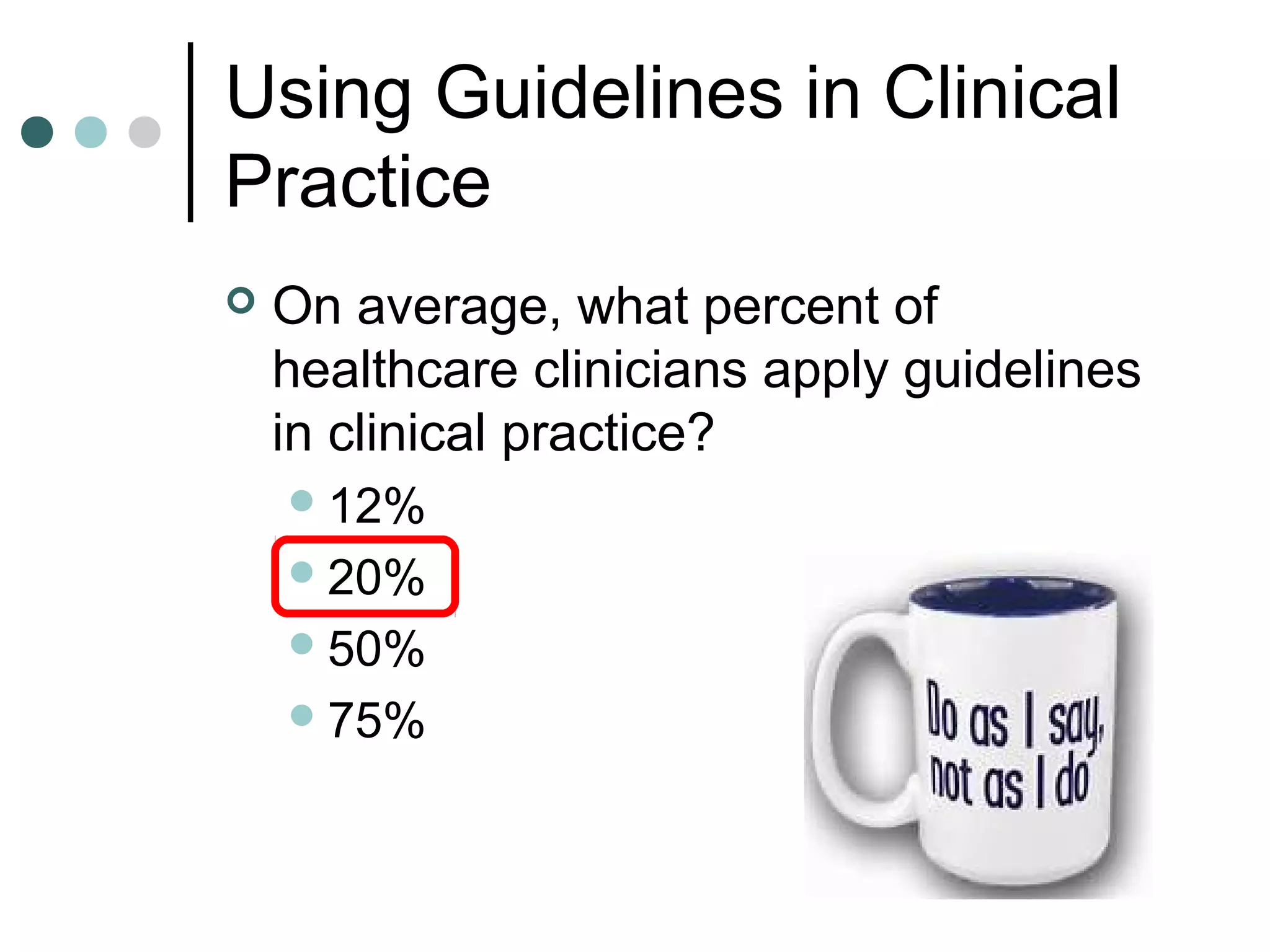
Using Guidelines in Clinical
Practice
 On average, what percent of
healthcare clinicians apply guidelines
in clinical practice?
12%
20%
50%
75%
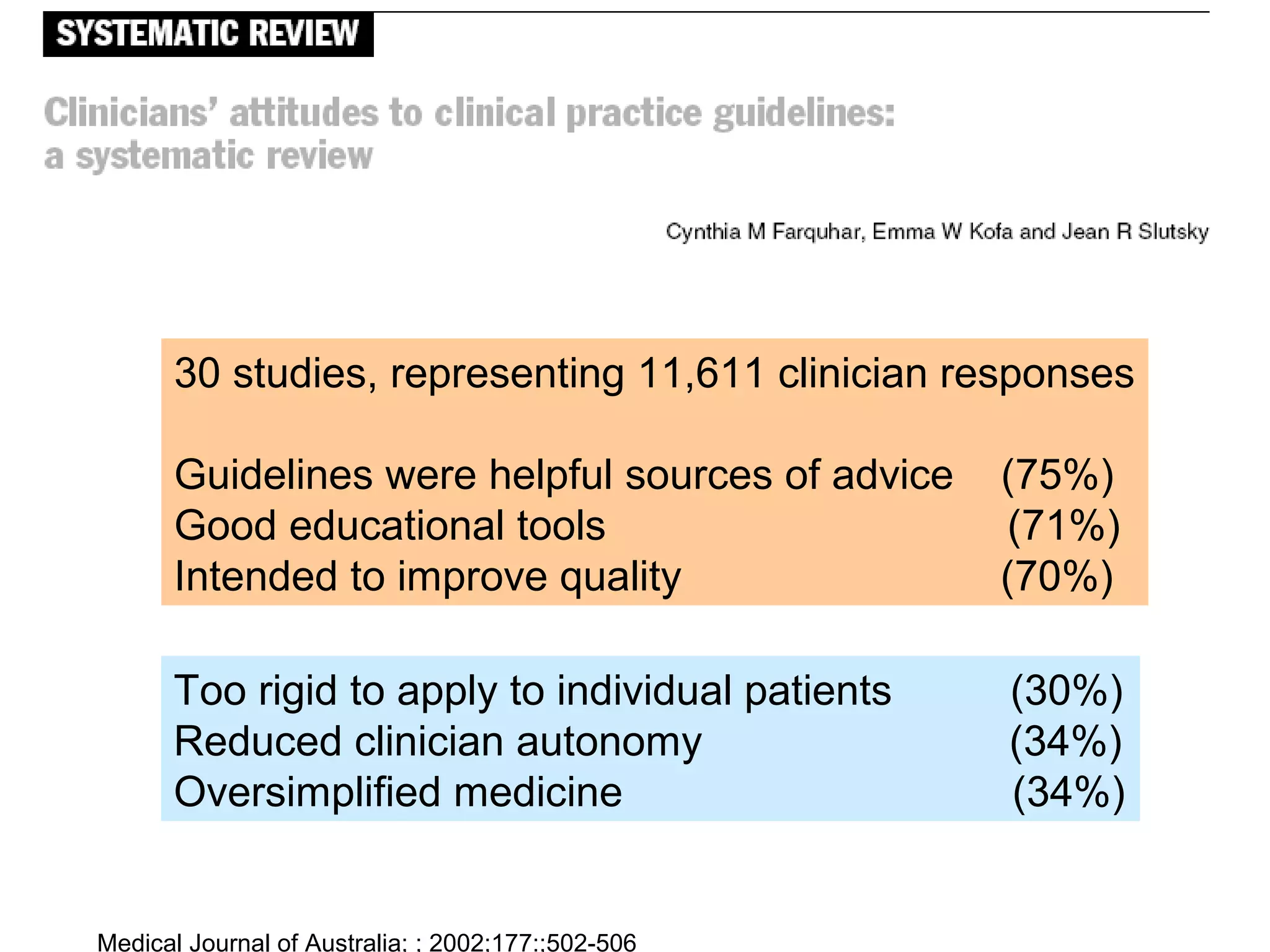
Medical Journal of Australia; ; 2002;177:;502-506
30 studies, representing 11,611 clinician responses
Guidelines were helpful sources of advice (75%)
Good educational tools (71%)
Intended to improve quality (70%)
Too rigid to apply to individual patients (30%)
Reduced clinician autonomy (34%)
Oversimplified medicine (34%)
Fact: The Interpretation of Medical Guidelines
is Somewhat Subjective
Fact: Not all Guidelines are Clear In Their Interpretation
2011
Kung J et al JAMA Internal Medicine 2012;172:1628-1633
How Does This Apply to
Sepsis?
Critical Care Medicine 2013;41:580-637
The GRADE system
Grade 1 – Strong
Grade 2 – Weak
Quality of Evidence:
Grade A – High
Grade B – Moderate
Grade C – Low
Grade D – Very Low
Evidence-based recommendations
Outline the management of severe sepsis and septic shock
Identify key recommendations for treatment
Dellinger RP et al. Critical Care Medicine 2013;41:580-637
Grading of Recommendations
Assessment, Development and Evaluation
http://ims.cochrane.org/gradepro
Despite limitations, the guidelines represent an important advance
in the management of patients with severe sepsis.
Although a number of recommendations were based on low-quality
evidence, strong agreement existed among international experts
regarding many level 1 recommendations as the best care for patients with sepsis.
Basic care tasks [microbiological sampling and antibiotic delivery
within 1 hour, fluid resuscitation, and risk stratification using serum
lactate] are likely to benefit patients most, yet are unreliability performed.
Barriers include lack of awareness, lack of supporting controlled trials
and complex diagnostic criteria leading to recognition delays.
620 bed University Medical Center, Chicago Illinois
22 bed Surgical ICU
21 bed Medical ICU
25 bed NeuroSurgical ICU
25 bed CCU/CSU
Total ICU admissions/year = 8,349
Clinical Example
Rush University Medical
Center
Sepsis Initiative
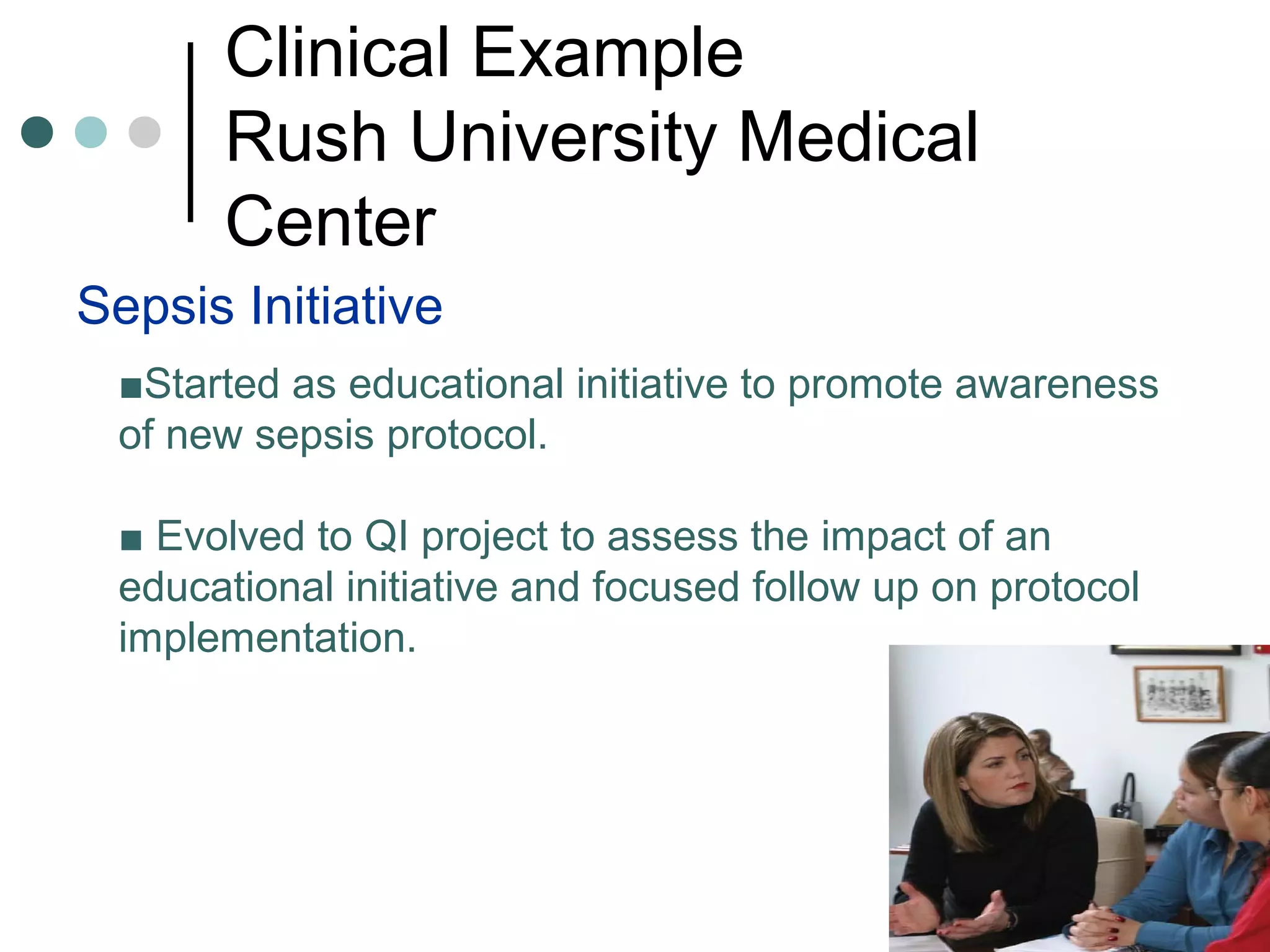
■Started as educational initiative to promote awareness
of new sepsis protocol.
■ Evolved to QI project to assess the impact of an
educational initiative and focused follow up on protocol
implementation.
Clinical Example: Sepsis Protocol
Implementation
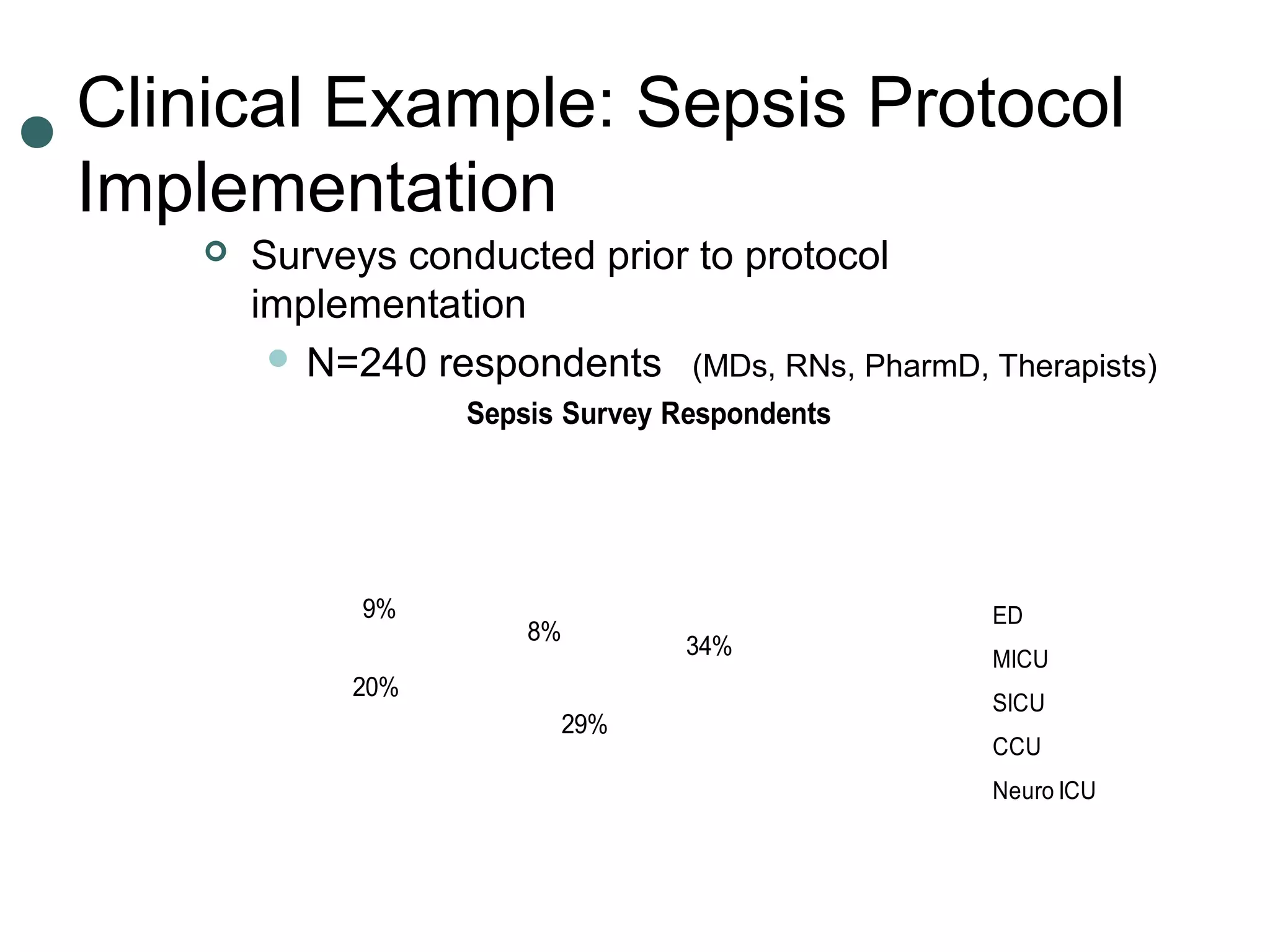
 Surveys conducted prior to protocol
implementation
 N=240 respondents
34%
29%
20%
9%
8%
Sepsis Survey Respondents
ED
MICU
SICU
CCU
Neuro ICU
(MDs, RNs, PharmD, Therapists)
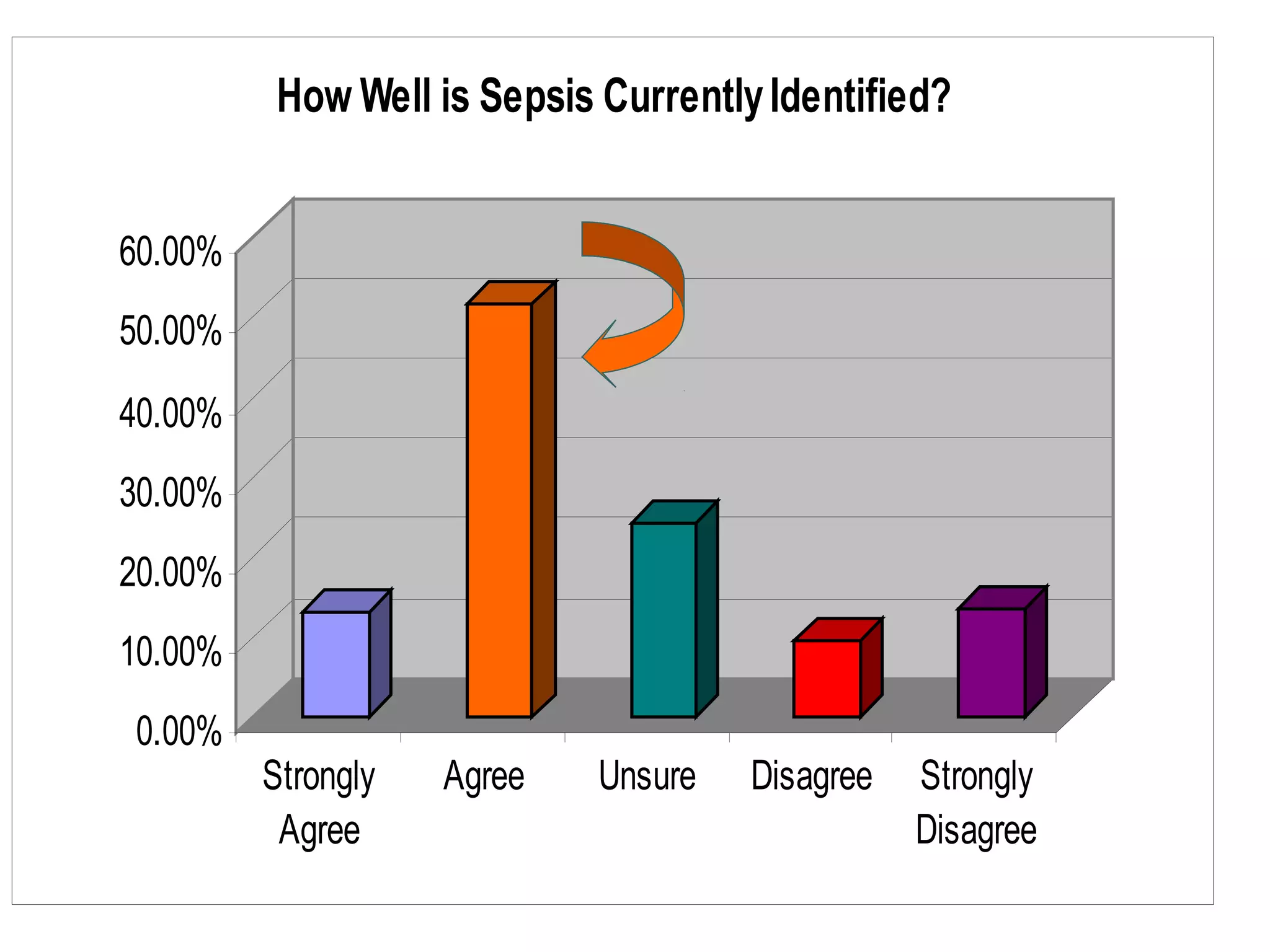
0.00%
10.00%
20.00%
30.00%
40.00%
50.00%
60.00%
Strongly
Agree
Agree Unsure Disagree Strongly
Disagree
How Well is Sepsis CurrentlyIdentified?
0.00%
5.00%
10.00%
15.00%
20.00%
25.00%
30.00%
35.00%
40.00%
Excellent Very Good Good Fair Poor
How Well is Sepsis CurrentlyManaged?
I amFamiliar with the Early Goal Directed Therapy
Guidelines
15%
34%
22%
22%
7% Strongly Agree
Agree
Unsure
Disagree
Strongly Disagree
0.00%
5.00%
10.00%
15.00%
20.00%
25.00%
30.00%
35.00%
Strongly
Agree
Agree Unsure Disagree Strongly
Disagree
I AmFamiliar with the Surviving Sepsis Campaign
Guidelines
New Focus Area
 Screening for Sepsis & Performance
Improvement
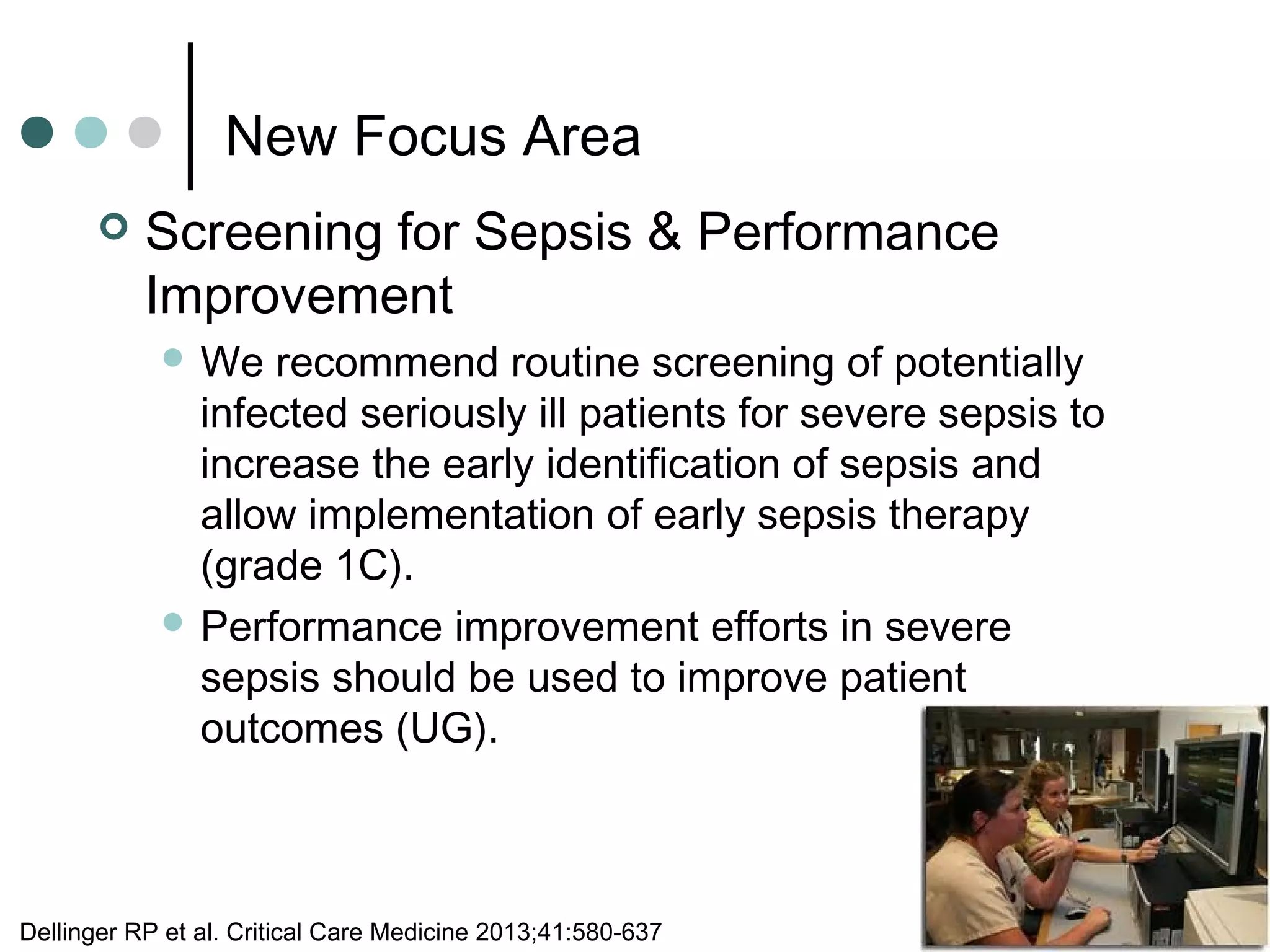
 We recommend routine screening of potentially
infected seriously ill patients for severe sepsis to
increase the early identification of sepsis and
allow implementation of early sepsis therapy
(grade 1C).
 Performance improvement efforts in severe
sepsis should be used to improve patient
outcomes (UG).
Dellinger RP et al. Critical Care Medicine 2013;41:580-637
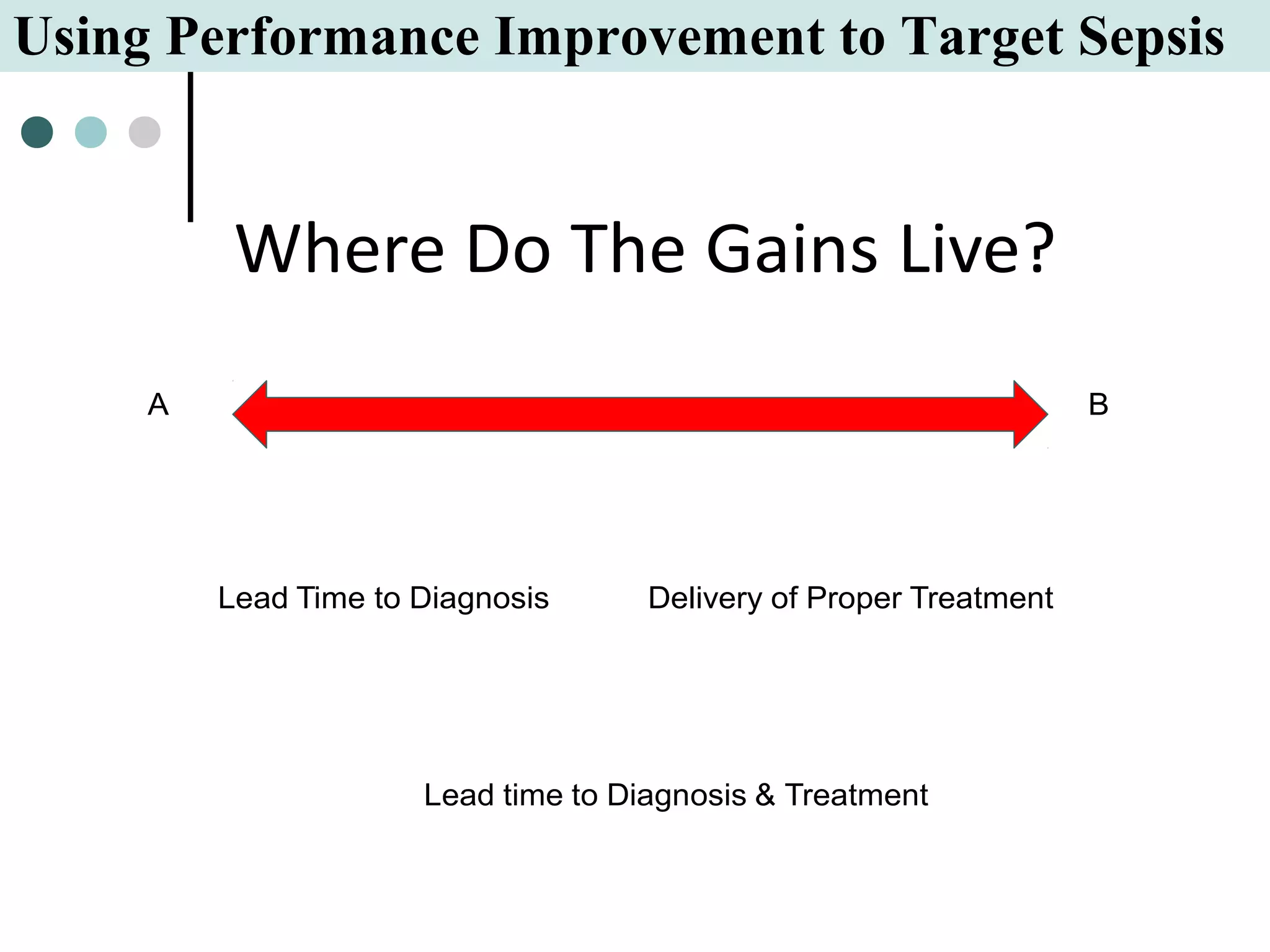
Where Do The Gains Live?
A B
Lead Time to Diagnosis Delivery of Proper Treatment
Lead time to Diagnosis & Treatment
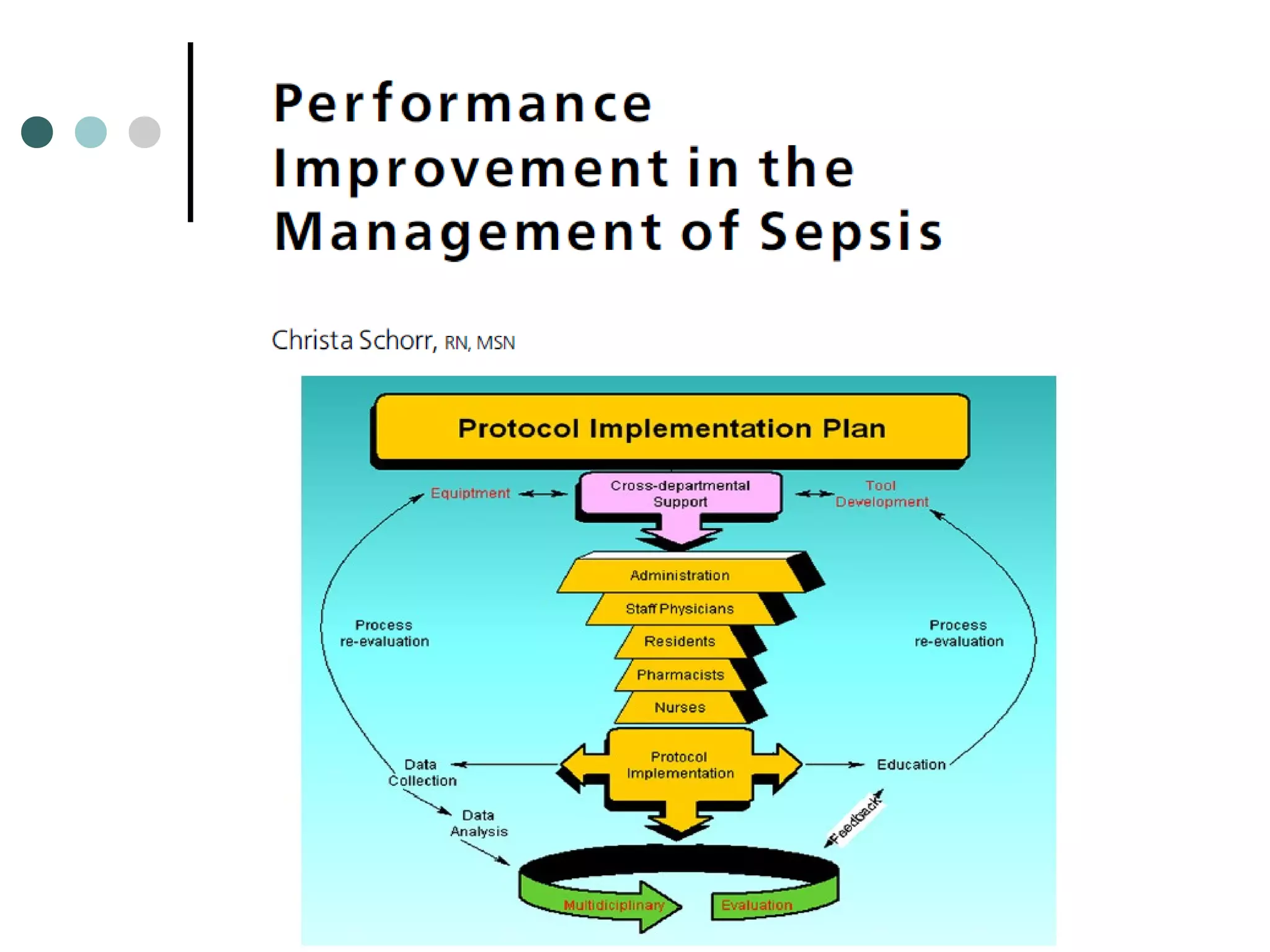
Using Performance Improvement to Target Sepsis
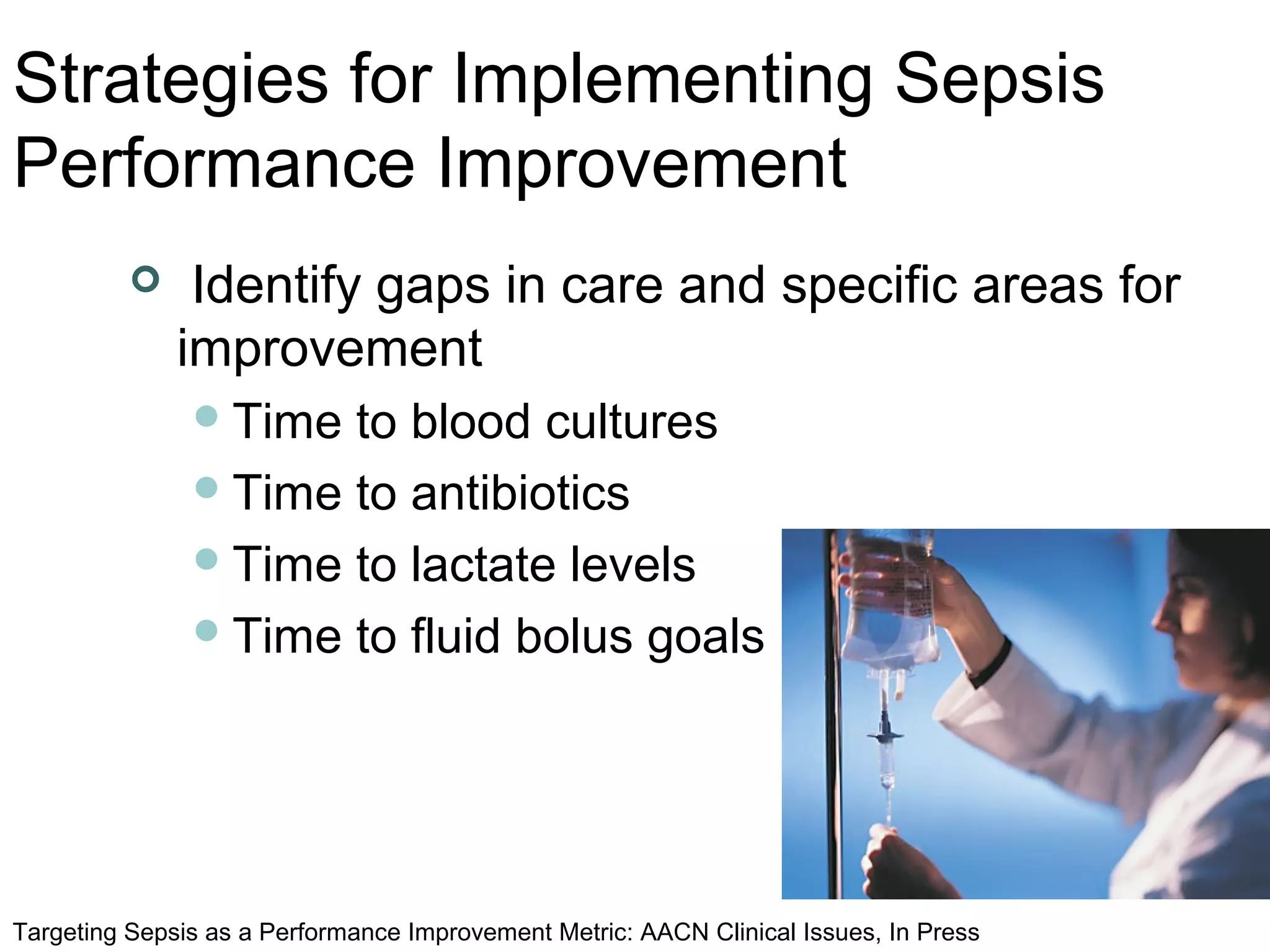
Strategies for Implementing Sepsis
Performance Improvement
 Identify gaps in care and specific areas for
improvement
Time to blood cultures
Time to antibiotics
Time to lactate levels
Time to fluid bolus goals
Targeting Sepsis as a Performance Improvement Metric: AACN Clinical Issues, In Press
Initial Resuscitation
1. We recommend the protocolized resuscitation of a patient with
sepsis-induced shock, defined as tissue hypoperfusion
(hypotension persisting after initial fluid challenge or blood lactate
concentration 4 mmol/L).
During the first 6 hrs of resuscitation, the goals of initial
resuscitation of sepsis-induced hypoperfusion should include all
of the following as one part of a treatment protocol:
• Central venous pressure (CVP): 8–12mm Hg
• Mean arterial pressure (MAP) ≥ 65mm Hg
• Urine output ≥ 0.5mL.kg–1.hr –1
• Central venous (superior vena cava) or mixed venous
oxygen saturation ≥ 70% or ≥ 65%, respectively
(Grade 1C)
Dellinger RP et al. Critical Care Medicine 2013;41:580-637
Fluid therapy
1. We recommend crystalloids be used in the initial fluid
resuscitation in patients (Grade 1B).
2. We recommend that initial fluid challenge in patients with
sepsis-induced tissue hypoperfusion with suspicion of
hypovolemia to achieve a minimum of 30ml/kg. (Grade
1C).
Dellinger RP et al. Critical Care Medicine 2013;41:580-637
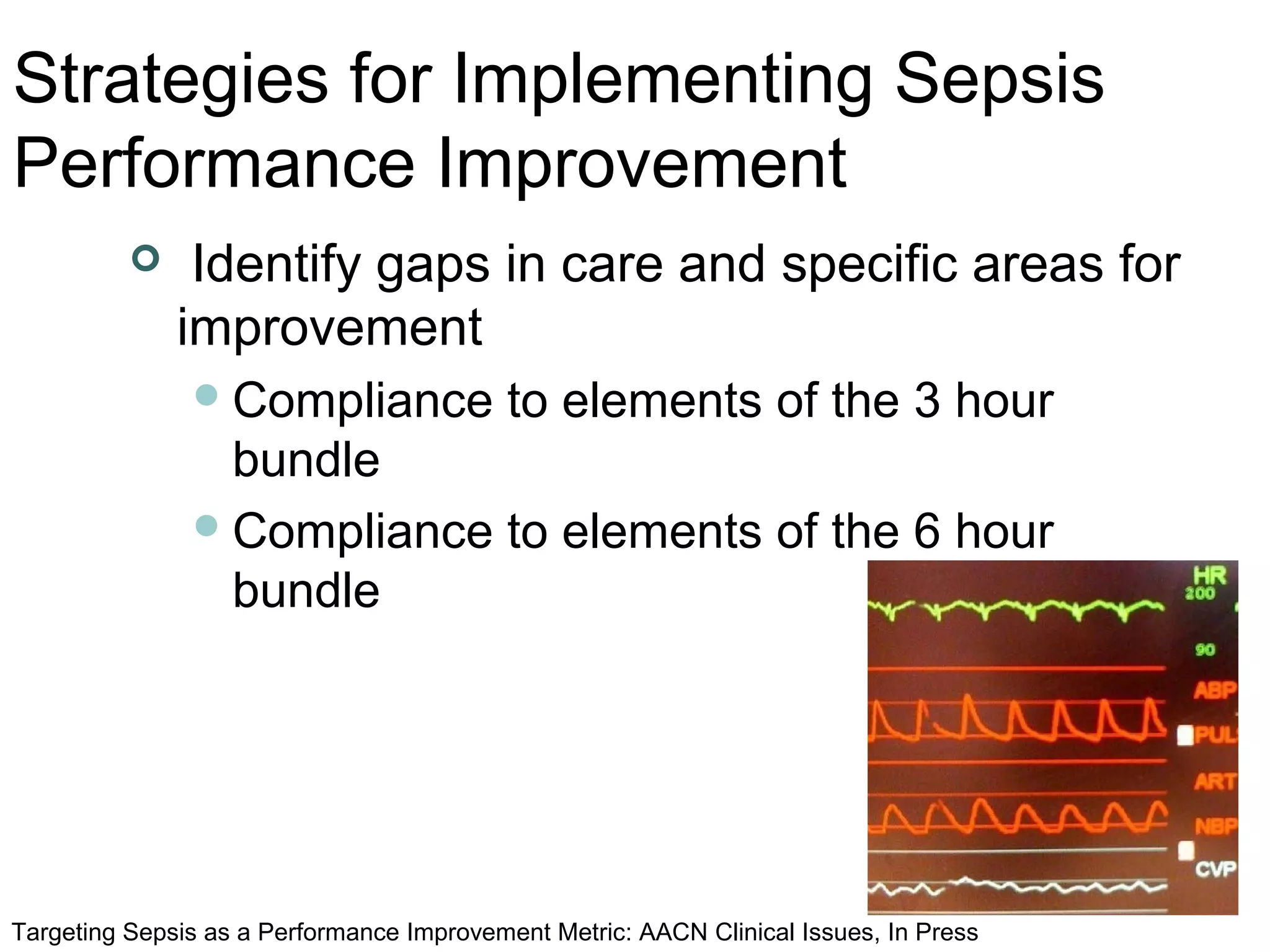
Strategies for Implementing Sepsis
Performance Improvement
 Identify gaps in care and specific areas for
improvement
Compliance to elements of the 3 hour
bundle
Compliance to elements of the 6 hour
bundle
Targeting Sepsis as a Performance Improvement Metric: AACN Clinical Issues, In Press
Diagnosis
1. We recommend obtaining appropriate cultures before
antimicrobial therapy is initiated if such cultures do not
cause significant delay (>45 minutes) in antimicrobial
administration.
2. To optimize identification of causative organisms, we
recommend at least two blood cultures be obtained
before antimicrobial therapy with at least one drawn
percutaneously and one drawn through each vascular
access device, unless the device was recently (<48 hr.)
inserted (1C)
Dellinger RP et al. Critical Care Medicine 2013;41:580-637
Antibiotic therapy
1. We recommend that intravenous antimicrobial therapy be
started as early as possible and within the first hour of
recognition of septic shock (1B) and severe sepsis without
septic shock (grade1C).
2. We recommend that initial empiric anti-infective therapy
include one or more drugs that have activity against all
likely pathogens (bacterial and/or fungal or viral) (grade
1B).
Vasopressors
1. We recommend that vasopressor therapy initially target
a mean arterial pressure (MAP) of 65 mm Hg (grade
1C).
2. We recommend norepinephrine as the first choice
vasopressor (Grade 1 B).
Dellinger RP et al. Critical Care Medicine 2013;41:580-637
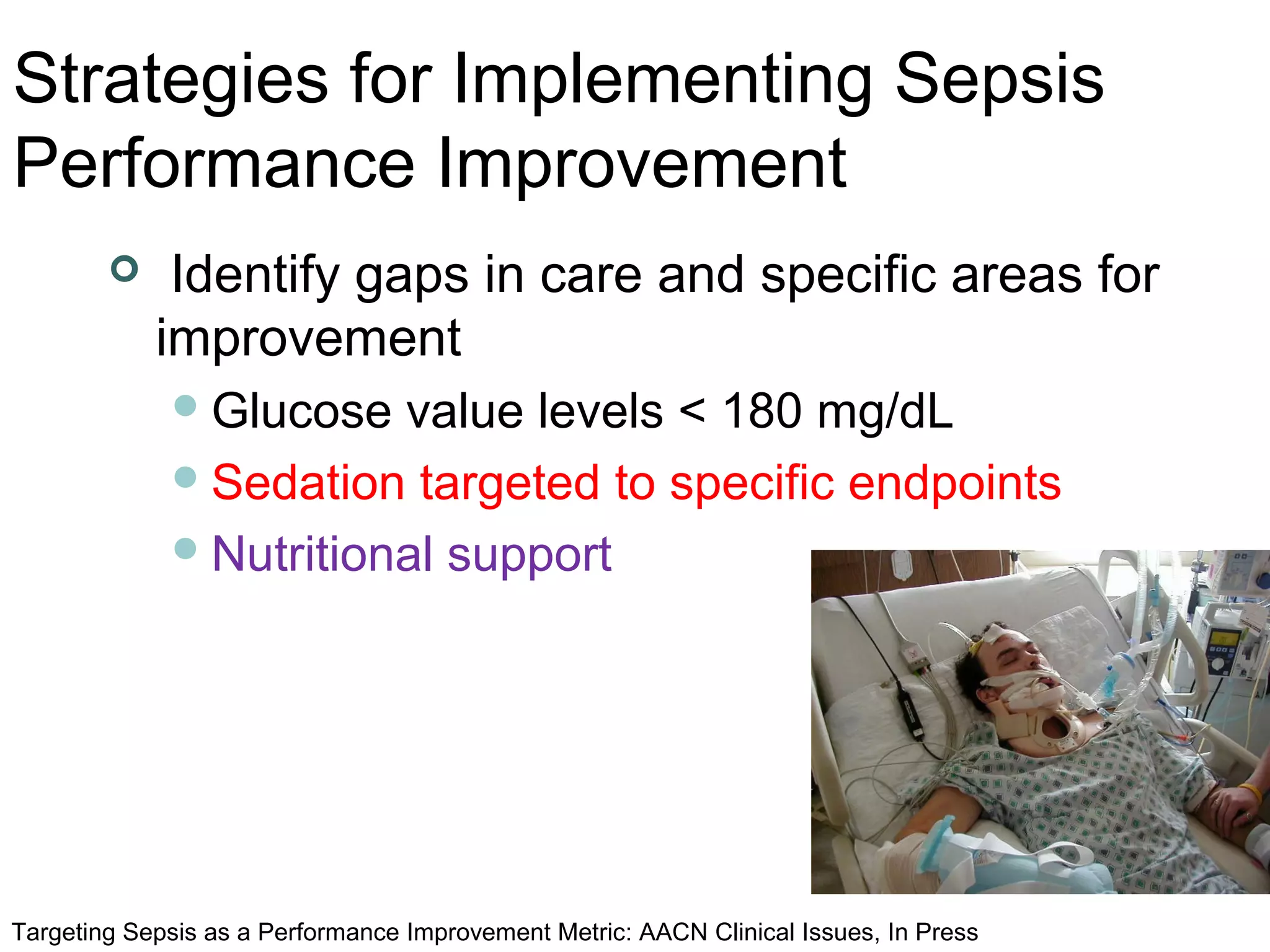
Strategies for Implementing Sepsis
Performance Improvement
 Identify gaps in care and specific areas for
improvement
Glucose value levels < 180 mg/dL
Sedation targeted to specific endpoints
Nutritional support
Targeting Sepsis as a Performance Improvement Metric: AACN Clinical Issues, In Press
2008 Surviving Sepsis Campaign
Guidelines
 ♦ Consideration for limitation of support
(1D)
 Discuss end-of-life care for critically ill patients
 Promote family communication to discuss use of
life-sustaining therapies
Dellinger RP et al Crit Care Med 2008; 36:296-437
1D = Very Low Quality of Evidence
Consideration for Limitation of Support
 Recommendation 1: We recommend that identification of
goals of care, prognosis for achieving those goals and the
level of certainty for the prognosis be discussed with
patients and families. (1B)
 Recommendation 2: We recommend that these
communications should be incorporated into treatment
plans with integration of palliative care principles, and as
appropriate, end-of-life care planning. (1B)
 Recommendation 3: It is suggested that goals of care be
addressed as early as feasible but no later than within 72
hours. (Grade 2C)
Setting Goals of Care
Dellinger RP et al. Critical Care Medicine 2013;41:580-637
Strategies for Implementing Sepsis
Performance Improvement
 Identify gaps in care and specific areas for
improvement
Patients receiving family care conference
to address goals of care within 72 hours of
ICU admission
Targeting Sepsis as a Performance Improvement Metric: AACN Clinical Issues, In Press
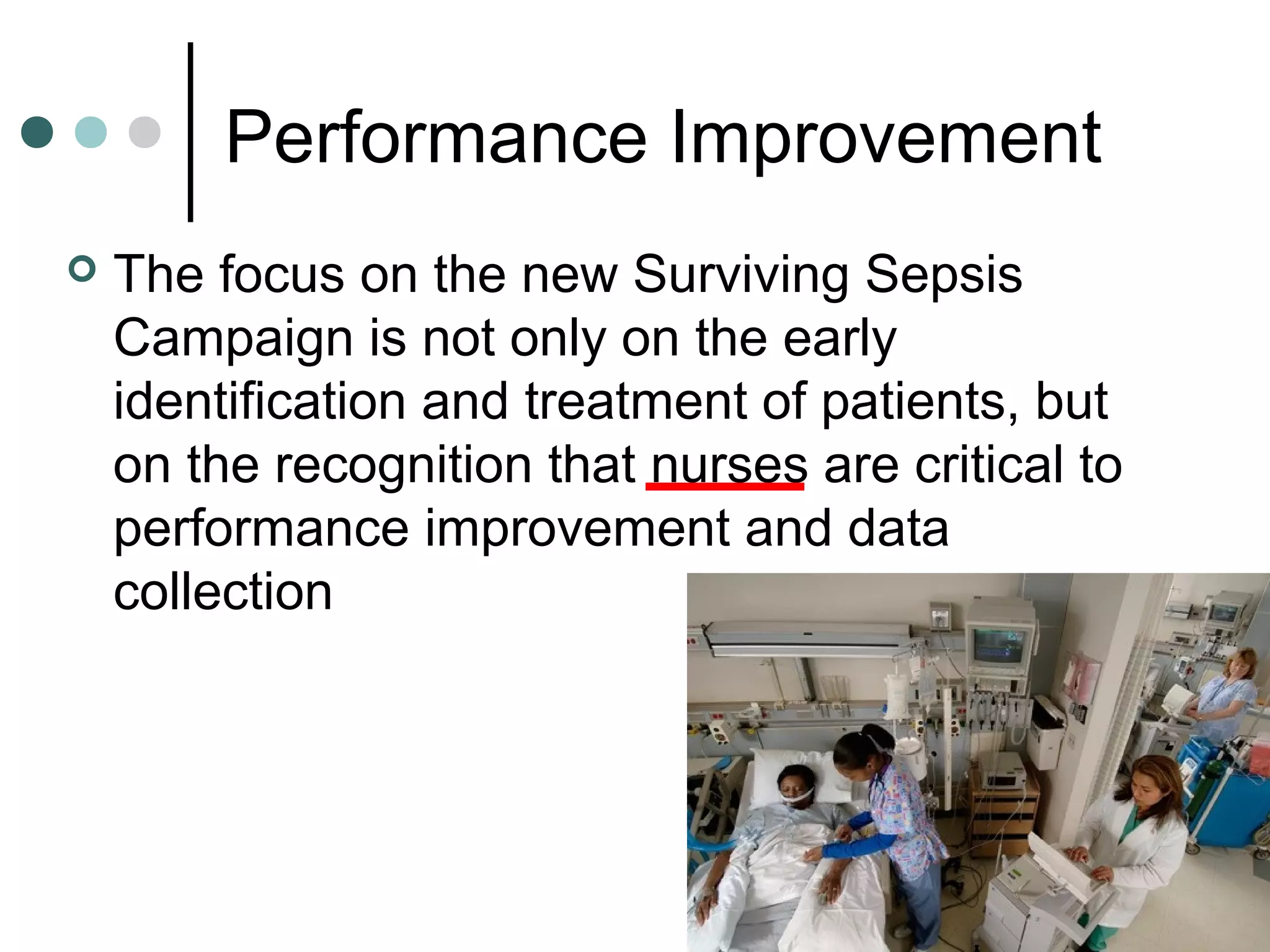
Performance Improvement
 The focus on the new Surviving Sepsis
Campaign is not only on the early
identification and treatment of patients, but
on the recognition that nurses are critical to
performance improvement and data
collection
Available full text
open access
www.wfccn.org
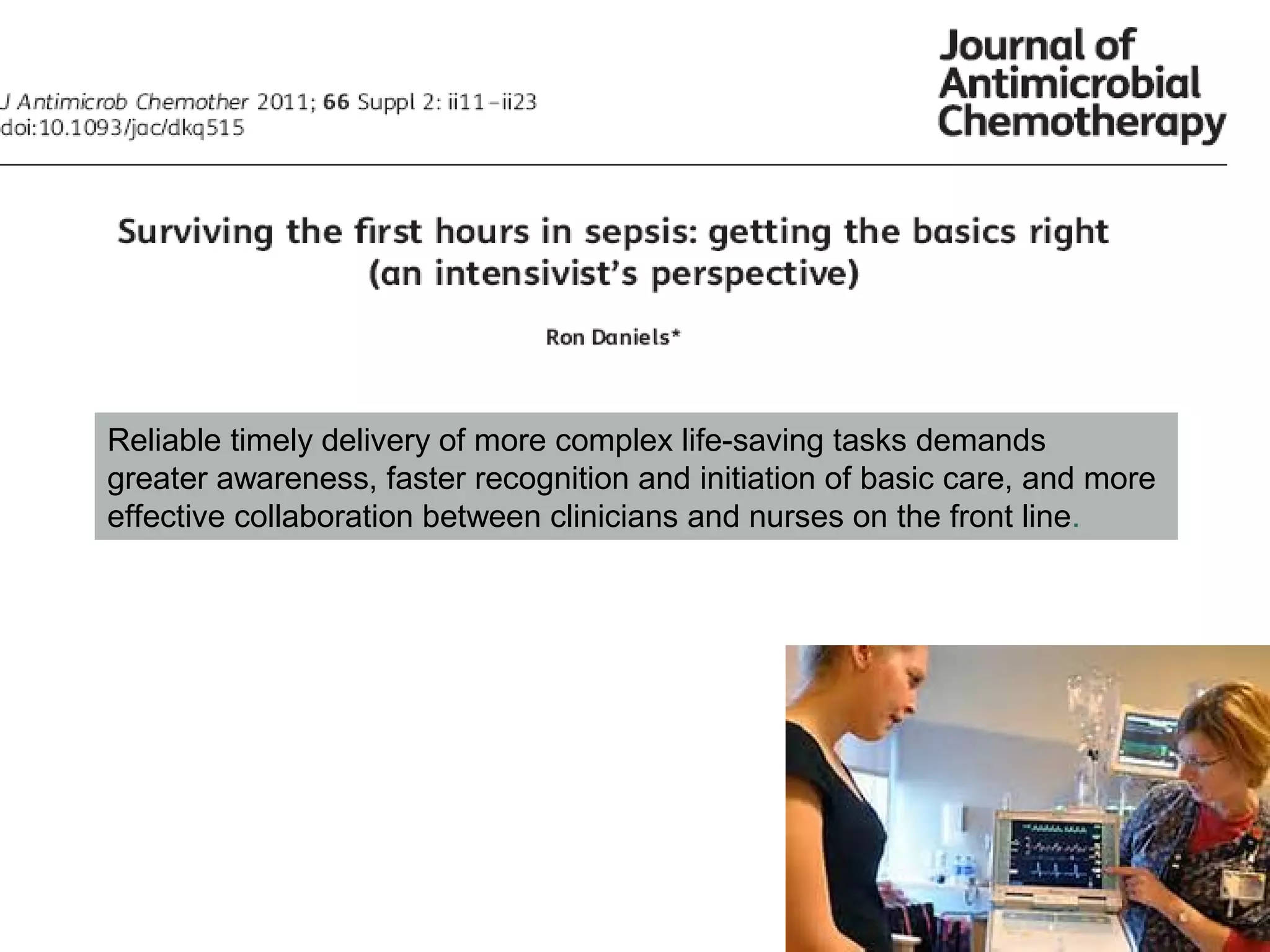
Reliable timely delivery of more complex life-saving tasks demands
greater awareness, faster recognition and initiation of basic care, and more
effective collaboration between clinicians and nurses on the front line.
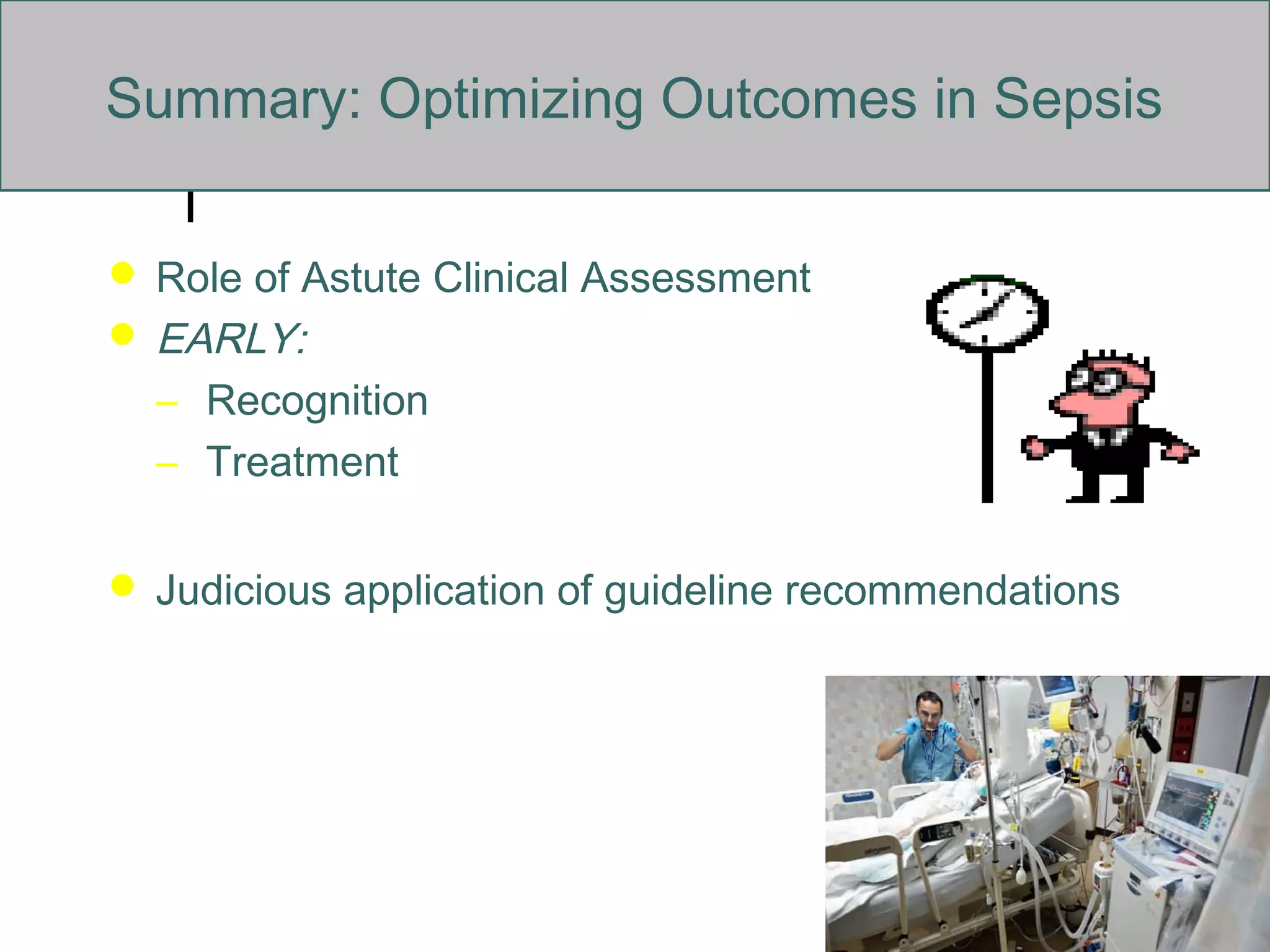
Summary: Optimizing Outcomes in Sepsis
 Role of Astute Clinical Assessment
 EARLY:
– Recognition
– Treatment
 Judicious application of guideline recommendations
Dank Je

Applying the Surviving Sepsis Campaign Guidelines to Clinical Practice

  • 1.
    Applying the SurvivingSepsis Campaign Guidelines to Clinical Practice Ruth M. Kleinpell PhD RN FCCM Rush University Medical Center Chicago, Illinois USA; President, World Federation of Critical Care Nurses
  • 2.
    Conflict of Interest “I believe there is value in the use of clinical practice guidelines, but at the same time acknowledge their limitations”
  • 3.
    Clinical Practice Guidelines:Origins Hieroglyphics outlining treatments for more than 700 remedies, circa 1552 BC
  • 4.
    Clinical practice guidelinesare recommendations for clinicians about the care of patients with specific conditions. They should be based on the best available evidence and practice experience.
  • 5.
    Using Guidelines inClinical Practice  On average, what percent of healthcare clinicians apply guidelines in clinical practice? 12% 20% 50% 75%
  • 6.
    Medical Journal ofAustralia; ; 2002;177:;502-506 30 studies, representing 11,611 clinician responses Guidelines were helpful sources of advice (75%) Good educational tools (71%) Intended to improve quality (70%) Too rigid to apply to individual patients (30%) Reduced clinician autonomy (34%) Oversimplified medicine (34%)
  • 7.
    Fact: The Interpretationof Medical Guidelines is Somewhat Subjective
  • 8.
    Fact: Not allGuidelines are Clear In Their Interpretation
  • 9.
  • 10.
    Kung J etal JAMA Internal Medicine 2012;172:1628-1633
  • 11.
    Kung J etal JAMA Internal Medicine 2012;172:1628-1633
  • 12.
    How Does ThisApply to Sepsis?
  • 13.
    Critical Care Medicine2013;41:580-637
  • 15.
    The GRADE system Grade1 – Strong Grade 2 – Weak Quality of Evidence: Grade A – High Grade B – Moderate Grade C – Low Grade D – Very Low Evidence-based recommendations Outline the management of severe sepsis and septic shock Identify key recommendations for treatment Dellinger RP et al. Critical Care Medicine 2013;41:580-637 Grading of Recommendations Assessment, Development and Evaluation
  • 16.
  • 17.
    Despite limitations, theguidelines represent an important advance in the management of patients with severe sepsis. Although a number of recommendations were based on low-quality evidence, strong agreement existed among international experts regarding many level 1 recommendations as the best care for patients with sepsis.
  • 18.
    Basic care tasks[microbiological sampling and antibiotic delivery within 1 hour, fluid resuscitation, and risk stratification using serum lactate] are likely to benefit patients most, yet are unreliability performed. Barriers include lack of awareness, lack of supporting controlled trials and complex diagnostic criteria leading to recognition delays.
  • 19.
    620 bed UniversityMedical Center, Chicago Illinois 22 bed Surgical ICU 21 bed Medical ICU 25 bed NeuroSurgical ICU 25 bed CCU/CSU Total ICU admissions/year = 8,349
  • 20.
    Clinical Example Rush UniversityMedical Center Sepsis Initiative ■Started as educational initiative to promote awareness of new sepsis protocol. ■ Evolved to QI project to assess the impact of an educational initiative and focused follow up on protocol implementation.
  • 21.
    Clinical Example: SepsisProtocol Implementation  Surveys conducted prior to protocol implementation  N=240 respondents 34% 29% 20% 9% 8% Sepsis Survey Respondents ED MICU SICU CCU Neuro ICU (MDs, RNs, PharmD, Therapists)
  • 22.
    0.00% 10.00% 20.00% 30.00% 40.00% 50.00% 60.00% Strongly Agree Agree Unsure DisagreeStrongly Disagree How Well is Sepsis CurrentlyIdentified?
  • 23.
  • 24.
    I amFamiliar withthe Early Goal Directed Therapy Guidelines 15% 34% 22% 22% 7% Strongly Agree Agree Unsure Disagree Strongly Disagree
  • 25.
    0.00% 5.00% 10.00% 15.00% 20.00% 25.00% 30.00% 35.00% Strongly Agree Agree Unsure DisagreeStrongly Disagree I AmFamiliar with the Surviving Sepsis Campaign Guidelines
  • 26.
    New Focus Area Screening for Sepsis & Performance Improvement  We recommend routine screening of potentially infected seriously ill patients for severe sepsis to increase the early identification of sepsis and allow implementation of early sepsis therapy (grade 1C).  Performance improvement efforts in severe sepsis should be used to improve patient outcomes (UG). Dellinger RP et al. Critical Care Medicine 2013;41:580-637
  • 27.
    Where Do TheGains Live? A B Lead Time to Diagnosis Delivery of Proper Treatment Lead time to Diagnosis & Treatment Using Performance Improvement to Target Sepsis
  • 28.
    Strategies for ImplementingSepsis Performance Improvement  Identify gaps in care and specific areas for improvement Time to blood cultures Time to antibiotics Time to lactate levels Time to fluid bolus goals Targeting Sepsis as a Performance Improvement Metric: AACN Clinical Issues, In Press
  • 29.
    Initial Resuscitation 1. Werecommend the protocolized resuscitation of a patient with sepsis-induced shock, defined as tissue hypoperfusion (hypotension persisting after initial fluid challenge or blood lactate concentration 4 mmol/L). During the first 6 hrs of resuscitation, the goals of initial resuscitation of sepsis-induced hypoperfusion should include all of the following as one part of a treatment protocol: • Central venous pressure (CVP): 8–12mm Hg • Mean arterial pressure (MAP) ≥ 65mm Hg • Urine output ≥ 0.5mL.kg–1.hr –1 • Central venous (superior vena cava) or mixed venous oxygen saturation ≥ 70% or ≥ 65%, respectively (Grade 1C) Dellinger RP et al. Critical Care Medicine 2013;41:580-637
  • 30.
    Fluid therapy 1. Werecommend crystalloids be used in the initial fluid resuscitation in patients (Grade 1B). 2. We recommend that initial fluid challenge in patients with sepsis-induced tissue hypoperfusion with suspicion of hypovolemia to achieve a minimum of 30ml/kg. (Grade 1C). Dellinger RP et al. Critical Care Medicine 2013;41:580-637
  • 32.
    Strategies for ImplementingSepsis Performance Improvement  Identify gaps in care and specific areas for improvement Compliance to elements of the 3 hour bundle Compliance to elements of the 6 hour bundle Targeting Sepsis as a Performance Improvement Metric: AACN Clinical Issues, In Press
  • 33.
    Diagnosis 1. We recommendobtaining appropriate cultures before antimicrobial therapy is initiated if such cultures do not cause significant delay (>45 minutes) in antimicrobial administration. 2. To optimize identification of causative organisms, we recommend at least two blood cultures be obtained before antimicrobial therapy with at least one drawn percutaneously and one drawn through each vascular access device, unless the device was recently (<48 hr.) inserted (1C) Dellinger RP et al. Critical Care Medicine 2013;41:580-637
  • 34.
    Antibiotic therapy 1. Werecommend that intravenous antimicrobial therapy be started as early as possible and within the first hour of recognition of septic shock (1B) and severe sepsis without septic shock (grade1C). 2. We recommend that initial empiric anti-infective therapy include one or more drugs that have activity against all likely pathogens (bacterial and/or fungal or viral) (grade 1B).
  • 35.
    Vasopressors 1. We recommendthat vasopressor therapy initially target a mean arterial pressure (MAP) of 65 mm Hg (grade 1C). 2. We recommend norepinephrine as the first choice vasopressor (Grade 1 B). Dellinger RP et al. Critical Care Medicine 2013;41:580-637
  • 36.
    Strategies for ImplementingSepsis Performance Improvement  Identify gaps in care and specific areas for improvement Glucose value levels < 180 mg/dL Sedation targeted to specific endpoints Nutritional support Targeting Sepsis as a Performance Improvement Metric: AACN Clinical Issues, In Press
  • 37.
    2008 Surviving SepsisCampaign Guidelines  ♦ Consideration for limitation of support (1D)  Discuss end-of-life care for critically ill patients  Promote family communication to discuss use of life-sustaining therapies Dellinger RP et al Crit Care Med 2008; 36:296-437 1D = Very Low Quality of Evidence
  • 38.
    Consideration for Limitationof Support  Recommendation 1: We recommend that identification of goals of care, prognosis for achieving those goals and the level of certainty for the prognosis be discussed with patients and families. (1B)  Recommendation 2: We recommend that these communications should be incorporated into treatment plans with integration of palliative care principles, and as appropriate, end-of-life care planning. (1B)  Recommendation 3: It is suggested that goals of care be addressed as early as feasible but no later than within 72 hours. (Grade 2C) Setting Goals of Care Dellinger RP et al. Critical Care Medicine 2013;41:580-637
  • 39.
    Strategies for ImplementingSepsis Performance Improvement  Identify gaps in care and specific areas for improvement Patients receiving family care conference to address goals of care within 72 hours of ICU admission Targeting Sepsis as a Performance Improvement Metric: AACN Clinical Issues, In Press
  • 43.
    Performance Improvement  Thefocus on the new Surviving Sepsis Campaign is not only on the early identification and treatment of patients, but on the recognition that nurses are critical to performance improvement and data collection
  • 44.
    Available full text openaccess www.wfccn.org
  • 45.
    Reliable timely deliveryof more complex life-saving tasks demands greater awareness, faster recognition and initiation of basic care, and more effective collaboration between clinicians and nurses on the front line.
  • 46.
    Summary: Optimizing Outcomesin Sepsis  Role of Astute Clinical Assessment  EARLY: – Recognition – Treatment  Judicious application of guideline recommendations
  • 49.

Editor's Notes

  • #4 The Georg Ebers Papyrus. Found in Egypt in the 1870’s, outlines more than 700 remedies, including this one for an acute asthma attack
  • #30 Lactate:2C