1
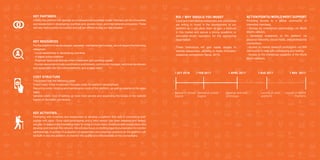
Merit360
Action plan 001
2 3
Merit360 action plan 001
3
Mobilising 1,000,000 Changemakers
for Development - World Merit’s SDG
Contribution
What We Offer
World Merit is a global network of 120,000
young activists from 196 countries who
are committed to realising the Sustainable
Development Goals (SDGs). Over 80%
of these activists are under the age of 25
(World Merit, Merit Day 2016 survey of 8,696
respondents from 140 counties). The reach of
this community is reflected in the network’s
social media reach of over 50 million viewers.
With activists from every country, World Merit
has tremendous traction in every corner of
the globe through these young changemakers
and leaders. Our reach ensures that
international development does not become
a region-specific concern, but is approached
as a global priority. World Merit develops and
supports young leaders from all countries
to effect change in their local communities,
based upon core principles shared between
David Nabarro (UN Special Advisor on the
2030 Agenda for Sustainable Development)
and Chris Arnold (World Merit founder).
“We need 700,000 SDG activists to be brought
together as quickly as possible to lead the charge
of achieving the global goals: not only do we
[World Merit] have access to this global talent,
but we are an incredibly well positioned youth
movement that is able to engage potential and
current leaders from every single background
and all countries. To achieve this, we are radially
inclusive: we don’t care what you have done in
the past, we simply care about what you will do
by 2030” (Chris Arnold)
We view youth as not only the future of a nation
(Staeheli and Hammett, 2013), but as both our
global future and our global present. Youth are
citizens of the world, affected by and influencing
life on our planet: we ignore the current challenges
and future needs of the 1.8 billion young people
aged between 10 and 24 (UN, 2016) at our peril.
4 5
Project Overview: Merit360 and Action
Plan 001
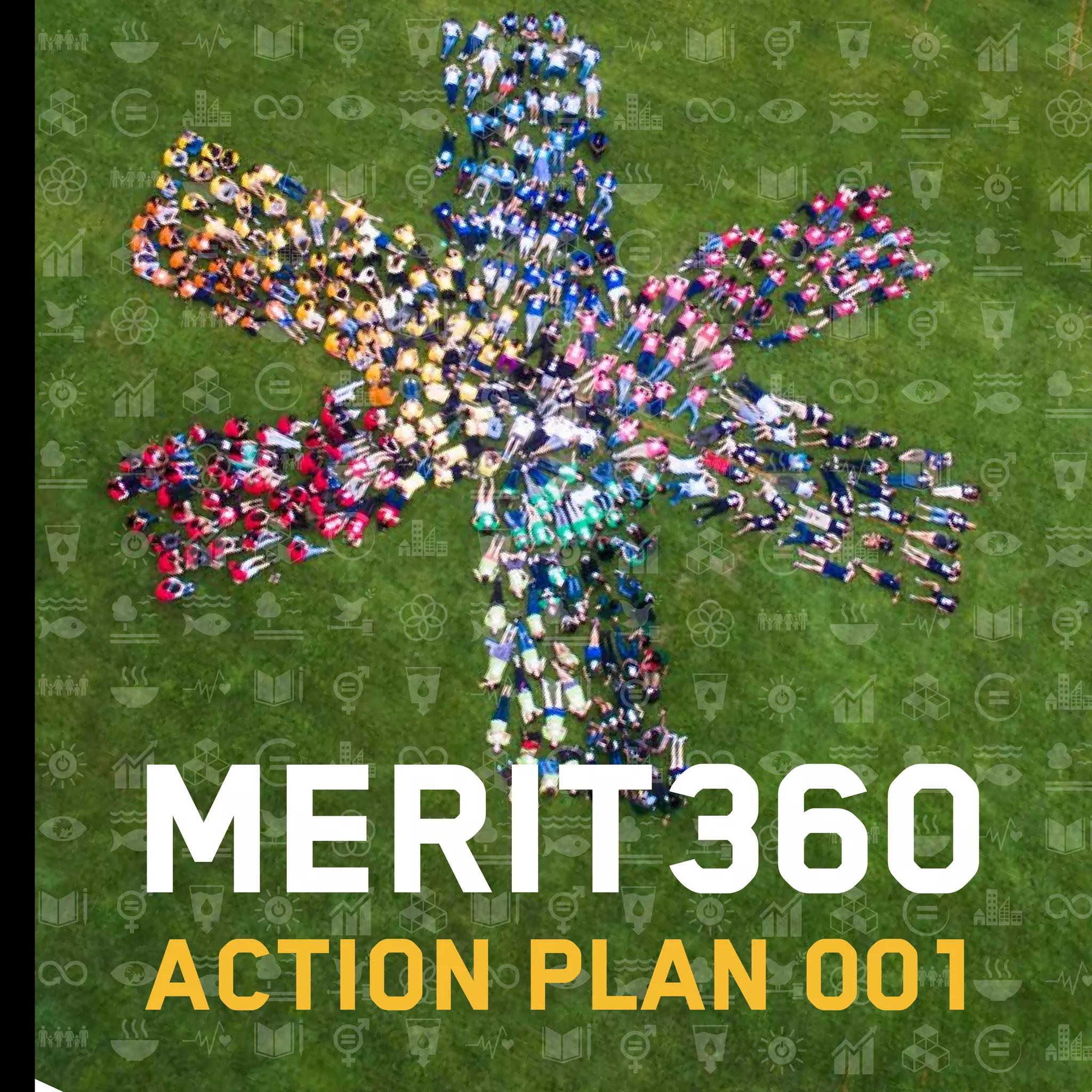
Our flagship event, Merit360, brought together 360
young changemakers from across the globe to propose
a youth-initiated Action Plan towards realising the SDGs.
Their creativity, initiative and energy are demonstrated
in the following pages. These projects demonstrate the
community’s potential to communicate, collaborate and
create development solutions at a variety of scales. Their
overarching message, as expressed by World Merit’s
General Manager, Marlou Hermsen, is that “We are youth:
we are powerful, we are hungry for change, and we WILL
make a positive contribution to realising a sustainable
future”.
The ideas presented here comprise Action Plan 001.
They are optimistic proposals, containing novel ideas
and detailed understandings of effective ways to mobilise
young people through both on- and off-line platforms to
meet the SDGs. The variety of communication and activism
practices outlined, illustrate both the willingness to but
also the need for young people to bypass mainstream
media and political establishments as they seek to have
their voices heard (Merchant, 2016). In contexts of extreme
injustice or political repression, the storytelling function
of social media provides a vital mechanism for mass
mobilisation, youth engagement and social empowerment.
These proposals also demonstrate an astute awareness
of the need to engage with multiple stakeholders in efforts
to promote sustainable development. At the core of many
proposals is a prioritisation of social entrepreneurialism,
recognising that sustainability in development is not
confined to understandings of environmental sustainability
and climate change, but also a need to ensure long-term,
sustainable funding sources for projects in order to scale-
up and enhance resultant benefits.
References
Gordon, H. R. (2010). We fight to win: Inequality and the politics
of youth activism. New
Brunswick, NJ: Rutgers University Press.
Gordon, H. R., & Taft, J. K. (2011). Rethinking youth political
socialization: Teenage activists talk back. Youth & Society,
43(4), 1499–1527.
Merchant, A. (2016, February 29). Youth Activists: A Force to
be Reckoned With. Retrieved September 01, 2016, from http://
www.huffingtonpost.com/the-youth-assembly-at-the-united-
nations/youth-activists-a-force-t_b_9348276.html
Staeheli, L.A. and Hammett, D. (2013) ‘’For the future of the
nation’: citizenship, nation, and education in South Africa’,
Political Geography, 32, 32-41
UN (2016) 10 Things You Didn’t Know About the World’s
Population, accessed 8/9/16, available at http://www.
un.org/youthenvoy/2015/04/10-things-didnt-know-worlds-
population/
Why work with World Merit?
World Merit reaches out to and works with
grassroots activists who are advancing change in
their local communities. Our members are active
in projects across all SDGs, and are recognised
as local changemakers who can leverage social
and developmental change. They are able to
raise awareness of and active support in efforts
to meet the SDGs amongst young people: over
85% of our members believe their knowledge and
understanding of the SDGs has been increased
by our work (Merit Day Survey, 2016). With only
20% of our activists believing their communities
are very aware of the SDGs, it is vitally important
that we develop and utilise young changemakers
to promote a sustainable and effective global
movement aimed at realising the SDGs.
Based on an 80/20 Principle, World Merit
pursues a radically inclusive agenda for youth
empowerment. With just 20% of input coming
from professionals, 80% of the efforts and
rewards are driven by World Merit changemakers
who are given the autonomy to advance their
initiatives and to take full ownership of their
projects. Thus, by avoiding ‘adultism’ (Gordon,
2010), this approach empowers young activists
– who are supported and mentored by the World
Merit community. Our youthful community are
thus not only able to exercise their rights but are
treated as full citizens of our global community,
and provides for the expression and realisation
of tremendous levels of creativity and innovation.
The incorporation of this youth voice plants the
seeds for an inclusive society and a healthy
democracy (Gordon & Taft, 2011).
6 7
Developing a Sustainable
Development Curriculum
Abstract
The Sustainable Development Curriculum (SDC) is a
global educational project based on the development
of regional and country specific resources. Working
with partners who already produce materials and
courses relating to international development, we
will create an innovative platform incorporating
educational materials and tools for activism for
youth across the globe. This platform will include
certification-carrying MOOCs, providing youth
with valuable knowledge and enhancing their
employability. This initiative is a key component to
our aim of creating 1,000,000 SDG-Goalkeepers
in the age category 12-35 by September 2018.
Our 5-module course will introduce the post-
2015 development landscape and help young
changemakers develop the skills and knowledge
needed to make sustainable, substantive differences
in their communities.
The development of our MOOC platform will cost
approximately £300,000, offset through on-site/
in-app advertising revenue and future fundraising
activities.
action Plan component 1
The World Merit community brings a wealth of energy,
talent and experience to bear on efforts to meet the
SDGs. We use a structured, multi-scalar approach to
youth engagement and empowerment to reach key
constituencies and communities across the world
to tackle the most pressing issues facing the world
today.
Our comprehensive engagement tools, include a
range key activities to support changemakers and
goalkeepers across the globe. Firstly, we will develop a
youth-orientated on-line, multi-language educational
resource to promote a Sustainable Development
Curriculum to communities and activists across the
world. Secondly, and as the attached Action Plan
SDG components illustrate, our changemakers are
able and willing to give back to their communities.
Further leveraging outcomes, we will utilise small-
and large-scale competition activities to heighten
awareness and encourage multi-stakeholder actions
and participation. Enhancing these outcomes, we will
adopt and promote multi-platform activities including
social media and on-line storytelling to enable
young people around the world to share stories and
experiences to learn from each, to develop inter-
cultural understanding and tolerance, and – ultimately
– to become active global citizens.
Global Marketing Team
8 9
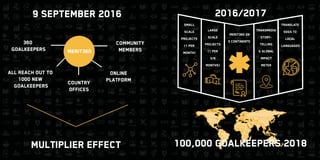
Merit360
100,000 goalkeepers 2018
Small
scale
projects
(1 per
month)
large
scale
projects
(1 per
3/6
months)
merit360 on
5 continents
Transmedia
story-
telling
& global
impact
meter
Translate
sdgs to
local
languages
2016/2017
360
goalkeepers
All reach out to
1000 new
goalkeepers
Country
offices
online
platform
Community
members
multiplier effect
9 september 2016
10 11
Activities and outputs/milestones
World Merit will act as the central hub to coordinate
and host these learning materials, and oversee the
administrative requirements of the project. Each
of the 5 proposed modules will be designed to
exist as both a stand-alone component and an
integrated part of the overall MOOC.
Objectives
Commencing with our launch at the UN on the
9th September 2016, we will develop a course
structure and content ready to launch to site users
and future Merit360 participants by April 2017.
Small Scale Competitions
Outline
Local, small-scale competitions provide targeted
traction and appeal to key audiences to engage
with SDG priorities. Functioning as a low-cost
entry point, the competitions use incentives
and gamification to stimulate initial, and then
maintain, ongoing interest and action from young
changemakers through monthly small-scale
competitions and bi-annual major competitions.
These will be tailored towards specific priority
themes tied to global days/events to leverage
attention and activism on specific SDGs.
The cost burden of these competitions is minimal,
with administrative burdens absorbed into current
work models and prizes subsidised by key
sponsors and stakeholders.
Activities and outputs/milestones
Initial plans include regular visual competitions,
‘A picture says a thousand words’ (utilising
photography relating to development themes
to raise awareness and publicity through a
participatory process) and ‘Design a Graphic’, and
social media campaigns (Tweet advocacy, with
prizes linked to increased profile and presence on
the SDGs).
Objectives
These competitions will promote engagement
with and knowledge of World Merit and the SDGs,
while supporting the development of a supportive
online community of changemakers – including the
participation of 100,000 people in the competitions
within 2 years. These competitions are tailored
towards youth empowerment through utilising
platforms that youth prefer to use.
Overall, these activities will nurture and grow
community mobilisation for the SDGs by
encouraging volunteering and local community
activities.
Outputs and activities
We will create a list of languages and beneficiary
communities to prioritise our efforts. Based upon this,
we will work through the World Merit community to
collaborate with local NGOs and other organisations
who will assist with translation and dissemination of
activities. Finally, the World Merit network and other
collaborators such as the SD Solutions Network will
distribute of translated information to local communities.
Objectives
Crowdsourced translation will increase global
awareness of and actions orientated towards the SDGs
while simultaneously strengthening the World Merit
community of changemakers.
Translating the SDGs
Outline
The language used to discuss the SDGs often restricts
their impact and relevance to local communities. Key
barriers to engagement include failures to translate
goals into local languages and struggles to make
goals seem relevant to everyday experience.
With a community of 120,000 members from 196
countries, World Merit members can play a crucial
role in overcoming these barriers of language and
translation, including into Hindi, Urdu, and Swahili.
Crowdsourcing translation services through World
Merit community members will ensure expanded reach
of the SDGs to local communities across the globe,
and assist in mobilising additional changemakers. To
assist in scaling up these activities, we will build on
existing partnerships with youth organisations such as
AIESEC to expand the pool of volunteer translators
12 13
Working
together to
raise awareness
and create a
lasting impact
COMPONENT
1
15
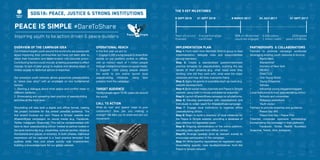
Peace is simple #DareToShare
Inspiring youth to be action driven & peace-builders
Overview of the campaign idea
Our initiative targets youth around the world who are passionate
about improving their communities but have not been able to
direct their frustration and determination into concrete action.
Contributing factors could include: a) feeling powerless to effect
change; b) lack of peer group to explore and develop ideas; c)
limited access to technical advice or expertise.
Our proactive youth network allows grassroots peacebuilders
to “share your story” with an emphasis on two fundamental
factors:
1. Starting a dialogue about what peace and conflict mean in
different contexts.
2. Showcasing and spreading best practice of peacebuilding
activities at the local level.
Storytelling will take both a digital and offline format, making
the project inclusive for the widest possible audience. The
first strand involves our own ‘Peace is Simple’ website and
#DaretoShare campaigns on social media (e.g. Facebook,
Twitter, Instagram, Snapchat). This will be complemented with
face-to-face ‘peacebuilding clinics’ hosted at partner bodies in
the local community (e.g. universities, cultural centres, religious
foundations and places of worship). In both phases, individual
experience will be captured in a ‘best practice template’ that
outlines what, how and where activity was implemented,
building a knowledge bank for our global network.
operational reach
In the first year we aim to:
1. Engage 5,000 young people to share their
stories on our platform (online or offline),
with an indirect reach of 1 million people
through interactions/views on social media.
2. Support 1,000 young people around
the world to join and/or launch local
peacebuilding initiatives, using best
practice from the campaign.
partnerships & collaborations
Partners to promote campaign worldwide
(leveraging existing youth networks & forums):
•	 World Merit
•	 Wanderbrief
•	 Humans of New York
•	 AIESEC
•	 ENACTUS
•	 One Young World
•	 Young Enterprise
•	 Ashoka
•	 Influential young bloggers/vloggers
Local institutions to host ‘peacebuilding clinics’:
•	 Schools and universities
•	 Religious institutions
•	 Youth clubs=
Partners to provide expertise and guidance:
•	 Peace Day 365
•	 Peace One Day / Peace First
Potential corporate sponsors (embedding/
incorporating the campaign in their platform):
•	 Facebook, Twitter, Reddit, Buzzfeed,
Snapchat, Twitch, Vine, Instagram
Implementation plan
Step 1: Form team from Merit360 SDG16 group to lead
implementation; delegate roles and responsibilities
among members.
Step 2: Create a standardised questionnaire/best
practice template for peacebuilders, outlining the key
details of their projects (e.g. what issue were they
tackling; who did they work with; what were the major
obstacles and how did they overcome them).
Step 3: Apply for grants to subsidise start-up costs (e.g.
website development).
Step 4: Build social media channels and Peace is Simple
website, using both in-house and external expertise.
Step 5: Launch #DaretoShare campaign on all platforms.
Step 6: Develop partnerships with organisations and
individuals to widen reach for #DaretoShare campaign.
Step 7: Engage local institutions to organise offline
‘peacebuilding clinics’.
Step 8: Begin to build a directory of local initiatives for
the Peace is Simple website, providing a database of
best practice for registered users.
Step 9: Ongoing administration of the online platform,
including data captured from offline ‘clinics’.
Step10: Arrange speaker slots at relevant events to
encourage participation in the campaign.
Step 11: Write monthly newsletters for registered users,
showcasing specific case studies/initiatives from the
Peace is Simple network.
Team structure
finalised
9 sept 2016 21 Sept 2016
Five partnerships
confirmed
9 march 2017
50% of UN member
countries engaged
21 sept 2017
1000 joined
peace initiatives
24 july 2017
5,000 videos
1 million reach
SDG16: Peace, justice & strong institutions
Target audience
Young people aged 13-30 years old around
the world.
Call to action
What do ‘war’ and ‘peace’ mean to your
community? How are you making a
change? We dare you to share and join our
movement!
the 5 key milestones
16 17
COMPONENT
2
Partnering
with local & global
organisations with
the same mission
18 1918
Eat Better Wa’ik
Local Initiative
Overview
Wa’ik uses educational interventions to promote better
understanding around malnutrition and its causes.
Discussion topics include: access to food, budget
management, appetite and the specific dietary needs of
different age-groups. These programmes enable informed
decision-making, enhancing educational and employment
outcomes, and physical and intellectual development. While
many food security projects focus on rural communities,
Wa’ik targets malnourishment in urban areas. Our ultimate
goal is to improve the health and livelihoods of low- and
middle-income families.
Educational workshops include capacity building on urban
farming (food production), income management on food
(purchase), and nutrition (consumption). Medium/long term
activities will include the empowerment of low-income
women through production and sales of affordable, healthy
food products as a means of income generation.
Reason for Selection
Inspired by the proverb, “Give a man a fish
and you feed him for a day; teach a man
to fish and you feed him for life”, Wa’ik
empowers youth and adults in their nutritional
understanding and decision-making. Wa’ik
adopts a holistic view of reducing hunger,
viewing nutrition as a core component to
break the cycle of poverty and eradicate
hunger.
Working through public schools serving low-
and middle-income families in Guatemala,
Wa’ik provides both nutritious meals and
education materials, with measurable
benefits. By tackling limits to food access and
nutrition-related knowledge and behaviours,
Wa’ik targets the root causes of a multitude
of educational and health-related issues,
including poor academic performance
and lower employment rates. Investing in
tackling malnutrition has significant benefits
for individuals, communities and nations:
each dollar invested in early childhood
nutrition results in $3-worth of educational
and other gains (Glewwe, Jacoby and King,
2001). Furthermore, Wa’ik’s model is easily
replicable and sustainable in many contexts.
Partnerships/collaborations
We will facilitate engagements between
and by youth-led organisations to reduce
food insecurity and malnourishment (both
undernourishment and obesity) through
community/household educational
programmes and interventions, lobbying
policy makers, and the development and
monitoring of relevant national indicators.
Schools and universities will be key
partners for both implementation and
research. Strategic partnerships will be
built with private sector partners in the
food and beverage industry, UN agencies
including the FAO, WFP, WHO, public sector
institutions and civil society organisations
to promote educational interventions and
improved nutrition.
When was it established:
20/08/2015
What fields does it operate?
Nutrition & food security
Key goals:
Help low-income households overcome
nutrition-based poverty traps
+
Collaboration with
WM’s participants
15 nov 2016 15 dec 2016
Establish
National Strategy
15 jan 2017
Establish line
of speakers
15 feb 2017
Received
Professional
Guidelines
THE CHALLENGE TO EMBED
To scale from a national project, Wa’ik needs to expand
its network of youth collaborators within and beyond
Guatemala to increase its reach and impact, both for
grassroots engagements and lobbying capacity. To
realise this, we pursue an “adopt and adapt” strategy to
ensure our work meets local needs.
THE OPPORTUNITY
Malnourishment is a global problem; Wa’ik’s approach in
tackling hunger and malnutrition is globally replicable in
efficient, contextually sensitive ways.
SDG2: zero hunger 15 march 2017
Established
indicator on school
performance
Some quick facts
EatBetterWa’ikisaGuatemalannot-for-profitorganization,
working to tackle malnutrition in low- and middle-income
households. By delivering educational programmes
for young people and their parents, it supports families
to make proactive decisions around diet, food access/
sourcing and budget management; particular emphasis
is placed on early-stage interventions, seeking to counter
common misconceptions around nutrition at a young age.
The ultimate objective is to improve food security, health,
academic attainment, employability and basic human
rights, empowering communities and building resilience
longer-term.
20 2120
Sagar Energy Solutions
Solar Powered Fishing Lamps - Local
Overview
Across East Africa, night fishers use pressurised kerosene
lanterns to attract sardines, posing a serious threat to their
health, waterborne wildlife, and the natural environment.
By promoting the utilisation of solar-charged battery-
operated lamps in place of kerosene lanterns, SES helps
fishermen increase their yield and disposable income
and reduce environmental damage. This in turn promotes
economic growth and resilience within local communities.
The regional fishing industry is integral to local economies,
with established infrastructure and community networks.
Through these connections, SES supports and accelerates
a broader transition to renewable energy solutions, creating
prosperity in a sustainable way.
Reason for Selection
SES encompasses the core values of SDG7
by ensuring access to affordable, reliable, and
modern energy solutions. The organisation
engages with fishing camp-owners and
Beach Management Units, key partners in
facilitating the transition to renewable energy
in Tanzania. Moreover, SES’s cost structure
encourages impact investment and ensures
sustainability going forward.
Transition costs are covered by fishing
camp owners who then levy a small fee
on their customers (local fishermen). This
end-user cost replaces, and is lower than,
current daily expenditure on kerosene
and lamp maintenance. SES thus has a
positive economic benefit for fishers, while
contributing to the sustainable development
of off-grid communities.
Partnerships/collaborations
It is essential for SES to raise seed capital,
and thereby, formalise the collaboration
with the manufacturer, RPD International.
SES will strengthen cooperation with
local administrative bodies in coastal
communities, also known as Beach
Management Units.
By leveraging these existing relationships
and solidifying new ones, we will ensure
a solid distribution network. Furthermore,
by using the World Merit community, SES
will be able to further increase its reach,
enabling scalability as well as much needed
global exposure.
When was it established:
01/10/2014
What fields does it operate?
Affordable and clean energy access
Key goals:
Use renewable energy to improve
sustainability within the fishing industry.
+
UN DAY
9 Sept 2016 1 Nov 2016
Venture capital
from impact
investors
1 Dec 2016
Establish
partnership with
RPD International
1 June 2017
Complete
MVP pilot
THE CHALLENGE TO EMBED
SES tackles a key issue for the fishing industry in Tanzania,
but lacks seed capital to enter the Tanzanian market.
THE OPPORTUNITY
SES requires buy-in from the fishing unions in Tanzania
and seed capital to begin operation, both of which depend
on grassroots engagement (i.e., World Merit community).
SDG7: Affordable and clean energy 1 July 2017
Enter Ugandan and
Kenyan Markets
22 23
COMPONENT
3
Initiating
sustainable
projects for
future generations
24 25
Farmotive
Primary Project
Overview
Over 245 million Indians work in the agricultural sector
(CIA Factbook). These farmers are frequently victims
of exploitation by landlords, trapping them in a vicious
cycle of poverty.
By connecting farmers with unused farmland, Farmotive
provides greater socio-economic independence and
increased dignity. With 39.6% of Indian farmland
currently unused, there is tremendous potential for
empowerment through this approach. Working with
local agricultural training NGOs (e.g. SOSEL) we will
ensure that farmers’ income is increased through
improved farming practices and crop yields.
Utilising existing collaborations with SOSEL, and
agreements with land owners, we will launch out the
round of first agricultural training in November. We
aim to provide a skilled workforce that will convert
unused lands into fertile farmlands in a country where
agriculture is the backbone of the economy.
Operational reach
Our project will take place in rural India, regions
that are home to 67% of the country’s population
(World Bank, 2016). These regions are priorities
for development interventions, as many of those
living in these regions live below the poverty line
(Reserve Bank of India, 2015).
SDG target focus
Poverty is more than a lack of income and
resources to ensure a sustainable livelihood.
Manifestations include hunger, malnutrition,
limited access to education and other basic
services, social discrimination as well as the
lack of participation in decision-making.
What problem is it solving?
This project aims to alleviate poverty through
economic stimulation by stimulating agricultural
employment.
Customer Segments
There are three target customer segments: landlords with unused farmland, unemployed
or low-income farmers, and NGOs that can provide agricultural entrepreneurship skills and
training.
Value propositions
By providing a skilled workforce on unused farmland, we aim to increase agricultural
efficiency through educational interventions, and improvements in distribution chains and
land management practices. Through increased efficiency and agricultural innovation, we
expect to see increased crop yields and higher revenues for farmers of up to 40%.
Customer Relationships
Key relationships will exist between three parties: farm owners, landowners and Farmotive.
Farmotive will deliver training in entrepreneurship to farmers, while mediating partnerships
and ensuring mutual legal and financial accountability throughout the partnership. This
relationship will ensure ethical financial and labour processes are respected by both parties.
Channels
The project is sold through the philosophy that land owners has nothing to lose, instead
something to gain financially. Farmers will benefit from capacity building and skills
development to increase crop yields and small-holding profitability. Delivery of training
courses will be undertaken by local agricultural training centers and SOSEL.
Explained through the business model canvas
Revenue StREams
Farmotive’s share of proceeds will depend on initial investments and increased net
profitability. This income will be used to cover operational, administrative, marketing and
human resource costs. Landlords and farmers receive a proportional share of the additional
net profit. If there has been no increased profit, Farmotive will receive no income.
SDG1: No Poverty
26 27
ROI / Why should you Invest
A percentage of any profit increase is paid to
Farmotive, contributing to a sustainable business
model. Investments in training, equipment and
crop diversification (including biofuel crops) will
result in marked revenue increases for local farmers
and landowners. These outputs will contribute
to the realization of multiple SDGs and a general
improvement in living standards.
ActionPoints/WorldMeritSupport
By utilising the World Merit community and social
media we will spread awareness about the program
to a diverse audience. In particular, the Indian
delegates and country office will help facilitate
partnerships between farmers and the landowners
to help establish the project.
Partner with
NGOs
1 oCt 2016 16 jan 2017
Find potential
landowner partners
16 feb 2017
Recruiting prospective
farmers
15 sept 2017
Successfully linked
farmers with 5
farmlands
Key activities
1. Partnering owners of vacant land with farmers who need upskilling to provide them with job
opportunities.
2. Partnering with NGOs such as SOSEL to train farmers with agricultural skills, which they will
then be able to apply to their crops, bringing in profits for themselves and the landlord. These
profits will then be split accordingly so no one is exploited and all work will occur under a legally
binding contract.
3. Marketing our initiatives to landowners and farmers
Key Partners
NGOs: Non-government organisations will provide agricultural training and expertise
Landowners: Landowners benefit because they get more profit from their now more efficient
farms
Farmers: The unemployed and mistreated farmers will be able to increase their income and live
more sustainable lives from the profit of the crops
Key Resources
The key resources required are mainly farmlands, farmers, crops, the tools necessary for farming
and innovative ideas to keep the crops and yields sustainable over the years. Also required are
training materials, entrepreneurship education, irrigation, pesticides and machinery needed to
grow the crops.
Cost structure
A fraction of the profit from the improved yield will cover overhead costs; operational, agricultural
and entrepreneurship training as well as marketing.
15 march 2017
Partnership
established
28 29
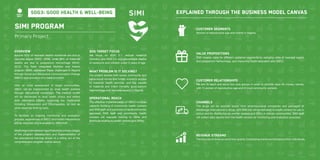
Simi program
Primary Project
Overview
Around 25% of neonatal deaths worldwide are due to
neonatal sepsis (WHO, 2009), while 30% of maternal
deaths are due to postpartum hemorrhage (WHO,
2012). The Safer Integrated Mothers and Infants
program (SIMI) addresses these challenges in Nigeria
through Social and Behavioral Communication Change
(SBCC) and provision of a medical toolkit.
After an initial assessment of target communities,
SBCC will be implemented by local health workers
through educational workshops. The medical toolkit
will be distributed to local health clinics and skilled
birth attendants (SBAs), supplying key medication
including Misoprostol and Chlorhexidine, as well as
other essential birthing tools.
To facilitate an ongoing monitoring and evaluation
process, experiences of SBCC and toolkit interventions
will be recorded and evaluated by SIMI staff.
Medbridge International has initiated the primary stages
of the program (development and implementation of
the educational training) ahead of a rolling out of the
comprehensive program outline above.
Operational reach
The effective implementation of SBCC involves
capacity building of community health workers
and SIMI staff, and a process of rapid community
appraisal. SIMI staff and community health
workers will cascade training to SBAs and
distribute toolkits to health centers and SBAs.
SDG target focus
We focus on SDG 3.1: reduce maternal
mortality, and SDG 3.2: end preventable deaths
of newborns and children under 5 years of age.
What problem is it solving?
Our project tackles both social, community and
behavioural norms that hinder women’s access
to maternal health services, and key causes
of maternal and infant mortality (post-partum
haemorrhage and neonatal sepsis) in Nigeria.
Customer Segments
Women of reproductive age and infants in Nigeria.
Value propositions
SIMI creates value for different customer segments by reducing rates of neonatal sepsis
and postpartum hemorrhage, and improving health education and SBCC.
Customer Relationships
We aim to reach and serve two core groups in order to provide value for money, namely
with 1) women of reproductive age and 2) local community workers.
Channels
The drugs will be sourced locally from pharmaceutical companies and packaged at
Medbridge International in Abuja. 500 SIMI kits will be delivered to health centers for use in
clinics and for distribution to women leaders and SBAs in remote communities. SIMI staff
will collect data reports from the health centers for monitoring and evaluation purposes.
Explained through the business model canvas
Revenue StREams
The sources of revenue come from grants, fundraising events and donations from individuals.
SDG3: Good health & Well-being
30 31
ROI / Why should you Invest
99% of maternal deaths occur in developing
countries, with post-partum hemorrhage a leading
cause of maternal mortality ;and neonatal sepsis
and pneumonia resulting in 1 million neonatal
deaths a year (WHO, 2009). Many of these deaths
are preventable (World Bank, 2015).
Therefore, a program that provides education and
drugs to prevent neonatal sepsis and postpartum
hemorrhage is essential: reduced mortality has
significant human, social and economic benefits
for families, communities and society as a whole.
ActionPoints/WorldMeritSupport
The World Merit platform will be used to spread
awareness of the Safer Integrated Mothers and
Infants (SIMI) program. World Merit can also
connect us with potential investors in order to
fund the program as well as provide networking
opportunities with well-established charities.
Start
6 sept 2016 8 Sept 2016
Initiation
of contact
6 feb 2017
simikit.com website
launch & protokit
6 sept 2017
Feedback
reports analysed
Key activities
The main activities are health education, engaging health workers and distributing toolkits to
pregnant women in under-served communities. Toolkits will be used either during facility-based
birthing via medical professionals or by SBAs in cases of home birthing. One-on-one and group
health education will raise awareness on how to use the toolkits and ways to reduce risk factors
during pregnancy and childbirth. Such education is vital as two-thirds of Nigerian women give
birth at home, contributing to Nigeria’s high maternal mortality rates (ranked 4th worst in the
world for overall maternal mortality, and with 8/1000 mortality rate for home-births) (UNICEF,
2008; World Bank, 2015).
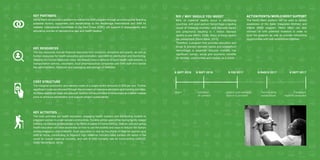
Key Partners
World Merit will provide a platform to market the SIMI program through an online portal directing
potential donors, supporters and beneficiaries to the Medbridge International and SIMI kit
website. International Committee of the Red Cross (ICRC) will support in expandability and
educating women of reproductive age and health leaders.
Key Resources
The key resources include financial resources from investors, donations and grants, as well as
human resources for health education and promotion, and SIMI kit distribution and monitoring.
Meeting the human resources need, we already have a network of local health care workers, a
transportation service, volunteers, local pharmaceutical companies and SIMI staff who handle
the administration, fieldwork and packaging and storage of SIMI kits.
Cost structure
The marginal production and delivery costs of a single toolkit amounts to $28 per box. Further
significant costs are incurred through the provision of intensive education and training activities.
As these additional costs are reduced, toolkits will be provided to consumers at a below-market
price to enhance penetration and support project sustainability.
6 march 2017
Partnership
established
32 33
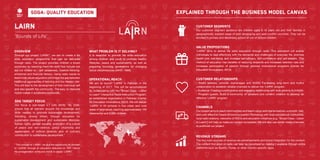
LAIRN
‘Sounds of Life’
Overview
Through our project ‘LAIRN’*, we aim to create a life
skills education programme that can be delivered
through radio. The project provides children a broad
worldview by teaching them life skills that include but
are not limited to - self awareness, creative thinking,
emotional and financial literacy. Using radio waves to
teach kids values education will bridge the gap between
traditional approaches of learning and low literacy rate.
This will lead to the development of their individual self
and also benefit the community. The easy to replicate
model makes it accessible worldwide.
Operational reach
We aim to launch ‘LAIRN’ in Pakistan in the
beginning of 2017. This will be accomplished
by collaborating with the “Broad Class - Listen
to Learn” Interactive Radio Instruction Program,
an established organisation in Pakistan (Center
for Education Innovations, 2012). We will deliver
‘LAIRN’ in 45 schools in five urban and rural
areas of Islamabad, reaching approximately 120
classrooms and 6,000 children.
SDG target focus
Our focus is sub-target 4.7 (UN, 2016): “By 2030,
ensure that all learners acquire the knowledge and
skills needed to promote sustainable development,
including, among others, through education for
sustainable development and sustainable lifestyles,
human rights, gender equality, promotion of a culture
of peace and non-violence, global citizenship and
appreciation of cultural diversity and of culture’s
contribution to sustainable development.”
What problem is it solving?
It is essential to provide life skills education
among children and youth to promote healthy
lifestyles, peace and sustainability, as well as
preparing incoming generations for changing
social circumstances (WHO, 1999).
Customer Segments
Our customer segment audience are children aged 5-18 years old and their families in
geographically isolated areas of both developing and post-conflict countries. They can be
enrolled in primary and secondary school or out-of-school children.
Value propositions
‘LAIRN’ aims to deliver life skills education through radio. This education will enable
individuals to deal effectively with the demands and challenges of everyday life, promote
health and well-being and increase self-efficacy, self-confidence and self-esteem. This
method of education has benefits of reducing dropouts and increases retention rate and
increases participation of parents through planned motivational programs (Center for
Education Innovations, 2012).
Customer Relationships
- Radio stations, schools, orphanages and NGOs: Facilitating long term and fruitful
collaboration to establish reliable channels to deliver the ‘LAIRN’ program.
- Audience: Creating a participative and engaging relationship with both parents & children.
- Program guests: Build a community of speakers and content creators to develop an
effective ‘LAIRN’ program.
Channels
Our project aims to reach communities and teach using radio transmissions: a smooth, fast,
and cost-effective means of communication. Partnering with local educational institutions,
local radio stations, networks of NGOs and education initiatives (e.g. “Broad Class - Listen
to Learn”) will help us make our project accessible. We will also use social media channels
to publicise our project.
Explained through the business model canvas
Revenue StREams
The two main sources of revenue are advertisements and brand integration for the content.
The content first aired on radio can later be monetised by making it available through online
platforms such as Spotify, iTunes, or other country-specific apps.
SDG4: QUALITY EDUCATION
* The concept of ‘LAIRN’: we give the opportunity for children
to ‘LEARN’ through an education delivered on ‘AIR’. Hence
the amalgamation of the two words to create ‘LAIRN’.
34 35
ROI / Why should you Invest
Brands reach a wider audience in rural areas
through this project and fulfil their corporate
social responsibility, alongside making a better
world. Life skills are essential for the promotion
of healthy child and adolescent development,
socialisation, preparing young people for changing
social circumstances. This overall contributes to
basic education, gender equality, democracy, the
promotion of lifelong learning, quality of life and
the promotion of peace.
ActionPoints/WorldMeritSupport
World Merit can support by providing members
and volunteers, aid in compiling radio content,
creating partnerships with podcast authors and
radio education organisations, as well as spreading
awareness of the program through campaigns.
Start
1 oct 2016 1 jan 2017
Set up curriculum &
build partnerships
1 april 2017
Launch
in Pakistan
(6000reach)
1 jan 2018
Expand to India
and Nepal
(1 million reach)
Key activities
Our key activities are formulating a life skills curriculum - based on research provided by WHO,
UNICEF and UNESCO - which can be effectively delivered through radio broadcast. Secondly,
establishing license and partnership agreements with our content providers both local and
global (e.g. country’s experts, TED talks and podcasts). Third, building long term collaborations
with radio stations to make the content accessible. At a later stage, we will also engage with
third party evaluators to assess the impact of the program and its reach in communities of our
target area.
Key Partners
The key partners are UN agencies, educational institutions, government bodies, educational
boards, corporate foundations, artists/collaborators and local youth activists working in the
field of education. To expand the program online, our project aims to partner with digital media
content providers.
Key Resources
Our key resources include educational institutions, existing effective life skills curricula, local/
regional radio stations, skilled human resources, along with network and global partnerships
with content providers. We aim to use an existing database of tested technology of radio and
available content in specific areas of life skills.
Cost structure
The cost structure is divided into two blocks: infrastructure and human resources. Infrastructure
costs in the initial phase include a hot desk and stationery in Pakistan. The human resources we
require are a lawyer, accountant, translator, audio editor and content creator. These demands
will be fulfilled through partnerships with corporate entities and individual donors. We are also
seeking sponsorships through brand integration.
1 jan 2018
Double the content
of the program
36 37
keeper
Primary Project
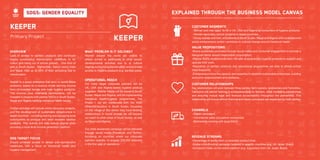
Overview
Lack of access to sanitary products and continued
stigma surrounding menstruation contribute to 62
million girls being out of school globally. . One third of
girls in South Sudan, Afghanistan, Sierra Leone, India
and Nepal miss up to 25% of their schooling due to
menstruation.
Keeper is a social enterprise that aims to tackle these
problems, based on a revenue model deriving income
from co-branded female and male hygiene products.
This income, plus charitable contributions, will be
invested in projects with partner NGOs in South Sudan,
Nepal and Nigeria tackling menstrual health issues.
Further activities will include online advocacy projects,
and the development of sustainable infrastructure in
target countries – including training and equipping local
communities to produce and retail reusable sanitary
products. This activity will help reduce stigma while
providing a local-level income generation platform.
Operational reach
Our initial target corporate partners will be
UK, USA and Nigeria-based hygiene product
suppliers. Partner NGOs will be based in South
Sudan, Nepal and Nigeria, and be implementing
menstrual health/hygiene programmes. For
Phase 1 we will collaborate with the NGO
#Stand4Education in South Sudan, focussing
on the village of Bor where they have existing
relationships. In future phases we will expand
our reach to other areas of South Sudan, as well
as Nepal and Nigeria.
Our initial awareness campaign will be delivered
through social media (Facebook and Twitter),
focussing on countries where our corporate
partners operate, to engage 250,000 followers
in the first year of operations.
SDG target focus
Ensure universal access to sexual and reproductive
healthcare, with a focus on menstrual health and
hygiene management.
What problem is it solving?
Women around the world are unable to
attend school or participate in other social/
developmental activities due to a) cultural
stigmas surrounding menstruation and b) limited
access to hygiene products (e.g. sanitary pads)
Customer Segments
- Women and men aged 18-50 in UK, USA and Nigeria as consumers of hygiene products.
- Female secondary school students in target countries.
- Young women and men, and parents in South Sudan, Nepal and Nigeria who could become
social entrepreneurs and/or contribute to cultural change around menstrual health.
Value propositions
-Brand awareness promoted through social media and consumer engagement to provide a
feel-good factor around responsible consumption.
-Partner NGOs receive funds from the sale of co-branded hygiene products to support and
upscale their work.
-Recipients of sanitary products and educational programmes are able to attend school
more frequently.
-Entrepreneurs have the capacity and expertise to establish sustainable enterprises, building
economic empowerment and resilience.
Customer Relationships
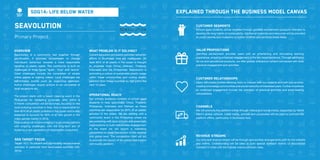
Key relationships will exist between three parties: farm owners, landowners and Farmotive.
Farmotive will deliver training in entrepreneurship to farmers, while mediating partnerships
and ensuring mutual legal and financial accountability throughout the partnership. This
relationship will ensure ethical financial and labour processes are respected by both parties.
Channels
- Digital campaigns
- Commercial sales (via partner companies)
- Partnership working with local NGOs
Explained through the business model canvas
Revenue StREams
-Percentage of profits from co-branded product lines.
-Online crowdfunding campaign targeted to specific countries (e.g. UK, Israel, Brazil).
-Donations made via the online platform (e.g. supporters from UK, Israel, Brazil).
SDG5: Gender Equality
38 39
ROI / Why should you Invest
Wewouldseektoattractinvestorsalreadyoperating
in this field; for example, feminine care and hygiene
companies who would a) expand their customer
base and increase sales through advertising on our
platforms; b) generate reputational value through
association.
ActionPoints/WorldMeritSupport
World Merit is a global network spanning 85+
countries – as such it offers a unique opportunity
to:
1) Seek guidance from Country Offices on the
best NGOs to support/collaborate with, taking into
account our long-term vision.
2) Leverage community members’ networks to
share our social media campaign, and support the
cause more broadly.
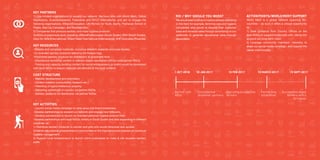
Partner with
NGOs
1 oCt 2016 16 jan 2017
Find potential
landowner partners
16 feb 2017
Recruiting prospective
farmers
15 sept 2017
Successfully linked
farmers with 5
farmlands
Key activities
- Launch social media campaign to raise issue and brand awareness.
-Develop partnerships to expand our network and engage new followers.
- Develop partnerships to launch co-branded personal hygiene product lines.
-Develop partnerships with local NGOs, initially in South Sudan and later expanding to different
countries, to:
1) Distribute sanitary products to women and girls who would otherwise lack access;
2) Deliver educational programmes to communities on the importance and process of menstrual
hygiene management;
3) Support local entrepreneurs to launch micro-businesses to make & sell reusable sanitary
pads.
Key Partners
1) Like-minded organisations to expand our network. We have links with World Merit, Global
Resolutions, #Letsfaceitperiod, Firebrands and NFCC International, and aim to engage the
following organisations: #Stand4Education, UN Women for Youth, Sayfty, Peshawar School of
Peace, Man Up Campaign, and NextGen Men.
2) Companies that produce sanitary and male hygiene products.
3) NGOs at grassroots level, including: #StandForEducation (South Sudan), SNV (South Sudan),
Days for Girls (International), Direct Relief International (International), SHE Innovates (Rwanda).
Key Resources
-Website and campaign materials, including research materials and case studies.
-Co-branded sanitary products featuring the Keeper logo.
-Purchased sanitary products for distribution at grassroots level.
- Educational workshop content in relevant dialect developed with/by local partner NGOs.
- Training and capacity-building content for social entrepreneurs (a toolkit would be developed
with local NGOs to ensure materials are relevant to the local context).
Cost structure
- Website development and promotion.
- Content creation (consultancy, research etc.).
- Patenting of logos/intellectual property.
- Delivering workshops in-country via partner NGOs.
- Sanitary products for distribution via partner NGOs.
15 march 2017
Partnership
established
40 41
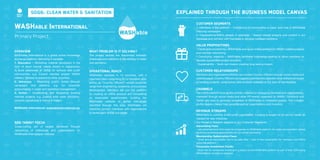
Overview
WASHable International is a global online knowledge
exchange platform, delivering 3 services:
1. Education – Workshop material developed in the
form of short tutorial videos shown in classrooms,
to build awareness of SDG6 for schools and youth
communities. e.g. Current member project ‘WASH
Literacy’ (Serbia) to expand to other countries.
2. Advocacy – Mobilising public action through
campaigns and petitions, e.g. for corporate
accountability in water and sanitation management.
3. Action – Accelerating and incubating existing
member projects. e.g. JuaMaji solar water distillation,
currently operational in Kenya & Malawi.
WASHable International: washableinternational.org
WASHable International
Primary Project
Operational reach
WASHable operates in 13 countries, with a
volunteer base comprising 22 co-founders (also
acting as “Country Officers”) whose expertise
range from engineering, academia, and business
development. Members will join the platform
by creating an online account and completing
an associated questionnaire, building the
WASHable network of skilled individuals
identified through this data. WASHable will
therefore connect members with organisations
to tackle each SDG6 sub-target.
SDG target focus
Cross-cutting set of targets (achieved through
networking of individuals and organisations on
WASHable International website).
What problem is it solving?
The project tackles the disconnect between
challenges and solutions in the delivery of water
and sanitation.
Customer Segments
1. Members of the platform – Connecting to communities in need, and help in WASHable
lobbying campaigns
2. Organisations/NGOs already in operation – Search related projects and content in our
database and connect with members to develop localised solutions.
Value propositions
• Clarity and connectivity – WASHable acts as an online platform for WASH-related projects
and member networking.
• Community creativity – WASHable facilitates knowledge-sharing to allow members to
develop sustainable project solutions.
• Sustainability – Youth-led mission creating long-lasting impact.
Customer Relationships
Members and organisations/NGOs can contact Country Officers through social media and
website pages. Country Officers can suggest potential links between other skilled individuals
or existing projects, using survey data analysis obtained at the start of membership.
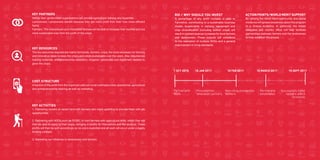
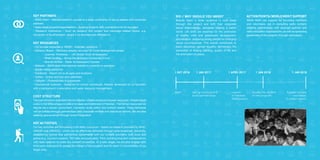
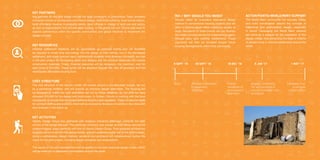
Channels
The online platform acts as the primary channel for engaging members and organisations,
marketed through social media and other PR events organised by WASH. Facebook and
Twitter are used to generate awareness of WASHable to interested parties. The LinkedIn
profile targets interest from possible partner organisations and investors.
Explained through the business model canvas
Revenue StREams
WASHable is currently a non-profit organisation. Funding is sought on an ad-hoc basis, as
needed for new initiatives.
Our Revenue Streams respond to our Customer Segments:
Advertising Fees:
• Job advertisements from external companies on WASHable platform: for water and sanitation related
positions, increasing opportunities for our online community
Membership Subscription Fees:
• Small annual subscription fee to be paid after 1 year of free subscription for members and NGOs
using the platform.
Corporate Investment Funds:
• Static fee for companies investing in a project on the WASHable platform as part of their CSR (using
WASHable to connect to projects).
SDG6: clean water & sanitation
42 43
ROI / Why should you Invest
Brands reach a wider audience in rural areas
through this project and fulfil their corporate
social responsibility, alongside making a better
world. Life skills are essential for the promotion
of healthy child and adolescent development,
socialisation, preparing young people for changing
social circumstances. This overall contributes to
basic education, gender equality, democracy, the
promotion of lifelong learning, quality of life and
the promotion of peace.
ActionPoints/WorldMeritSupport
World Merit can support by providing members
and volunteers, aid in compiling radio content,
creating partnerships with podcast authors and
radio education organisations, as well as spreading
awareness of the program through campaigns.
Start
1 okt 2016 1 jan 2017
Set up curriculum &
build partnerships
1 april 2017
Launch
in Pakistan
(6000reach)
1 jan 2018
Expand to India
and Nepal
(1 million reach)
Key activities
Our key activities are formulating a life skills curriculum - based on research provided by WHO,
UNICEF and UNESCO - which can be effectively delivered through radio broadcast. Secondly,
establishing license and partnership agreements with our content providers both local and
global (e.g. country’s experts, TED talks and podcasts). Third, building long term collaborations
with radio stations to make the content accessible. At a later stage, we will also engage with
third party evaluators to assess the impact of the program and its reach in communities of our
target area.
Key Partners
• World Merit – Website/platform; access to a large community of young leaders and corporate
partners.
• Associated projects/organisations – Existing projects with connections to co-founders.
• Research institutions – Such as research into project and campaign-related topics. e.g.
University of Southampton, where 5 co-founders are affiliated to.
Key Resources
• Co-founder expertise in WASH - Voluntary positions
• Advisory Board – Members already recruited for initial development phase
	 • Joannes Yimbesalu – UN Global Youth Ambassador	
	 • Rhett Godfrey – Boma Social Impact Investment Fund
	 • Brenda McKee - Water Ambassadors Canada
• Website – WASHable International website is currently in operation
• Social media platforms:
• Facebook - Reach out to all ages and locations
• Twitter - Online activists and celebrities
• LinkedIn - Professionals & businesses
• Educational materials - Designed for school workshops. Already developed by co-founders
with a background in education and water resource management.
Cost structure
The cost structure is divided into two blocks: infrastructure and human resources. Infrastructure
costs in the initial phase include a hot desk and stationery in Pakistan. The human resources we
require are a lawyer, accountant, translator, audio editor and content creator. These demands
will be fulfilled through partnerships with corporate entities and individual donors. We are also
seeking sponsorships through brand integration.
1 jan 2018
Double the content
of the program
44 45
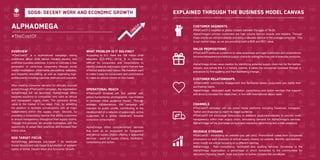
AlphaOmega
#TheCostOf
Overview
“#TheCostOf” is a multinational campaign raising
awareness about child labour, modern slavery, and
unethical business practices. It aims to cultivate a new
generation of conscious consumers through social
media mobilisation, informative educational websites,
and impactful storytelling, as well as organising high-
profile events including marches, festivals and concerts.
After creating consumer demand for ethically sourced
goods through #TheCostOf campaign, the organisation
AlphaOmega will be launched. AlphaOmega offers
bespoke solutions to companies who want an ethical
and transparent supply chain. The company drives
value to the market in two ways. First, by providing
the platform to facilitate conversations with all major
stakeholders within the supply chain. Second, by
providing a consultancy service that allows customers
to ensure transparency throughout their supply chains.
Through this process, we provide businesses with the
opportunity to adopt best practices and increase their
brand value.
Operational reach
#TheCostOf initiative will first partner with
global humanitarian photographer, Lisa Kristine
to increase initial audience impact. Through
strategic collaborations, the campaign will
maintain its public profile, contributing to the
development of a network of passionate, active
supporters of a global movement towards
conscious consumption.
AlphaOmega offers complementary services
that work as an ecosystem for transparent
and ethical supply chains offering 4 sequential
services – audit (of supply chains), facilitation,
consultancy and action.
SDG target focus
AlphaOmega addresses sub-target 7 (to eradicate
forced labour) and sub-target 8 (protection of workers’
rights) of SDG8, Decent Work and Economic Growth.
What problem is it solving?
According to ILO, there are 168 million child
labourers (ILO-IPEC, 2013). It is, however,
difficult for consumers and corporations to
identify products and supply chains that are free
of forced and bonded labour. We therefore want
to make it easy for consumers and corporations
to make an ethical choice on this matter.
Customer Segments
#TheCostOf is targeted at global citizens between the ages of 18-30.
AlphaOmega’s primary customers are high volume fashion brands and retailers. Through
these clients we will be indirectly providing a valuable service to the average consumer. This
is our market edge, as we are providing both a B2B and B2C value.
Value propositions
#TheCostOf works as a platform to raise awareness amongst customers and corporations
for more transparent and ethical supply chains by stating the true cost of everyday products.
AlphaOmega drives value creation by identifying potential supply chain risk for the fashion
industry and solves this in a holistic manner. It takes the concerned business through a
procedure by first auditing and then facilitating change.
Customer Relationships
#TheCostOf- community engagement and facilitation where consumers can clarify their
purchasing habits.
AlphaOmega - dedicated audit, facilitation, consultancy and action services that support
and drive to increase the value chain, in line with International labour laws.
Channels
#TheCostOf campaign will use social media platforms including Facebook, Instagram,
Twitter and Snapchat to reach its target audience.
#TheCostOf will encourage consumers to pressure producers/retailers to provide more
transparency within their supply chain, stimulating demand for AlphaOmega’s services.
AlphaOmega will be promoted via business networks, advertising and a web-presence.
Explained through the business model canvas
Revenue StREams
#TheCostOf - Advertising on website (pay per click). Promotional codes from companies
(champions on best practices of ethical supply chains) via website. Monthly sponsorship -
every month we will be focusing on a different hashtag
AlphaOmega - Paid consultancy, facilitation and auditing services. Donations to the
AlphaOmega organization, a percentage of which forwarded to the communities for
education, housing, health, food and water to further increase the conditions
SDG8: decent work and economic growth
46 47
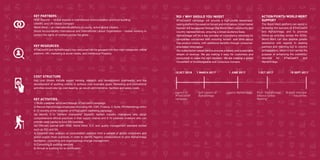
ROI / Why should you Invest
#TheCostOf campaign will provide a high-profile awareness-
raising platform focussed on forced and child labour. Initial market
traction will be secured through the World Merit community and
country representatives, ensuring a broad audience base.
AlphaOmega will be a key provider of consultancy solutions for
companies concerned with ensuring forced- and child-labour
free product chains, with additional benefits through consumer-
orientated information.
Our subscription based service ensures a steady and sustainable
stream of revenue. We are making it easy for customers and
consumers to make the right decision. We are creating a global
movement of knowledgeable and conscious humans.
Action Points/World Merit
Support
The World Merit platform can assist in
reviewing the success of #TheCostOf
and AlphaOmega, and to promote
follow-up activities across the SDGs.
World Merit can also provide greater
assistance with regards to seeking
partners and reaching out to country
ambassadors, which in turn serves the
purpose of enhancing the credibility/
demand for #TheCostOf and
AlphaOmega.
Launch of
#TheCostOf
campaign
15 oCt 2016 1 march 2017
Soft Launch of
AlphaOmega
1 June 2017
Launch AlphaOmega
15 sept 2017
Branch into new
industries
Key activities
1) Build customer sentiment through #TheCostOf campaign.
2) Recruit AlphaOmega employees (Including HR, CSR, Finance, C-Suite, PR/Marketing) within
6-12 months of the inception of #TheCostOf marketing campaign
3a) Identify 5-10 ‘content champions’ (Specific fashion industry champions who adopt
comprehensive ethical practices in their supply chains) and 5-10 potential investors who can
provide seed capital to fund the business.
3b) Officially partner with RISE, World Merit, ILO, and quality management standard bodies
such as ISO and SA.
4) Establish data analysis on consumption patterns from a sample of global consumers and
global supply chain practices, in order to identify flagship collaborations to pilot AlphaOmega
facilitation, consulting and organisational change management.
5) Consulting & auditing services.
6) Annual re-auditing for re-certification.
Key Partners
RISE Beyond -- Global experts in international communication and trust building.
UNHRC and UN Global Compact.
World Merit -- an international platform of young, active global citizens.
Social Accountability International and International Labour Organisation – bodies working to
protect the rights of workers across the globe
Key Resources
#TheCostOf and AlphaOmega’s key resources can be grouped into four main categories: online
platform, HR, marketing & social media, and Intellectual Property.
Cost structure
Key cost drivers include expert training, research and development overheards, and the
development of auditing criteria to achieve core business goals. Marketing and promotional
activities would also be cost-bearing, as would administrative, facilities and salary costs.
1 oct 2017
First “AlphaOmega
Alliance Global
Meeting”
48 49
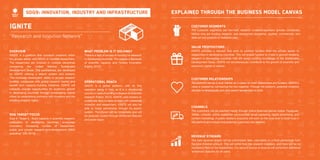
Ignite
“Research and Innovtion Network”
Overview
IGNITE is a platform that connects investors within
the private sector and NGOs to credible researchers.
The researchers are involved in multiple disciplines
concerning the United Nations Sustainable
Development Goals. The partnerships are developed
by IGNITE utilising a search system and brokers.
This increases researchers’ ability to access research
funding, collaborate with global research teams, and
benefit from capacity-building initiatives. IGNITE will
indirectly provide opportunities for economic growth
in developing countries through encouraging capital
inflow by establishing contracts with investors and the
entailing property rights.
Operational reach
IGNITE is a global platform, with its first
operation being in Iraq, as it is a developing
country in need of funding to finance its scientific
research (Fakhir, 2012). IGNITE uses brokers to
coordinate face-to-face contact with interested
investors and researchers. IGNITE will also be
able to foster partnership through its search
system. The impact will be immediate, and will
be gradually scaled through enhanced features
and wider reach.
SDG target focus
Goal 9 “Target 5 - Build capacity in scientific research,
particularly in developing countries, encourage
innovation, increasing number of researchers,
public and private research-and-development (R&D)
spending” (UN, 2016).
What problem is it solving?
There is a lack of access to funding for research
in developing countries. This causes a decrease
of scientific capacity and hinders innovation
(Fakhir, 2012).
Customer Segments
The customer segments are two-fold; research investors/sponsors (private companies,
NGOs) who are funding research, and researchers (academic, applied, commercial), who
seek ad-hoc projects or freelance jobs.
Value propositions
IGNITE provides a network that aims to connect funders from the private sector to
researchers in developing countries. This will enable funders to invest in ground-breaking
research in developing countries that will enrich existing knowledge of the Sustainable
Development Goals. IGNITE will simultaneously contribute to the growth of scientific and
economic capital of nations.
Customer Relationships
The platform serves a dual market as it caters for both researchers and funders. IGNITE’s
value is created by connecting the two together. Through the platform, potential investors
are able to strategically sort and search researchers to fund.
Channels
The customers will be reached mainly through online channels (social media: Facebook,
Twitter, LinkedIn; online researcher communities; email marketing, digital advertising, and
content marketing). A public relations executive will work on the local level to build trust in
the platform and ensure that potential customers are reached.
Explained through the business model canvas
Revenue StREams
The main revenue stream will be commission fees, calculated on a fixed percentage from
the total invested amount. This will come from the research investors, and there will be no
mandatory fees for the researchers. Our second source of revenue will come from additional
‘enhanced’ features for all users.
SDG9: Innovation, industry and infrastructure
50 51
ROI / Why should you Invest
Local and international enterprises and universities
are willing to invest in the development of our
platform as it will allow them to gain a foothold
in this market and secure a strong academic or
innovation-driven reputation for the sponsoring
organisation.
These institutions will gain easier access to
outside researchers, allowing to foster innovation
outpacing competitors (Tarver, 2015).
ActionPoints/WorldMeritSupport
Providing access to a global community of
interested members.
- Access to commercial partnerships via World
Merit’s network.
- Spreading awareness of the platform via
personal networks, social media, and professional
connections.
- Access to market research participants via WM
community to help with prototyping and testing.
- Access to the intellectual capability of the World
Merit members.
Research phase
begins
1 oCt 2016 1 Feb 2017
Research phase
begins
1 April 2017
Develop and test
prototype
1 nov 2017
Launch of IGNITE
Platform
Key activities
Partnering with investors and researchers to develop a platform that aids in connecting both
parties with ease. Once rapid prototyping and a beta version has been released and tested,
we plan to expand the marketing team to bring in more users (investors and researchers) and
develop and maintain the network. We will also focus on drafting legal documentation to monitor
partnerships. A system of evaluation of researchers and potential investors on the platform will
be built in into the platform, to monitor the quality and effectiveness of the connections.
Key Partners
Initially the platform will operate on a transactional business model. Partners will be universities
and researchers in developing countries and, private, local, and international companies. These
will vary from country to country and will be refined during our test phases.
Key Resources
For the platform to be developed, operated, maintained and scaled, we will require the following
resources:
- Local researchers in developing countries
- A digital online platform
- Financial resources include initial investment and working capital
- Human resources include coordinators and brokers, community manager, technical developers
and supporters (for the online platform), and a sales team.
Cost structure
The project has the following costs:
Fixed Costs: Initial investment includes costs for platform development.
Recurring costs: Hosting and maintenance costs of the platform, as well as salaries to the sales
team.
Variable costs: Cost of setting up more host servers and expanding the scope of the website
based on the traffic we receive.
Launch of pilot
platform
1 Aug 2017
52 53
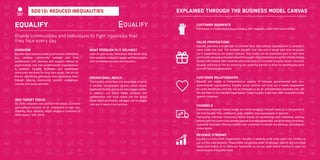
Equalify
Enable communities and individuals to fight injustices that
they face every day.
Overview
Equalify rents space in existing community institutions
(e.g. libraries, community centres) and links
beneficiaries with services and support offered by
governmental and non-governmental organisations.
In addition, Equalify facilitates and accelerates
community solutions for long term equity. We will do
this by identifying grievances and addressing them
through offering community specific workshops,
courses and social activities.
Operational reach
The Equalify pilots have the advantage of being
in socially recognisable spaces which ensure
significant footfall during our pilot project phase.
In addition, our social media outreach and
collaboration with local media and the global
World Merit community will reach out to people
who are in need of our services.
SDG target focus
By 2030, empower and promote the social, economic
and political inclusion of all, irrespective of age, sex,
disability, race, ethnicity, origin, religion or economic or
other status.’ (UN, 2016)
What problem is it solving?
Lack of community institutions that tackle long
term systemic inequality issues and links people
with immediate services and solutions.
Customer Segments
Individuals or marginalised groups dealing with inequality within their communities.
Value propositions
Equalify provides a single hub to connect local and national organisations to people in
need under one roof. The smallest Equalify Hub has only a single part time employee
but is supported by our global network. This model can be expanded upon to add more
community services and scaled around the world. Organisations such as the Citizens Advice
Bureau (UK) already offer impartial advice services on a number of equity issues. However,
Equalify will build on this by removing any potential barriers to entry for beneficiaries such
as multi-layered bureaucracy.
Customer Relationships
Equalify will create a comprehensive registry of relevant governmental and non-
governmental organisations. Equalify social workers will carry out a needs assessment
on every beneficiary and this will be followed up by an administration assistant who will
link the them to the relevant organisation. Large Equalify Hubs may offer more community
specific initiatives.
Channels
Awareness channels: Social media; an online campaign that will build up to the launch of
the first Equalify Hub; community radio stations; free newspapers or journals.
Partnership channels: Contacting NGOs directly for partnerships and marketing; working
directly with the community centres/spaces to create awareness; social workers; investors.
Customer channels: Working directly with customers to deliver the services; providing an
online option.
Explained through the business model canvas
Revenue StREams
Equalify is a Non-Profit Organisation. Equalify is seeking small scale seed corn funding to
run our two pilot projects. These pilots will provide proof of concept, identify any structural
issues and enable us to refine our framework so we can seek further funding to open our
second wave of Equalify Hubs.
SDG10: reduced inequalities
54 55
ROI / Why should you Invest
Equalify fills a gap in the market by providing
beneficiaries with short term links with services
whilst enabling communities to tackle long term
inequality issues. Our model is affordable and
scalable and has the potential to grow into a
globally recognisable brand for fighting inequality.
We are able to serve as an outreach and solve
individual local problems and connect people to
solutions whilst maintaining low costs.
ActionPoints/WorldMeritSupport
World Merit can support Equalify through
connections to investors, corporates, NGOs, and
individuals to support our project. World Merit as
a mentor would help us transform our pilots into
a global brand through their knowledge, network
and feedback. World Merit’s youth community
could contribute as researchers and volunteers.
Start
7 sept ‘16 10 jan ‘17
Launch website and
all social media
12 jan ‘17
Hire social
workers for both
pilot projects
6 jan ‘18
Launch two pilot
Equalify Hubs in
Birmingham and
Algeria
Key activities
Our pilot Hubs will provide two simple services. Firstly, our social worker will assess beneficiaries
and work with the administration assistant to connect individuals to the relevant help. Secondly,
Equalify will run community gathering initiatives to begin the process of building sustainable
solutions to addressing inequity within the local context. As we become more aware of the
needs of our community these initiatives can be specifically tailored to their requirements.
Equalify’s two strand approach will set us apart from existing organisations and provide the
framework which can be scaled to locations around the globe.
- Measurement and KPIs
- Business strategy including scaling and growth opportunities
Key Partners
- Impact Hub (Birmingham, UK) and Salle Bouali (Tlemcen, Algeria)
- Local service-providers and NGOs directly addressing inequalities.
- Impact 2030 Conference member companies for professional volunteer HR and possible
funding
- Organizations with similar initiatives e.g. Action Connected
Key Resources
Community Spaces: Birmingham Impact Hub will provide us with a space. In Algeria, the
space has been donated by Salle Bouali.
Employees/volunteers: The pilots will run with one part-time social worker and a volunteer
administration assistant and supported by all co-founders.
NGO Partnerships: For database creation
Finances: Initial seed funding and in Algeria partnerships with three organisations.
Cost structure
Birmingham, UK June-August 2017, Impact Hub membership: £50 (this covers insurance on
the space), Impact Hub space rental: £1200, 8hrs/week Social Worker salary: £3000, Marketing
and Advertising: £1000, Miscellaneous: £1000
Tlemcen, Algeria June-August 2017, Salle Bouali Hall: Free, 8hrs/week Social Worker salary:
£3000, Marketing and Advertising: £1000, Miscellaneous: £1000
Total Cost (for 3 month pilot) £11,050
5 jan ‘18
Partner with local NGO
and governmental
organisations to
secure support
56 57
UBUntu design group
Primary project
Overview
Ubuntu is a transferable design process that enables
communities to engage in participatory design and
decision making for upgrading informal settlements.
Unlike many current upgrading programs which
fail to adequately consider recipient communities’
perspectives and cultural norms, the Ubuntu concept
provides a client focused, participatory design
framework. Developing house solutions within existing
communities ensures residents are able to remain in
their communities and have their housing needs met.
Through developing bespoke interventions, Ubuntu
is able to provide affordable housing in keeping with
relevant government subsidies.
Beginning with a pilot project currently underway in
Durban, South Africa, the Ubuntu design process will
be refined and shared with partners globally in an
‘adopt and adapt’ model.
Ubuntu is a Zulu word meaning “I am, because we
are”; this value is the driving force behind the mission
of Ubuntu Design Group and its vision of shaping
the future of independent, innovative and holistic
community-oriented design.
Operational reach
Ubuntu Design Group’s pilot project is working
with one family in Umbumbulu Town, Durban,
South Africa. Once completed, the design
process will be reviewed and scaled, initially
within this community of 4,000 people. The
design framework will then be adapted to
different communities on a global scale.
SDG target focus
Ubuntu Design Group is positioned to ensure
access to adequate, safe and affordable housing
and basic services for all by 2030, the first target
of SDG 11.
What problem is it solving?
The Ubuntu Design Group seeks to upgrade
informal housing whilst solving disconnections
between residents and current resettlement
programs and converting informal settlements
into recognised, formal settlements.
Customer Segments
Informal settlements engaged by this project will serve as our primary customers, along
with national and city governmental agencies that choose to implement this holistic design
methodology for social housing projects.
Value propositions
Ubuntu Design Group’s primary selling point is its client based approach, which allows the
community to lead the design process and gives a greater sense of ownership than other
participatory design models. Our model is based upon the redevelopment of land within
existing community settlements to upgrade living conditions, thereby avoiding forced
removal or relocation. Additionally, the design model allows for planned home expansion
to accommodate changing household demographics. Ubuntu creates a unique structure
for designing settlements to be more culturally sensitive, sustainable, and resilient.
Customer Relationships
Initial partnerships will be made with global initiatives, both governmental and non-
governmental, that are working to upgrade informal settlements. From this base, Ubuntu’s
customer model will function in the same way as an architecture firm: low-income
households will be approached as clients, who lead the design process to ensure their
housing will be useful and meaningful to the community
Channels
Ubuntu Design Group will conduct a research study and evaluation of the process with
Andrews University (Michigan, USA), to monitor the success of the design model and set
an example for other initiatives around the world. In addition to this, Ubuntu will use value-
aligned organizational platforms, such as World Merit, The Resolution Project, and One
Young World, to recruit a network of advocates, supporters, communities and distributors
of their concept to bring awareness of it to other initiatives globally.
Explained through the business model canvas
Revenue StREams
Andrews University has recently granted $10,000 for the setup of the initial pilot home
in Durban, South Africa. Future revenue streams include international clients, local
governments, charitable foundations, donations from partner organizations, corporate
sponsorship, and the social enterprise wing of the design concept, which includes
consulting interested communities on socially sustainable design.
SDG11: Sustainable cities and communities
58 59
ROI / Why should you Invest
Ubuntu offers an innovative alternative design
method to conventional housing projects and will
allow a positive ripple effect improving society at
large. Recipients of these homes will pay forward
the initial cost incurred by the implementing agent,
through labor and monthly installments. These
payments will then be funneled toward future
housing developments within their community.
ActionPoints/WorldMeritSupport
The World Merit community will educate, lobby,
and build conversation around the concept of
intentional and participatory design, especially
in slums. Leveraging the World Merit network
will serve as a catalyst for the expansion of this
design model, thus enhancing the lives of millions
of people living in informal settlements around the
world.
Start
9 sept ‘16 20 sept ‘16
Activate Community
Engagement
Strategy
18 dec ‘16
Publish
handbook of
processes &
approach
1 may ‘17
Complete first
prototype
construction
Key activities
Ubuntu Design Group has partnered with Andrews University (Michigan, USA) for the pilot
roll-out of the design concept. This particular university was chosen as their ethos, serving the
underprivileged, aligns perfectly with that of Ubuntu Design Group. Post-graduate architecture
students are involved with the design model, and will undertake a site visit to the pilot location.
Using a participatory design method, residents and architects will collaboratively outline the
vision for the pilot project, including design principles and expectations.
The results of this pilot development will be applied to the best practices design model, which
will be rolled out to interested communities around the world.
Key Partners
Key partners for the pilot phase include the local community in Umbumbulu Town, Andrews
University School of Architecture and Interior Design, local tribal authority, local school district,
local affordable housing municipality sector, local officials in charge of land use and policy,
as well as organizations that provide seed funding. In the global roll-out, Ubuntu will need to
expand partnerships within the specific communities and global initiatives to implement the
design concept.
Key Resources
Informal settlement residents will be approached as potential clients and will therefore
be required to invest time and energy into the design of their homes, live in the developed
settlement, and share relevant input. Architectural students from Andrews University are vital
in the pilot project for developing plans and designs and the physical resources will include
construction materials. Finally, financial resources will be necessary; the maximum cost for
each build is $10,000. These funds will be acquired through the help of sponsors and the
municipality affordable housing fund.
Cost structure
The cost structure of the Ubuntu model will revolve around a pre-allocated budget, set out
by a partnering initiative, and will provide an inclusive design alternative. The housing will
be designed to match the cost estimation set out by these initiatives: for the pilot we have
allocated $10,000 for the design and build-costs. In Durban, Ubuntu is working with the local
municipality to ensure that the project adheres to policy and regulation. There will also be costs
for contract staffing and publicity which will be covered by Andrews University in the initial pilot
and reviewed in the follow up.
5 jan ‘17
Engage community
for partnerships &
recruit volunteers for
prototype
60 61
Twelve
What are you wasting for?
Overview
Twelve is a one off or limited series box service which
provides consumers with convenient zero-waste
alternatives to everyday products. All products will last
for several years, representing a financial cost saving
for consumers as well as reducing their environmental
footprint. The box will also focus on changing attitudes
towards having less and experiencing more, including
facts and tips on sustainable lifestyles, fun challenges
and experiences for the consumer. In the long-term
there will be an option to sponsor a box for people in
developing countries.
Operational reach
Launch in Europe with hubs in UK, France,
Netherlands, Sweden, Spain and Germany.
Medium term expansion to Australia and
potentially the US. Long term, we aim to
create a ‘sponsor a box’ program for people in
developing countries, though the content of the
box may change to meet local need.
SDG target focus
By 2030, reduce waste generation through prevention,
reduction and reuse (SDG 12.5), and ensure that
people have information and awareness for lifestyles
that in harmony with nature (SDG ¬12.8) (UN, 2016).
What problem is it solving?
Europeans produce on average 500kg of
household waste annually (World Economic
Forum, 2016). Throwaway items are the norm
and living sustainably can be seen as confusing.
Customer Segments
Women drive 70-80% of consumer purchasing (Brennan, 2015) thus targeting them first
can lead to more sustainable choices on a wider scale. Ultimately we aim at reaching both
genders.
Value propositions
- Financial - reusable items allow money savings; consumers go through a questionnaire to
only receive products relevant to them.
- Health / Lifestyle - reusable alternatives are often more efficient and healthier than
disposables. Behaviour change prioritising experience over materialism.
- Environmental - waste reduction; awareness on sustainable lifestyles.
Customer Relationships
Providing easy access to zero waste products, which focus on ‘wasting less and
experiencing more’. Inserts in the box showcase local initiatives on sustainability like
Incredible Edible and incentives to engage in experience rather than consumerism, such
as one of our #daretoshare events that promote the sharing economy.
Channels
- Prior to launch, the “What are you wasting for” campaign will raise awareness on -
sustainable lifestyles through high-profile vloggers and create interest for the box
- Webshop where the box can be ordered
- Creating unique and likable brand by storytelling
- Social media channels to build consumer following and branding
- Press
WM Network, Potential specifically targeted Google or Facebook advertising, Young
professionals (company network), Make Sense (organization)
Explained through the business model canvas
Revenue StREams
In order to launch the project, start-up funding will be required. Our aim is to crowd fund or
work through social investors. The primary revenue stream once the project is running will
be the sales of the boxes, but we may also get revenue through advertising on our website
and partnerships.
SDG12: responsible consumption
62 63
ROI / Why should you Invest
Nielsen (2014) have shown ⅔ of consumers choose
sustainable products over conventional products.
A subscription box, like Birchbox, generates annual
sales of $96 million, despite competing against
600+ other boxes. We have a unique product
targeting the same consumers, meeting demand
for sustainable products through a proven model,
creating social impact.
ActionPoints/WorldMeritSupport
We would like to use the network of World Merit
to publicly support the product and also have
possibilities for sales and funding. We will explain
our business idea to the UN and immediately
create visibility and credibility for the brand.
Start
1 sept ‘16 end oct ‘16
Business plan
finished
end dec ‘16
Trademarks,
registration,
website content
complete
end may ‘17
Distribution and
delivery of boxes
Key activities
- Ensuring messaging and products fit within the brand purpose and vision of reducing waste
and educating on sustainable lifestyles
- Updating website and marketing content
- Advertising and social media including vlogger partnerships
- Managing customer queries and complaints
- Understanding and improving customer experience
- Sourcing products and managing stock levels
- Packaging and posting the box
- Financial planning and monitoring
- Supplier relationships including product producers and box distributors
- Risk management
- Market research, focus groups and products test-run
- Measurement and KPIs
- Business strategy including scaling and growth opportunities
Key Partners
- Producers of zero-waste products: E.g. Dopper, Re-Seck, Lapiglove, Humblebrush
- Packaging: Seed Paper Promotions (box can be planted to grow vegetables)
- Transportation: short-distance: bicycle (partnership with an app such as UberRUSH), long-
distance: DeRooyTransport, DHLGreen, Uship
- Local projects providing ‘sustainable experiences’: e.g. Incredible Edible
- Support: e.g. WRAP, World Merit
Key Resources
A team of 8 is in place, and additional resource can be found if necessary, partnership with
organisations such as Make Sense which can provide volunteers for social enterprises.
We will need start up funding in order to deliver the plan, but the model will be self sustaining
to include overheads once sales are made. As we are not manufacturing products ourselves,
all other key resources are products to be sourced from other companies.
Cost structure
Business will be self sustaining; revenue generated will cover all costs including overheads.
Any profit generated in Y1 will be used to develop the business, Y2 onwards profit will be used
to run campaigns or projects advancing the aims of SDG12. Start up costs include business
registration, website development, stock and distribution, marketing strategies and eventual
costs for large scale operations and staff costs. No staff costs will be incurred until the project
is making a profit.
end april‘17
Preparation of boxes
and marketing
64 65
Climate Express
Primary Project
Overview
The Climate Express (TCE) is a climate resiliency
service on wheels. TCE assembles resiliency teams
made up of climate scientists, agricultural experts, NGO
representatives, engineers, translators, young climate
advocates and educators on buses to reach frontline
communities vulnerable to climate change. These
teams design and deliver workshops, training sessions
and on-the-ground projects tackling relevant challenges
to each community. Local representatives assist in the
planning of workshops and the implementation and
management of programs after the bus’s departure.
TCE will launch its pilot project in Ghana in July 2017
to build resilience in communities affected by droughts
and floods.
Operational reach
TCE reaches and has an impact on frontline
communities experiencing the effects of
climate change such as desertification, coastal
erosion, droughts and floods. The pilot project
in Ghana will have a particular impact on three
communities affected by droughts and floods:
Karni, Kokoligu and Vea.
SDG target focus
We have chosen to address the first sub-target of
the Climate Action Sustainable Development Goal:
“Strengthen resilience and adaptive capacity to
climate-related hazards and natural disasters in all
countries.” (UN, 2016).
What problem is it solving?
Communities experiencing the effects of climate
are often remote and unable to access the
knowledge and resources needed to enhance
community resilience.
Customer Segments
Our target partners are TCE resiliency teams who work on the ground with frontline
communities, including local representatives and global experts. An international marketing
campaign will also raise awareness on the progress of our project, especially amongst youth
around the world.
Value propositions
TCE offers skills and solutions to frontline communities who otherwise would not have
access to resiliency experts and resources. Simultaneously, we are able to raise awareness,
educate, and engage youth across the world by exposing the issues faced by vulnerable
communities. TCE expeditions also have an adventure appeal.
Customer Relationships
By partnering with local organizations, institutions and leaders, TCE can attract global
experts and community members to join the resiliency team. Climate ambassadors are
selected from previously visited communities to be spokespeople, trainers, and for the
purpose of maintaining relationships for future operations in the area.
Channels
Our main channel is the team of climate leaders involved, such as regional institutions,
engineers, and local NGOs. To raise awareness and call the developed world to action,
we will use international media, social media, blogging, advertising, and a documentary
following the journey of the bus. We will also use existing channels of marketing and
advertising in the communities we visit, such as radio, magazines and town criers.
Explained through the business model canvas
Revenue StREams
An investment of $100,000 is required for TCE’s pilot project in Ghana. This sum will cover
the cost of securing a bus and materials for workshops and caring for the resiliency teams
on the ground. We will fundraise $25,000 from friends and family and seek investments from
Oxfam, World Wildlife Fund and microfinancial institutions for the remaining sum.
SDG13: Climate Action
66 67
ROI / Why should you Invest
Investors in TCE are supporting a novel initiative
which will boost their public image, by offering
stability to otherwise vulnerable communities. TCE
is an expanding project with the aim of reaching
five continents in the years ahead, making this a
promising investment. Sponsors will also benefit
from global exposure, in both communities and
social media, as their brands will be acknowledged
and displayed at events hosted by TCE.
ActionPoints/WorldMeritSupport
World Merit members will be the primary source
of volunteers for TCE and can assist in connecting
TCE to investors and climate resiliency experts.
World Merit can promote TCE on social media
and its local chapters can assist in identifying and
preparing vulnerable communities for the arrival of
the bus.
Partner with
communities
& identify local
representatives
1 oct 16 1 nov 16
Begin
fundraising
& identify
sponsors
1 jan 17
Identify global
team & design
workshops
1 Sept 17
End trip & collect
feedback
Key activities
In collaboration with local leaders, the team of climate experts will provide hands-on training
and workshops on emergency strategies, sustainable agricultural practices, and the causes of
droughts and floods. This will increase the adaptive capacity of communities dealing with the
effects of climate change. Through these partnerships, we will be able to follow up and measure
impact. TCE will also engage youth by conducting a marketing campaign through social media,
TV, radio and print advertisements to promote the project and attract global attention.
Key Partners
We will partner with local institutions and organizations that can provide resiliency team
members to work and follow-up with projects. In Ghana, TCE will partner with ‘Recycle Up’
which has connections to communities, schools and local leaders; ‘Ghana Environmental
Protection Agency’ which can provide environmental experts; and ‘Feed The Children’ which
supports sustainable agriculture in Ghana.
Key Resources
TCE’s key resources are its partnerships. Global resiliency experts, community members, young
climate advocates, translators, and NGO representatives will be the drivers in designing and
running the workshops on climate resilience and adaptation. Investors and sponsors, will be
vital sources of financial support for TCE. Our team is also partnering with local transportation
services for potential sponsorship. The cooperation of media experts is also essential to
develop a successful global marketing campaign.
Cost structure
Operational expenses for the pilot project in Ghana include the cost of a bus, workshop tools,
a mobile camp and the hiring of local support staff, such as drivers and cooks. The venue and
workshop expenses are also included. In order to make the project financially sustainable,
we are seeking partnerships with existing bus companies to find the most affordable option
available (new buses, refurbished vehicles, etc.).
21 July 17
Launch first trip in
Ghana
68 69
Seavolution
Primary Project
Overview
Seavolution is a community tied together through
gamification. It provides edutainment to change
individual’s behaviour towards a more responsible
handling of plastic waste. The community is built on
challenges of three types: ‘quite’, ‘loud’ and ‘active’.
Quiet challenges include the completion of simple
online games or making videos. Loud challenges are
self-initiated events such as organizing seminars.
Active challenges require actions to be completed at
local aquariums etc.
The project starts with a beach cleaning event in the
Philippines for marketing purposes, after which a
4-month competition will be launched, focusing on the
most polluting countries in Asia. Asia is responsible for
over 80% of all plastic pollution in the ocean and is also
expected to account for 58% of all new growth in the
video games market in 2016.
Final scaling will involve bringing it to an online platform
with ongoing challenges, with the long-term aim of
fostering a new generation of responsible consumers.
Operational reach
Our primary audience consists of school aged
students in Asia specifically China, Thailand,
Philippines, Indonesia and Vietnam as these
countries are responsible for 60% of all plastic
pollution in the ocean. We are starting with a
community event in the Philippines where we
are partnering with local schools and grassroots
organisations to build stakeholder engagement.
At the event we will launch a marketing
competition to scale Seavolution to the regional
and global level. The competition itself will act
to promote the launch of the global Seavolution
community platform.
SDG target focus
Target 14.1 - To prevent and significantly reduce marine
pollution in particular from land-based activities (UN,
2016).
What problem is it solving?
Current education and plastic pollution reduction
efforts in Southeast Asia are inadequate. (At
least 80% of all plastic in the ocean is thought
to originate from China, Vietnam, Thailand,
Indonesia, and the Philippines). Seavolution is
promoting a culture of sustainable plastic usage
within these communities and cutting plastic
pollution from these countries by half within the
next 10 years.
Customer Segments
School-aged students will be targeted through gamified edutainment products intended to
develop life-long habits of sustainability. Additional materials and resources will be provided
to youth centres and museums to further scaffold and reinforce these ideas.
Value propositions
Gamified edutainment provides users with an entertaining and stimulating learning
experience, ensuring enhanced engagement of the key target audience. Through additional
tie-ins and educational products, we offer greater interactive content connected with local
practical engagement and activities.
Customer Relationships
Users will create profiles allowing them to interact with our material and with one another,
creating knowledge communities and social networks of interested users. Further incentives
to continued engagement include the provision of practical activities and prize-bearing
competitions.
Channels
We will promote the platform online through videos and social media, supported by World
Merit’s global network. Local media, schools and universities will be used to promote the
platform offline, particularly in Southeast Asia.
Explained through the business model canvas
Revenue StREams
Our principal revenue stream will be through sponsorship arrangements both for the website
and events. Crowdfunding will be used to fund special outreach events i.e educational
outreach in cities with the highest marine pollution rates.
SDG14: Life Below water
70 71
ROI / Why should you Invest
Investors will benefit from social ROI and potential
tax benefits. By showing they promote sustainable
utilisation of the plastic containers they sell their
products in, companies will be able to show
that they are engaged in their corporate social
responsibility. This has a value-added benefit for
companies from a marketing standpoint in that
they can promote themselves as advancing global
sustainability.
ActionPoints/WorldMeritSupport
World Merit will function as a mentoring
organisation, helping us expand our global reach
and effectiveness. The project will depend on
community and partnership transfers as well as
branding and network access. Access to World
Merit infrastructure (including digital infrastructure),
staff and seed funding will assist with the initial
financial outlay.
UN
Presentation
9 sep 16 1 Dec 17
Develop
Partnerships
1 jan 17
Launch of Online
Platform
1 jan 19
Over 10,000 users
in each target
country
Key activities
1. Trial event, Beach clean-up day in the Philippines. It will be used to market and finalise the
format of the competition. First version of webpage online where participants can register
2. Competition. Attract participants of trial event, for example through schools in target
countries. The competition will involve: a. Creating a video, outlining a key challenge related to
plastic pollution, and sharing the video to get as many likes as possible. b. Collecting and ‘up-
cycling’ plastic pollution in local areas
Selection of finalists will be tasked to organise an awareness-building event in their community
3. Creation of online platform with 3 types of games and assign points
Examples: a. Quiet: Engaging online learning through videos b. Loud: Organising a seminar
c. Active: Providing ‘field trip’ itineraries for local aquariums
4. Engage World Merit members to connect local partners to co-create & market platform
5. Provide awards and organise mini-competitions on a regular basis
6. Launch active marketing campaigns outside of SE Asia in order to reach a global scale
Key Partners
World Merit, UN, schools and universities will help draw attention to the platform. Schools and
universities will be invited to host activities and create platform content alongside environmental
activists, volunteers, professionals and local communities. Local companies as well as global
companies operating in similar countries (e.g. Veolia) will be invited to sponsor prizes and assist
in raising the profile of the platform through cross-marketing.
Key Resources
The project will have two components requiring distinct resources. Volunteers, including the
World Merit country offices, will be used to promote and implement the physical launch events.
Building local partnerships, including engaging schools, will be essential to maximizing the
impact of the event. Centrally, a core team will be responsible for website design, maintenance,
and adapting the platform content to better reflect the desires of the community. Funding will
be required for developing and maintaining the platform.
Cost structure
The costs of the initial content design and organisation of the first series of competitions will be
covered through partnerships and support from World Merit.
Transforming, designing and integrating the initial content into the platform will incur costs.
Hosting and maintaining the platform will also incur additional costs alongside logistical
expenses such as travel, promotional content, marketing collaterals for events, etc. Some of
these digital costs will be covered through partnership/advertising agreements. Overall, the
project will involve an initial financial outlay which can be recovered in time through advertising
and promotional agreements with partners.
1 Jan 18
Forward progress
plan agreed with
Country Offices
72 73
Just leaves
Primary project
Overview
Just Leaves is an online platform raising awareness
of existing sustainable grassroots initiatives (e.g.
agroforestry and permaculture) in local communities
which support SDG15 (“Initiatives”) as well as
leveraging resources to support and expand these
Initiatives.
The platform matches and connects the competencies
and interests of the platform’s users (students and
young professionals) (“Users”) to the Initiatives. Each
Initiative posts its situational needs (e.g. human
resources for projects or activities, such as planters
for afforestation projects) (“Activities”), enabling the
Users to identify and take up relevant Activities,
including those where User involvement lasts one
day, one week or one month.
These engagements will enable communities to
expand sustainable alternatives to exploitative land
practices, reducing environmental degradation and
allowing progress towards SDG 15’s targets.
Operational reach
Reach of a global audience through external
platforms and partnerships, including World
Merit, AIESEC, and Enactus. Initial outreach
activities will include the World Merit community,
given the existing relationship. An ongoing
programme of research will continually monitor
and update listings of suitable Initiatives on the
platform. These Initiatives will be drawn from
across the globe, for example the Instituto de
Manejo e Certificação Florestal in Brazil or the
Tap o’ Noth Permaculture Research Institute
in Scotland. The establishment of partnerships
with umbrella organisations, such as research
institutes, universities, and environmental
NGOS (“Umbrella Organisations”), will assist in
the identification of potential Initiatives and the
reach of potential Users. Umbrella Organisations
shall also be responsible for validating Initiatives,
ensuring they support the SDG15 targets.
SDG target focus
The project supports all targets under SDG 15.
What problem is it solving?
Lack of awareness and weak uptake of initiatives
that tackle exploitative and unsustainable land
use practices globally
Customer Segments
Users, Initiatives, Umbrella Organisations, World Merit, Relevant corporate companies
(potential sponsors)
Value propositions
Initiatives benefit from hands-on resources, incoming revenue (if charged) and access to
skills and technology, through the User’s own knowledge and wider networks i.e. universities.
Once users conclude the relevant Initiative and are back in their communities, they should
be encouraged to apply the sustainable practices they have learnt through their networks,
to their place of study or work, the Just Leaves platform and social media.
Users benefit from practical experience in working with sustainable land use practices,
enhancing resumes. In addition, they will also be contributing to the targets of SDG 15.
Customer Relationships
- Engagement of Users through marketing strategies, including the hosting of a competition
where the prize will be a travel opportunity (“Your Big Trip”), increasing traffic and attracting
potential Users.
- Automated matching of Users with relevant Initiatives.
- Direct interaction with existing and potential Initiatives, by answering queries and providing
assistance with the platform’s operations.
Channels
- Existing youth platforms including World Merit, AIESEC and Enactus.
- Partners: NGOs, Initiatives, Umbrella Organisations, Corporate sponsors and universities
- Outreach to Initiatives through Umbrella Organisations
- Social media (of Just Leaves and the individual networks of Initiatives and Users)
Explained through the business model canvas
Revenue StREams
Alongside World Merit, Just Leaves will approach the Ford Foundation for £500,000 capital,
allowing the expansion of the World Merit website to include Just Leaves, sustain it, and
create an initial advertising budget. Once established, an expansion is expected as a result
of the reinvestment of any profits in to improvement of the user experience.
SDG15: Life on land
74 75
ROI / Why should you Invest
In order to compensate the initial outlay, Just
Leaves intends to charge a 10% commission
to the users for every priced Initiative matched
through the platform channel. Just Leaves will also
allow companies with similar environmental values
to advertise their services and products on our
platform, creating additional income, thus allowing
the repayment of the initial investment.
ActionPoints/WorldMeritSupport
- Website space for the Just Leaves platform and a
network of engaged youth
- SDG-specific knowledge to contribute to Just
Leaves development
- The use of World Merit globally recognized image
to build credibility and establish partners.
Start
1 oct ‘16 1 jan ‘17
Launch of the
platform
1 jan ‘17
Launch “Your
Big Trip”
competition
1 aug ‘17
Send 100 young
people abroad
Key activities
- Conduct thorough market research to ensure proof of concept.
- Create the Just Leaves platform, with connection to the World Merit website.
- Directly approach potential Initiatives to feature on the platform.
- Partner with Umbrella Organisations.
- Engage with corporate sponsors to help fund the “Your Big Trip” competition.
- Launch “Your Big Trip”.
Key Partners
- Umbrella Organisations
- Initiatives
- User’s networks such as World Merit, AIESEC, Enactus
- Corporate sponsors from related fields such as Patagonia
Key Resources
- Human resources: (i) the World Merit web team will be involved in developing the online
platform; (ii) a Just Leaves project manager shall be responsible for facilitating growth and
maintenance of the platform.
- Premises from which to manage the platform
- Existing World Merit community will provide valuable networks of potential Users and Initiatives
- Corporate sponsors to incentivise participation through the provision of competition prizes
Cost structure
At the discretion of each initiative, a fee shall be charged to the users. Alternatively, an Initiative
may opt for not charging for the activities, based on the exchange of skills and provision of
services by the User.
As an organisation that is not profit-orientated, Just Leaves intends to afford a lower rate
of commission than other organisations, making opportunities cheaper at the User end.
Discussions with web developers has led to an estimated cost of $150,000 to build the website.
Based on the premise that Umbrella Organisations will benefit from the exposure on the platform,
they are expected to collaborate on a non-chargeable basis by (i) providing information on; (ii)
identifying; and (iii) validating Initiatives.
Just Leaves will utilise the World Merit community of volunteers and activists to use and market
the platform.
1 march ‘17
Reach 5000 young
people
76 77
Map of Opportunities
Primary Project
Overview
Partnerships are vital to successful implementation of
the SDGs; unfortunately, they are too often framed in
financial terms and rarely as an exchange of knowledge
or expertise that generates mutual value. Map of
Opportunities provides a simple, cost-effective tool
to identify and pursue partnerships, using co-benefit
analysis to maximise the impact of development
spending.
Based on a proof-of-concept study conducted for
Merit360projects,ouronlinetoolallowsuserstovisualize
existing and potential partnerships at both the local and
international level. An interactive map displays possible
links under 3 areas – scaling, funding and capacity -
joining the dots between different stakeholders. By
connecting funders, researchers and delivery partners
we can promote stronger collaboration and catalyse
smarter, more comprehensive development planning
across the system.
Operational reach
Any national or international development
initiative looking to:
- Create partnerships and/or exchange expertise
- Identify funding sources and/or invest in
projects
- Take existing projects to scale and/or pilot new
development solutions
- Enhance a project through consideration of
co-benefits.
SDG target focus
Enhance partnerships for sustainable development.
What problem is it solving?
Although the SDGs have been agreed by all
Member States, the international community
lacks the partnerships required to make them a
reality. Map of Opportunities addresses this lack
of cohesion, providing a platform to streamline
and enhance policy, research, funding and
project delivery.
Customer Segments
Non-governmental organizations (NGOs), Social entrepreneurs, Project managers, Funders
(individual and institutional), Conference managers, Governmental organizations, Monitoring
agencies, Businesses and private sector bodies, Academics and sector specialists
Value propositions
Map of Opportunities is a free-to-use online tool that systematizes collated data and allows
visualization of connections between projects and organizations. Highlighting these links
allows stakeholders to identify possible funding opportunities and collaboration partners,
meeting the core aims of SDG 17 and contributing to the realization of all Sustainable
Development Goals.
Customer Relationships
The platform is open-access, allowing anyone to view and make use of its functions. Users
will submit details of their projects to help the site identify the most relevant partners/
opportunities within its database; these projects then populate the broader Map, expanding
the pool of partners for future searches.
Channels
We will engage audiences primarily via our digital platforms (i.e. the online tool and social
media), building a user base through collaboration with philanthropic incubators, social
activist platforms, academic conferences and industry events/exhibitions.
Explained through the business model canvas
Revenue StREams
Market validation will be undertaken to determine pricing strategy. Key streams could
include:
- Selling access to information and specific data sets (for funding organisations/investors,
research bodies and other interested parties).
- Bespoke support services (e.g. coordinating partnership development; navigating the
online tool).
- Embedded advertising on our website.
SDG17: partnerships for the goals
78 79
ROI / Why should you Invest
‘Investment’ is not merely a financial transaction, but value
added through exchange of skills, capacity or networks.
We believe our mapping product:
1) Collates/visualises information which is currently housed
in disparate and inaccessible locations.
2) Strengthens funding requests to the UN through greater
emphasis on collaboration and co-benefits.
3) Helps UN agencies leverage their limited resources in a
smarter, more effective manner.
4) Helps the UN advise funding organisations how to invest.
5) Provides programme/budget managers with a clearer
sense of market gaps and opportunities.
Action Points/World Merit
Support
All steps utilising the World Merit Networks
1. Develop model
- Collect data
- Analyse and categorise data.
- Identify expertise to build platform.
2. Pilot model with projects
3. Broker partnerships e.g. UN, World Bank,
5. Launch product and promote
Start
1 okt 2016 1 jan 2017
Initiation
of contact
6 feb 2017
simikit.com website
launch & protokit
6 sept 2017
Feedback
reports analysed
Key activities
Developing: Collating information on projects and organisations; creating an algorithm to sift
data; automating for initial release; beta testing and focus groups with relevant user segments.
Marketing: Preliminary research, followed by step-by-step campaign that progressively targets
different user segments. Once a sufficient user base is established, capturing statistics to
evidence impact and publishing results in appropriate fora.
Facilitating use: Offering support for early adopters to enhance usage and product reputation.
Iterative product design: Periodic monitoring and evaluation to assess effectiveness, including
user experience and interface (UX/UI); identifying areas for improvement and implementing
necessary updates; tracking developments in data visualization and ICT to ensure best service.
Key Partners
Users - Organisations/individuals seeking to identify partnership opportunities
Data suppliers – Organisations providing information on existing activity worldwide
Advocates - Organisations spreading awareness of product, engaging new users and building
product reputation
Commercial Partners – Organisations providing funding, networks or other forms of sponsorship/
support.
Developers – Partners supporting platform development and add-ons.
Key Resources
Financial and physical capital to develop, maintain, and expand the tool.
Subject experts in software development, marketing, data visualization and analytics.
Existing sustainable development project databases (e.g. UN Partnership Exchange platform).
Existing multi-stakeholder networks (e.g. World Merit, industry forums).
Cost structure
Further scoping is needed to determine the exact cost implications of our online tool. .
Start-up costs:
- Developing the model - Developing the software - Compiling initial data set - First phase
marketing.
Operational costs:
- Management of key marketing channels (e.g. Facebook and Twitter). Since expanding the user
base is integral to product growth and credibility, an external consultant may be contracted to
develop/implement a marketing strategy - Server hosting - Website and model maintenance. -
Staff - Other overheads.
Strategic partnerships could drastically reduce costs, particularly in the initial development
phase (e.g. Google, Microsoft).
6 march 2017
Partnership
established
80 81
SDG16
Local
Mobaderoon
SDG4
Local
School of
the air
SDG4
Global
Mind Leaps
SDG1
Local
Coast
Shelter
SDG1
Global
Thank you
SDG15
Global
Permaculture
research
SDG15
Local
imaflora
SDG2
Global
The Hunger
Project
SDG2
Local
No kid
Hungry
SDG3
Local
Giftedmom
SDG5
Global
Let’s face it
period
SDG5
Local
Surefire
girls
SDG6
Global
Juamaji
SDG6
Local
Filter cycler
SDG7
Global
Solar fishing
lamps
SDG7
Local
Solar fence
SDG8
Global
She leads
africa
SDG8
Local
generations
initiative
SDG3
Global
Bill & melinda
gates
SDG9
Local
Eneza
Education
SDG9
Global
Project
loon
SDG10
Global
The homeless
world cup
SDG10
Global
living wage
foundation
SDG11
Local
green office
initiative
SDG11
Global
Project for
public spaces
SDG12
Global
The wrap
project
SDG12
Global
incredible
edible
SDG13
Global
C40 Cities
SDG13
Local
Zero Regional
SDG14
Global
New plastic
economy
SDG16
Global
World justice
project
partnerships to be found
I
Ii
IIi
IV
XXXII
VI
VII
IX
VIII
XIV
XV
XVI
XVII XVIII
X
XI
XII
XX
XiX
XiII
Xxi
XxIi
XxIV
XxV
XxVI
XxVII
XXIX
XXVIII
XXX XXXI
Index
- SDG #
- Global
or local
- Name of
project
partnership
Implementation
Funding
*The thicker the line,
the stronger the connection is
SDGs initiative map
The following shows an example of the
different connections that are in the
map, by looking at the GiftedMom
project.
IV. Project Loon could help scale up
GiftedMom by providing Internet
connectivity to soon-to-be moms in
Africa to help spread the mobile
platform health awareness campaign.
VIII. Let’s Face It. Period. and
GiftedMom could partner to create a
mutual health awareness campaign to
tackle both maternal and menstrual
health issues.
X. Thank You could help fund GiftedMom
as a portion of the profits of Thank You
go to child and maternal health
programs for families in the developing
world.
XIV. The Hunger Project can use the
GiftedMom’s platform to train women
about maternal health in the
communities they work in, where
mobile penetration is high. This will
also allow GiftedMom to scale up.
NO DROP TO WEAKENED KNEE
WE FIGHT ODIOUS INEQUALITY
NO SITTING WITH DECOMPOSING DREAMS
WE LIVE EVERY MOMENT
ALL POTENTIALTO BE
U N S H A C K L E D
ALL MINDS OF MERIT TO MEET.
M E E T I N G A S P I R A T I O N
WITH
DETERMINATION
STRIVING FOR GOALS
CLIMBING ABOVE DATED DIVISIVE TRADITIONS
R I S I N G B E Y O N D
BELIEFS & BORDERS
TOGETHER WE REACH
OUR
FULLEST HEIGHT.

AP001 2016

  • 1.
  • 2.
    2 3 Merit360 actionplan 001 3 Mobilising 1,000,000 Changemakers for Development - World Merit’s SDG Contribution What We Offer World Merit is a global network of 120,000 young activists from 196 countries who are committed to realising the Sustainable Development Goals (SDGs). Over 80% of these activists are under the age of 25 (World Merit, Merit Day 2016 survey of 8,696 respondents from 140 counties). The reach of this community is reflected in the network’s social media reach of over 50 million viewers. With activists from every country, World Merit has tremendous traction in every corner of the globe through these young changemakers and leaders. Our reach ensures that international development does not become a region-specific concern, but is approached as a global priority. World Merit develops and supports young leaders from all countries to effect change in their local communities, based upon core principles shared between David Nabarro (UN Special Advisor on the 2030 Agenda for Sustainable Development) and Chris Arnold (World Merit founder). “We need 700,000 SDG activists to be brought together as quickly as possible to lead the charge of achieving the global goals: not only do we [World Merit] have access to this global talent, but we are an incredibly well positioned youth movement that is able to engage potential and current leaders from every single background and all countries. To achieve this, we are radially inclusive: we don’t care what you have done in the past, we simply care about what you will do by 2030” (Chris Arnold) We view youth as not only the future of a nation (Staeheli and Hammett, 2013), but as both our global future and our global present. Youth are citizens of the world, affected by and influencing life on our planet: we ignore the current challenges and future needs of the 1.8 billion young people aged between 10 and 24 (UN, 2016) at our peril.
  • 3.
    4 5 Project Overview:Merit360 and Action Plan 001 Our flagship event, Merit360, brought together 360 young changemakers from across the globe to propose a youth-initiated Action Plan towards realising the SDGs. Their creativity, initiative and energy are demonstrated in the following pages. These projects demonstrate the community’s potential to communicate, collaborate and create development solutions at a variety of scales. Their overarching message, as expressed by World Merit’s General Manager, Marlou Hermsen, is that “We are youth: we are powerful, we are hungry for change, and we WILL make a positive contribution to realising a sustainable future”. The ideas presented here comprise Action Plan 001. They are optimistic proposals, containing novel ideas and detailed understandings of effective ways to mobilise young people through both on- and off-line platforms to meet the SDGs. The variety of communication and activism practices outlined, illustrate both the willingness to but also the need for young people to bypass mainstream media and political establishments as they seek to have their voices heard (Merchant, 2016). In contexts of extreme injustice or political repression, the storytelling function of social media provides a vital mechanism for mass mobilisation, youth engagement and social empowerment. These proposals also demonstrate an astute awareness of the need to engage with multiple stakeholders in efforts to promote sustainable development. At the core of many proposals is a prioritisation of social entrepreneurialism, recognising that sustainability in development is not confined to understandings of environmental sustainability and climate change, but also a need to ensure long-term, sustainable funding sources for projects in order to scale- up and enhance resultant benefits. References Gordon, H. R. (2010). We fight to win: Inequality and the politics of youth activism. New Brunswick, NJ: Rutgers University Press. Gordon, H. R., & Taft, J. K. (2011). Rethinking youth political socialization: Teenage activists talk back. Youth & Society, 43(4), 1499–1527. Merchant, A. (2016, February 29). Youth Activists: A Force to be Reckoned With. Retrieved September 01, 2016, from http:// www.huffingtonpost.com/the-youth-assembly-at-the-united- nations/youth-activists-a-force-t_b_9348276.html Staeheli, L.A. and Hammett, D. (2013) ‘’For the future of the nation’: citizenship, nation, and education in South Africa’, Political Geography, 32, 32-41 UN (2016) 10 Things You Didn’t Know About the World’s Population, accessed 8/9/16, available at http://www. un.org/youthenvoy/2015/04/10-things-didnt-know-worlds- population/ Why work with World Merit? World Merit reaches out to and works with grassroots activists who are advancing change in their local communities. Our members are active in projects across all SDGs, and are recognised as local changemakers who can leverage social and developmental change. They are able to raise awareness of and active support in efforts to meet the SDGs amongst young people: over 85% of our members believe their knowledge and understanding of the SDGs has been increased by our work (Merit Day Survey, 2016). With only 20% of our activists believing their communities are very aware of the SDGs, it is vitally important that we develop and utilise young changemakers to promote a sustainable and effective global movement aimed at realising the SDGs. Based on an 80/20 Principle, World Merit pursues a radically inclusive agenda for youth empowerment. With just 20% of input coming from professionals, 80% of the efforts and rewards are driven by World Merit changemakers who are given the autonomy to advance their initiatives and to take full ownership of their projects. Thus, by avoiding ‘adultism’ (Gordon, 2010), this approach empowers young activists – who are supported and mentored by the World Merit community. Our youthful community are thus not only able to exercise their rights but are treated as full citizens of our global community, and provides for the expression and realisation of tremendous levels of creativity and innovation. The incorporation of this youth voice plants the seeds for an inclusive society and a healthy democracy (Gordon & Taft, 2011).
  • 4.
    6 7 Developing aSustainable Development Curriculum Abstract The Sustainable Development Curriculum (SDC) is a global educational project based on the development of regional and country specific resources. Working with partners who already produce materials and courses relating to international development, we will create an innovative platform incorporating educational materials and tools for activism for youth across the globe. This platform will include certification-carrying MOOCs, providing youth with valuable knowledge and enhancing their employability. This initiative is a key component to our aim of creating 1,000,000 SDG-Goalkeepers in the age category 12-35 by September 2018. Our 5-module course will introduce the post- 2015 development landscape and help young changemakers develop the skills and knowledge needed to make sustainable, substantive differences in their communities. The development of our MOOC platform will cost approximately £300,000, offset through on-site/ in-app advertising revenue and future fundraising activities. action Plan component 1 The World Merit community brings a wealth of energy, talent and experience to bear on efforts to meet the SDGs. We use a structured, multi-scalar approach to youth engagement and empowerment to reach key constituencies and communities across the world to tackle the most pressing issues facing the world today. Our comprehensive engagement tools, include a range key activities to support changemakers and goalkeepers across the globe. Firstly, we will develop a youth-orientated on-line, multi-language educational resource to promote a Sustainable Development Curriculum to communities and activists across the world. Secondly, and as the attached Action Plan SDG components illustrate, our changemakers are able and willing to give back to their communities. Further leveraging outcomes, we will utilise small- and large-scale competition activities to heighten awareness and encourage multi-stakeholder actions and participation. Enhancing these outcomes, we will adopt and promote multi-platform activities including social media and on-line storytelling to enable young people around the world to share stories and experiences to learn from each, to develop inter- cultural understanding and tolerance, and – ultimately – to become active global citizens. Global Marketing Team
  • 5.
    8 9 Merit360 100,000 goalkeepers2018 Small scale projects (1 per month) large scale projects (1 per 3/6 months) merit360 on 5 continents Transmedia story- telling & global impact meter Translate sdgs to local languages 2016/2017 360 goalkeepers All reach out to 1000 new goalkeepers Country offices online platform Community members multiplier effect 9 september 2016
  • 6.
    10 11 Activities andoutputs/milestones World Merit will act as the central hub to coordinate and host these learning materials, and oversee the administrative requirements of the project. Each of the 5 proposed modules will be designed to exist as both a stand-alone component and an integrated part of the overall MOOC. Objectives Commencing with our launch at the UN on the 9th September 2016, we will develop a course structure and content ready to launch to site users and future Merit360 participants by April 2017. Small Scale Competitions Outline Local, small-scale competitions provide targeted traction and appeal to key audiences to engage with SDG priorities. Functioning as a low-cost entry point, the competitions use incentives and gamification to stimulate initial, and then maintain, ongoing interest and action from young changemakers through monthly small-scale competitions and bi-annual major competitions. These will be tailored towards specific priority themes tied to global days/events to leverage attention and activism on specific SDGs. The cost burden of these competitions is minimal, with administrative burdens absorbed into current work models and prizes subsidised by key sponsors and stakeholders. Activities and outputs/milestones Initial plans include regular visual competitions, ‘A picture says a thousand words’ (utilising photography relating to development themes to raise awareness and publicity through a participatory process) and ‘Design a Graphic’, and social media campaigns (Tweet advocacy, with prizes linked to increased profile and presence on the SDGs). Objectives These competitions will promote engagement with and knowledge of World Merit and the SDGs, while supporting the development of a supportive online community of changemakers – including the participation of 100,000 people in the competitions within 2 years. These competitions are tailored towards youth empowerment through utilising platforms that youth prefer to use. Overall, these activities will nurture and grow community mobilisation for the SDGs by encouraging volunteering and local community activities. Outputs and activities We will create a list of languages and beneficiary communities to prioritise our efforts. Based upon this, we will work through the World Merit community to collaborate with local NGOs and other organisations who will assist with translation and dissemination of activities. Finally, the World Merit network and other collaborators such as the SD Solutions Network will distribute of translated information to local communities. Objectives Crowdsourced translation will increase global awareness of and actions orientated towards the SDGs while simultaneously strengthening the World Merit community of changemakers. Translating the SDGs Outline The language used to discuss the SDGs often restricts their impact and relevance to local communities. Key barriers to engagement include failures to translate goals into local languages and struggles to make goals seem relevant to everyday experience. With a community of 120,000 members from 196 countries, World Merit members can play a crucial role in overcoming these barriers of language and translation, including into Hindi, Urdu, and Swahili. Crowdsourcing translation services through World Merit community members will ensure expanded reach of the SDGs to local communities across the globe, and assist in mobilising additional changemakers. To assist in scaling up these activities, we will build on existing partnerships with youth organisations such as AIESEC to expand the pool of volunteer translators
  • 7.
    12 13 Working together to raiseawareness and create a lasting impact COMPONENT 1
  • 8.
    15 Peace is simple#DareToShare Inspiring youth to be action driven & peace-builders Overview of the campaign idea Our initiative targets youth around the world who are passionate about improving their communities but have not been able to direct their frustration and determination into concrete action. Contributing factors could include: a) feeling powerless to effect change; b) lack of peer group to explore and develop ideas; c) limited access to technical advice or expertise. Our proactive youth network allows grassroots peacebuilders to “share your story” with an emphasis on two fundamental factors: 1. Starting a dialogue about what peace and conflict mean in different contexts. 2. Showcasing and spreading best practice of peacebuilding activities at the local level. Storytelling will take both a digital and offline format, making the project inclusive for the widest possible audience. The first strand involves our own ‘Peace is Simple’ website and #DaretoShare campaigns on social media (e.g. Facebook, Twitter, Instagram, Snapchat). This will be complemented with face-to-face ‘peacebuilding clinics’ hosted at partner bodies in the local community (e.g. universities, cultural centres, religious foundations and places of worship). In both phases, individual experience will be captured in a ‘best practice template’ that outlines what, how and where activity was implemented, building a knowledge bank for our global network. operational reach In the first year we aim to: 1. Engage 5,000 young people to share their stories on our platform (online or offline), with an indirect reach of 1 million people through interactions/views on social media. 2. Support 1,000 young people around the world to join and/or launch local peacebuilding initiatives, using best practice from the campaign. partnerships & collaborations Partners to promote campaign worldwide (leveraging existing youth networks & forums): • World Merit • Wanderbrief • Humans of New York • AIESEC • ENACTUS • One Young World • Young Enterprise • Ashoka • Influential young bloggers/vloggers Local institutions to host ‘peacebuilding clinics’: • Schools and universities • Religious institutions • Youth clubs= Partners to provide expertise and guidance: • Peace Day 365 • Peace One Day / Peace First Potential corporate sponsors (embedding/ incorporating the campaign in their platform): • Facebook, Twitter, Reddit, Buzzfeed, Snapchat, Twitch, Vine, Instagram Implementation plan Step 1: Form team from Merit360 SDG16 group to lead implementation; delegate roles and responsibilities among members. Step 2: Create a standardised questionnaire/best practice template for peacebuilders, outlining the key details of their projects (e.g. what issue were they tackling; who did they work with; what were the major obstacles and how did they overcome them). Step 3: Apply for grants to subsidise start-up costs (e.g. website development). Step 4: Build social media channels and Peace is Simple website, using both in-house and external expertise. Step 5: Launch #DaretoShare campaign on all platforms. Step 6: Develop partnerships with organisations and individuals to widen reach for #DaretoShare campaign. Step 7: Engage local institutions to organise offline ‘peacebuilding clinics’. Step 8: Begin to build a directory of local initiatives for the Peace is Simple website, providing a database of best practice for registered users. Step 9: Ongoing administration of the online platform, including data captured from offline ‘clinics’. Step10: Arrange speaker slots at relevant events to encourage participation in the campaign. Step 11: Write monthly newsletters for registered users, showcasing specific case studies/initiatives from the Peace is Simple network. Team structure finalised 9 sept 2016 21 Sept 2016 Five partnerships confirmed 9 march 2017 50% of UN member countries engaged 21 sept 2017 1000 joined peace initiatives 24 july 2017 5,000 videos 1 million reach SDG16: Peace, justice & strong institutions Target audience Young people aged 13-30 years old around the world. Call to action What do ‘war’ and ‘peace’ mean to your community? How are you making a change? We dare you to share and join our movement! the 5 key milestones
  • 9.
    16 17 COMPONENT 2 Partnering with local& global organisations with the same mission
  • 10.
    18 1918 Eat BetterWa’ik Local Initiative Overview Wa’ik uses educational interventions to promote better understanding around malnutrition and its causes. Discussion topics include: access to food, budget management, appetite and the specific dietary needs of different age-groups. These programmes enable informed decision-making, enhancing educational and employment outcomes, and physical and intellectual development. While many food security projects focus on rural communities, Wa’ik targets malnourishment in urban areas. Our ultimate goal is to improve the health and livelihoods of low- and middle-income families. Educational workshops include capacity building on urban farming (food production), income management on food (purchase), and nutrition (consumption). Medium/long term activities will include the empowerment of low-income women through production and sales of affordable, healthy food products as a means of income generation. Reason for Selection Inspired by the proverb, “Give a man a fish and you feed him for a day; teach a man to fish and you feed him for life”, Wa’ik empowers youth and adults in their nutritional understanding and decision-making. Wa’ik adopts a holistic view of reducing hunger, viewing nutrition as a core component to break the cycle of poverty and eradicate hunger. Working through public schools serving low- and middle-income families in Guatemala, Wa’ik provides both nutritious meals and education materials, with measurable benefits. By tackling limits to food access and nutrition-related knowledge and behaviours, Wa’ik targets the root causes of a multitude of educational and health-related issues, including poor academic performance and lower employment rates. Investing in tackling malnutrition has significant benefits for individuals, communities and nations: each dollar invested in early childhood nutrition results in $3-worth of educational and other gains (Glewwe, Jacoby and King, 2001). Furthermore, Wa’ik’s model is easily replicable and sustainable in many contexts. Partnerships/collaborations We will facilitate engagements between and by youth-led organisations to reduce food insecurity and malnourishment (both undernourishment and obesity) through community/household educational programmes and interventions, lobbying policy makers, and the development and monitoring of relevant national indicators. Schools and universities will be key partners for both implementation and research. Strategic partnerships will be built with private sector partners in the food and beverage industry, UN agencies including the FAO, WFP, WHO, public sector institutions and civil society organisations to promote educational interventions and improved nutrition. When was it established: 20/08/2015 What fields does it operate? Nutrition & food security Key goals: Help low-income households overcome nutrition-based poverty traps + Collaboration with WM’s participants 15 nov 2016 15 dec 2016 Establish National Strategy 15 jan 2017 Establish line of speakers 15 feb 2017 Received Professional Guidelines THE CHALLENGE TO EMBED To scale from a national project, Wa’ik needs to expand its network of youth collaborators within and beyond Guatemala to increase its reach and impact, both for grassroots engagements and lobbying capacity. To realise this, we pursue an “adopt and adapt” strategy to ensure our work meets local needs. THE OPPORTUNITY Malnourishment is a global problem; Wa’ik’s approach in tackling hunger and malnutrition is globally replicable in efficient, contextually sensitive ways. SDG2: zero hunger 15 march 2017 Established indicator on school performance Some quick facts EatBetterWa’ikisaGuatemalannot-for-profitorganization, working to tackle malnutrition in low- and middle-income households. By delivering educational programmes for young people and their parents, it supports families to make proactive decisions around diet, food access/ sourcing and budget management; particular emphasis is placed on early-stage interventions, seeking to counter common misconceptions around nutrition at a young age. The ultimate objective is to improve food security, health, academic attainment, employability and basic human rights, empowering communities and building resilience longer-term.
  • 11.
    20 2120 Sagar EnergySolutions Solar Powered Fishing Lamps - Local Overview Across East Africa, night fishers use pressurised kerosene lanterns to attract sardines, posing a serious threat to their health, waterborne wildlife, and the natural environment. By promoting the utilisation of solar-charged battery- operated lamps in place of kerosene lanterns, SES helps fishermen increase their yield and disposable income and reduce environmental damage. This in turn promotes economic growth and resilience within local communities. The regional fishing industry is integral to local economies, with established infrastructure and community networks. Through these connections, SES supports and accelerates a broader transition to renewable energy solutions, creating prosperity in a sustainable way. Reason for Selection SES encompasses the core values of SDG7 by ensuring access to affordable, reliable, and modern energy solutions. The organisation engages with fishing camp-owners and Beach Management Units, key partners in facilitating the transition to renewable energy in Tanzania. Moreover, SES’s cost structure encourages impact investment and ensures sustainability going forward. Transition costs are covered by fishing camp owners who then levy a small fee on their customers (local fishermen). This end-user cost replaces, and is lower than, current daily expenditure on kerosene and lamp maintenance. SES thus has a positive economic benefit for fishers, while contributing to the sustainable development of off-grid communities. Partnerships/collaborations It is essential for SES to raise seed capital, and thereby, formalise the collaboration with the manufacturer, RPD International. SES will strengthen cooperation with local administrative bodies in coastal communities, also known as Beach Management Units. By leveraging these existing relationships and solidifying new ones, we will ensure a solid distribution network. Furthermore, by using the World Merit community, SES will be able to further increase its reach, enabling scalability as well as much needed global exposure. When was it established: 01/10/2014 What fields does it operate? Affordable and clean energy access Key goals: Use renewable energy to improve sustainability within the fishing industry. + UN DAY 9 Sept 2016 1 Nov 2016 Venture capital from impact investors 1 Dec 2016 Establish partnership with RPD International 1 June 2017 Complete MVP pilot THE CHALLENGE TO EMBED SES tackles a key issue for the fishing industry in Tanzania, but lacks seed capital to enter the Tanzanian market. THE OPPORTUNITY SES requires buy-in from the fishing unions in Tanzania and seed capital to begin operation, both of which depend on grassroots engagement (i.e., World Merit community). SDG7: Affordable and clean energy 1 July 2017 Enter Ugandan and Kenyan Markets
  • 12.
  • 13.
    24 25 Farmotive Primary Project Overview Over245 million Indians work in the agricultural sector (CIA Factbook). These farmers are frequently victims of exploitation by landlords, trapping them in a vicious cycle of poverty. By connecting farmers with unused farmland, Farmotive provides greater socio-economic independence and increased dignity. With 39.6% of Indian farmland currently unused, there is tremendous potential for empowerment through this approach. Working with local agricultural training NGOs (e.g. SOSEL) we will ensure that farmers’ income is increased through improved farming practices and crop yields. Utilising existing collaborations with SOSEL, and agreements with land owners, we will launch out the round of first agricultural training in November. We aim to provide a skilled workforce that will convert unused lands into fertile farmlands in a country where agriculture is the backbone of the economy. Operational reach Our project will take place in rural India, regions that are home to 67% of the country’s population (World Bank, 2016). These regions are priorities for development interventions, as many of those living in these regions live below the poverty line (Reserve Bank of India, 2015). SDG target focus Poverty is more than a lack of income and resources to ensure a sustainable livelihood. Manifestations include hunger, malnutrition, limited access to education and other basic services, social discrimination as well as the lack of participation in decision-making. What problem is it solving? This project aims to alleviate poverty through economic stimulation by stimulating agricultural employment. Customer Segments There are three target customer segments: landlords with unused farmland, unemployed or low-income farmers, and NGOs that can provide agricultural entrepreneurship skills and training. Value propositions By providing a skilled workforce on unused farmland, we aim to increase agricultural efficiency through educational interventions, and improvements in distribution chains and land management practices. Through increased efficiency and agricultural innovation, we expect to see increased crop yields and higher revenues for farmers of up to 40%. Customer Relationships Key relationships will exist between three parties: farm owners, landowners and Farmotive. Farmotive will deliver training in entrepreneurship to farmers, while mediating partnerships and ensuring mutual legal and financial accountability throughout the partnership. This relationship will ensure ethical financial and labour processes are respected by both parties. Channels The project is sold through the philosophy that land owners has nothing to lose, instead something to gain financially. Farmers will benefit from capacity building and skills development to increase crop yields and small-holding profitability. Delivery of training courses will be undertaken by local agricultural training centers and SOSEL. Explained through the business model canvas Revenue StREams Farmotive’s share of proceeds will depend on initial investments and increased net profitability. This income will be used to cover operational, administrative, marketing and human resource costs. Landlords and farmers receive a proportional share of the additional net profit. If there has been no increased profit, Farmotive will receive no income. SDG1: No Poverty
  • 14.
    26 27 ROI /Why should you Invest A percentage of any profit increase is paid to Farmotive, contributing to a sustainable business model. Investments in training, equipment and crop diversification (including biofuel crops) will result in marked revenue increases for local farmers and landowners. These outputs will contribute to the realization of multiple SDGs and a general improvement in living standards. ActionPoints/WorldMeritSupport By utilising the World Merit community and social media we will spread awareness about the program to a diverse audience. In particular, the Indian delegates and country office will help facilitate partnerships between farmers and the landowners to help establish the project. Partner with NGOs 1 oCt 2016 16 jan 2017 Find potential landowner partners 16 feb 2017 Recruiting prospective farmers 15 sept 2017 Successfully linked farmers with 5 farmlands Key activities 1. Partnering owners of vacant land with farmers who need upskilling to provide them with job opportunities. 2. Partnering with NGOs such as SOSEL to train farmers with agricultural skills, which they will then be able to apply to their crops, bringing in profits for themselves and the landlord. These profits will then be split accordingly so no one is exploited and all work will occur under a legally binding contract. 3. Marketing our initiatives to landowners and farmers Key Partners NGOs: Non-government organisations will provide agricultural training and expertise Landowners: Landowners benefit because they get more profit from their now more efficient farms Farmers: The unemployed and mistreated farmers will be able to increase their income and live more sustainable lives from the profit of the crops Key Resources The key resources required are mainly farmlands, farmers, crops, the tools necessary for farming and innovative ideas to keep the crops and yields sustainable over the years. Also required are training materials, entrepreneurship education, irrigation, pesticides and machinery needed to grow the crops. Cost structure A fraction of the profit from the improved yield will cover overhead costs; operational, agricultural and entrepreneurship training as well as marketing. 15 march 2017 Partnership established
  • 15.
    28 29 Simi program PrimaryProject Overview Around 25% of neonatal deaths worldwide are due to neonatal sepsis (WHO, 2009), while 30% of maternal deaths are due to postpartum hemorrhage (WHO, 2012). The Safer Integrated Mothers and Infants program (SIMI) addresses these challenges in Nigeria through Social and Behavioral Communication Change (SBCC) and provision of a medical toolkit. After an initial assessment of target communities, SBCC will be implemented by local health workers through educational workshops. The medical toolkit will be distributed to local health clinics and skilled birth attendants (SBAs), supplying key medication including Misoprostol and Chlorhexidine, as well as other essential birthing tools. To facilitate an ongoing monitoring and evaluation process, experiences of SBCC and toolkit interventions will be recorded and evaluated by SIMI staff. Medbridge International has initiated the primary stages of the program (development and implementation of the educational training) ahead of a rolling out of the comprehensive program outline above. Operational reach The effective implementation of SBCC involves capacity building of community health workers and SIMI staff, and a process of rapid community appraisal. SIMI staff and community health workers will cascade training to SBAs and distribute toolkits to health centers and SBAs. SDG target focus We focus on SDG 3.1: reduce maternal mortality, and SDG 3.2: end preventable deaths of newborns and children under 5 years of age. What problem is it solving? Our project tackles both social, community and behavioural norms that hinder women’s access to maternal health services, and key causes of maternal and infant mortality (post-partum haemorrhage and neonatal sepsis) in Nigeria. Customer Segments Women of reproductive age and infants in Nigeria. Value propositions SIMI creates value for different customer segments by reducing rates of neonatal sepsis and postpartum hemorrhage, and improving health education and SBCC. Customer Relationships We aim to reach and serve two core groups in order to provide value for money, namely with 1) women of reproductive age and 2) local community workers. Channels The drugs will be sourced locally from pharmaceutical companies and packaged at Medbridge International in Abuja. 500 SIMI kits will be delivered to health centers for use in clinics and for distribution to women leaders and SBAs in remote communities. SIMI staff will collect data reports from the health centers for monitoring and evaluation purposes. Explained through the business model canvas Revenue StREams The sources of revenue come from grants, fundraising events and donations from individuals. SDG3: Good health & Well-being
  • 16.
    30 31 ROI /Why should you Invest 99% of maternal deaths occur in developing countries, with post-partum hemorrhage a leading cause of maternal mortality ;and neonatal sepsis and pneumonia resulting in 1 million neonatal deaths a year (WHO, 2009). Many of these deaths are preventable (World Bank, 2015). Therefore, a program that provides education and drugs to prevent neonatal sepsis and postpartum hemorrhage is essential: reduced mortality has significant human, social and economic benefits for families, communities and society as a whole. ActionPoints/WorldMeritSupport The World Merit platform will be used to spread awareness of the Safer Integrated Mothers and Infants (SIMI) program. World Merit can also connect us with potential investors in order to fund the program as well as provide networking opportunities with well-established charities. Start 6 sept 2016 8 Sept 2016 Initiation of contact 6 feb 2017 simikit.com website launch & protokit 6 sept 2017 Feedback reports analysed Key activities The main activities are health education, engaging health workers and distributing toolkits to pregnant women in under-served communities. Toolkits will be used either during facility-based birthing via medical professionals or by SBAs in cases of home birthing. One-on-one and group health education will raise awareness on how to use the toolkits and ways to reduce risk factors during pregnancy and childbirth. Such education is vital as two-thirds of Nigerian women give birth at home, contributing to Nigeria’s high maternal mortality rates (ranked 4th worst in the world for overall maternal mortality, and with 8/1000 mortality rate for home-births) (UNICEF, 2008; World Bank, 2015). Key Partners World Merit will provide a platform to market the SIMI program through an online portal directing potential donors, supporters and beneficiaries to the Medbridge International and SIMI kit website. International Committee of the Red Cross (ICRC) will support in expandability and educating women of reproductive age and health leaders. Key Resources The key resources include financial resources from investors, donations and grants, as well as human resources for health education and promotion, and SIMI kit distribution and monitoring. Meeting the human resources need, we already have a network of local health care workers, a transportation service, volunteers, local pharmaceutical companies and SIMI staff who handle the administration, fieldwork and packaging and storage of SIMI kits. Cost structure The marginal production and delivery costs of a single toolkit amounts to $28 per box. Further significant costs are incurred through the provision of intensive education and training activities. As these additional costs are reduced, toolkits will be provided to consumers at a below-market price to enhance penetration and support project sustainability. 6 march 2017 Partnership established
  • 17.
    32 33 LAIRN ‘Sounds ofLife’ Overview Through our project ‘LAIRN’*, we aim to create a life skills education programme that can be delivered through radio. The project provides children a broad worldview by teaching them life skills that include but are not limited to - self awareness, creative thinking, emotional and financial literacy. Using radio waves to teach kids values education will bridge the gap between traditional approaches of learning and low literacy rate. This will lead to the development of their individual self and also benefit the community. The easy to replicate model makes it accessible worldwide. Operational reach We aim to launch ‘LAIRN’ in Pakistan in the beginning of 2017. This will be accomplished by collaborating with the “Broad Class - Listen to Learn” Interactive Radio Instruction Program, an established organisation in Pakistan (Center for Education Innovations, 2012). We will deliver ‘LAIRN’ in 45 schools in five urban and rural areas of Islamabad, reaching approximately 120 classrooms and 6,000 children. SDG target focus Our focus is sub-target 4.7 (UN, 2016): “By 2030, ensure that all learners acquire the knowledge and skills needed to promote sustainable development, including, among others, through education for sustainable development and sustainable lifestyles, human rights, gender equality, promotion of a culture of peace and non-violence, global citizenship and appreciation of cultural diversity and of culture’s contribution to sustainable development.” What problem is it solving? It is essential to provide life skills education among children and youth to promote healthy lifestyles, peace and sustainability, as well as preparing incoming generations for changing social circumstances (WHO, 1999). Customer Segments Our customer segment audience are children aged 5-18 years old and their families in geographically isolated areas of both developing and post-conflict countries. They can be enrolled in primary and secondary school or out-of-school children. Value propositions ‘LAIRN’ aims to deliver life skills education through radio. This education will enable individuals to deal effectively with the demands and challenges of everyday life, promote health and well-being and increase self-efficacy, self-confidence and self-esteem. This method of education has benefits of reducing dropouts and increases retention rate and increases participation of parents through planned motivational programs (Center for Education Innovations, 2012). Customer Relationships - Radio stations, schools, orphanages and NGOs: Facilitating long term and fruitful collaboration to establish reliable channels to deliver the ‘LAIRN’ program. - Audience: Creating a participative and engaging relationship with both parents & children. - Program guests: Build a community of speakers and content creators to develop an effective ‘LAIRN’ program. Channels Our project aims to reach communities and teach using radio transmissions: a smooth, fast, and cost-effective means of communication. Partnering with local educational institutions, local radio stations, networks of NGOs and education initiatives (e.g. “Broad Class - Listen to Learn”) will help us make our project accessible. We will also use social media channels to publicise our project. Explained through the business model canvas Revenue StREams The two main sources of revenue are advertisements and brand integration for the content. The content first aired on radio can later be monetised by making it available through online platforms such as Spotify, iTunes, or other country-specific apps. SDG4: QUALITY EDUCATION * The concept of ‘LAIRN’: we give the opportunity for children to ‘LEARN’ through an education delivered on ‘AIR’. Hence the amalgamation of the two words to create ‘LAIRN’.
  • 18.
    34 35 ROI /Why should you Invest Brands reach a wider audience in rural areas through this project and fulfil their corporate social responsibility, alongside making a better world. Life skills are essential for the promotion of healthy child and adolescent development, socialisation, preparing young people for changing social circumstances. This overall contributes to basic education, gender equality, democracy, the promotion of lifelong learning, quality of life and the promotion of peace. ActionPoints/WorldMeritSupport World Merit can support by providing members and volunteers, aid in compiling radio content, creating partnerships with podcast authors and radio education organisations, as well as spreading awareness of the program through campaigns. Start 1 oct 2016 1 jan 2017 Set up curriculum & build partnerships 1 april 2017 Launch in Pakistan (6000reach) 1 jan 2018 Expand to India and Nepal (1 million reach) Key activities Our key activities are formulating a life skills curriculum - based on research provided by WHO, UNICEF and UNESCO - which can be effectively delivered through radio broadcast. Secondly, establishing license and partnership agreements with our content providers both local and global (e.g. country’s experts, TED talks and podcasts). Third, building long term collaborations with radio stations to make the content accessible. At a later stage, we will also engage with third party evaluators to assess the impact of the program and its reach in communities of our target area. Key Partners The key partners are UN agencies, educational institutions, government bodies, educational boards, corporate foundations, artists/collaborators and local youth activists working in the field of education. To expand the program online, our project aims to partner with digital media content providers. Key Resources Our key resources include educational institutions, existing effective life skills curricula, local/ regional radio stations, skilled human resources, along with network and global partnerships with content providers. We aim to use an existing database of tested technology of radio and available content in specific areas of life skills. Cost structure The cost structure is divided into two blocks: infrastructure and human resources. Infrastructure costs in the initial phase include a hot desk and stationery in Pakistan. The human resources we require are a lawyer, accountant, translator, audio editor and content creator. These demands will be fulfilled through partnerships with corporate entities and individual donors. We are also seeking sponsorships through brand integration. 1 jan 2018 Double the content of the program
  • 19.
    36 37 keeper Primary Project Overview Lackof access to sanitary products and continued stigma surrounding menstruation contribute to 62 million girls being out of school globally. . One third of girls in South Sudan, Afghanistan, Sierra Leone, India and Nepal miss up to 25% of their schooling due to menstruation. Keeper is a social enterprise that aims to tackle these problems, based on a revenue model deriving income from co-branded female and male hygiene products. This income, plus charitable contributions, will be invested in projects with partner NGOs in South Sudan, Nepal and Nigeria tackling menstrual health issues. Further activities will include online advocacy projects, and the development of sustainable infrastructure in target countries – including training and equipping local communities to produce and retail reusable sanitary products. This activity will help reduce stigma while providing a local-level income generation platform. Operational reach Our initial target corporate partners will be UK, USA and Nigeria-based hygiene product suppliers. Partner NGOs will be based in South Sudan, Nepal and Nigeria, and be implementing menstrual health/hygiene programmes. For Phase 1 we will collaborate with the NGO #Stand4Education in South Sudan, focussing on the village of Bor where they have existing relationships. In future phases we will expand our reach to other areas of South Sudan, as well as Nepal and Nigeria. Our initial awareness campaign will be delivered through social media (Facebook and Twitter), focussing on countries where our corporate partners operate, to engage 250,000 followers in the first year of operations. SDG target focus Ensure universal access to sexual and reproductive healthcare, with a focus on menstrual health and hygiene management. What problem is it solving? Women around the world are unable to attend school or participate in other social/ developmental activities due to a) cultural stigmas surrounding menstruation and b) limited access to hygiene products (e.g. sanitary pads) Customer Segments - Women and men aged 18-50 in UK, USA and Nigeria as consumers of hygiene products. - Female secondary school students in target countries. - Young women and men, and parents in South Sudan, Nepal and Nigeria who could become social entrepreneurs and/or contribute to cultural change around menstrual health. Value propositions -Brand awareness promoted through social media and consumer engagement to provide a feel-good factor around responsible consumption. -Partner NGOs receive funds from the sale of co-branded hygiene products to support and upscale their work. -Recipients of sanitary products and educational programmes are able to attend school more frequently. -Entrepreneurs have the capacity and expertise to establish sustainable enterprises, building economic empowerment and resilience. Customer Relationships Key relationships will exist between three parties: farm owners, landowners and Farmotive. Farmotive will deliver training in entrepreneurship to farmers, while mediating partnerships and ensuring mutual legal and financial accountability throughout the partnership. This relationship will ensure ethical financial and labour processes are respected by both parties. Channels - Digital campaigns - Commercial sales (via partner companies) - Partnership working with local NGOs Explained through the business model canvas Revenue StREams -Percentage of profits from co-branded product lines. -Online crowdfunding campaign targeted to specific countries (e.g. UK, Israel, Brazil). -Donations made via the online platform (e.g. supporters from UK, Israel, Brazil). SDG5: Gender Equality
  • 20.
    38 39 ROI /Why should you Invest Wewouldseektoattractinvestorsalreadyoperating in this field; for example, feminine care and hygiene companies who would a) expand their customer base and increase sales through advertising on our platforms; b) generate reputational value through association. ActionPoints/WorldMeritSupport World Merit is a global network spanning 85+ countries – as such it offers a unique opportunity to: 1) Seek guidance from Country Offices on the best NGOs to support/collaborate with, taking into account our long-term vision. 2) Leverage community members’ networks to share our social media campaign, and support the cause more broadly. Partner with NGOs 1 oCt 2016 16 jan 2017 Find potential landowner partners 16 feb 2017 Recruiting prospective farmers 15 sept 2017 Successfully linked farmers with 5 farmlands Key activities - Launch social media campaign to raise issue and brand awareness. -Develop partnerships to expand our network and engage new followers. - Develop partnerships to launch co-branded personal hygiene product lines. -Develop partnerships with local NGOs, initially in South Sudan and later expanding to different countries, to: 1) Distribute sanitary products to women and girls who would otherwise lack access; 2) Deliver educational programmes to communities on the importance and process of menstrual hygiene management; 3) Support local entrepreneurs to launch micro-businesses to make & sell reusable sanitary pads. Key Partners 1) Like-minded organisations to expand our network. We have links with World Merit, Global Resolutions, #Letsfaceitperiod, Firebrands and NFCC International, and aim to engage the following organisations: #Stand4Education, UN Women for Youth, Sayfty, Peshawar School of Peace, Man Up Campaign, and NextGen Men. 2) Companies that produce sanitary and male hygiene products. 3) NGOs at grassroots level, including: #StandForEducation (South Sudan), SNV (South Sudan), Days for Girls (International), Direct Relief International (International), SHE Innovates (Rwanda). Key Resources -Website and campaign materials, including research materials and case studies. -Co-branded sanitary products featuring the Keeper logo. -Purchased sanitary products for distribution at grassroots level. - Educational workshop content in relevant dialect developed with/by local partner NGOs. - Training and capacity-building content for social entrepreneurs (a toolkit would be developed with local NGOs to ensure materials are relevant to the local context). Cost structure - Website development and promotion. - Content creation (consultancy, research etc.). - Patenting of logos/intellectual property. - Delivering workshops in-country via partner NGOs. - Sanitary products for distribution via partner NGOs. 15 march 2017 Partnership established
  • 21.
    40 41 Overview WASHable Internationalis a global online knowledge exchange platform, delivering 3 services: 1. Education – Workshop material developed in the form of short tutorial videos shown in classrooms, to build awareness of SDG6 for schools and youth communities. e.g. Current member project ‘WASH Literacy’ (Serbia) to expand to other countries. 2. Advocacy – Mobilising public action through campaigns and petitions, e.g. for corporate accountability in water and sanitation management. 3. Action – Accelerating and incubating existing member projects. e.g. JuaMaji solar water distillation, currently operational in Kenya & Malawi. WASHable International: washableinternational.org WASHable International Primary Project Operational reach WASHable operates in 13 countries, with a volunteer base comprising 22 co-founders (also acting as “Country Officers”) whose expertise range from engineering, academia, and business development. Members will join the platform by creating an online account and completing an associated questionnaire, building the WASHable network of skilled individuals identified through this data. WASHable will therefore connect members with organisations to tackle each SDG6 sub-target. SDG target focus Cross-cutting set of targets (achieved through networking of individuals and organisations on WASHable International website). What problem is it solving? The project tackles the disconnect between challenges and solutions in the delivery of water and sanitation. Customer Segments 1. Members of the platform – Connecting to communities in need, and help in WASHable lobbying campaigns 2. Organisations/NGOs already in operation – Search related projects and content in our database and connect with members to develop localised solutions. Value propositions • Clarity and connectivity – WASHable acts as an online platform for WASH-related projects and member networking. • Community creativity – WASHable facilitates knowledge-sharing to allow members to develop sustainable project solutions. • Sustainability – Youth-led mission creating long-lasting impact. Customer Relationships Members and organisations/NGOs can contact Country Officers through social media and website pages. Country Officers can suggest potential links between other skilled individuals or existing projects, using survey data analysis obtained at the start of membership. Channels The online platform acts as the primary channel for engaging members and organisations, marketed through social media and other PR events organised by WASH. Facebook and Twitter are used to generate awareness of WASHable to interested parties. The LinkedIn profile targets interest from possible partner organisations and investors. Explained through the business model canvas Revenue StREams WASHable is currently a non-profit organisation. Funding is sought on an ad-hoc basis, as needed for new initiatives. Our Revenue Streams respond to our Customer Segments: Advertising Fees: • Job advertisements from external companies on WASHable platform: for water and sanitation related positions, increasing opportunities for our online community Membership Subscription Fees: • Small annual subscription fee to be paid after 1 year of free subscription for members and NGOs using the platform. Corporate Investment Funds: • Static fee for companies investing in a project on the WASHable platform as part of their CSR (using WASHable to connect to projects). SDG6: clean water & sanitation
  • 22.
    42 43 ROI /Why should you Invest Brands reach a wider audience in rural areas through this project and fulfil their corporate social responsibility, alongside making a better world. Life skills are essential for the promotion of healthy child and adolescent development, socialisation, preparing young people for changing social circumstances. This overall contributes to basic education, gender equality, democracy, the promotion of lifelong learning, quality of life and the promotion of peace. ActionPoints/WorldMeritSupport World Merit can support by providing members and volunteers, aid in compiling radio content, creating partnerships with podcast authors and radio education organisations, as well as spreading awareness of the program through campaigns. Start 1 okt 2016 1 jan 2017 Set up curriculum & build partnerships 1 april 2017 Launch in Pakistan (6000reach) 1 jan 2018 Expand to India and Nepal (1 million reach) Key activities Our key activities are formulating a life skills curriculum - based on research provided by WHO, UNICEF and UNESCO - which can be effectively delivered through radio broadcast. Secondly, establishing license and partnership agreements with our content providers both local and global (e.g. country’s experts, TED talks and podcasts). Third, building long term collaborations with radio stations to make the content accessible. At a later stage, we will also engage with third party evaluators to assess the impact of the program and its reach in communities of our target area. Key Partners • World Merit – Website/platform; access to a large community of young leaders and corporate partners. • Associated projects/organisations – Existing projects with connections to co-founders. • Research institutions – Such as research into project and campaign-related topics. e.g. University of Southampton, where 5 co-founders are affiliated to. Key Resources • Co-founder expertise in WASH - Voluntary positions • Advisory Board – Members already recruited for initial development phase • Joannes Yimbesalu – UN Global Youth Ambassador • Rhett Godfrey – Boma Social Impact Investment Fund • Brenda McKee - Water Ambassadors Canada • Website – WASHable International website is currently in operation • Social media platforms: • Facebook - Reach out to all ages and locations • Twitter - Online activists and celebrities • LinkedIn - Professionals & businesses • Educational materials - Designed for school workshops. Already developed by co-founders with a background in education and water resource management. Cost structure The cost structure is divided into two blocks: infrastructure and human resources. Infrastructure costs in the initial phase include a hot desk and stationery in Pakistan. The human resources we require are a lawyer, accountant, translator, audio editor and content creator. These demands will be fulfilled through partnerships with corporate entities and individual donors. We are also seeking sponsorships through brand integration. 1 jan 2018 Double the content of the program
  • 23.
    44 45 AlphaOmega #TheCostOf Overview “#TheCostOf” isa multinational campaign raising awareness about child labour, modern slavery, and unethical business practices. It aims to cultivate a new generation of conscious consumers through social media mobilisation, informative educational websites, and impactful storytelling, as well as organising high- profile events including marches, festivals and concerts. After creating consumer demand for ethically sourced goods through #TheCostOf campaign, the organisation AlphaOmega will be launched. AlphaOmega offers bespoke solutions to companies who want an ethical and transparent supply chain. The company drives value to the market in two ways. First, by providing the platform to facilitate conversations with all major stakeholders within the supply chain. Second, by providing a consultancy service that allows customers to ensure transparency throughout their supply chains. Through this process, we provide businesses with the opportunity to adopt best practices and increase their brand value. Operational reach #TheCostOf initiative will first partner with global humanitarian photographer, Lisa Kristine to increase initial audience impact. Through strategic collaborations, the campaign will maintain its public profile, contributing to the development of a network of passionate, active supporters of a global movement towards conscious consumption. AlphaOmega offers complementary services that work as an ecosystem for transparent and ethical supply chains offering 4 sequential services – audit (of supply chains), facilitation, consultancy and action. SDG target focus AlphaOmega addresses sub-target 7 (to eradicate forced labour) and sub-target 8 (protection of workers’ rights) of SDG8, Decent Work and Economic Growth. What problem is it solving? According to ILO, there are 168 million child labourers (ILO-IPEC, 2013). It is, however, difficult for consumers and corporations to identify products and supply chains that are free of forced and bonded labour. We therefore want to make it easy for consumers and corporations to make an ethical choice on this matter. Customer Segments #TheCostOf is targeted at global citizens between the ages of 18-30. AlphaOmega’s primary customers are high volume fashion brands and retailers. Through these clients we will be indirectly providing a valuable service to the average consumer. This is our market edge, as we are providing both a B2B and B2C value. Value propositions #TheCostOf works as a platform to raise awareness amongst customers and corporations for more transparent and ethical supply chains by stating the true cost of everyday products. AlphaOmega drives value creation by identifying potential supply chain risk for the fashion industry and solves this in a holistic manner. It takes the concerned business through a procedure by first auditing and then facilitating change. Customer Relationships #TheCostOf- community engagement and facilitation where consumers can clarify their purchasing habits. AlphaOmega - dedicated audit, facilitation, consultancy and action services that support and drive to increase the value chain, in line with International labour laws. Channels #TheCostOf campaign will use social media platforms including Facebook, Instagram, Twitter and Snapchat to reach its target audience. #TheCostOf will encourage consumers to pressure producers/retailers to provide more transparency within their supply chain, stimulating demand for AlphaOmega’s services. AlphaOmega will be promoted via business networks, advertising and a web-presence. Explained through the business model canvas Revenue StREams #TheCostOf - Advertising on website (pay per click). Promotional codes from companies (champions on best practices of ethical supply chains) via website. Monthly sponsorship - every month we will be focusing on a different hashtag AlphaOmega - Paid consultancy, facilitation and auditing services. Donations to the AlphaOmega organization, a percentage of which forwarded to the communities for education, housing, health, food and water to further increase the conditions SDG8: decent work and economic growth
  • 24.
    46 47 ROI /Why should you Invest #TheCostOf campaign will provide a high-profile awareness- raising platform focussed on forced and child labour. Initial market traction will be secured through the World Merit community and country representatives, ensuring a broad audience base. AlphaOmega will be a key provider of consultancy solutions for companies concerned with ensuring forced- and child-labour free product chains, with additional benefits through consumer- orientated information. Our subscription based service ensures a steady and sustainable stream of revenue. We are making it easy for customers and consumers to make the right decision. We are creating a global movement of knowledgeable and conscious humans. Action Points/World Merit Support The World Merit platform can assist in reviewing the success of #TheCostOf and AlphaOmega, and to promote follow-up activities across the SDGs. World Merit can also provide greater assistance with regards to seeking partners and reaching out to country ambassadors, which in turn serves the purpose of enhancing the credibility/ demand for #TheCostOf and AlphaOmega. Launch of #TheCostOf campaign 15 oCt 2016 1 march 2017 Soft Launch of AlphaOmega 1 June 2017 Launch AlphaOmega 15 sept 2017 Branch into new industries Key activities 1) Build customer sentiment through #TheCostOf campaign. 2) Recruit AlphaOmega employees (Including HR, CSR, Finance, C-Suite, PR/Marketing) within 6-12 months of the inception of #TheCostOf marketing campaign 3a) Identify 5-10 ‘content champions’ (Specific fashion industry champions who adopt comprehensive ethical practices in their supply chains) and 5-10 potential investors who can provide seed capital to fund the business. 3b) Officially partner with RISE, World Merit, ILO, and quality management standard bodies such as ISO and SA. 4) Establish data analysis on consumption patterns from a sample of global consumers and global supply chain practices, in order to identify flagship collaborations to pilot AlphaOmega facilitation, consulting and organisational change management. 5) Consulting & auditing services. 6) Annual re-auditing for re-certification. Key Partners RISE Beyond -- Global experts in international communication and trust building. UNHRC and UN Global Compact. World Merit -- an international platform of young, active global citizens. Social Accountability International and International Labour Organisation – bodies working to protect the rights of workers across the globe Key Resources #TheCostOf and AlphaOmega’s key resources can be grouped into four main categories: online platform, HR, marketing & social media, and Intellectual Property. Cost structure Key cost drivers include expert training, research and development overheards, and the development of auditing criteria to achieve core business goals. Marketing and promotional activities would also be cost-bearing, as would administrative, facilities and salary costs. 1 oct 2017 First “AlphaOmega Alliance Global Meeting”
  • 25.
    48 49 Ignite “Research andInnovtion Network” Overview IGNITE is a platform that connects investors within the private sector and NGOs to credible researchers. The researchers are involved in multiple disciplines concerning the United Nations Sustainable Development Goals. The partnerships are developed by IGNITE utilising a search system and brokers. This increases researchers’ ability to access research funding, collaborate with global research teams, and benefit from capacity-building initiatives. IGNITE will indirectly provide opportunities for economic growth in developing countries through encouraging capital inflow by establishing contracts with investors and the entailing property rights. Operational reach IGNITE is a global platform, with its first operation being in Iraq, as it is a developing country in need of funding to finance its scientific research (Fakhir, 2012). IGNITE uses brokers to coordinate face-to-face contact with interested investors and researchers. IGNITE will also be able to foster partnership through its search system. The impact will be immediate, and will be gradually scaled through enhanced features and wider reach. SDG target focus Goal 9 “Target 5 - Build capacity in scientific research, particularly in developing countries, encourage innovation, increasing number of researchers, public and private research-and-development (R&D) spending” (UN, 2016). What problem is it solving? There is a lack of access to funding for research in developing countries. This causes a decrease of scientific capacity and hinders innovation (Fakhir, 2012). Customer Segments The customer segments are two-fold; research investors/sponsors (private companies, NGOs) who are funding research, and researchers (academic, applied, commercial), who seek ad-hoc projects or freelance jobs. Value propositions IGNITE provides a network that aims to connect funders from the private sector to researchers in developing countries. This will enable funders to invest in ground-breaking research in developing countries that will enrich existing knowledge of the Sustainable Development Goals. IGNITE will simultaneously contribute to the growth of scientific and economic capital of nations. Customer Relationships The platform serves a dual market as it caters for both researchers and funders. IGNITE’s value is created by connecting the two together. Through the platform, potential investors are able to strategically sort and search researchers to fund. Channels The customers will be reached mainly through online channels (social media: Facebook, Twitter, LinkedIn; online researcher communities; email marketing, digital advertising, and content marketing). A public relations executive will work on the local level to build trust in the platform and ensure that potential customers are reached. Explained through the business model canvas Revenue StREams The main revenue stream will be commission fees, calculated on a fixed percentage from the total invested amount. This will come from the research investors, and there will be no mandatory fees for the researchers. Our second source of revenue will come from additional ‘enhanced’ features for all users. SDG9: Innovation, industry and infrastructure
  • 26.
    50 51 ROI /Why should you Invest Local and international enterprises and universities are willing to invest in the development of our platform as it will allow them to gain a foothold in this market and secure a strong academic or innovation-driven reputation for the sponsoring organisation. These institutions will gain easier access to outside researchers, allowing to foster innovation outpacing competitors (Tarver, 2015). ActionPoints/WorldMeritSupport Providing access to a global community of interested members. - Access to commercial partnerships via World Merit’s network. - Spreading awareness of the platform via personal networks, social media, and professional connections. - Access to market research participants via WM community to help with prototyping and testing. - Access to the intellectual capability of the World Merit members. Research phase begins 1 oCt 2016 1 Feb 2017 Research phase begins 1 April 2017 Develop and test prototype 1 nov 2017 Launch of IGNITE Platform Key activities Partnering with investors and researchers to develop a platform that aids in connecting both parties with ease. Once rapid prototyping and a beta version has been released and tested, we plan to expand the marketing team to bring in more users (investors and researchers) and develop and maintain the network. We will also focus on drafting legal documentation to monitor partnerships. A system of evaluation of researchers and potential investors on the platform will be built in into the platform, to monitor the quality and effectiveness of the connections. Key Partners Initially the platform will operate on a transactional business model. Partners will be universities and researchers in developing countries and, private, local, and international companies. These will vary from country to country and will be refined during our test phases. Key Resources For the platform to be developed, operated, maintained and scaled, we will require the following resources: - Local researchers in developing countries - A digital online platform - Financial resources include initial investment and working capital - Human resources include coordinators and brokers, community manager, technical developers and supporters (for the online platform), and a sales team. Cost structure The project has the following costs: Fixed Costs: Initial investment includes costs for platform development. Recurring costs: Hosting and maintenance costs of the platform, as well as salaries to the sales team. Variable costs: Cost of setting up more host servers and expanding the scope of the website based on the traffic we receive. Launch of pilot platform 1 Aug 2017
  • 27.
    52 53 Equalify Enable communitiesand individuals to fight injustices that they face every day. Overview Equalify rents space in existing community institutions (e.g. libraries, community centres) and links beneficiaries with services and support offered by governmental and non-governmental organisations. In addition, Equalify facilitates and accelerates community solutions for long term equity. We will do this by identifying grievances and addressing them through offering community specific workshops, courses and social activities. Operational reach The Equalify pilots have the advantage of being in socially recognisable spaces which ensure significant footfall during our pilot project phase. In addition, our social media outreach and collaboration with local media and the global World Merit community will reach out to people who are in need of our services. SDG target focus By 2030, empower and promote the social, economic and political inclusion of all, irrespective of age, sex, disability, race, ethnicity, origin, religion or economic or other status.’ (UN, 2016) What problem is it solving? Lack of community institutions that tackle long term systemic inequality issues and links people with immediate services and solutions. Customer Segments Individuals or marginalised groups dealing with inequality within their communities. Value propositions Equalify provides a single hub to connect local and national organisations to people in need under one roof. The smallest Equalify Hub has only a single part time employee but is supported by our global network. This model can be expanded upon to add more community services and scaled around the world. Organisations such as the Citizens Advice Bureau (UK) already offer impartial advice services on a number of equity issues. However, Equalify will build on this by removing any potential barriers to entry for beneficiaries such as multi-layered bureaucracy. Customer Relationships Equalify will create a comprehensive registry of relevant governmental and non- governmental organisations. Equalify social workers will carry out a needs assessment on every beneficiary and this will be followed up by an administration assistant who will link the them to the relevant organisation. Large Equalify Hubs may offer more community specific initiatives. Channels Awareness channels: Social media; an online campaign that will build up to the launch of the first Equalify Hub; community radio stations; free newspapers or journals. Partnership channels: Contacting NGOs directly for partnerships and marketing; working directly with the community centres/spaces to create awareness; social workers; investors. Customer channels: Working directly with customers to deliver the services; providing an online option. Explained through the business model canvas Revenue StREams Equalify is a Non-Profit Organisation. Equalify is seeking small scale seed corn funding to run our two pilot projects. These pilots will provide proof of concept, identify any structural issues and enable us to refine our framework so we can seek further funding to open our second wave of Equalify Hubs. SDG10: reduced inequalities
  • 28.
    54 55 ROI /Why should you Invest Equalify fills a gap in the market by providing beneficiaries with short term links with services whilst enabling communities to tackle long term inequality issues. Our model is affordable and scalable and has the potential to grow into a globally recognisable brand for fighting inequality. We are able to serve as an outreach and solve individual local problems and connect people to solutions whilst maintaining low costs. ActionPoints/WorldMeritSupport World Merit can support Equalify through connections to investors, corporates, NGOs, and individuals to support our project. World Merit as a mentor would help us transform our pilots into a global brand through their knowledge, network and feedback. World Merit’s youth community could contribute as researchers and volunteers. Start 7 sept ‘16 10 jan ‘17 Launch website and all social media 12 jan ‘17 Hire social workers for both pilot projects 6 jan ‘18 Launch two pilot Equalify Hubs in Birmingham and Algeria Key activities Our pilot Hubs will provide two simple services. Firstly, our social worker will assess beneficiaries and work with the administration assistant to connect individuals to the relevant help. Secondly, Equalify will run community gathering initiatives to begin the process of building sustainable solutions to addressing inequity within the local context. As we become more aware of the needs of our community these initiatives can be specifically tailored to their requirements. Equalify’s two strand approach will set us apart from existing organisations and provide the framework which can be scaled to locations around the globe. - Measurement and KPIs - Business strategy including scaling and growth opportunities Key Partners - Impact Hub (Birmingham, UK) and Salle Bouali (Tlemcen, Algeria) - Local service-providers and NGOs directly addressing inequalities. - Impact 2030 Conference member companies for professional volunteer HR and possible funding - Organizations with similar initiatives e.g. Action Connected Key Resources Community Spaces: Birmingham Impact Hub will provide us with a space. In Algeria, the space has been donated by Salle Bouali. Employees/volunteers: The pilots will run with one part-time social worker and a volunteer administration assistant and supported by all co-founders. NGO Partnerships: For database creation Finances: Initial seed funding and in Algeria partnerships with three organisations. Cost structure Birmingham, UK June-August 2017, Impact Hub membership: £50 (this covers insurance on the space), Impact Hub space rental: £1200, 8hrs/week Social Worker salary: £3000, Marketing and Advertising: £1000, Miscellaneous: £1000 Tlemcen, Algeria June-August 2017, Salle Bouali Hall: Free, 8hrs/week Social Worker salary: £3000, Marketing and Advertising: £1000, Miscellaneous: £1000 Total Cost (for 3 month pilot) £11,050 5 jan ‘18 Partner with local NGO and governmental organisations to secure support
  • 29.
    56 57 UBUntu designgroup Primary project Overview Ubuntu is a transferable design process that enables communities to engage in participatory design and decision making for upgrading informal settlements. Unlike many current upgrading programs which fail to adequately consider recipient communities’ perspectives and cultural norms, the Ubuntu concept provides a client focused, participatory design framework. Developing house solutions within existing communities ensures residents are able to remain in their communities and have their housing needs met. Through developing bespoke interventions, Ubuntu is able to provide affordable housing in keeping with relevant government subsidies. Beginning with a pilot project currently underway in Durban, South Africa, the Ubuntu design process will be refined and shared with partners globally in an ‘adopt and adapt’ model. Ubuntu is a Zulu word meaning “I am, because we are”; this value is the driving force behind the mission of Ubuntu Design Group and its vision of shaping the future of independent, innovative and holistic community-oriented design. Operational reach Ubuntu Design Group’s pilot project is working with one family in Umbumbulu Town, Durban, South Africa. Once completed, the design process will be reviewed and scaled, initially within this community of 4,000 people. The design framework will then be adapted to different communities on a global scale. SDG target focus Ubuntu Design Group is positioned to ensure access to adequate, safe and affordable housing and basic services for all by 2030, the first target of SDG 11. What problem is it solving? The Ubuntu Design Group seeks to upgrade informal housing whilst solving disconnections between residents and current resettlement programs and converting informal settlements into recognised, formal settlements. Customer Segments Informal settlements engaged by this project will serve as our primary customers, along with national and city governmental agencies that choose to implement this holistic design methodology for social housing projects. Value propositions Ubuntu Design Group’s primary selling point is its client based approach, which allows the community to lead the design process and gives a greater sense of ownership than other participatory design models. Our model is based upon the redevelopment of land within existing community settlements to upgrade living conditions, thereby avoiding forced removal or relocation. Additionally, the design model allows for planned home expansion to accommodate changing household demographics. Ubuntu creates a unique structure for designing settlements to be more culturally sensitive, sustainable, and resilient. Customer Relationships Initial partnerships will be made with global initiatives, both governmental and non- governmental, that are working to upgrade informal settlements. From this base, Ubuntu’s customer model will function in the same way as an architecture firm: low-income households will be approached as clients, who lead the design process to ensure their housing will be useful and meaningful to the community Channels Ubuntu Design Group will conduct a research study and evaluation of the process with Andrews University (Michigan, USA), to monitor the success of the design model and set an example for other initiatives around the world. In addition to this, Ubuntu will use value- aligned organizational platforms, such as World Merit, The Resolution Project, and One Young World, to recruit a network of advocates, supporters, communities and distributors of their concept to bring awareness of it to other initiatives globally. Explained through the business model canvas Revenue StREams Andrews University has recently granted $10,000 for the setup of the initial pilot home in Durban, South Africa. Future revenue streams include international clients, local governments, charitable foundations, donations from partner organizations, corporate sponsorship, and the social enterprise wing of the design concept, which includes consulting interested communities on socially sustainable design. SDG11: Sustainable cities and communities
  • 30.
    58 59 ROI /Why should you Invest Ubuntu offers an innovative alternative design method to conventional housing projects and will allow a positive ripple effect improving society at large. Recipients of these homes will pay forward the initial cost incurred by the implementing agent, through labor and monthly installments. These payments will then be funneled toward future housing developments within their community. ActionPoints/WorldMeritSupport The World Merit community will educate, lobby, and build conversation around the concept of intentional and participatory design, especially in slums. Leveraging the World Merit network will serve as a catalyst for the expansion of this design model, thus enhancing the lives of millions of people living in informal settlements around the world. Start 9 sept ‘16 20 sept ‘16 Activate Community Engagement Strategy 18 dec ‘16 Publish handbook of processes & approach 1 may ‘17 Complete first prototype construction Key activities Ubuntu Design Group has partnered with Andrews University (Michigan, USA) for the pilot roll-out of the design concept. This particular university was chosen as their ethos, serving the underprivileged, aligns perfectly with that of Ubuntu Design Group. Post-graduate architecture students are involved with the design model, and will undertake a site visit to the pilot location. Using a participatory design method, residents and architects will collaboratively outline the vision for the pilot project, including design principles and expectations. The results of this pilot development will be applied to the best practices design model, which will be rolled out to interested communities around the world. Key Partners Key partners for the pilot phase include the local community in Umbumbulu Town, Andrews University School of Architecture and Interior Design, local tribal authority, local school district, local affordable housing municipality sector, local officials in charge of land use and policy, as well as organizations that provide seed funding. In the global roll-out, Ubuntu will need to expand partnerships within the specific communities and global initiatives to implement the design concept. Key Resources Informal settlement residents will be approached as potential clients and will therefore be required to invest time and energy into the design of their homes, live in the developed settlement, and share relevant input. Architectural students from Andrews University are vital in the pilot project for developing plans and designs and the physical resources will include construction materials. Finally, financial resources will be necessary; the maximum cost for each build is $10,000. These funds will be acquired through the help of sponsors and the municipality affordable housing fund. Cost structure The cost structure of the Ubuntu model will revolve around a pre-allocated budget, set out by a partnering initiative, and will provide an inclusive design alternative. The housing will be designed to match the cost estimation set out by these initiatives: for the pilot we have allocated $10,000 for the design and build-costs. In Durban, Ubuntu is working with the local municipality to ensure that the project adheres to policy and regulation. There will also be costs for contract staffing and publicity which will be covered by Andrews University in the initial pilot and reviewed in the follow up. 5 jan ‘17 Engage community for partnerships & recruit volunteers for prototype
  • 31.
    60 61 Twelve What areyou wasting for? Overview Twelve is a one off or limited series box service which provides consumers with convenient zero-waste alternatives to everyday products. All products will last for several years, representing a financial cost saving for consumers as well as reducing their environmental footprint. The box will also focus on changing attitudes towards having less and experiencing more, including facts and tips on sustainable lifestyles, fun challenges and experiences for the consumer. In the long-term there will be an option to sponsor a box for people in developing countries. Operational reach Launch in Europe with hubs in UK, France, Netherlands, Sweden, Spain and Germany. Medium term expansion to Australia and potentially the US. Long term, we aim to create a ‘sponsor a box’ program for people in developing countries, though the content of the box may change to meet local need. SDG target focus By 2030, reduce waste generation through prevention, reduction and reuse (SDG 12.5), and ensure that people have information and awareness for lifestyles that in harmony with nature (SDG ¬12.8) (UN, 2016). What problem is it solving? Europeans produce on average 500kg of household waste annually (World Economic Forum, 2016). Throwaway items are the norm and living sustainably can be seen as confusing. Customer Segments Women drive 70-80% of consumer purchasing (Brennan, 2015) thus targeting them first can lead to more sustainable choices on a wider scale. Ultimately we aim at reaching both genders. Value propositions - Financial - reusable items allow money savings; consumers go through a questionnaire to only receive products relevant to them. - Health / Lifestyle - reusable alternatives are often more efficient and healthier than disposables. Behaviour change prioritising experience over materialism. - Environmental - waste reduction; awareness on sustainable lifestyles. Customer Relationships Providing easy access to zero waste products, which focus on ‘wasting less and experiencing more’. Inserts in the box showcase local initiatives on sustainability like Incredible Edible and incentives to engage in experience rather than consumerism, such as one of our #daretoshare events that promote the sharing economy. Channels - Prior to launch, the “What are you wasting for” campaign will raise awareness on - sustainable lifestyles through high-profile vloggers and create interest for the box - Webshop where the box can be ordered - Creating unique and likable brand by storytelling - Social media channels to build consumer following and branding - Press WM Network, Potential specifically targeted Google or Facebook advertising, Young professionals (company network), Make Sense (organization) Explained through the business model canvas Revenue StREams In order to launch the project, start-up funding will be required. Our aim is to crowd fund or work through social investors. The primary revenue stream once the project is running will be the sales of the boxes, but we may also get revenue through advertising on our website and partnerships. SDG12: responsible consumption
  • 32.
    62 63 ROI /Why should you Invest Nielsen (2014) have shown ⅔ of consumers choose sustainable products over conventional products. A subscription box, like Birchbox, generates annual sales of $96 million, despite competing against 600+ other boxes. We have a unique product targeting the same consumers, meeting demand for sustainable products through a proven model, creating social impact. ActionPoints/WorldMeritSupport We would like to use the network of World Merit to publicly support the product and also have possibilities for sales and funding. We will explain our business idea to the UN and immediately create visibility and credibility for the brand. Start 1 sept ‘16 end oct ‘16 Business plan finished end dec ‘16 Trademarks, registration, website content complete end may ‘17 Distribution and delivery of boxes Key activities - Ensuring messaging and products fit within the brand purpose and vision of reducing waste and educating on sustainable lifestyles - Updating website and marketing content - Advertising and social media including vlogger partnerships - Managing customer queries and complaints - Understanding and improving customer experience - Sourcing products and managing stock levels - Packaging and posting the box - Financial planning and monitoring - Supplier relationships including product producers and box distributors - Risk management - Market research, focus groups and products test-run - Measurement and KPIs - Business strategy including scaling and growth opportunities Key Partners - Producers of zero-waste products: E.g. Dopper, Re-Seck, Lapiglove, Humblebrush - Packaging: Seed Paper Promotions (box can be planted to grow vegetables) - Transportation: short-distance: bicycle (partnership with an app such as UberRUSH), long- distance: DeRooyTransport, DHLGreen, Uship - Local projects providing ‘sustainable experiences’: e.g. Incredible Edible - Support: e.g. WRAP, World Merit Key Resources A team of 8 is in place, and additional resource can be found if necessary, partnership with organisations such as Make Sense which can provide volunteers for social enterprises. We will need start up funding in order to deliver the plan, but the model will be self sustaining to include overheads once sales are made. As we are not manufacturing products ourselves, all other key resources are products to be sourced from other companies. Cost structure Business will be self sustaining; revenue generated will cover all costs including overheads. Any profit generated in Y1 will be used to develop the business, Y2 onwards profit will be used to run campaigns or projects advancing the aims of SDG12. Start up costs include business registration, website development, stock and distribution, marketing strategies and eventual costs for large scale operations and staff costs. No staff costs will be incurred until the project is making a profit. end april‘17 Preparation of boxes and marketing
  • 33.
    64 65 Climate Express PrimaryProject Overview The Climate Express (TCE) is a climate resiliency service on wheels. TCE assembles resiliency teams made up of climate scientists, agricultural experts, NGO representatives, engineers, translators, young climate advocates and educators on buses to reach frontline communities vulnerable to climate change. These teams design and deliver workshops, training sessions and on-the-ground projects tackling relevant challenges to each community. Local representatives assist in the planning of workshops and the implementation and management of programs after the bus’s departure. TCE will launch its pilot project in Ghana in July 2017 to build resilience in communities affected by droughts and floods. Operational reach TCE reaches and has an impact on frontline communities experiencing the effects of climate change such as desertification, coastal erosion, droughts and floods. The pilot project in Ghana will have a particular impact on three communities affected by droughts and floods: Karni, Kokoligu and Vea. SDG target focus We have chosen to address the first sub-target of the Climate Action Sustainable Development Goal: “Strengthen resilience and adaptive capacity to climate-related hazards and natural disasters in all countries.” (UN, 2016). What problem is it solving? Communities experiencing the effects of climate are often remote and unable to access the knowledge and resources needed to enhance community resilience. Customer Segments Our target partners are TCE resiliency teams who work on the ground with frontline communities, including local representatives and global experts. An international marketing campaign will also raise awareness on the progress of our project, especially amongst youth around the world. Value propositions TCE offers skills and solutions to frontline communities who otherwise would not have access to resiliency experts and resources. Simultaneously, we are able to raise awareness, educate, and engage youth across the world by exposing the issues faced by vulnerable communities. TCE expeditions also have an adventure appeal. Customer Relationships By partnering with local organizations, institutions and leaders, TCE can attract global experts and community members to join the resiliency team. Climate ambassadors are selected from previously visited communities to be spokespeople, trainers, and for the purpose of maintaining relationships for future operations in the area. Channels Our main channel is the team of climate leaders involved, such as regional institutions, engineers, and local NGOs. To raise awareness and call the developed world to action, we will use international media, social media, blogging, advertising, and a documentary following the journey of the bus. We will also use existing channels of marketing and advertising in the communities we visit, such as radio, magazines and town criers. Explained through the business model canvas Revenue StREams An investment of $100,000 is required for TCE’s pilot project in Ghana. This sum will cover the cost of securing a bus and materials for workshops and caring for the resiliency teams on the ground. We will fundraise $25,000 from friends and family and seek investments from Oxfam, World Wildlife Fund and microfinancial institutions for the remaining sum. SDG13: Climate Action
  • 34.
    66 67 ROI /Why should you Invest Investors in TCE are supporting a novel initiative which will boost their public image, by offering stability to otherwise vulnerable communities. TCE is an expanding project with the aim of reaching five continents in the years ahead, making this a promising investment. Sponsors will also benefit from global exposure, in both communities and social media, as their brands will be acknowledged and displayed at events hosted by TCE. ActionPoints/WorldMeritSupport World Merit members will be the primary source of volunteers for TCE and can assist in connecting TCE to investors and climate resiliency experts. World Merit can promote TCE on social media and its local chapters can assist in identifying and preparing vulnerable communities for the arrival of the bus. Partner with communities & identify local representatives 1 oct 16 1 nov 16 Begin fundraising & identify sponsors 1 jan 17 Identify global team & design workshops 1 Sept 17 End trip & collect feedback Key activities In collaboration with local leaders, the team of climate experts will provide hands-on training and workshops on emergency strategies, sustainable agricultural practices, and the causes of droughts and floods. This will increase the adaptive capacity of communities dealing with the effects of climate change. Through these partnerships, we will be able to follow up and measure impact. TCE will also engage youth by conducting a marketing campaign through social media, TV, radio and print advertisements to promote the project and attract global attention. Key Partners We will partner with local institutions and organizations that can provide resiliency team members to work and follow-up with projects. In Ghana, TCE will partner with ‘Recycle Up’ which has connections to communities, schools and local leaders; ‘Ghana Environmental Protection Agency’ which can provide environmental experts; and ‘Feed The Children’ which supports sustainable agriculture in Ghana. Key Resources TCE’s key resources are its partnerships. Global resiliency experts, community members, young climate advocates, translators, and NGO representatives will be the drivers in designing and running the workshops on climate resilience and adaptation. Investors and sponsors, will be vital sources of financial support for TCE. Our team is also partnering with local transportation services for potential sponsorship. The cooperation of media experts is also essential to develop a successful global marketing campaign. Cost structure Operational expenses for the pilot project in Ghana include the cost of a bus, workshop tools, a mobile camp and the hiring of local support staff, such as drivers and cooks. The venue and workshop expenses are also included. In order to make the project financially sustainable, we are seeking partnerships with existing bus companies to find the most affordable option available (new buses, refurbished vehicles, etc.). 21 July 17 Launch first trip in Ghana
  • 35.
    68 69 Seavolution Primary Project Overview Seavolutionis a community tied together through gamification. It provides edutainment to change individual’s behaviour towards a more responsible handling of plastic waste. The community is built on challenges of three types: ‘quite’, ‘loud’ and ‘active’. Quiet challenges include the completion of simple online games or making videos. Loud challenges are self-initiated events such as organizing seminars. Active challenges require actions to be completed at local aquariums etc. The project starts with a beach cleaning event in the Philippines for marketing purposes, after which a 4-month competition will be launched, focusing on the most polluting countries in Asia. Asia is responsible for over 80% of all plastic pollution in the ocean and is also expected to account for 58% of all new growth in the video games market in 2016. Final scaling will involve bringing it to an online platform with ongoing challenges, with the long-term aim of fostering a new generation of responsible consumers. Operational reach Our primary audience consists of school aged students in Asia specifically China, Thailand, Philippines, Indonesia and Vietnam as these countries are responsible for 60% of all plastic pollution in the ocean. We are starting with a community event in the Philippines where we are partnering with local schools and grassroots organisations to build stakeholder engagement. At the event we will launch a marketing competition to scale Seavolution to the regional and global level. The competition itself will act to promote the launch of the global Seavolution community platform. SDG target focus Target 14.1 - To prevent and significantly reduce marine pollution in particular from land-based activities (UN, 2016). What problem is it solving? Current education and plastic pollution reduction efforts in Southeast Asia are inadequate. (At least 80% of all plastic in the ocean is thought to originate from China, Vietnam, Thailand, Indonesia, and the Philippines). Seavolution is promoting a culture of sustainable plastic usage within these communities and cutting plastic pollution from these countries by half within the next 10 years. Customer Segments School-aged students will be targeted through gamified edutainment products intended to develop life-long habits of sustainability. Additional materials and resources will be provided to youth centres and museums to further scaffold and reinforce these ideas. Value propositions Gamified edutainment provides users with an entertaining and stimulating learning experience, ensuring enhanced engagement of the key target audience. Through additional tie-ins and educational products, we offer greater interactive content connected with local practical engagement and activities. Customer Relationships Users will create profiles allowing them to interact with our material and with one another, creating knowledge communities and social networks of interested users. Further incentives to continued engagement include the provision of practical activities and prize-bearing competitions. Channels We will promote the platform online through videos and social media, supported by World Merit’s global network. Local media, schools and universities will be used to promote the platform offline, particularly in Southeast Asia. Explained through the business model canvas Revenue StREams Our principal revenue stream will be through sponsorship arrangements both for the website and events. Crowdfunding will be used to fund special outreach events i.e educational outreach in cities with the highest marine pollution rates. SDG14: Life Below water
  • 36.
    70 71 ROI /Why should you Invest Investors will benefit from social ROI and potential tax benefits. By showing they promote sustainable utilisation of the plastic containers they sell their products in, companies will be able to show that they are engaged in their corporate social responsibility. This has a value-added benefit for companies from a marketing standpoint in that they can promote themselves as advancing global sustainability. ActionPoints/WorldMeritSupport World Merit will function as a mentoring organisation, helping us expand our global reach and effectiveness. The project will depend on community and partnership transfers as well as branding and network access. Access to World Merit infrastructure (including digital infrastructure), staff and seed funding will assist with the initial financial outlay. UN Presentation 9 sep 16 1 Dec 17 Develop Partnerships 1 jan 17 Launch of Online Platform 1 jan 19 Over 10,000 users in each target country Key activities 1. Trial event, Beach clean-up day in the Philippines. It will be used to market and finalise the format of the competition. First version of webpage online where participants can register 2. Competition. Attract participants of trial event, for example through schools in target countries. The competition will involve: a. Creating a video, outlining a key challenge related to plastic pollution, and sharing the video to get as many likes as possible. b. Collecting and ‘up- cycling’ plastic pollution in local areas Selection of finalists will be tasked to organise an awareness-building event in their community 3. Creation of online platform with 3 types of games and assign points Examples: a. Quiet: Engaging online learning through videos b. Loud: Organising a seminar c. Active: Providing ‘field trip’ itineraries for local aquariums 4. Engage World Merit members to connect local partners to co-create & market platform 5. Provide awards and organise mini-competitions on a regular basis 6. Launch active marketing campaigns outside of SE Asia in order to reach a global scale Key Partners World Merit, UN, schools and universities will help draw attention to the platform. Schools and universities will be invited to host activities and create platform content alongside environmental activists, volunteers, professionals and local communities. Local companies as well as global companies operating in similar countries (e.g. Veolia) will be invited to sponsor prizes and assist in raising the profile of the platform through cross-marketing. Key Resources The project will have two components requiring distinct resources. Volunteers, including the World Merit country offices, will be used to promote and implement the physical launch events. Building local partnerships, including engaging schools, will be essential to maximizing the impact of the event. Centrally, a core team will be responsible for website design, maintenance, and adapting the platform content to better reflect the desires of the community. Funding will be required for developing and maintaining the platform. Cost structure The costs of the initial content design and organisation of the first series of competitions will be covered through partnerships and support from World Merit. Transforming, designing and integrating the initial content into the platform will incur costs. Hosting and maintaining the platform will also incur additional costs alongside logistical expenses such as travel, promotional content, marketing collaterals for events, etc. Some of these digital costs will be covered through partnership/advertising agreements. Overall, the project will involve an initial financial outlay which can be recovered in time through advertising and promotional agreements with partners. 1 Jan 18 Forward progress plan agreed with Country Offices
  • 37.
    72 73 Just leaves Primaryproject Overview Just Leaves is an online platform raising awareness of existing sustainable grassroots initiatives (e.g. agroforestry and permaculture) in local communities which support SDG15 (“Initiatives”) as well as leveraging resources to support and expand these Initiatives. The platform matches and connects the competencies and interests of the platform’s users (students and young professionals) (“Users”) to the Initiatives. Each Initiative posts its situational needs (e.g. human resources for projects or activities, such as planters for afforestation projects) (“Activities”), enabling the Users to identify and take up relevant Activities, including those where User involvement lasts one day, one week or one month. These engagements will enable communities to expand sustainable alternatives to exploitative land practices, reducing environmental degradation and allowing progress towards SDG 15’s targets. Operational reach Reach of a global audience through external platforms and partnerships, including World Merit, AIESEC, and Enactus. Initial outreach activities will include the World Merit community, given the existing relationship. An ongoing programme of research will continually monitor and update listings of suitable Initiatives on the platform. These Initiatives will be drawn from across the globe, for example the Instituto de Manejo e Certificação Florestal in Brazil or the Tap o’ Noth Permaculture Research Institute in Scotland. The establishment of partnerships with umbrella organisations, such as research institutes, universities, and environmental NGOS (“Umbrella Organisations”), will assist in the identification of potential Initiatives and the reach of potential Users. Umbrella Organisations shall also be responsible for validating Initiatives, ensuring they support the SDG15 targets. SDG target focus The project supports all targets under SDG 15. What problem is it solving? Lack of awareness and weak uptake of initiatives that tackle exploitative and unsustainable land use practices globally Customer Segments Users, Initiatives, Umbrella Organisations, World Merit, Relevant corporate companies (potential sponsors) Value propositions Initiatives benefit from hands-on resources, incoming revenue (if charged) and access to skills and technology, through the User’s own knowledge and wider networks i.e. universities. Once users conclude the relevant Initiative and are back in their communities, they should be encouraged to apply the sustainable practices they have learnt through their networks, to their place of study or work, the Just Leaves platform and social media. Users benefit from practical experience in working with sustainable land use practices, enhancing resumes. In addition, they will also be contributing to the targets of SDG 15. Customer Relationships - Engagement of Users through marketing strategies, including the hosting of a competition where the prize will be a travel opportunity (“Your Big Trip”), increasing traffic and attracting potential Users. - Automated matching of Users with relevant Initiatives. - Direct interaction with existing and potential Initiatives, by answering queries and providing assistance with the platform’s operations. Channels - Existing youth platforms including World Merit, AIESEC and Enactus. - Partners: NGOs, Initiatives, Umbrella Organisations, Corporate sponsors and universities - Outreach to Initiatives through Umbrella Organisations - Social media (of Just Leaves and the individual networks of Initiatives and Users) Explained through the business model canvas Revenue StREams Alongside World Merit, Just Leaves will approach the Ford Foundation for £500,000 capital, allowing the expansion of the World Merit website to include Just Leaves, sustain it, and create an initial advertising budget. Once established, an expansion is expected as a result of the reinvestment of any profits in to improvement of the user experience. SDG15: Life on land
  • 38.
    74 75 ROI /Why should you Invest In order to compensate the initial outlay, Just Leaves intends to charge a 10% commission to the users for every priced Initiative matched through the platform channel. Just Leaves will also allow companies with similar environmental values to advertise their services and products on our platform, creating additional income, thus allowing the repayment of the initial investment. ActionPoints/WorldMeritSupport - Website space for the Just Leaves platform and a network of engaged youth - SDG-specific knowledge to contribute to Just Leaves development - The use of World Merit globally recognized image to build credibility and establish partners. Start 1 oct ‘16 1 jan ‘17 Launch of the platform 1 jan ‘17 Launch “Your Big Trip” competition 1 aug ‘17 Send 100 young people abroad Key activities - Conduct thorough market research to ensure proof of concept. - Create the Just Leaves platform, with connection to the World Merit website. - Directly approach potential Initiatives to feature on the platform. - Partner with Umbrella Organisations. - Engage with corporate sponsors to help fund the “Your Big Trip” competition. - Launch “Your Big Trip”. Key Partners - Umbrella Organisations - Initiatives - User’s networks such as World Merit, AIESEC, Enactus - Corporate sponsors from related fields such as Patagonia Key Resources - Human resources: (i) the World Merit web team will be involved in developing the online platform; (ii) a Just Leaves project manager shall be responsible for facilitating growth and maintenance of the platform. - Premises from which to manage the platform - Existing World Merit community will provide valuable networks of potential Users and Initiatives - Corporate sponsors to incentivise participation through the provision of competition prizes Cost structure At the discretion of each initiative, a fee shall be charged to the users. Alternatively, an Initiative may opt for not charging for the activities, based on the exchange of skills and provision of services by the User. As an organisation that is not profit-orientated, Just Leaves intends to afford a lower rate of commission than other organisations, making opportunities cheaper at the User end. Discussions with web developers has led to an estimated cost of $150,000 to build the website. Based on the premise that Umbrella Organisations will benefit from the exposure on the platform, they are expected to collaborate on a non-chargeable basis by (i) providing information on; (ii) identifying; and (iii) validating Initiatives. Just Leaves will utilise the World Merit community of volunteers and activists to use and market the platform. 1 march ‘17 Reach 5000 young people
  • 39.
    76 77 Map ofOpportunities Primary Project Overview Partnerships are vital to successful implementation of the SDGs; unfortunately, they are too often framed in financial terms and rarely as an exchange of knowledge or expertise that generates mutual value. Map of Opportunities provides a simple, cost-effective tool to identify and pursue partnerships, using co-benefit analysis to maximise the impact of development spending. Based on a proof-of-concept study conducted for Merit360projects,ouronlinetoolallowsuserstovisualize existing and potential partnerships at both the local and international level. An interactive map displays possible links under 3 areas – scaling, funding and capacity - joining the dots between different stakeholders. By connecting funders, researchers and delivery partners we can promote stronger collaboration and catalyse smarter, more comprehensive development planning across the system. Operational reach Any national or international development initiative looking to: - Create partnerships and/or exchange expertise - Identify funding sources and/or invest in projects - Take existing projects to scale and/or pilot new development solutions - Enhance a project through consideration of co-benefits. SDG target focus Enhance partnerships for sustainable development. What problem is it solving? Although the SDGs have been agreed by all Member States, the international community lacks the partnerships required to make them a reality. Map of Opportunities addresses this lack of cohesion, providing a platform to streamline and enhance policy, research, funding and project delivery. Customer Segments Non-governmental organizations (NGOs), Social entrepreneurs, Project managers, Funders (individual and institutional), Conference managers, Governmental organizations, Monitoring agencies, Businesses and private sector bodies, Academics and sector specialists Value propositions Map of Opportunities is a free-to-use online tool that systematizes collated data and allows visualization of connections between projects and organizations. Highlighting these links allows stakeholders to identify possible funding opportunities and collaboration partners, meeting the core aims of SDG 17 and contributing to the realization of all Sustainable Development Goals. Customer Relationships The platform is open-access, allowing anyone to view and make use of its functions. Users will submit details of their projects to help the site identify the most relevant partners/ opportunities within its database; these projects then populate the broader Map, expanding the pool of partners for future searches. Channels We will engage audiences primarily via our digital platforms (i.e. the online tool and social media), building a user base through collaboration with philanthropic incubators, social activist platforms, academic conferences and industry events/exhibitions. Explained through the business model canvas Revenue StREams Market validation will be undertaken to determine pricing strategy. Key streams could include: - Selling access to information and specific data sets (for funding organisations/investors, research bodies and other interested parties). - Bespoke support services (e.g. coordinating partnership development; navigating the online tool). - Embedded advertising on our website. SDG17: partnerships for the goals
  • 40.
    78 79 ROI /Why should you Invest ‘Investment’ is not merely a financial transaction, but value added through exchange of skills, capacity or networks. We believe our mapping product: 1) Collates/visualises information which is currently housed in disparate and inaccessible locations. 2) Strengthens funding requests to the UN through greater emphasis on collaboration and co-benefits. 3) Helps UN agencies leverage their limited resources in a smarter, more effective manner. 4) Helps the UN advise funding organisations how to invest. 5) Provides programme/budget managers with a clearer sense of market gaps and opportunities. Action Points/World Merit Support All steps utilising the World Merit Networks 1. Develop model - Collect data - Analyse and categorise data. - Identify expertise to build platform. 2. Pilot model with projects 3. Broker partnerships e.g. UN, World Bank, 5. Launch product and promote Start 1 okt 2016 1 jan 2017 Initiation of contact 6 feb 2017 simikit.com website launch & protokit 6 sept 2017 Feedback reports analysed Key activities Developing: Collating information on projects and organisations; creating an algorithm to sift data; automating for initial release; beta testing and focus groups with relevant user segments. Marketing: Preliminary research, followed by step-by-step campaign that progressively targets different user segments. Once a sufficient user base is established, capturing statistics to evidence impact and publishing results in appropriate fora. Facilitating use: Offering support for early adopters to enhance usage and product reputation. Iterative product design: Periodic monitoring and evaluation to assess effectiveness, including user experience and interface (UX/UI); identifying areas for improvement and implementing necessary updates; tracking developments in data visualization and ICT to ensure best service. Key Partners Users - Organisations/individuals seeking to identify partnership opportunities Data suppliers – Organisations providing information on existing activity worldwide Advocates - Organisations spreading awareness of product, engaging new users and building product reputation Commercial Partners – Organisations providing funding, networks or other forms of sponsorship/ support. Developers – Partners supporting platform development and add-ons. Key Resources Financial and physical capital to develop, maintain, and expand the tool. Subject experts in software development, marketing, data visualization and analytics. Existing sustainable development project databases (e.g. UN Partnership Exchange platform). Existing multi-stakeholder networks (e.g. World Merit, industry forums). Cost structure Further scoping is needed to determine the exact cost implications of our online tool. . Start-up costs: - Developing the model - Developing the software - Compiling initial data set - First phase marketing. Operational costs: - Management of key marketing channels (e.g. Facebook and Twitter). Since expanding the user base is integral to product growth and credibility, an external consultant may be contracted to develop/implement a marketing strategy - Server hosting - Website and model maintenance. - Staff - Other overheads. Strategic partnerships could drastically reduce costs, particularly in the initial development phase (e.g. Google, Microsoft). 6 march 2017 Partnership established
  • 41.
    80 81 SDG16 Local Mobaderoon SDG4 Local School of theair SDG4 Global Mind Leaps SDG1 Local Coast Shelter SDG1 Global Thank you SDG15 Global Permaculture research SDG15 Local imaflora SDG2 Global The Hunger Project SDG2 Local No kid Hungry SDG3 Local Giftedmom SDG5 Global Let’s face it period SDG5 Local Surefire girls SDG6 Global Juamaji SDG6 Local Filter cycler SDG7 Global Solar fishing lamps SDG7 Local Solar fence SDG8 Global She leads africa SDG8 Local generations initiative SDG3 Global Bill & melinda gates SDG9 Local Eneza Education SDG9 Global Project loon SDG10 Global The homeless world cup SDG10 Global living wage foundation SDG11 Local green office initiative SDG11 Global Project for public spaces SDG12 Global The wrap project SDG12 Global incredible edible SDG13 Global C40 Cities SDG13 Local Zero Regional SDG14 Global New plastic economy SDG16 Global World justice project partnerships to be found I Ii IIi IV XXXII VI VII IX VIII XIV XV XVI XVII XVIII X XI XII XX XiX XiII Xxi XxIi XxIV XxV XxVI XxVII XXIX XXVIII XXX XXXI Index - SDG # - Global or local - Name of project partnership Implementation Funding *The thicker the line, the stronger the connection is SDGs initiative map The following shows an example of the different connections that are in the map, by looking at the GiftedMom project. IV. Project Loon could help scale up GiftedMom by providing Internet connectivity to soon-to-be moms in Africa to help spread the mobile platform health awareness campaign. VIII. Let’s Face It. Period. and GiftedMom could partner to create a mutual health awareness campaign to tackle both maternal and menstrual health issues. X. Thank You could help fund GiftedMom as a portion of the profits of Thank You go to child and maternal health programs for families in the developing world. XIV. The Hunger Project can use the GiftedMom’s platform to train women about maternal health in the communities they work in, where mobile penetration is high. This will also allow GiftedMom to scale up.
  • 42.
    NO DROP TOWEAKENED KNEE WE FIGHT ODIOUS INEQUALITY NO SITTING WITH DECOMPOSING DREAMS WE LIVE EVERY MOMENT ALL POTENTIALTO BE U N S H A C K L E D ALL MINDS OF MERIT TO MEET. M E E T I N G A S P I R A T I O N WITH DETERMINATION STRIVING FOR GOALS CLIMBING ABOVE DATED DIVISIVE TRADITIONS R I S I N G B E Y O N D BELIEFS & BORDERS TOGETHER WE REACH OUR FULLEST HEIGHT.