ANTIPLATELETS
Dr.Shreya K S
Post Graduate in General Medicine
Bangalore
PHYSIOLOGY
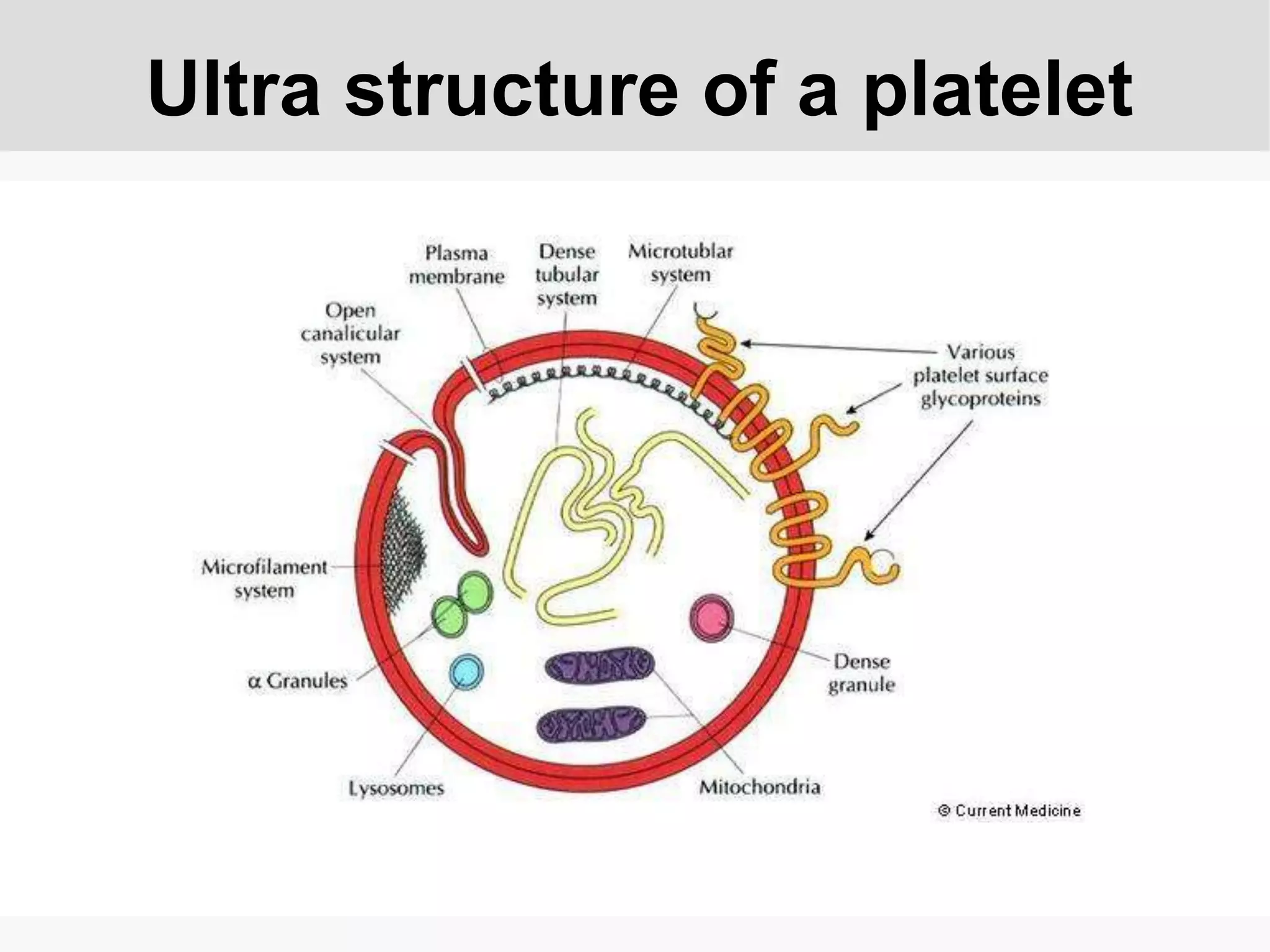
Ultra structure of a platelet
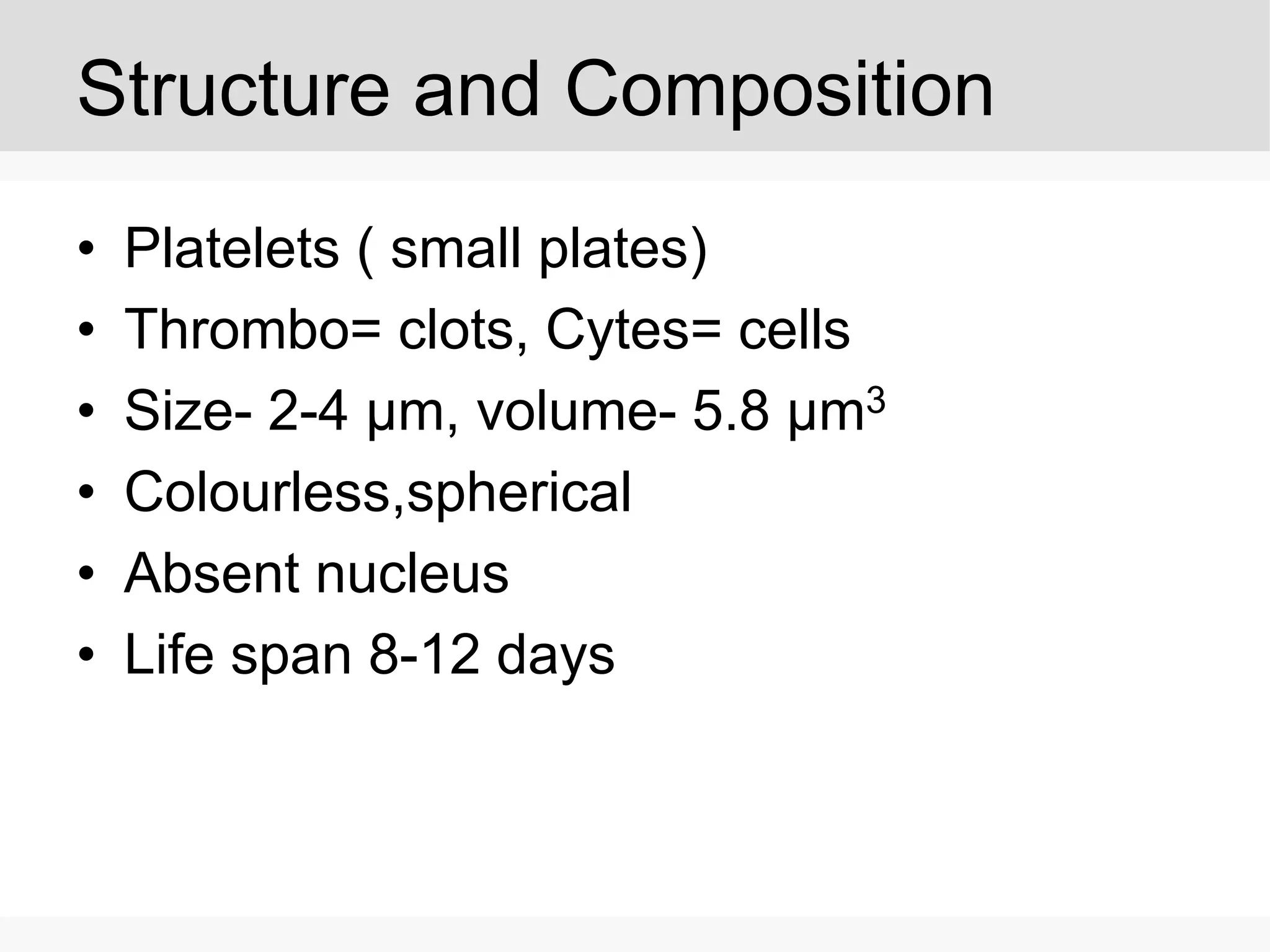
Structure and Composition
• Platelets ( small plates)
• Thrombo= clots, Cytes= cells
• Size- 2-4 μm, volume- 5.8 μm3
• Colourless,spherical
• Absent nucleus
• Life span 8-12 days
• circulating platelets are maintained in an
inactive state by nitric oxide (NO) and
prostacyclin released by endothelial cells
lining the blood vessels
Properties and Functions
1. Adhesion
2. Aggregation
3. Agglutination
Properties and Functions cont..
ADHESION
ACTIVATION
AGGREGATION
Antiplatelets
ASPIRIN
Structure
Mechanism of Action
Arachidonic acid and its physiology
Mechanism of Action cont..
1. Irreversible inhibition of cyclooxygenase
enzyme via acetylation.
2. Small dose inhibits thromboxane synthesis
in platelets (TXA2), but not prostacyclin
(PGI2) synthesis in endothelium.
Pharmacokinetics
• Aspirin is rapidly absorbed in the upper
gastrointestinal tract
• Inhibition of platelet function within 60
minutes
• The plasma half-life of aspirin is 20
minutes
• After a single dose of aspirin, platelet COX
activity recovers by 10% per day as a
function of platelet turnover
• hemostasis may be normal if 20% of
platelets have normal COX activity
Aspirin Dose
• Primary prevention:
Diabetes with increased CVD risk i,e 10 year risk
of 10%
Low dose (75-162 mg/day)
• Acute Ischaemic stroke:
Initial dose of 325mg within 24-48hours
• STEMI:
Aspirin 162 to 325mg should be given before
primary PCI
81-325 mg daily maintainence dose
Introduction: CURRENT–OASIS 7 trial was designed
to determine whether,
• doubling of the loading and initial maintenance
doses of clopidogrel is superior to the standard-dose
regimen and
• Whether higher-dose aspirin (300 to 325 mg daily) is
superior to lower-dose aspirin (75 to 100 mg
daily) in patients with acute coronary syndromes
referred for an early invasive strategy.
The CURRENT–OASIS 7 Investigators
NEJM, september 2010
• Comparision of doubling of the loading and initial
maintenance doses of clopidogrel with standard dose and
higher-dose aspirin with lower-dose aspirin
• double-dose clopidogrel (a 600-mg loading dose on day 1,
followed by 150 mg daily for 6 days and 75 mg daily
thereafter) OR
• standard-dose clopidogrel (a 300-mg loading dose and 75 mg
daily thereafter)
+
• higher-dose aspirin (300 to 325 mg daily) OR
• lower-dose aspirin (75 to 100 mg daily).
• The primary outcome was cardiovascular death,
myocardial infarction, or stroke at 30 days.
Results:
• Primary outcome occcured in 4.2% of patients
assigned to double-dose clopidogrel as compared with
4.4% assigned to standard-dose clopidogrel
• There was no significant difference between higher-dose
and lower-dose aspirin with respect to the primary
outcome (4.2% vs. 4.4%)
Conclusion
In patients with an acute coronary syndrome who
were referred for an invasive strategy, there was no
significant difference between a 7-day, double-dose
clopidogrel regimen and the standard-dose regimen,
or between higher-dose aspirin and lower-dose
aspirin, with respect to the primary outcome of
cardiovascular death,myocardial infarction, or stroke.
SIDE EFFECTS
1. GI:
• loss of the cytoprotective effects of PGE2 on
the gastric mucosa
• dose related
• dyspepsia to erosive gastritis
• peptic ulcers with bleeding and perforation.
• overall risk of major bleeding with aspirin is 1–
3% per year.
• increased two- to threefold when given in
conjunction with other antiplatelet drugs
UK-TIA trial
• From 1979 to 1985, 2435 patients with h/o
TIA or minor ischemic stroke were
randomly given
• 600mg BD OR
• 300mg OD OR
• Placebo
UK-TIA trial
Conclusion:
• the incidence of GI symptoms was
significantly higher in the aspirin-treated
group than in the placebo group
• GI symptoms were significantly more
frequent in the high-dose (1200 mg/d) than
in the low-dose (300 mg/d) aspirin groups
2. Hemorrhagic stroke:
3. Doses (1500 mg/d),reduces renal sodium
excretion in patients with heart failure
4. Allergy
Aspirin resistance
• Decrease in the expected inhibitory effects
on platelet function, such as thromboxane
A2 synthesis .
• 5% to 45% of the population
Methods of assessing Resistansce
• Platelet aggregation studies (platelet function
analyzer)
• Bleeding time
• Urinary metabolites of thromboxane metabolism
( 11-dehydro-thromboxane B2 and 2,3- dinor-
thromboxane B2)
DIAGNOSIS:
• aggregation of >70% with 10μm ADP and
>20% with 0.5mg/ml arachidonic acid (Gum et al)
• Aspirin resistance type I (pharmacokinetic
type)
• Aspirin resistance type II
(pharmacodynamic type)
• Aspirin resistance type III (pseudo-
resistance).
MECHANISM
CLINICAL
• Poor compliance
• Drug interaction (e.g: Ibuprofen)
• Cigarette smoking
• Diabetes
• Hypercholesterolemia
MECHANISM Cont..
BIOLOGICAL FACTORS
• Alternate pathways of platelet activation.
• Failure to inhibit catecholamine-mediated platelet
activation
• Overexpression of COX-2 mRNA
• Regenerated COX-1 activity in macrophages and
vascular endothelial cells
• Erythrocyte-induced platelet activation
GENETIC
• Polymorphism of vWF receptor gene
• Polymorphism collagen receptor
Aspirin and Risk of hemorrhagic Stroke
A Metaanalysis of RCTs , JAMA 1998
• A data from 16 trial including 55,462
patients and 108 hemorrhagic stroke cases
were analyzed.
• Mean dose of aspirin was 273mg/d and
mean duration 37 months.
• Risk reduction of MI observed 137 events
per 10,000
• Risk increase in hemorrhagic stroke of 12
events per 10,000
Indication
1.Prevention of myocardial infarction
2.In Unstable angina/ Non-STEMI
3.Transient cerebral ischemic attacks.
4.After Revascularisation: Following PTCA and
CABG
5.Prosthetic heart valves.
6.Chronic disseminated intravascular coagulation
7. Prophylaxis of venous thrombosis.
8. Peripheral vascular disease
ADP
P2Y1
Platelet shape change
and aggregation
ADP
P2Y12
Inhibition of platelet
Activation of platelets
Gq-IP3-Ca2+
pathway
Gi pathway
Inhibits Adenyl cyclase
decreased cAMP
ADP receptor Antagonists
1.Thienopyridines
• Ticlopidine, Clopidogrel and Prasugrel
2. Ticagrelor
Ticlopidine
• Prodrug
• Conversion to the active thiol metabolite by
a hepatic cytochrome P450 enzyme.
• rapidly absorbed and highly bioavailable
• Inhibits P2Y12 receptor
• CLASSICS Study
Clopidogrel
• Prodrug
• antithrombotic effects are dose-dependent
• within 5 hours after an oral loading dose of 300
mg, 80% of platelet activity will be inhibited.
• duration of the antiplatelet effect is 7–10 days.
• Used with aspirin in NSTEMI / STEMI/ Ischemic
Stroke / Peripheral artery disease
Prasugrel
• more potent
• third-generation oral thienopyridine
• specific, irreversible antagonist of P2Y12
ADP receptor inhibitor.
• TRITON- TIMI Study
Ticagrelor
• reversible oral P2Y12 receptor antagonist.
• does not require metabolic activation.
• metabolized in the liver via CYP3A4.
• Used in caution with enzyme
inducers/inhibitors.
• Can cause dyspnea
• PLATO Study
• CURE Trial --addition of clopidogrel to
aspirin in patients with UA/NSTEMI.
• TRITON TIMI --Trial compare prasugrel
with clopidogrel in patients with acute
coronary syndromes with scheduled PCI.
• PLATO Study – Compared ticagrelor with
clopidogrel
Adverse Effects
• Bleeding (most common)
• Nausea, dyspepsis, diarrhea
• severe neutropenia (absolute neutrophil
count [ANC] <1500/mL
• Thrombopenia
• Thrombotic thrombocytopenic purpura
INDICATIONS
1. Unstable Angina/NSTEMI
• Initial loading dose of 300 to 600 mg
clopidogrel is followed by a maintenance
dose of 75 mg/day.
CURE trial NEJM, 2001
• The addition of clopidogrel to aspirin was studied
in12,562 patients with UA/NSTEMI, in which
patients were treated with ASA (75 to 325 mg),
unfractionated or low-molecular weight heparin,
and other standard therapies and were
randomized to receive
• 300-mg loading dose of clopidogrel followed by
75 mg daily OR placebo for 3-12 months.
RESULTS
• Primary outcome occurred in 9.3 percent
of patients in the clopidogrel group and
• 11.4 percent of the patients in the placebo
group.
• Patients with major bleeding were more in
the clopidogrel group than in the placebo
group (3.7 percent vs. 2.7 percent)
CAPRIE Study, American Journal of
medicine
• The Clopidogrel versus Aspirin in Patients at Risk for
Ischemic Events (CAPRIE)
• Aspirin (325 mg/d) with Clopidogrel (75 mg/d) for
reducing the combined incidence of ischemic stroke, MI,
or vascular death
• 19,185 patients with a recent stroke or MI or with
symptomatic peripheral arterial disease.
• After average follow-up of almost 2 years, clopidogrel
demonstrated a significant 8.7% benefit over aspirin
TRITON–TIMI study NEJM november , 2007
• To compare prasugrel with clopidogrel
• 13,608 patients with moderate-to-high-risk acute
coronary syndromes with scheduled PCI
• prasugrel (60-mg loading dose and 10-mg daily maintenance dose)
OR
• clopidogrel (300-mg loading dose and
75-mg daily maintenance dose), for 6 to 15 months.
• Primary efficacy end point was death from
cardiovascular causes, nonfatal myocardial infarction, or
nonfatal stroke.
• The key safety end point was major bleeding
RESULTS
• Primary efficacy end point occurred in 12.1% of
patients receiving clopidogrel and 9.9% of
patients receiving prasugrel.
• Significant reductions in the prasugrel group in
the rates of MI (9.7% for clopidogrel vs. 7.4% for
prasugrel)
• life-threatening bleeding was noted (1.4% for
prasugrel vs. 0.9% for clopidogrel)
PLATO Study, Nejm 2009
• Randomized trial, comparing ticagrelor (180-mg
loading dose, 90 mg twice daily maintenance dose) and
clopidogrel (300-to-600-mg loading dose, 75 mg daily
maintenance dose)
• 18,624 patients admitted to the hospital with an
acute coronary syndrome, with or without ST-
segment elevation.
RESULTS
• At 12 months, the primary end point was noted in
patients receiving ticagrelor as compared with
clopidogrel (9.8% vs 11.7%) .
• No significant difference in the rates of major
bleeding between the ticagrelor and clopidogrel
groups (11.6% and 11.2% respectively).
• But ticagrelor was associated with a higher rate
of fatal intracranial bleed.
2. Post- PCI API UPDATE 2012
• For all “elective” PCI patients receiving Drug
eluting stents -Clopidogrel 75 mg daily should
be given for atleast 12 months if patients are not
at high risk of bleeding.
• For post PCI patients receiving Bare Metal Stent
-Clopidogrel should be given for a minimum of 1
month and ideally for 12 months.
DAPT Study Nejm Dec, 2014
• Patients who had undergone Drug-eluting
stent placement were randomized after 12
months of treatment with a thienopyridine
drug (clopidogrel or prasugrel) and aspirin.
• Further treatment with thienopyridine OR
placebo for next 18 months were studied.
• 9961 patients were randomly assigned to
continue thienopyridine treatment
• Reduced in the rates of stent thrombosis
(0.4% vs. 1.4%) in the treatment group.
• The rate of moderate or severe bleeding
was increased with continued treatment
group (2.5% vs. 1.6%)
Efficacy of Post-Op clopidogrel
treatment in patients revascularized
with CABG after MI , Am J of cardiology.2011
• 3545 patients were randomised, 27% were
treated with clopidogrel post CABG for an
average of 466 days.
• 4% vs 7.8% experienced primary outcome
(death or recurrent MI) in treatment group
and placebo group respectively.
3. Ischemic stroke
• Usefulness of Clopidogrel is not well
established ASA/AHA Guideliness 2009
SPS3 Trial
• double-blind, multicenter trial involving
3020 patients with recent symptomatic
lacunar infarcts.
• Patients randomly assigned to receive
• 325mg Aspirin+ 75 mg of clopidogrel OR
325mg Aspirin + placebo daily.
RESULTS: mean follow-up of 3.4 years
• the risk of recurrent stroke was not
significantly reduced with dual antiplatelet
therapy as compared to aspirin alone(2.5%
per year vs 2.7% per year).
• The risk of major hemorrhage was almost
doubled (2.1% per year vs 1.1% per year).
CLASSICS Study Circulation 2000
• Patients (n=1020) were randomized after
successful stent placement and initiated on a 28-
day regimen
(1) 300-mg clopidogrel loading dose and 325 mg/d
aspirin on day 1, followed by 75 mg/d clopidogrel
and 325 mg/d aspirin
(2) 75 mg/d clopidogrel and 325 mg/d aspirin
(3) 250 mg BID ticlopidine and 325 mg/d aspirin.
• The primary end point occurred in 9.1% of
patients in the ticlopidine group and 4.6% of
patients in the combined clopidogrel group.
• The safety/tolerability of clopidogrel (plus aspirin)
is superior to that of ticlopidine (plus aspirin)
• The 300-mg loading dose was well tolerated,
notably with no increased risk of bleeding
Thienopyridine Resistance
• CYP isoenzymes (CYP2C19) involved in
the metabolic activation of clopidogrel
GP IIb IIIa Inhibitors
• Gp IIb/IIIa is the most abundant receptor on
platelets.
• Activation of platelets causes conformational
change.
• GP IIb IIIa antagonists inhibits the final common
pathway for platelet aggregation.
• Binds to fibrinogen , vWF by Arg-Gly-Asp (RGD
sequence) of α chains of fibrinogen and VWF.
• Lys-Gly-Asp (KGD sequence) located within γ
chains of fibrinogen.
• Fab fragment of a humanized murine
monoclonal antibody.
• Onset is rapid, high affinity to platelets within
minutes
• Plasma t1/2 10-30 mins.
• Dissociation slowly from GP IIb/IIIa receptor
• Clears rapidly from plasma but remains bound to
circulating platelets up to 21 days
Abciximab
• After bolus dose aggregation is inhibited for 12-
24 hours
• effects of the agent can be reversed with the
transfusion of platelets
• Dose: 0.25 mg/kg followed by an infusion of
0.125 μg/kg per minute to a maximum of 10
μg/kg for 12 hrs
• The ACUITY Timing Trial
• Prospective, Randomized Comparison of
Routine Upfront Initiation Versus Selective Use
of Glycoprotein IIb/IIIa Inhibitors in Patients With
Acute Coronary Syndromes
The ACUITY Timing Trial
• 13,800 patients with moderate to high risk
ACS received
• UF heparin Or LMWH + IIb/IIIa inhibitor
OR
• Bivalirudin + IIb /IIIa inhibitor
• Underwent cardiac cathetrization within 72
hours
Clinical Implications
• In pts with moderate-high risk ACS undergoing an
early invasive strategy, compared to the routine
upstream use of GP IIb/IIIa inhibitors in all pts,
withholding upfront IIb/IIIa inhibitor use for selective
initiation in the cath lab only to pts undergoing PCI
results in:
–Similar rates of adverse ischemic events,
though a slight increase cannot be excluded
–Reduced rates of major and minor bleeding
• blockade of GP IIb-IIIa with abciximab
decreased
the risk of cardiac events after PCI
• Administration of a 0.25 mg/kg intravenous
loading dose followed by a 12 h infusion of
0.125 mg/kg/min reduced the 30 days
incidence of cardiac events from 12.8% to
8.3%
• bolus alone had a modest effect (30 days
event rate of
11.5%)
EPIC Study
• Synthetic compound
• Cyclic heptapeptide derived from a protein
found in the venom of the southeastern
pygmy rattlesnake.
• Acts on the KGD sequence
• Plasma t1/2 2.5 hours
• Inhibitory effect is dependant on the plasma
level
• Two doses 180 μg/kg boluses given 10 min
apart, followed by an infusion of 2.0 μg/kg per
minute for 18–24 h
Eptifibatide
• Dose reduction in renal insufficiency 1
μg/kg/min in patients with CrCl <50
mL/min.
• Discontinued at least 2 to 4 hours before
urgent CABG
• Synthetic compound
• Non peptide tyrosine derivative
• Acts on the RGD sequense
• Plasma t1/2 2 hours
• Inhibitory effect is dependant on the plasma level
• Dose: 0.4 μg/kg per minute for 30 min; the drug
is then continued at a rate of 0.1 μg/kg per
minute for up to 18 hrs.
• Half of the dose if CrCl <30 mL/min.
• TARGET Trial
Tirofiban
• Bleeding
• Thrombocytopenia is the most serious
complication
• Constipation
• Arrthythmias
SIDE EFFECTS
• Compared tirofiban with abciximab in
patients undergoing PCI for an acute
coronary syndrome or stable angina.
• The primary endpoint of death, MI or
urgent target-vessel revascularization
within 30 days occurred in 7.5% of those
who received tirofiban versus 6% of those
who received abciximab.
TARGET Trial Nejm 2001
• For UA/NSTEMI patients in whom an initial
conservative (i.e., noninvasive) strategy is
selected, eptifibatide or tirofiban to be used
with anticoagulant and oral antiplatelet
therapy.
Indications US/NSTEMI
• For UA/NSTEMI patients in whom an initial
invasive strategy is selected, it is
reasonable to initiate antiplatelet therapy
with both clopidogrel (loading dose
followed by daily maintenance dose)* and
an intravenous GP IIb/IIIa inhibitor.
• Abciximab preferred for patients likely to
undergo PCI
• Half-dose reteplase (5 U and 5 U) and full-
dose abciximab compared with full-dose
reteplase (10 U and 10 U) in 16,588
patients in the first 6 hours of STEMI.
• Thirty-day mortality rates were similar in
the two treatment groups (5.9% versus
5.6%) but nonfatal reinfarction and other
complications of MI were reduced in the
group receiving combination reperfusion
therapy.
GUSTO V trial Cleve Clin J Med. 2002
• Rates of intracranial hemorrhage were the
same in the two treatment groups (0.6%)
• Moderate to severe bleeding was
significantly increased from 2.3% to 4.6%
with combination reperfusion therapy
• An adenosine analogue
• Intravennous direct acting P2Y12 receptor
inhibitor
• Half-life of 3–6 min and is given
• IV as a bolus followed by an infusion
• Platelet function recovers within 60 min of
stopping.
Cangrelor
• Sequential dephosphorylation to the nucleoside
• Metabolism not dependent on renal or hepatic
function
• Major metabolite is not pharmacologically active
• No potential for CYP450 drug interactions
• Double blind placebo-controlled trial
• 11,145 undergoing PCI were given
• Bolus and infusion of cangrelor (30ug/kg;
4ug/kg/min ) OR
loading dose of 600mg / 300mg of
clopidogrel
• Primary end point death/ MI/Stent
thrombosis at 48 hours, primary safety end
point severe bleeding at 48 hours
CHAMPION Study Nejm 2013
• Primary end point was 4.7% in cangrelor
group and 5.9% in clopidogrel group
• Stent thrombosis developed in 0.8% in
cangrelor group and 1.4% in clopidogrel
group
• Primary safety end point was 0.16% I
cangrelor and 0.11% in clopidogrel group.
CONCLUSION:
• IV cangrelor significantly reduced the rate of ischemic
events, including stent thrombosis , during PCI, with no
significant increase in severe bleeding.
VORAPAXAR
• Oral competitive PAR-1 antagonist.
• Inhibits thrombin-induced platelet aggregation.
• Rapidly absorbed and slowly eliminated with a
t½ value ranging between 165 and 311 hrs.
• steady-state concentration reached within 21
days.
VORAPAXAR
• Dose: loading dose of 40 mg
Daily maintenance dose of 2.5 mg
• Adverse events:
– Occasional Epistaxis -- Fatigue
– Headache -- RTI
Newer antiplatelet agents
• P2Y12 inhibitors: Ticagrelor, Elinogrel, Cangrelor,
BX 667
• GPIIb/IIIa antagonist: Z4A5
• von Willebrand factor (vWF) antagonists:
AJW200, ARC1779, ARC15105, ALX-0081, 82D6 A3
• GPVI receptor antagonists: Revacept, DZ-697b
• GPIb receptor antagonists: h6B4-Fab, GPG-290,
SZ2
• Thromboxane A2 receptor antagonists:
Terutroban, Picotamide, Ridogrel, EV-077, Z-335,
BM-573

Antiplatelets

  • 1.
    ANTIPLATELETS Dr.Shreya K S PostGraduate in General Medicine Bangalore
  • 2.
  • 3.
  • 4.
    Structure and Composition •Platelets ( small plates) • Thrombo= clots, Cytes= cells • Size- 2-4 μm, volume- 5.8 μm3 • Colourless,spherical • Absent nucleus • Life span 8-12 days
  • 5.
    • circulating plateletsare maintained in an inactive state by nitric oxide (NO) and prostacyclin released by endothelial cells lining the blood vessels
  • 6.
    Properties and Functions 1.Adhesion 2. Aggregation 3. Agglutination
  • 7.
  • 8.
  • 9.
  • 11.
  • 12.
  • 14.
  • 15.
  • 16.
  • 17.
    Arachidonic acid andits physiology
  • 18.
    Mechanism of Actioncont.. 1. Irreversible inhibition of cyclooxygenase enzyme via acetylation. 2. Small dose inhibits thromboxane synthesis in platelets (TXA2), but not prostacyclin (PGI2) synthesis in endothelium.
  • 20.
    Pharmacokinetics • Aspirin israpidly absorbed in the upper gastrointestinal tract • Inhibition of platelet function within 60 minutes • The plasma half-life of aspirin is 20 minutes • After a single dose of aspirin, platelet COX activity recovers by 10% per day as a function of platelet turnover
  • 21.
    • hemostasis maybe normal if 20% of platelets have normal COX activity
  • 22.
    Aspirin Dose • Primaryprevention: Diabetes with increased CVD risk i,e 10 year risk of 10% Low dose (75-162 mg/day) • Acute Ischaemic stroke: Initial dose of 325mg within 24-48hours • STEMI: Aspirin 162 to 325mg should be given before primary PCI 81-325 mg daily maintainence dose
  • 23.
    Introduction: CURRENT–OASIS 7trial was designed to determine whether, • doubling of the loading and initial maintenance doses of clopidogrel is superior to the standard-dose regimen and • Whether higher-dose aspirin (300 to 325 mg daily) is superior to lower-dose aspirin (75 to 100 mg daily) in patients with acute coronary syndromes referred for an early invasive strategy.
  • 24.
    The CURRENT–OASIS 7Investigators NEJM, september 2010 • Comparision of doubling of the loading and initial maintenance doses of clopidogrel with standard dose and higher-dose aspirin with lower-dose aspirin • double-dose clopidogrel (a 600-mg loading dose on day 1, followed by 150 mg daily for 6 days and 75 mg daily thereafter) OR • standard-dose clopidogrel (a 300-mg loading dose and 75 mg daily thereafter) + • higher-dose aspirin (300 to 325 mg daily) OR • lower-dose aspirin (75 to 100 mg daily).
  • 25.
    • The primaryoutcome was cardiovascular death, myocardial infarction, or stroke at 30 days. Results: • Primary outcome occcured in 4.2% of patients assigned to double-dose clopidogrel as compared with 4.4% assigned to standard-dose clopidogrel • There was no significant difference between higher-dose and lower-dose aspirin with respect to the primary outcome (4.2% vs. 4.4%)
  • 26.
    Conclusion In patients withan acute coronary syndrome who were referred for an invasive strategy, there was no significant difference between a 7-day, double-dose clopidogrel regimen and the standard-dose regimen, or between higher-dose aspirin and lower-dose aspirin, with respect to the primary outcome of cardiovascular death,myocardial infarction, or stroke.
  • 27.
  • 28.
    1. GI: • lossof the cytoprotective effects of PGE2 on the gastric mucosa • dose related • dyspepsia to erosive gastritis • peptic ulcers with bleeding and perforation. • overall risk of major bleeding with aspirin is 1– 3% per year. • increased two- to threefold when given in conjunction with other antiplatelet drugs
  • 29.
    UK-TIA trial • From1979 to 1985, 2435 patients with h/o TIA or minor ischemic stroke were randomly given • 600mg BD OR • 300mg OD OR • Placebo
  • 30.
    UK-TIA trial Conclusion: • theincidence of GI symptoms was significantly higher in the aspirin-treated group than in the placebo group • GI symptoms were significantly more frequent in the high-dose (1200 mg/d) than in the low-dose (300 mg/d) aspirin groups
  • 31.
    2. Hemorrhagic stroke: 3.Doses (1500 mg/d),reduces renal sodium excretion in patients with heart failure 4. Allergy
  • 32.
    Aspirin resistance • Decreasein the expected inhibitory effects on platelet function, such as thromboxane A2 synthesis . • 5% to 45% of the population
  • 33.
    Methods of assessingResistansce • Platelet aggregation studies (platelet function analyzer) • Bleeding time • Urinary metabolites of thromboxane metabolism ( 11-dehydro-thromboxane B2 and 2,3- dinor- thromboxane B2) DIAGNOSIS: • aggregation of >70% with 10μm ADP and >20% with 0.5mg/ml arachidonic acid (Gum et al)
  • 34.
    • Aspirin resistancetype I (pharmacokinetic type) • Aspirin resistance type II (pharmacodynamic type) • Aspirin resistance type III (pseudo- resistance).
  • 35.
    MECHANISM CLINICAL • Poor compliance •Drug interaction (e.g: Ibuprofen) • Cigarette smoking • Diabetes • Hypercholesterolemia
  • 36.
    MECHANISM Cont.. BIOLOGICAL FACTORS •Alternate pathways of platelet activation. • Failure to inhibit catecholamine-mediated platelet activation • Overexpression of COX-2 mRNA • Regenerated COX-1 activity in macrophages and vascular endothelial cells • Erythrocyte-induced platelet activation GENETIC • Polymorphism of vWF receptor gene • Polymorphism collagen receptor
  • 37.
    Aspirin and Riskof hemorrhagic Stroke A Metaanalysis of RCTs , JAMA 1998 • A data from 16 trial including 55,462 patients and 108 hemorrhagic stroke cases were analyzed. • Mean dose of aspirin was 273mg/d and mean duration 37 months. • Risk reduction of MI observed 137 events per 10,000 • Risk increase in hemorrhagic stroke of 12 events per 10,000
  • 38.
    Indication 1.Prevention of myocardialinfarction 2.In Unstable angina/ Non-STEMI 3.Transient cerebral ischemic attacks. 4.After Revascularisation: Following PTCA and CABG 5.Prosthetic heart valves. 6.Chronic disseminated intravascular coagulation 7. Prophylaxis of venous thrombosis. 8. Peripheral vascular disease
  • 39.
    ADP P2Y1 Platelet shape change andaggregation ADP P2Y12 Inhibition of platelet Activation of platelets Gq-IP3-Ca2+ pathway Gi pathway Inhibits Adenyl cyclase decreased cAMP
  • 40.
    ADP receptor Antagonists 1.Thienopyridines •Ticlopidine, Clopidogrel and Prasugrel 2. Ticagrelor
  • 41.
    Ticlopidine • Prodrug • Conversionto the active thiol metabolite by a hepatic cytochrome P450 enzyme. • rapidly absorbed and highly bioavailable • Inhibits P2Y12 receptor • CLASSICS Study
  • 42.
    Clopidogrel • Prodrug • antithromboticeffects are dose-dependent • within 5 hours after an oral loading dose of 300 mg, 80% of platelet activity will be inhibited. • duration of the antiplatelet effect is 7–10 days. • Used with aspirin in NSTEMI / STEMI/ Ischemic Stroke / Peripheral artery disease
  • 44.
    Prasugrel • more potent •third-generation oral thienopyridine • specific, irreversible antagonist of P2Y12 ADP receptor inhibitor. • TRITON- TIMI Study
  • 45.
    Ticagrelor • reversible oralP2Y12 receptor antagonist. • does not require metabolic activation. • metabolized in the liver via CYP3A4. • Used in caution with enzyme inducers/inhibitors. • Can cause dyspnea • PLATO Study
  • 46.
    • CURE Trial--addition of clopidogrel to aspirin in patients with UA/NSTEMI. • TRITON TIMI --Trial compare prasugrel with clopidogrel in patients with acute coronary syndromes with scheduled PCI. • PLATO Study – Compared ticagrelor with clopidogrel
  • 50.
    Adverse Effects • Bleeding(most common) • Nausea, dyspepsis, diarrhea • severe neutropenia (absolute neutrophil count [ANC] <1500/mL • Thrombopenia • Thrombotic thrombocytopenic purpura
  • 51.
  • 52.
    1. Unstable Angina/NSTEMI •Initial loading dose of 300 to 600 mg clopidogrel is followed by a maintenance dose of 75 mg/day.
  • 53.
    CURE trial NEJM,2001 • The addition of clopidogrel to aspirin was studied in12,562 patients with UA/NSTEMI, in which patients were treated with ASA (75 to 325 mg), unfractionated or low-molecular weight heparin, and other standard therapies and were randomized to receive • 300-mg loading dose of clopidogrel followed by 75 mg daily OR placebo for 3-12 months.
  • 54.
    RESULTS • Primary outcomeoccurred in 9.3 percent of patients in the clopidogrel group and • 11.4 percent of the patients in the placebo group. • Patients with major bleeding were more in the clopidogrel group than in the placebo group (3.7 percent vs. 2.7 percent)
  • 55.
    CAPRIE Study, AmericanJournal of medicine • The Clopidogrel versus Aspirin in Patients at Risk for Ischemic Events (CAPRIE) • Aspirin (325 mg/d) with Clopidogrel (75 mg/d) for reducing the combined incidence of ischemic stroke, MI, or vascular death • 19,185 patients with a recent stroke or MI or with symptomatic peripheral arterial disease. • After average follow-up of almost 2 years, clopidogrel demonstrated a significant 8.7% benefit over aspirin
  • 56.
    TRITON–TIMI study NEJMnovember , 2007 • To compare prasugrel with clopidogrel • 13,608 patients with moderate-to-high-risk acute coronary syndromes with scheduled PCI • prasugrel (60-mg loading dose and 10-mg daily maintenance dose) OR • clopidogrel (300-mg loading dose and 75-mg daily maintenance dose), for 6 to 15 months. • Primary efficacy end point was death from cardiovascular causes, nonfatal myocardial infarction, or nonfatal stroke. • The key safety end point was major bleeding
  • 57.
    RESULTS • Primary efficacyend point occurred in 12.1% of patients receiving clopidogrel and 9.9% of patients receiving prasugrel. • Significant reductions in the prasugrel group in the rates of MI (9.7% for clopidogrel vs. 7.4% for prasugrel) • life-threatening bleeding was noted (1.4% for prasugrel vs. 0.9% for clopidogrel)
  • 58.
    PLATO Study, Nejm2009 • Randomized trial, comparing ticagrelor (180-mg loading dose, 90 mg twice daily maintenance dose) and clopidogrel (300-to-600-mg loading dose, 75 mg daily maintenance dose) • 18,624 patients admitted to the hospital with an acute coronary syndrome, with or without ST- segment elevation.
  • 59.
    RESULTS • At 12months, the primary end point was noted in patients receiving ticagrelor as compared with clopidogrel (9.8% vs 11.7%) . • No significant difference in the rates of major bleeding between the ticagrelor and clopidogrel groups (11.6% and 11.2% respectively). • But ticagrelor was associated with a higher rate of fatal intracranial bleed.
  • 60.
    2. Post- PCIAPI UPDATE 2012 • For all “elective” PCI patients receiving Drug eluting stents -Clopidogrel 75 mg daily should be given for atleast 12 months if patients are not at high risk of bleeding. • For post PCI patients receiving Bare Metal Stent -Clopidogrel should be given for a minimum of 1 month and ideally for 12 months.
  • 61.
    DAPT Study NejmDec, 2014 • Patients who had undergone Drug-eluting stent placement were randomized after 12 months of treatment with a thienopyridine drug (clopidogrel or prasugrel) and aspirin. • Further treatment with thienopyridine OR placebo for next 18 months were studied.
  • 62.
    • 9961 patientswere randomly assigned to continue thienopyridine treatment • Reduced in the rates of stent thrombosis (0.4% vs. 1.4%) in the treatment group. • The rate of moderate or severe bleeding was increased with continued treatment group (2.5% vs. 1.6%)
  • 63.
    Efficacy of Post-Opclopidogrel treatment in patients revascularized with CABG after MI , Am J of cardiology.2011 • 3545 patients were randomised, 27% were treated with clopidogrel post CABG for an average of 466 days. • 4% vs 7.8% experienced primary outcome (death or recurrent MI) in treatment group and placebo group respectively.
  • 64.
    3. Ischemic stroke •Usefulness of Clopidogrel is not well established ASA/AHA Guideliness 2009
  • 65.
    SPS3 Trial • double-blind,multicenter trial involving 3020 patients with recent symptomatic lacunar infarcts. • Patients randomly assigned to receive • 325mg Aspirin+ 75 mg of clopidogrel OR 325mg Aspirin + placebo daily.
  • 66.
    RESULTS: mean follow-upof 3.4 years • the risk of recurrent stroke was not significantly reduced with dual antiplatelet therapy as compared to aspirin alone(2.5% per year vs 2.7% per year). • The risk of major hemorrhage was almost doubled (2.1% per year vs 1.1% per year).
  • 67.
    CLASSICS Study Circulation2000 • Patients (n=1020) were randomized after successful stent placement and initiated on a 28- day regimen (1) 300-mg clopidogrel loading dose and 325 mg/d aspirin on day 1, followed by 75 mg/d clopidogrel and 325 mg/d aspirin (2) 75 mg/d clopidogrel and 325 mg/d aspirin (3) 250 mg BID ticlopidine and 325 mg/d aspirin.
  • 68.
    • The primaryend point occurred in 9.1% of patients in the ticlopidine group and 4.6% of patients in the combined clopidogrel group. • The safety/tolerability of clopidogrel (plus aspirin) is superior to that of ticlopidine (plus aspirin) • The 300-mg loading dose was well tolerated, notably with no increased risk of bleeding
  • 69.
    Thienopyridine Resistance • CYPisoenzymes (CYP2C19) involved in the metabolic activation of clopidogrel
  • 70.
    GP IIb IIIaInhibitors
  • 73.
    • Gp IIb/IIIais the most abundant receptor on platelets. • Activation of platelets causes conformational change. • GP IIb IIIa antagonists inhibits the final common pathway for platelet aggregation. • Binds to fibrinogen , vWF by Arg-Gly-Asp (RGD sequence) of α chains of fibrinogen and VWF. • Lys-Gly-Asp (KGD sequence) located within γ chains of fibrinogen.
  • 76.
    • Fab fragmentof a humanized murine monoclonal antibody. • Onset is rapid, high affinity to platelets within minutes • Plasma t1/2 10-30 mins. • Dissociation slowly from GP IIb/IIIa receptor • Clears rapidly from plasma but remains bound to circulating platelets up to 21 days Abciximab
  • 77.
    • After bolusdose aggregation is inhibited for 12- 24 hours • effects of the agent can be reversed with the transfusion of platelets • Dose: 0.25 mg/kg followed by an infusion of 0.125 μg/kg per minute to a maximum of 10 μg/kg for 12 hrs • The ACUITY Timing Trial
  • 78.
    • Prospective, RandomizedComparison of Routine Upfront Initiation Versus Selective Use of Glycoprotein IIb/IIIa Inhibitors in Patients With Acute Coronary Syndromes The ACUITY Timing Trial
  • 79.
    • 13,800 patientswith moderate to high risk ACS received • UF heparin Or LMWH + IIb/IIIa inhibitor OR • Bivalirudin + IIb /IIIa inhibitor • Underwent cardiac cathetrization within 72 hours
  • 80.
    Clinical Implications • Inpts with moderate-high risk ACS undergoing an early invasive strategy, compared to the routine upstream use of GP IIb/IIIa inhibitors in all pts, withholding upfront IIb/IIIa inhibitor use for selective initiation in the cath lab only to pts undergoing PCI results in: –Similar rates of adverse ischemic events, though a slight increase cannot be excluded –Reduced rates of major and minor bleeding
  • 81.
    • blockade ofGP IIb-IIIa with abciximab decreased the risk of cardiac events after PCI • Administration of a 0.25 mg/kg intravenous loading dose followed by a 12 h infusion of 0.125 mg/kg/min reduced the 30 days incidence of cardiac events from 12.8% to 8.3% • bolus alone had a modest effect (30 days event rate of 11.5%) EPIC Study
  • 82.
    • Synthetic compound •Cyclic heptapeptide derived from a protein found in the venom of the southeastern pygmy rattlesnake. • Acts on the KGD sequence • Plasma t1/2 2.5 hours • Inhibitory effect is dependant on the plasma level • Two doses 180 μg/kg boluses given 10 min apart, followed by an infusion of 2.0 μg/kg per minute for 18–24 h Eptifibatide
  • 83.
    • Dose reductionin renal insufficiency 1 μg/kg/min in patients with CrCl <50 mL/min. • Discontinued at least 2 to 4 hours before urgent CABG
  • 84.
    • Synthetic compound •Non peptide tyrosine derivative • Acts on the RGD sequense • Plasma t1/2 2 hours • Inhibitory effect is dependant on the plasma level • Dose: 0.4 μg/kg per minute for 30 min; the drug is then continued at a rate of 0.1 μg/kg per minute for up to 18 hrs. • Half of the dose if CrCl <30 mL/min. • TARGET Trial Tirofiban
  • 85.
    • Bleeding • Thrombocytopeniais the most serious complication • Constipation • Arrthythmias SIDE EFFECTS
  • 86.
    • Compared tirofibanwith abciximab in patients undergoing PCI for an acute coronary syndrome or stable angina. • The primary endpoint of death, MI or urgent target-vessel revascularization within 30 days occurred in 7.5% of those who received tirofiban versus 6% of those who received abciximab. TARGET Trial Nejm 2001
  • 88.
    • For UA/NSTEMIpatients in whom an initial conservative (i.e., noninvasive) strategy is selected, eptifibatide or tirofiban to be used with anticoagulant and oral antiplatelet therapy. Indications US/NSTEMI
  • 89.
    • For UA/NSTEMIpatients in whom an initial invasive strategy is selected, it is reasonable to initiate antiplatelet therapy with both clopidogrel (loading dose followed by daily maintenance dose)* and an intravenous GP IIb/IIIa inhibitor. • Abciximab preferred for patients likely to undergo PCI
  • 90.
    • Half-dose reteplase(5 U and 5 U) and full- dose abciximab compared with full-dose reteplase (10 U and 10 U) in 16,588 patients in the first 6 hours of STEMI. • Thirty-day mortality rates were similar in the two treatment groups (5.9% versus 5.6%) but nonfatal reinfarction and other complications of MI were reduced in the group receiving combination reperfusion therapy. GUSTO V trial Cleve Clin J Med. 2002
  • 91.
    • Rates ofintracranial hemorrhage were the same in the two treatment groups (0.6%) • Moderate to severe bleeding was significantly increased from 2.3% to 4.6% with combination reperfusion therapy
  • 92.
    • An adenosineanalogue • Intravennous direct acting P2Y12 receptor inhibitor • Half-life of 3–6 min and is given • IV as a bolus followed by an infusion • Platelet function recovers within 60 min of stopping. Cangrelor
  • 93.
    • Sequential dephosphorylationto the nucleoside • Metabolism not dependent on renal or hepatic function • Major metabolite is not pharmacologically active • No potential for CYP450 drug interactions
  • 94.
    • Double blindplacebo-controlled trial • 11,145 undergoing PCI were given • Bolus and infusion of cangrelor (30ug/kg; 4ug/kg/min ) OR loading dose of 600mg / 300mg of clopidogrel • Primary end point death/ MI/Stent thrombosis at 48 hours, primary safety end point severe bleeding at 48 hours CHAMPION Study Nejm 2013
  • 95.
    • Primary endpoint was 4.7% in cangrelor group and 5.9% in clopidogrel group • Stent thrombosis developed in 0.8% in cangrelor group and 1.4% in clopidogrel group • Primary safety end point was 0.16% I cangrelor and 0.11% in clopidogrel group.
  • 96.
    CONCLUSION: • IV cangrelorsignificantly reduced the rate of ischemic events, including stent thrombosis , during PCI, with no significant increase in severe bleeding.
  • 97.
    VORAPAXAR • Oral competitivePAR-1 antagonist. • Inhibits thrombin-induced platelet aggregation. • Rapidly absorbed and slowly eliminated with a t½ value ranging between 165 and 311 hrs. • steady-state concentration reached within 21 days.
  • 98.
    VORAPAXAR • Dose: loadingdose of 40 mg Daily maintenance dose of 2.5 mg • Adverse events: – Occasional Epistaxis -- Fatigue – Headache -- RTI
  • 102.
    Newer antiplatelet agents •P2Y12 inhibitors: Ticagrelor, Elinogrel, Cangrelor, BX 667 • GPIIb/IIIa antagonist: Z4A5 • von Willebrand factor (vWF) antagonists: AJW200, ARC1779, ARC15105, ALX-0081, 82D6 A3 • GPVI receptor antagonists: Revacept, DZ-697b • GPIb receptor antagonists: h6B4-Fab, GPG-290, SZ2 • Thromboxane A2 receptor antagonists: Terutroban, Picotamide, Ridogrel, EV-077, Z-335, BM-573