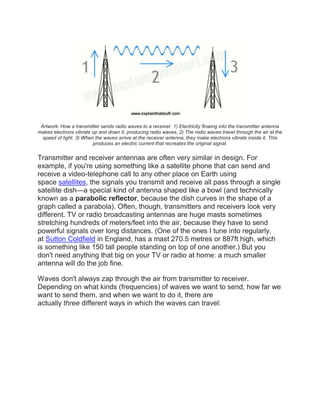
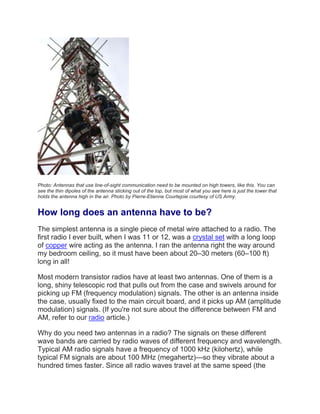
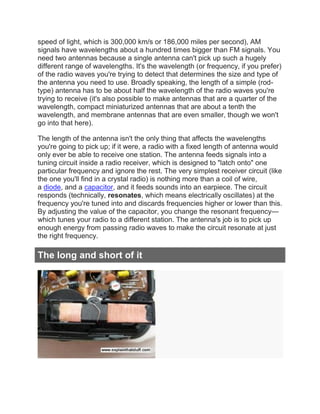
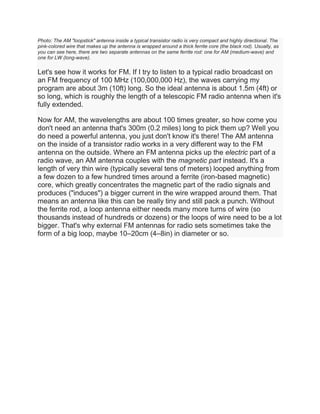
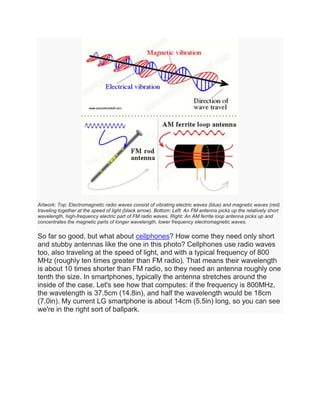
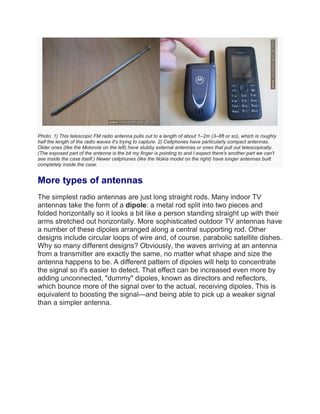
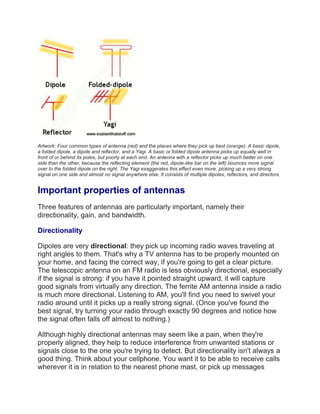
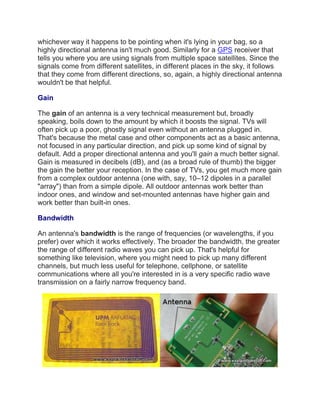
Antennas and transmitters work by converting electrical signals to radio waves and vice versa. Receiver antennas catch radio waves and convert them to electrical signals that can be processed. Transmitter antennas do the opposite, converting electrical signals to radio waves that can travel through the air or space. The size of the antenna depends on the wavelength of the radio waves - a half-wavelength dipole is optimal for most receivers. Different antenna designs have different directionality, gain, and bandwidth properties suited to various applications like radio, TV, phones, and satellites.