See	discussions,	stats,	and	author	profiles	for	this	publication	at:	https://www.researchgate.net/publication/281812616
AN	INTRODUCTION	TO	LATEX	GLOVES
Book	·	September	2012
CITATIONS
0
READS
3,366
1	author:
Some	of	the	authors	of	this	publication	are	also	working	on	these	related	projects:
blend	of	PLA	with	natural	rubber	View	project
Jose	Paul	Meleth
PRIMUS	GLOVES	PVT	LIMITED
4	PUBLICATIONS			6	CITATIONS			
SEE	PROFILE
All	content	following	this	page	was	uploaded	by	Jose	Paul	Meleth	on	16	September	2015.
The	user	has	requested	enhancement	of	the	downloaded	file.
1
TABLE OF CONTENTS
Page No:
CHAPTER 1 : Latex glove Industry - An Introduction 05
: Glove types
o Medical gloves
o Household gloves
o Industrial gloves
o Speciality gloves
CHAPTER 2 : Glove production & Manufacture 13
o Batch dipping
o Continuous dipping
: The manufacturing process
o Latex concentrate
o Compounding
o Coagulant dipping
o Latex dipping
o Beading
o Leaching
o Vulcanisation
o Post leaching
o Slurry dipping
o Stripping
o Tumbling
o Quality control
o Glove packing
o Glove sterilisation
o Finished gloves
CHAPTER 3 : Glove properties 19
2
TABLE OF CONTENTS
Page No:
: After treatment of gloves
o Chlorination
o Polymer coating
o Hydrogel coating
: Glove allergy and it’s remedies
o Type I allergy
o Type IV allergy
o Remedy
o Safe protein levels
: Powderfree gloves
CHAPTER 4 : Testing and Quality control of gloves 25
o In-process testing
: Standards and regulations for gloves
o Indian standards
o International standards
CHAPTER 5 : Alternatives to latex gloves 34
o Plasticised PVC
o Nitrile and neoprene
o Copolymer film
o Styrene block copolymer
o Polyurethane
CHAPTER 6 : Medical gloves – emerging properties & trends 36
: Latex gloves ….. the future
CHAPTER 7 : Frequently asked Questions 39
REFERENCES / FURTHER READING 62
3
4
ACKNOWLEDGMENT
I would like to acknowledge the management and staff of PRIMUS
GLOVES PRIVATE LIMITED for the kind help and support I
received during the course of completing this book.
5
CHAPTER 1
LATEX GLOVE INDUSTRY - AN INTRODUCTION
The demand for rubber gloves is expected to grow by 10% per annum. At
present, though rubber gloves have not been affected much from the global
crisis, the smaller manufacturers are facing stiff competition and higher
operational costs given the volatile latex prices over the past two years.
The strong growth partly reflects higher selling prices following the rise in
natural gas and latex prices in mid-2008. The demand for rubber gloves is
increasing in India, China and Vietnam due to increase in health and hygiene
awareness. Demand for lower-end powdered latex gloves is popular among
developing countries whose end-users are more cost-conscious. In developed
countries namely the United States and Europe there is a definite shift towards
powder-free latex and nitrile gloves. Latex sensitive persons prefer the nitrile
gloves. However, it is thought that powdered gloves will continue to rule the
market for many more years to come.
Malaysia is the largest worldwide exporter of rubber gloves whereas Thailand
accounts for less than half of the Malaysian market share. Exports of Malaysian
gloves are expected to increase by at least five to eight percent this year from
total exports of 63.8 billion pieces, last year. Malaysia's strength is its
productive labour. Each worker in the rubber gloves industry in Malaysia is
estimated to be nearly three times more productive compared to Thailand and
twice to Indonesian workers. The Indian presence in the international market is
negligible and is only around 0.2 % of the total market.
The major importers of latex gloves are the US, Europe and Latin American
countries. Last year, the US imported 48.4 billion pairs of rubber gloves worth
US$3.16 billion, with 23.8 billion pairs worth about US$1.55 billion from
6
Malaysia. This was a steady growth from 2004 when the US imported 37.6
billion pairs of gloves worth US$2.45 billion, with 18.6 billion pairs worth
about US$1.23 billion from Malaysia.
The awareness of healthcare and hygiene is driving the demand for rubber
gloves in the developed countries. Regulations have played a key role in the
growing rubber gloves demand, by making it mandatory in all types of
industries. The ageing population is another factor influencing demand for
healthcare expenditures; the world's population aged above 80 has been
increasing at a rapid rate of 3% over the past 20 years.
GLOVE TYPES
The rubber gloves can be divided basically into 4 different categories,
• Medical gloves
• Household gloves
• Industrial gloves
• Speciality gloves
MEDICAL GLOVES
Medical gloves are medical safety accessories that ensure sanitary hospital
conditions by limiting patients' exposure to infectious matter. They also serve to
protect health professionals from disease through contact with bodily fluids.
Medical gloves are traditionally made of latex and powdered with cornstarch to
lubricate the gloves, making them easier to don . Cornstarch replaced
Lycopodium powder and/or talc but since cornstarch can also impede healing if
it gets into tissues (as during surgery), non-powdered gloves are being used
7
more often during surgery and other sensitive procedures. Special
manufacturing processes are used to compensate for the lack of powder.
Medical gloves can further be divided into two,
• Surgical (surgeon’s) gloves
• Examination gloves
A surgical (surgeon’s) glove is a device made of natural or synthetic rubber
intended to be worn by operating room personnel to protect a surgical wound
from contamination.
Surgical gloves have more precise sizing (numbered sizing, generally from size
5.5 to size 9), and are made to higher specifications. They are hand specific.
Due to the increasing rate of latex allergy among health professionals as well as
in the general population, there has been an increasing move to gloves made of
non-latex materials such as vinyl or nitrile rubber. However, these gloves have
not yet replaced latex gloves in surgical procedures, as gloves made of alternate
materials generally do not fully match the fine control or greater sensitivity to
touch available with latex surgical gloves. High-grade non-latex gloves (such as
nitrile gloves) also cost two or more times the price of their latex counterparts, a
fact that has often prevented switching to these alternate materials in cost-
sensitive environments, such as many hospitals.
Powder-free medical gloves are also used in medical cleanroom environments,
where the need for cleanliness is often similar to that in a sensitive medical
environment. Similar but specially tested gloves are used in electronics
cleanrooms.
An Examination gloves (patient examination) glove is a disposable device
intended for medical purposes that is worn on the examiner’s hand or finger to
prevent contamination between patient and examiner. They are ambidextrous
8
(fitting both hands) and are generally thinner than surgical gloves. The
performance characteristics of the exam gloves are lower than the surgical glove
since they are used for less critical procedures. They are generally sized as
Extra small, Small, medium, large, and extra large.
HOUSEHOLD GLOVES
Gloves used around the Household are generally called Household gloves. It
can be useful in many ways,
If you have a screw-top bottle that has become stuck, use gloves for better
grip.
Picking up spiders and creepy-crawlies.
Food preparation - when preparing vegetables, fish, meat, etc to stop your
hands smelling/dirty
Painting and decorating.
Gardening.
Washing up.
Cleaning.
Dusting. It's so easy to knock your hand hand when dusting - wearing gloves
will protect you from injury.
Bathing pets.
Cleaning up after pets and children.
Dyeing/bleaching your hair.
Washing your hair - no need to get hands wet!
Protect your hands from steam burn when removing hot food from
microwave
Clearing tables in restaurants.
9
INDUSTRIAL GLOVES
Over the past two decades employers, especially in the developed countries,
have become increasingly aware of the obligation imposed on them to provide
their employees, where necessary, with adequate protective clothing and
appliances. This extends in particular to the protection of the hands, which, is
widely accepted as being an important aspect of their general duty at common
law to ensure the safety of their employees. It is estimated that injuries to hands
and fingers continue to account for more than a quarter of all industrial
accidents. Whatever the nature or cause of the injury, many accidents could be
avoided if the employer provide the correct type of hand protection. In selecting
a suitable glove for a particular operation, employers can obtain some guidance
from the British Standard Specification for Industrial Gloves: BS 1651:1986.
This standard specifies materials, manufacturing details and performance
requirements for gloves for protection against common industrial hazards. This
standard is not intended to be comprehensive or exhaustive and specifically
excludes products manufactured from certain specialized materials or used for
special purposes. More specifically, there are now a range of European
Standards issued under the PPE Directive (and adopted as British Standards)
laying down minimum performance requirements for gloves for particular
operations, e.g. fire-fighters gloves (BS EN 659), chainsaw gloves (BS EN
374), cold store gloves (BS EN 511). The pictograms given below shows the
glove tests performed on the gloves.
10
The range of materials available to glove makers has undergone a revolution in
the last decade. Whilst the more traditional materials, such as cotton or nylon
fleeces still have a role to play, the age of the performance fabric is now with
us. Fabrics are now on the market, which transport and manage moisture,
thermo-regulate, stretch for comfort, prevent the passage of blood borne
pathogens, and even inhibit the growth of bacteria.
Various materials are used in industrial gloves, to ensure maximum protection.
With the case of latex allergy in place, silk glove liners are tending to be used as
a practical and effective solution to the irritating problems of allergic reaction or
sensitivity. With the exception of man-made fibers such as KEVLAR®,
NOMEX®, and KERMEL®, the basic materials used in industrial gloves are
generally the same as they were in World War II. The major technological
development has been in the agents, such as waterproofing agents that are added
to leather, for example, during the tanning process. Although industrial leather
gloves are still used, they have now been superseded in many industrial
applications by rubber, plastic and fabrics.
11
In any form of industry, workers hands will come into daily and repeated
contact with irritants that can be found in liquids, such as petrol, oil, anti-freeze,
battery acid and chemicals, and objects at high temperatures - from 200 up to
800 degrees centigrade. Gloves not only protect from day to day burns and cuts,
but also ensure long-term protection against conditions such as severe
dermatitis.
SPECIALITY GLOVES
In selecting a suitable glove, it is essential to take into account the physical
conditions in which the operative is working and the sequence of the operation,
as well as the severity and combination of the hazards encountered. Below are
some examples of various industries where protective gloves are an essential
part of their “uniform.”
Emergency Services
Personnel in other services, from ambulance crews to commissionaires all
require gloves at some time. In addition all governments require specialist
gloves for their armed forces for both combat and general purposes. The gloves
are now mandatory to be used during emergency situations like traffic
accidents, natural calamities etc. Special types of gloves like High risk exam
gloves which are thicker than regular exam glove and long length gloves are
gaining popularity.
Police gloves
The introduction of a new British standard (BS 7971-2003) for protective
gloves for the police service has meant a new generation of gloves has been
developed to cover certain aspects of operational police duties, and includes
12
padded gloves for public order duties and cut - resistant uniform gloves which
are becoming standard for all Police personnel. The requirement for gloves
conforming to the standard will improve the safety of police officers
dramatically over the next decade
13
CHAPTER 2
GLOVE PRODUCTION & MANUFACTURE
The gloves are manufactured by either a
• Batch dipping process, or a
• Continuous dipping process
Batch dipping process
Batch dipping process is presently being used only for the manufacture of
irregular shaped articles or where the output required is small. Industrial gloves
are generally made using a batch process and household gloves are made on a
combination of batch and continuous process.
- A BATCH DIP PROCESS-
14
Continuous dipping process
Surgical and examination gloves are presently made on high-speed continuous
dipping lines with very high output.
- A CONTINUOUS DIP PROCESS -
The manufacturing process
15
The production process and the steps involved are similar in both Batch and
Continuous processes.
Latex concentrate
The latex from the tree is collected and then concentrated to 60 % DRC in latex
centrifuging plants. The concentrated latex is the basic raw material for the
dipping process.
Compounding
Compounding involves the addition of rubber chemicals like curing agents,
rubber accelerators, antioxidants, stabilizers, pigments, and others to the
concentrated latex. The added chemicals are mainly solids and hence have to be
ground before adding to the latex. The chemicals are ground to dispersion in
ball mills, pearl mills or attritors. The compounded latex is matured to get the
required maturation before feeding on to the dipping line.
Coagulant dipping
The formers are cleaned, dried and then dipped in a coagulant bath containing
suitable quantities of calcium nitrate, calcium carbonate and a suitable wetting
agent.
Latex dipping
The compounded latex is fed to the latex tank, which is maintained at a
temperature lower than ambient. The coagulant coated dry formers are then
dipped into the latex bath. The angle of dip of the formers into the bath is
critical.
16
Beading
The latex film is gelled in a gelling oven and then passed through edge rollers,
which curl the latex film at the cuff forming a rolled bead. The beading is given
to facilitate gripping of the gloves during donning.
Leaching
Leaching is the process by which the latex film is dipped in a bath of hot water
maintained at a temperature of around 80 deg C. This process removes the
excess chemicals in the latex film. This process is before curing and hence is
also called as pre-cure leaching.
Vulcanization
Vulcanization or curing is the process by which the latex film gets dried and
chemically crosslinked to form the glove. The curing takes place in a long
continuous tunnel oven maintained at around 130 deg c.
Post leaching
The glove film after curing is leached again in hot water to remove the water-
soluble protein and chemicals. This is an important step in the manufacture,
which keeps the residual protein level of gloves at the minimum.
Slurry Dip
The formers with the gloves are then dipped in wet slurry containing modified
cornstarch. The cornstarch is dried in an oven and it forms the donning powder
on the gloves. The starch powder is bio-absorbable and hence soft on skin.
17
Stripping
The gloves are then stripped off the formers and put in crates or bins. The
gloves are segregated size wise and put in the respective crates or bins.
Tumbling
The gloves are dried in a tumble drier where the excess moisture and powder is
removed. The gloves are then made into lots. The lots are then transferred for
further processing.
Quality control
The gloves, size wise, in lots, are either 100% inspected or audited randomly
and released for further processing.
Glove packing
Gloves are either packed bulk or in sterile pouches. Bulk packing involves
stuffing the gloves into packs of 100, in dispensor boxes. Sterile packing
involves wrapping the gloves, left and right, into primary packing called wallets
and then into a pouch made of either paper or plastic. The pouches are then
packed into inner cartons or shelf boxes of generally 50 pairs. The shelf boxes
are then packed in shipper cartons.
Glove sterilization
Gloves are sterilized either by Ethylene oxide or Gamma irradiation. Ethylene
oxide (ETO) sterilization involves subjecting the gloves to Ethylene oxide under
controlled conditions. ETO kills the microorganisms and makes the gloves
sterile. Gamma irradiation involves subjecting the gloves to Gamma rays.
Gamma rays kill the microorganisms but do not affect the rubber glove.
18
Finished gloves
The gloves are despatched as per planning schedule. Every consignment is
audited and released for shipment by the Quality Assurance department.
19
CHAPTER 3
GLOVE PROPERTIES
The performance requirements of gloves are,
• Freedom from holes
• Physical dimensions
• Physical properties
• Powder Amount
• Protein content
• Powderfree residue
• Antigenic protein content
• Sterility
Defects and Remedies
Gloves being a thin material, the thickness ranging from 0.10 mm at the cuff to
0.20mm at the fingers, is liable to have many film imperfections, resulting in
defectives.
Defects can be classified broadly into,
• Functional, and
• Cosmetic
Functional defects are those that affect the barrier properties and hence the
performance characteristics of the glove. They are,
• Pinholes –very small holes as the name suggests and results from bubbles
in latex tank, excess of calcium carbonate, mould imperfections etc.
20
• Weak spots – areas of weakness that could lead to a hole if left
unattended.
• Visual holes or tears – holes that are big enough to be detected visually
and cuts and tears.
• Bead imperfections - no bead or improper beading, resulting in difficulty
during donning
• Lower tensile properties – reason could be the compound recipe or
processing parameters
• Dimensional variation – process parameters or former dimensions could
be the reason
• Variation in powder content
• Increased protein levels – insufficient leaching, high protein latex
Cosmetic defects are those that do not compromise the barrier and performance
characteristics of the glove
• Coagulum- lumps of latex coagulated on the surface of the glove
• Dirt – specks of dirt on the surface of the glove
• Stains – stains due to oil or grease on the glove
After treatments of Gloves
The after treatments are done to remove the powder and the residual proteins.
Chlorination
Chlorination of the latex glove reduces the stickiness (tackiness) of the latex by
modifying the rubber surface. This produces a smooth, non-tacky surface on the
glove, which can be donned without the aid of dusting powder. An added
benefit of chlorination is that it reduces the amount of extractable protein in the
glove, either by denaturing the protein or by leaching.
21
Polymer coating
Coating the surface with suitable Polymers could also reduce the tackiness of
the glove. The popular polymer coating materials are based on Polyurethane or
Acrylic emulsions. The process involves coating the surface with the polymer
during the production process. The process is modified so that the polymer
integrates with the glove film.
Hydrogel Coatings
Hydrogel coated gloves eliminate the need for powdering as the hydrogel
creates a slippery surface on the inside of the glove, which aids donning. The
hydrogel may also act as a barrier between the users skin and the latex, thus
reducing the exposure to the latex proteins. An antiseptic coating on the glove
(cetylpyridinium chloride) bound to the hydrogel may also act as an antiseptic
barrier to cross-infection if the glove is punctured.
Glove allergy and it’s remedies
Latex is known to cause two types of hypersensitivity:
Type I Allergy
The most serious Type I allergy is an immediate and potentially life-threatening
reaction, like the severe reaction some people have to bee stings. These are
known to be caused by Latex proteins.
Type IV Allergy
Type IV allergy is also known as allergic contact dermatitis. This involves a
delayed skin rash that is similar to poison ivy with blistering and oozing of the
22
skin. Chemicals used in the processing of rubber products cause this type of
allergy.
Remedy
The remedy to these allergic reactions is to reduce the residual proteins and
chemicals during the production process by extensive hot water leaching. It is
now presently possible to manufacture low protein powdered gloves and
powder free gloves. Extensive leaching, chlorination and polymer coating are
some of the methods used in glove manufacture to reduce allergy.. Low protein
latex has also been developed to tackle this problem in the raw material stage.
Of the two allergies reported Type I involving latex allergens have been studied
to a great deal and presently the manufacturers have put in sufficient controls in
production that this is no longer a major issue.
"Safe" Protein levels
Is it possible to identify a "safe" level of protein in latex gloves? A question
often debated!
The main problem at present is that we do not know exactly which proteins
cause Type I allergy. Whilst the total extractable proteins (TEP) results can give
a good indication of the likelihood of a glove causing a hypersensitivity
reaction, there is a theoretical possibility of a glove containing extremely low
levels of proteins, where all of those proteins are allergenic and likely to cause a
Type I reaction. Conversely, it is also possible that gloves low in allergen
content may be high in TEP The Food and Drug Administration (FDA) in the
USA stated in their interim guidance on protein content latex medical gloves
that "Although there are insufficient clinical data to set a protein level that
dramatically reduces the incidence of reactions to latex protein, there is
23
scientific consensus that reduced protein levels will lower the potential for both
sensitization of non-sensitized individuals and allergic reactions in sensitized
individuals.
The FDA now has a policy of allowing manufacturers to label their gloves with
a specified protein level (based on their maximum process level, not the average
figure), making it mandatory for manufacturers to include a statement as
follows.
"Caution: Safe use of this glove by or on latex sensitized individuals has not
been established.
FDA also does not allow products to be labeled with TEP levels lower than 50
micrograms per gram as this is the sensitivity limit of the ASTM Lowry test
method (which is very similar to the CEN method – EN 455-3).
The FDA has also proposed a ban on the use of the term "hypoallergenic glove"
until it is properly defined. Some manufacturers use the term to refer to the fact
that their gloves may contain reduced levels of chemical additives, or the fact
that they use carbamates instead of thiurams as accelerators. Even so, these
gloves may contain the same or higher levels of TEP than gloves not so labeled.
Powder-free gloves
The conventional latex glove is powdered with bio-absorbable cornstarch
powder. Cornstarch was an improvement on the talc and other donning powder
used earlier, but it has it’s own problems. The powder can result in polluting
the sterile environment in which the gloves are used and it also aids as a carrier
for latex proteins. Hence there was a need for replacing the powder in the
glove. This resulted in the introduction of Powder-free gloves where the
donning was facilitated not by using powder but by modifying the surface by
24
chlorination or by treating with a suitable Polymer solution or hydrogel. The
powder free gloves are free from powder and are low in residual proteins and
hence they are less susceptible to allergies.
25
CHAPTER 4
TESTING AND QUALITY CONTROL OF GLOVES
The Quality is controlled at the various in-process stages in the manufacture of
the gloves. Samples are drawn at regular intervals and then tested in the
laboratory for the specified parameters. Further the manufacturing process is
validated and the process specifications are issued based on the validation
results. Some of the tests done are,
In-process testing
• Former pre-cleaning – acidity content, water flow rates
• Coagulant tank – concentration of calcium nitrate, calcium carbonate,
wetting efficiency
• Latex tank – total solids, pH, maturation
• Leach tanks – water overflow rates, water hardness, pH
• Wet slurry tank – concentration, pH
Product testing
Product testing is done on a random sampling as per sampling plan ISO 2859.
Samples are selected and tested for the various parameters like tensile
properties, dimensions, powder content, protein content, holes etc. The result is
expressed in AQL’s – Acceptable quality levels. Anything above the acceptable
limits is rejected or reprocessed. The international standard specifies an AQL
level of 1.5 for surgical gloves and 2.5 for examination gloves but the
manufacturers generally keep a much tighter AQL levels in their process.
26
PICTURES OF GLOVE TESTING
- WATER TIGHT TESTING –
- VISCOSITY MEASURMENTS -
27
- PROTEIN MEASUREMENTS –
- CHEMICAL ANALYSIS -
28
- DIMENSIONAL ANALYSIS –
- TENSILE TESTING -
29
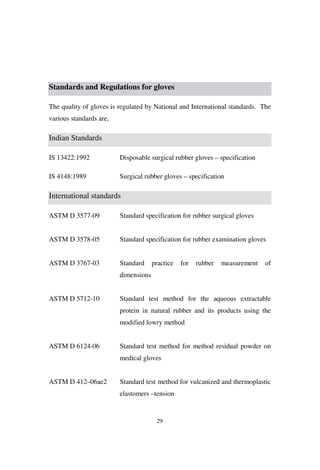
Standards and Regulations for gloves
The quality of gloves is regulated by National and International standards. The
various standards are,
Indian Standards
IS 13422:1992 Disposable surgical rubber gloves – specification
IS 4148:1989 Surgical rubber gloves – specification
International standards
ASTM D 3577-09 Standard specification for rubber surgical gloves
ASTM D 3578-05 Standard specification for rubber examination gloves
ASTM D 3767-03 Standard practice for rubber measurement of
dimensions
ASTM D 5712-10 Standard test method for the aqueous extractable
protein in natural rubber and its products using the
modified lowry method
ASTM D 6124-06 Standard test method for method residual powder on
medical gloves
ASTM D 412–06ae2 Standard test method for vulcanized and thermoplastic
elastomers –tension
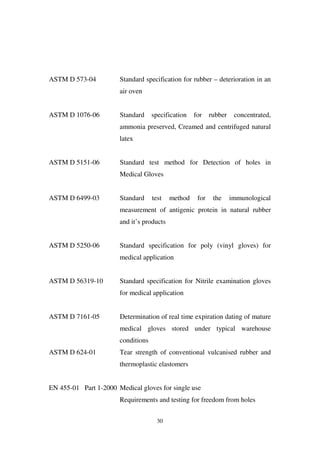
30
ASTM D 573-04 Standard specification for rubber – deterioration in an
air oven
ASTM D 1076-06 Standard specification for rubber concentrated,
ammonia preserved, Creamed and centrifuged natural
latex
ASTM D 5151-06 Standard test method for Detection of holes in
Medical Gloves
ASTM D 6499-03 Standard test method for the immunological
measurement of antigenic protein in natural rubber
and it’s products
ASTM D 5250-06 Standard specification for poly (vinyl gloves) for
medical application
ASTM D 56319-10 Standard specification for Nitrile examination gloves
for medical application
ASTM D 7161-05 Determination of real time expiration dating of mature
medical gloves stored under typical warehouse
conditions
ASTM D 624-01 Tear strength of conventional vulcanised rubber and
thermoplastic elastomers
EN 455-01 Part 1-2000 Medical gloves for single use
Requirements and testing for freedom from holes
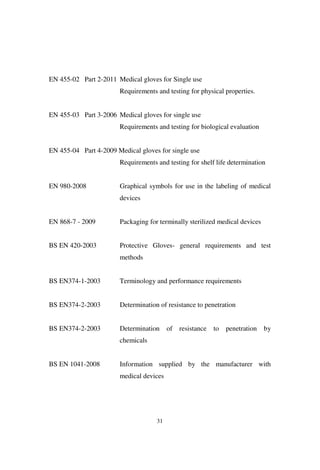
31
EN 455-02 Part 2-2011 Medical gloves for Single use
Requirements and testing for physical properties.
EN 455-03 Part 3-2006 Medical gloves for single use
Requirements and testing for biological evaluation
EN 455-04 Part 4-2009 Medical gloves for single use
Requirements and testing for shelf life determination
EN 980-2008 Graphical symbols for use in the labeling of medical
devices
EN 868-7 - 2009 Packaging for terminally sterilized medical devices
BS EN 420-2003 Protective Gloves- general requirements and test
methods
BS EN374-1-2003 Terminology and performance requirements
BS EN374-2-2003 Determination of resistance to penetration
BS EN374-2-2003 Determination of resistance to penetration by
chemicals
BS EN 1041-2008 Information supplied by the manufacturer with
medical devices
32
ISO 14971:2012 Medical Devices: Application of risk management to
medical devices
ISO 11135-1994 Medical devices- Validation and routine control of
ethylene oxide sterilization
ISO 11135-1-2007 Medical devices- Requirements for development
,Validation and routine control of ethylene oxide
sterilization
ISO 11135-2-2008 Sterilisation of Healthcare products Ethylene Oxide –
Guidelines of Application 11135-1
ISO 11137 –1:2006 Sterilization of health care products
Requirements for validation and routine control-
Radiation validation
ISO 11137 –2:2006 Sterilization of health care products
Establishing the sterilization Dose
ISO 11137 –3:2006 Sterilization of health care products
Guidance on dosimetric aspects
ISO 11737-1-2006 Sterilization of Medical Devices
Estimation of the population of Micro organisms on
product
ISO 2230-2002 Rubber products – Guidelines for storage
33
ISO 10993-7: 2008 Biological evaluation of medical devices
ISO 13485-2012 Quality Management system- Requirement for
regulatory purpose
ISO 10282-2002 Single use sterile rubber surgical gloves - specification
In European Community (EC) countries, requirements for reporting a glove's
performance characteristics are law. As of 1995, all gloves sold in EC countries
must comply with the 1992 Personal Protective Equipment Directive for the
European Community and carry the CE Marking. This directive from the
European Committee for Standardization, or the Comité Européen de
Normalisation (CEN), prohibits selling any glove in EC countries until it has
been tested by an independent, certified laboratory and had the ratings
subsequently labeled on the glove itself or the smallest unit of packaging.
The labeling informs end users of the intended purpose of the glove and ensures
the glove is not harmful to the wearer. Instructions for use, including the life
expectancy of the glove, must be included in the smallest unit of packaging. The
glove must comply with uniform sizing requirements set by the EN 420
Standard for Labeling. The glove's packaging must be labeled with the name of
the manufacturer, glove designation, size, CE marking, contact information, and
date of expiry.
The CE marking must include one or more pictograms showing the
performance levels of the glove against specific risks. The Instructions for Use
document must be included in the smallest unit of packaging and must include
care instructions and details of any substance used in the glove materials that is
known to cause allergies.
34
CHAPTER 5
ALTERNATIVES TO LATEX GLOVES
There are a number of alternatives to latex for the manufacture of gloves, but
none of them have the same unique combination of properties as latex. The
following lists alternative materials along with their advantages and
disadvantages.
Plasticised PVC - usually only used for examination gloves, PVC is cheap, but
has poor elasticity and tear strength, and there have been reports of allergic
reactions to additives from the manufacturing process. Disposal of PVC by
incineration is known to release the monomer vinyl chloride, a known human
carcinogen. PVC will tend to have higher levels of chemical additives than
latex.
Nitrile & Neoprene (polychloroprene) are similar to natural rubber when
vulcanized, but their tensile strength is usually lower whilst their elastic
modulus tends to be higher (leading to finger fatigue over time). Incineration of
both can lead to the release of hazardous chemicals, such as cyanide from nitrile
and hydrogen chloride from Neoprene.
Copolymer film gloves are not an acceptable substitute for NRL gloves, as they
have reduced tear strength, and have been shown in the laboratory to be
unsuitable for rectal or vaginal examinations due to bursting of the seam. They
have a very limited field of use.
Styrene Block Copolymer - can be manufactured into gloves strong enough for
medical use, but they have very poor ability to return to their original shape
after repeated stretching. It has been reported that styrene can cause Type I
35
allergic responses, but there is little evidence at present on how well tolerated
these products are due to the small numbers being used.
Polyurethane - can be used to manufacture very high tensile strength gloves, but
its modulus of elasticity and elongation at break can make the gloves
uncomfortable to wear. There have been reports of reactions to polyurethane
implants and Polyurethane gloves also tend to be very expensive.
Whilst latex-free gloves may be more expensive than the latex alternative on a
unit basis, the cost disadvantage may be outweighed by the potential reduction
in costs of dealing with latex allergy. Nevertheless, it can be seen that it is
difficult to find an alternative to latex that matches it in terms of its physical
properties (high tensile strength, softness, excellent film-forming properties). As
latex has been used almost universally for such a long time, there is a
considerable body of evidence on the likely ill effects of latex medical devices.
Alternatives to latex gloves should be available for sensitive individuals, but a
wholesale move to non-latex gloves will be not be risk free, and it would result
in the majority of users (who do not experience any ill-effects from latex)
having to use an inferior performing glove.
36
CHAPTER 6
MEDICAL GLOVES - EMERGING PROPERTIES & TRENDS
The proper use of effective medical gloves is a fundamental component of the
effort to control the spread of pathogens. Given the range of choices that the
market currently offers in terms of gloves, facilities must evaluate a number of
factors in order to select the best possible gloving solution for their healthcare
workers (HCWs). For their part, manufacturers must strive to provide good
choices, which include incorporating features and elements that address HCW
needs and concerns.
Excellent barrier properties are a primary consideration for the selection of
gloves. Those with inferior barrier protection against blood borne pathogens and
other harmful infectious diseases should not be used in medical and healthcare
environments. Otherwise, both medical and healthcare professionals as well as
their patients could be exposed to unnecessary infections.
Another prominent issue in regard to glove usage is the possibility of health risk
to HCWs. This basically refers to the possible adverse reactions that can be
elicited in sensitive users by the presence of excessive residual chemicals,
which can give rise to irritant contact dermatitis or Type IV allergy, or the
presence of certain proteins, which can cause Type I allergy. While most
gloves, particularly those made of synthetic materials derived from petrol
chemicals, do have residual chemicals, improvement in latex glove
manufacturing technologies has led to the production of very low-protein latex
gloves. The use of these gloves has been shown by many recent studies to
markedly reduce the incidence of latex allergy.
37
Latex gloves … The future
As result of greater demand for NRL powder alternatives from the provider
side, an increasing number of companies are likely to continue to enter the
market in an attempt to capitalize on the demand. This continued entry of the
new market participants is expected to provide for a rise in the disposable glove
production over the course of the forecast period. Additionally, the continued
increase in patient volumes is also likely to drive unit shipments, as healthcare
organizations across the board are anticipated to increase their expenditure on
disposable gloves to accommodate growing patient volumes. This can, in turn,
lead to the purchase of lower-priced gloves to alleviate cost constraints for some
organizations, especially within the alternative care segment.
Among the market segments, unit shipments of the latex powdered gloves, in
both the medical exam gloves and the surgical gloves market, have undergone
significant reductions over the past three years. Correspondingly, Latex powder-
free gloves have continued to gain acceptance, displaying considerable growth
in terms of both unit shipments and revenues. Although the overall U.S. medical
gloves market continues to grow, adoption patterns have begun changing over
the past several years, and will continue to do so as clinicians become
increasingly aware of the negative components of the previously more used
latex gloves, and continue demanding alternatives. Additional factors such as
price point and technology innovation will also play critical roles in determining
further market penetration in the years to come. Disposable medical device is a
very important part of the total medical device industry. For the last few years
disposable market is growing continuously and showing a bright growth trend
in near future.
38
Contract manufacturers will tend to play a more important role in this industry.
Their specialization in a particular field minimizes the cost and enhances the
quality of the product.
Ageing population is one of the important contributors in increasing the market
of disposable medical devices. Increasing health expenditures are also one of
the key growth drivers.
It is expected that niche markets will develop that caters to the exact
requirement of the surgeons and the healthcare worker. It is seen that latest
innovations like gloves with multiple attachments for light source, endoscopy
camera etc. are gaining acceptance. The future of the glove industry lies is
innovating better suited gloves for the intended user.
39
CHAPTER 7
FREQUENTLY ASKED QUESTIONS
General Latex Information
1. What is natural rubber latex?
Natural rubber latex is obtained from the Hevea Brasiliensis tree
when it’s bark is tapped. It is a milky fluid comprising 30-40% of
rubber hydrocarbon particles suspended in a serum together with a
few percent of other non-rubber substances such as proteins, lipids,
carbohydrates, sugars and some metals (non-rubber fractions). The
remaining major component is water.
2. What products contain latex?
Latex is a common component of many medical supplies, including
disposable gloves, airway and intravenous tubing, syringes,
stethoscopes, catheters, dental dams, dressings and bandages. They
are also used in the manufacture of balloons, baby soothers latex
foam and threads.
Production
3. How is latex products produced?
Latex products are generally produced by a dipping process. Forms
of the required shape and size are dipped in compounded latex and
40
then cured to form the product. Generally the products are leached
in hot water to remove residual proteins and chemicals.
4. What does vulcanization mean?
Vulcanization is the process of curing a latex product at elevated
temperature so as to obtain the required properties.
5. Why are chemicals used in the manufacture of gloves?
Chemicals are an essential component of rubber goods
manufacture. The gloves get their properties due to the presence of
these chemicals and therefore these cannot be totally eliminated.
6. Do chemical additives cause skin problems?
Yes, they do. Allergies to rubber chemicals are one of the most
common causes of occupational contact dermatitis.
7. What are the classes of chemicals in the gloves that are known
to have allergenic potential?
The greatest allergenic potential of rubber additives in gloves is
accelerators and antioxidants.
8. What is an accelerator?
Accelerators are essential chemicals that are used to cure latex
compounds and so cannot be avoided.
41
9. What other factors affect sensitization?
The other factors that affect sensitization are the length and method
of exposure, concentration and sensitizing nature of allergenic
substances. Also, pre-existing contact eczema or irritative
dermatitis can aggravate sensitization.
10. What accelerators may be used by the various manufacturers
of gloves?
There are different classes of accelerators viz, dithiocarbamates,
thiazoles, thiurams , aldehydamines and guanidines. The
predominant allergens are those accelerators belonging to the
thiuram group.
11. What is an antioxidant?
An antioxidant is a chemical that increases the shelf life of gloves
and is essential for extending the shelf life of gloves.
12. Why are Biocides used in the manufacture of gloves?
The gloves in the final stage of manufacture are coated with
modified corn starch. The starch powder has a tendency to putrefy,
if left alone and therefore would require a bactericide
42
Chlorination
13. How does chlorination affect surface protein and chemical
residues?
The Chlorination process involves a thorough washing process.
This reduces the surface proteins and chemical residues. The
surface chlorination further reduces the residual protein content.
14. What are the different processes of Chlorination?
There are two different processes for chlorination. One using liquid
chemicals and the other using gaseous chlorine.
15. What is the advantage of gaseous chlorine over the liquid
process?
The alternate method using chemicals, is to treat gloves with a
solution of Sodium Hypochlorate and hydrochloric acid. Chlorine
released during this reaction chlorinates the glove surface thereby
making donning easier. This method uses more chemicals and
hence more residuals are present. Moreover the process is “messy”
compared to the other method.
16. Is chlorination difficult to control?
Yes, the process is difficult to control and consistency in the
product can be guaranteed only if sophisticated instrumentation is
used. The concentration of chlorine is controlled by flow meters
43
and ppm meters. PH meters control the solution and discharge pH.
The PLC programme integrates all these parameters into the
programme logic.
17. Does chlorination reduce protein levels?
Yes, the Chlorination process reduces the residual proteins to
negligible levels.
Packaging
18. What is the regulatory requirement for warning labels on latex
products?
The products containing natural rubber latex are required to be
labeled as
CAUTION:
“THIS PRODUCT CONTAINS NATURAL RUBBER LATEX
WHICH MAY CAUSE ALLERGIC REACTIONS. SAFE USE
OF THIS GLOVE BY OR ON LATEX SENSITISED
INDIVIDUALS HAS NOT BEEN ESTABLISHED “
19. Can labels say gloves are low proteins?
Yes, Labelling claims on gloves can be made , but a claim below
50 microgram per gram is not permitted by the USFDA.
44
Protein levels
20. Why is low protein levels preferred?
Higher residual water extractable protein levels are associated with
Type I allergic reactions. The problem is more severe in sensitized
individuals.
21. What are water extractable proteins?
Water extractable proteins are those protein fractions that are
extracted on to the hands. It is these proteins that cause an allergic
reaction.
22. Does all proteins in latex induce a reaction?
No, Not all allergic proteins in the residual extractable fraction
cause an allergic reaction. So far about nine of the potential
allergens present in the latex have been identified.
28. Does all glove made from natural rubber glove have the same
allergic potential?
No, the allergic potential by and far depends on the processing
conditions of manufacturing. For example, a glove with extensive
leaching, would have much lower residual proteins than a glove
that has been leached to a lesser extent.
45
29.How is the protein content determined / tested?
There are two standard test method , both using the Modified
Lowry method. One is the ASTM D5712 and the other the EN
455-3. Both differ only in the extraction procedure and the
expression of results.
30. Which external laboratories are used for testing gloves?
Laboratories like GUTHRIE , USA, University of Erlengen,
Germany, the Rubber Research Institute of Malaysia and the
Rubber Research Institute, India, are generally used for testing
glove samples.
31.What is a safe” protein” levels?
A safe protein level cannot be easily set as the allergic reaction is
dependent on the sensitization level of an individual. It is found
that a level below 50 microgram per gram is safer for an already
sensitized individual.
32.Does Powder in the glove enhance allergy reaction?
Yes, the Corn starch powder in the gloves is known to induce
allergic reactions. Even though the Powder is by itself not allergic
it has a tendency to absorb proteins from the glove film. The
powder with the adsorbed protein gets into the respiratory tract and
46
induces allergic reactions. The Powder is therefore a carrier of
allergens.
33. What are the alternatives?
One of the alternatives to this problem is to avoid usage of latex
products. This is a difficult proposition as the advantages of a
natural rubber glove are far more to be ignored.
34.Does Synthetic glove offer an alternative?
It is an alternative for the severely sensitized but is not a solution.
Synthetics does not provide the barrier properties required for a
glove. The glove disposal problems associated with synthetics are
another problem that restricts it’s use. With these disadvantages the
synthetic glove seems to be a poor alternative to natural latex
glove.
35.What would be the optimal solution?
A natural rubber glove with low protein content would be an ideal
alternative. It should be low in proteins and provide the feel, fit,
comfort, strength and endurance required for a glove.
Barrier properties – Glove use, storage and disposal
36.Can I wash & resuse disposable glove?
It is not advisable to reuse disposable gloves. Disposable gloves
are designed to be used only once. Gloves once used have inferior
47
barrier properties and poses a severe threat of contamination to the
user.
37.How can I tell if a glove is OK to use?
It is difficult to tell the quality of a glove by visual examination
alone. Only holes that are visible could be seen. The confidence in
the supplier is one of the factors that can ensure the quality of the
glove used. Gloves made as per ISO 9002 , ISO 13485 & CE
norms where the quality is monitored and controlled at every level
of manufacture and where the process is as per the cGMP – current
good manufacturing practices, ensures a consistently good quality
product.
38.Do all latex gloves offer the same barrier protection?
They may not. Since gloves are made at different locations with
different process parameters a variation in glove properties may be
present.
39.Does storage of gloves affect the barrier properties?
Yes, it does. Gloves are to be stored in a cool and dry place away
from Sunlight. The ISO 2230 standard gives a guideline for
storage of rubber products.
48
40.What is the recommended storage condition for gloves?
• Below 25°C, away from sources of heat (boilers, radiators
and direct sunlight).
• At a humidity below 70 %
• Protected from light sources e.g., sunlight or intense
artificial light and especially ultraviolet light.
• Areas of storage should not be located near or contain ozone
generating equipment, e.g., electric motors, switch gear,
fluorescent lights, mercury vapour lights, and ultra violet
lights.
• Storage areas should be well ventilated as a build up of
combustion gases could give rise to ozone, which being
heavier than air, will accumulate in low areas.
• Gloves should be stored away from ionising radiation which
will break down the vulcanisation bonds, thereby weakening
the gloves.
• Organic solvents, petroleum based oils and grease should not
contact the gloves as they will degrade the rubber.
• Copper, manganese and other heavy metals should not
contact the gloves as they will react with the residual
accelerators and degrade the gloves.
• Contact with sharp surfaces or objects could damage the
packaging or the gloves. In the case of pre-sterilised gloves,
this would render them un-sterile.
• As gloves have an expiry date it is important to observe a
strict "first in, first out" stock rotation policy.
49
• Medical product storage must be dust and rodent free in case
the packaging becomes contaminated rendering the products
unusable.
41.Are the gloves biodegradable?
Gloves are made from natural rubber latex and are biodegradable.
They break down under the presence of sunlight. Microorganisms
also degrade the gloves.
42.Can latex gloves be disposed in a landfill?
Yes, they can be disposed off in a landfill.
Lotions
43.Can I use hand lotion under my latex gloves?
Hand lotions are often recommended to minimize drying which
may result from frequent handwashing. Outbreaks of bacterial
infection have been caused by contaminated hand lotions.
Selection of hand lotions have to be done carefully and detailed
information may be obtained from the manufacturer of lotions.
44.Do lotions affect glove barrier properties?
Yes, they do. OSHA has expressed concerns about the potential for
oil-based lotion formulations (petroleum) to weaken latex gloves
and cause increased permeability.
50
45.How do I select a compatible hand lotion?
Lotions with anionic moisturizing agents may interfere with the
residual antibacterial activity of some antiseptics. Thus, the
interaction between lotions and antimicrobial activity as well as the
effect of lotions on the permeability of gloves must be considered
at the time of product selection.
Biocompatibility and safety
46.What is the accepted method for latex protein testing?
There are two standard test method , both using the Modified
Lowry method. One is the ASTM D5712 and the other the EN
455-3. Both differs only in the extraction procedure and the
expression of results.
47. What are the tests that demonstrate the potential for causing
irritation to skin?
Primary Skin irritation test demonstrates the potential for irritating
abraded skin
Dermal sensitization test demonstrates the potential for eliciting
allergic contact dermatitis
51
48.What are the tests for strength of Gloves?
Tensile strength refers to how much force is required to stretch a
glove sample until it breaks. Higher values reflect superior
performance
Elongation at break relates to how far the glove stretches before it
breaks and is expressed as a percentage of the initial length.
49. How does “Glove fit“ relate to performance?
Glove fit is important to prevent chafing of the skin. If a glove's
sizing is not well matched to the wearer, a glove selected for good
finger fit may be tight across the hand and cause chafing of the skin
across the back of the hand. (This may be mistaken for an allergic
reaction). In addition, gloves that fit poorly sometimes make it
difficult to perform manual tasks, such as grasping or manipulating
medical devices. In some cases, workers compensate by gripping
more tightly, which over time can cause hand trauma or accidents.
50. How is the fit of a glove reflected in the glove standards?
Gloves are divided into different sizes and the fit of the glove is
based on the width of the glove at the palm.
51. What is an Endotoxin?
Endotoxin is an inflammatory agent made by gram positive
bacteria that can irritate the skin, induce respiratory problems,
fever, and shock.
52
56. What are Pyrogens?
A pyrogen is a fever producing substance. Endotoxins are
Pyrogens.
57. What does Pyrogenic mean?
Pyrogenic means Fever producing.
58. Are Endotoxins found only in gloves?
No. Endotoxins may be present in medical equipment, infusion
dialysis equipment, disinfection liquids, air cooler systems, water
supplies, air filters, sterilized re-usable devices and generally in the
hospital environment.
Sterility
59. What is Bioburden?
Bioburden is the population of viable microorganisms on a product
and/or a package.
60. What are the popular methods of sterilisation?
The popular sterilization methods for gloves are Ethylene oxide
sterilization, irradiation by Gamma rays and Electron beam
irradiation. VAPOURISED HYDROGEN PEROXIDE (VHP) is a
new method that is gaining popularity.
61. What are the differences between the methods?
Ethylene oxide sterilization uses ethylene oxide gas for sterilization
whereas irradiation methods uses either Gamma radiation from a
53
Cobalt-60 source or uses high energy electron beam. VHP uses
hydrogen peroxide vapors that does not leave any residues.
62. What is SAL?
SAL stands for STERILITY ASSURANCE LEVEL.
63. What is Dose mapping?
Dose mapping is the exercise conducted to determine the
distribution of radiation dose throughout a load of specified
density, arranged in an irradiation container in a defined
configuration.
64. What is sterilization dose?
It is the minimum absorbed dose required to achieve the specified
sterility assurance level.
65. Does gamma sterilization use chemicals?
Gamma sterilization uses radiation from Cobalt-60 source and does
not use any chemicals.
66. Does Gamma radiation affect the properties of gloves?
A good formulated natural rubber glove can tolerate upto about
100 kGy without affecting the properties of gloves.
67. Does Gamma radiation involve the application of pressure or
temperature?
Gamma radiation does not involve pressure or temperature and so
the product is not stressed during the process.
54
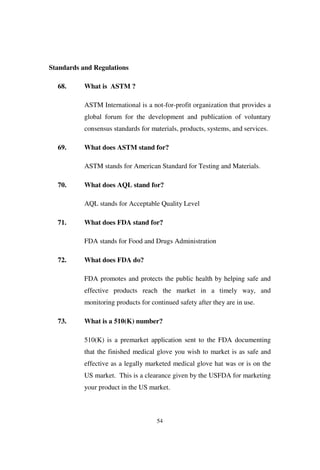
Standards and Regulations
68. What is ASTM ?
ASTM International is a not-for-profit organization that provides a
global forum for the development and publication of voluntary
consensus standards for materials, products, systems, and services.
69. What does ASTM stand for?
ASTM stands for American Standard for Testing and Materials.
70. What does AQL stand for?
AQL stands for Acceptable Quality Level
71. What does FDA stand for?
FDA stands for Food and Drugs Administration
72. What does FDA do?
FDA promotes and protects the public health by helping safe and
effective products reach the market in a timely way, and
monitoring products for continued safety after they are in use.
73. What is a 510(K) number?
510(K) is a premarket application sent to the FDA documenting
that the finished medical glove you wish to market is as safe and
effective as a legally marketed medical glove hat was or is on the
US market. This is a clearance given by the USFDA for marketing
your product in the US market.
55
74. Is any testing required for a glove to receive a 510(k)?
Yes, gloves are tested for Biocompatibility, residual proteins,
physical properties and residual chemicals.
75. What are the EN standards?
The EN standards are the European standards
76. What are the relevant EN standards for gloves?
EN 455-1, 2 & 3 are the relevant standards for medical gloves.
77. What is ISO?
The International Organization for Standardization (ISO) is a
worldwide federation of national standards bodies from
some 140 countries, one from each country.
78. What does ISO do?
ISO is a non-governmental organization established in 1947. The
mission of ISO is to promote the development of standardization
and related activities in the world with a view to facilitating the
international exchange of goods and services, and to developing
cooperation in the spheres of intellectual, scientific, technological
and economic activity.
79. Why is international standardization required?
The need arose due to the need to agree on world standards to help
rationalize the international trading process
56
80. What are ISO 9000 standards?
ISO 9000 is primarily concerned with "quality management". The
standardized definition of "quality" in ISO 9000 refers to all those
features of a product (or service) which are required by the
customer.
81. What is quality management?
"Quality management" means what the organization does to ensure
that its products conform to the customer's requirements
Powder associated issues
82. Why is glove powder an issue?
Powder is an irritant that can dry hands, macerates skin, irritate the
respiratory mucosa and cause granulomas.
83. Can Powder act as a carrier of proteins?
Powder is found to be a carrier or vector , aerolising proteins and
chemicals bound to it’s surface. The aerolised powder acts a
foreign body when left in the wound site.
84. What kind of Powder is generally used on gloves?
The primary powder used for gloves is USP absorbable dusting
powder ( modified cornstarch). Calcium carbonate and other
chemicals may be added, depending on the manufacturer.
85. What is the allowable level of Powder as per ASTM?
57
The ASTM standards call for a maximum limit of 15 milligram per
dm2
for Surgical gloves.
86. Does Powder bind just chemicals and proteins?
No. Powder may act as a microbial-laden fomite , carrying
infectious agents such as bacteria, yeast, viruses and fungi. These
glove powder fomites can potentially contact patients during
procedure such as routine examinations, emergency treatments,
respiratory care and wound dressings, contributing to increased
inflammation and infection, and potentially affecting hospital stay
and associated costs.
87. Why are Powdered gloves still in use?
Powdered latex gloves make up a majority of the glove market in
response to consumer demand. To completely stop production of
all powdered gloves would result in a massive glove shortage and
unnecessarily expose healthcare professionals to potential
infections from blood borne pathogens.
88. Are powdered gloves easier to don than Powderfree gloves?
Powder free gloves are exposed to different manufacturing
processes. One of these processes , Chlorination , gives a smooth
feel to the gloves, making powderfree gloves as easy to don as
powdered gloves.
89. Why do consumers continue to demand powdered gloves?
Education of end-users continues as additional research clarifies
the specific consequences of Powdered glove use in its myriad of
58
applications. This process is moving user demand increasingly
toward a powderfree environment. However, because customer
demands for powdered gloves have always been greater than those
for powderfree , a sudden ban of powered gloves would leave
manufacturers unable to produce enough powderfree product to
make up the difference, creating a glove supply shortage.
Glove donning
90. What is the correct method of donning a Sterile glove?
• Select the appropriate glove size and inspect the package
to make sure it's intact and dry.
• Wash and dry your hands.
• Place the sterile package on a clean, dry surface above
waist height. (Consider anything held below waist level
contaminated.
• Peel back the top of the outside wrapper. Handle only the
outside of the inner package.
• Carefully open the inner package so the cuffs of the
sterile gloves are closest to you.
• Using the thumb and forefinger of your non dominant
hand, grasp the fold of the cuff on the glove for your
dominant hand.
• Leaving the cuff folded, place your dominant hand into
the glove and pull the glove on. Allow the cuff to unfold
as you finish inserting your hand but don't touch the
outside of the glove.
59
• Using your gloved hand, pick up the other glove by
holding your thumb outward and sliding your fingers
under the cuff.
• Carefully slide your other hand into the glove.
• Touching only the sterile areas, adjust both gloves
The Donning and Doffing of gloves are pictorially represented as
follows,
91. What are the different gloving procedures?
The different gloving procedures are open and closed.
• For open-glove method, touch only the cuff of the glove
with ungloved hand, and then only glove-to-glove for
other hand.
• If contamination occurs during either procedure, both
gown and gloves must be discarded and new gown and
gloves must be added.
• When removing gloves after a procedure is finished, the
gloves are removed after the gown is removed inside out,
using glove-to-glove, then skin-to-skin technique.
60
• Avoid contact of sterile gloves with ungloved hands
during closed-glove procedure.
• For closed-glove method, never let the fingers extend
beyond the stockinet cuff during the procedure. Contact
with ungloved fingers constitutes contamination of the
glove.
Gloving Procedure - Open
61
Gloving Procedure – Closed
62
References / Further reading
Korniewicz DM, El-Masri MM, Broyles JM, Martin CD, O’Connell KP. A
laboratory-based study to assess the performance of surgical gloves. AORN J
2003;77:772–9.
Korniewicz DM, El-Masri M, Broyles JM, Martin CD, O’Connell KP.
Performance of latex and nonlatex medical examination gloves during
simulated use. Am J Infect Control 2002;30(2):133–8.
Murray CA, Burke FJ, McHugh S. An assessment of the incidence of
punctures in latex and non-latex dental examination gloves in routine clinical
practice. Br Dent J 2001;190:377–80.
Rego A, Roley L. In-use barrier integrity of gloves: latex and nitrile superior
to vinyl. Am J Infect Control 1999;27:405–10.
American Dental Association Council on Scientific Affairs. American
National Standards Institute/American Dental Association specification no. 102
for non-sterile nitrile gloves for dentistry. Chicago: American Dental
Association; 1999.
U.S. Food and Drug Administration. Environmental degradation of latex
gloves: the effects of elevated temperature on tensile strength. Available at:
"www.fda.gov/cdrh/ost/rpt97/OST1997AR40.html". Accessed July 16, 2003.
Boyce JM, Pittet D. Guideline for hand hygiene in health-care settings:
recommendations of the Healthcare Infection Control Practices Advisory
63
Committee and the HICPAC/SHEA/APIC/IDSA Hand Hygiene Task Force.
Society for Healthcare Epidemiology of America/Association for Professionals
in Infection Control/Infectious Diseases Society of America. MMWR Recomm
Rep 2002;51(RR-16):
Proceedings from the 32nd General Hospital Panel Meeting: infection
control devices branch division of dental, infection control and general hospital
devices office of dental evaluation center for devices and radiological health,
Sept. 15, 1997. Available at:
"www.fda.gov/ohrms/dockets/ac/97/transcpt/3334t1.pdf ". Accessed July 17,
2003.
http://www.marketresearch.com/
http://www.infectioncontroltoday.com/articles/5b1feat5.html
Buy your books fast and straightforward online - at one of world’s
fastest growing online book stores! Environmentally sound due to
Print-on-Demand technologies.
Buy your books online at
www.get-morebooks.com
Kaufen Sie Ihre Bücher schnell und unkompliziert online – auf einer
der am schnellsten wachsenden Buchhandelsplattformen weltweit!
Dank Print-On-Demand umwelt- und ressourcenschonend produzi-
ert.
Bücher schneller online kaufen
www.morebooks.de
VDM Verlagsservicegesellschaft mbH
Heinrich-Böcking-Str. 6-8 Telefon: +49 681 3720 174 info@vdm-vsg.de
D - 66121 Saarbrücken Telefax: +49 681 3720 1749 www.vdm-vsg.de
View publication statsView publication stats

Anintroductiontolatexgloves publishedby lap_260912

  • 1.
  • 7.
    1 TABLE OF CONTENTS PageNo: CHAPTER 1 : Latex glove Industry - An Introduction 05 : Glove types o Medical gloves o Household gloves o Industrial gloves o Speciality gloves CHAPTER 2 : Glove production & Manufacture 13 o Batch dipping o Continuous dipping : The manufacturing process o Latex concentrate o Compounding o Coagulant dipping o Latex dipping o Beading o Leaching o Vulcanisation o Post leaching o Slurry dipping o Stripping o Tumbling o Quality control o Glove packing o Glove sterilisation o Finished gloves CHAPTER 3 : Glove properties 19
  • 8.
    2 TABLE OF CONTENTS PageNo: : After treatment of gloves o Chlorination o Polymer coating o Hydrogel coating : Glove allergy and it’s remedies o Type I allergy o Type IV allergy o Remedy o Safe protein levels : Powderfree gloves CHAPTER 4 : Testing and Quality control of gloves 25 o In-process testing : Standards and regulations for gloves o Indian standards o International standards CHAPTER 5 : Alternatives to latex gloves 34 o Plasticised PVC o Nitrile and neoprene o Copolymer film o Styrene block copolymer o Polyurethane CHAPTER 6 : Medical gloves – emerging properties & trends 36 : Latex gloves ….. the future CHAPTER 7 : Frequently asked Questions 39 REFERENCES / FURTHER READING 62
  • 9.
  • 10.
    4 ACKNOWLEDGMENT I would liketo acknowledge the management and staff of PRIMUS GLOVES PRIVATE LIMITED for the kind help and support I received during the course of completing this book.
  • 11.
    5 CHAPTER 1 LATEX GLOVEINDUSTRY - AN INTRODUCTION The demand for rubber gloves is expected to grow by 10% per annum. At present, though rubber gloves have not been affected much from the global crisis, the smaller manufacturers are facing stiff competition and higher operational costs given the volatile latex prices over the past two years. The strong growth partly reflects higher selling prices following the rise in natural gas and latex prices in mid-2008. The demand for rubber gloves is increasing in India, China and Vietnam due to increase in health and hygiene awareness. Demand for lower-end powdered latex gloves is popular among developing countries whose end-users are more cost-conscious. In developed countries namely the United States and Europe there is a definite shift towards powder-free latex and nitrile gloves. Latex sensitive persons prefer the nitrile gloves. However, it is thought that powdered gloves will continue to rule the market for many more years to come. Malaysia is the largest worldwide exporter of rubber gloves whereas Thailand accounts for less than half of the Malaysian market share. Exports of Malaysian gloves are expected to increase by at least five to eight percent this year from total exports of 63.8 billion pieces, last year. Malaysia's strength is its productive labour. Each worker in the rubber gloves industry in Malaysia is estimated to be nearly three times more productive compared to Thailand and twice to Indonesian workers. The Indian presence in the international market is negligible and is only around 0.2 % of the total market. The major importers of latex gloves are the US, Europe and Latin American countries. Last year, the US imported 48.4 billion pairs of rubber gloves worth US$3.16 billion, with 23.8 billion pairs worth about US$1.55 billion from
  • 12.
    6 Malaysia. This wasa steady growth from 2004 when the US imported 37.6 billion pairs of gloves worth US$2.45 billion, with 18.6 billion pairs worth about US$1.23 billion from Malaysia. The awareness of healthcare and hygiene is driving the demand for rubber gloves in the developed countries. Regulations have played a key role in the growing rubber gloves demand, by making it mandatory in all types of industries. The ageing population is another factor influencing demand for healthcare expenditures; the world's population aged above 80 has been increasing at a rapid rate of 3% over the past 20 years. GLOVE TYPES The rubber gloves can be divided basically into 4 different categories, • Medical gloves • Household gloves • Industrial gloves • Speciality gloves MEDICAL GLOVES Medical gloves are medical safety accessories that ensure sanitary hospital conditions by limiting patients' exposure to infectious matter. They also serve to protect health professionals from disease through contact with bodily fluids. Medical gloves are traditionally made of latex and powdered with cornstarch to lubricate the gloves, making them easier to don . Cornstarch replaced Lycopodium powder and/or talc but since cornstarch can also impede healing if it gets into tissues (as during surgery), non-powdered gloves are being used
  • 13.
    7 more often duringsurgery and other sensitive procedures. Special manufacturing processes are used to compensate for the lack of powder. Medical gloves can further be divided into two, • Surgical (surgeon’s) gloves • Examination gloves A surgical (surgeon’s) glove is a device made of natural or synthetic rubber intended to be worn by operating room personnel to protect a surgical wound from contamination. Surgical gloves have more precise sizing (numbered sizing, generally from size 5.5 to size 9), and are made to higher specifications. They are hand specific. Due to the increasing rate of latex allergy among health professionals as well as in the general population, there has been an increasing move to gloves made of non-latex materials such as vinyl or nitrile rubber. However, these gloves have not yet replaced latex gloves in surgical procedures, as gloves made of alternate materials generally do not fully match the fine control or greater sensitivity to touch available with latex surgical gloves. High-grade non-latex gloves (such as nitrile gloves) also cost two or more times the price of their latex counterparts, a fact that has often prevented switching to these alternate materials in cost- sensitive environments, such as many hospitals. Powder-free medical gloves are also used in medical cleanroom environments, where the need for cleanliness is often similar to that in a sensitive medical environment. Similar but specially tested gloves are used in electronics cleanrooms. An Examination gloves (patient examination) glove is a disposable device intended for medical purposes that is worn on the examiner’s hand or finger to prevent contamination between patient and examiner. They are ambidextrous
  • 14.
    8 (fitting both hands)and are generally thinner than surgical gloves. The performance characteristics of the exam gloves are lower than the surgical glove since they are used for less critical procedures. They are generally sized as Extra small, Small, medium, large, and extra large. HOUSEHOLD GLOVES Gloves used around the Household are generally called Household gloves. It can be useful in many ways, If you have a screw-top bottle that has become stuck, use gloves for better grip. Picking up spiders and creepy-crawlies. Food preparation - when preparing vegetables, fish, meat, etc to stop your hands smelling/dirty Painting and decorating. Gardening. Washing up. Cleaning. Dusting. It's so easy to knock your hand hand when dusting - wearing gloves will protect you from injury. Bathing pets. Cleaning up after pets and children. Dyeing/bleaching your hair. Washing your hair - no need to get hands wet! Protect your hands from steam burn when removing hot food from microwave Clearing tables in restaurants.
  • 15.
    9 INDUSTRIAL GLOVES Over thepast two decades employers, especially in the developed countries, have become increasingly aware of the obligation imposed on them to provide their employees, where necessary, with adequate protective clothing and appliances. This extends in particular to the protection of the hands, which, is widely accepted as being an important aspect of their general duty at common law to ensure the safety of their employees. It is estimated that injuries to hands and fingers continue to account for more than a quarter of all industrial accidents. Whatever the nature or cause of the injury, many accidents could be avoided if the employer provide the correct type of hand protection. In selecting a suitable glove for a particular operation, employers can obtain some guidance from the British Standard Specification for Industrial Gloves: BS 1651:1986. This standard specifies materials, manufacturing details and performance requirements for gloves for protection against common industrial hazards. This standard is not intended to be comprehensive or exhaustive and specifically excludes products manufactured from certain specialized materials or used for special purposes. More specifically, there are now a range of European Standards issued under the PPE Directive (and adopted as British Standards) laying down minimum performance requirements for gloves for particular operations, e.g. fire-fighters gloves (BS EN 659), chainsaw gloves (BS EN 374), cold store gloves (BS EN 511). The pictograms given below shows the glove tests performed on the gloves.
  • 16.
    10 The range ofmaterials available to glove makers has undergone a revolution in the last decade. Whilst the more traditional materials, such as cotton or nylon fleeces still have a role to play, the age of the performance fabric is now with us. Fabrics are now on the market, which transport and manage moisture, thermo-regulate, stretch for comfort, prevent the passage of blood borne pathogens, and even inhibit the growth of bacteria. Various materials are used in industrial gloves, to ensure maximum protection. With the case of latex allergy in place, silk glove liners are tending to be used as a practical and effective solution to the irritating problems of allergic reaction or sensitivity. With the exception of man-made fibers such as KEVLAR®, NOMEX®, and KERMEL®, the basic materials used in industrial gloves are generally the same as they were in World War II. The major technological development has been in the agents, such as waterproofing agents that are added to leather, for example, during the tanning process. Although industrial leather gloves are still used, they have now been superseded in many industrial applications by rubber, plastic and fabrics.
  • 17.
    11 In any formof industry, workers hands will come into daily and repeated contact with irritants that can be found in liquids, such as petrol, oil, anti-freeze, battery acid and chemicals, and objects at high temperatures - from 200 up to 800 degrees centigrade. Gloves not only protect from day to day burns and cuts, but also ensure long-term protection against conditions such as severe dermatitis. SPECIALITY GLOVES In selecting a suitable glove, it is essential to take into account the physical conditions in which the operative is working and the sequence of the operation, as well as the severity and combination of the hazards encountered. Below are some examples of various industries where protective gloves are an essential part of their “uniform.” Emergency Services Personnel in other services, from ambulance crews to commissionaires all require gloves at some time. In addition all governments require specialist gloves for their armed forces for both combat and general purposes. The gloves are now mandatory to be used during emergency situations like traffic accidents, natural calamities etc. Special types of gloves like High risk exam gloves which are thicker than regular exam glove and long length gloves are gaining popularity. Police gloves The introduction of a new British standard (BS 7971-2003) for protective gloves for the police service has meant a new generation of gloves has been developed to cover certain aspects of operational police duties, and includes
  • 18.
    12 padded gloves forpublic order duties and cut - resistant uniform gloves which are becoming standard for all Police personnel. The requirement for gloves conforming to the standard will improve the safety of police officers dramatically over the next decade
  • 19.
    13 CHAPTER 2 GLOVE PRODUCTION& MANUFACTURE The gloves are manufactured by either a • Batch dipping process, or a • Continuous dipping process Batch dipping process Batch dipping process is presently being used only for the manufacture of irregular shaped articles or where the output required is small. Industrial gloves are generally made using a batch process and household gloves are made on a combination of batch and continuous process. - A BATCH DIP PROCESS-
  • 20.
    14 Continuous dipping process Surgicaland examination gloves are presently made on high-speed continuous dipping lines with very high output. - A CONTINUOUS DIP PROCESS - The manufacturing process
  • 21.
    15 The production processand the steps involved are similar in both Batch and Continuous processes. Latex concentrate The latex from the tree is collected and then concentrated to 60 % DRC in latex centrifuging plants. The concentrated latex is the basic raw material for the dipping process. Compounding Compounding involves the addition of rubber chemicals like curing agents, rubber accelerators, antioxidants, stabilizers, pigments, and others to the concentrated latex. The added chemicals are mainly solids and hence have to be ground before adding to the latex. The chemicals are ground to dispersion in ball mills, pearl mills or attritors. The compounded latex is matured to get the required maturation before feeding on to the dipping line. Coagulant dipping The formers are cleaned, dried and then dipped in a coagulant bath containing suitable quantities of calcium nitrate, calcium carbonate and a suitable wetting agent. Latex dipping The compounded latex is fed to the latex tank, which is maintained at a temperature lower than ambient. The coagulant coated dry formers are then dipped into the latex bath. The angle of dip of the formers into the bath is critical.
  • 22.
    16 Beading The latex filmis gelled in a gelling oven and then passed through edge rollers, which curl the latex film at the cuff forming a rolled bead. The beading is given to facilitate gripping of the gloves during donning. Leaching Leaching is the process by which the latex film is dipped in a bath of hot water maintained at a temperature of around 80 deg C. This process removes the excess chemicals in the latex film. This process is before curing and hence is also called as pre-cure leaching. Vulcanization Vulcanization or curing is the process by which the latex film gets dried and chemically crosslinked to form the glove. The curing takes place in a long continuous tunnel oven maintained at around 130 deg c. Post leaching The glove film after curing is leached again in hot water to remove the water- soluble protein and chemicals. This is an important step in the manufacture, which keeps the residual protein level of gloves at the minimum. Slurry Dip The formers with the gloves are then dipped in wet slurry containing modified cornstarch. The cornstarch is dried in an oven and it forms the donning powder on the gloves. The starch powder is bio-absorbable and hence soft on skin.
  • 23.
    17 Stripping The gloves arethen stripped off the formers and put in crates or bins. The gloves are segregated size wise and put in the respective crates or bins. Tumbling The gloves are dried in a tumble drier where the excess moisture and powder is removed. The gloves are then made into lots. The lots are then transferred for further processing. Quality control The gloves, size wise, in lots, are either 100% inspected or audited randomly and released for further processing. Glove packing Gloves are either packed bulk or in sterile pouches. Bulk packing involves stuffing the gloves into packs of 100, in dispensor boxes. Sterile packing involves wrapping the gloves, left and right, into primary packing called wallets and then into a pouch made of either paper or plastic. The pouches are then packed into inner cartons or shelf boxes of generally 50 pairs. The shelf boxes are then packed in shipper cartons. Glove sterilization Gloves are sterilized either by Ethylene oxide or Gamma irradiation. Ethylene oxide (ETO) sterilization involves subjecting the gloves to Ethylene oxide under controlled conditions. ETO kills the microorganisms and makes the gloves sterile. Gamma irradiation involves subjecting the gloves to Gamma rays. Gamma rays kill the microorganisms but do not affect the rubber glove.
  • 24.
    18 Finished gloves The glovesare despatched as per planning schedule. Every consignment is audited and released for shipment by the Quality Assurance department.
  • 25.
    19 CHAPTER 3 GLOVE PROPERTIES Theperformance requirements of gloves are, • Freedom from holes • Physical dimensions • Physical properties • Powder Amount • Protein content • Powderfree residue • Antigenic protein content • Sterility Defects and Remedies Gloves being a thin material, the thickness ranging from 0.10 mm at the cuff to 0.20mm at the fingers, is liable to have many film imperfections, resulting in defectives. Defects can be classified broadly into, • Functional, and • Cosmetic Functional defects are those that affect the barrier properties and hence the performance characteristics of the glove. They are, • Pinholes –very small holes as the name suggests and results from bubbles in latex tank, excess of calcium carbonate, mould imperfections etc.
  • 26.
    20 • Weak spots– areas of weakness that could lead to a hole if left unattended. • Visual holes or tears – holes that are big enough to be detected visually and cuts and tears. • Bead imperfections - no bead or improper beading, resulting in difficulty during donning • Lower tensile properties – reason could be the compound recipe or processing parameters • Dimensional variation – process parameters or former dimensions could be the reason • Variation in powder content • Increased protein levels – insufficient leaching, high protein latex Cosmetic defects are those that do not compromise the barrier and performance characteristics of the glove • Coagulum- lumps of latex coagulated on the surface of the glove • Dirt – specks of dirt on the surface of the glove • Stains – stains due to oil or grease on the glove After treatments of Gloves The after treatments are done to remove the powder and the residual proteins. Chlorination Chlorination of the latex glove reduces the stickiness (tackiness) of the latex by modifying the rubber surface. This produces a smooth, non-tacky surface on the glove, which can be donned without the aid of dusting powder. An added benefit of chlorination is that it reduces the amount of extractable protein in the glove, either by denaturing the protein or by leaching.
  • 27.
    21 Polymer coating Coating thesurface with suitable Polymers could also reduce the tackiness of the glove. The popular polymer coating materials are based on Polyurethane or Acrylic emulsions. The process involves coating the surface with the polymer during the production process. The process is modified so that the polymer integrates with the glove film. Hydrogel Coatings Hydrogel coated gloves eliminate the need for powdering as the hydrogel creates a slippery surface on the inside of the glove, which aids donning. The hydrogel may also act as a barrier between the users skin and the latex, thus reducing the exposure to the latex proteins. An antiseptic coating on the glove (cetylpyridinium chloride) bound to the hydrogel may also act as an antiseptic barrier to cross-infection if the glove is punctured. Glove allergy and it’s remedies Latex is known to cause two types of hypersensitivity: Type I Allergy The most serious Type I allergy is an immediate and potentially life-threatening reaction, like the severe reaction some people have to bee stings. These are known to be caused by Latex proteins. Type IV Allergy Type IV allergy is also known as allergic contact dermatitis. This involves a delayed skin rash that is similar to poison ivy with blistering and oozing of the
  • 28.
    22 skin. Chemicals usedin the processing of rubber products cause this type of allergy. Remedy The remedy to these allergic reactions is to reduce the residual proteins and chemicals during the production process by extensive hot water leaching. It is now presently possible to manufacture low protein powdered gloves and powder free gloves. Extensive leaching, chlorination and polymer coating are some of the methods used in glove manufacture to reduce allergy.. Low protein latex has also been developed to tackle this problem in the raw material stage. Of the two allergies reported Type I involving latex allergens have been studied to a great deal and presently the manufacturers have put in sufficient controls in production that this is no longer a major issue. "Safe" Protein levels Is it possible to identify a "safe" level of protein in latex gloves? A question often debated! The main problem at present is that we do not know exactly which proteins cause Type I allergy. Whilst the total extractable proteins (TEP) results can give a good indication of the likelihood of a glove causing a hypersensitivity reaction, there is a theoretical possibility of a glove containing extremely low levels of proteins, where all of those proteins are allergenic and likely to cause a Type I reaction. Conversely, it is also possible that gloves low in allergen content may be high in TEP The Food and Drug Administration (FDA) in the USA stated in their interim guidance on protein content latex medical gloves that "Although there are insufficient clinical data to set a protein level that dramatically reduces the incidence of reactions to latex protein, there is
  • 29.
    23 scientific consensus thatreduced protein levels will lower the potential for both sensitization of non-sensitized individuals and allergic reactions in sensitized individuals. The FDA now has a policy of allowing manufacturers to label their gloves with a specified protein level (based on their maximum process level, not the average figure), making it mandatory for manufacturers to include a statement as follows. "Caution: Safe use of this glove by or on latex sensitized individuals has not been established. FDA also does not allow products to be labeled with TEP levels lower than 50 micrograms per gram as this is the sensitivity limit of the ASTM Lowry test method (which is very similar to the CEN method – EN 455-3). The FDA has also proposed a ban on the use of the term "hypoallergenic glove" until it is properly defined. Some manufacturers use the term to refer to the fact that their gloves may contain reduced levels of chemical additives, or the fact that they use carbamates instead of thiurams as accelerators. Even so, these gloves may contain the same or higher levels of TEP than gloves not so labeled. Powder-free gloves The conventional latex glove is powdered with bio-absorbable cornstarch powder. Cornstarch was an improvement on the talc and other donning powder used earlier, but it has it’s own problems. The powder can result in polluting the sterile environment in which the gloves are used and it also aids as a carrier for latex proteins. Hence there was a need for replacing the powder in the glove. This resulted in the introduction of Powder-free gloves where the donning was facilitated not by using powder but by modifying the surface by
  • 30.
    24 chlorination or bytreating with a suitable Polymer solution or hydrogel. The powder free gloves are free from powder and are low in residual proteins and hence they are less susceptible to allergies.
  • 31.
    25 CHAPTER 4 TESTING ANDQUALITY CONTROL OF GLOVES The Quality is controlled at the various in-process stages in the manufacture of the gloves. Samples are drawn at regular intervals and then tested in the laboratory for the specified parameters. Further the manufacturing process is validated and the process specifications are issued based on the validation results. Some of the tests done are, In-process testing • Former pre-cleaning – acidity content, water flow rates • Coagulant tank – concentration of calcium nitrate, calcium carbonate, wetting efficiency • Latex tank – total solids, pH, maturation • Leach tanks – water overflow rates, water hardness, pH • Wet slurry tank – concentration, pH Product testing Product testing is done on a random sampling as per sampling plan ISO 2859. Samples are selected and tested for the various parameters like tensile properties, dimensions, powder content, protein content, holes etc. The result is expressed in AQL’s – Acceptable quality levels. Anything above the acceptable limits is rejected or reprocessed. The international standard specifies an AQL level of 1.5 for surgical gloves and 2.5 for examination gloves but the manufacturers generally keep a much tighter AQL levels in their process.
  • 32.
    26 PICTURES OF GLOVETESTING - WATER TIGHT TESTING – - VISCOSITY MEASURMENTS -
  • 33.
    27 - PROTEIN MEASUREMENTS– - CHEMICAL ANALYSIS -
  • 34.
    28 - DIMENSIONAL ANALYSIS– - TENSILE TESTING -
  • 35.
    29 Standards and Regulationsfor gloves The quality of gloves is regulated by National and International standards. The various standards are, Indian Standards IS 13422:1992 Disposable surgical rubber gloves – specification IS 4148:1989 Surgical rubber gloves – specification International standards ASTM D 3577-09 Standard specification for rubber surgical gloves ASTM D 3578-05 Standard specification for rubber examination gloves ASTM D 3767-03 Standard practice for rubber measurement of dimensions ASTM D 5712-10 Standard test method for the aqueous extractable protein in natural rubber and its products using the modified lowry method ASTM D 6124-06 Standard test method for method residual powder on medical gloves ASTM D 412–06ae2 Standard test method for vulcanized and thermoplastic elastomers –tension
  • 36.
    30 ASTM D 573-04Standard specification for rubber – deterioration in an air oven ASTM D 1076-06 Standard specification for rubber concentrated, ammonia preserved, Creamed and centrifuged natural latex ASTM D 5151-06 Standard test method for Detection of holes in Medical Gloves ASTM D 6499-03 Standard test method for the immunological measurement of antigenic protein in natural rubber and it’s products ASTM D 5250-06 Standard specification for poly (vinyl gloves) for medical application ASTM D 56319-10 Standard specification for Nitrile examination gloves for medical application ASTM D 7161-05 Determination of real time expiration dating of mature medical gloves stored under typical warehouse conditions ASTM D 624-01 Tear strength of conventional vulcanised rubber and thermoplastic elastomers EN 455-01 Part 1-2000 Medical gloves for single use Requirements and testing for freedom from holes
  • 37.
    31 EN 455-02 Part2-2011 Medical gloves for Single use Requirements and testing for physical properties. EN 455-03 Part 3-2006 Medical gloves for single use Requirements and testing for biological evaluation EN 455-04 Part 4-2009 Medical gloves for single use Requirements and testing for shelf life determination EN 980-2008 Graphical symbols for use in the labeling of medical devices EN 868-7 - 2009 Packaging for terminally sterilized medical devices BS EN 420-2003 Protective Gloves- general requirements and test methods BS EN374-1-2003 Terminology and performance requirements BS EN374-2-2003 Determination of resistance to penetration BS EN374-2-2003 Determination of resistance to penetration by chemicals BS EN 1041-2008 Information supplied by the manufacturer with medical devices
  • 38.
    32 ISO 14971:2012 MedicalDevices: Application of risk management to medical devices ISO 11135-1994 Medical devices- Validation and routine control of ethylene oxide sterilization ISO 11135-1-2007 Medical devices- Requirements for development ,Validation and routine control of ethylene oxide sterilization ISO 11135-2-2008 Sterilisation of Healthcare products Ethylene Oxide – Guidelines of Application 11135-1 ISO 11137 –1:2006 Sterilization of health care products Requirements for validation and routine control- Radiation validation ISO 11137 –2:2006 Sterilization of health care products Establishing the sterilization Dose ISO 11137 –3:2006 Sterilization of health care products Guidance on dosimetric aspects ISO 11737-1-2006 Sterilization of Medical Devices Estimation of the population of Micro organisms on product ISO 2230-2002 Rubber products – Guidelines for storage
  • 39.
    33 ISO 10993-7: 2008Biological evaluation of medical devices ISO 13485-2012 Quality Management system- Requirement for regulatory purpose ISO 10282-2002 Single use sterile rubber surgical gloves - specification In European Community (EC) countries, requirements for reporting a glove's performance characteristics are law. As of 1995, all gloves sold in EC countries must comply with the 1992 Personal Protective Equipment Directive for the European Community and carry the CE Marking. This directive from the European Committee for Standardization, or the Comité Européen de Normalisation (CEN), prohibits selling any glove in EC countries until it has been tested by an independent, certified laboratory and had the ratings subsequently labeled on the glove itself or the smallest unit of packaging. The labeling informs end users of the intended purpose of the glove and ensures the glove is not harmful to the wearer. Instructions for use, including the life expectancy of the glove, must be included in the smallest unit of packaging. The glove must comply with uniform sizing requirements set by the EN 420 Standard for Labeling. The glove's packaging must be labeled with the name of the manufacturer, glove designation, size, CE marking, contact information, and date of expiry. The CE marking must include one or more pictograms showing the performance levels of the glove against specific risks. The Instructions for Use document must be included in the smallest unit of packaging and must include care instructions and details of any substance used in the glove materials that is known to cause allergies.
  • 40.
    34 CHAPTER 5 ALTERNATIVES TOLATEX GLOVES There are a number of alternatives to latex for the manufacture of gloves, but none of them have the same unique combination of properties as latex. The following lists alternative materials along with their advantages and disadvantages. Plasticised PVC - usually only used for examination gloves, PVC is cheap, but has poor elasticity and tear strength, and there have been reports of allergic reactions to additives from the manufacturing process. Disposal of PVC by incineration is known to release the monomer vinyl chloride, a known human carcinogen. PVC will tend to have higher levels of chemical additives than latex. Nitrile & Neoprene (polychloroprene) are similar to natural rubber when vulcanized, but their tensile strength is usually lower whilst their elastic modulus tends to be higher (leading to finger fatigue over time). Incineration of both can lead to the release of hazardous chemicals, such as cyanide from nitrile and hydrogen chloride from Neoprene. Copolymer film gloves are not an acceptable substitute for NRL gloves, as they have reduced tear strength, and have been shown in the laboratory to be unsuitable for rectal or vaginal examinations due to bursting of the seam. They have a very limited field of use. Styrene Block Copolymer - can be manufactured into gloves strong enough for medical use, but they have very poor ability to return to their original shape after repeated stretching. It has been reported that styrene can cause Type I
  • 41.
    35 allergic responses, butthere is little evidence at present on how well tolerated these products are due to the small numbers being used. Polyurethane - can be used to manufacture very high tensile strength gloves, but its modulus of elasticity and elongation at break can make the gloves uncomfortable to wear. There have been reports of reactions to polyurethane implants and Polyurethane gloves also tend to be very expensive. Whilst latex-free gloves may be more expensive than the latex alternative on a unit basis, the cost disadvantage may be outweighed by the potential reduction in costs of dealing with latex allergy. Nevertheless, it can be seen that it is difficult to find an alternative to latex that matches it in terms of its physical properties (high tensile strength, softness, excellent film-forming properties). As latex has been used almost universally for such a long time, there is a considerable body of evidence on the likely ill effects of latex medical devices. Alternatives to latex gloves should be available for sensitive individuals, but a wholesale move to non-latex gloves will be not be risk free, and it would result in the majority of users (who do not experience any ill-effects from latex) having to use an inferior performing glove.
  • 42.
    36 CHAPTER 6 MEDICAL GLOVES- EMERGING PROPERTIES & TRENDS The proper use of effective medical gloves is a fundamental component of the effort to control the spread of pathogens. Given the range of choices that the market currently offers in terms of gloves, facilities must evaluate a number of factors in order to select the best possible gloving solution for their healthcare workers (HCWs). For their part, manufacturers must strive to provide good choices, which include incorporating features and elements that address HCW needs and concerns. Excellent barrier properties are a primary consideration for the selection of gloves. Those with inferior barrier protection against blood borne pathogens and other harmful infectious diseases should not be used in medical and healthcare environments. Otherwise, both medical and healthcare professionals as well as their patients could be exposed to unnecessary infections. Another prominent issue in regard to glove usage is the possibility of health risk to HCWs. This basically refers to the possible adverse reactions that can be elicited in sensitive users by the presence of excessive residual chemicals, which can give rise to irritant contact dermatitis or Type IV allergy, or the presence of certain proteins, which can cause Type I allergy. While most gloves, particularly those made of synthetic materials derived from petrol chemicals, do have residual chemicals, improvement in latex glove manufacturing technologies has led to the production of very low-protein latex gloves. The use of these gloves has been shown by many recent studies to markedly reduce the incidence of latex allergy.
  • 43.
    37 Latex gloves …The future As result of greater demand for NRL powder alternatives from the provider side, an increasing number of companies are likely to continue to enter the market in an attempt to capitalize on the demand. This continued entry of the new market participants is expected to provide for a rise in the disposable glove production over the course of the forecast period. Additionally, the continued increase in patient volumes is also likely to drive unit shipments, as healthcare organizations across the board are anticipated to increase their expenditure on disposable gloves to accommodate growing patient volumes. This can, in turn, lead to the purchase of lower-priced gloves to alleviate cost constraints for some organizations, especially within the alternative care segment. Among the market segments, unit shipments of the latex powdered gloves, in both the medical exam gloves and the surgical gloves market, have undergone significant reductions over the past three years. Correspondingly, Latex powder- free gloves have continued to gain acceptance, displaying considerable growth in terms of both unit shipments and revenues. Although the overall U.S. medical gloves market continues to grow, adoption patterns have begun changing over the past several years, and will continue to do so as clinicians become increasingly aware of the negative components of the previously more used latex gloves, and continue demanding alternatives. Additional factors such as price point and technology innovation will also play critical roles in determining further market penetration in the years to come. Disposable medical device is a very important part of the total medical device industry. For the last few years disposable market is growing continuously and showing a bright growth trend in near future.
  • 44.
    38 Contract manufacturers willtend to play a more important role in this industry. Their specialization in a particular field minimizes the cost and enhances the quality of the product. Ageing population is one of the important contributors in increasing the market of disposable medical devices. Increasing health expenditures are also one of the key growth drivers. It is expected that niche markets will develop that caters to the exact requirement of the surgeons and the healthcare worker. It is seen that latest innovations like gloves with multiple attachments for light source, endoscopy camera etc. are gaining acceptance. The future of the glove industry lies is innovating better suited gloves for the intended user.
  • 45.
    39 CHAPTER 7 FREQUENTLY ASKEDQUESTIONS General Latex Information 1. What is natural rubber latex? Natural rubber latex is obtained from the Hevea Brasiliensis tree when it’s bark is tapped. It is a milky fluid comprising 30-40% of rubber hydrocarbon particles suspended in a serum together with a few percent of other non-rubber substances such as proteins, lipids, carbohydrates, sugars and some metals (non-rubber fractions). The remaining major component is water. 2. What products contain latex? Latex is a common component of many medical supplies, including disposable gloves, airway and intravenous tubing, syringes, stethoscopes, catheters, dental dams, dressings and bandages. They are also used in the manufacture of balloons, baby soothers latex foam and threads. Production 3. How is latex products produced? Latex products are generally produced by a dipping process. Forms of the required shape and size are dipped in compounded latex and
  • 46.
    40 then cured toform the product. Generally the products are leached in hot water to remove residual proteins and chemicals. 4. What does vulcanization mean? Vulcanization is the process of curing a latex product at elevated temperature so as to obtain the required properties. 5. Why are chemicals used in the manufacture of gloves? Chemicals are an essential component of rubber goods manufacture. The gloves get their properties due to the presence of these chemicals and therefore these cannot be totally eliminated. 6. Do chemical additives cause skin problems? Yes, they do. Allergies to rubber chemicals are one of the most common causes of occupational contact dermatitis. 7. What are the classes of chemicals in the gloves that are known to have allergenic potential? The greatest allergenic potential of rubber additives in gloves is accelerators and antioxidants. 8. What is an accelerator? Accelerators are essential chemicals that are used to cure latex compounds and so cannot be avoided.
  • 47.
    41 9. What otherfactors affect sensitization? The other factors that affect sensitization are the length and method of exposure, concentration and sensitizing nature of allergenic substances. Also, pre-existing contact eczema or irritative dermatitis can aggravate sensitization. 10. What accelerators may be used by the various manufacturers of gloves? There are different classes of accelerators viz, dithiocarbamates, thiazoles, thiurams , aldehydamines and guanidines. The predominant allergens are those accelerators belonging to the thiuram group. 11. What is an antioxidant? An antioxidant is a chemical that increases the shelf life of gloves and is essential for extending the shelf life of gloves. 12. Why are Biocides used in the manufacture of gloves? The gloves in the final stage of manufacture are coated with modified corn starch. The starch powder has a tendency to putrefy, if left alone and therefore would require a bactericide
  • 48.
    42 Chlorination 13. How doeschlorination affect surface protein and chemical residues? The Chlorination process involves a thorough washing process. This reduces the surface proteins and chemical residues. The surface chlorination further reduces the residual protein content. 14. What are the different processes of Chlorination? There are two different processes for chlorination. One using liquid chemicals and the other using gaseous chlorine. 15. What is the advantage of gaseous chlorine over the liquid process? The alternate method using chemicals, is to treat gloves with a solution of Sodium Hypochlorate and hydrochloric acid. Chlorine released during this reaction chlorinates the glove surface thereby making donning easier. This method uses more chemicals and hence more residuals are present. Moreover the process is “messy” compared to the other method. 16. Is chlorination difficult to control? Yes, the process is difficult to control and consistency in the product can be guaranteed only if sophisticated instrumentation is used. The concentration of chlorine is controlled by flow meters
  • 49.
    43 and ppm meters.PH meters control the solution and discharge pH. The PLC programme integrates all these parameters into the programme logic. 17. Does chlorination reduce protein levels? Yes, the Chlorination process reduces the residual proteins to negligible levels. Packaging 18. What is the regulatory requirement for warning labels on latex products? The products containing natural rubber latex are required to be labeled as CAUTION: “THIS PRODUCT CONTAINS NATURAL RUBBER LATEX WHICH MAY CAUSE ALLERGIC REACTIONS. SAFE USE OF THIS GLOVE BY OR ON LATEX SENSITISED INDIVIDUALS HAS NOT BEEN ESTABLISHED “ 19. Can labels say gloves are low proteins? Yes, Labelling claims on gloves can be made , but a claim below 50 microgram per gram is not permitted by the USFDA.
  • 50.
    44 Protein levels 20. Whyis low protein levels preferred? Higher residual water extractable protein levels are associated with Type I allergic reactions. The problem is more severe in sensitized individuals. 21. What are water extractable proteins? Water extractable proteins are those protein fractions that are extracted on to the hands. It is these proteins that cause an allergic reaction. 22. Does all proteins in latex induce a reaction? No, Not all allergic proteins in the residual extractable fraction cause an allergic reaction. So far about nine of the potential allergens present in the latex have been identified. 28. Does all glove made from natural rubber glove have the same allergic potential? No, the allergic potential by and far depends on the processing conditions of manufacturing. For example, a glove with extensive leaching, would have much lower residual proteins than a glove that has been leached to a lesser extent.
  • 51.
    45 29.How is theprotein content determined / tested? There are two standard test method , both using the Modified Lowry method. One is the ASTM D5712 and the other the EN 455-3. Both differ only in the extraction procedure and the expression of results. 30. Which external laboratories are used for testing gloves? Laboratories like GUTHRIE , USA, University of Erlengen, Germany, the Rubber Research Institute of Malaysia and the Rubber Research Institute, India, are generally used for testing glove samples. 31.What is a safe” protein” levels? A safe protein level cannot be easily set as the allergic reaction is dependent on the sensitization level of an individual. It is found that a level below 50 microgram per gram is safer for an already sensitized individual. 32.Does Powder in the glove enhance allergy reaction? Yes, the Corn starch powder in the gloves is known to induce allergic reactions. Even though the Powder is by itself not allergic it has a tendency to absorb proteins from the glove film. The powder with the adsorbed protein gets into the respiratory tract and
  • 52.
    46 induces allergic reactions.The Powder is therefore a carrier of allergens. 33. What are the alternatives? One of the alternatives to this problem is to avoid usage of latex products. This is a difficult proposition as the advantages of a natural rubber glove are far more to be ignored. 34.Does Synthetic glove offer an alternative? It is an alternative for the severely sensitized but is not a solution. Synthetics does not provide the barrier properties required for a glove. The glove disposal problems associated with synthetics are another problem that restricts it’s use. With these disadvantages the synthetic glove seems to be a poor alternative to natural latex glove. 35.What would be the optimal solution? A natural rubber glove with low protein content would be an ideal alternative. It should be low in proteins and provide the feel, fit, comfort, strength and endurance required for a glove. Barrier properties – Glove use, storage and disposal 36.Can I wash & resuse disposable glove? It is not advisable to reuse disposable gloves. Disposable gloves are designed to be used only once. Gloves once used have inferior
  • 53.
    47 barrier properties andposes a severe threat of contamination to the user. 37.How can I tell if a glove is OK to use? It is difficult to tell the quality of a glove by visual examination alone. Only holes that are visible could be seen. The confidence in the supplier is one of the factors that can ensure the quality of the glove used. Gloves made as per ISO 9002 , ISO 13485 & CE norms where the quality is monitored and controlled at every level of manufacture and where the process is as per the cGMP – current good manufacturing practices, ensures a consistently good quality product. 38.Do all latex gloves offer the same barrier protection? They may not. Since gloves are made at different locations with different process parameters a variation in glove properties may be present. 39.Does storage of gloves affect the barrier properties? Yes, it does. Gloves are to be stored in a cool and dry place away from Sunlight. The ISO 2230 standard gives a guideline for storage of rubber products.
  • 54.
    48 40.What is therecommended storage condition for gloves? • Below 25°C, away from sources of heat (boilers, radiators and direct sunlight). • At a humidity below 70 % • Protected from light sources e.g., sunlight or intense artificial light and especially ultraviolet light. • Areas of storage should not be located near or contain ozone generating equipment, e.g., electric motors, switch gear, fluorescent lights, mercury vapour lights, and ultra violet lights. • Storage areas should be well ventilated as a build up of combustion gases could give rise to ozone, which being heavier than air, will accumulate in low areas. • Gloves should be stored away from ionising radiation which will break down the vulcanisation bonds, thereby weakening the gloves. • Organic solvents, petroleum based oils and grease should not contact the gloves as they will degrade the rubber. • Copper, manganese and other heavy metals should not contact the gloves as they will react with the residual accelerators and degrade the gloves. • Contact with sharp surfaces or objects could damage the packaging or the gloves. In the case of pre-sterilised gloves, this would render them un-sterile. • As gloves have an expiry date it is important to observe a strict "first in, first out" stock rotation policy.
  • 55.
    49 • Medical productstorage must be dust and rodent free in case the packaging becomes contaminated rendering the products unusable. 41.Are the gloves biodegradable? Gloves are made from natural rubber latex and are biodegradable. They break down under the presence of sunlight. Microorganisms also degrade the gloves. 42.Can latex gloves be disposed in a landfill? Yes, they can be disposed off in a landfill. Lotions 43.Can I use hand lotion under my latex gloves? Hand lotions are often recommended to minimize drying which may result from frequent handwashing. Outbreaks of bacterial infection have been caused by contaminated hand lotions. Selection of hand lotions have to be done carefully and detailed information may be obtained from the manufacturer of lotions. 44.Do lotions affect glove barrier properties? Yes, they do. OSHA has expressed concerns about the potential for oil-based lotion formulations (petroleum) to weaken latex gloves and cause increased permeability.
  • 56.
    50 45.How do Iselect a compatible hand lotion? Lotions with anionic moisturizing agents may interfere with the residual antibacterial activity of some antiseptics. Thus, the interaction between lotions and antimicrobial activity as well as the effect of lotions on the permeability of gloves must be considered at the time of product selection. Biocompatibility and safety 46.What is the accepted method for latex protein testing? There are two standard test method , both using the Modified Lowry method. One is the ASTM D5712 and the other the EN 455-3. Both differs only in the extraction procedure and the expression of results. 47. What are the tests that demonstrate the potential for causing irritation to skin? Primary Skin irritation test demonstrates the potential for irritating abraded skin Dermal sensitization test demonstrates the potential for eliciting allergic contact dermatitis
  • 57.
    51 48.What are thetests for strength of Gloves? Tensile strength refers to how much force is required to stretch a glove sample until it breaks. Higher values reflect superior performance Elongation at break relates to how far the glove stretches before it breaks and is expressed as a percentage of the initial length. 49. How does “Glove fit“ relate to performance? Glove fit is important to prevent chafing of the skin. If a glove's sizing is not well matched to the wearer, a glove selected for good finger fit may be tight across the hand and cause chafing of the skin across the back of the hand. (This may be mistaken for an allergic reaction). In addition, gloves that fit poorly sometimes make it difficult to perform manual tasks, such as grasping or manipulating medical devices. In some cases, workers compensate by gripping more tightly, which over time can cause hand trauma or accidents. 50. How is the fit of a glove reflected in the glove standards? Gloves are divided into different sizes and the fit of the glove is based on the width of the glove at the palm. 51. What is an Endotoxin? Endotoxin is an inflammatory agent made by gram positive bacteria that can irritate the skin, induce respiratory problems, fever, and shock.
  • 58.
    52 56. What arePyrogens? A pyrogen is a fever producing substance. Endotoxins are Pyrogens. 57. What does Pyrogenic mean? Pyrogenic means Fever producing. 58. Are Endotoxins found only in gloves? No. Endotoxins may be present in medical equipment, infusion dialysis equipment, disinfection liquids, air cooler systems, water supplies, air filters, sterilized re-usable devices and generally in the hospital environment. Sterility 59. What is Bioburden? Bioburden is the population of viable microorganisms on a product and/or a package. 60. What are the popular methods of sterilisation? The popular sterilization methods for gloves are Ethylene oxide sterilization, irradiation by Gamma rays and Electron beam irradiation. VAPOURISED HYDROGEN PEROXIDE (VHP) is a new method that is gaining popularity. 61. What are the differences between the methods? Ethylene oxide sterilization uses ethylene oxide gas for sterilization whereas irradiation methods uses either Gamma radiation from a
  • 59.
    53 Cobalt-60 source oruses high energy electron beam. VHP uses hydrogen peroxide vapors that does not leave any residues. 62. What is SAL? SAL stands for STERILITY ASSURANCE LEVEL. 63. What is Dose mapping? Dose mapping is the exercise conducted to determine the distribution of radiation dose throughout a load of specified density, arranged in an irradiation container in a defined configuration. 64. What is sterilization dose? It is the minimum absorbed dose required to achieve the specified sterility assurance level. 65. Does gamma sterilization use chemicals? Gamma sterilization uses radiation from Cobalt-60 source and does not use any chemicals. 66. Does Gamma radiation affect the properties of gloves? A good formulated natural rubber glove can tolerate upto about 100 kGy without affecting the properties of gloves. 67. Does Gamma radiation involve the application of pressure or temperature? Gamma radiation does not involve pressure or temperature and so the product is not stressed during the process.
  • 60.
    54 Standards and Regulations 68.What is ASTM ? ASTM International is a not-for-profit organization that provides a global forum for the development and publication of voluntary consensus standards for materials, products, systems, and services. 69. What does ASTM stand for? ASTM stands for American Standard for Testing and Materials. 70. What does AQL stand for? AQL stands for Acceptable Quality Level 71. What does FDA stand for? FDA stands for Food and Drugs Administration 72. What does FDA do? FDA promotes and protects the public health by helping safe and effective products reach the market in a timely way, and monitoring products for continued safety after they are in use. 73. What is a 510(K) number? 510(K) is a premarket application sent to the FDA documenting that the finished medical glove you wish to market is as safe and effective as a legally marketed medical glove hat was or is on the US market. This is a clearance given by the USFDA for marketing your product in the US market.
  • 61.
    55 74. Is anytesting required for a glove to receive a 510(k)? Yes, gloves are tested for Biocompatibility, residual proteins, physical properties and residual chemicals. 75. What are the EN standards? The EN standards are the European standards 76. What are the relevant EN standards for gloves? EN 455-1, 2 & 3 are the relevant standards for medical gloves. 77. What is ISO? The International Organization for Standardization (ISO) is a worldwide federation of national standards bodies from some 140 countries, one from each country. 78. What does ISO do? ISO is a non-governmental organization established in 1947. The mission of ISO is to promote the development of standardization and related activities in the world with a view to facilitating the international exchange of goods and services, and to developing cooperation in the spheres of intellectual, scientific, technological and economic activity. 79. Why is international standardization required? The need arose due to the need to agree on world standards to help rationalize the international trading process
  • 62.
    56 80. What areISO 9000 standards? ISO 9000 is primarily concerned with "quality management". The standardized definition of "quality" in ISO 9000 refers to all those features of a product (or service) which are required by the customer. 81. What is quality management? "Quality management" means what the organization does to ensure that its products conform to the customer's requirements Powder associated issues 82. Why is glove powder an issue? Powder is an irritant that can dry hands, macerates skin, irritate the respiratory mucosa and cause granulomas. 83. Can Powder act as a carrier of proteins? Powder is found to be a carrier or vector , aerolising proteins and chemicals bound to it’s surface. The aerolised powder acts a foreign body when left in the wound site. 84. What kind of Powder is generally used on gloves? The primary powder used for gloves is USP absorbable dusting powder ( modified cornstarch). Calcium carbonate and other chemicals may be added, depending on the manufacturer. 85. What is the allowable level of Powder as per ASTM?
  • 63.
    57 The ASTM standardscall for a maximum limit of 15 milligram per dm2 for Surgical gloves. 86. Does Powder bind just chemicals and proteins? No. Powder may act as a microbial-laden fomite , carrying infectious agents such as bacteria, yeast, viruses and fungi. These glove powder fomites can potentially contact patients during procedure such as routine examinations, emergency treatments, respiratory care and wound dressings, contributing to increased inflammation and infection, and potentially affecting hospital stay and associated costs. 87. Why are Powdered gloves still in use? Powdered latex gloves make up a majority of the glove market in response to consumer demand. To completely stop production of all powdered gloves would result in a massive glove shortage and unnecessarily expose healthcare professionals to potential infections from blood borne pathogens. 88. Are powdered gloves easier to don than Powderfree gloves? Powder free gloves are exposed to different manufacturing processes. One of these processes , Chlorination , gives a smooth feel to the gloves, making powderfree gloves as easy to don as powdered gloves. 89. Why do consumers continue to demand powdered gloves? Education of end-users continues as additional research clarifies the specific consequences of Powdered glove use in its myriad of
  • 64.
    58 applications. This processis moving user demand increasingly toward a powderfree environment. However, because customer demands for powdered gloves have always been greater than those for powderfree , a sudden ban of powered gloves would leave manufacturers unable to produce enough powderfree product to make up the difference, creating a glove supply shortage. Glove donning 90. What is the correct method of donning a Sterile glove? • Select the appropriate glove size and inspect the package to make sure it's intact and dry. • Wash and dry your hands. • Place the sterile package on a clean, dry surface above waist height. (Consider anything held below waist level contaminated. • Peel back the top of the outside wrapper. Handle only the outside of the inner package. • Carefully open the inner package so the cuffs of the sterile gloves are closest to you. • Using the thumb and forefinger of your non dominant hand, grasp the fold of the cuff on the glove for your dominant hand. • Leaving the cuff folded, place your dominant hand into the glove and pull the glove on. Allow the cuff to unfold as you finish inserting your hand but don't touch the outside of the glove.
  • 65.
    59 • Using yourgloved hand, pick up the other glove by holding your thumb outward and sliding your fingers under the cuff. • Carefully slide your other hand into the glove. • Touching only the sterile areas, adjust both gloves The Donning and Doffing of gloves are pictorially represented as follows, 91. What are the different gloving procedures? The different gloving procedures are open and closed. • For open-glove method, touch only the cuff of the glove with ungloved hand, and then only glove-to-glove for other hand. • If contamination occurs during either procedure, both gown and gloves must be discarded and new gown and gloves must be added. • When removing gloves after a procedure is finished, the gloves are removed after the gown is removed inside out, using glove-to-glove, then skin-to-skin technique.
  • 66.
    60 • Avoid contactof sterile gloves with ungloved hands during closed-glove procedure. • For closed-glove method, never let the fingers extend beyond the stockinet cuff during the procedure. Contact with ungloved fingers constitutes contamination of the glove. Gloving Procedure - Open
  • 67.
  • 68.
    62 References / Furtherreading Korniewicz DM, El-Masri MM, Broyles JM, Martin CD, O’Connell KP. A laboratory-based study to assess the performance of surgical gloves. AORN J 2003;77:772–9. Korniewicz DM, El-Masri M, Broyles JM, Martin CD, O’Connell KP. Performance of latex and nonlatex medical examination gloves during simulated use. Am J Infect Control 2002;30(2):133–8. Murray CA, Burke FJ, McHugh S. An assessment of the incidence of punctures in latex and non-latex dental examination gloves in routine clinical practice. Br Dent J 2001;190:377–80. Rego A, Roley L. In-use barrier integrity of gloves: latex and nitrile superior to vinyl. Am J Infect Control 1999;27:405–10. American Dental Association Council on Scientific Affairs. American National Standards Institute/American Dental Association specification no. 102 for non-sterile nitrile gloves for dentistry. Chicago: American Dental Association; 1999. U.S. Food and Drug Administration. Environmental degradation of latex gloves: the effects of elevated temperature on tensile strength. Available at: "www.fda.gov/cdrh/ost/rpt97/OST1997AR40.html". Accessed July 16, 2003. Boyce JM, Pittet D. Guideline for hand hygiene in health-care settings: recommendations of the Healthcare Infection Control Practices Advisory
  • 69.
    63 Committee and theHICPAC/SHEA/APIC/IDSA Hand Hygiene Task Force. Society for Healthcare Epidemiology of America/Association for Professionals in Infection Control/Infectious Diseases Society of America. MMWR Recomm Rep 2002;51(RR-16): Proceedings from the 32nd General Hospital Panel Meeting: infection control devices branch division of dental, infection control and general hospital devices office of dental evaluation center for devices and radiological health, Sept. 15, 1997. Available at: "www.fda.gov/ohrms/dockets/ac/97/transcpt/3334t1.pdf ". Accessed July 17, 2003. http://www.marketresearch.com/ http://www.infectioncontroltoday.com/articles/5b1feat5.html
  • 71.
    Buy your booksfast and straightforward online - at one of world’s fastest growing online book stores! Environmentally sound due to Print-on-Demand technologies. Buy your books online at www.get-morebooks.com Kaufen Sie Ihre Bücher schnell und unkompliziert online – auf einer der am schnellsten wachsenden Buchhandelsplattformen weltweit! Dank Print-On-Demand umwelt- und ressourcenschonend produzi- ert. Bücher schneller online kaufen www.morebooks.de VDM Verlagsservicegesellschaft mbH Heinrich-Böcking-Str. 6-8 Telefon: +49 681 3720 174 info@vdm-vsg.de D - 66121 Saarbrücken Telefax: +49 681 3720 1749 www.vdm-vsg.de
  • 74.
    View publication statsViewpublication stats