Let’s Talk
ANGER
MANAGEMENT
2
ANGER MANAGEMENT
Anger management does not
involve getting rid of all anger,
but using anger to enhance your
life. We can look at the purposes
of anger in both a positive and
negative light.
3
ANGER MANAGEMENT
The positive aspects of anger
are you have increased energy,
are able to communicate your
feelings, able to problem solve
and can take charge of the
situation.
4
ANGER MANAGEMENT
The negative aspects of anger
are you can have disruption of
your thinking, unnecessarily
defend yourself, become
aggressive and become known
as an angry person.
5
ANGER MANAGEMENT
Anger management is a way to
increase the positive aspects of
anger and decrease the negative
aspects of anger.
6
ANGER MANAGEMENT
Know the difference between ANGER
and AGGRESSION.
1. Anger is an emotion. It is ok to be
angry. It is part of being human.
2. Aggression is acting out
inappropriately and is not ok. Learn
to check your aggression and express
your anger appropriately.
7
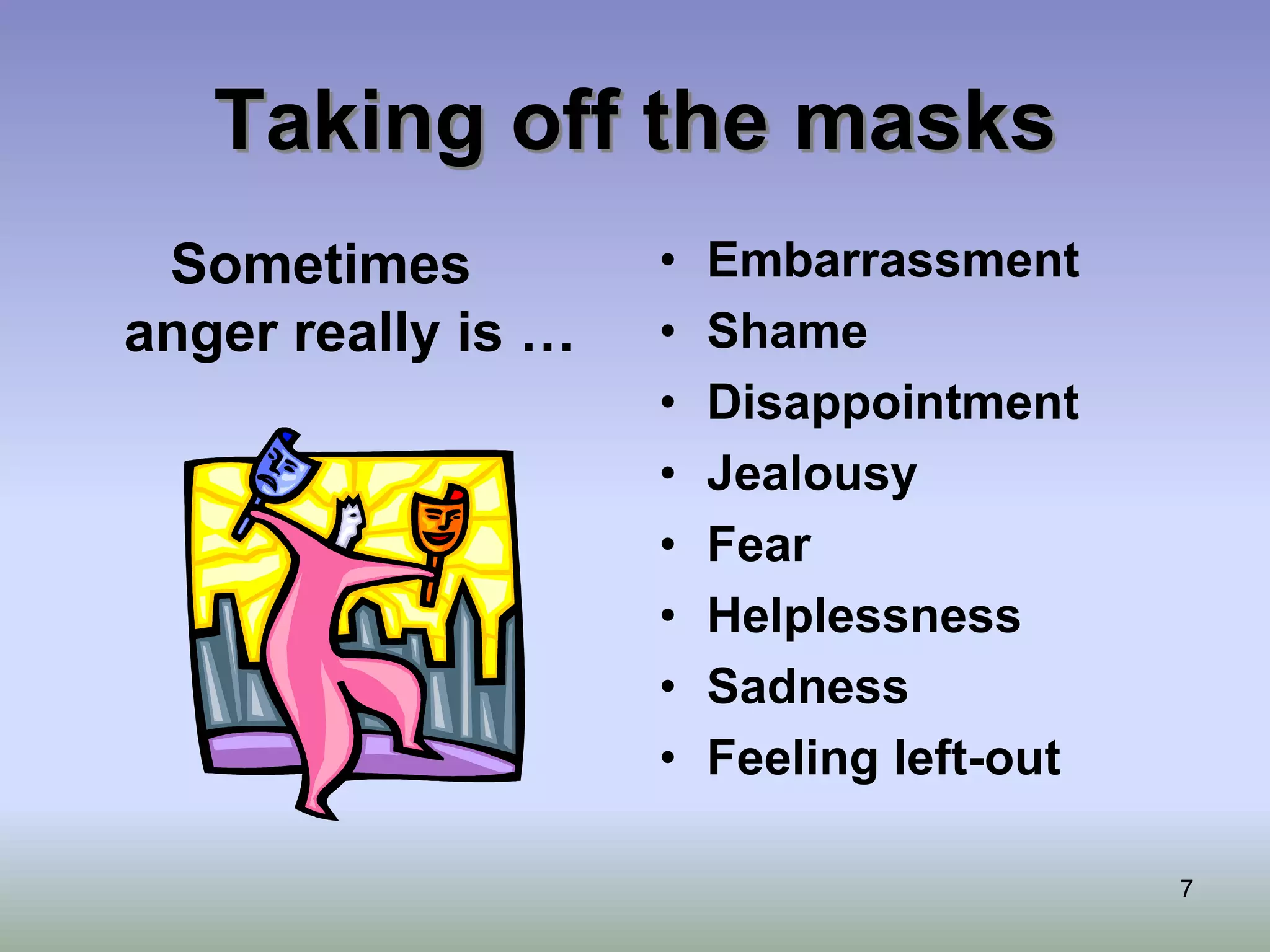
Taking off the masks
Sometimes
anger really is …
• Embarrassment
• Shame
• Disappointment
• Jealousy
• Fear
• Helplessness
• Sadness
• Feeling left-out
8
ANGER MANAGEMENT
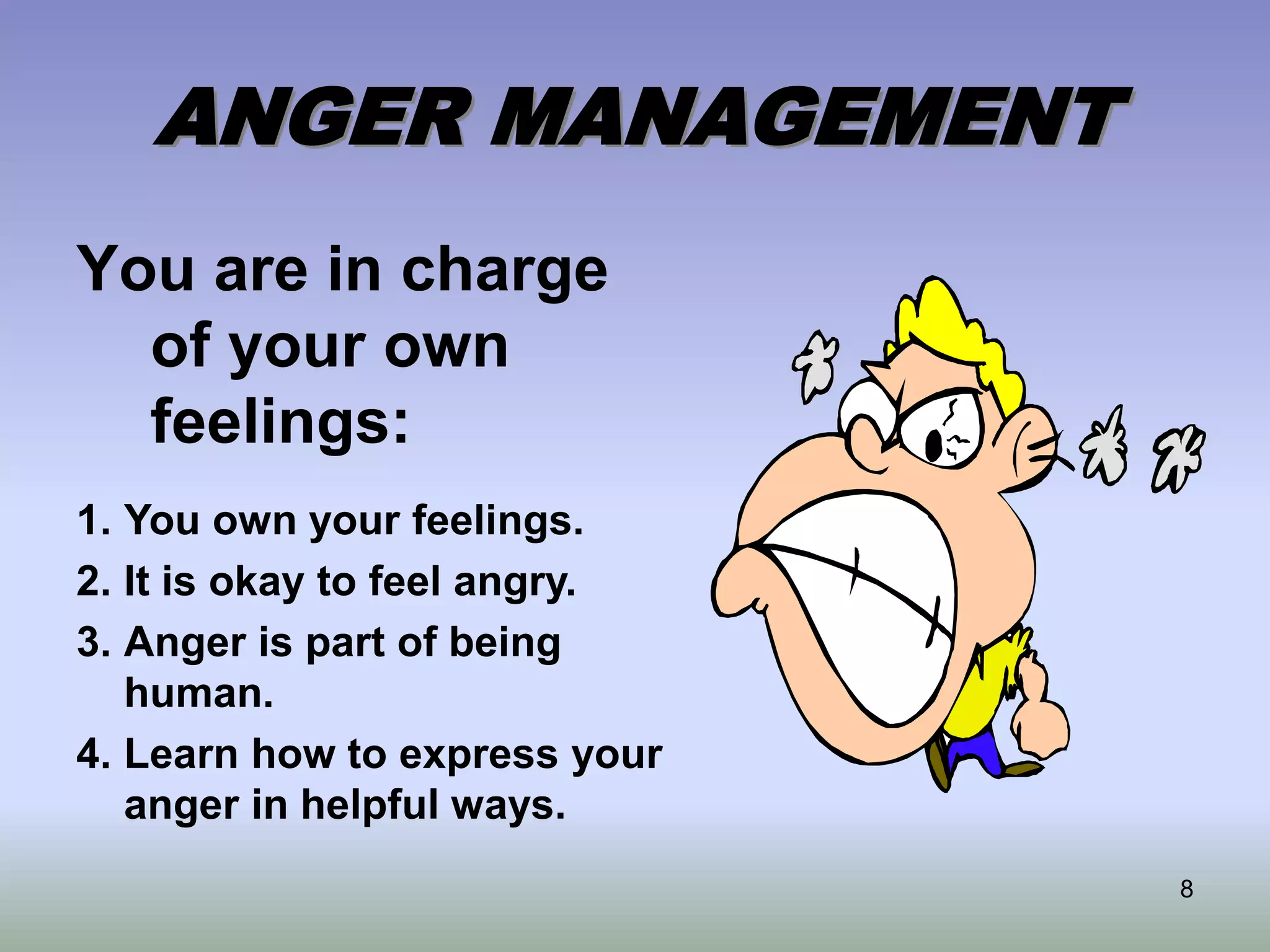
You are in charge
of your own
feelings:
1. You own your feelings.
2. It is okay to feel angry.
3. Anger is part of being
human.
4. Learn how to express your
anger in helpful ways.
9
ANGER MANAGEMENT
Do you show
anger in
aggressive ways?
Do you…..
• Throw things
• Kick people or things
• Get in someone’s face
• Shove, grab or hit
• Break things
• Call people names
• Give someone a dirty
look
• Give people the silent
treatment
• Get others to “gang up”
• Spread rumors
10
ANGER MANAGEMENT
Choose to feel
good about
yourself by
expressing your
feelings.
Express your feelings in ways that
are fair to others and yourself.
Use fair words…such as “I feel…”
11
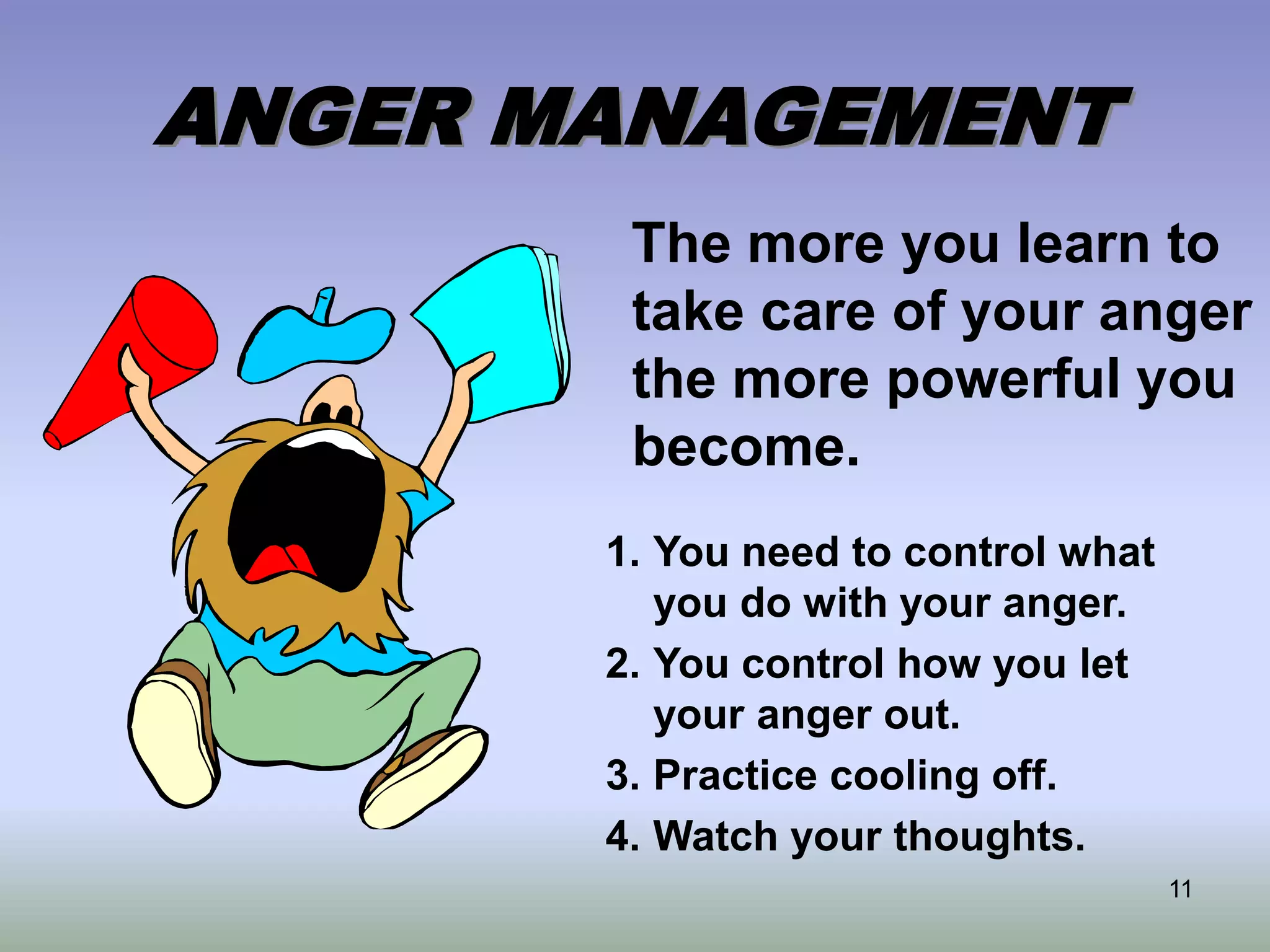
ANGER MANAGEMENT
The more you learn to
take care of your anger
the more powerful you
become.
1. You need to control what
you do with your anger.
2. You control how you let
your anger out.
3. Practice cooling off.
4. Watch your thoughts.
12
ANGER MANAGEMENT
• Identify possible
consequences of
your anger to others
and yourself.
What can that mean
for you?
• Physical harm to
someone or self
• Destruction of property
• Loss of friends
• Loss of social
privileges
• Getting a bad
reputation
• Going to juvenile hall
13
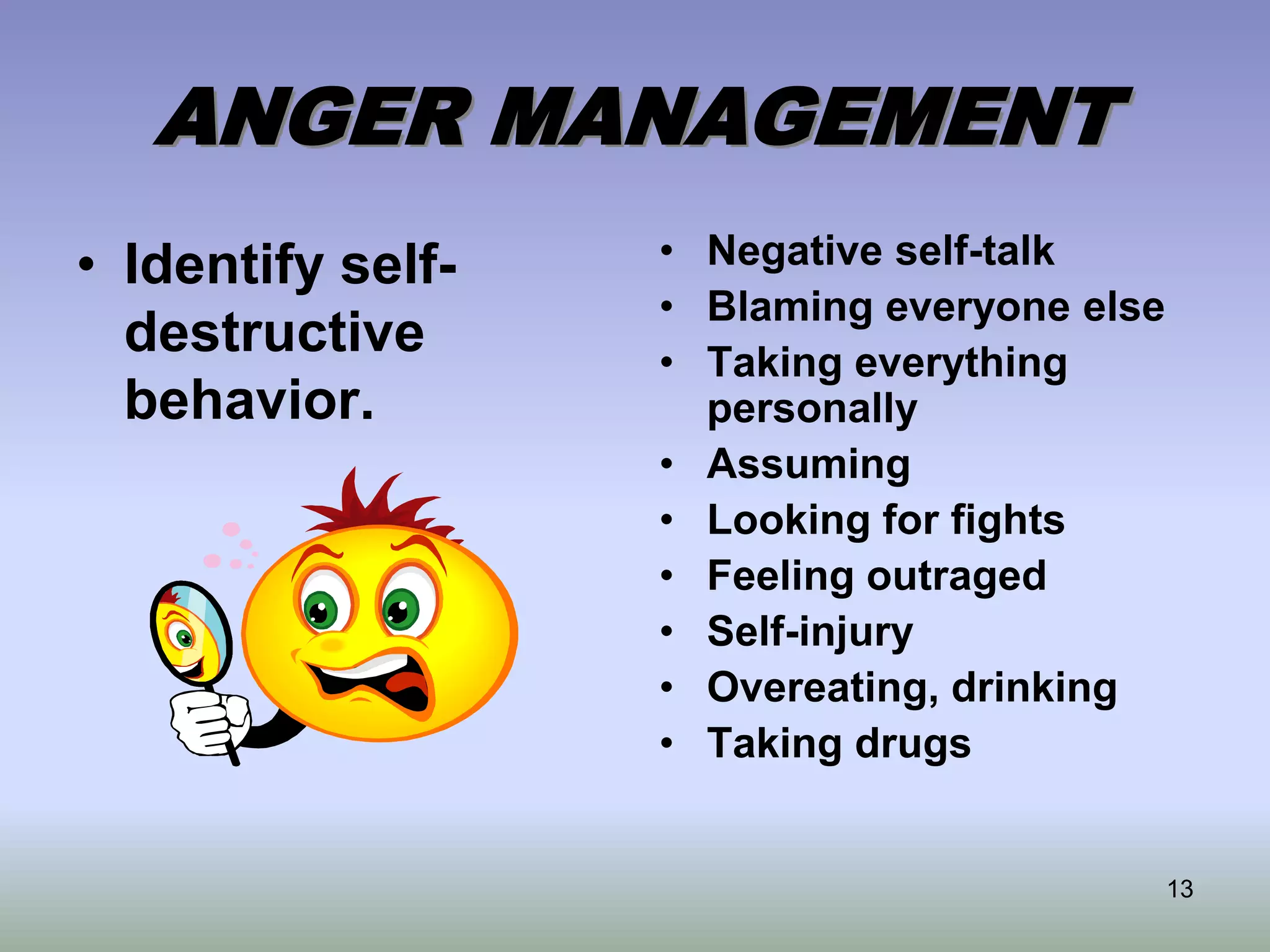
ANGER MANAGEMENT
• Identify self-
destructive
behavior.
• Negative self-talk
• Blaming everyone else
• Taking everything
personally
• Assuming
• Looking for fights
• Feeling outraged
• Self-injury
• Overeating, drinking
• Taking drugs
14
ANGER MANAGEMENT
Stop blaming
others and
yourself.
1. Blaming only keeps
people upset.
2. Blaming is a way of
not respecting people.
3. Express your feelings
and then try to work
things out.
15
ANGER MANAGEMENT
What do you think
before your angry
actions?
Do you think …
• You did that on purpose…
• You wanted to hurt me…
• You deserve this…
• You never even asked me…
• You’re being unreasonable…
• You think you’re so good…
• I’ll show you…
• You started it…
• It’s not fair…
16
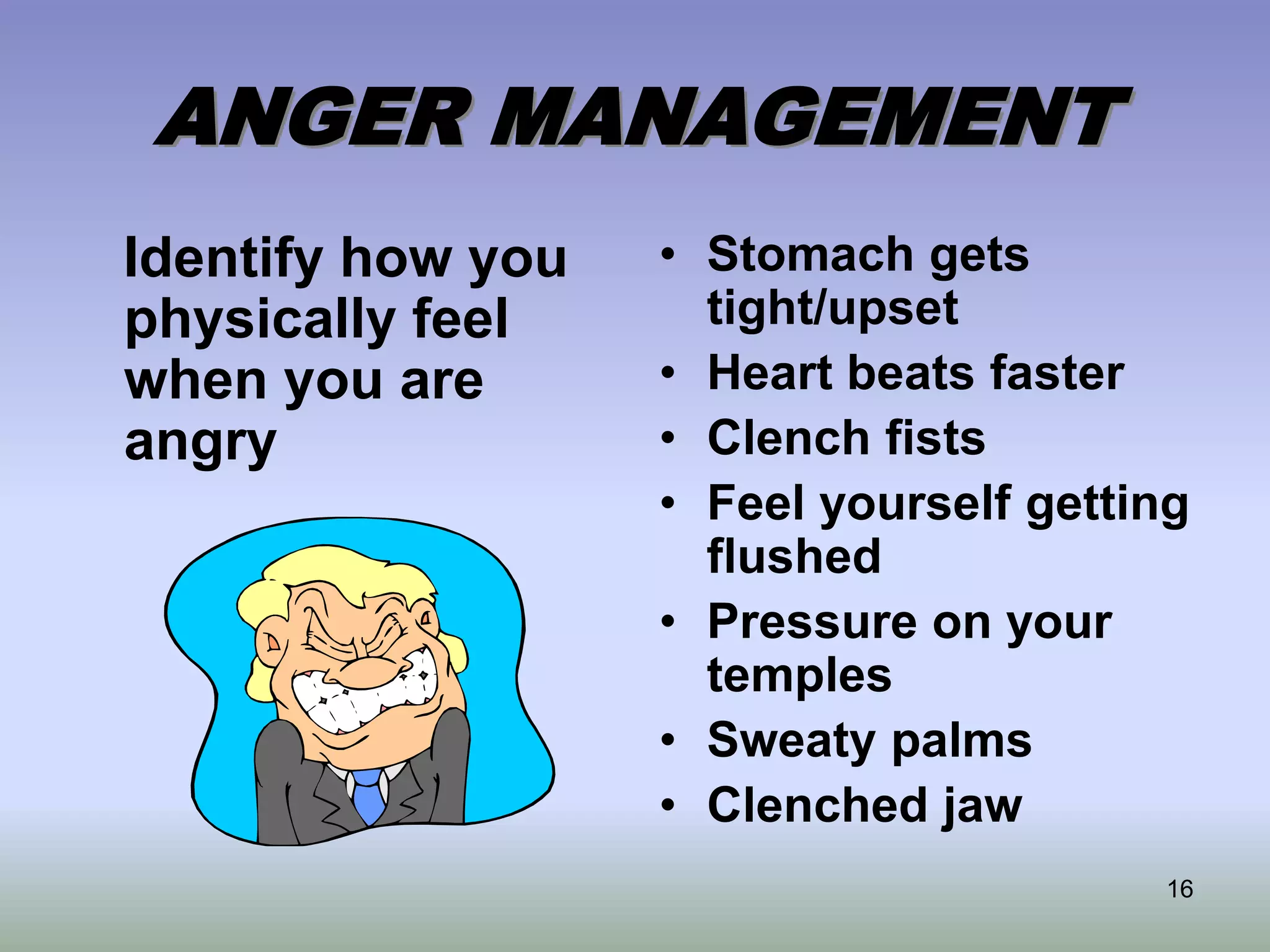
ANGER MANAGEMENT
Identify how you
physically feel
when you are
angry
• Stomach gets
tight/upset
• Heart beats faster
• Clench fists
• Feel yourself getting
flushed
• Pressure on your
temples
• Sweaty palms
• Clenched jaw
17
ANGER MANAGEMENT
You don’t have to
hold on to your
anger.
1. Find ways to let it go.
2. Talk about hurt and
angry feelings.
3. Look for someone to
discuss your anger.
18
Take control of your anger
1. Stand up for yourself
and others being hurt.
2. Learn to defeat
negative self-talk.
3. Feel good about
learning about
yourself.
4. You are strong when
you use fair and firm
words instead of fists.
19
Steps to taming anger
1. Know what pushes
your buttons.
2. Know your body’s
anger signs.
3. Stop and think!
4. Decide what to do.
20
ANGER MANAGEMENT
Ways to Calm Down:
1. Exercise.
2. Eat right.
3. Get enough sleep.
4. Learn to relax.
5. Know your feelings.
6. Write about those feelings.
21
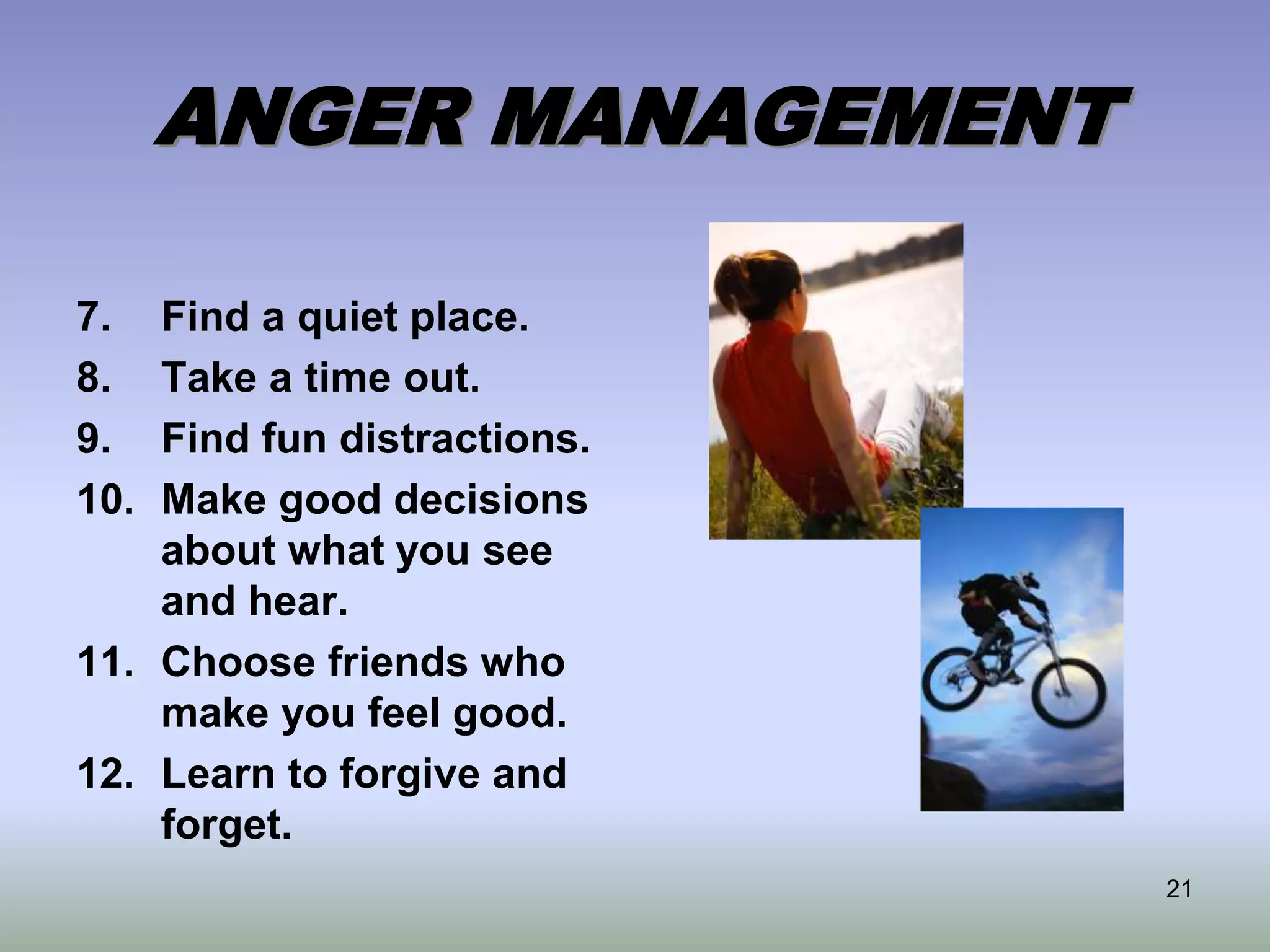
ANGER MANAGEMENT
7. Find a quiet place.
8. Take a time out.
9. Find fun distractions.
10. Make good decisions
about what you see
and hear.
11. Choose friends who
make you feel good.
12. Learn to forgive and
forget.
22
Conflict resolution steps:
1. Calm down
2. Identify the
problem
3. Find solutions
4. Pick the best
solution
5. Evaluate the
solution
6. Make changes if
necessary
23
Remember people are precious.
1. Watch your thoughts,
words, and actions.
2. Stop hurting people
with your words and
actions.
3. Take ownership of the
hurtful things you do
and say.
4. “Bullying” hurts
everyone.
24

anger_mng.ppt

  • 1.
  • 2.
    2 ANGER MANAGEMENT Anger managementdoes not involve getting rid of all anger, but using anger to enhance your life. We can look at the purposes of anger in both a positive and negative light.
  • 3.
    3 ANGER MANAGEMENT The positiveaspects of anger are you have increased energy, are able to communicate your feelings, able to problem solve and can take charge of the situation.
  • 4.
    4 ANGER MANAGEMENT The negativeaspects of anger are you can have disruption of your thinking, unnecessarily defend yourself, become aggressive and become known as an angry person.
  • 5.
    5 ANGER MANAGEMENT Anger managementis a way to increase the positive aspects of anger and decrease the negative aspects of anger.
  • 6.
    6 ANGER MANAGEMENT Know thedifference between ANGER and AGGRESSION. 1. Anger is an emotion. It is ok to be angry. It is part of being human. 2. Aggression is acting out inappropriately and is not ok. Learn to check your aggression and express your anger appropriately.
  • 7.
    7 Taking off themasks Sometimes anger really is … • Embarrassment • Shame • Disappointment • Jealousy • Fear • Helplessness • Sadness • Feeling left-out
  • 8.
    8 ANGER MANAGEMENT You arein charge of your own feelings: 1. You own your feelings. 2. It is okay to feel angry. 3. Anger is part of being human. 4. Learn how to express your anger in helpful ways.
  • 9.
    9 ANGER MANAGEMENT Do youshow anger in aggressive ways? Do you….. • Throw things • Kick people or things • Get in someone’s face • Shove, grab or hit • Break things • Call people names • Give someone a dirty look • Give people the silent treatment • Get others to “gang up” • Spread rumors
  • 10.
    10 ANGER MANAGEMENT Choose tofeel good about yourself by expressing your feelings. Express your feelings in ways that are fair to others and yourself. Use fair words…such as “I feel…”
  • 11.
    11 ANGER MANAGEMENT The moreyou learn to take care of your anger the more powerful you become. 1. You need to control what you do with your anger. 2. You control how you let your anger out. 3. Practice cooling off. 4. Watch your thoughts.
  • 12.
    12 ANGER MANAGEMENT • Identifypossible consequences of your anger to others and yourself. What can that mean for you? • Physical harm to someone or self • Destruction of property • Loss of friends • Loss of social privileges • Getting a bad reputation • Going to juvenile hall
  • 13.
    13 ANGER MANAGEMENT • Identifyself- destructive behavior. • Negative self-talk • Blaming everyone else • Taking everything personally • Assuming • Looking for fights • Feeling outraged • Self-injury • Overeating, drinking • Taking drugs
  • 14.
    14 ANGER MANAGEMENT Stop blaming othersand yourself. 1. Blaming only keeps people upset. 2. Blaming is a way of not respecting people. 3. Express your feelings and then try to work things out.
  • 15.
    15 ANGER MANAGEMENT What doyou think before your angry actions? Do you think … • You did that on purpose… • You wanted to hurt me… • You deserve this… • You never even asked me… • You’re being unreasonable… • You think you’re so good… • I’ll show you… • You started it… • It’s not fair…
  • 16.
    16 ANGER MANAGEMENT Identify howyou physically feel when you are angry • Stomach gets tight/upset • Heart beats faster • Clench fists • Feel yourself getting flushed • Pressure on your temples • Sweaty palms • Clenched jaw
  • 17.
    17 ANGER MANAGEMENT You don’thave to hold on to your anger. 1. Find ways to let it go. 2. Talk about hurt and angry feelings. 3. Look for someone to discuss your anger.
  • 18.
    18 Take control ofyour anger 1. Stand up for yourself and others being hurt. 2. Learn to defeat negative self-talk. 3. Feel good about learning about yourself. 4. You are strong when you use fair and firm words instead of fists.
  • 19.
    19 Steps to taminganger 1. Know what pushes your buttons. 2. Know your body’s anger signs. 3. Stop and think! 4. Decide what to do.
  • 20.
    20 ANGER MANAGEMENT Ways toCalm Down: 1. Exercise. 2. Eat right. 3. Get enough sleep. 4. Learn to relax. 5. Know your feelings. 6. Write about those feelings.
  • 21.
    21 ANGER MANAGEMENT 7. Finda quiet place. 8. Take a time out. 9. Find fun distractions. 10. Make good decisions about what you see and hear. 11. Choose friends who make you feel good. 12. Learn to forgive and forget.
  • 22.
    22 Conflict resolution steps: 1.Calm down 2. Identify the problem 3. Find solutions 4. Pick the best solution 5. Evaluate the solution 6. Make changes if necessary
  • 23.
    23 Remember people areprecious. 1. Watch your thoughts, words, and actions. 2. Stop hurting people with your words and actions. 3. Take ownership of the hurtful things you do and say. 4. “Bullying” hurts everyone.
  • 24.