VISVESVARAYA TECHNOLOGICAL UNIVERSITY, BELAGAVI-590018,
KARNATAKA
S.J.M INSTITUTE OF TECHNOLOGY CHITRADURGA 577502
DEPARTMENT OF ELECTRICALAND ELECTRONICS ENGINEERING
2023-24
PHASE 1 PROJECT PRESENTATION
ON
“HOW TO MAKE AUTOMATIC BOTTLE FILLING MACHINE ”
UNDER THE GUIDANCE OF MAIN PROJECT CO-ORDINATOR
DR.MANJUNATHA S C M.TECH, PH.D., MR.CHANDRASHEKHAR KAMBALI M.TECH
ASSO.PROF DEPT. OF EEE ASST.PROF DEPT, OF EEE
PRESENTING BY
AKASH M 4SM18EE002
GURU S L 4SM20EE023
ANANTHKUMAR G 4SM21EE400
GOUTHAM Y 4SM21EE403
CONTENTS
 Introduction
 Methodology
 Components required
 Advantages , Disadvantages and Applications
 Bibliography
2
INTRODUCTION
3
• A bottle filling system is a machine or group of machines that are used to fill bottles with a liquid
or powdered substance. The system typically includes several components such as a filling
machine, a capping machine, a labeling machine, and a conveyor belt to transport the bottles
through the system.
• There are different types of bottle filling systems available depending on the type of product being
filled and the production requirements. Some of the most common types of filling systems include.
• Gravity filling, which uses the force of gravity to fill the bottles.
• Pressure filling, which uses pressurized air or liquid to force the product into the bottles
• Volumetric filling, which dispenses a specific volume of product into each bottle
• Net weight filling, which fills the bottles to a specific weight
OBJECTIVES
• Design a system to detect and recognize empty bottles.
• Create a mechanism to accurately position the bottles for filling.
• Implement an automated filling process that ensures consistent
volume in each bottle.
• Integrate a sensor to detect when the bottle is full and stop the
filling process.
4
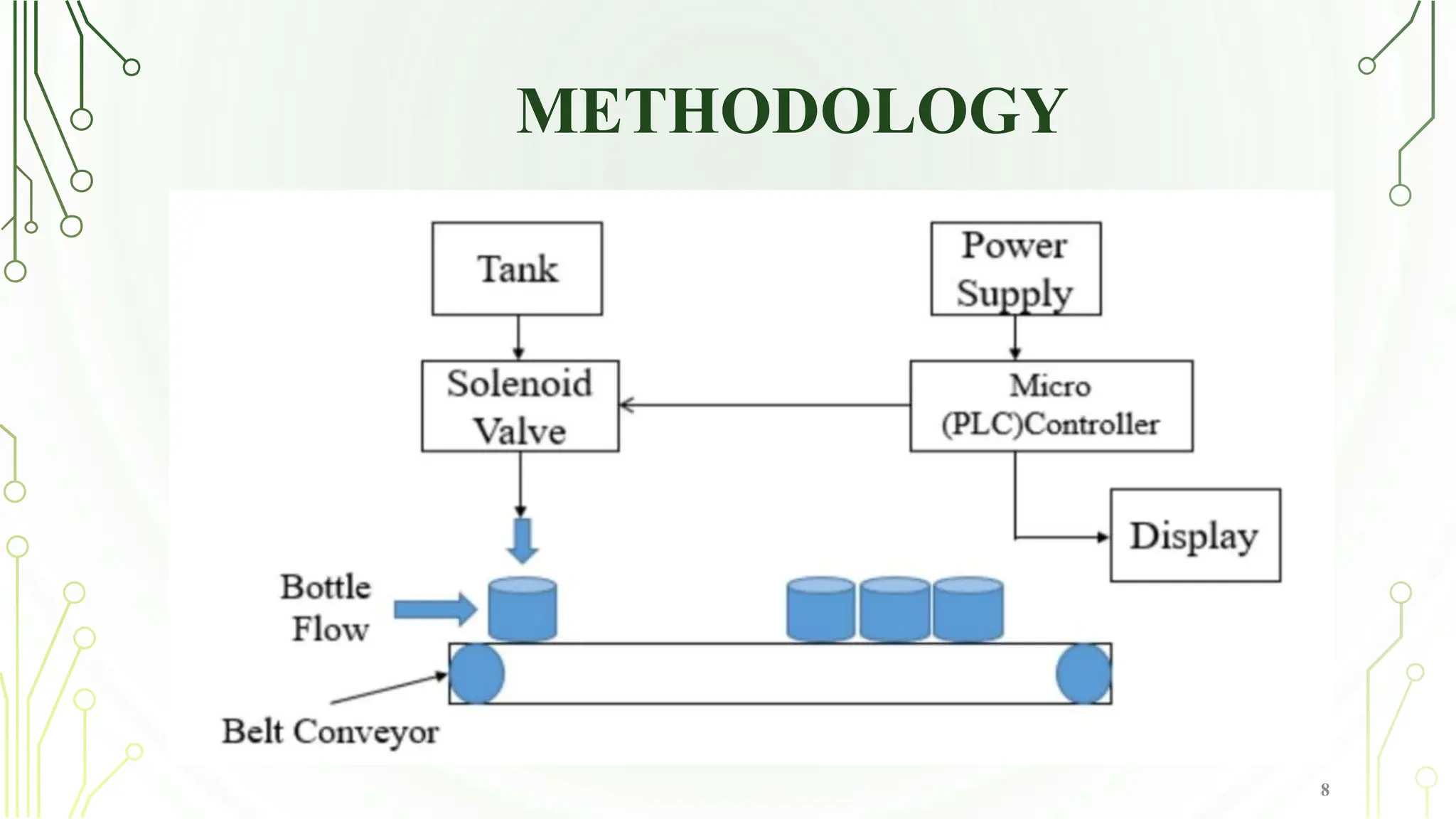
METHODOLOGY
8
OUTCOMES
• Increased efficiency in the filling process, allowing for higher
production rates.
• Consistent and accurate filling of each bottle, ensuring uniform
product quality.
• Reduction in human error and labor costs associated with manual
bottle filling
• Enhanced hygiene and cleanliness, minimizing the risk of
contamination.
6
COMPONENTS REQUIRED
7
• Arduino UNO
• KY-032 sensor
• Relay
• US-17H4401 Stepper motor
• CNC shield
• 12V water pump
• Battery of 9V
• Timing belt
• Disc
• Test plate
• Support
• Connecting wire
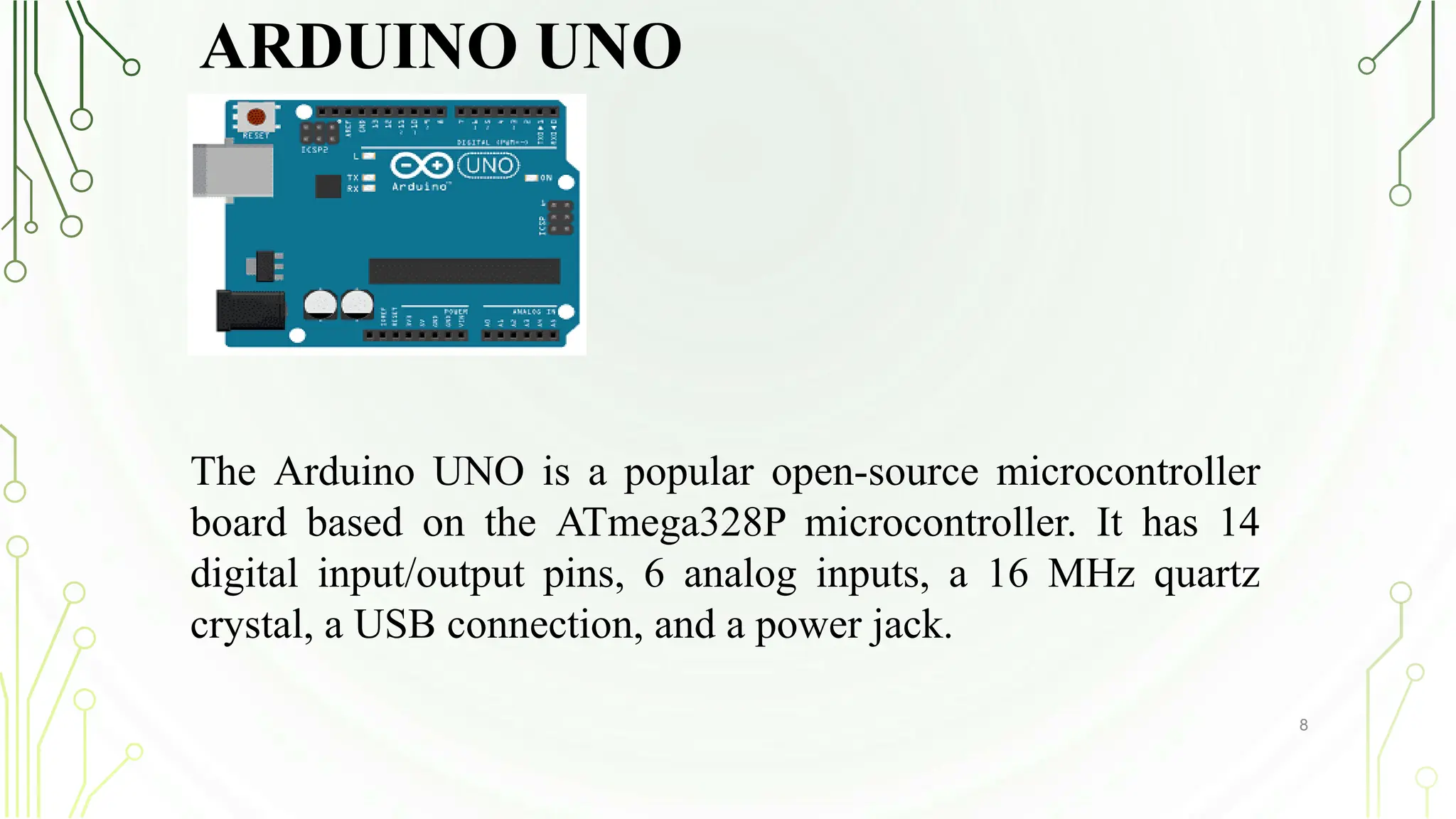
ARDUINO UNO
8
The Arduino UNO is a popular open-source microcontroller
board based on the ATmega328P microcontroller. It has 14
digital input/output pins, 6 analog inputs, a 16 MHz quartz
crystal, a USB connection, and a power jack.
KY-032 SENSOR
9
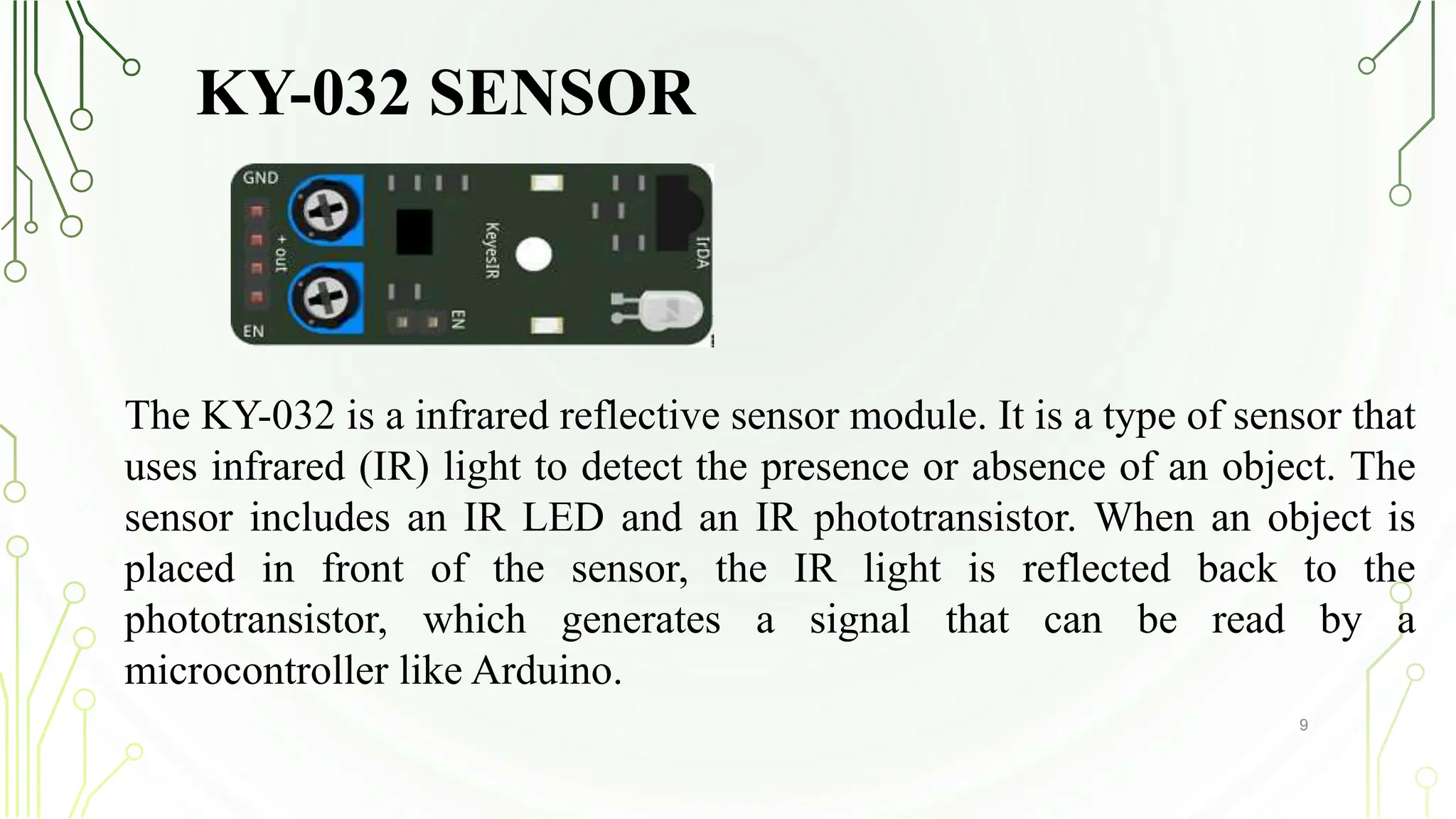
The KY-032 is a infrared reflective sensor module. It is a type of sensor that
uses infrared (IR) light to detect the presence or absence of an object. The
sensor includes an IR LED and an IR phototransistor. When an object is
placed in front of the sensor, the IR light is reflected back to the
phototransistor, which generates a signal that can be read by a
microcontroller like Arduino.
RELAY
10
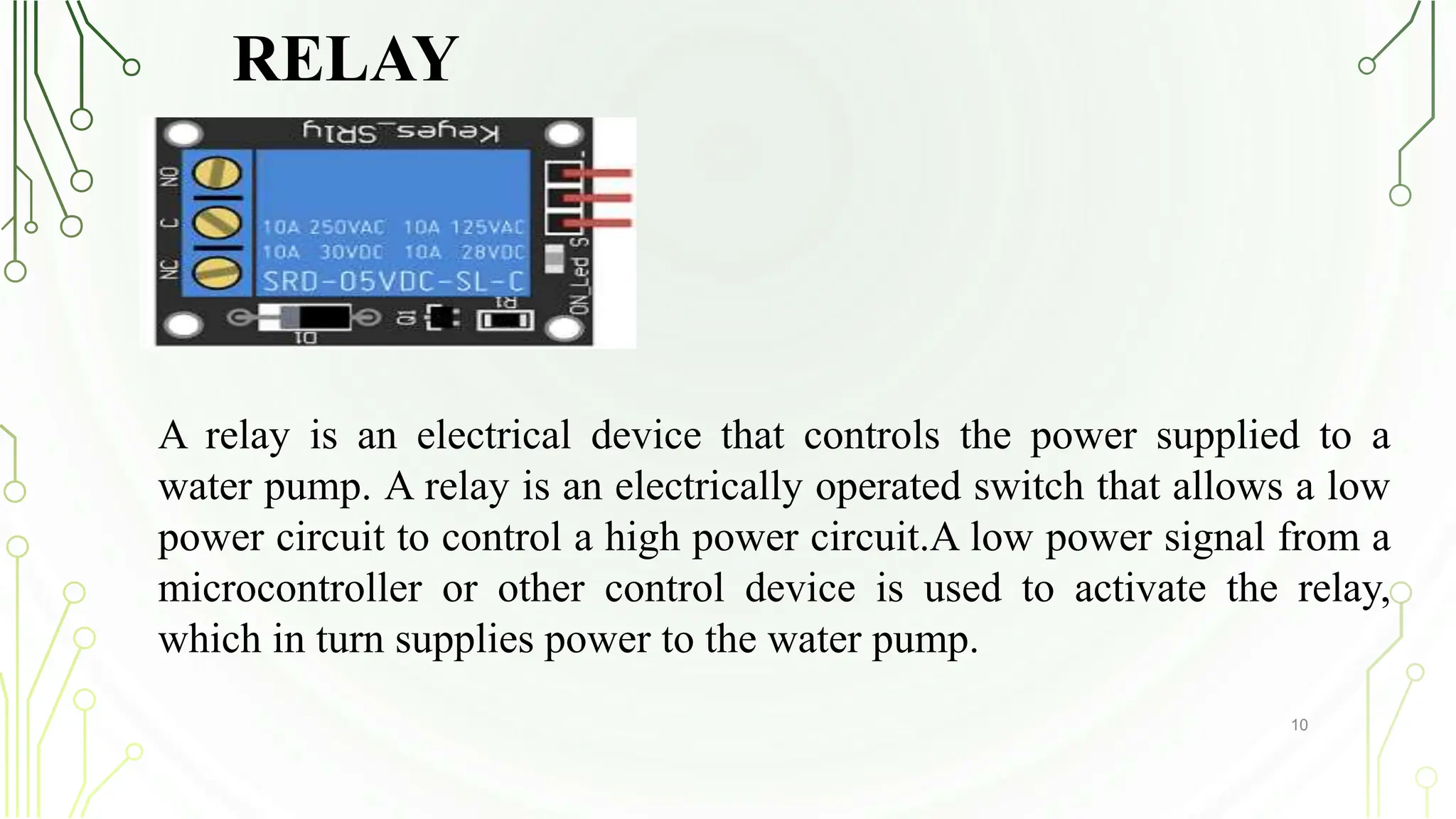
A relay is an electrical device that controls the power supplied to a
water pump. A relay is an electrically operated switch that allows a low
power circuit to control a high power circuit.A low power signal from a
microcontroller or other control device is used to activate the relay,
which in turn supplies power to the water pump.
STEPPER MOTOR
11
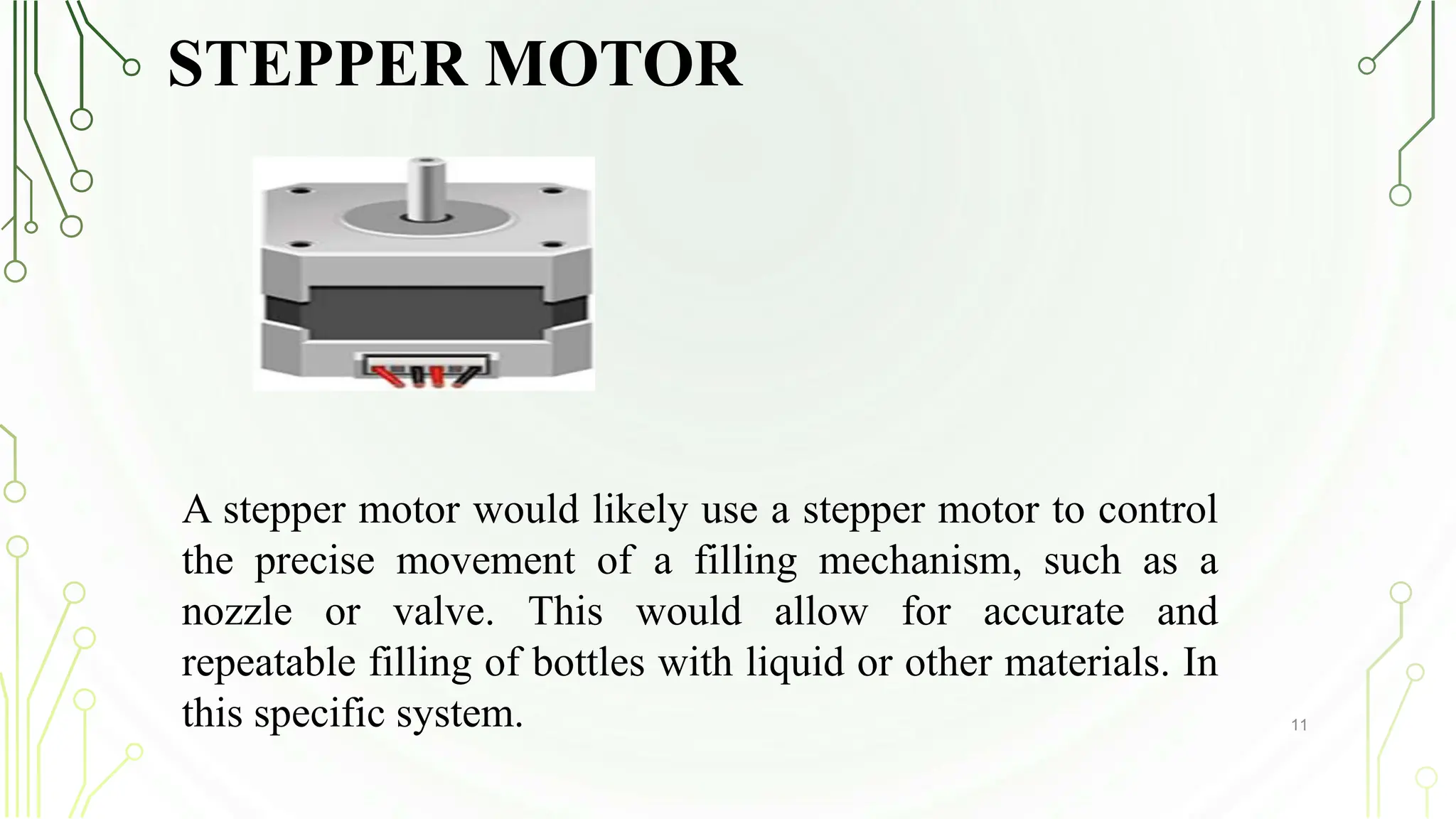
A stepper motor would likely use a stepper motor to control
the precise movement of a filling mechanism, such as a
nozzle or valve. This would allow for accurate and
repeatable filling of bottles with liquid or other materials. In
this specific system.
CNC SHIELD
12
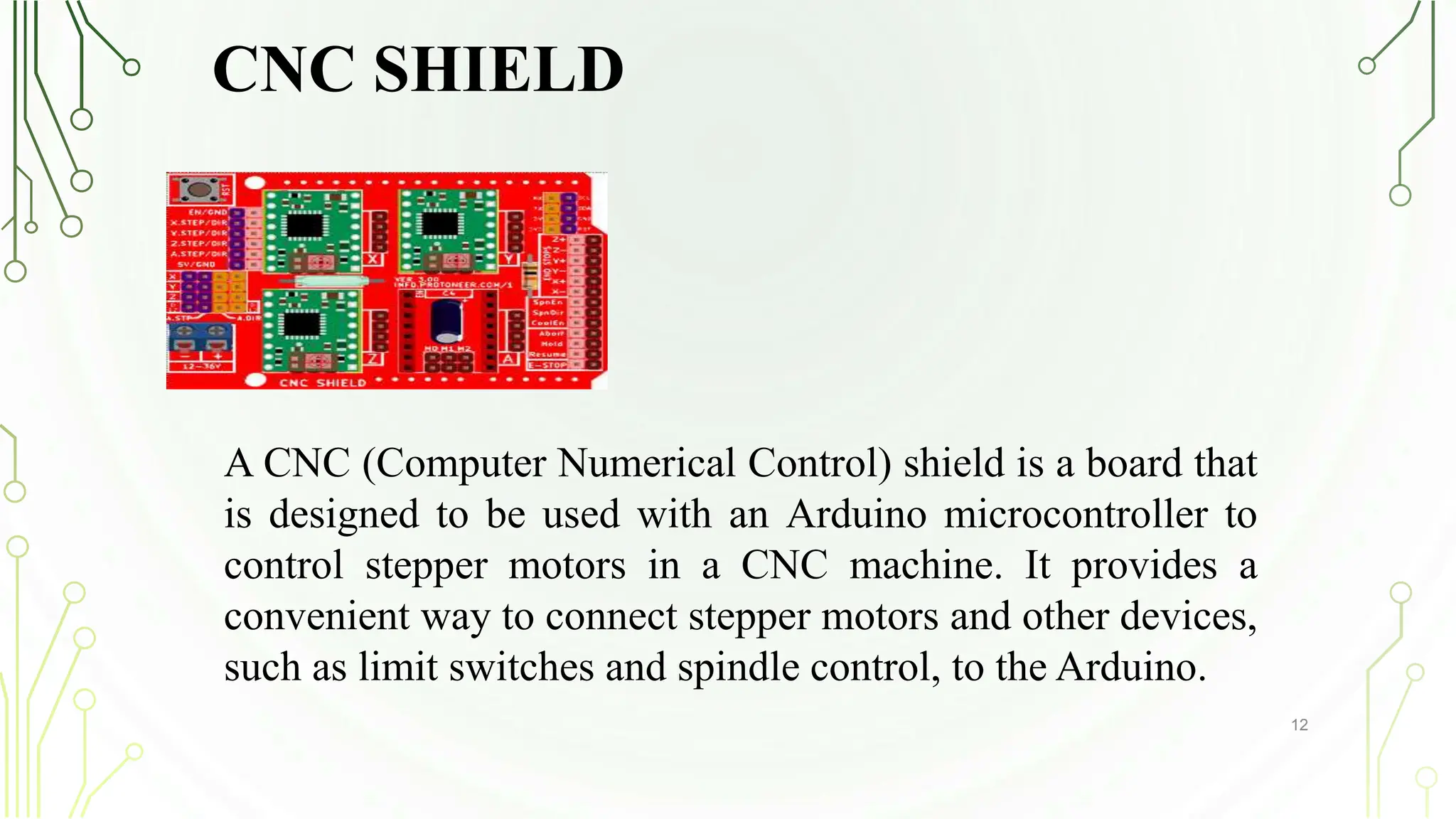
A CNC (Computer Numerical Control) shield is a board that
is designed to be used with an Arduino microcontroller to
control stepper motors in a CNC machine. It provides a
convenient way to connect stepper motors and other devices,
such as limit switches and spindle control, to the Arduino.
BATTERY
13
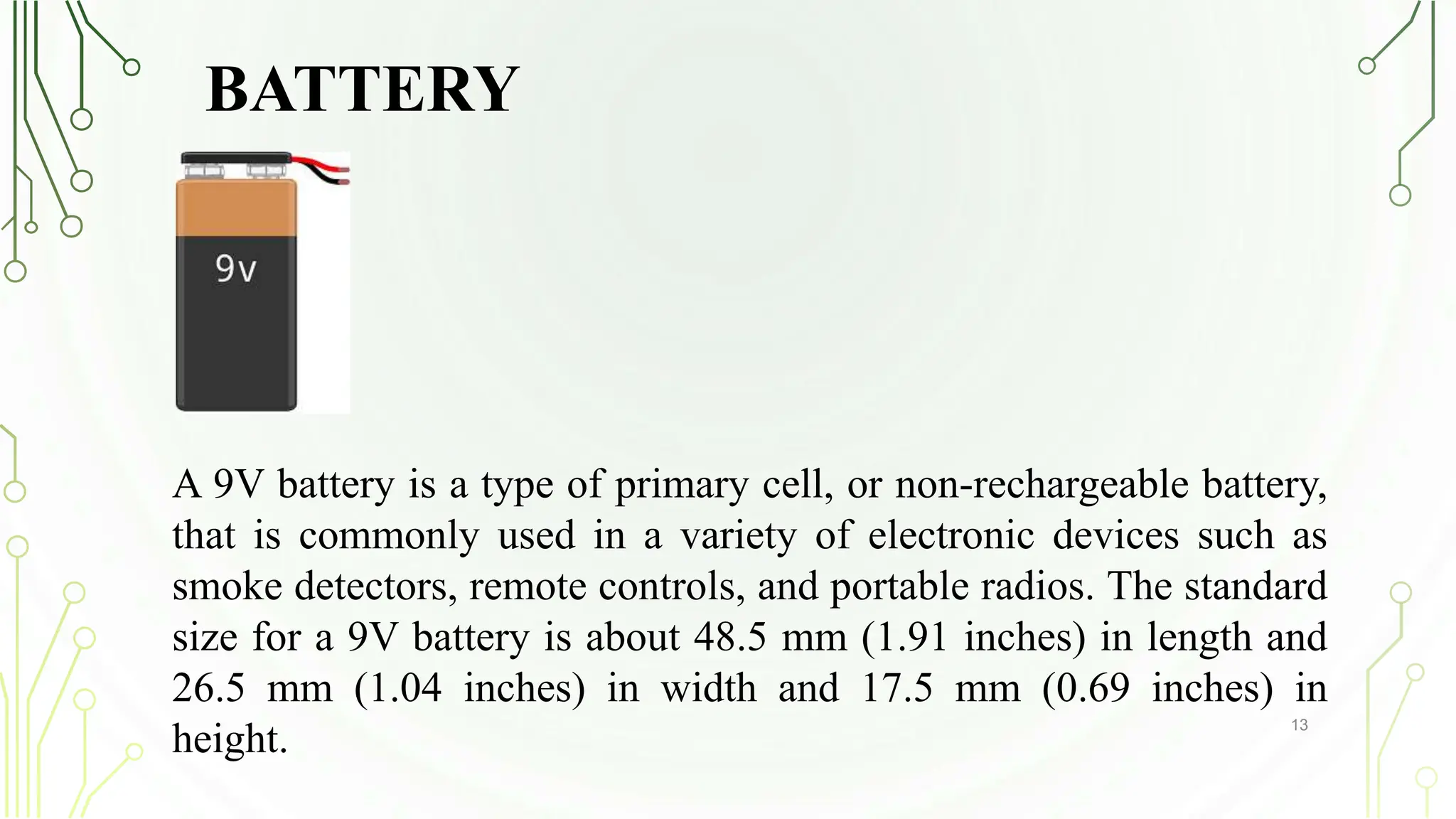
A 9V battery is a type of primary cell, or non-rechargeable battery,
that is commonly used in a variety of electronic devices such as
smoke detectors, remote controls, and portable radios. The standard
size for a 9V battery is about 48.5 mm (1.91 inches) in length and
26.5 mm (1.04 inches) in width and 17.5 mm (0.69 inches) in
height.
WATER PUMP
14
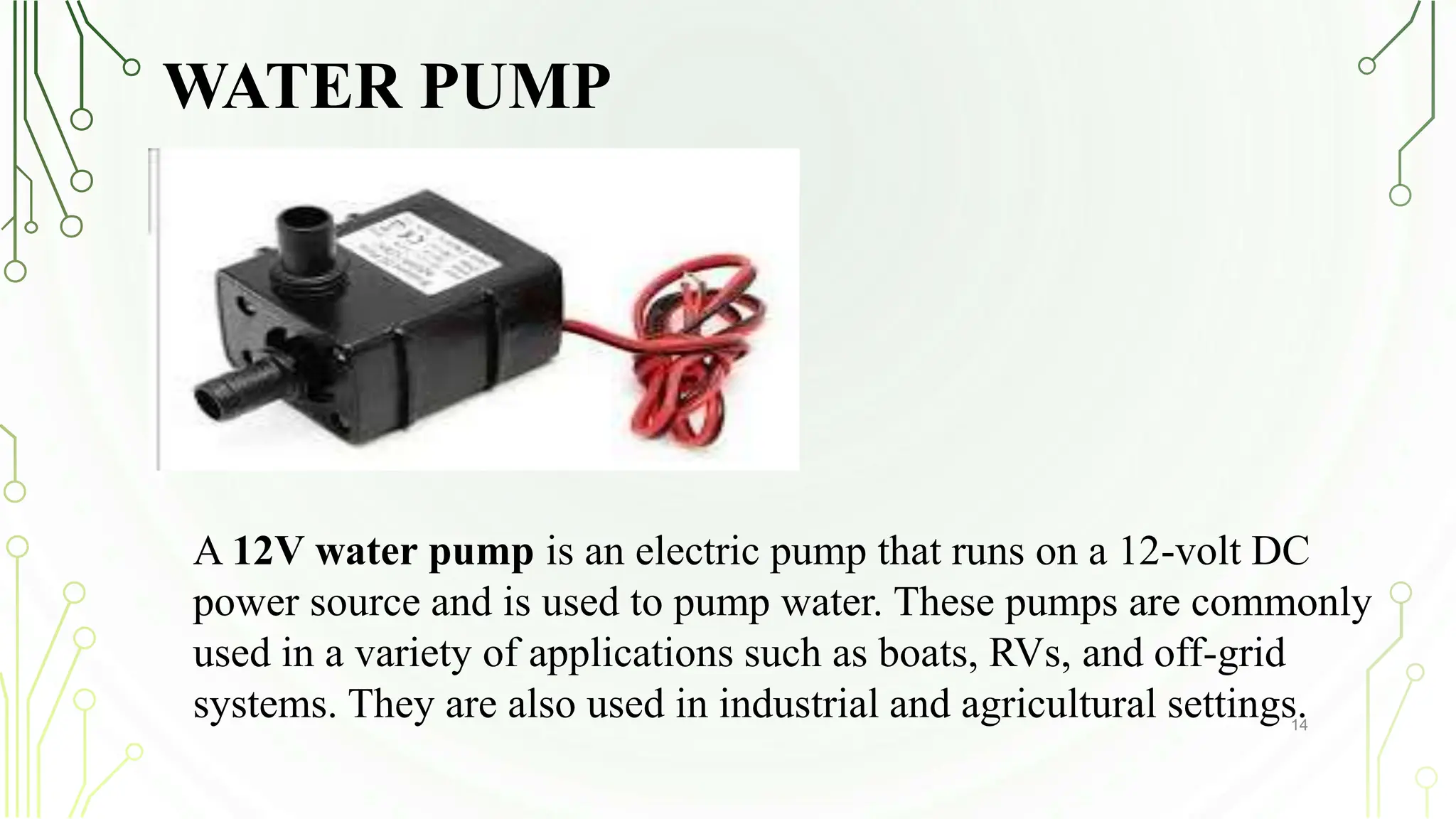
A 12V water pump is an electric pump that runs on a 12-volt DC
power source and is used to pump water. These pumps are commonly
used in a variety of applications such as boats, RVs, and off-grid
systems. They are also used in industrial and agricultural settings.
DISC
15
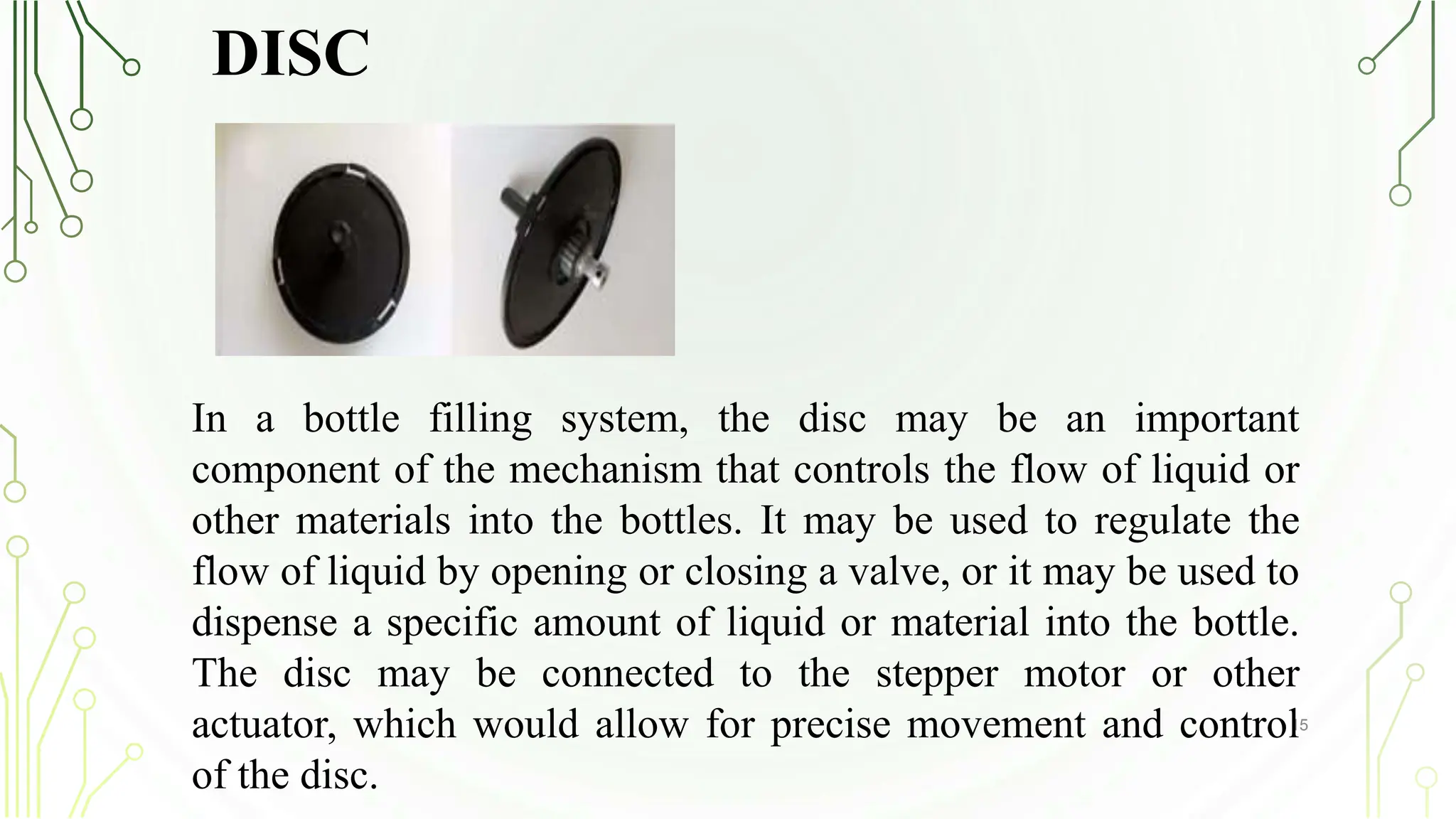
In a bottle filling system, the disc may be an important
component of the mechanism that controls the flow of liquid or
other materials into the bottles. It may be used to regulate the
flow of liquid by opening or closing a valve, or it may be used to
dispense a specific amount of liquid or material into the bottle.
The disc may be connected to the stepper motor or other
actuator, which would allow for precise movement and control
of the disc.
TIMING BELT
16
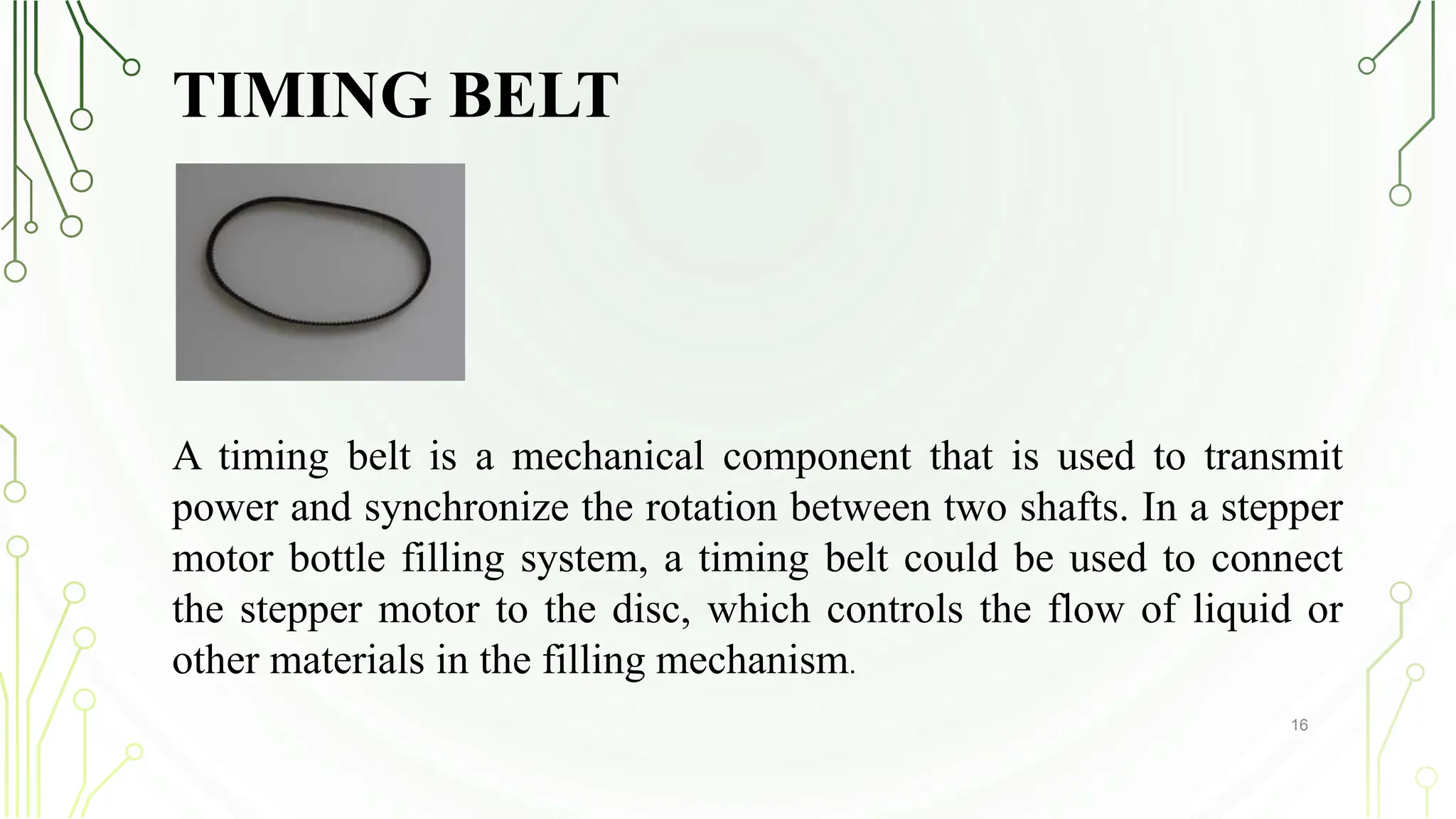
A timing belt is a mechanical component that is used to transmit
power and synchronize the rotation between two shafts. In a stepper
motor bottle filling system, a timing belt could be used to connect
the stepper motor to the disc, which controls the flow of liquid or
other materials in the filling mechanism.
SUPPORT
17
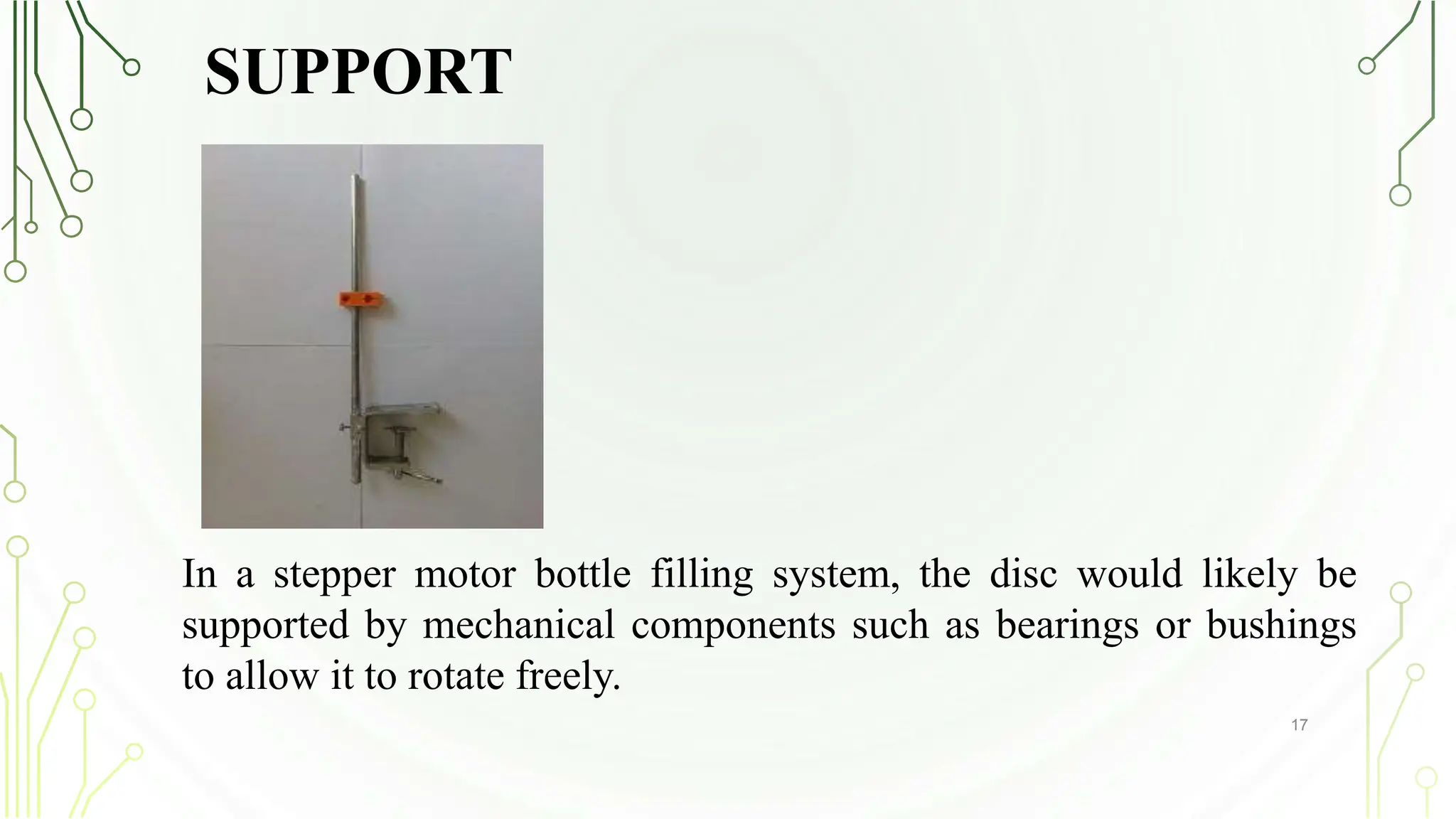
In a stepper motor bottle filling system, the disc would likely be
supported by mechanical components such as bearings or bushings
to allow it to rotate freely.
ADVANTAGES
18
 Efficiency
 Accuracy
 Consistency
 Cost-effectiveness
 Flexibility
DISADVANTAGES
 Initial setup complexity
 Cost of components
 Limited scalability
19
APPLICATIONS
 Beverage industry
 Pharmaceutical industry
 Food industry
 Chemical industry
 Research and development
 Cosmetics industry
 Oil and lubricant industry
20
BIBLIOGRAPHY
1. "Automation of Bottle Filling System Using Arduino" by XYZ
(insert author name if available).
2. "Arduino-Based Automatic Bottle Filling System: Design,
Implementation, and Performance Evaluation" by ABC (insert author
name if available).
3. "Design and Development of Automatic Bottle Filling System using
Arduino" by PQR (insert author name if available).
21
22

Ananth phase 1 ppt and project work base

  • 1.
    VISVESVARAYA TECHNOLOGICAL UNIVERSITY,BELAGAVI-590018, KARNATAKA S.J.M INSTITUTE OF TECHNOLOGY CHITRADURGA 577502 DEPARTMENT OF ELECTRICALAND ELECTRONICS ENGINEERING 2023-24 PHASE 1 PROJECT PRESENTATION ON “HOW TO MAKE AUTOMATIC BOTTLE FILLING MACHINE ” UNDER THE GUIDANCE OF MAIN PROJECT CO-ORDINATOR DR.MANJUNATHA S C M.TECH, PH.D., MR.CHANDRASHEKHAR KAMBALI M.TECH ASSO.PROF DEPT. OF EEE ASST.PROF DEPT, OF EEE PRESENTING BY AKASH M 4SM18EE002 GURU S L 4SM20EE023 ANANTHKUMAR G 4SM21EE400 GOUTHAM Y 4SM21EE403
  • 2.
    CONTENTS  Introduction  Methodology Components required  Advantages , Disadvantages and Applications  Bibliography 2
  • 3.
    INTRODUCTION 3 • A bottlefilling system is a machine or group of machines that are used to fill bottles with a liquid or powdered substance. The system typically includes several components such as a filling machine, a capping machine, a labeling machine, and a conveyor belt to transport the bottles through the system. • There are different types of bottle filling systems available depending on the type of product being filled and the production requirements. Some of the most common types of filling systems include. • Gravity filling, which uses the force of gravity to fill the bottles. • Pressure filling, which uses pressurized air or liquid to force the product into the bottles • Volumetric filling, which dispenses a specific volume of product into each bottle • Net weight filling, which fills the bottles to a specific weight
  • 4.
    OBJECTIVES • Design asystem to detect and recognize empty bottles. • Create a mechanism to accurately position the bottles for filling. • Implement an automated filling process that ensures consistent volume in each bottle. • Integrate a sensor to detect when the bottle is full and stop the filling process. 4
  • 5.
  • 6.
    OUTCOMES • Increased efficiencyin the filling process, allowing for higher production rates. • Consistent and accurate filling of each bottle, ensuring uniform product quality. • Reduction in human error and labor costs associated with manual bottle filling • Enhanced hygiene and cleanliness, minimizing the risk of contamination. 6
  • 7.
    COMPONENTS REQUIRED 7 • ArduinoUNO • KY-032 sensor • Relay • US-17H4401 Stepper motor • CNC shield • 12V water pump • Battery of 9V • Timing belt • Disc • Test plate • Support • Connecting wire
  • 8.
    ARDUINO UNO 8 The ArduinoUNO is a popular open-source microcontroller board based on the ATmega328P microcontroller. It has 14 digital input/output pins, 6 analog inputs, a 16 MHz quartz crystal, a USB connection, and a power jack.
  • 9.
    KY-032 SENSOR 9 The KY-032is a infrared reflective sensor module. It is a type of sensor that uses infrared (IR) light to detect the presence or absence of an object. The sensor includes an IR LED and an IR phototransistor. When an object is placed in front of the sensor, the IR light is reflected back to the phototransistor, which generates a signal that can be read by a microcontroller like Arduino.
  • 10.
    RELAY 10 A relay isan electrical device that controls the power supplied to a water pump. A relay is an electrically operated switch that allows a low power circuit to control a high power circuit.A low power signal from a microcontroller or other control device is used to activate the relay, which in turn supplies power to the water pump.
  • 11.
    STEPPER MOTOR 11 A steppermotor would likely use a stepper motor to control the precise movement of a filling mechanism, such as a nozzle or valve. This would allow for accurate and repeatable filling of bottles with liquid or other materials. In this specific system.
  • 12.
    CNC SHIELD 12 A CNC(Computer Numerical Control) shield is a board that is designed to be used with an Arduino microcontroller to control stepper motors in a CNC machine. It provides a convenient way to connect stepper motors and other devices, such as limit switches and spindle control, to the Arduino.
  • 13.
    BATTERY 13 A 9V batteryis a type of primary cell, or non-rechargeable battery, that is commonly used in a variety of electronic devices such as smoke detectors, remote controls, and portable radios. The standard size for a 9V battery is about 48.5 mm (1.91 inches) in length and 26.5 mm (1.04 inches) in width and 17.5 mm (0.69 inches) in height.
  • 14.
    WATER PUMP 14 A 12Vwater pump is an electric pump that runs on a 12-volt DC power source and is used to pump water. These pumps are commonly used in a variety of applications such as boats, RVs, and off-grid systems. They are also used in industrial and agricultural settings.
  • 15.
    DISC 15 In a bottlefilling system, the disc may be an important component of the mechanism that controls the flow of liquid or other materials into the bottles. It may be used to regulate the flow of liquid by opening or closing a valve, or it may be used to dispense a specific amount of liquid or material into the bottle. The disc may be connected to the stepper motor or other actuator, which would allow for precise movement and control of the disc.
  • 16.
    TIMING BELT 16 A timingbelt is a mechanical component that is used to transmit power and synchronize the rotation between two shafts. In a stepper motor bottle filling system, a timing belt could be used to connect the stepper motor to the disc, which controls the flow of liquid or other materials in the filling mechanism.
  • 17.
    SUPPORT 17 In a steppermotor bottle filling system, the disc would likely be supported by mechanical components such as bearings or bushings to allow it to rotate freely.
  • 18.
    ADVANTAGES 18  Efficiency  Accuracy Consistency  Cost-effectiveness  Flexibility
  • 19.
    DISADVANTAGES  Initial setupcomplexity  Cost of components  Limited scalability 19
  • 20.
    APPLICATIONS  Beverage industry Pharmaceutical industry  Food industry  Chemical industry  Research and development  Cosmetics industry  Oil and lubricant industry 20
  • 21.
    BIBLIOGRAPHY 1. "Automation ofBottle Filling System Using Arduino" by XYZ (insert author name if available). 2. "Arduino-Based Automatic Bottle Filling System: Design, Implementation, and Performance Evaluation" by ABC (insert author name if available). 3. "Design and Development of Automatic Bottle Filling System using Arduino" by PQR (insert author name if available). 21
  • 22.