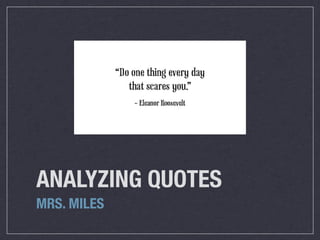
ANALYZING QUOTES
MRS. MILES
Analyzing Quotations


Read quotations

Analyze quotations

Understand the meaning
of the quotation
WHY? Explanatory Essay
HSPA Explanatory
Essay Prompt give
you a quote.

You are required to
explain, describe,
discuss, or analyze
the quote.

You have to relate the
quote to your
personal experience.
Example:Explanatory Prompt


Consider how the following quotation
relates to you.
“____________(QUOTATION)___”
Write a five paragraph essay explaining
what this quotation means to you. Use
details and examples in your essay.
Step 1


  How do you
analyze a quote?
Who is the author?


Do you know the author?

If you do, think about what the author may have
been like? Why do you think he/she said it?

Who do you think the quote was said to?
What is the main topic of
       the quote?


What does the quote mean?
Identify the author’s tone?


Is the quote positive, negative?

Is it encouraging, hopeful, pessimistic,
optimistic?
Author’s opinion


Most quotes give you an idea of the author’s
opinion.

Decide what you think the quote tells you about
the speaker (person saying quote).
Let’s begin!

Quote 1

“Beware of little expenses; a small leak will sink a big
ship”

                                 Benjamin Franklin
Vocabulary First!

beware: Be careful

expenses: Things that cost money

leak: a hole in a container that
causes liquid to pass through it.

sink: to go down to the bottom of
the sea/ ocean
Who is the author?


Benjamin Franklin:

American Statesman/ politician (He signed the
Declaration of Independence, and the
Constitution)

Scientist and inventor (discovered electricity?)
What does this quote mean


Draw a table and divide the quote into parts.

Beware of little expenses,

 A small leak will sink a
       big ship.
What does this quote mean
Figure out what the quote means in your own
words.

                                Be careful when
Beware of little expenses,
                               spending money.


A small leak will sink a big
           ship.
What does this quote mean
Figure out what the quote means in your own
words.

                                Be careful when
Beware of little expenses,
                               spending money.

                              Many small purchases
                             added together represent
A small leak will sink a big
                              more money spent and
           ship.
                                can cause financial
                                    problems.
What about the tone and
         the audience?
“Beware of little expenses; a small leak will sink a big ship”

                              Benjamin Franklin


TONE: A warning

AUDIENCE: Public (Benjamin Franklin was a
statesman. Maybe times were difficult and he
was warning the public to be careful with their
money)
Start Practicing or More
         Examples?
 If you are ready to    If you need one more
practice, press here.    example press here.
Here’s one more example

Quote 2

"Every man is the architect of his own fortune."

                                     Sallust
Vocabulary First!


architect: A person who designs buildings

fortune: luck or success
Who is the author?


Sallust:

A Roman historian (86BC-35BC) and Roman
official.
What does this quote mean


Draw a table and divide the quote into parts.

Every man is the architect


   of his own fortune
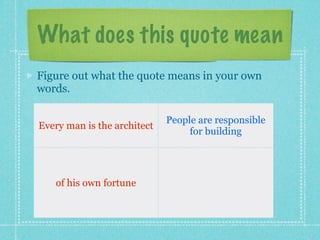
What does this quote mean
Figure out what the quote means in your own
words.

                             People are responsible
Every man is the architect
                                  for building


   of his own fortune
What does this quote mean
Figure out what the quote means in your own
words.

                            People are responsible
Every man is the architect
                           for building or achieving


   of his own fortune         their own success.
What about the tone and
        the audience?
“People are the architects of their own fortune”

                             Sallust


TONE: positive? negative?

AUDIENCE: Roman government?/ People?

Click here to practice.
Practice


Instructions

Take Handout #1 from the desk at the front of
the class.

. When you get the handout press here and
follow the instructions.
Practice
Take a handout from
the desk at the front
of the room.

Read and follow the
directions on the
handout. Use the
handout to analyze
two of the following
quotes

Press here for the
quotes.
Quotes
Quote 1

"Genius is 1 percent inspiration, 99 percent
perspiration."

                         -- Thomas Edison


Press here for quote 2
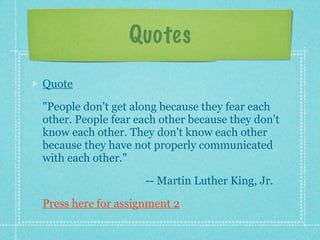
Quotes

Quote

"People don't get along because they fear each
other. People fear each other because they don't
know each other. They don't know each other
because they have not properly communicated
with each other."

                    -- Martin Luther King, Jr.

Press here for assignment 2
Assignment 2

Use the internet (Safari) to find your own quote.

Using Keynote, create a two page keynote
presentation.

On page one- write the quote and the author’s
name. You may include a picture.

On page 2- Analyze your quote.
WELL DONE


This was your first iPad lesson! Go to Edmodo
and click on the IPad Lesson Test. IT IS NOT A
  TEST- just five questions asking you about
               today’s experience.

Analyzing Quotes

  • 1.
  • 2.
    Analyzing Quotations Read quotations Analyzequotations Understand the meaning of the quotation
  • 3.
    WHY? Explanatory Essay HSPAExplanatory Essay Prompt give you a quote. You are required to explain, describe, discuss, or analyze the quote. You have to relate the quote to your personal experience.
  • 4.
    Example:Explanatory Prompt Consider howthe following quotation relates to you. “____________(QUOTATION)___” Write a five paragraph essay explaining what this quotation means to you. Use details and examples in your essay.
  • 5.
    Step 1 How do you analyze a quote?
  • 6.
    Who is theauthor? Do you know the author? If you do, think about what the author may have been like? Why do you think he/she said it? Who do you think the quote was said to?
  • 7.
    What is themain topic of the quote? What does the quote mean?
  • 8.
    Identify the author’stone? Is the quote positive, negative? Is it encouraging, hopeful, pessimistic, optimistic?
  • 9.
    Author’s opinion Most quotesgive you an idea of the author’s opinion. Decide what you think the quote tells you about the speaker (person saying quote).
  • 10.
    Let’s begin! Quote 1 “Bewareof little expenses; a small leak will sink a big ship” Benjamin Franklin
  • 11.
    Vocabulary First! beware: Becareful expenses: Things that cost money leak: a hole in a container that causes liquid to pass through it. sink: to go down to the bottom of the sea/ ocean
  • 12.
    Who is theauthor? Benjamin Franklin: American Statesman/ politician (He signed the Declaration of Independence, and the Constitution) Scientist and inventor (discovered electricity?)
  • 13.
    What does thisquote mean Draw a table and divide the quote into parts. Beware of little expenses, A small leak will sink a big ship.
  • 14.
    What does thisquote mean Figure out what the quote means in your own words. Be careful when Beware of little expenses, spending money. A small leak will sink a big ship.
  • 15.
    What does thisquote mean Figure out what the quote means in your own words. Be careful when Beware of little expenses, spending money. Many small purchases added together represent A small leak will sink a big more money spent and ship. can cause financial problems.
  • 16.
    What about thetone and the audience? “Beware of little expenses; a small leak will sink a big ship” Benjamin Franklin TONE: A warning AUDIENCE: Public (Benjamin Franklin was a statesman. Maybe times were difficult and he was warning the public to be careful with their money)
  • 17.
    Start Practicing orMore Examples? If you are ready to If you need one more practice, press here. example press here.
  • 18.
    Here’s one moreexample Quote 2 "Every man is the architect of his own fortune." Sallust
  • 19.
    Vocabulary First! architect: Aperson who designs buildings fortune: luck or success
  • 20.
    Who is theauthor? Sallust: A Roman historian (86BC-35BC) and Roman official.
  • 21.
    What does thisquote mean Draw a table and divide the quote into parts. Every man is the architect of his own fortune
  • 22.
    What does thisquote mean Figure out what the quote means in your own words. People are responsible Every man is the architect for building of his own fortune
  • 23.
    What does thisquote mean Figure out what the quote means in your own words. People are responsible Every man is the architect for building or achieving of his own fortune their own success.
  • 24.
    What about thetone and the audience? “People are the architects of their own fortune” Sallust TONE: positive? negative? AUDIENCE: Roman government?/ People? Click here to practice.
  • 25.
    Practice Instructions Take Handout #1from the desk at the front of the class. . When you get the handout press here and follow the instructions.
  • 26.
    Practice Take a handoutfrom the desk at the front of the room. Read and follow the directions on the handout. Use the handout to analyze two of the following quotes Press here for the quotes.
  • 27.
    Quotes Quote 1 "Genius is1 percent inspiration, 99 percent perspiration." -- Thomas Edison Press here for quote 2
  • 28.
    Quotes Quote "People don't getalong because they fear each other. People fear each other because they don't know each other. They don't know each other because they have not properly communicated with each other." -- Martin Luther King, Jr. Press here for assignment 2
  • 29.
    Assignment 2 Use theinternet (Safari) to find your own quote. Using Keynote, create a two page keynote presentation. On page one- write the quote and the author’s name. You may include a picture. On page 2- Analyze your quote.
  • 30.
    WELL DONE This wasyour first iPad lesson! Go to Edmodo and click on the IPad Lesson Test. IT IS NOT A TEST- just five questions asking you about today’s experience.