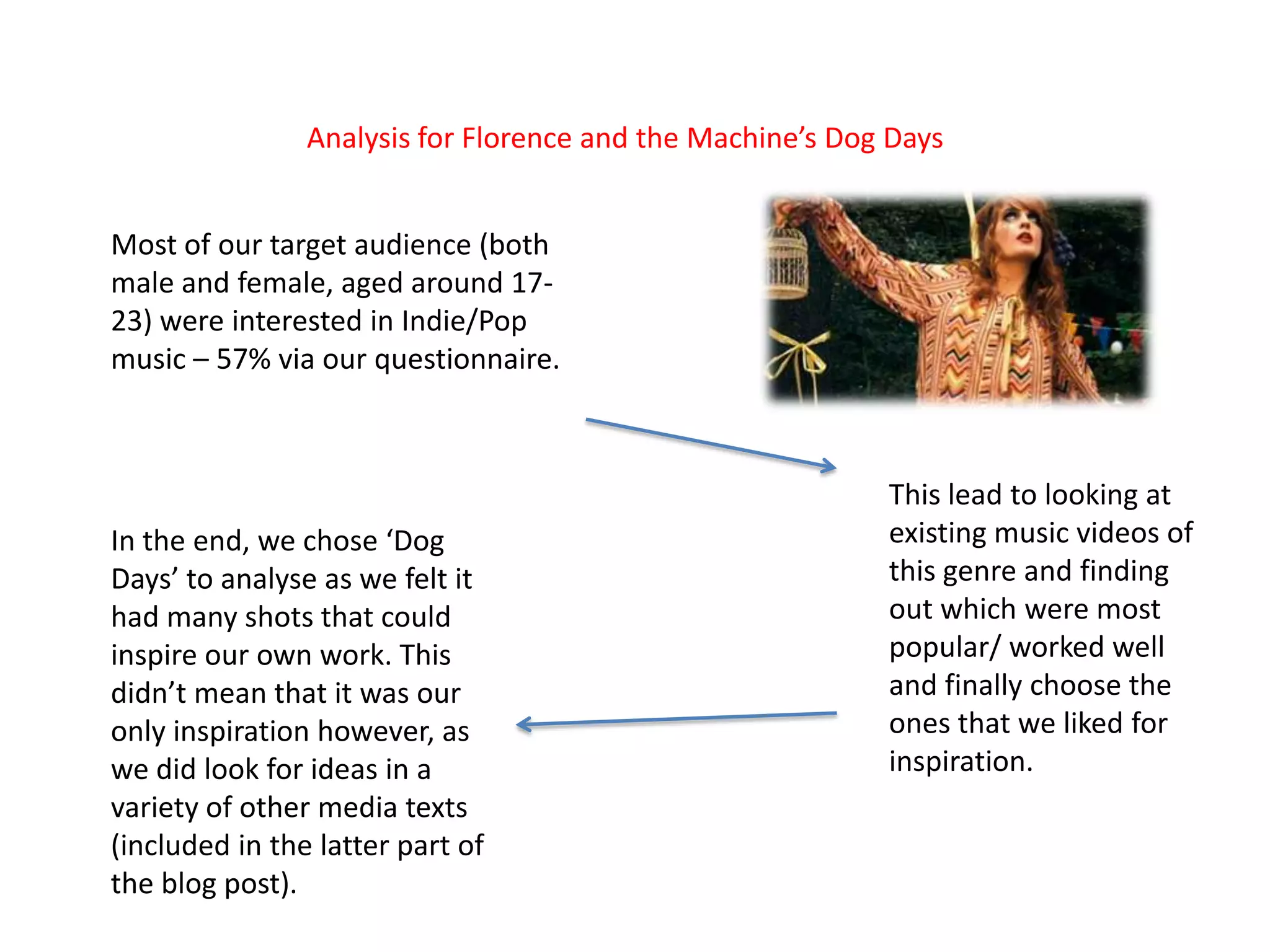
Analysis for Florence and the Machine’s Dog Days


Most of our target audience (both
male and female, aged around 17-
23) were interested in Indie/Pop
music – 57% via our questionnaire.


                                                           This lead to looking at
In the end, we chose ‘Dog                                  existing music videos of
Days’ to analyse as we felt it                             this genre and finding
had many shots that could                                  out which were most
inspire our own work. This                                 popular/ worked well
didn’t mean that it was our                                and finally choose the
only inspiration however, as                               ones that we liked for
we did look for ideas in a                                 inspiration.
variety of other media texts
(included in the latter part of
the blog post).
We decided to look at a Florence and the
Machine music video as she features in
our chosen song. Conveniently she had a
music video that was set in a woods/forest
area which we thought would be useful to
analyse in order to gain a better
understanding of filming in a similar style
and setting.


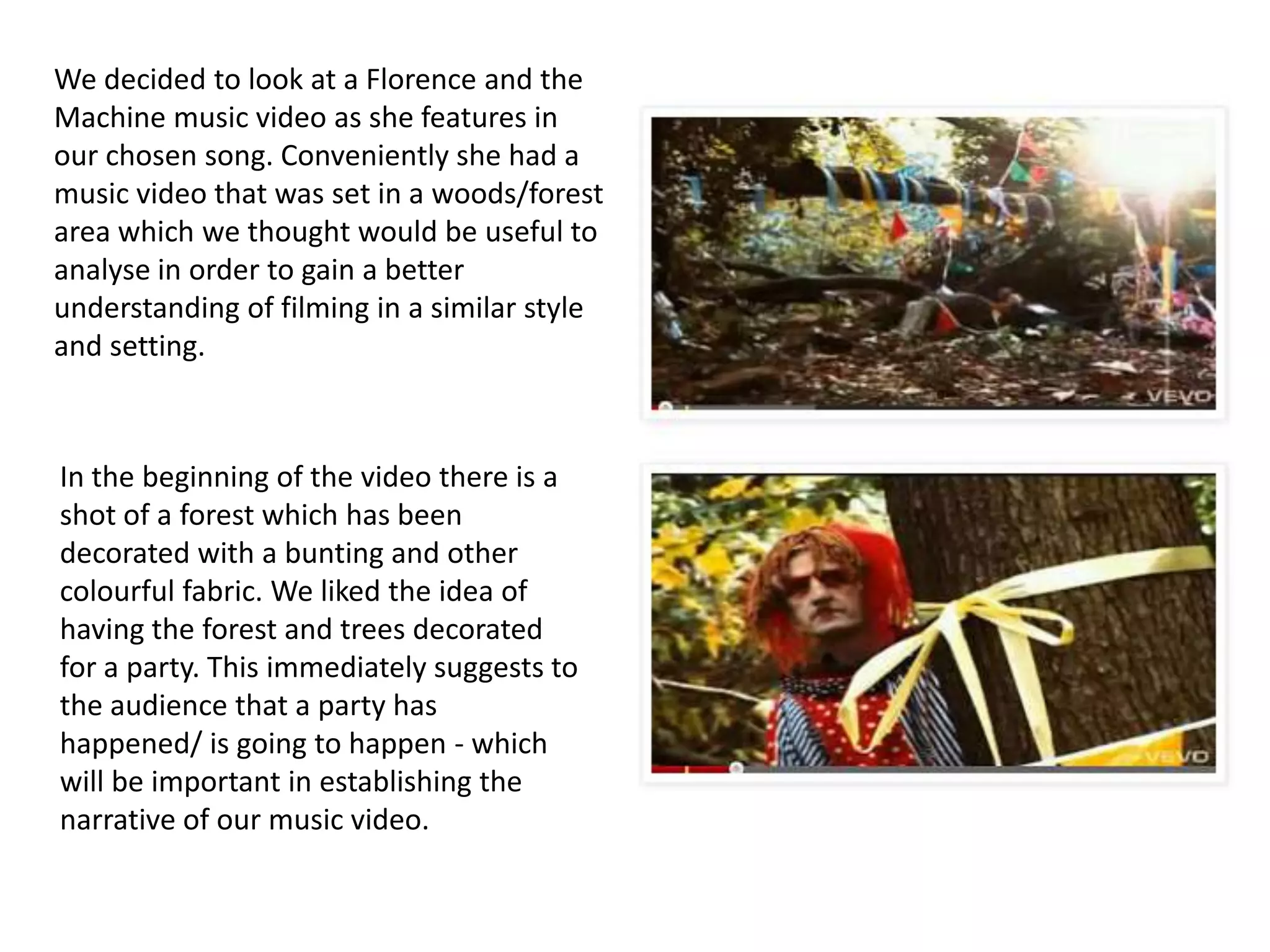
In the beginning of the video there is a
shot of a forest which has been
decorated with a bunting and other
colourful fabric. We liked the idea of
having the forest and trees decorated
for a party. This immediately suggests to
the audience that a party has
happened/ is going to happen - which
will be important in establishing the
narrative of our music video.
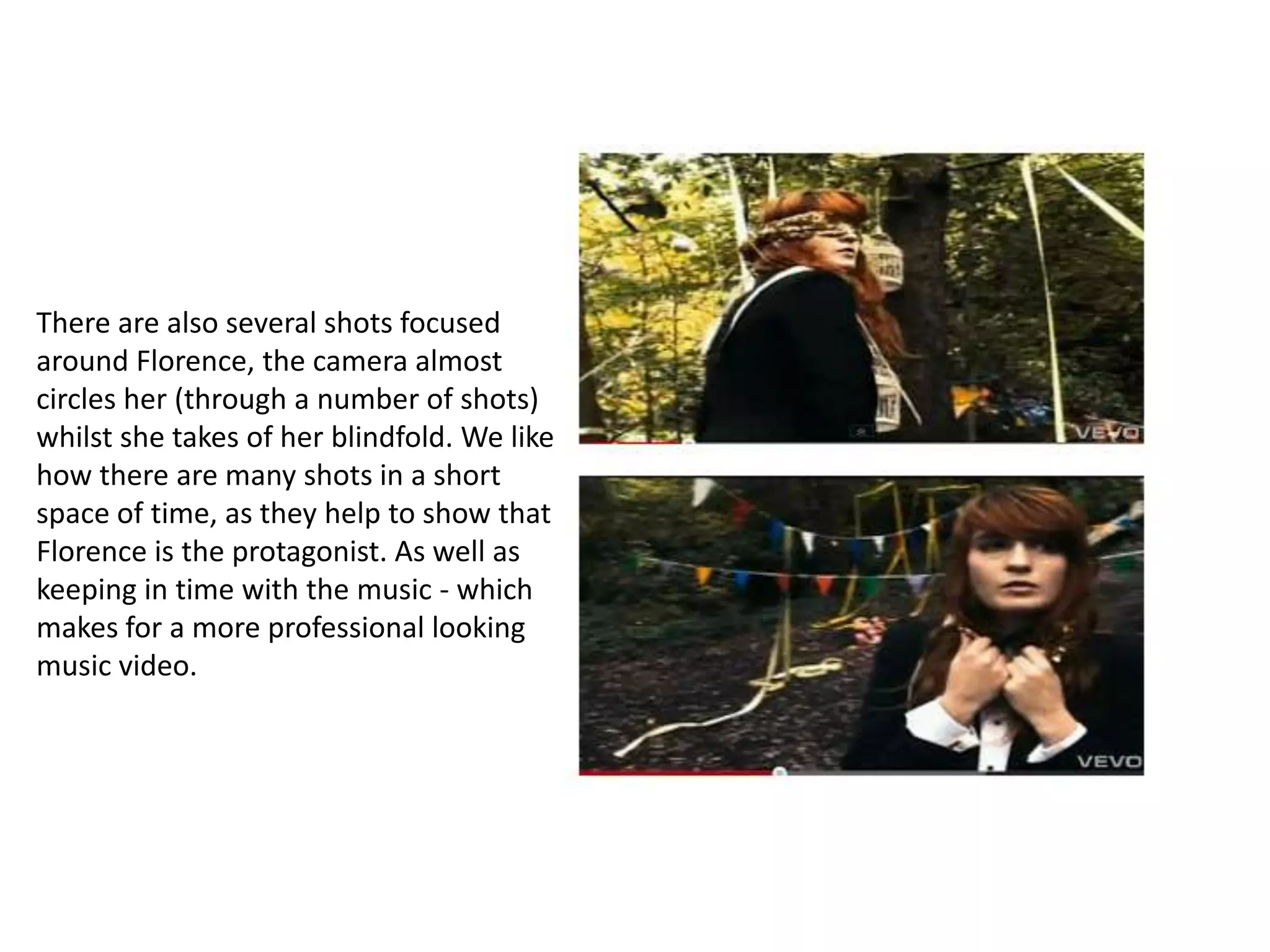
There are also several shots focused
around Florence, the camera almost
circles her (through a number of shots)
whilst she takes of her blindfold. We like
how there are many shots in a short
space of time, as they help to show that
Florence is the protagonist. As well as
keeping in time with the music - which
makes for a more professional looking
music video.
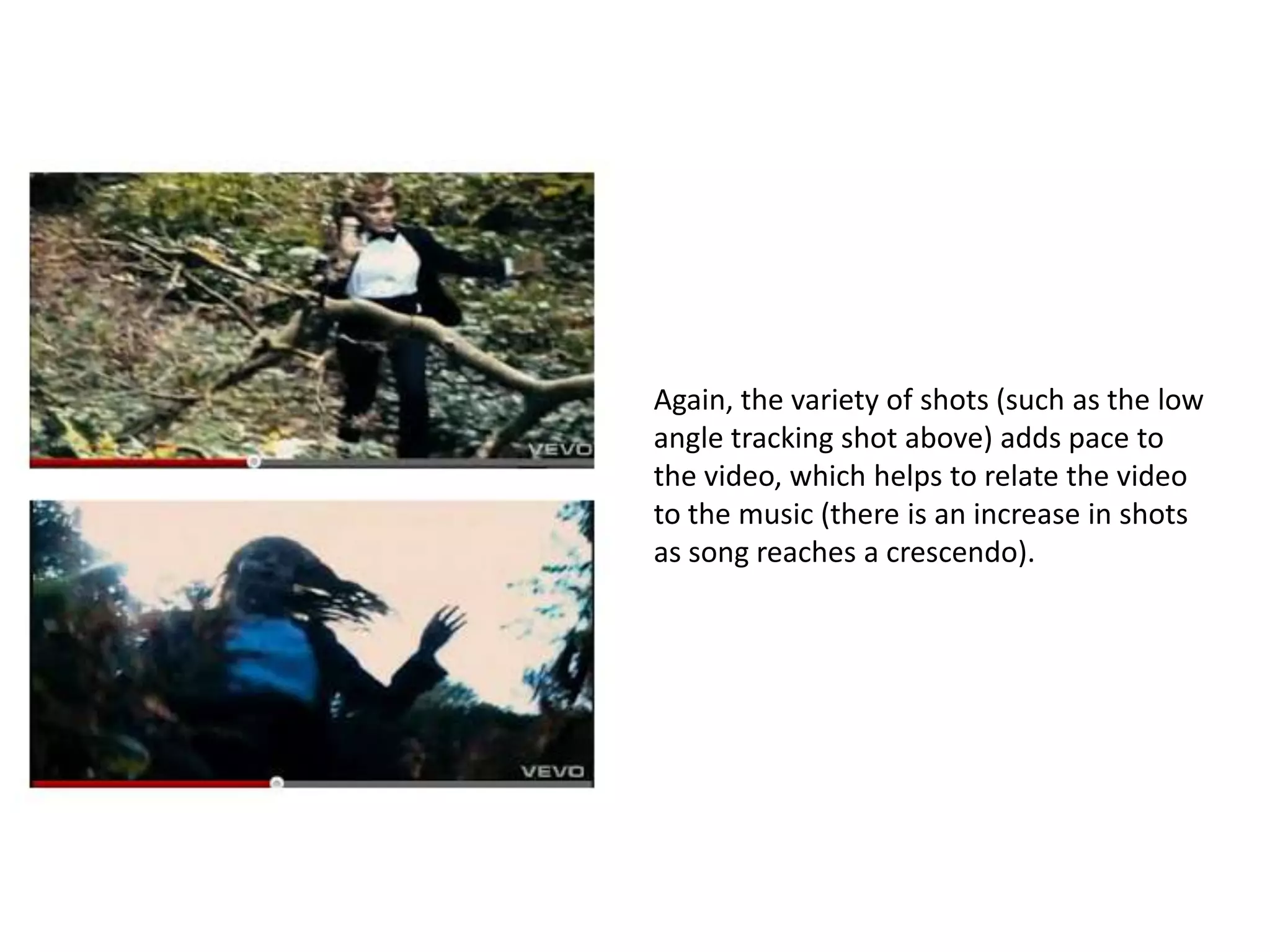
Again, the variety of shots (such as the low
angle tracking shot above) adds pace to
the video, which helps to relate the video
to the music (there is an increase in shots
as song reaches a crescendo).
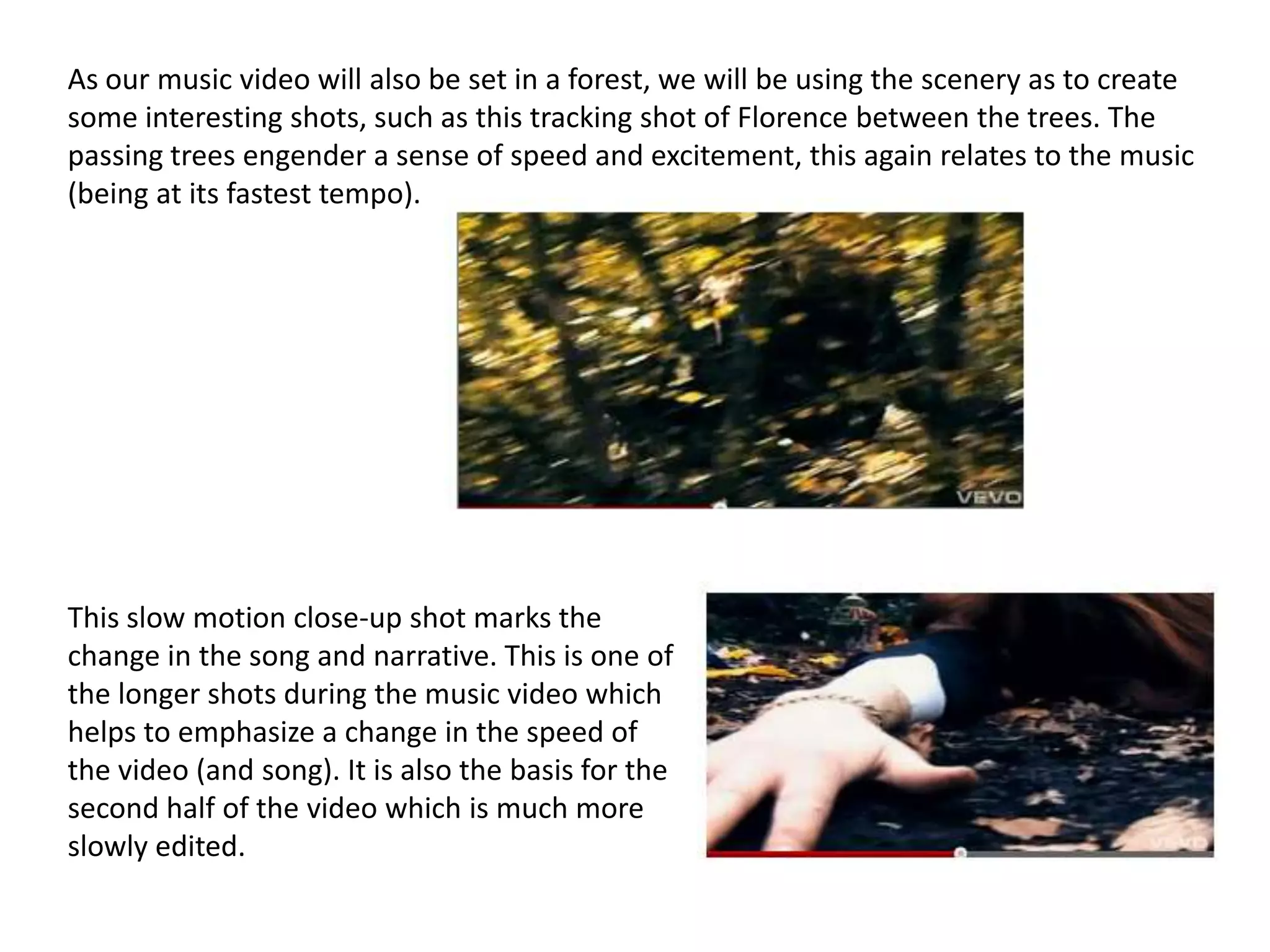
As our music video will also be set in a forest, we will be using the scenery as to create
some interesting shots, such as this tracking shot of Florence between the trees. The
passing trees engender a sense of speed and excitement, this again relates to the music
(being at its fastest tempo).


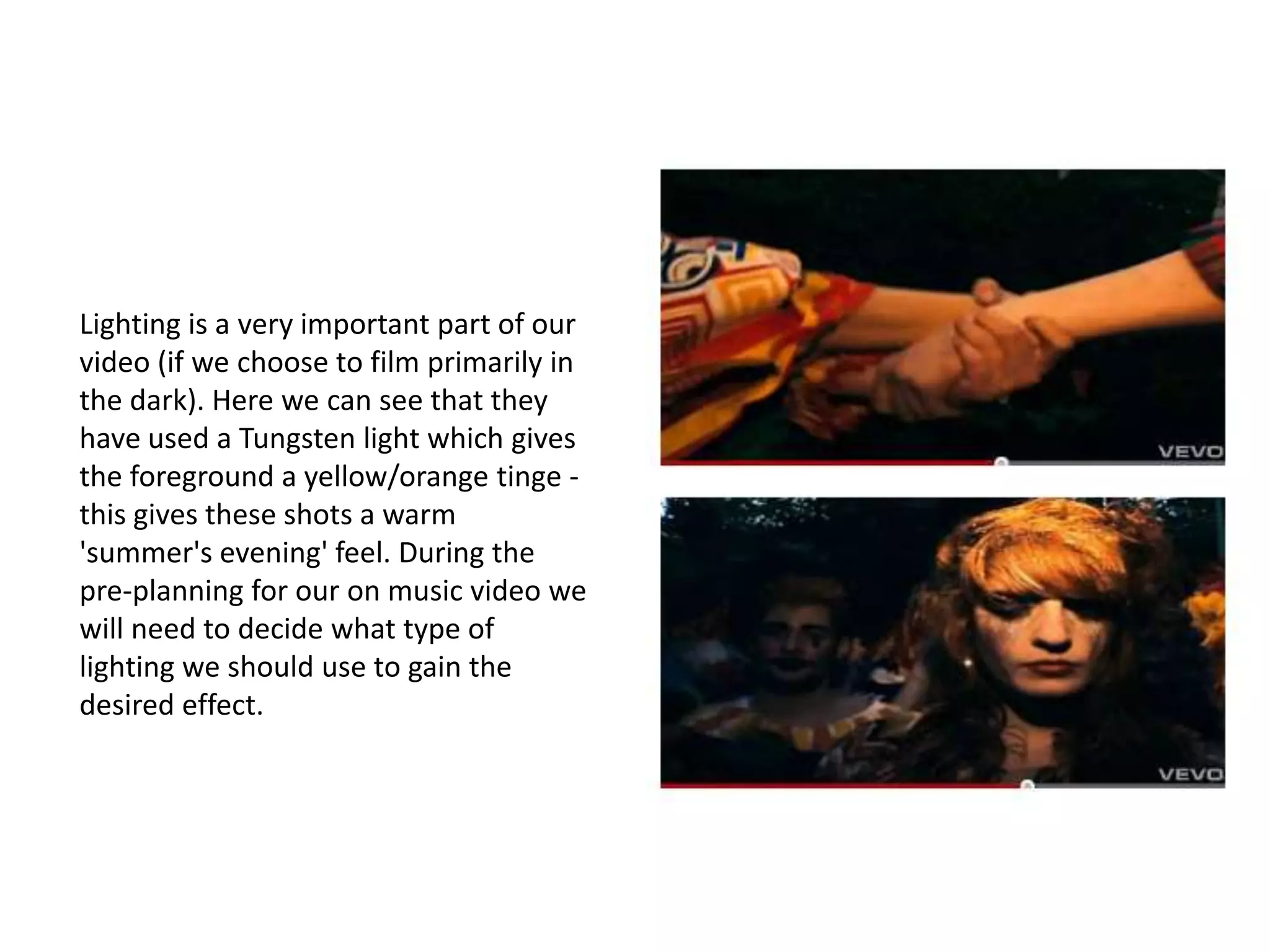
This slow motion close-up shot marks the
change in the song and narrative. This is one of
the longer shots during the music video which
helps to emphasize a change in the speed of
the video (and song). It is also the basis for the
second half of the video which is much more
slowly edited.
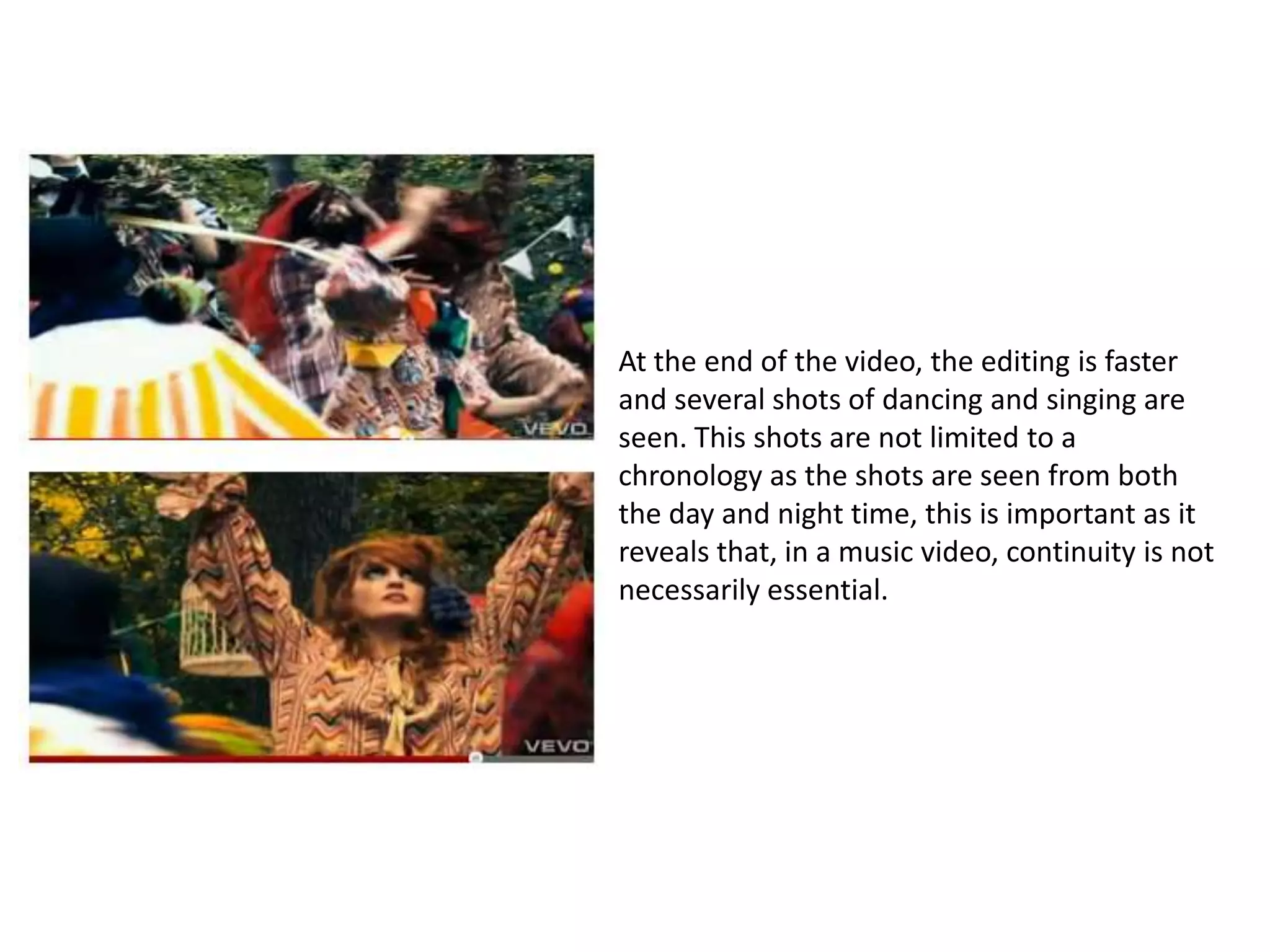
Lighting is a very important part of our
video (if we choose to film primarily in
the dark). Here we can see that they
have used a Tungsten light which gives
the foreground a yellow/orange tinge -
this gives these shots a warm
'summer's evening' feel. During the
pre-planning for our on music video we
will need to decide what type of
lighting we should use to gain the
desired effect.
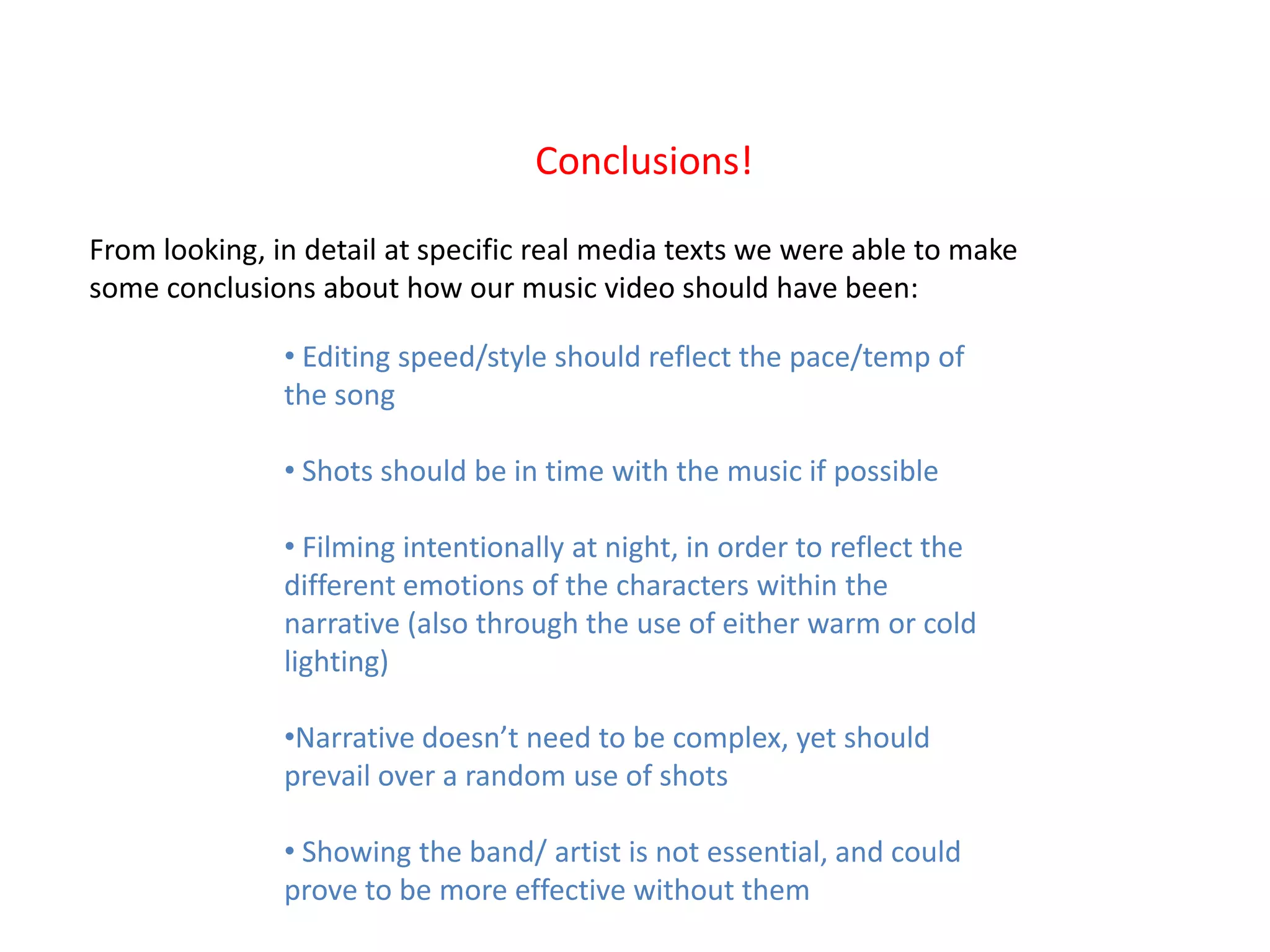
At the end of the video, the editing is faster
and several shots of dancing and singing are
seen. This shots are not limited to a
chronology as the shots are seen from both
the day and night time, this is important as it
reveals that, in a music video, continuity is not
necessarily essential.
Conclusions!

From looking, in detail at specific real media texts we were able to make
some conclusions about how our music video should have been:

               • Editing speed/style should reflect the pace/temp of
               the song

               • Shots should be in time with the music if possible

               • Filming intentionally at night, in order to reflect the
               different emotions of the characters within the
               narrative (also through the use of either warm or cold
               lighting)

               •Narrative doesn’t need to be complex, yet should
               prevail over a random use of shots

               • Showing the band/ artist is not essential, and could
               prove to be more effective without them

Analysis of real media texts

  • 1.
    Analysis for Florenceand the Machine’s Dog Days Most of our target audience (both male and female, aged around 17- 23) were interested in Indie/Pop music – 57% via our questionnaire. This lead to looking at In the end, we chose ‘Dog existing music videos of Days’ to analyse as we felt it this genre and finding had many shots that could out which were most inspire our own work. This popular/ worked well didn’t mean that it was our and finally choose the only inspiration however, as ones that we liked for we did look for ideas in a inspiration. variety of other media texts (included in the latter part of the blog post).
  • 2.
    We decided tolook at a Florence and the Machine music video as she features in our chosen song. Conveniently she had a music video that was set in a woods/forest area which we thought would be useful to analyse in order to gain a better understanding of filming in a similar style and setting. In the beginning of the video there is a shot of a forest which has been decorated with a bunting and other colourful fabric. We liked the idea of having the forest and trees decorated for a party. This immediately suggests to the audience that a party has happened/ is going to happen - which will be important in establishing the narrative of our music video.
  • 3.
    There are alsoseveral shots focused around Florence, the camera almost circles her (through a number of shots) whilst she takes of her blindfold. We like how there are many shots in a short space of time, as they help to show that Florence is the protagonist. As well as keeping in time with the music - which makes for a more professional looking music video.
  • 4.
    Again, the varietyof shots (such as the low angle tracking shot above) adds pace to the video, which helps to relate the video to the music (there is an increase in shots as song reaches a crescendo).
  • 5.
    As our musicvideo will also be set in a forest, we will be using the scenery as to create some interesting shots, such as this tracking shot of Florence between the trees. The passing trees engender a sense of speed and excitement, this again relates to the music (being at its fastest tempo). This slow motion close-up shot marks the change in the song and narrative. This is one of the longer shots during the music video which helps to emphasize a change in the speed of the video (and song). It is also the basis for the second half of the video which is much more slowly edited.
  • 6.
    Lighting is avery important part of our video (if we choose to film primarily in the dark). Here we can see that they have used a Tungsten light which gives the foreground a yellow/orange tinge - this gives these shots a warm 'summer's evening' feel. During the pre-planning for our on music video we will need to decide what type of lighting we should use to gain the desired effect.
  • 7.
    At the endof the video, the editing is faster and several shots of dancing and singing are seen. This shots are not limited to a chronology as the shots are seen from both the day and night time, this is important as it reveals that, in a music video, continuity is not necessarily essential.
  • 8.
    Conclusions! From looking, indetail at specific real media texts we were able to make some conclusions about how our music video should have been: • Editing speed/style should reflect the pace/temp of the song • Shots should be in time with the music if possible • Filming intentionally at night, in order to reflect the different emotions of the characters within the narrative (also through the use of either warm or cold lighting) •Narrative doesn’t need to be complex, yet should prevail over a random use of shots • Showing the band/ artist is not essential, and could prove to be more effective without them