Analysis of Monolithic and Microkernel Architectures
Towards Secure Hypervisor Design
Islam, Pahlwan Rabiul
20-61980-1
By
Dr. Jordan Shropshire
Contents
 Hypervisor Architecture
 Hypervisor Security
 Hypervisor Platforms
 ESX
 Xen
 Hyper-V
 Architectural Features
 Management API
 Monitoring Interface
 Hypercalls
 Interrupts
 Networking
 I/O
Introduction
Monolithic Hypervisor
 Thin Layer of Software
 Hardware Drivers
 Application Programming Interface
 Virtualization Stack
Microkernel Hypervisor
 Small hypervisor
 Kernel
 Management Partition
 Drivers
 Virtualization Managers
 Administrative Interfaces
Vulnerabilities & Trade-offs Comparison
Background
Hypervisors
 Intermediary between virtual machines & underlying hardware
 Hypercalls
 Paravirtualization
 Deliberate System Calls
 Interrupts
 Signal to Processor
 Scheduler
 One or more vCPU for each virtual machine
 Multiprocessing
 Abstraction
Security Rings
 Hierarchical level of privilege
 Ring 0 → OS Kernel | CPU | Memory
 Ring 1 & Ring 2 → Device Drivers
 Ring 3 → User Mode
 Shared memory privilege
 System flags
 Gate feature
 Context switch
Trusted Code Base (TCB)
 Trusted Code Base components
 Hardware
 Drivers
 Operating System
 Abstraction Software
 Resource Brokering Software
“all of the elements of the system responsible for supporting the
security policy and supporting the isolation of objects (code
and data) on which the protection is based”
Monolithic
and
Microkernel
Architectures
Hypervisor Task
 Starting and Maintaining virtual machines
 Abstracting System Resources
 Sharing Hardware and Assets
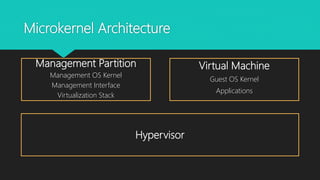
Microkernel Architecture
Management Partition
Management OS Kernel
Management Interface
Virtualization Stack
Virtual Machine
Guest OS Kernel
Applications
Hypervisor
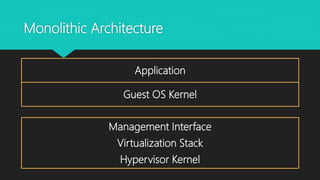
Monolithic Architecture
Application
Guest OS Kernel
Management Interface
Virtualization Stack
Hypervisor Kernel
Threat Model
Logical Access but No Physical Access
Analysis
Analysis of Six Features of Hypervisors
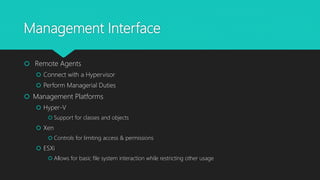
Management Interface
 Remote Agents
 Connect with a Hypervisor
 Perform Managerial Duties
 Management Platforms
 Hyper-V
 Support for classes and objects
 Xen
 Controls for limiting access & permissions
 ESXi
 Allows for basic file system interaction while restricting other usage
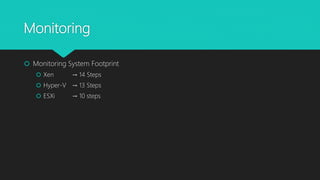
Monitoring
 Monitoring System Footprint
 Xen → 14 Steps
 Hyper-V → 13 Steps
 ESXi → 10 steps
Hypercalls
 Hypercall Support
 Xen → 100 Hypercalls
 Hyper-V → 113 Hypercalls
 ESXi → 82 Hypercalls
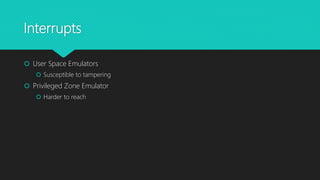
Interrupts
 User Space Emulators
 Susceptible to tampering
 Privileged Zone Emulator
 Harder to reach
Networking
 Network Path
 Xen → 25 Steps
 Hyper-V → 31 Steps
 ESXi → 20 Steps
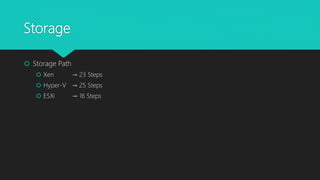
Storage
 Storage Path
 Xen → 23 Steps
 Hyper-V → 25 Steps
 ESXi → 16 Steps
Conclusion
“Regardless of the size of the footprint or the type of
architecture, well written and tested kernel code will
provide better security”

Analysis of Monolithic and Microkernel Architectures - Towards Secure Hypervisor Design

  • 1.
    Analysis of Monolithicand Microkernel Architectures Towards Secure Hypervisor Design Islam, Pahlwan Rabiul 20-61980-1 By Dr. Jordan Shropshire
  • 2.
    Contents  Hypervisor Architecture Hypervisor Security  Hypervisor Platforms  ESX  Xen  Hyper-V  Architectural Features  Management API  Monitoring Interface  Hypercalls  Interrupts  Networking  I/O
  • 3.
    Introduction Monolithic Hypervisor  ThinLayer of Software  Hardware Drivers  Application Programming Interface  Virtualization Stack Microkernel Hypervisor  Small hypervisor  Kernel  Management Partition  Drivers  Virtualization Managers  Administrative Interfaces Vulnerabilities & Trade-offs Comparison
  • 4.
  • 5.
    Hypervisors  Intermediary betweenvirtual machines & underlying hardware  Hypercalls  Paravirtualization  Deliberate System Calls  Interrupts  Signal to Processor  Scheduler  One or more vCPU for each virtual machine  Multiprocessing  Abstraction
  • 6.
    Security Rings  Hierarchicallevel of privilege  Ring 0 → OS Kernel | CPU | Memory  Ring 1 & Ring 2 → Device Drivers  Ring 3 → User Mode  Shared memory privilege  System flags  Gate feature  Context switch
  • 7.
    Trusted Code Base(TCB)  Trusted Code Base components  Hardware  Drivers  Operating System  Abstraction Software  Resource Brokering Software “all of the elements of the system responsible for supporting the security policy and supporting the isolation of objects (code and data) on which the protection is based”
  • 8.
  • 9.
    Hypervisor Task  Startingand Maintaining virtual machines  Abstracting System Resources  Sharing Hardware and Assets
  • 10.
    Microkernel Architecture Management Partition ManagementOS Kernel Management Interface Virtualization Stack Virtual Machine Guest OS Kernel Applications Hypervisor
  • 11.
    Monolithic Architecture Application Guest OSKernel Management Interface Virtualization Stack Hypervisor Kernel
  • 12.
    Threat Model Logical Accessbut No Physical Access
  • 13.
    Analysis Analysis of SixFeatures of Hypervisors
  • 14.
    Management Interface  RemoteAgents  Connect with a Hypervisor  Perform Managerial Duties  Management Platforms  Hyper-V  Support for classes and objects  Xen  Controls for limiting access & permissions  ESXi  Allows for basic file system interaction while restricting other usage
  • 15.
    Monitoring  Monitoring SystemFootprint  Xen → 14 Steps  Hyper-V → 13 Steps  ESXi → 10 steps
  • 16.
    Hypercalls  Hypercall Support Xen → 100 Hypercalls  Hyper-V → 113 Hypercalls  ESXi → 82 Hypercalls
  • 17.
    Interrupts  User SpaceEmulators  Susceptible to tampering  Privileged Zone Emulator  Harder to reach
  • 18.
    Networking  Network Path Xen → 25 Steps  Hyper-V → 31 Steps  ESXi → 20 Steps
  • 19.
    Storage  Storage Path Xen → 23 Steps  Hyper-V → 25 Steps  ESXi → 16 Steps
  • 20.
    Conclusion “Regardless of thesize of the footprint or the type of architecture, well written and tested kernel code will provide better security”