Women of the ANA Luncheon:
Work Life Balance
Kathleen B. Digre MD
University of Utah
September 28, 2015
What is work life balance?
• New term 1998—in pubmed, and most
published literature is the last 5-10 years
• The goal is maintaining well-being to
avoid burnout
– Present in 37-47% academics
– Occuring all age groups
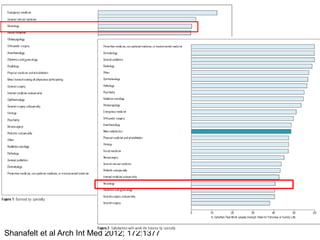
– Neurology in higher group (OR1.5)
Shanafeldt et al Am J Med 2003: 114; Shanafelt et al Arch Int Med 2012; 172:1377
Shanafelt et al Arch Int Med 2012; 172:1377
What the literature says about work
life balance
Things that matter
• **Control over time
(flexible working hours)
• Meaningful work
• Personality
• Social support
• Spirituality
• Children
• Mentoring and Role
models
• Saying «no»
Things that don’t matter
• Age
• High income
• Occupational success
• prestige
Hoff et al Health Care Manage Rev 2015; May 14; Strong et al 2013 J Gen Int Med;
Keeton et al Ob Gyn 2007: 109: 949; Joyce et al Cochrane Review 2010;
Generational factors
• Baby boomers (1946-1964): Medicine is a
calling;
• Generation X (1965-1980) less rigid more
practical, rule questioning;
• Millenials (1981-early 2000): life-work
balance
– In 1996 18% and 28% men chose residency for
life style control
– 2003, 36% women and 45% men made the
choice for life style control (Dorsey et al Acad Med 2005;8: 791
Dageforde et al J Vasc Surg 2013; 57:262-7; Howell Acad med 2009; 84:985; Spector et
al Pediatrics 2014;133:1112–1121;
Gender Factors
• Women chose tracks for work life balance vs
tenure OR 2.1 (Waljee et al Plast Reconst Surg 2015; 136: 380e-7e)
• Gender roles more challenging for women
• Stigma associated with using family friendly
institutional programs (Strong et al J Gen Intern Med 28: 1596)
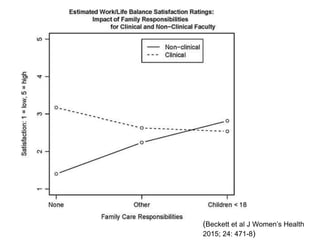
• Impact of family: Clinical faculty without
children better vs with children. Non-clinical
faculty with children than without children;
– Women Assoc Professors and above better
balance (Beckett et al J women’shealth 2015; 24: 471-8)
(Beckett et al J Women’s Health
2015; 24: 471-8)
Strategies used by individuals
• Self-care practice—cultivate your interests
professionally and personally (sleep, nutrition,
exercise, reading, stress reactions)
• Relationships—time with family and significant other,
opportunities to share with colleagues
• Work attitude: meaning in work; find the things you
like (research, teaching) and discontinue or limit the
things you don’t like
• Religious belief and spiritual practice—nurturing
spirituality in self
• Life Philosophy—positive outlook
• Get rid of dichotomy of work-life balance (integration
of profession and life)
Shanafelt et al Am J Medicine 2003; 114: 513; Schwingshacki Frontiers in Pediatrics 2014: Buddenberg-Fischer
2008
Strategies of organizations
• Promote physician autonomy—flexibility and control of
schedule
• Collegial work environment
• Foster wellness: exercise opportunities, mindfulness
training, fresh fruits and vegetables (Brennan et al Int J Psych Med
2015: 50: 104-14)
• Minimize work and home interferences—coverage for
life events
• Support services: administrative; mentorship
• Value oriented organizations—mission and values
aligned
• Periodic breaks
• Family Friendly Policies: Part time tenure (Waljee et al)
Conclusions
• Many factors (individual, gender,
occupation, family obligations,
organizational) are important
• Discussion and sharing our strategies
helpful
Nature 2011; 477:27

ANA Work Life Balance

  • 1.
    Women of theANA Luncheon: Work Life Balance Kathleen B. Digre MD University of Utah September 28, 2015
  • 2.
    What is worklife balance? • New term 1998—in pubmed, and most published literature is the last 5-10 years • The goal is maintaining well-being to avoid burnout – Present in 37-47% academics – Occuring all age groups – Neurology in higher group (OR1.5) Shanafeldt et al Am J Med 2003: 114; Shanafelt et al Arch Int Med 2012; 172:1377
  • 3.
    Shanafelt et alArch Int Med 2012; 172:1377
  • 4.
    What the literaturesays about work life balance Things that matter • **Control over time (flexible working hours) • Meaningful work • Personality • Social support • Spirituality • Children • Mentoring and Role models • Saying «no» Things that don’t matter • Age • High income • Occupational success • prestige Hoff et al Health Care Manage Rev 2015; May 14; Strong et al 2013 J Gen Int Med; Keeton et al Ob Gyn 2007: 109: 949; Joyce et al Cochrane Review 2010;
  • 5.
    Generational factors • Babyboomers (1946-1964): Medicine is a calling; • Generation X (1965-1980) less rigid more practical, rule questioning; • Millenials (1981-early 2000): life-work balance – In 1996 18% and 28% men chose residency for life style control – 2003, 36% women and 45% men made the choice for life style control (Dorsey et al Acad Med 2005;8: 791 Dageforde et al J Vasc Surg 2013; 57:262-7; Howell Acad med 2009; 84:985; Spector et al Pediatrics 2014;133:1112–1121;
  • 6.
    Gender Factors • Womenchose tracks for work life balance vs tenure OR 2.1 (Waljee et al Plast Reconst Surg 2015; 136: 380e-7e) • Gender roles more challenging for women • Stigma associated with using family friendly institutional programs (Strong et al J Gen Intern Med 28: 1596) • Impact of family: Clinical faculty without children better vs with children. Non-clinical faculty with children than without children; – Women Assoc Professors and above better balance (Beckett et al J women’shealth 2015; 24: 471-8)
  • 7.
    (Beckett et alJ Women’s Health 2015; 24: 471-8)
  • 8.
    Strategies used byindividuals • Self-care practice—cultivate your interests professionally and personally (sleep, nutrition, exercise, reading, stress reactions) • Relationships—time with family and significant other, opportunities to share with colleagues • Work attitude: meaning in work; find the things you like (research, teaching) and discontinue or limit the things you don’t like • Religious belief and spiritual practice—nurturing spirituality in self • Life Philosophy—positive outlook • Get rid of dichotomy of work-life balance (integration of profession and life) Shanafelt et al Am J Medicine 2003; 114: 513; Schwingshacki Frontiers in Pediatrics 2014: Buddenberg-Fischer 2008
  • 9.
    Strategies of organizations •Promote physician autonomy—flexibility and control of schedule • Collegial work environment • Foster wellness: exercise opportunities, mindfulness training, fresh fruits and vegetables (Brennan et al Int J Psych Med 2015: 50: 104-14) • Minimize work and home interferences—coverage for life events • Support services: administrative; mentorship • Value oriented organizations—mission and values aligned • Periodic breaks • Family Friendly Policies: Part time tenure (Waljee et al)
  • 10.
    Conclusions • Many factors(individual, gender, occupation, family obligations, organizational) are important • Discussion and sharing our strategies helpful
  • 11.