Course Code:EEE223
Course Title: Energy Conversion II
Course Instructor: Mr. Naimur Rahman
Lecturer, Dept. Of EEE,DIU
Presented By: Saifur Rahman Turjoy
Id: 221-33-1785 (C)
Department of EEE,DIU
Speed Control of DC Motor
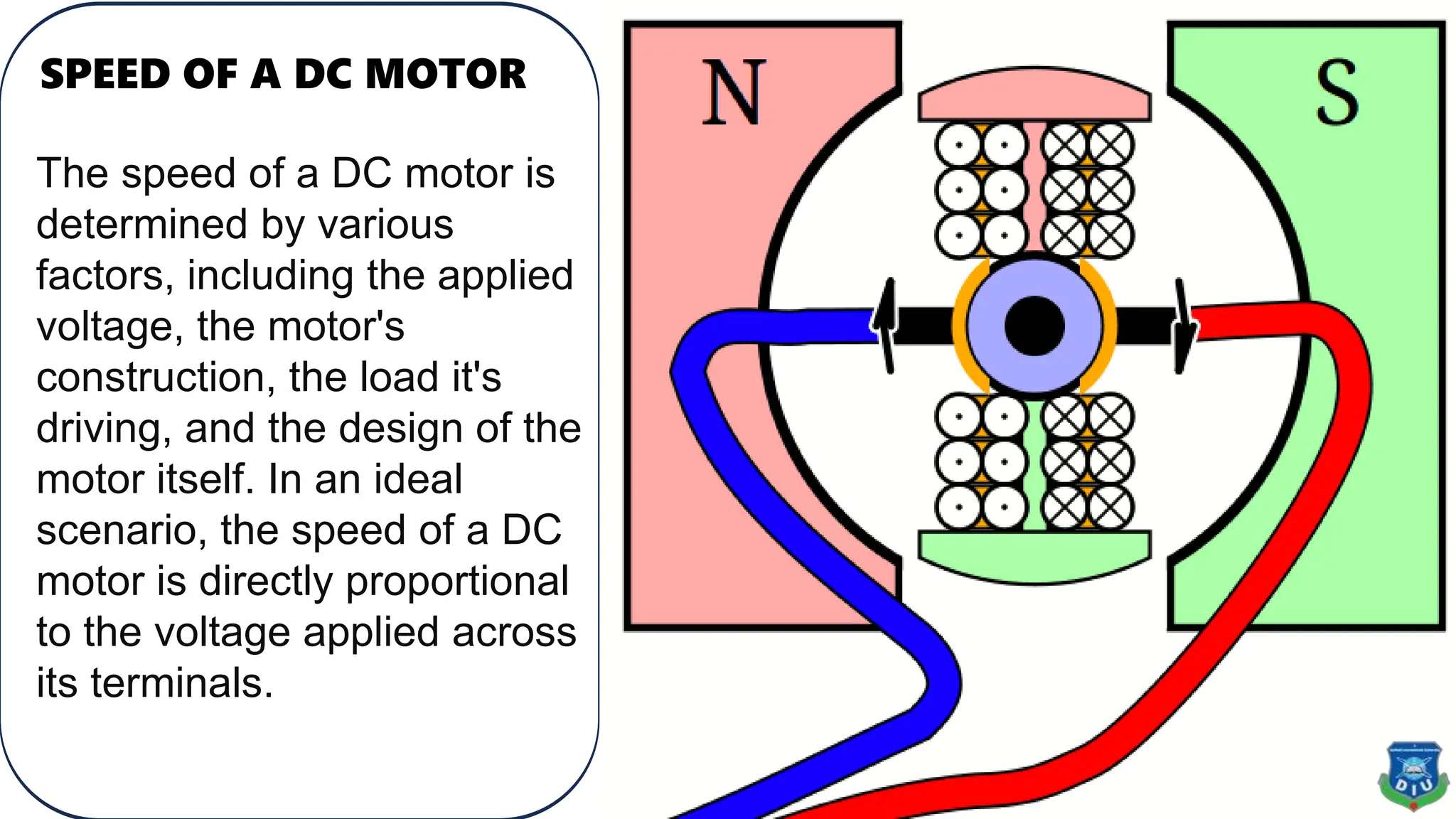
The speed of a DC motor is
determined by various
factors, including the applied
voltage, the motor's
construction, the load it's
driving, and the design of the
motor itself. In an ideal
scenario, the speed of a DC
motor is directly proportional
to the voltage applied across
its terminals.
SPEED OF A DC MOTOR
•The flux control
method involves
adjusting the field flux
of the DC motor.
•The field flux is
created by the current
flowing through the
field windings.
•By increasing or
decreasing the field
current, the field flux
can be increased or
decreased, respective
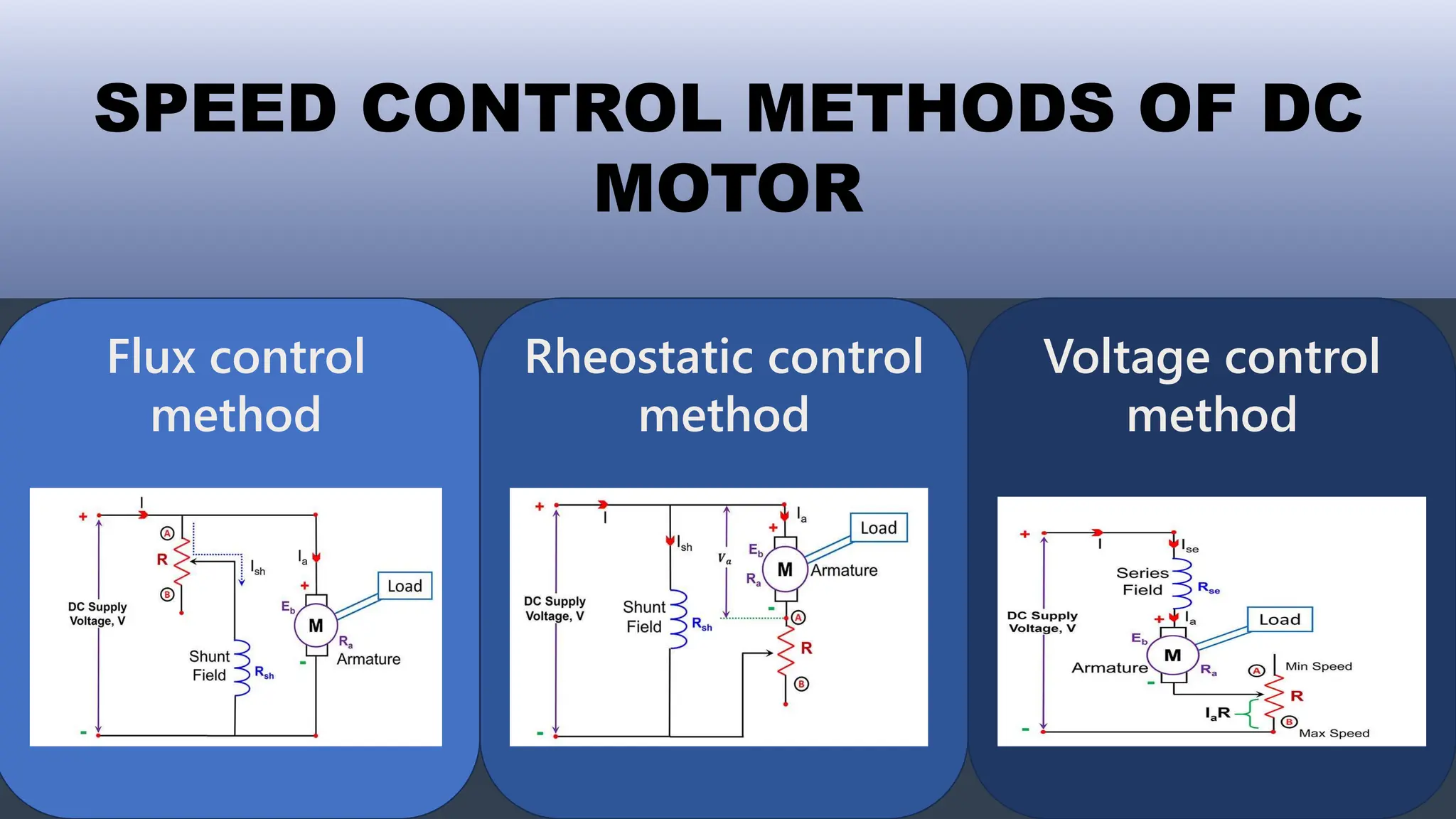
SPEED CONTROL METHODS OF DC
MOTOR
Flux control
method
Rheostatic control
method
Voltage control
method
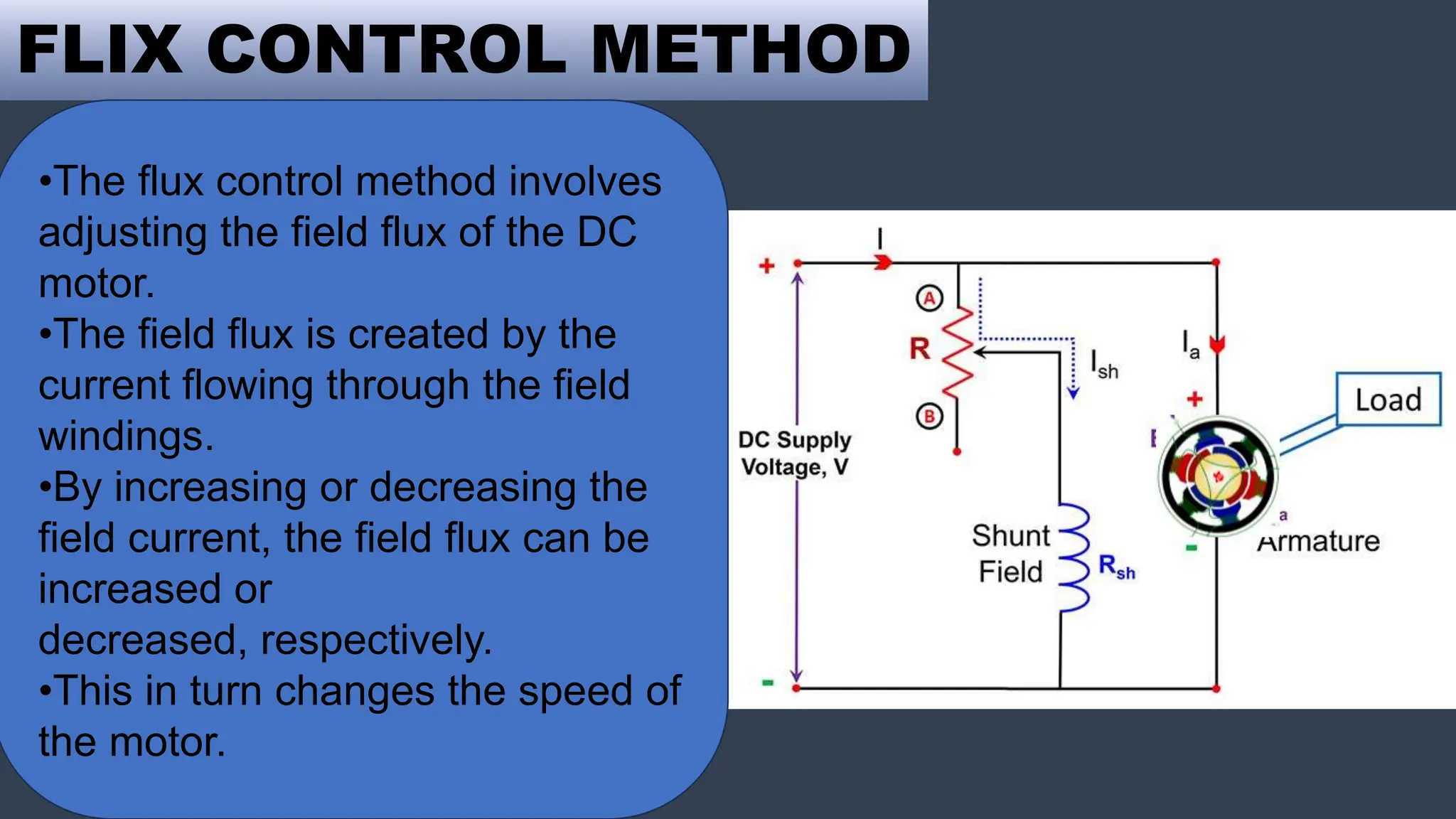
FLIX CONTROL METHOD
•The flux control method involves
adjusting the field flux of the DC
motor.
•The field flux is created by the
current flowing through the field
windings.
•By increasing or decreasing the
field current, the field flux can be
increased or
decreased, respectively.
•This in turn changes the speed of
the motor.
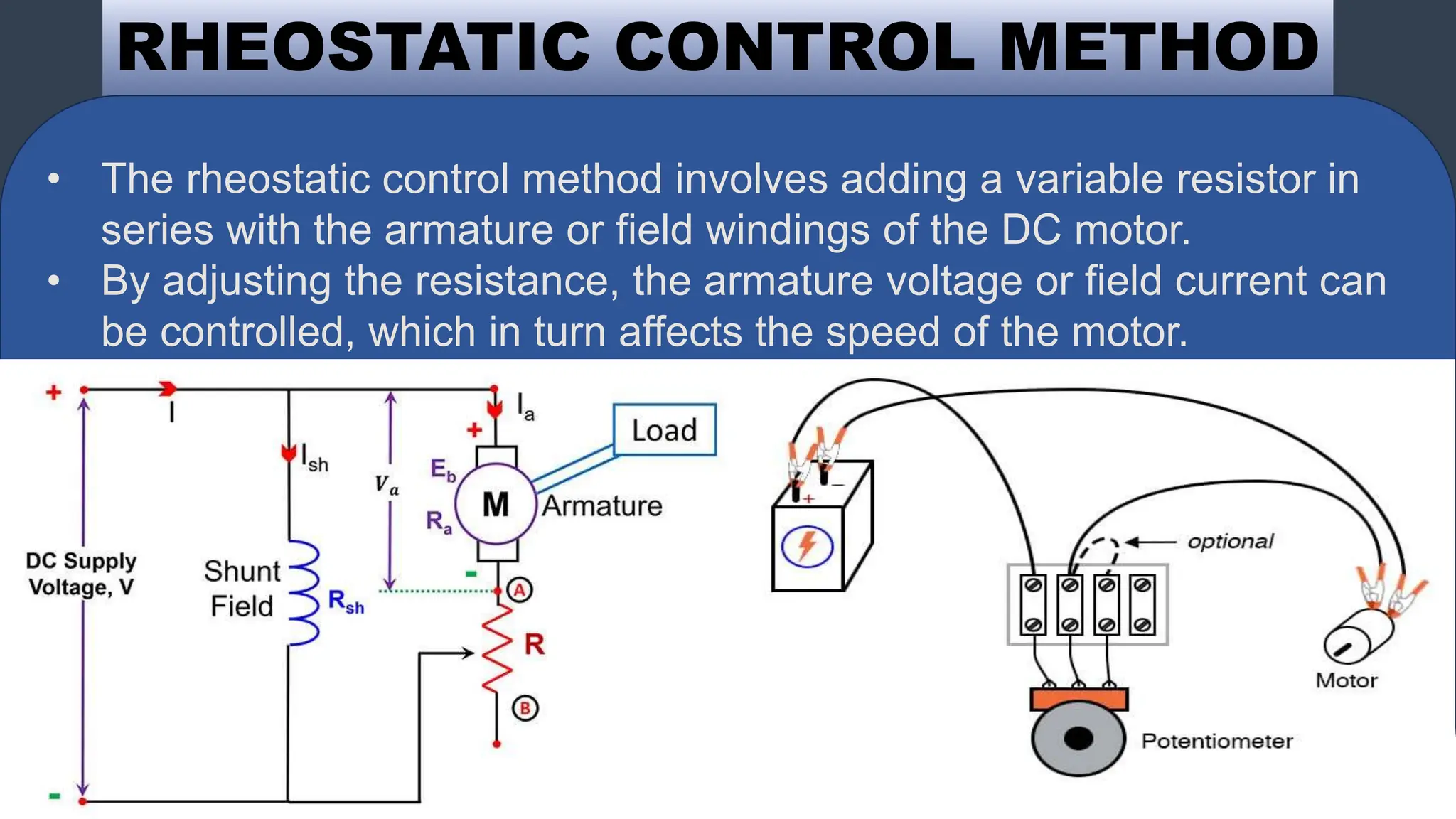
RHEOSTATIC CONTROL METHOD
• The rheostatic control method involves adding a variable resistor in
series with the armature or field windings of the DC motor.
• By adjusting the resistance, the armature voltage or field current can
be controlled, which in turn affects the speed of the motor.
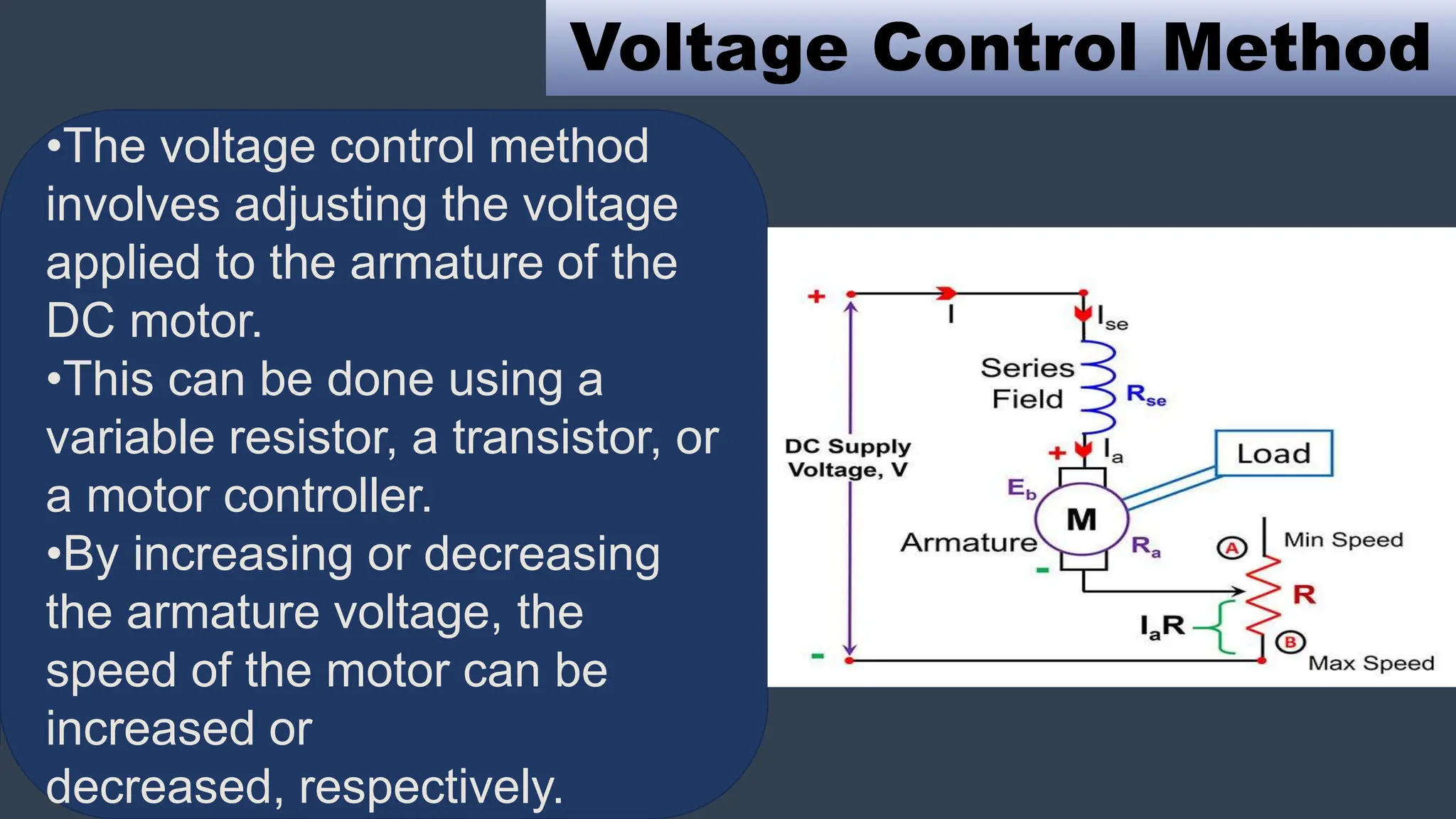
Voltage Control Method
•The voltage control method
involves adjusting the voltage
applied to the armature of the
DC motor.
•This can be done using a
variable resistor, a transistor, or
a motor controller.
•By increasing or decreasing
the armature voltage, the
speed of the motor can be
increased or
decreased, respectively.
THANK Y
U

An Speed Control of DC Motor Presentation

  • 1.
    Course Code:EEE223 Course Title:Energy Conversion II Course Instructor: Mr. Naimur Rahman Lecturer, Dept. Of EEE,DIU Presented By: Saifur Rahman Turjoy Id: 221-33-1785 (C) Department of EEE,DIU Speed Control of DC Motor
  • 2.
    The speed ofa DC motor is determined by various factors, including the applied voltage, the motor's construction, the load it's driving, and the design of the motor itself. In an ideal scenario, the speed of a DC motor is directly proportional to the voltage applied across its terminals. SPEED OF A DC MOTOR
  • 3.
    •The flux control methodinvolves adjusting the field flux of the DC motor. •The field flux is created by the current flowing through the field windings. •By increasing or decreasing the field current, the field flux can be increased or decreased, respective SPEED CONTROL METHODS OF DC MOTOR Flux control method Rheostatic control method Voltage control method
  • 4.
    FLIX CONTROL METHOD •Theflux control method involves adjusting the field flux of the DC motor. •The field flux is created by the current flowing through the field windings. •By increasing or decreasing the field current, the field flux can be increased or decreased, respectively. •This in turn changes the speed of the motor.
  • 5.
    RHEOSTATIC CONTROL METHOD •The rheostatic control method involves adding a variable resistor in series with the armature or field windings of the DC motor. • By adjusting the resistance, the armature voltage or field current can be controlled, which in turn affects the speed of the motor.
  • 6.
    Voltage Control Method •Thevoltage control method involves adjusting the voltage applied to the armature of the DC motor. •This can be done using a variable resistor, a transistor, or a motor controller. •By increasing or decreasing the armature voltage, the speed of the motor can be increased or decreased, respectively.
  • 7.