An LSTM-Based Neural Network
Architecture for
Model Transformations
Loli Burgueño1,2, Jordi Cabot1, Sébastien Gérard2
1 Open University of Catalonia, Barcelona, Spain
2 CEA LIST, Paris, France
MODELS’19
Munich, September 20th, 2019
2
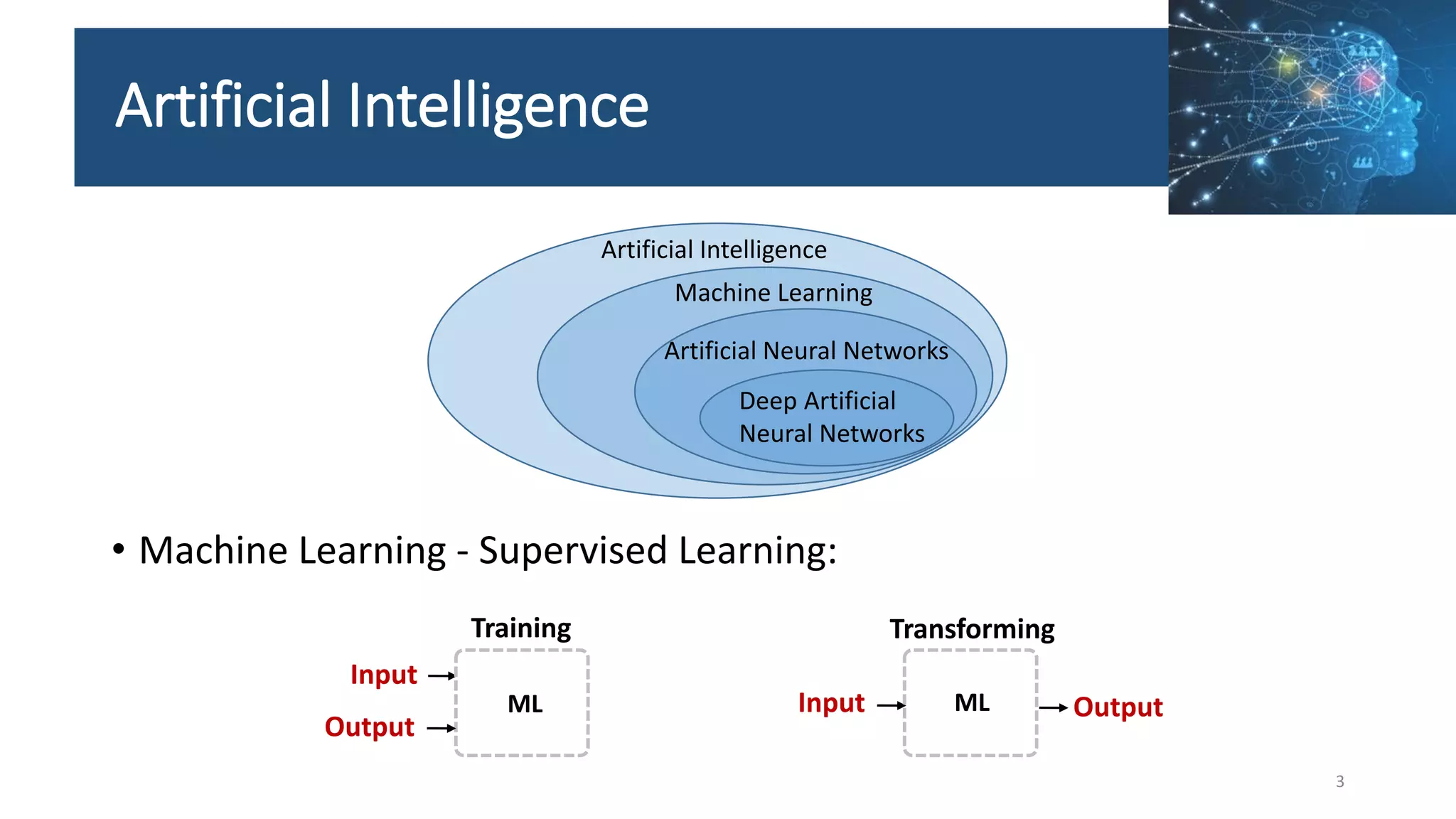
Artificial Intelligence
• Machine Learning - Supervised Learning:
Input
Output
Training Transforming
ML Input OutputML
Artificial Intelligence
Machine Learning
Artificial Neural Networks
Deep Artificial
Neural Networks
3
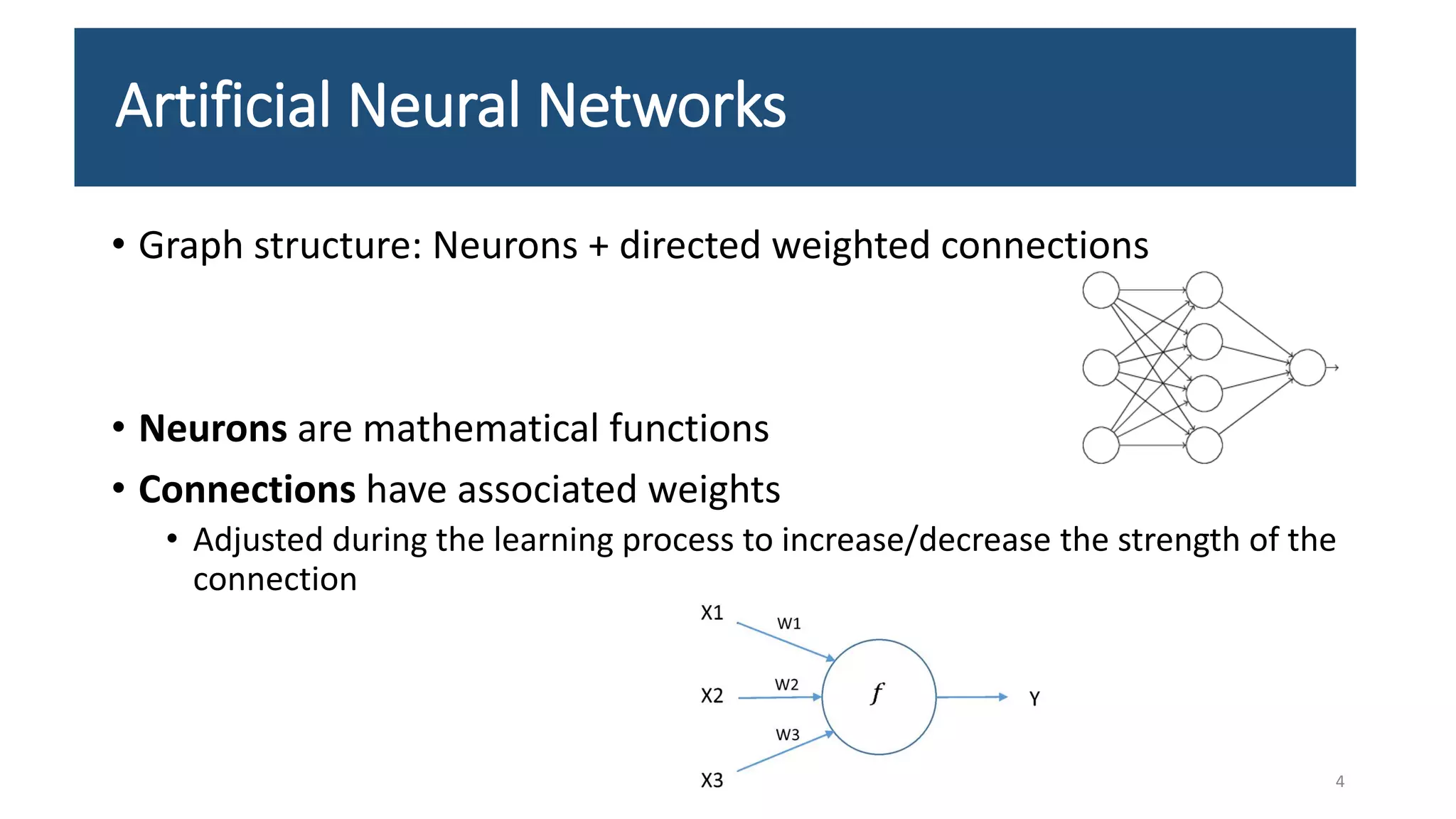
Artificial Neural Networks
• Graph structure: Neurons + directed weighted connections
• Neurons are mathematical functions
• Connections have associated weights
• Adjusted during the learning process to increase/decrease the strength of the
connection
4
Artificial Neural Networks
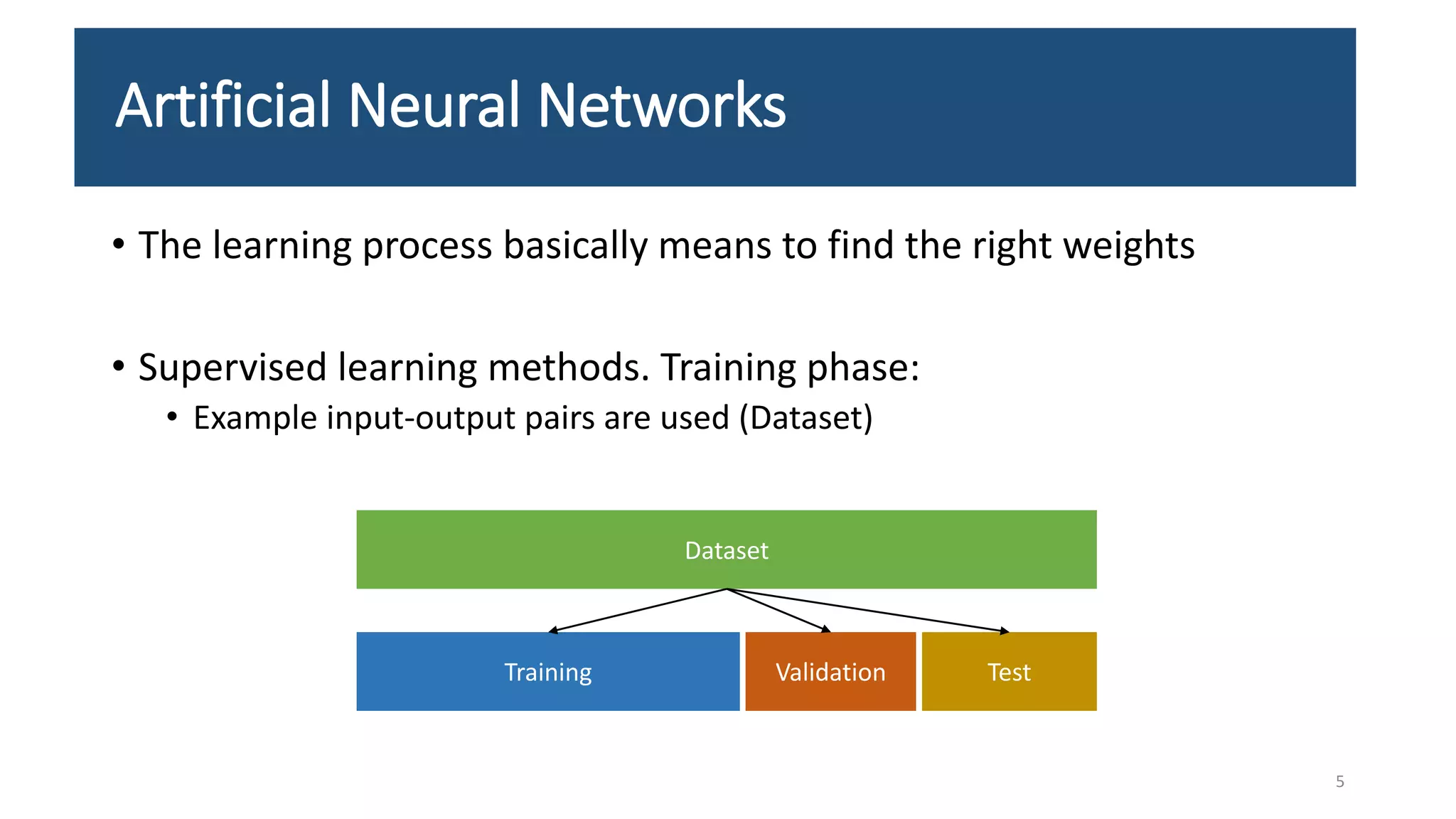
• The learning process basically means to find the right weights
• Supervised learning methods. Training phase:
• Example input-output pairs are used (Dataset)
Dataset
Training Validation Test
5
Artificial Neural Networks
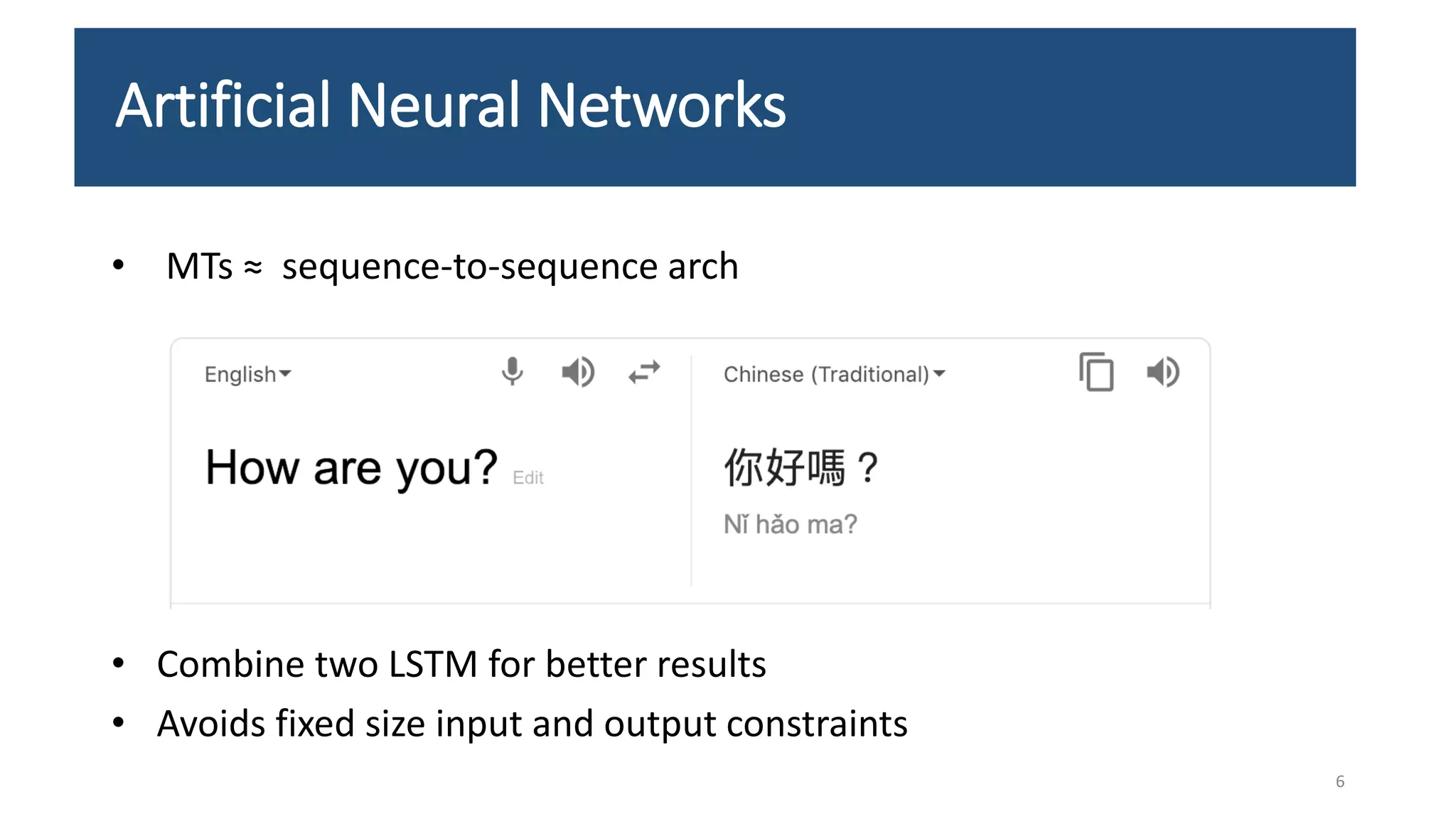
• Combine two LSTM for better results
• Avoids fixed size input and output constraints
• MTs ≈ sequence-to-sequence arch
6
Architecture
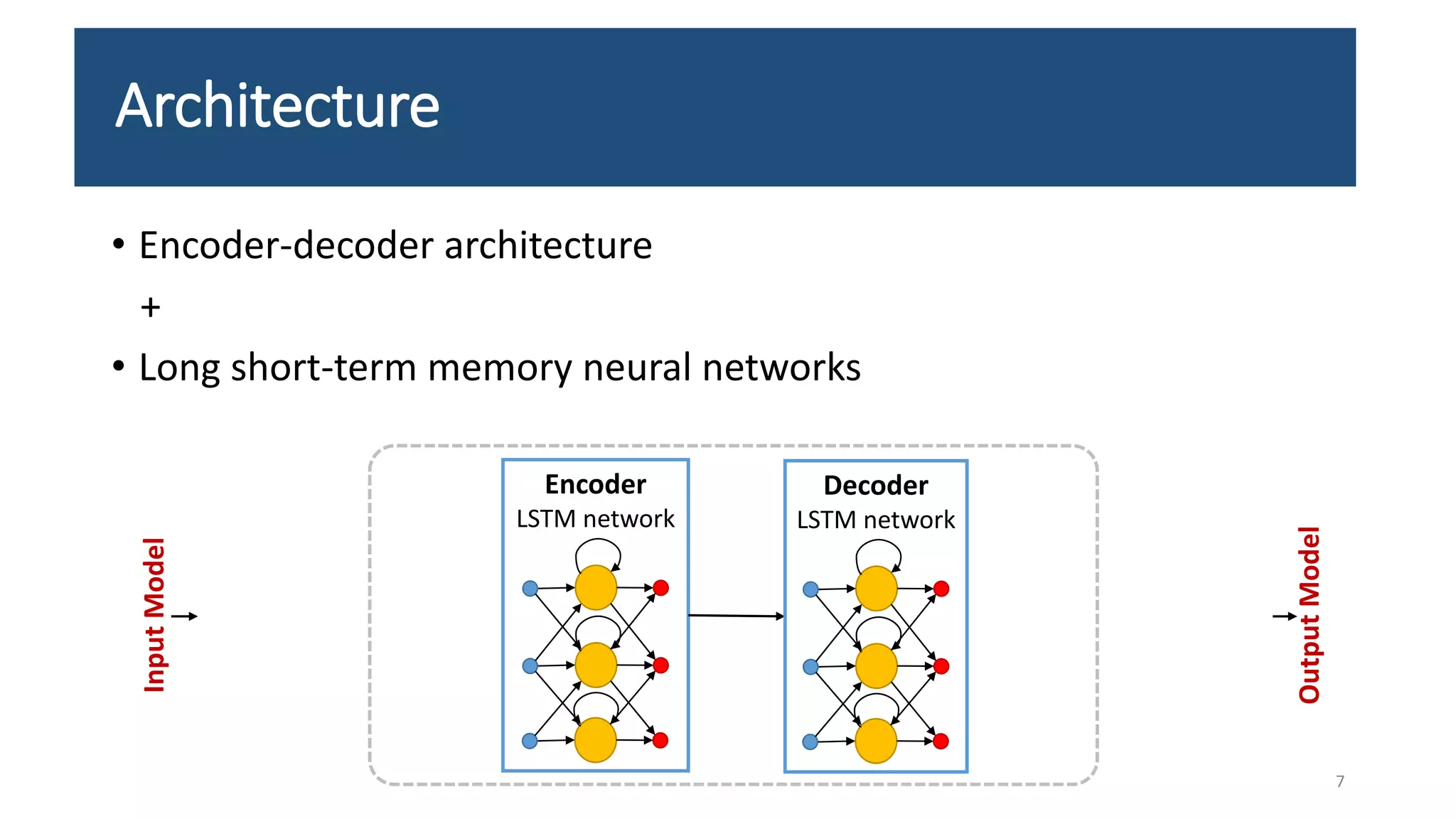
• Encoder-decoder architecture
+
• Long short-term memory neural networks
Encoder
LSTM network
Decoder
LSTM network
InputModel
OutputModel
7
Architecture
• Sequence-to-Sequence transformations
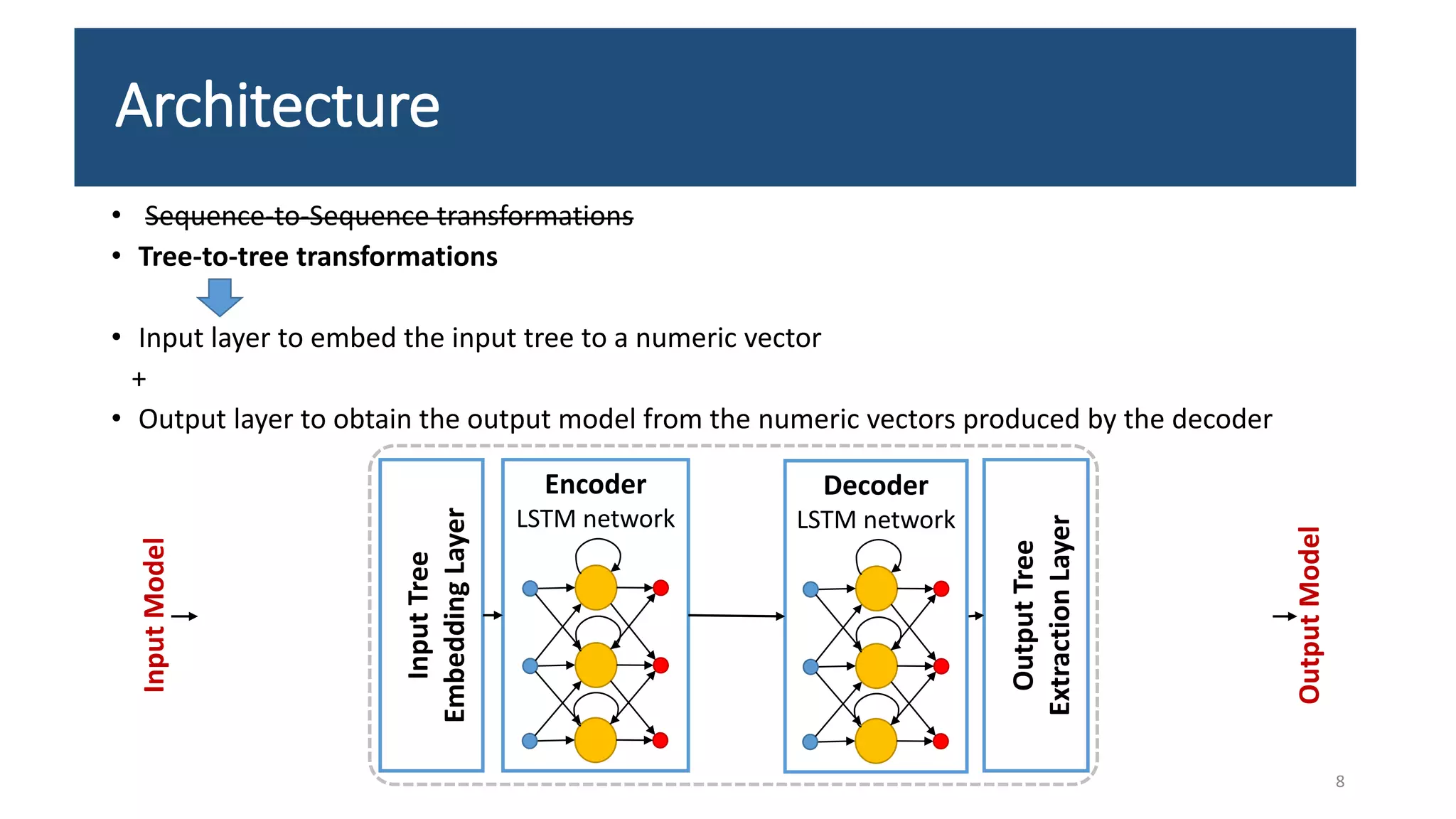
• Tree-to-tree transformations
• Input layer to embed the input tree to a numeric vector
+
• Output layer to obtain the output model from the numeric vectors produced by the decoderInputTree
EmbeddingLayer
Encoder
LSTM network
OutputTree
ExtractionLayer
Decoder
LSTM network
InputModel
OutputModel
8
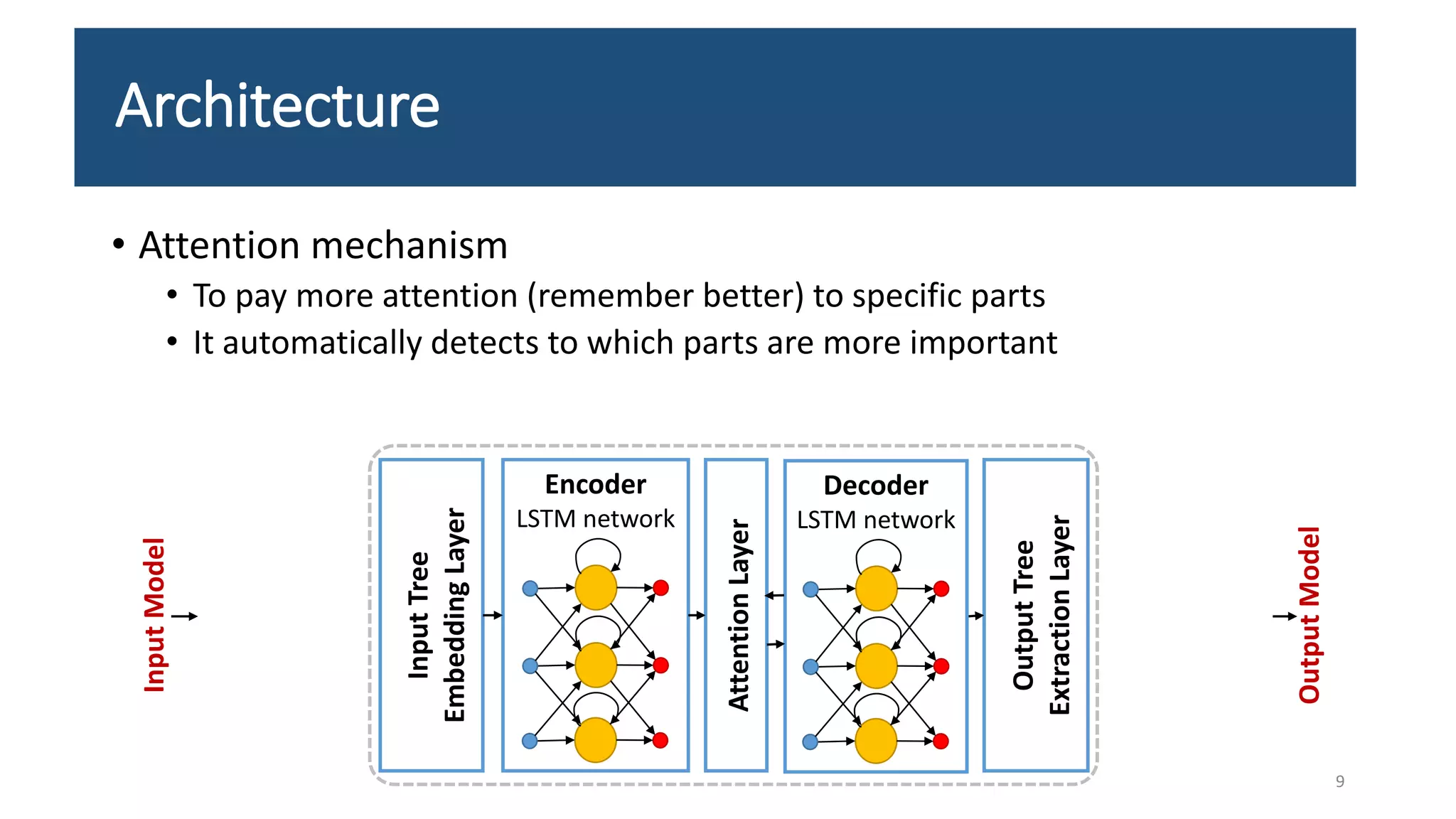
• Attention mechanism
• To pay more attention (remember better) to specific parts
• It automatically detects to which parts are more important
Architecture
InputTree
EmbeddingLayer
Encoder
LSTM network
OutputTree
ExtractionLayer
Decoder
LSTM network
AttentionLayer
InputModel
OutputModel
9
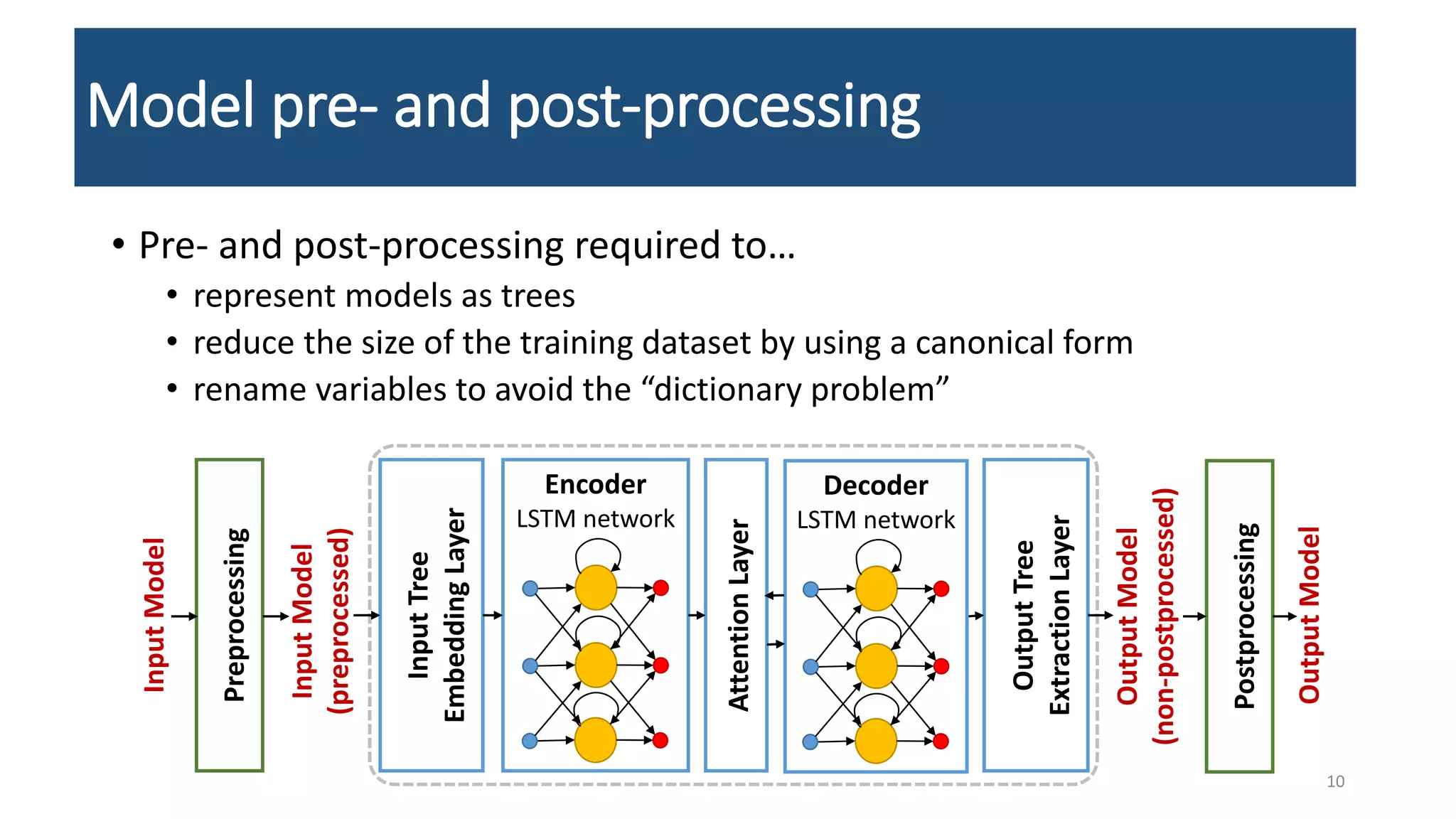
• Pre- and post-processing required to…
• represent models as trees
• reduce the size of the training dataset by using a canonical form
• rename variables to avoid the “dictionary problem”
Model pre- and post-processing
InputModel
(preprocessed)
InputTree
EmbeddingLayer
Encoder
LSTM network
OutputTree
ExtractionLayer
OutputModel
(non-postprocessed)
Decoder
LSTM network
AttentionLayer
InputModel
OutputModel
Preprocessing
Postprocessing
10
Preliminary results
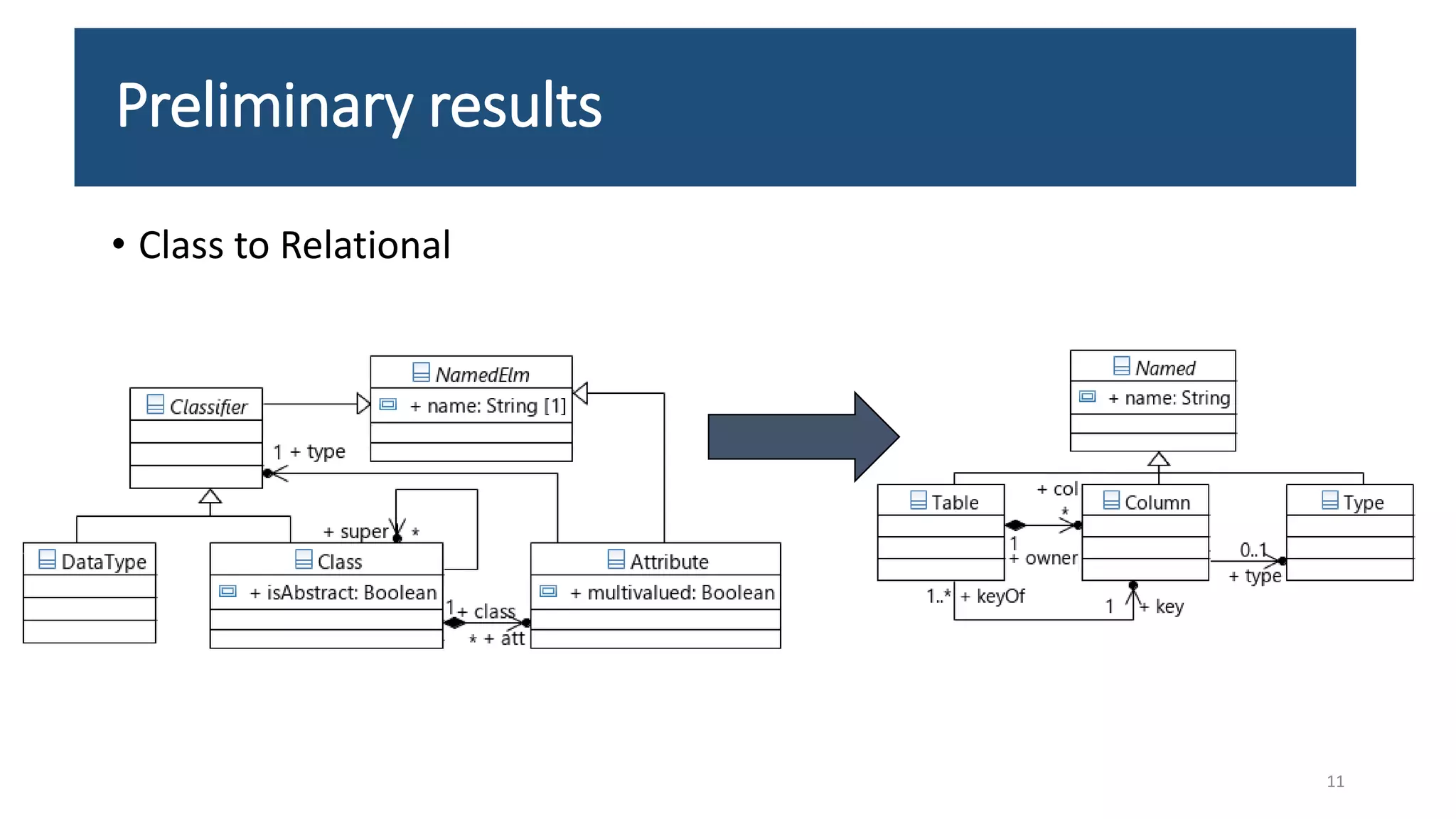
• Class to Relational
11
Preliminary results
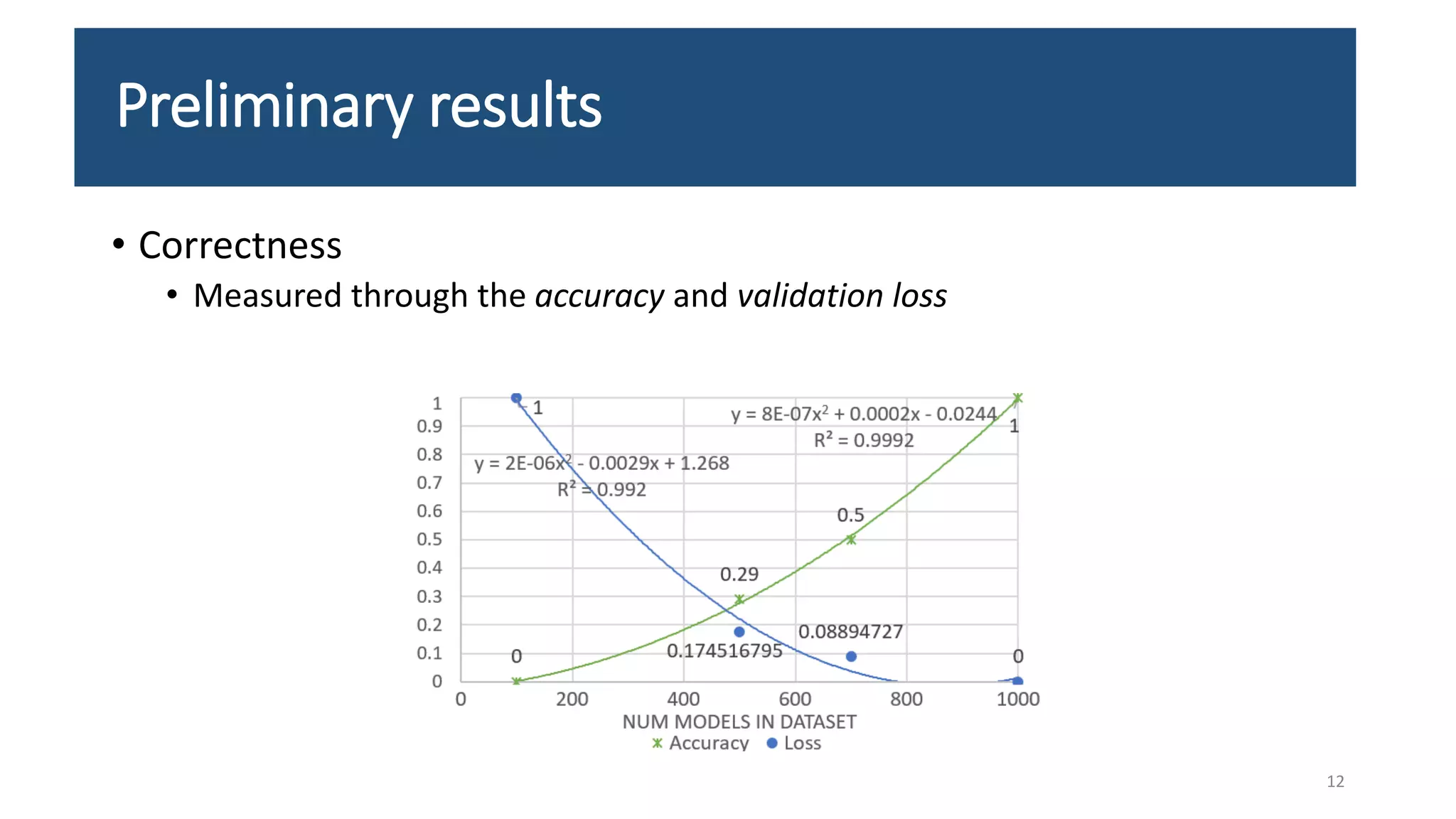
• Correctness
• Measured through the accuracy and validation loss
12
Preliminary results
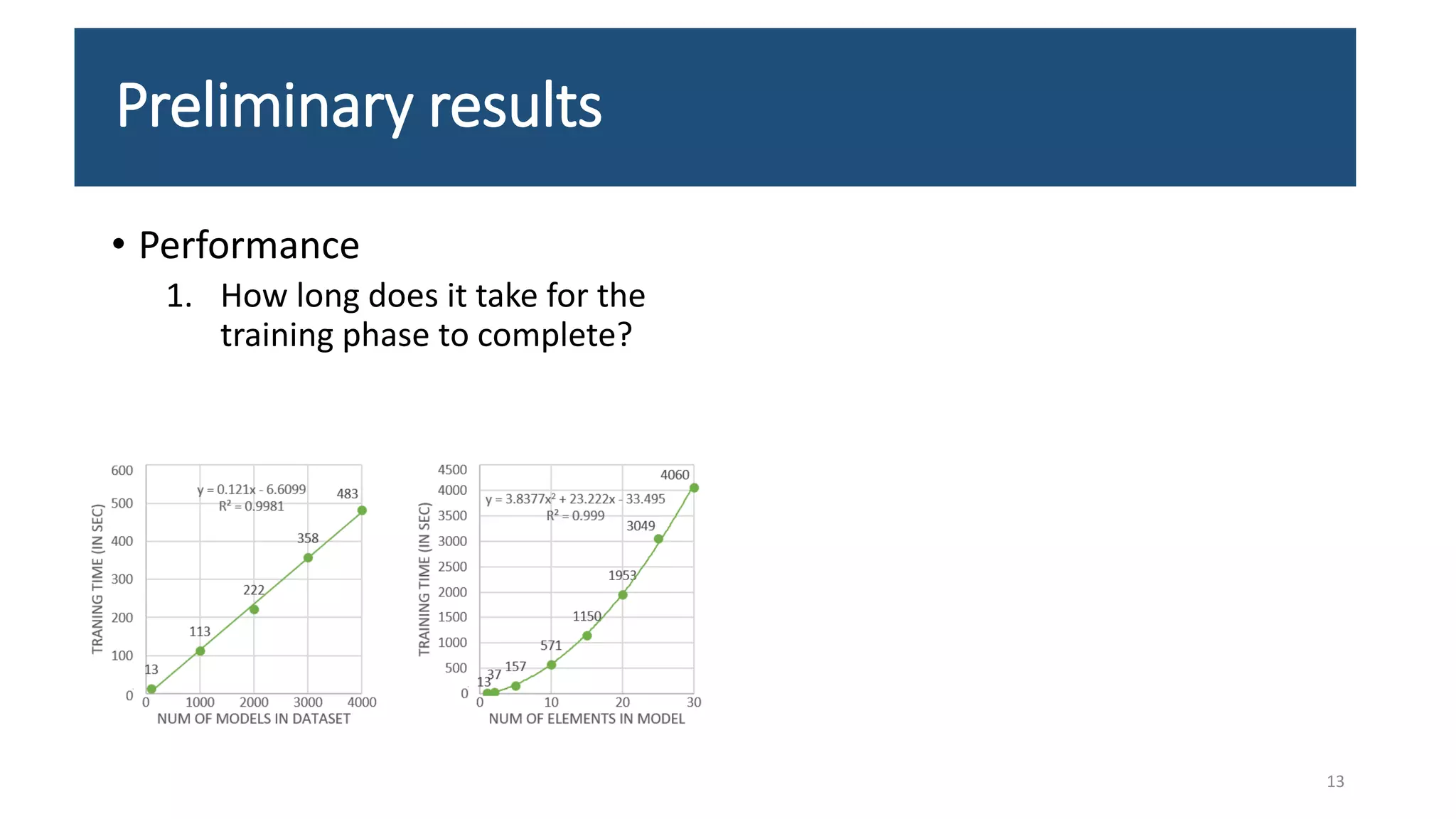
• Performance
1. How long does it take for the
training phase to complete?
13
Preliminary results
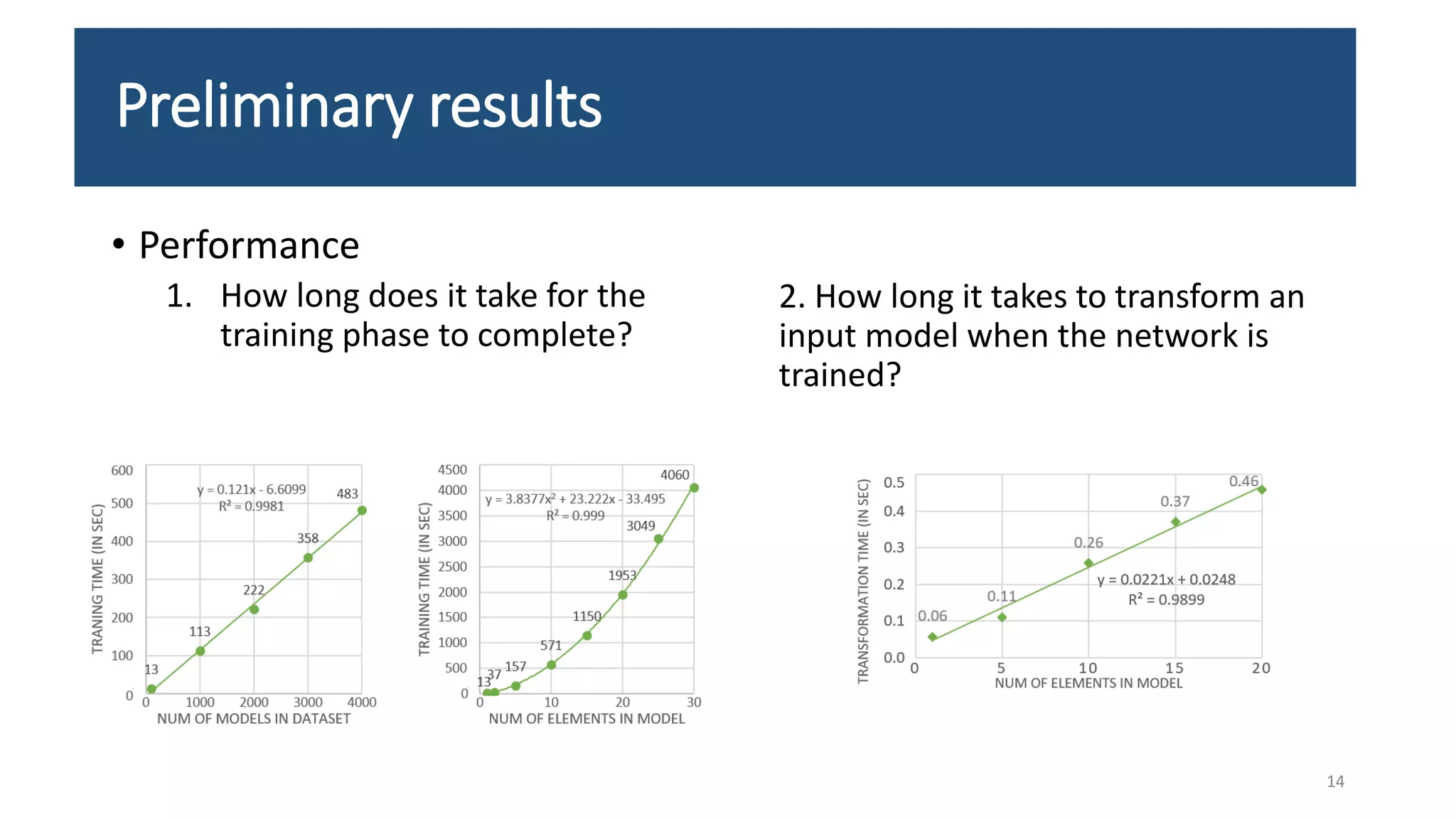
• Performance
1. How long does it take for the
training phase to complete?
2. How long it takes to transform an
input model when the network is
trained?
14
Limitations/Discussion
• Size of the training dataset
• Diversity in the training set
• Computational limitations of ANNs
• i.e., mathematical operations
• Generalization problem
• predicting output solutions for input models very different from the training
distribution it has learn from
• Social acceptance
15

An LSTM-Based Neural Network Architecture for Model Transformations

  • 1.
    An LSTM-Based NeuralNetwork Architecture for Model Transformations Loli Burgueño1,2, Jordi Cabot1, Sébastien Gérard2 1 Open University of Catalonia, Barcelona, Spain 2 CEA LIST, Paris, France MODELS’19 Munich, September 20th, 2019
  • 2.
  • 3.
    Artificial Intelligence • MachineLearning - Supervised Learning: Input Output Training Transforming ML Input OutputML Artificial Intelligence Machine Learning Artificial Neural Networks Deep Artificial Neural Networks 3
  • 4.
    Artificial Neural Networks •Graph structure: Neurons + directed weighted connections • Neurons are mathematical functions • Connections have associated weights • Adjusted during the learning process to increase/decrease the strength of the connection 4
  • 5.
    Artificial Neural Networks •The learning process basically means to find the right weights • Supervised learning methods. Training phase: • Example input-output pairs are used (Dataset) Dataset Training Validation Test 5
  • 6.
    Artificial Neural Networks •Combine two LSTM for better results • Avoids fixed size input and output constraints • MTs ≈ sequence-to-sequence arch 6
  • 7.
    Architecture • Encoder-decoder architecture + •Long short-term memory neural networks Encoder LSTM network Decoder LSTM network InputModel OutputModel 7
  • 8.
    Architecture • Sequence-to-Sequence transformations •Tree-to-tree transformations • Input layer to embed the input tree to a numeric vector + • Output layer to obtain the output model from the numeric vectors produced by the decoderInputTree EmbeddingLayer Encoder LSTM network OutputTree ExtractionLayer Decoder LSTM network InputModel OutputModel 8
  • 9.
    • Attention mechanism •To pay more attention (remember better) to specific parts • It automatically detects to which parts are more important Architecture InputTree EmbeddingLayer Encoder LSTM network OutputTree ExtractionLayer Decoder LSTM network AttentionLayer InputModel OutputModel 9
  • 10.
    • Pre- andpost-processing required to… • represent models as trees • reduce the size of the training dataset by using a canonical form • rename variables to avoid the “dictionary problem” Model pre- and post-processing InputModel (preprocessed) InputTree EmbeddingLayer Encoder LSTM network OutputTree ExtractionLayer OutputModel (non-postprocessed) Decoder LSTM network AttentionLayer InputModel OutputModel Preprocessing Postprocessing 10
  • 11.
  • 12.
    Preliminary results • Correctness •Measured through the accuracy and validation loss 12
  • 13.
    Preliminary results • Performance 1.How long does it take for the training phase to complete? 13
  • 14.
    Preliminary results • Performance 1.How long does it take for the training phase to complete? 2. How long it takes to transform an input model when the network is trained? 14
  • 15.
    Limitations/Discussion • Size ofthe training dataset • Diversity in the training set • Computational limitations of ANNs • i.e., mathematical operations • Generalization problem • predicting output solutions for input models very different from the training distribution it has learn from • Social acceptance 15