An Introduction to “Search-Friendliness”Wine Writers Symposium, 2011Doug CookFounder, Able Grape
OverviewFundamentalsWhy does search matter?The Long Tail and what it meansDefining Success“Search 101”How search engines workImplications for how you build your sitePractical Considerations & ToolsMeasuring and Fine-tuning: AnalyticsQ&A
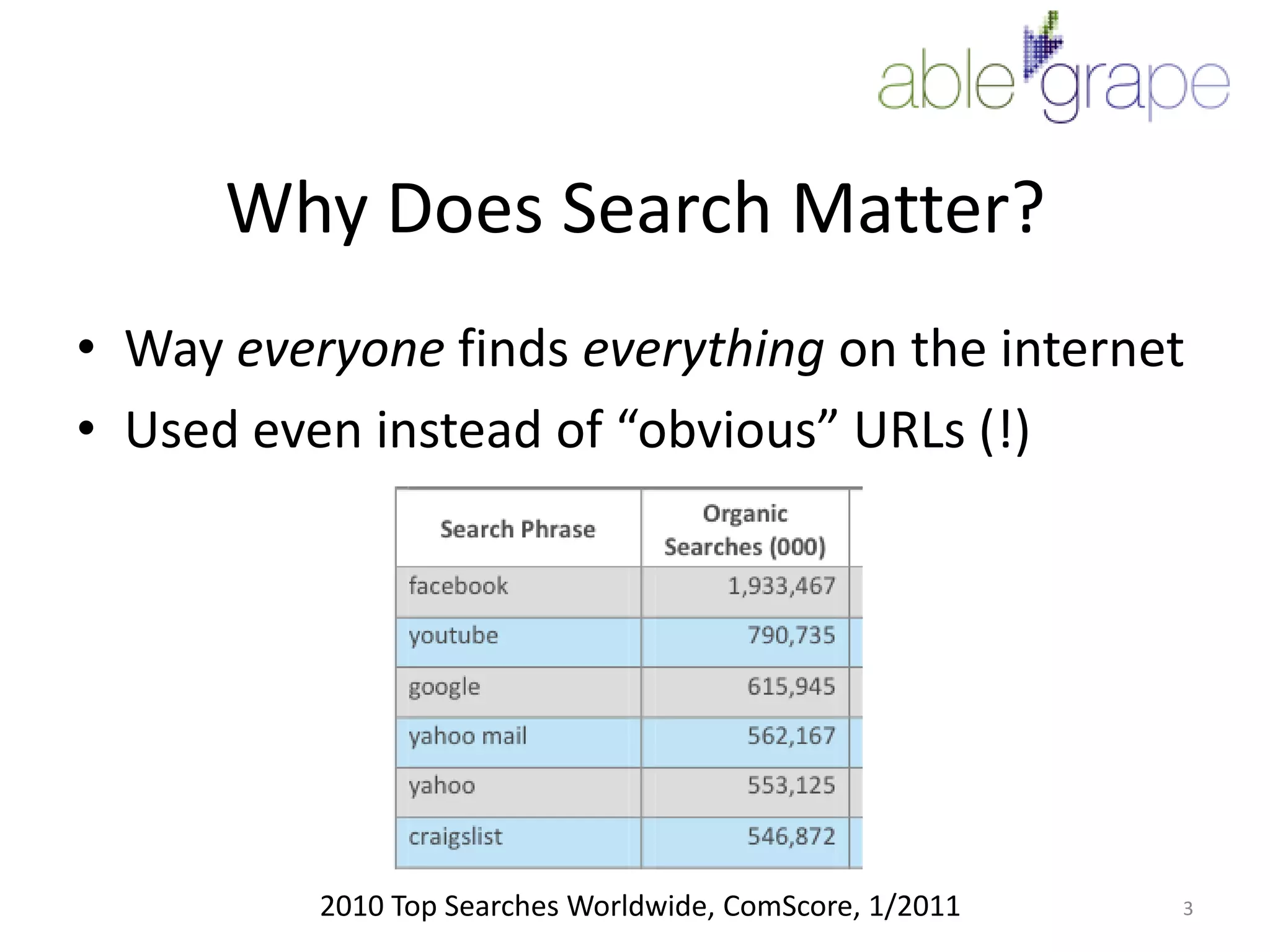
Why Does Search Matter?Way everyone finds everything on the internetUsed even instead of “obvious” URLs (!)32010 Top Searches Worldwide, ComScore, 1/2011
Why Does Search Matter?Massive pie, growing quickly*131 billion searches per month46% growth year over yearSize of the pie, and growth, means two things:Huge opportunityFierce competitionUnderstanding search is a necessary skill4* ComScore 2009 Worldwide Data, 1/22/2010
THE “LONG TAIL”“The Web is not kind to generalists.” –Bruce Schoenfeld
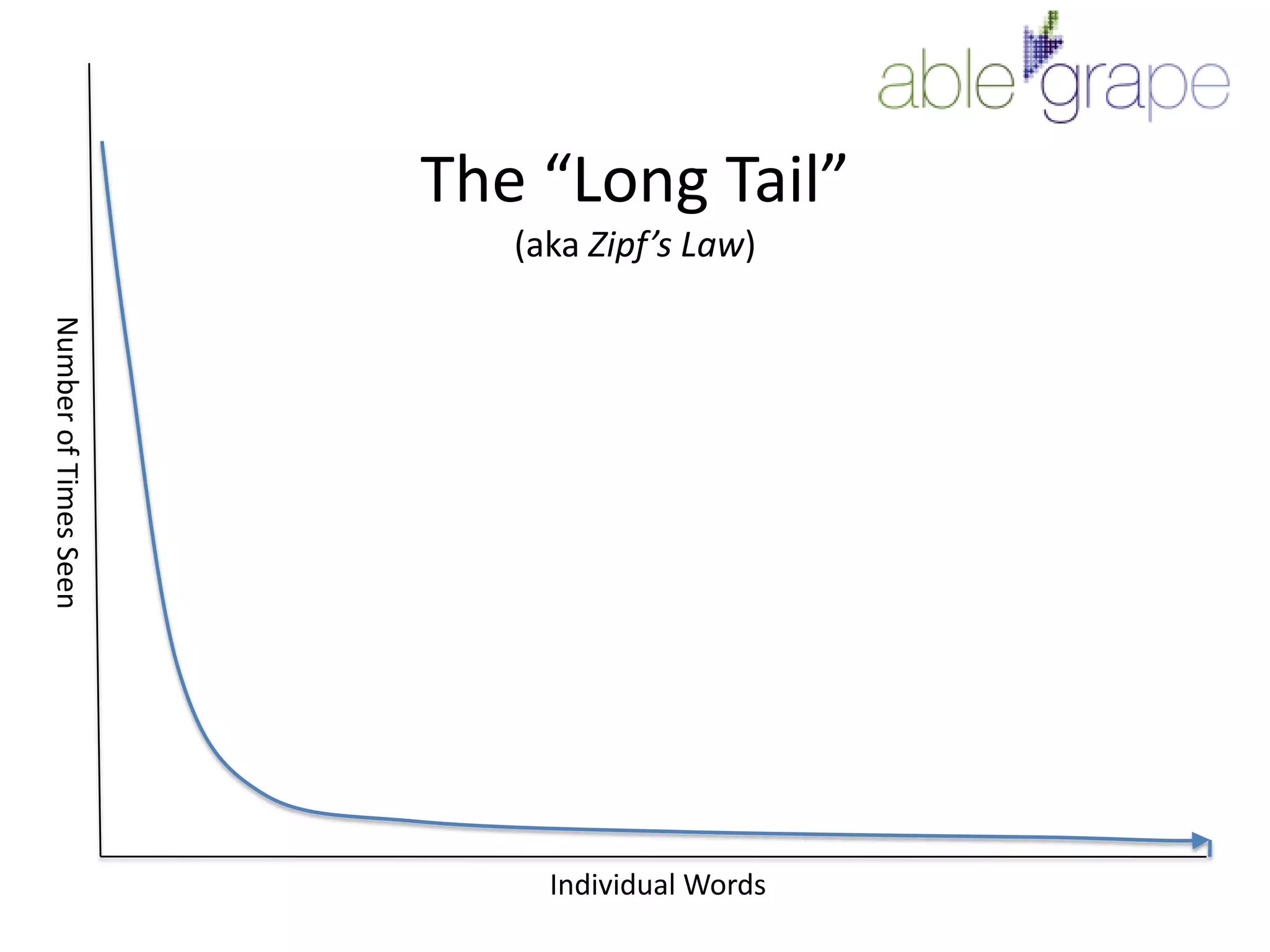
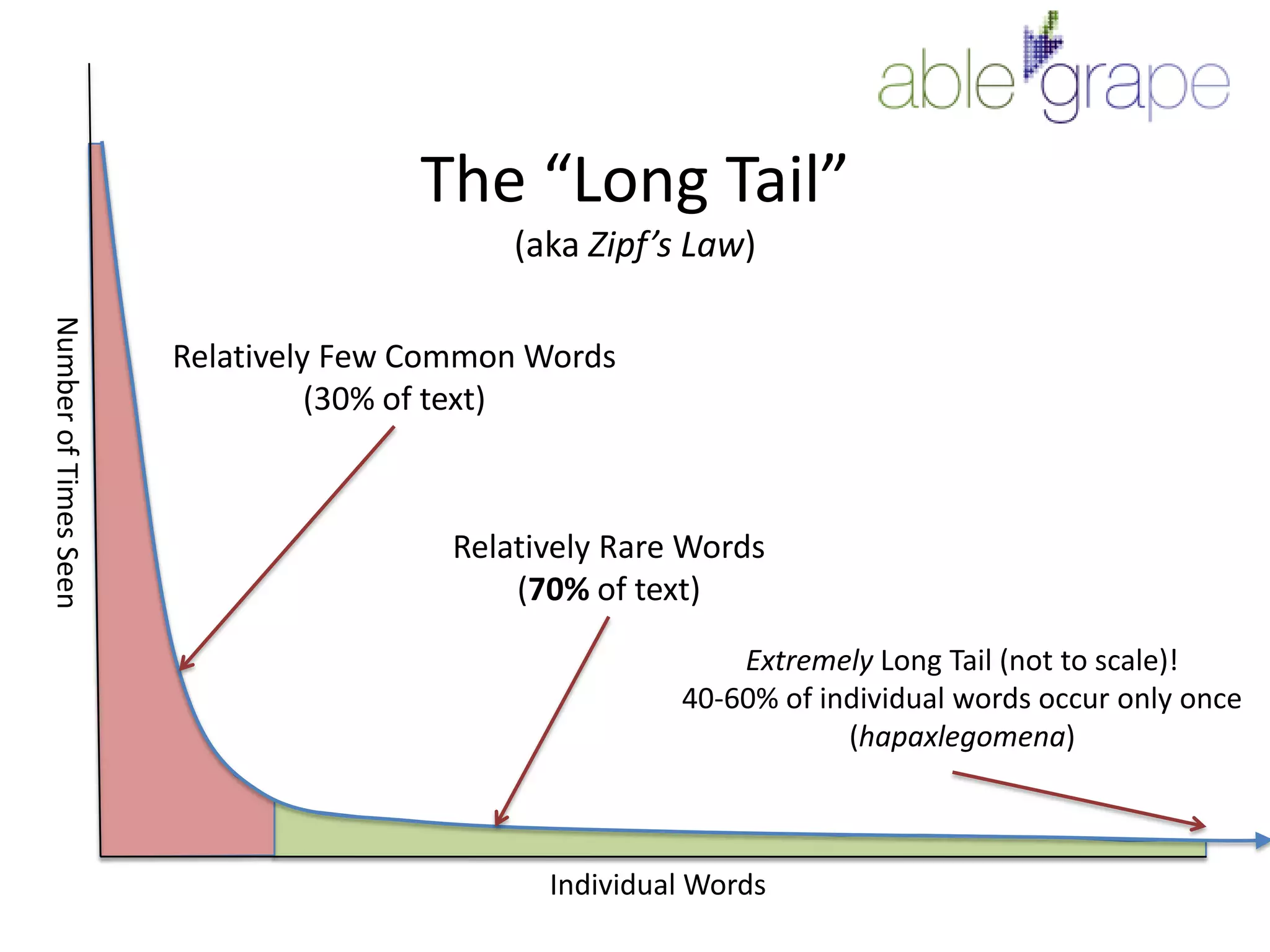
The “Long Tail” (aka Zipf’s Law)Number of Times SeenIndividual Words
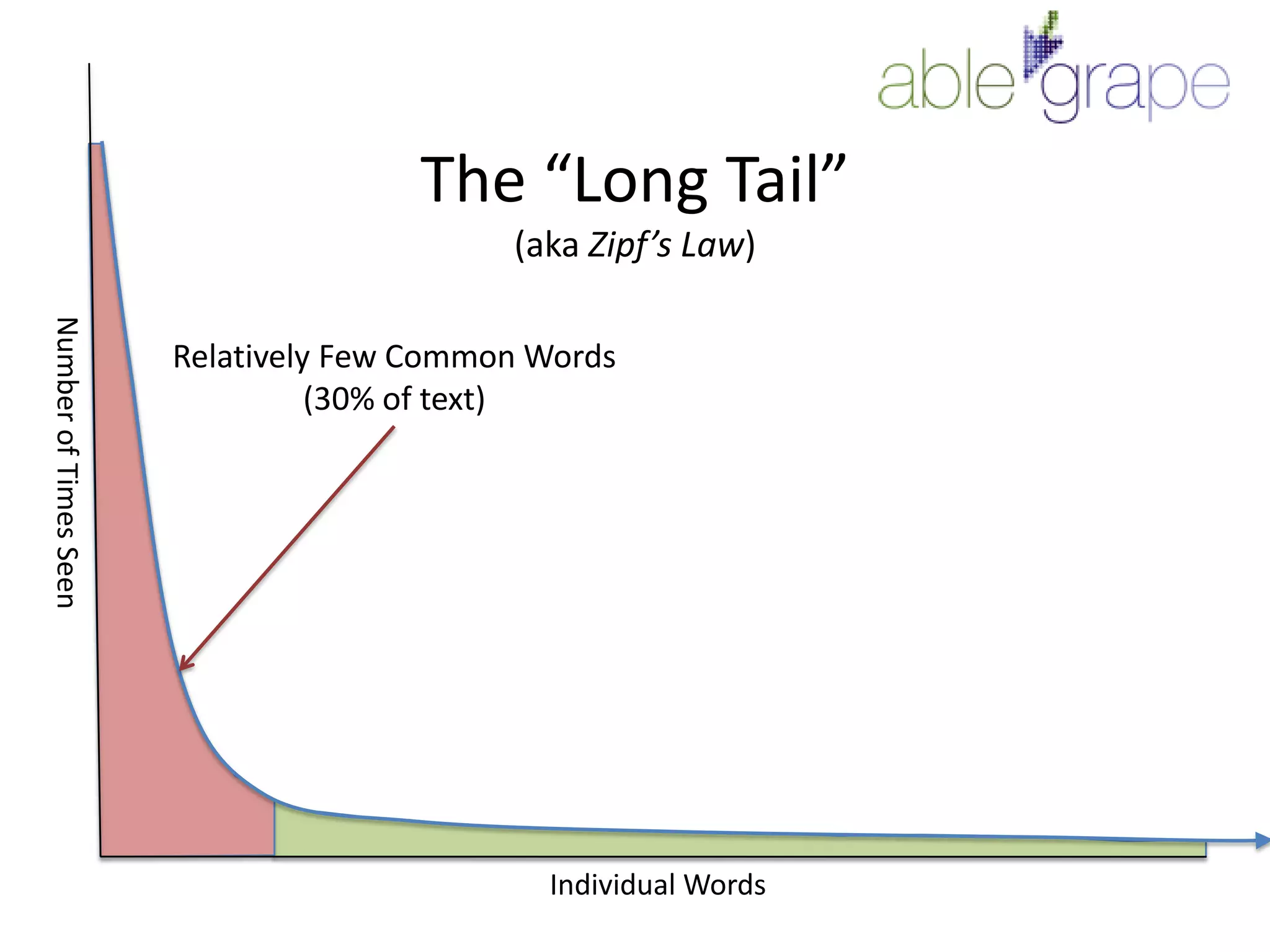
The “Long Tail”(aka Zipf’s Law)Relatively Few Common Words(30% of text)Number of Times SeenIndividual Words
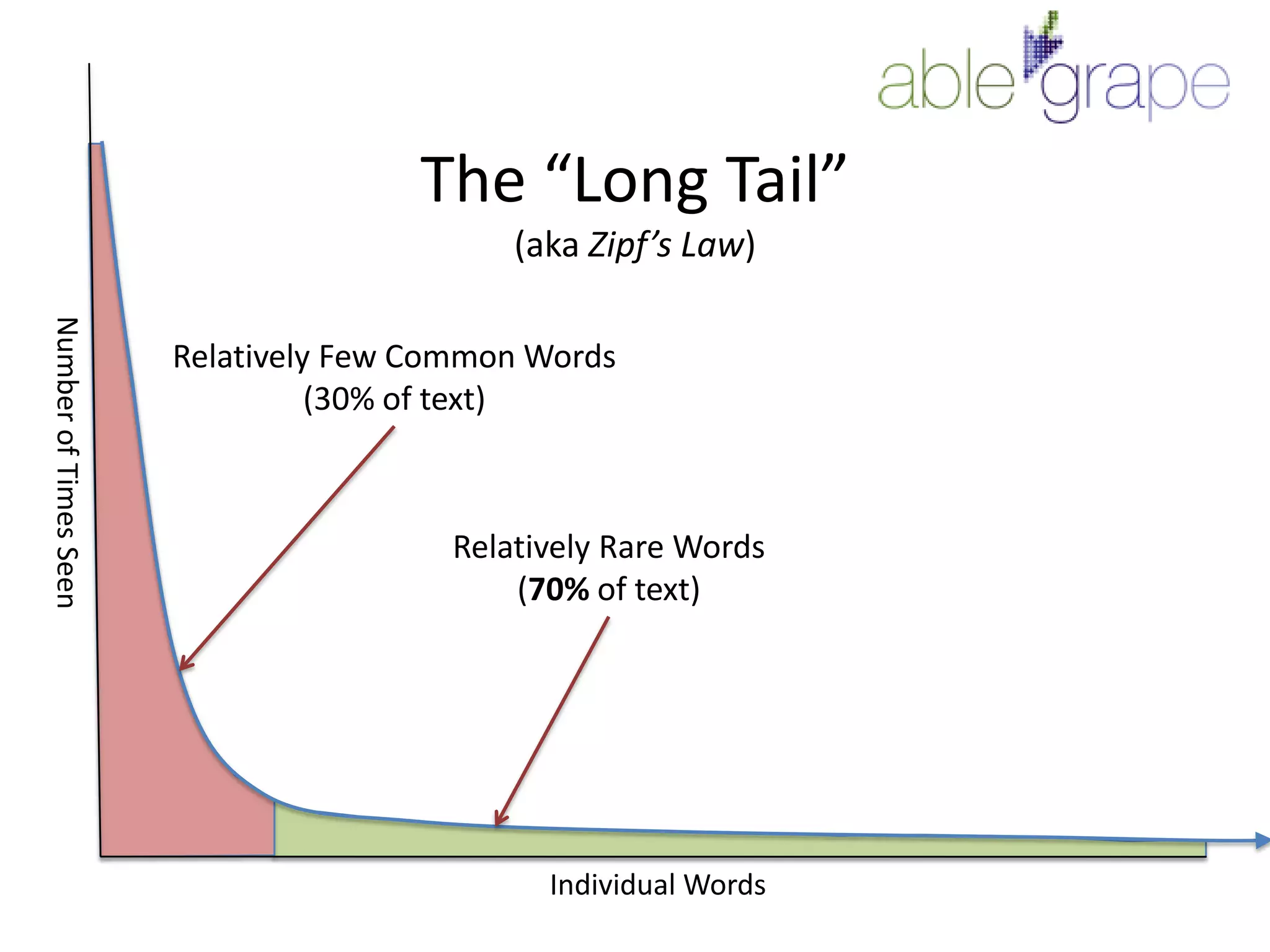
The “Long Tail”(aka Zipf’s Law)Relatively Few Common Words(30% of text)Number of Times SeenRelatively Rare Words(70% of text)Individual Words
The “Long Tail”(aka Zipf’s Law)Relatively Few Common Words(30% of text)Number of Times SeenRelatively Rare Words(70% of text)Extremely Long Tail (not to scale)!40-60% of individual words occur only once(hapaxlegomena)Individual Words
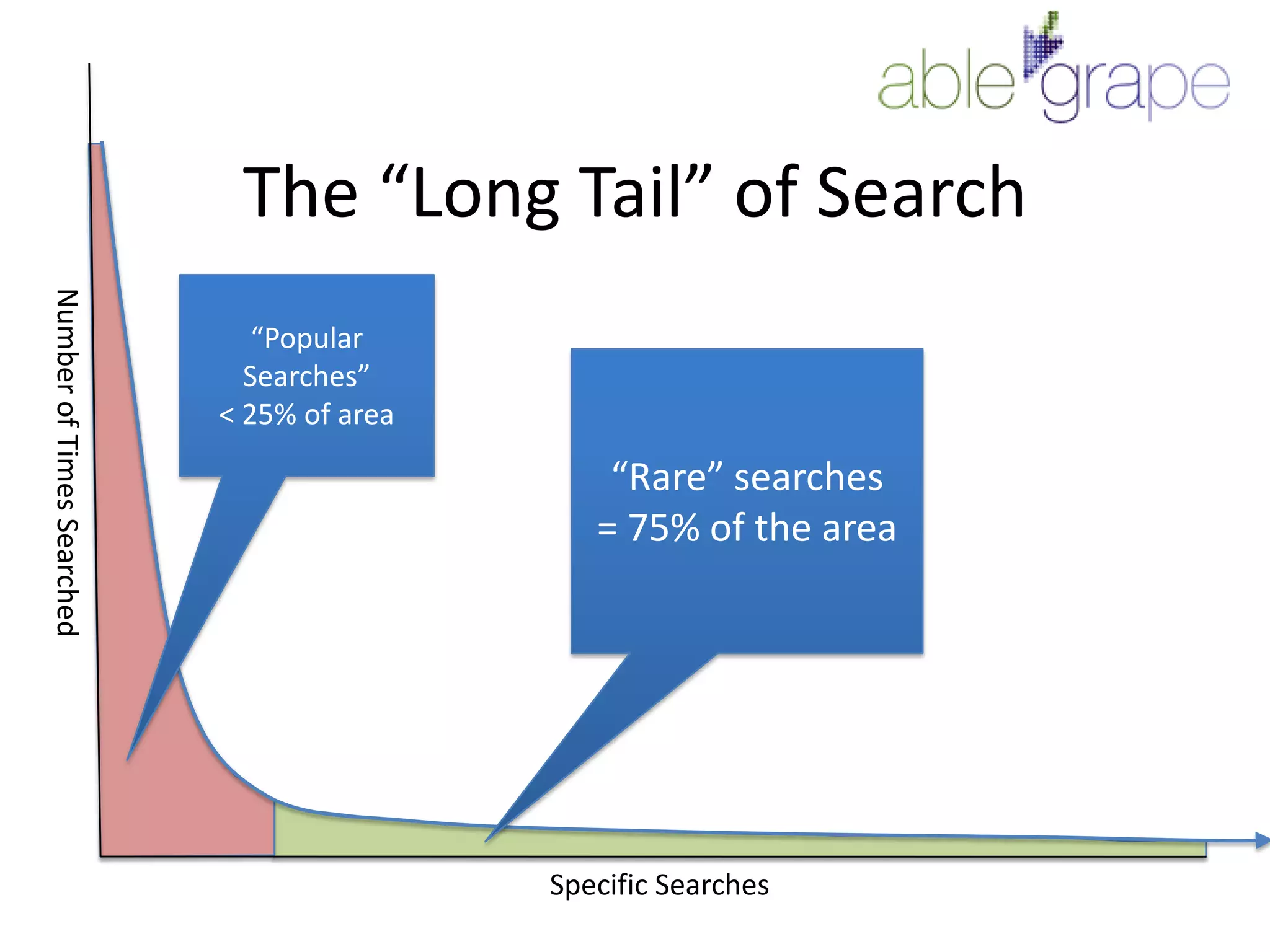
The “Long Tail” of Search“Popular Searches”< 25% of area“Rare” searches= 75% of the areaNumber of Times SearchedSpecific Searches
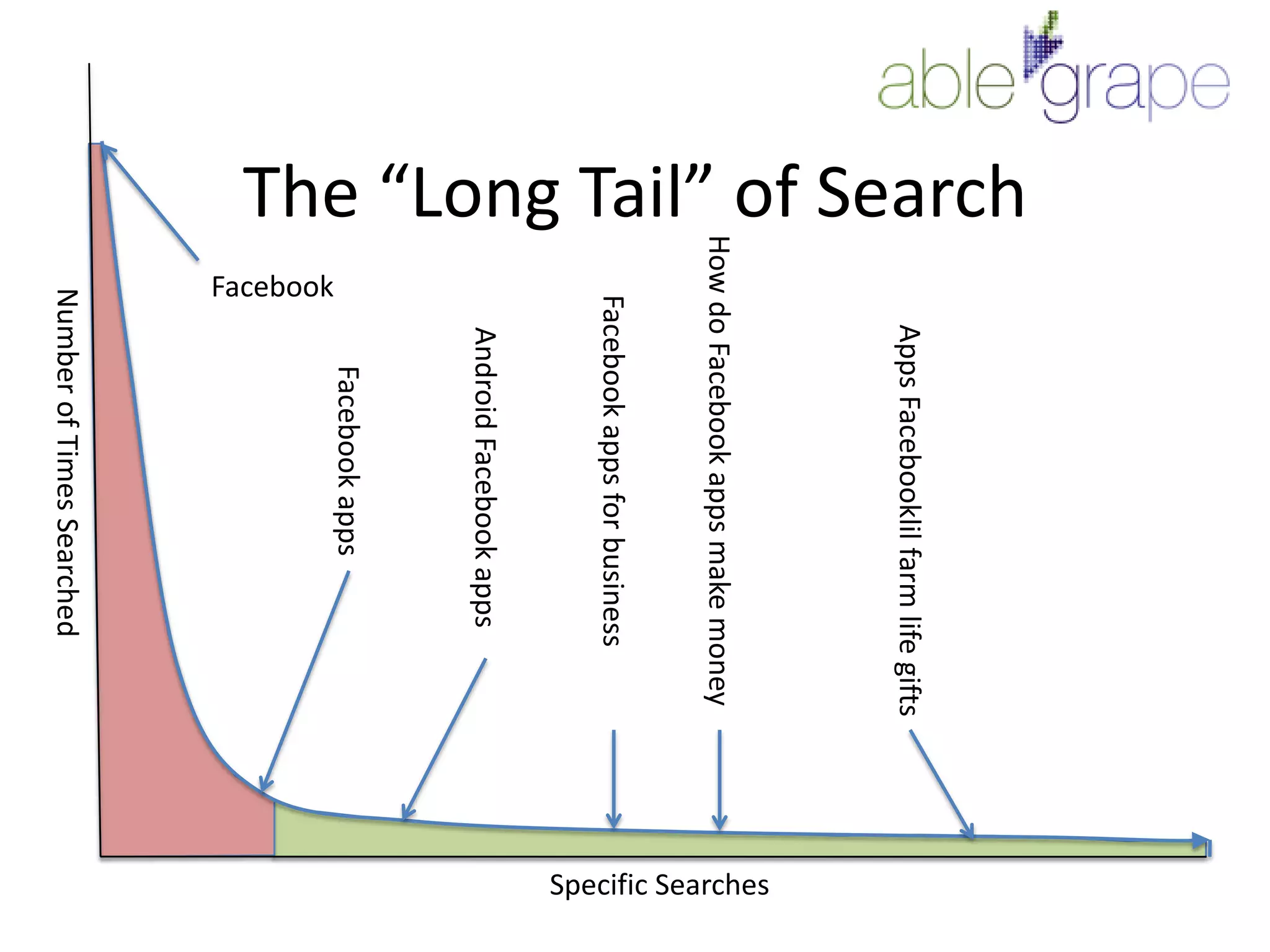
The “Long Tail” of SearchFacebookFacebook appsNumber of Times SearchedHow do Facebook apps make moneyFacebook apps for businessAndroid Facebook appsApps Facebooklil farm life giftsSpecific Searches
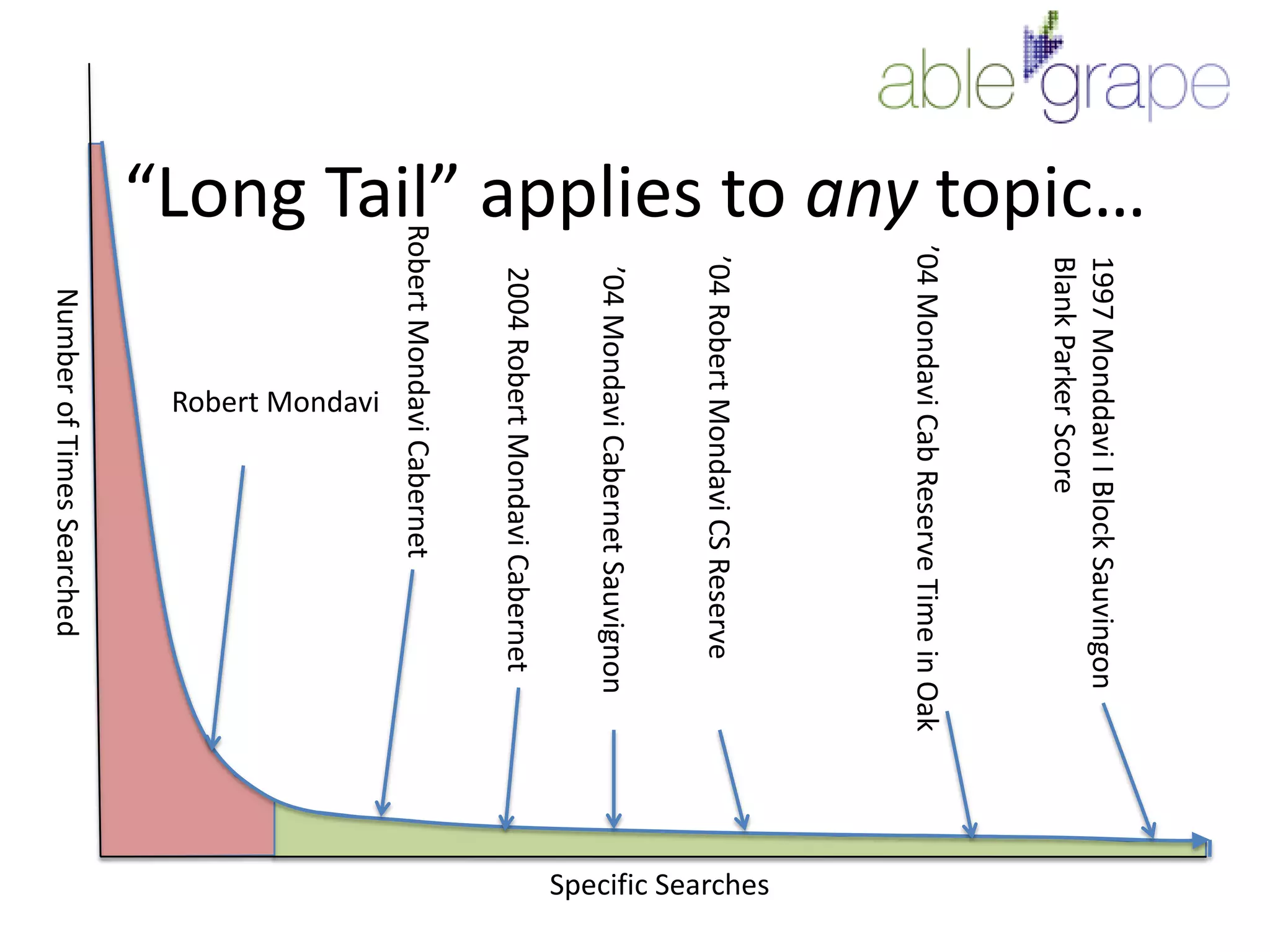
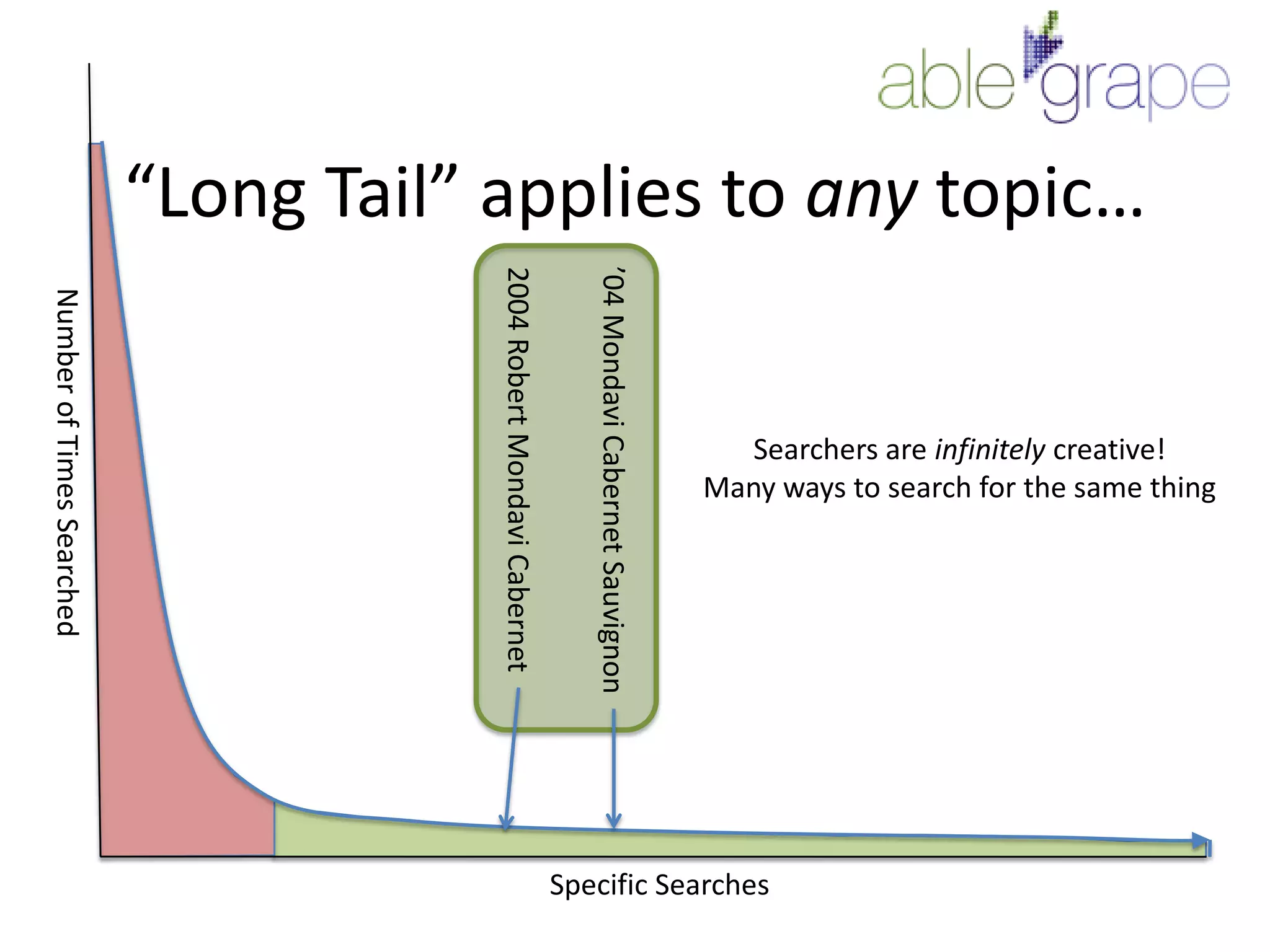
“Long Tail” applies to any topic…Robert Mondavi CabernetRobert MondaviNumber of Times Searched2004 Robert Mondavi Cabernet1997 Monddavi I Block Sauvingon Blank Parker Score’04 Mondavi Cab Reserve Time in Oak’04 Mondavi Cabernet Sauvignon’04 Robert Mondavi CS ReserveSpecific Searches
“Long Tail” applies to any topic…Searchers are infinitely creative!Many ways to search for the same thingNumber of Times Searched2004 Robert Mondavi Cabernet’04 Mondavi Cabernet SauvignonSpecific Searches
Myth #1:“People will come to my homepage and browse to find what they want”How will they discover you in the first place?Even assuming they know your brand, “long tail” debunks thisPeople find information mostly by very specific searchesExpect these to take them directly to content of interestEx: Only 18% of “Mondavi” searches were for homepageImplications:Your site must be “search friendly” or your (potential) users/customers will end up on another siteEvery page should be a complete experience, and a compelling introduction to your site
Myth #2:“I have to rank highly for some popular query to get lots of traffic”Don’t try to be #1 for “cabernet”Too much competitionOnly very top results get any user attention“Cabernet” is but a small slice of “cabernet”-related pieOnly 7.5% of all queries mentioning cabernet!It is not the traffic you wantWon’t result in a meaningful interaction unless you truly have the world’s best general resource for Cabernet informationPut yourself in the shoes of the searcherThe search engines will!
Myth #3: “More Traffic is Better”Two fictitious examplesHumblevino.com:1000 search visits/daySpamovin.com:10000 search visits/dayWhich site is more successful?
Myth #3: “More Traffic is Better”Let’s say Humblevino.com is user-focused:35% meaningful interactions (conversions)…and Spamovin.com is traffic-focused:2% meaningful interactionsThen Humblevino is more successful:More (350 vs 200) users engaged each dayMore likely to have repeat users, and grow search trafficSpamovin is:Potentially tarnishing their brandAt higher risk of losing their search traffic
Defining SuccessConnect with all the people who are interested in what you have to say, and nobody elseMaximizes meaningful interactionsDefine and measure your “meaningful interactions”Similar analogy can be made for Twitter, Facebook, etc.
The Long Tail: SummaryThe world is made up of people with very specific information needs“Optimal” traffic comes when you have the world’s best page for some very specific information needEach of these generates a tiny bit of high-quality trafficMake it up in volume! Have lots of specific, useful content on your siteIn practical terms:WineriesAll wines, specific vintages, past and present, with detailed informationBlogsPost often!Encourage commentsUse tagsMust be accessible to search enginesMust be organized so “infinitely creative” searchers can find it
Search ENGINE 101
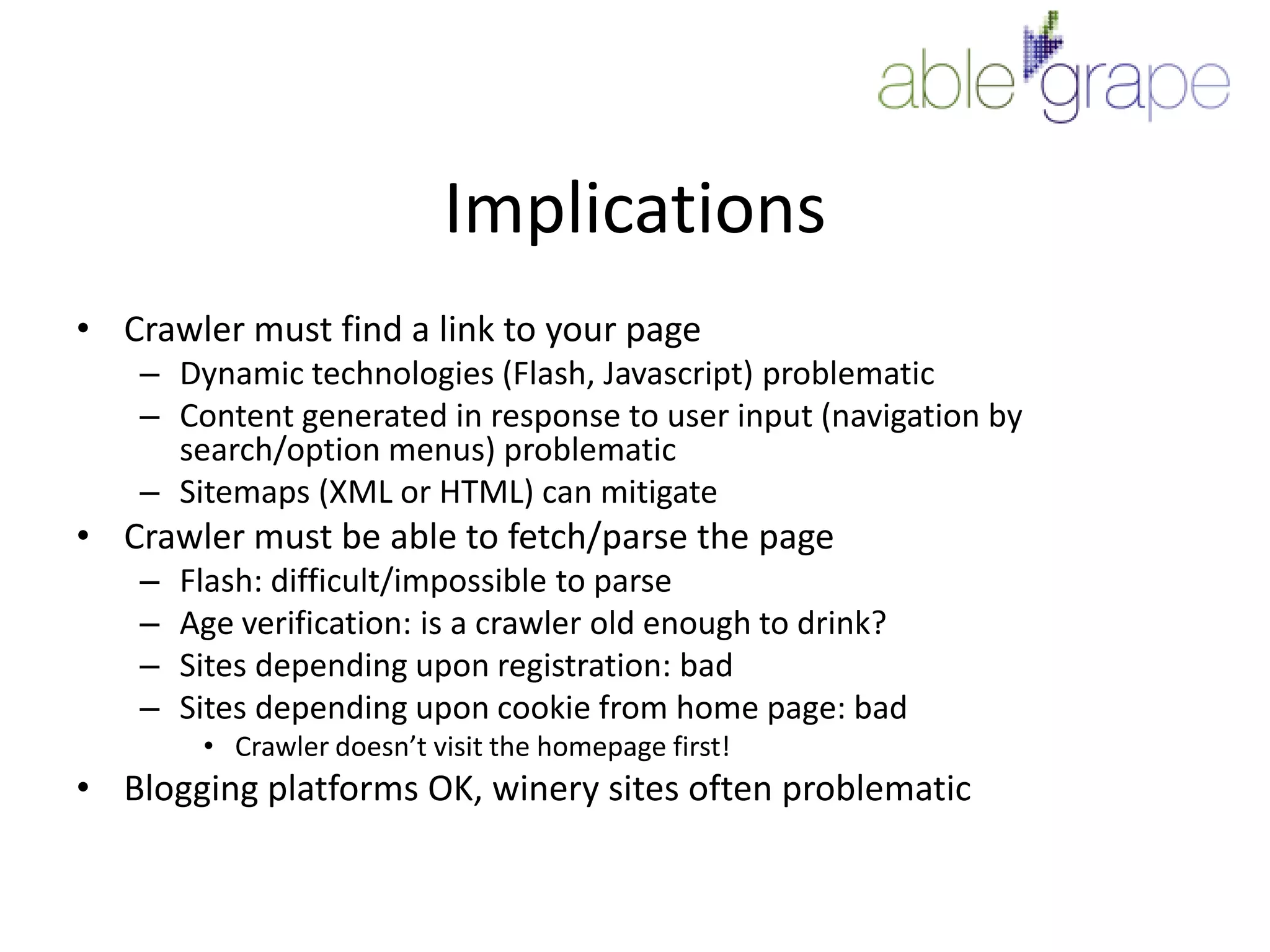
How a Search Engine Finds ContentCrawler (robot, spider) fetches pages from the webParses (picks apart) page, extracts the linksGoes to new pages found among links, and fetches them(Lather, rinse, repeat).
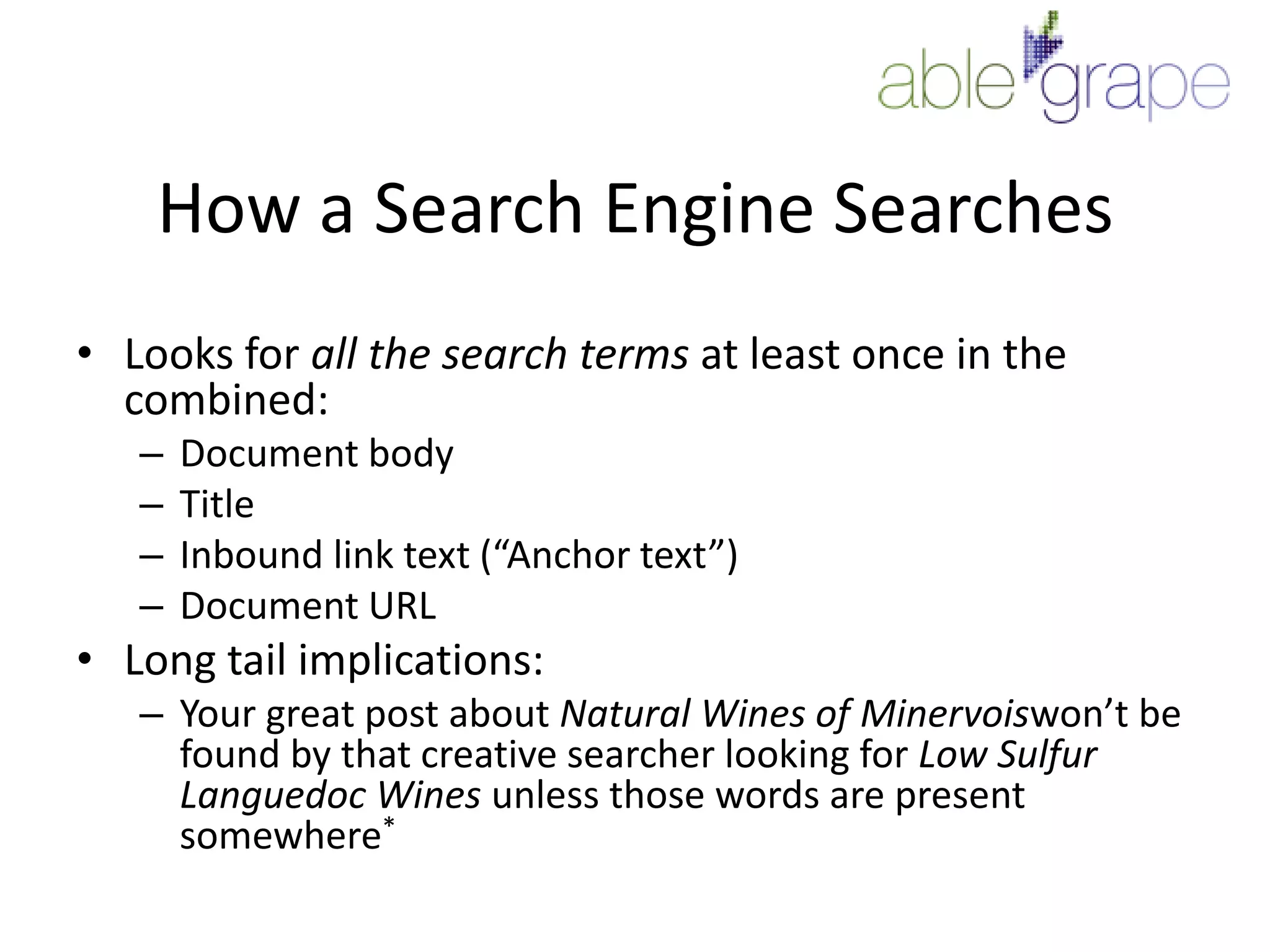
ImplicationsCrawler must find a link to your pageDynamic technologies (Flash, Javascript) problematicContent generated in response to user input (navigation by search/option menus) problematicSitemaps (XML or HTML) can mitigateCrawler must be able to fetch/parse the pageFlash: difficult/impossible to parseAge verification: is a crawler old enough to drink?Sites depending upon registration: badSites depending upon cookie from home page: badCrawler doesn’t visit the homepage first! Blogging platforms OK, winery sites often problematic
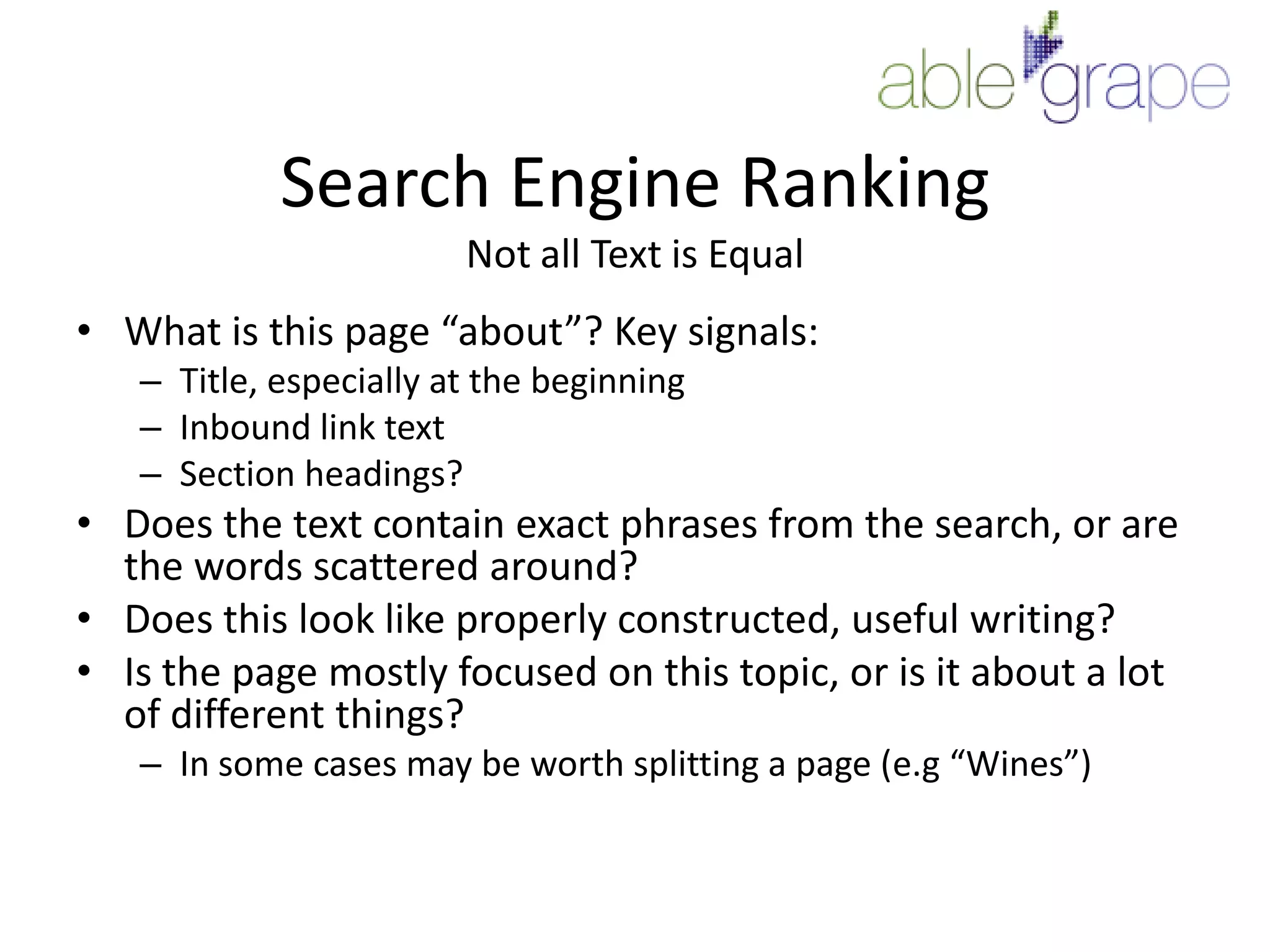
How a Search Engine SearchesLooks for all the search terms at least once in the combined:Document bodyTitleInbound link text (“Anchor text”)Document URLLong tail implications:Your great post about Natural Wines of Minervoiswon’t be found by that creative searcher looking for Low Sulfur Languedoc Wines unless those words are present somewhere*
Search Engine RankingNot all Text is EqualWhat is this page “about”? Key signals:Title, especially at the beginningInbound link textSection headings?Does the text contain exact phrases from the search, or are the words scattered around?Does this look like properly constructed, useful writing?Is the page mostly focused on this topic, or is it about a lot of different things?In some cases may be worth splitting a page (e.g “Wines”)
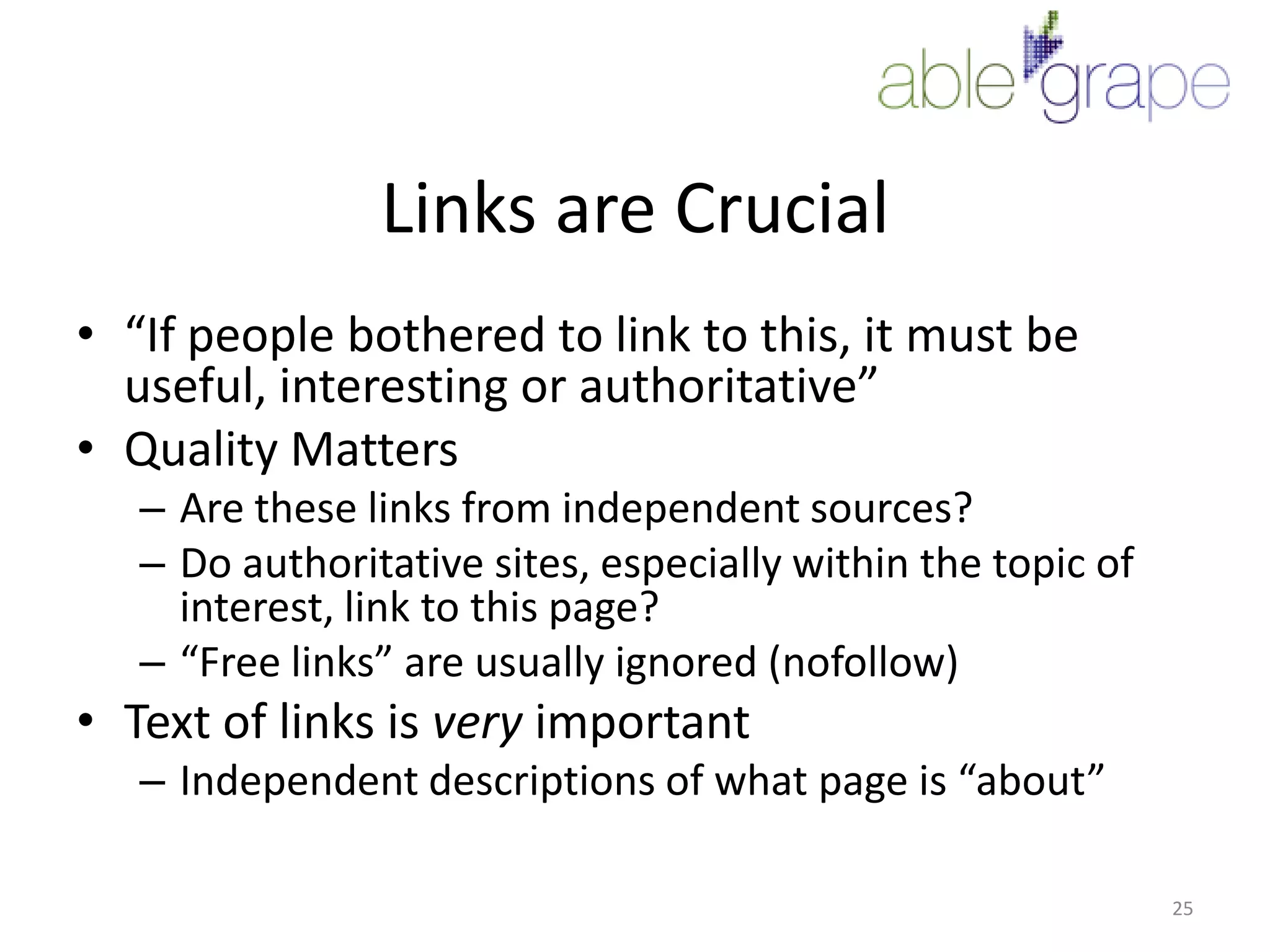
Links are Crucial“If people bothered to link to this, it must be useful, interesting or authoritative”Quality MattersAre these links from independent sources?Do authoritative sites, especially within the topic of interest, link to this page?“Free links” are usually ignored (nofollow)Text of links is very importantIndependent descriptions of what page is “about”25
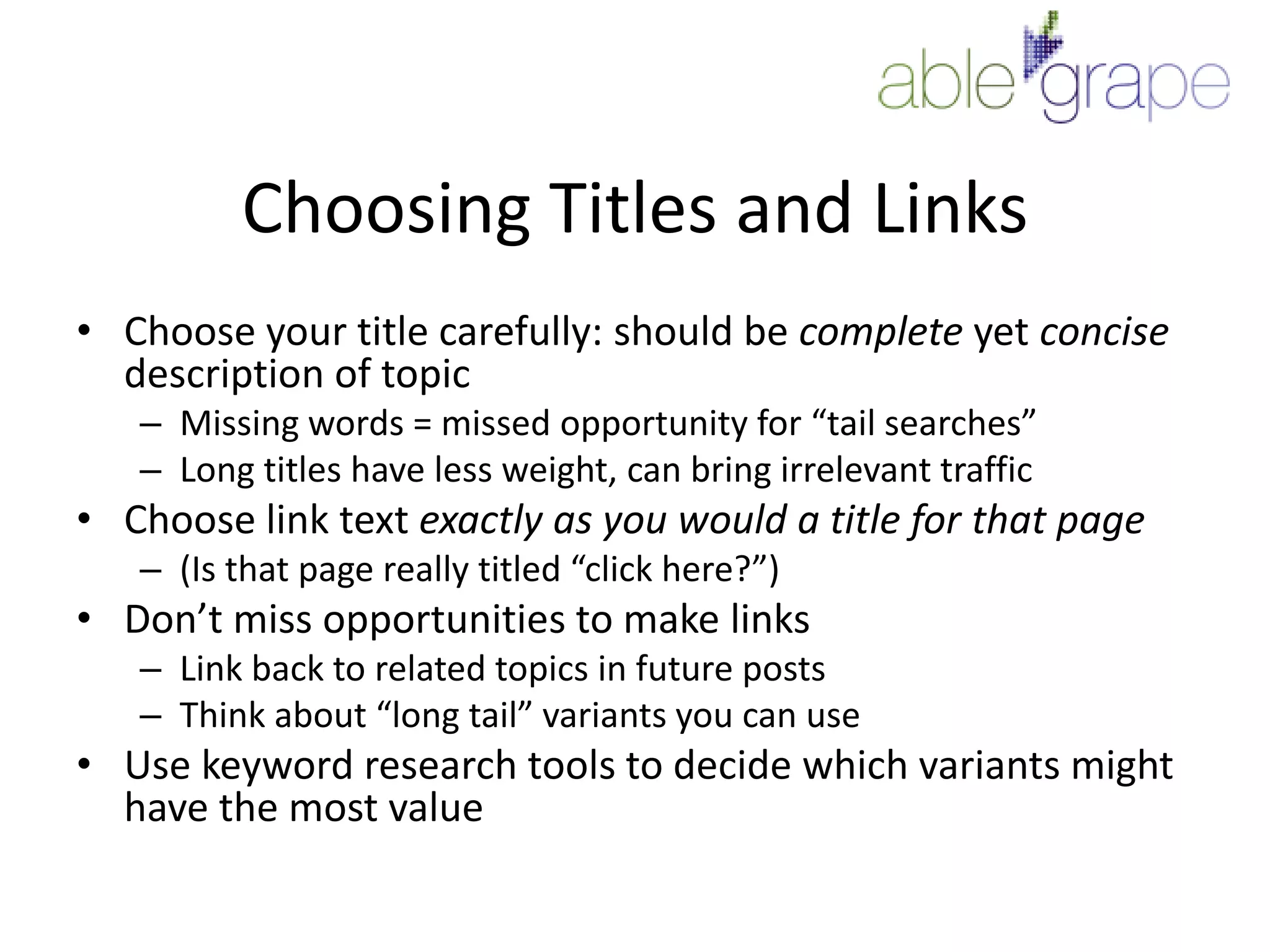
Choosing Titles and LinksChoose your title carefully: should be complete yet concise description of topicMissing words = missed opportunity for “tail searches”Long titles have less weight, can bring irrelevant trafficChoose link text exactly as you would a title for that page(Is that page really titled “click here?”)Don’t miss opportunities to make linksLink back to related topics in future postsThink about “long tail” variants you can useUse keyword research tools to decide which variants might have the most value
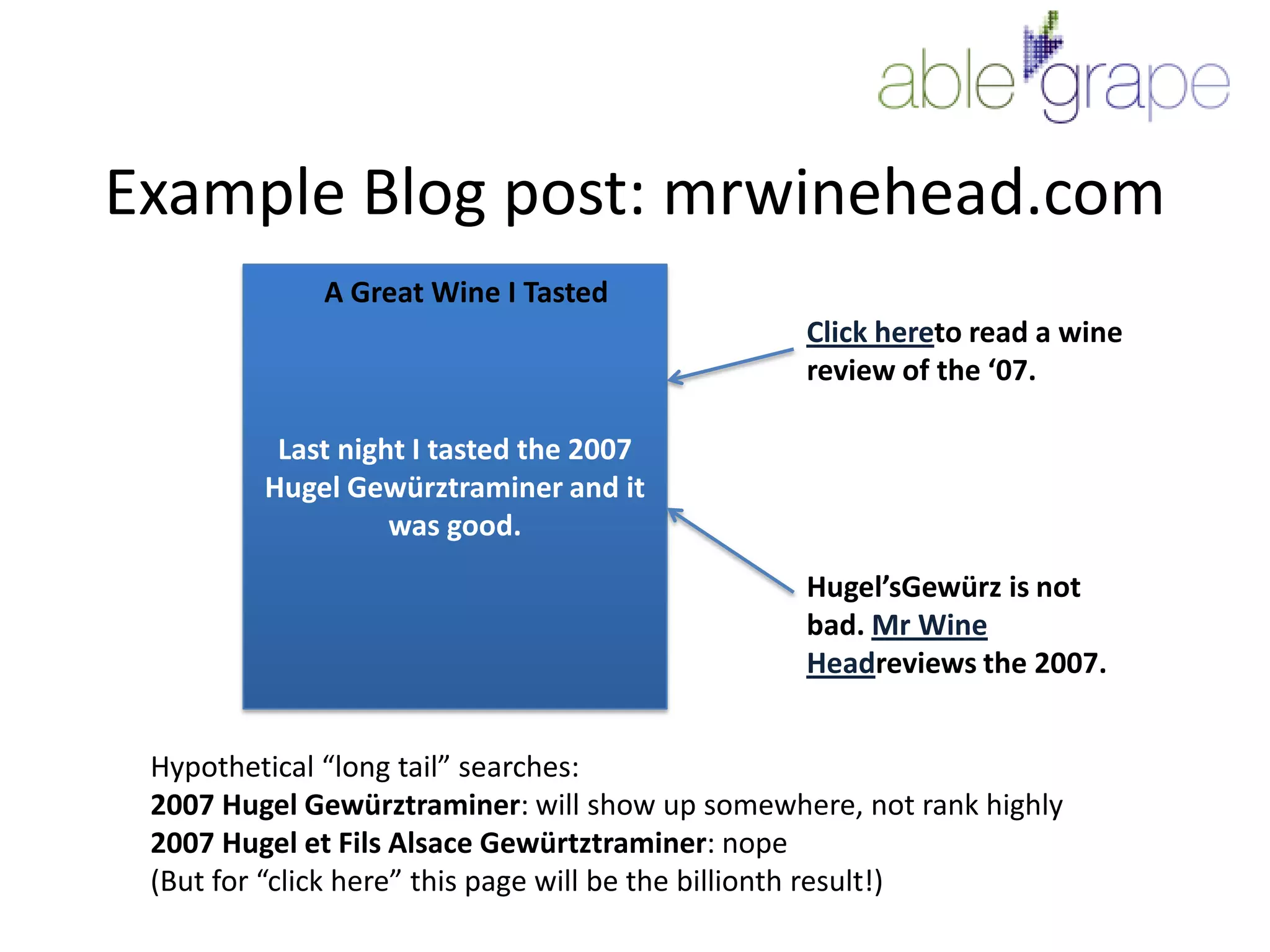
Example Blog post: mrwinehead.comLast night I tasted the 2007 Hugel Gewürztraminer and it was good.A Great Wine I TastedClick hereto read a wine review of the ‘07.Hugel’sGewürz is not bad. Mr Wine Headreviews the 2007.Hypothetical “long tail” searches:2007 Hugel Gewürztraminer: will show up somewhere, not rank highly2007 Hugel et Fils Alsace Gewürtztraminer: nope(But for “click here” this page will be the billionth result!)
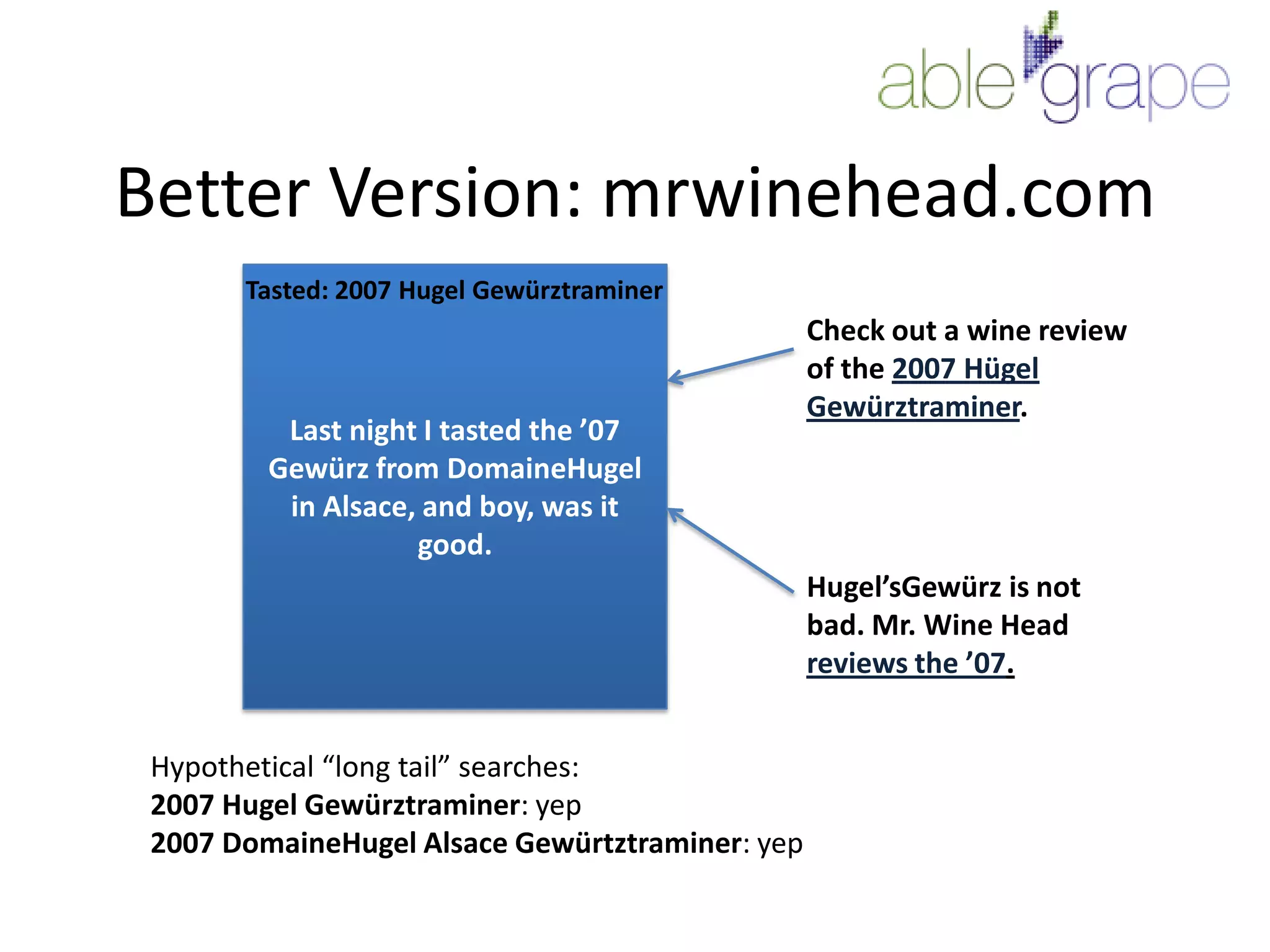
Better Version: mrwinehead.comLast night I tasted the ’07 Gewürz from DomaineHugel in Alsace, and boy, was it good.Tasted: 2007 Hugel GewürztraminerCheck out a wine review of the 2007 Hügel Gewürztraminer.Hugel’sGewürz is not bad. Mr. Wine Head reviews the ’07.Hypothetical “long tail” searches:2007 Hugel Gewürztraminer: yep2007 DomaineHugel Alsace Gewürtztraminer: yep
PRACTICAL TOPICS
Want Links?EssentialHave something unique and interesting to sayBuild RelationshipsSocial Media (Twitter, Facebook)Get visits, build relationshipsControversy (“Link Baiting”) - sometimesTools to ease sharing/linkingIdentify sites you want links from, and ask!Be patientLinks, especially from high-value sites, must be earnedBe careful if you change sites or move pagesDone the wrong way, you will lose those hard-earned links
Learn from Successful Sites!a.k.a. Competitive AnalysisWho do they link to? Who links to them?How much traffic do they get?Where from? For what search terms?What are other similar sites?What kind of people visit?Tools:Google Trends for WebsitesAlexa, ComScore, Quantcast31
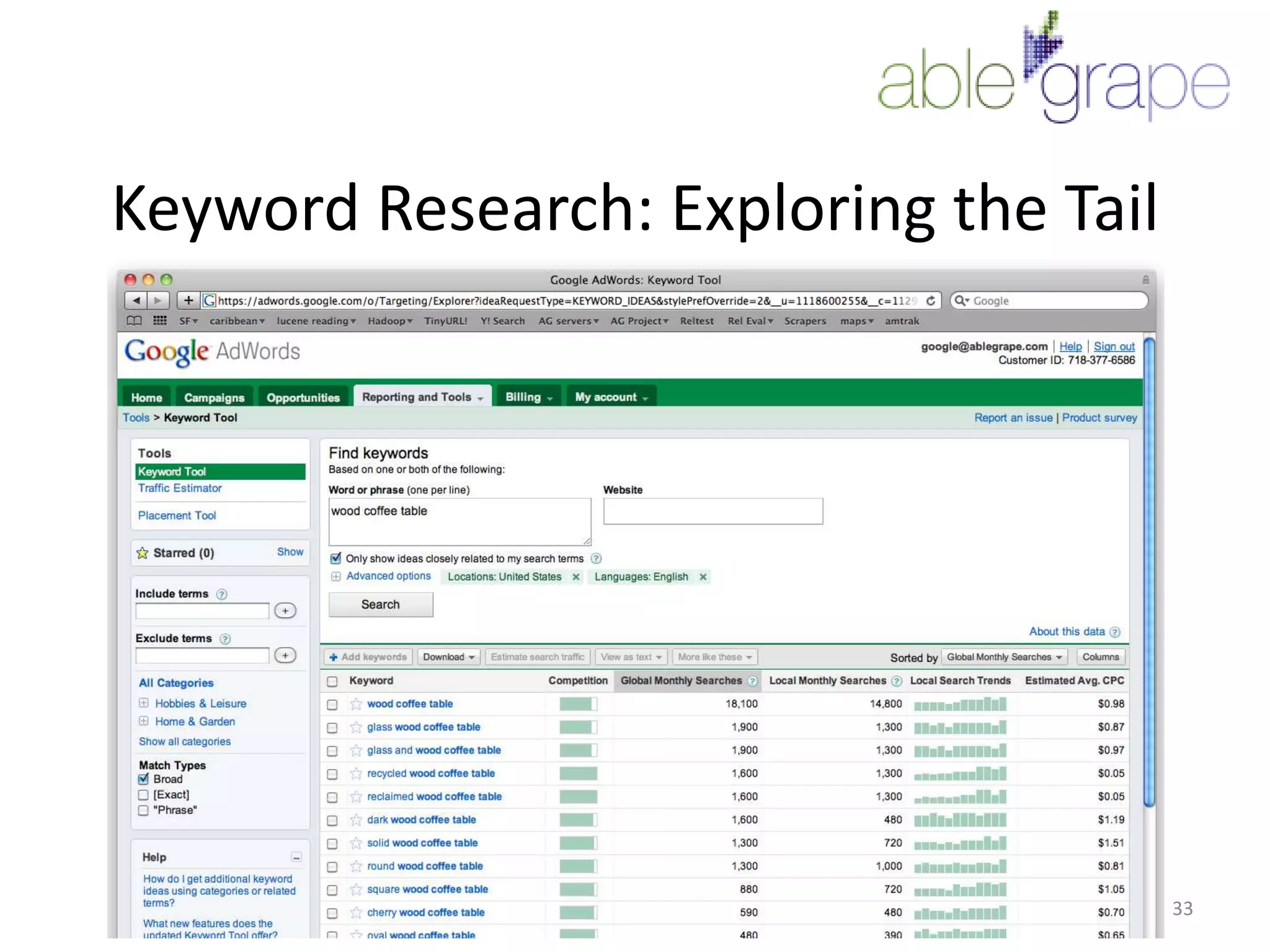
Keyword Research: Exploring the TailGiven a topic or a website, understand what related topics have most valueEstimates of searches, competition for rankingsFree, but with limitations:Google AdWordsMicrosoft adCenterSubscription toolsWordtracker, Keyword Discovery (Trellian), …32
Keyword Research: Exploring the Tail33
Image Search34
Image SearchWhy?Fewer searches, but opportunity to “connect” may be higher?For a compelling picture, being top result matters lessMay be blended into main search results35
Image SearchUse high-quality picture!As with text:Title, Links, Section HeadingsUse a descriptive filenamereclaimed_wood_coffee_table.jpgvsDSC0032.JPGUse descriptive alt tagsText around picture should contain the key terms related to the picture (think “long tail”)36
DuplicatesSearch Engines work very hard to remove near-duplicates from resultsNever copy content without permission!Be careful about licensing your site’s content  to othersModify it, or require links back to original versionYou have rights if someone copies your content!See “DMCA takedown notice”Paged blog comments can even cause issues37
WordpressPluginsGoogle Analytics pluginsTag CloudsRelated PostsTools for sharingWhatever you try, you should measure it38
Webmaster ToolsGoogle Webmaster Tools, Bing Webmaster Central: sign up!Host of information about your sitewho links to youHow many pages indexedcrawl problemsAllows you to report spamSite verification requiredEasy with Wordpress; search for “Webmaster Tools” in supportWealth of good documentation, including videos!Almost any topic covered here: Duplicate Content, Image Search39
AnalyticsIf you want to make something better, you must measure it
AnalyticsHow do you know your changes are working?Where do you get inspiration for other changes to make?Track your trafficWhere is it from?If from a search engine, what searches are they using?What pages are users visiting?
How do users respond to your site?Bounce rateAm I connecting with people who land on my site from a search?Time on siteWhere do your users go after the landing page?Optimizing is about learning from your users and evolving your site.NB: Google tracks these things too!Sites with high bounce rates may rank lower
Defining Success, RevisitedEasy to get overwhelmed by dataDefine what “success” means for youPost a comment?Subscribe to RSS or email list?Purchase something?Follow me on Twitter?Read a second post? (i.e. bounce rate)Google Analytics allows you to define goals43
Analytics PlatformsBlogging platforms often include basic analyticsGoogle Analytics – free, much more sophisticatedAny of several WP plugins provide the tiny “code” to track pagesNumber of commercial packages (Omniture, etc)
Experiment!Don’t be afraid to try things, as long as you measure the resultsA/B tests can be very usefulSurprising things can matterFonts, colors can affect clickthrough rate of linksPosition/size of RSS link
SummaryProduce unique, useful, interesting content!Understand the implications of the long tailMake sure your pages are findable/fetchable by search enginesMake sure your content, especially titles/anchors, are well-chosenBuild trust and community to get linksUnderstand the tools available to youMeasure your results and tune
ResourcesRequired!Google Webmaster GuidelinesBooksEnge, Spencer, Fishkin & Stricchiola. The Art of SEO, O’Reilly, 2009Jones, K. Search Engine Optimization: Your Visual Blueprint, Visual Publishing 2011Halligan, B. Inbound Marketing: Get Found Using Google, Social Media, and Blogs. Wiley, 2009.47
An Introduction to "Search Friendliness" for Wine Writers and Wineries

  • 1.
    An Introduction to“Search-Friendliness”Wine Writers Symposium, 2011Doug CookFounder, Able Grape
  • 2.
    OverviewFundamentalsWhy does searchmatter?The Long Tail and what it meansDefining Success“Search 101”How search engines workImplications for how you build your sitePractical Considerations & ToolsMeasuring and Fine-tuning: AnalyticsQ&A
  • 3.
    Why Does SearchMatter?Way everyone finds everything on the internetUsed even instead of “obvious” URLs (!)32010 Top Searches Worldwide, ComScore, 1/2011
  • 4.
    Why Does SearchMatter?Massive pie, growing quickly*131 billion searches per month46% growth year over yearSize of the pie, and growth, means two things:Huge opportunityFierce competitionUnderstanding search is a necessary skill4* ComScore 2009 Worldwide Data, 1/22/2010
  • 5.
    THE “LONG TAIL”“TheWeb is not kind to generalists.” –Bruce Schoenfeld
  • 6.
    The “Long Tail”(aka Zipf’s Law)Number of Times SeenIndividual Words
  • 7.
    The “Long Tail”(akaZipf’s Law)Relatively Few Common Words(30% of text)Number of Times SeenIndividual Words
  • 8.
    The “Long Tail”(akaZipf’s Law)Relatively Few Common Words(30% of text)Number of Times SeenRelatively Rare Words(70% of text)Individual Words
  • 9.
    The “Long Tail”(akaZipf’s Law)Relatively Few Common Words(30% of text)Number of Times SeenRelatively Rare Words(70% of text)Extremely Long Tail (not to scale)!40-60% of individual words occur only once(hapaxlegomena)Individual Words
  • 10.
    The “Long Tail”of Search“Popular Searches”< 25% of area“Rare” searches= 75% of the areaNumber of Times SearchedSpecific Searches
  • 11.
    The “Long Tail”of SearchFacebookFacebook appsNumber of Times SearchedHow do Facebook apps make moneyFacebook apps for businessAndroid Facebook appsApps Facebooklil farm life giftsSpecific Searches
  • 12.
    “Long Tail” appliesto any topic…Robert Mondavi CabernetRobert MondaviNumber of Times Searched2004 Robert Mondavi Cabernet1997 Monddavi I Block Sauvingon Blank Parker Score’04 Mondavi Cab Reserve Time in Oak’04 Mondavi Cabernet Sauvignon’04 Robert Mondavi CS ReserveSpecific Searches
  • 13.
    “Long Tail” appliesto any topic…Searchers are infinitely creative!Many ways to search for the same thingNumber of Times Searched2004 Robert Mondavi Cabernet’04 Mondavi Cabernet SauvignonSpecific Searches
  • 14.
    Myth #1:“People willcome to my homepage and browse to find what they want”How will they discover you in the first place?Even assuming they know your brand, “long tail” debunks thisPeople find information mostly by very specific searchesExpect these to take them directly to content of interestEx: Only 18% of “Mondavi” searches were for homepageImplications:Your site must be “search friendly” or your (potential) users/customers will end up on another siteEvery page should be a complete experience, and a compelling introduction to your site
  • 15.
    Myth #2:“I haveto rank highly for some popular query to get lots of traffic”Don’t try to be #1 for “cabernet”Too much competitionOnly very top results get any user attention“Cabernet” is but a small slice of “cabernet”-related pieOnly 7.5% of all queries mentioning cabernet!It is not the traffic you wantWon’t result in a meaningful interaction unless you truly have the world’s best general resource for Cabernet informationPut yourself in the shoes of the searcherThe search engines will!
  • 16.
    Myth #3: “MoreTraffic is Better”Two fictitious examplesHumblevino.com:1000 search visits/daySpamovin.com:10000 search visits/dayWhich site is more successful?
  • 17.
    Myth #3: “MoreTraffic is Better”Let’s say Humblevino.com is user-focused:35% meaningful interactions (conversions)…and Spamovin.com is traffic-focused:2% meaningful interactionsThen Humblevino is more successful:More (350 vs 200) users engaged each dayMore likely to have repeat users, and grow search trafficSpamovin is:Potentially tarnishing their brandAt higher risk of losing their search traffic
  • 18.
    Defining SuccessConnect withall the people who are interested in what you have to say, and nobody elseMaximizes meaningful interactionsDefine and measure your “meaningful interactions”Similar analogy can be made for Twitter, Facebook, etc.
  • 19.
    The Long Tail:SummaryThe world is made up of people with very specific information needs“Optimal” traffic comes when you have the world’s best page for some very specific information needEach of these generates a tiny bit of high-quality trafficMake it up in volume! Have lots of specific, useful content on your siteIn practical terms:WineriesAll wines, specific vintages, past and present, with detailed informationBlogsPost often!Encourage commentsUse tagsMust be accessible to search enginesMust be organized so “infinitely creative” searchers can find it
  • 20.
  • 21.
    How a SearchEngine Finds ContentCrawler (robot, spider) fetches pages from the webParses (picks apart) page, extracts the linksGoes to new pages found among links, and fetches them(Lather, rinse, repeat).
  • 22.
    ImplicationsCrawler must finda link to your pageDynamic technologies (Flash, Javascript) problematicContent generated in response to user input (navigation by search/option menus) problematicSitemaps (XML or HTML) can mitigateCrawler must be able to fetch/parse the pageFlash: difficult/impossible to parseAge verification: is a crawler old enough to drink?Sites depending upon registration: badSites depending upon cookie from home page: badCrawler doesn’t visit the homepage first! Blogging platforms OK, winery sites often problematic
  • 23.
    How a SearchEngine SearchesLooks for all the search terms at least once in the combined:Document bodyTitleInbound link text (“Anchor text”)Document URLLong tail implications:Your great post about Natural Wines of Minervoiswon’t be found by that creative searcher looking for Low Sulfur Languedoc Wines unless those words are present somewhere*
  • 24.
    Search Engine RankingNotall Text is EqualWhat is this page “about”? Key signals:Title, especially at the beginningInbound link textSection headings?Does the text contain exact phrases from the search, or are the words scattered around?Does this look like properly constructed, useful writing?Is the page mostly focused on this topic, or is it about a lot of different things?In some cases may be worth splitting a page (e.g “Wines”)
  • 25.
    Links are Crucial“Ifpeople bothered to link to this, it must be useful, interesting or authoritative”Quality MattersAre these links from independent sources?Do authoritative sites, especially within the topic of interest, link to this page?“Free links” are usually ignored (nofollow)Text of links is very importantIndependent descriptions of what page is “about”25
  • 26.
    Choosing Titles andLinksChoose your title carefully: should be complete yet concise description of topicMissing words = missed opportunity for “tail searches”Long titles have less weight, can bring irrelevant trafficChoose link text exactly as you would a title for that page(Is that page really titled “click here?”)Don’t miss opportunities to make linksLink back to related topics in future postsThink about “long tail” variants you can useUse keyword research tools to decide which variants might have the most value
  • 27.
    Example Blog post:mrwinehead.comLast night I tasted the 2007 Hugel Gewürztraminer and it was good.A Great Wine I TastedClick hereto read a wine review of the ‘07.Hugel’sGewürz is not bad. Mr Wine Headreviews the 2007.Hypothetical “long tail” searches:2007 Hugel Gewürztraminer: will show up somewhere, not rank highly2007 Hugel et Fils Alsace Gewürtztraminer: nope(But for “click here” this page will be the billionth result!)
  • 28.
    Better Version: mrwinehead.comLastnight I tasted the ’07 Gewürz from DomaineHugel in Alsace, and boy, was it good.Tasted: 2007 Hugel GewürztraminerCheck out a wine review of the 2007 Hügel Gewürztraminer.Hugel’sGewürz is not bad. Mr. Wine Head reviews the ’07.Hypothetical “long tail” searches:2007 Hugel Gewürztraminer: yep2007 DomaineHugel Alsace Gewürtztraminer: yep
  • 29.
  • 30.
    Want Links?EssentialHave somethingunique and interesting to sayBuild RelationshipsSocial Media (Twitter, Facebook)Get visits, build relationshipsControversy (“Link Baiting”) - sometimesTools to ease sharing/linkingIdentify sites you want links from, and ask!Be patientLinks, especially from high-value sites, must be earnedBe careful if you change sites or move pagesDone the wrong way, you will lose those hard-earned links
  • 31.
    Learn from SuccessfulSites!a.k.a. Competitive AnalysisWho do they link to? Who links to them?How much traffic do they get?Where from? For what search terms?What are other similar sites?What kind of people visit?Tools:Google Trends for WebsitesAlexa, ComScore, Quantcast31
  • 32.
    Keyword Research: Exploringthe TailGiven a topic or a website, understand what related topics have most valueEstimates of searches, competition for rankingsFree, but with limitations:Google AdWordsMicrosoft adCenterSubscription toolsWordtracker, Keyword Discovery (Trellian), …32
  • 33.
  • 34.
  • 35.
    Image SearchWhy?Fewer searches,but opportunity to “connect” may be higher?For a compelling picture, being top result matters lessMay be blended into main search results35
  • 36.
    Image SearchUse high-qualitypicture!As with text:Title, Links, Section HeadingsUse a descriptive filenamereclaimed_wood_coffee_table.jpgvsDSC0032.JPGUse descriptive alt tagsText around picture should contain the key terms related to the picture (think “long tail”)36
  • 37.
    DuplicatesSearch Engines workvery hard to remove near-duplicates from resultsNever copy content without permission!Be careful about licensing your site’s content to othersModify it, or require links back to original versionYou have rights if someone copies your content!See “DMCA takedown notice”Paged blog comments can even cause issues37
  • 38.
    WordpressPluginsGoogle Analytics pluginsTagCloudsRelated PostsTools for sharingWhatever you try, you should measure it38
  • 39.
    Webmaster ToolsGoogle WebmasterTools, Bing Webmaster Central: sign up!Host of information about your sitewho links to youHow many pages indexedcrawl problemsAllows you to report spamSite verification requiredEasy with Wordpress; search for “Webmaster Tools” in supportWealth of good documentation, including videos!Almost any topic covered here: Duplicate Content, Image Search39
  • 40.
    AnalyticsIf you wantto make something better, you must measure it
  • 41.
    AnalyticsHow do youknow your changes are working?Where do you get inspiration for other changes to make?Track your trafficWhere is it from?If from a search engine, what searches are they using?What pages are users visiting?
  • 42.
    How do usersrespond to your site?Bounce rateAm I connecting with people who land on my site from a search?Time on siteWhere do your users go after the landing page?Optimizing is about learning from your users and evolving your site.NB: Google tracks these things too!Sites with high bounce rates may rank lower
  • 43.
    Defining Success, RevisitedEasyto get overwhelmed by dataDefine what “success” means for youPost a comment?Subscribe to RSS or email list?Purchase something?Follow me on Twitter?Read a second post? (i.e. bounce rate)Google Analytics allows you to define goals43
  • 44.
    Analytics PlatformsBlogging platformsoften include basic analyticsGoogle Analytics – free, much more sophisticatedAny of several WP plugins provide the tiny “code” to track pagesNumber of commercial packages (Omniture, etc)
  • 45.
    Experiment!Don’t be afraidto try things, as long as you measure the resultsA/B tests can be very usefulSurprising things can matterFonts, colors can affect clickthrough rate of linksPosition/size of RSS link
  • 46.
    SummaryProduce unique, useful,interesting content!Understand the implications of the long tailMake sure your pages are findable/fetchable by search enginesMake sure your content, especially titles/anchors, are well-chosenBuild trust and community to get linksUnderstand the tools available to youMeasure your results and tune
  • 47.
    ResourcesRequired!Google Webmaster GuidelinesBooksEnge,Spencer, Fishkin & Stricchiola. The Art of SEO, O’Reilly, 2009Jones, K. Search Engine Optimization: Your Visual Blueprint, Visual Publishing 2011Halligan, B. Inbound Marketing: Get Found Using Google, Social Media, and Blogs. Wiley, 2009.47

Editor's Notes

  • #6 Topic has come up in many guises already. Pervasive, fundamental attribute of human behavior.This is the reason why of 2M books published, 1.8M are self-published.