Bell ringer: Which amendment
protects an accused person’s right to
remain silent?
Essential Question: How do societies
balance rights?
Essential Vocabulary: Civil War
Amendments, Suffrage
Civil War Amendments
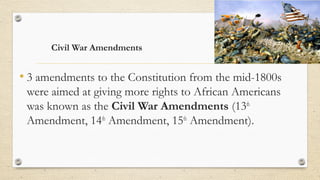
• 3 amendments to the Constitution from the mid-1800s
were aimed at giving more rights to African Americans
was known as the Civil War Amendments (13th
Amendment, 14th
Amendment, 15th
Amendment).
Civil War Amendments
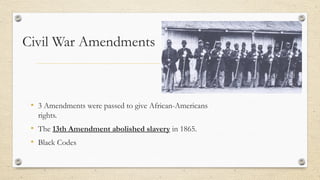
• 3 Amendments were passed to give African-Americans
rights.
• The 13th Amendment abolished slavery in 1865.
• Black Codes
Civil War Amendments
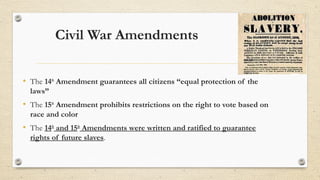
• The 14th
Amendment guarantees all citizens “equal protection of the
laws”
• The 15th
Amendment prohibits restrictions on the right to vote based on
race and color
• The 14th
and 15th
Amendments were written and ratified to guarantee
rights of future slaves.
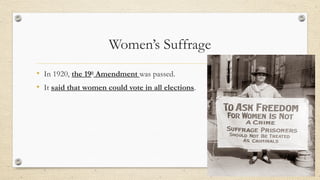
Women’s Suffrage
• In 1920, the 19th
Amendment was passed.
• It said that women could vote in all elections.
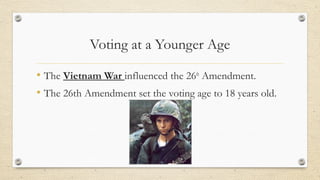
Voting at a Younger Age
• The Vietnam War influenced the 26th
Amendment.
• The 26th Amendment set the voting age to 18 years old.
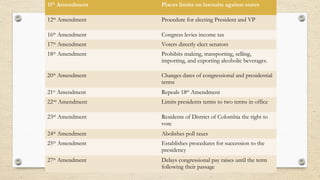
11th
Amendment Places limits on lawsuits against states
12th
Amendment Procedure for electing President and VP
16th
Amendment Congress levies income tax
17th
Amendment Voters directly elect senators
18th
Amendment Prohibits making, transporting, selling,
importing, and exporting alcoholic beverages.
20th
Amendment Changes dates of congressional and presidential
terms
21st
Amendment Repeals 18th
Amendment
22nd
Amendment Limits presidents terms to two terms in office
23rd
Amendment Residents of District of Colombia the right to
vote
24th
Amendment Abolishes poll taxes
25th
Amendment Establishes procedures for succession to the
presidency
27th
Amendment Delays congressional pay raises until the term
following their passage

Amendments 11-27

  • 1.
    Bell ringer: Whichamendment protects an accused person’s right to remain silent? Essential Question: How do societies balance rights? Essential Vocabulary: Civil War Amendments, Suffrage
  • 2.
    Civil War Amendments •3 amendments to the Constitution from the mid-1800s were aimed at giving more rights to African Americans was known as the Civil War Amendments (13th Amendment, 14th Amendment, 15th Amendment).
  • 3.
    Civil War Amendments •3 Amendments were passed to give African-Americans rights. • The 13th Amendment abolished slavery in 1865. • Black Codes
  • 4.
    Civil War Amendments •The 14th Amendment guarantees all citizens “equal protection of the laws” • The 15th Amendment prohibits restrictions on the right to vote based on race and color • The 14th and 15th Amendments were written and ratified to guarantee rights of future slaves.
  • 5.
    Women’s Suffrage • In1920, the 19th Amendment was passed. • It said that women could vote in all elections.
  • 6.
    Voting at aYounger Age • The Vietnam War influenced the 26th Amendment. • The 26th Amendment set the voting age to 18 years old.
  • 7.
    11th Amendment Places limitson lawsuits against states 12th Amendment Procedure for electing President and VP 16th Amendment Congress levies income tax 17th Amendment Voters directly elect senators 18th Amendment Prohibits making, transporting, selling, importing, and exporting alcoholic beverages. 20th Amendment Changes dates of congressional and presidential terms 21st Amendment Repeals 18th Amendment 22nd Amendment Limits presidents terms to two terms in office 23rd Amendment Residents of District of Colombia the right to vote 24th Amendment Abolishes poll taxes 25th Amendment Establishes procedures for succession to the presidency 27th Amendment Delays congressional pay raises until the term following their passage