E-mail- vipgzp2019@gmail.com
Mobile no.- 9897677977
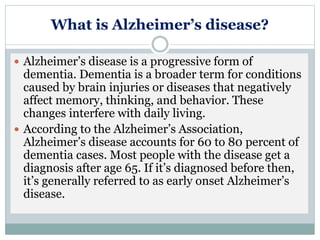
Topic- Alzheimer’s disease
Harish Sharma
(Lecturer)
E-mail- harishsharma4295@gmail.com
What is Alzheimer’s disease?
 Alzheimer’s disease is a progressive form of
dementia. Dementia is a broader term for conditions
caused by brain injuries or diseases that negatively
affect memory, thinking, and behavior. These
changes interfere with daily living.
 According to the Alzheimer’s Association,
Alzheimer’s disease accounts for 60 to 80 percent of
dementia cases. Most people with the disease get a
diagnosis after age 65. If it’s diagnosed before then,
it’s generally referred to as early onset Alzheimer’s
disease.
Dementia vs. Alzheimer’s
 The terms “dementia” and “Alzheimer’s” are sometimes used
interchangeably. However, these two conditions aren’t the
same. Alzheimer’s is a type of dementia.
 Dementia is a broader term for conditions with symptoms
relating to memory loss such as forgetfulness and confusion.
Dementia includes more specific conditions, such as
Alzheimer’s disease, Parkinson’s disease, traumatic brain
injury, and others, which can cause these symptoms.
 Causes, symptoms, and treatments can be different for these
diseases. Learn more about how dementia and Alzheimer’s
disease differ.
Alzheimer’s disease causes and risk factors
 Experts haven’t determined a single cause of Alzheimer’s
disease but they have identified certain risk factors, including:
 Age. Most people who develop Alzheimer’s disease are 65
years of age or older.
 Family history. If you have an immediate family member who
has developed the condition, you’re more likely to get it.
 Genetics. Certain genes have been linked to Alzheimer’s
disease.
 Having one or more of these risk factors doesn’t mean that
you’ll develop Alzheimer’s disease. It simply raises your risk
level.
Symptoms
 Everyone has episodes of forgetfulness from time to time. But
people with Alzheimer’s disease display certain ongoing behaviors
and symptoms that worsen over time. These can include:
 memory loss affecting daily activities, such as an ability to keep
appointments
 trouble with familiar tasks, such as using a microwave
 difficulties with problem-solving
 trouble with speech or writing
 becoming disoriented about times or places
 decreased judgment
 decreased personal hygiene
 mood and personality changes
 withdrawal from friends, family, and community
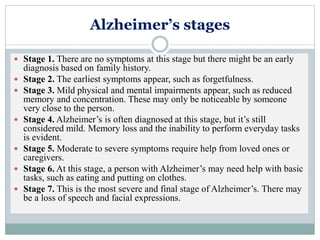
Alzheimer’s stages
 Stage 1. There are no symptoms at this stage but there might be an early
diagnosis based on family history.
 Stage 2. The earliest symptoms appear, such as forgetfulness.
 Stage 3. Mild physical and mental impairments appear, such as reduced
memory and concentration. These may only be noticeable by someone
very close to the person.
 Stage 4. Alzheimer’s is often diagnosed at this stage, but it’s still
considered mild. Memory loss and the inability to perform everyday tasks
is evident.
 Stage 5. Moderate to severe symptoms require help from loved ones or
caregivers.
 Stage 6. At this stage, a person with Alzheimer’s may need help with basic
tasks, such as eating and putting on clothes.
 Stage 7. This is the most severe and final stage of Alzheimer’s. There may
be a loss of speech and facial expressions.
Diagnosing Alzheimer’s disease
 The only definitive way to diagnose someone with
Alzheimer’s disease is to examine their brain tissue after
death. But your doctor can use other examinations and tests to
assess your mental abilities, diagnose dementia, and rule out
other conditions.
 They’ll likely start by taking a medical history. They may ask
about your:
 symptoms
 family medical history
 other current or past health conditions
 current or past medications
 diet, alcohol intake, or other lifestyle habits
Alzheimer’s tests
 There’s no definitive test for Alzheimer’s disease.
However, your doctor will likely do several tests to
determine your diagnosis. These can be mental, physical,
neurological, and imaging tests.
 Your doctor may start with a mental status test. This can
help them assess your short-term memory, long-term
memory, and orientation to place and time. For example,
they may ask you:
 what day it is
 who the president is
 to remember and recall a short list of words
Alzheimer’s medication
 For early to moderate Alzheimer’s, your doctor may
prescribe medications such as donepezil (Aricept) or
rivastigmine (Exelon). These drugs can help maintain
high levels of acetylcholine in your brain. This is a type of
neurotransmitter that can help aid your memory.
 To treat moderate to severe Alzheimer’s, your doctor may
prescribe donepezil (Aricept) or memantine (Namenda).
Memantine can help block the effects of excess glutamate.
Glutamate is a brain chemical that’s released in higher
amounts in Alzheimer’s disease and damages brain cells.
Preventing Alzheimer’s
 The following measures may help:
 Quit smoking.
 Exercise regularly.
 Try cognitive training exercises.
 Eat a plant-based diet.
 Consume more antioxidants.
 Maintain an active social life.

Alzheimer

  • 1.
    E-mail- vipgzp2019@gmail.com Mobile no.-9897677977 Topic- Alzheimer’s disease Harish Sharma (Lecturer) E-mail- harishsharma4295@gmail.com
  • 2.
    What is Alzheimer’sdisease?  Alzheimer’s disease is a progressive form of dementia. Dementia is a broader term for conditions caused by brain injuries or diseases that negatively affect memory, thinking, and behavior. These changes interfere with daily living.  According to the Alzheimer’s Association, Alzheimer’s disease accounts for 60 to 80 percent of dementia cases. Most people with the disease get a diagnosis after age 65. If it’s diagnosed before then, it’s generally referred to as early onset Alzheimer’s disease.
  • 3.
    Dementia vs. Alzheimer’s The terms “dementia” and “Alzheimer’s” are sometimes used interchangeably. However, these two conditions aren’t the same. Alzheimer’s is a type of dementia.  Dementia is a broader term for conditions with symptoms relating to memory loss such as forgetfulness and confusion. Dementia includes more specific conditions, such as Alzheimer’s disease, Parkinson’s disease, traumatic brain injury, and others, which can cause these symptoms.  Causes, symptoms, and treatments can be different for these diseases. Learn more about how dementia and Alzheimer’s disease differ.
  • 4.
    Alzheimer’s disease causesand risk factors  Experts haven’t determined a single cause of Alzheimer’s disease but they have identified certain risk factors, including:  Age. Most people who develop Alzheimer’s disease are 65 years of age or older.  Family history. If you have an immediate family member who has developed the condition, you’re more likely to get it.  Genetics. Certain genes have been linked to Alzheimer’s disease.  Having one or more of these risk factors doesn’t mean that you’ll develop Alzheimer’s disease. It simply raises your risk level.
  • 5.
    Symptoms  Everyone hasepisodes of forgetfulness from time to time. But people with Alzheimer’s disease display certain ongoing behaviors and symptoms that worsen over time. These can include:  memory loss affecting daily activities, such as an ability to keep appointments  trouble with familiar tasks, such as using a microwave  difficulties with problem-solving  trouble with speech or writing  becoming disoriented about times or places  decreased judgment  decreased personal hygiene  mood and personality changes  withdrawal from friends, family, and community
  • 6.
    Alzheimer’s stages  Stage1. There are no symptoms at this stage but there might be an early diagnosis based on family history.  Stage 2. The earliest symptoms appear, such as forgetfulness.  Stage 3. Mild physical and mental impairments appear, such as reduced memory and concentration. These may only be noticeable by someone very close to the person.  Stage 4. Alzheimer’s is often diagnosed at this stage, but it’s still considered mild. Memory loss and the inability to perform everyday tasks is evident.  Stage 5. Moderate to severe symptoms require help from loved ones or caregivers.  Stage 6. At this stage, a person with Alzheimer’s may need help with basic tasks, such as eating and putting on clothes.  Stage 7. This is the most severe and final stage of Alzheimer’s. There may be a loss of speech and facial expressions.
  • 7.
    Diagnosing Alzheimer’s disease The only definitive way to diagnose someone with Alzheimer’s disease is to examine their brain tissue after death. But your doctor can use other examinations and tests to assess your mental abilities, diagnose dementia, and rule out other conditions.  They’ll likely start by taking a medical history. They may ask about your:  symptoms  family medical history  other current or past health conditions  current or past medications  diet, alcohol intake, or other lifestyle habits
  • 8.
    Alzheimer’s tests  There’sno definitive test for Alzheimer’s disease. However, your doctor will likely do several tests to determine your diagnosis. These can be mental, physical, neurological, and imaging tests.  Your doctor may start with a mental status test. This can help them assess your short-term memory, long-term memory, and orientation to place and time. For example, they may ask you:  what day it is  who the president is  to remember and recall a short list of words
  • 9.
    Alzheimer’s medication  Forearly to moderate Alzheimer’s, your doctor may prescribe medications such as donepezil (Aricept) or rivastigmine (Exelon). These drugs can help maintain high levels of acetylcholine in your brain. This is a type of neurotransmitter that can help aid your memory.  To treat moderate to severe Alzheimer’s, your doctor may prescribe donepezil (Aricept) or memantine (Namenda). Memantine can help block the effects of excess glutamate. Glutamate is a brain chemical that’s released in higher amounts in Alzheimer’s disease and damages brain cells.
  • 10.
    Preventing Alzheimer’s  Thefollowing measures may help:  Quit smoking.  Exercise regularly.  Try cognitive training exercises.  Eat a plant-based diet.  Consume more antioxidants.  Maintain an active social life.