Alliteration
Alliteration is the stylistic
device of using a series of
words begin with the same
consonant sound.
What Is It?
Characteristically, alliteration is the use of a series of words beginning
with the same consonant or syllabic sound. While alliteration doesn't
usually give much added depth to writing, it can add humour
and expression.
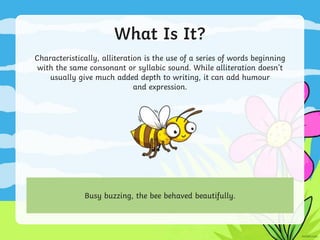
Busy buzzing, the bee behaved beautifully.
Why Use It?
As mentioned, it might not add to the depth of meaning of your writing,
but it will make it sound better. Alliteration can make your words more
engaging – and entertaining. And, when your writing engages your
audience they are more likely to pay attention and remember what
you say.
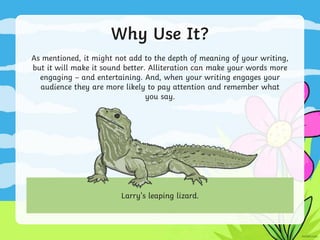
Larry’s leaping lizard.
How to Use Alliteration
Alliteration is a technique that
gives sentences a little more
description, humour and energy.
Try playing around with
alliterative words and phrases to
make your words come alive.
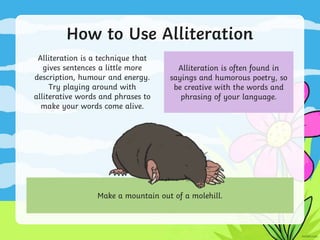
Make a mountain out of a molehill.
Alliteration is often found in
sayings and humorous poetry, so
be creative with the words and
phrasing of your language.
How to Identify Alliteration
The best way to spot alliteration being used is to read out the sentence,
listening for the words with the identical consonant sounds. As you read
these sentences, identify the alliterative letter or sound.
Check out the Consonant
Which letter is being repeated in the following sentences?
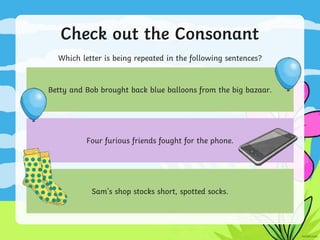
Betty and Bob brought back blue balloons from the big bazaar.
Four furious friends fought for the phone.
Sam's shop stocks short, spotted socks.
Try It Yourself
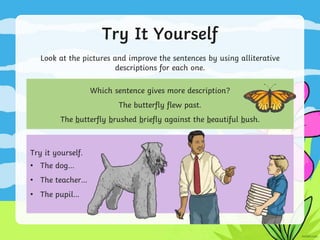
Look at the pictures and improve the sentences by using alliterative
descriptions for each one.
Which sentence gives more description?
The butterfly flew past.
The butterfly brushed briefly against the beautiful bush.
Try it yourself.
• The dog...
• The teacher…
• The pupil…
Notable Names
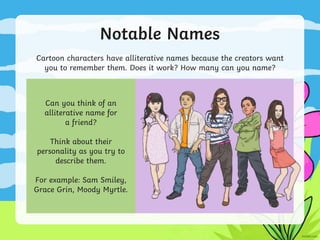
Cartoon characters have alliterative names because the creators want
you to remember them. Does it work? How many can you name?
Can you think of an
alliterative name for
a friend?
Think about their
personality as you try to
describe them.
For example: Sam Smiley,
Grace Grin, Moody Myrtle.
Brand Names
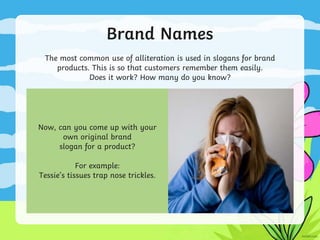
The most common use of alliteration is used in slogans for brand
products. This is so that customers remember them easily.
Does it work? How many do you know?
Now, can you come up with your
own original brand
slogan for a product?
For example:
Tessie’s tissues trap nose trickles.
Vocabulary for Verse
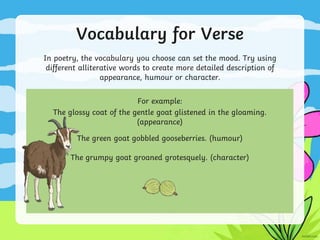
In poetry, the vocabulary you choose can set the mood. Try using
different alliterative words to create more detailed description of
appearance, humour or character.
For example:
The glossy coat of the gentle goat glistened in the gloaming.
(appearance)
The green goat gobbled gooseberries. (humour)
The grumpy goat groaned grotesquely. (character)
Have a Go
Find some alliterative words and phrases in poems that you know.
What effect does it have?
Does it add to the description of appearance, character or humour?
Have a go at adding alliteration
to your own work to make it
more interesting, memorable,
humorous or descriptive.
Adding Amazing Alliteration
Remember:
Not every word has
to be alliterative.
You can use
prepositions such as
‘the’ and 'of' and
pronouns such as
'his' and ‘her’ and
still maintain the
alliterative effect.
Alliteration does not
need to be an entire
sentence.
Any two-word phrase
can be alliterative.
Even some single
words can be
alliterative if they
have multiple
syllables which begin
with the same
consonant sound.
Is the slide heading
alliteration?

Alliteration-powerpoint.ppt

  • 2.
    Alliteration Alliteration is thestylistic device of using a series of words begin with the same consonant sound.
  • 3.
    What Is It? Characteristically,alliteration is the use of a series of words beginning with the same consonant or syllabic sound. While alliteration doesn't usually give much added depth to writing, it can add humour and expression. Busy buzzing, the bee behaved beautifully.
  • 4.
    Why Use It? Asmentioned, it might not add to the depth of meaning of your writing, but it will make it sound better. Alliteration can make your words more engaging – and entertaining. And, when your writing engages your audience they are more likely to pay attention and remember what you say. Larry’s leaping lizard.
  • 5.
    How to UseAlliteration Alliteration is a technique that gives sentences a little more description, humour and energy. Try playing around with alliterative words and phrases to make your words come alive. Make a mountain out of a molehill. Alliteration is often found in sayings and humorous poetry, so be creative with the words and phrasing of your language.
  • 6.
    How to IdentifyAlliteration The best way to spot alliteration being used is to read out the sentence, listening for the words with the identical consonant sounds. As you read these sentences, identify the alliterative letter or sound.
  • 7.
    Check out theConsonant Which letter is being repeated in the following sentences? Betty and Bob brought back blue balloons from the big bazaar. Four furious friends fought for the phone. Sam's shop stocks short, spotted socks.
  • 8.
    Try It Yourself Lookat the pictures and improve the sentences by using alliterative descriptions for each one. Which sentence gives more description? The butterfly flew past. The butterfly brushed briefly against the beautiful bush. Try it yourself. • The dog... • The teacher… • The pupil…
  • 9.
    Notable Names Cartoon charactershave alliterative names because the creators want you to remember them. Does it work? How many can you name? Can you think of an alliterative name for a friend? Think about their personality as you try to describe them. For example: Sam Smiley, Grace Grin, Moody Myrtle.
  • 10.
    Brand Names The mostcommon use of alliteration is used in slogans for brand products. This is so that customers remember them easily. Does it work? How many do you know? Now, can you come up with your own original brand slogan for a product? For example: Tessie’s tissues trap nose trickles.
  • 11.
    Vocabulary for Verse Inpoetry, the vocabulary you choose can set the mood. Try using different alliterative words to create more detailed description of appearance, humour or character. For example: The glossy coat of the gentle goat glistened in the gloaming. (appearance) The green goat gobbled gooseberries. (humour) The grumpy goat groaned grotesquely. (character)
  • 12.
    Have a Go Findsome alliterative words and phrases in poems that you know. What effect does it have? Does it add to the description of appearance, character or humour? Have a go at adding alliteration to your own work to make it more interesting, memorable, humorous or descriptive.
  • 13.
    Adding Amazing Alliteration Remember: Notevery word has to be alliterative. You can use prepositions such as ‘the’ and 'of' and pronouns such as 'his' and ‘her’ and still maintain the alliterative effect. Alliteration does not need to be an entire sentence. Any two-word phrase can be alliterative. Even some single words can be alliterative if they have multiple syllables which begin with the same consonant sound. Is the slide heading alliteration?