Algorithms of standard videocodec H.264
Master Thesis
Presented by Santosh Kumar Chintapalli
TECHNICAL UNIVERSITY OF KOŠICE
Košice 2018
Supervisor: Prof. Ing. Ján Mihalík, PhD
OutlineOutline
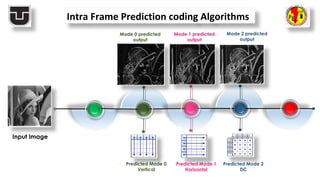
Introduction
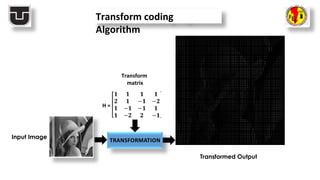
Algorithms of standard videocodec H.264
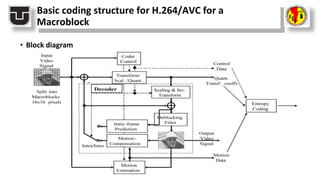
Basic coding structure for H.264/AVC for a Macroblock
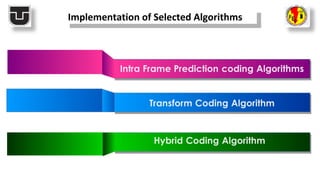
Implementation of selected Algorithms
Evaluation of MATLAB Achieved Results
Comparison of Efficiency
Conclusion
IntroductionIntroduction
JPEG (Joint Photographic Experts Group).
MPEG(Moving Picture Experts Group).
MPEG-1
MPEG-2
MPEG-4
H.261
H.263
Old standard videocodec’s
Algorithms of Standard
videocodec H.264 was created
to offer a high compression
rate, and low bandwidth
consumption, In order to
provide solutions of high
quality(high frame resolution,
high frame rate, and low
distortion) low bit rate for
storage or transmission
Encoding and Decoding process of Macroblocks
Algorithms of Intra-frame prediction
Algorithms of Inter-frame prediction
• Inter-Frame prediction in P slices
• Inter-Frame prediction in B-slices
Algorithms of Transform, scaling, quantization
Algorithms of Entropy coding
Algorithms of standard videocodec H.264Algorithms of standard videocodec H.264
• Block diagram
Basic coding structure for H.264/AVC for a
Macroblock
Basic coding structure for H.264/AVC for a
Macroblock
Implementation of Selected AlgorithmsImplementation of Selected Algorithms
Input Image
Mode 0 predicted
output
Predicted Mode 0
Vertical
Predicted Mode 1
Horizontal
Predicted Mode 2
DC
Mode 1 predicted
output
Mode 2 predicted
output
Intra Frame Prediction coding Algorithms
H =
Transform coding
Algorithm
Input Image
Transformed Output
Transform
matrix
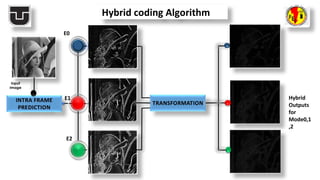
Hybrid coding Algorithm
E0
E1
E2
Hybrid
Outputs
for
Mode0,1
,2
Input
Image
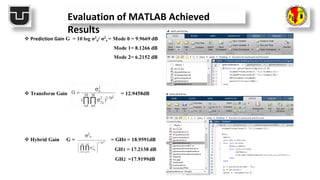
Evaluation of MATLAB Achieved
Results
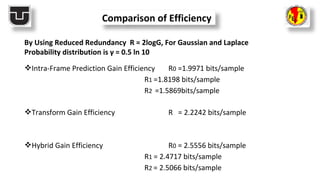
Intra-Frame Prediction Gain Efficiency R0 =1.9971 bits/sample
R1 =1.8198 bits/sample
R2 =1.5869bits/sample
Transform Gain Efficiency R = 2.2242 bits/sample
Hybrid Gain Efficiency R0 = 2.5556 bits/sample
R1 = 2.4717 bits/sample
R2 = 2.5066 bits/sample
Comparison of Efficiency
By Using Reduced Redundancy R = 2logG, For Gaussian and Laplace
Probability distribution is γ = 0.5 ln 10
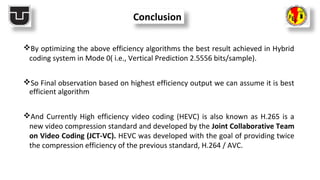
By optimizing the above efficiency algorithms the best result achieved in Hybrid
coding system in Mode 0( i.e., Vertical Prediction 2.5556 bits/sample).
So Final observation based on highest efficiency output we can assume it is best
efficient algorithm
And Currently High efficiency video coding (HEVC) is also known as H.265 is a
new video compression standard and developed by the Joint Collaborative Team
on Video Coding (JCT-VC). HEVC was developed with the goal of providing twice
the compression efficiency of the previous standard, H.264 / AVC.
Conclusion
THANK YOU
FOR YOUR ATTENTION
Special thanks to
Prof. Ing. Ján Mihalík, PhD
and
Department of Electronics and Multimedia Telecommunications
Brief Points
What is the meaning of the abbreviation HEVC used in the Abstract?
High efficiency video coding (HEVC) is also known as H.265
Which are four others “Intra 4x4 prediction modes”, Fig.7, p.19? Describe
Brief Points
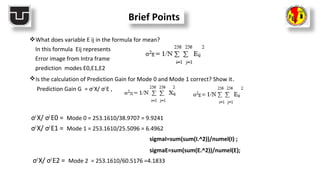
What does variable E ij in the formula for mean?
In this formula Eij represents
Error image from Intra frame
prediction modes E0,E1,E2
Is the calculation of Prediction Gain for Mode 0 and Mode 1 correct? Show it.
Prediction Gain G = σ2
X/ σ2
E ,
σ2
X/ σ2
E0 = Mode 0 = 253.1610/38.9707 = 9.9241
σ2
X/ σ2
E1 = Mode 1 = 253.1610/25.5096 = 6.4962
sigmaI=sum(sum(I.^2))/numel(I) ;
sigmaE=sum(sum(E.^2))/numel(E);
σ2
X/ σ2
E2 = Mode 2 = 253.1610/60.5176 =4.1833
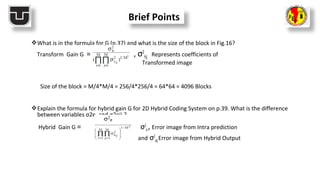
What is in the formula for G (p.37) and what is the size of the block in Fig.16?
Transform Gain G = , σ2
Yij Represents coefficients of
Transformed image
Size of the block = M/4*M/4 = 256/4*256/4 = 64*64 = 4096 Blocks
Explain the formula for hybrid gain G for 2D Hybrid Coding System on p.39. What is the difference
between variables σ2e and σ2eij ?
Hybrid Gain G = σ2
e, Error image from Intra prediction
and σ2
eijError image from Hybrid Output
Brief Points
Brief Points
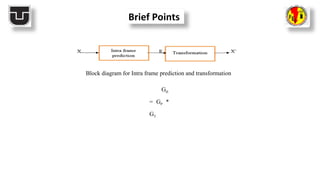
Block diagram for Intra frame prediction and transformation
GH
= GP *
GT

Algorithm of standard videocodec H.264

  • 1.
    Algorithms of standardvideocodec H.264 Master Thesis Presented by Santosh Kumar Chintapalli TECHNICAL UNIVERSITY OF KOŠICE Košice 2018 Supervisor: Prof. Ing. Ján Mihalík, PhD
  • 2.
    OutlineOutline Introduction Algorithms of standardvideocodec H.264 Basic coding structure for H.264/AVC for a Macroblock Implementation of selected Algorithms Evaluation of MATLAB Achieved Results Comparison of Efficiency Conclusion
  • 3.
    IntroductionIntroduction JPEG (Joint PhotographicExperts Group). MPEG(Moving Picture Experts Group). MPEG-1 MPEG-2 MPEG-4 H.261 H.263 Old standard videocodec’s Algorithms of Standard videocodec H.264 was created to offer a high compression rate, and low bandwidth consumption, In order to provide solutions of high quality(high frame resolution, high frame rate, and low distortion) low bit rate for storage or transmission
  • 4.
    Encoding and Decodingprocess of Macroblocks Algorithms of Intra-frame prediction Algorithms of Inter-frame prediction • Inter-Frame prediction in P slices • Inter-Frame prediction in B-slices Algorithms of Transform, scaling, quantization Algorithms of Entropy coding Algorithms of standard videocodec H.264Algorithms of standard videocodec H.264
  • 5.
    • Block diagram Basiccoding structure for H.264/AVC for a Macroblock Basic coding structure for H.264/AVC for a Macroblock
  • 6.
    Implementation of SelectedAlgorithmsImplementation of Selected Algorithms
  • 7.
    Input Image Mode 0predicted output Predicted Mode 0 Vertical Predicted Mode 1 Horizontal Predicted Mode 2 DC Mode 1 predicted output Mode 2 predicted output Intra Frame Prediction coding Algorithms
  • 8.
    H = Transform coding Algorithm InputImage Transformed Output Transform matrix
  • 9.
  • 10.
    Evaluation of MATLABAchieved Results
  • 11.
    Intra-Frame Prediction GainEfficiency R0 =1.9971 bits/sample R1 =1.8198 bits/sample R2 =1.5869bits/sample Transform Gain Efficiency R = 2.2242 bits/sample Hybrid Gain Efficiency R0 = 2.5556 bits/sample R1 = 2.4717 bits/sample R2 = 2.5066 bits/sample Comparison of Efficiency By Using Reduced Redundancy R = 2logG, For Gaussian and Laplace Probability distribution is γ = 0.5 ln 10
  • 12.
    By optimizing theabove efficiency algorithms the best result achieved in Hybrid coding system in Mode 0( i.e., Vertical Prediction 2.5556 bits/sample). So Final observation based on highest efficiency output we can assume it is best efficient algorithm And Currently High efficiency video coding (HEVC) is also known as H.265 is a new video compression standard and developed by the Joint Collaborative Team on Video Coding (JCT-VC). HEVC was developed with the goal of providing twice the compression efficiency of the previous standard, H.264 / AVC. Conclusion
  • 13.
    THANK YOU FOR YOURATTENTION Special thanks to Prof. Ing. Ján Mihalík, PhD and Department of Electronics and Multimedia Telecommunications
  • 14.
    Brief Points What isthe meaning of the abbreviation HEVC used in the Abstract? High efficiency video coding (HEVC) is also known as H.265 Which are four others “Intra 4x4 prediction modes”, Fig.7, p.19? Describe
  • 15.
    Brief Points What doesvariable E ij in the formula for mean? In this formula Eij represents Error image from Intra frame prediction modes E0,E1,E2 Is the calculation of Prediction Gain for Mode 0 and Mode 1 correct? Show it. Prediction Gain G = σ2 X/ σ2 E , σ2 X/ σ2 E0 = Mode 0 = 253.1610/38.9707 = 9.9241 σ2 X/ σ2 E1 = Mode 1 = 253.1610/25.5096 = 6.4962 sigmaI=sum(sum(I.^2))/numel(I) ; sigmaE=sum(sum(E.^2))/numel(E); σ2 X/ σ2 E2 = Mode 2 = 253.1610/60.5176 =4.1833
  • 16.
    What is inthe formula for G (p.37) and what is the size of the block in Fig.16? Transform Gain G = , σ2 Yij Represents coefficients of Transformed image Size of the block = M/4*M/4 = 256/4*256/4 = 64*64 = 4096 Blocks Explain the formula for hybrid gain G for 2D Hybrid Coding System on p.39. What is the difference between variables σ2e and σ2eij ? Hybrid Gain G = σ2 e, Error image from Intra prediction and σ2 eijError image from Hybrid Output Brief Points
  • 17.
    Brief Points Block diagramfor Intra frame prediction and transformation GH = GP * GT