Feb . 2024
Feb . 2024
Part 4
‫الجزء‬
‫الرابع‬
Feb . 2024
Manufacturing Utilities
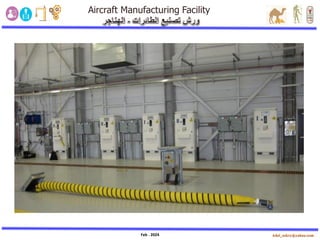
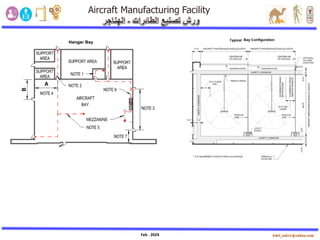
aircraft manufacturing has a high reliance on
• clean, dry compressed air as a primary utility.
• providing redundancy, reliability, maintainability, and distribution and access
flexibility for compressed air is critical. 400Hz aircraft power is often a critical
test requirement.
• It needs to be close to the aircraft due to voltage loss.
• Also, exhaust air for fumesor heat processes is often necessary.
• noise level of the portable compressor is forbidden inside the workshop
Feb . 2024
Feb . 2024
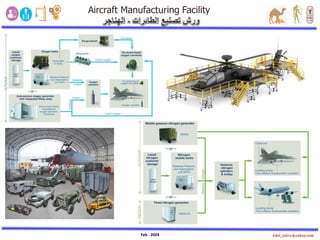
Additional utility considerations include:
• Critical lighting levels and color are needed for some processes and inspections.
• Vacuum is necessary for composite materials assembly and bonding.
• Housekeeping vacuums for chip collection and cleanup are often required.
Fuel test agents are often piped to critical testing locations during component or assembly
testing.
Keep in mind, fuel test agents are combustible oils with special requirements, as well.
Code officials and insurance underwriters need to understand the fire-related issues with
these materials.
Hydraulic systems provide aircraft power to function flaps, wings, doors and landinggear.
Hydraulic systems need to be filled, drained and may operate at high pressures may be 20
Mpa. Care must be taken for personnel safety, avoiding leaks or spills and toensure over-
pressurization or damage does not occur to the aircraft.
High volume, low pressure compressed air is used for pneumatic testing, such as fuselage
pressure testing.
Aircraft grounding is very important. Static electricity can damage sensitive electronic
components.
Feb . 2024
Feb . 2024
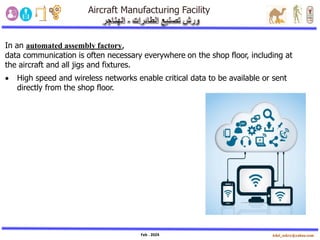
In an automated assembly factory,
data communication is often necessary everywhere on the shop floor, including at
the aircraft and all jigs and fixtures.
• High speed and wireless networks enable critical data to be available or sent
directly from the shop floor.
Feb . 2024
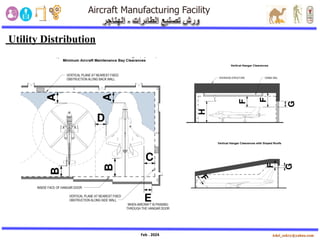
Utility Distribution
Feb . 2024
Feb . 2024
Feb . 2024
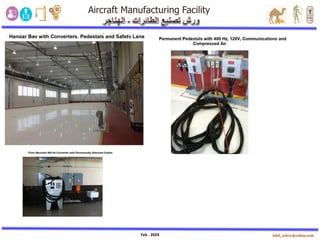
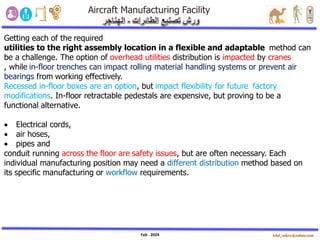
Getting each of the required
utilities to the right assembly location in a flexible and adaptable method can
be a challenge. The option of overhead utilities distribution is impacted by cranes
, while in-floor trenches can impact rolling material handling systems or prevent air
bearings from working effectively.
Recessed in-floor boxes are an option, but impact flexibility for future factory
modifications. In-floor retractable pedestals are expensive, but proving to be a
functional alternative.
• Electrical cords,
• air hoses,
• pipes and
conduit running across the floor are safety issues, but are often necessary. Each
individual manufacturing position may need a different distribution method based on
its specific manufacturing or workflow requirements.
Feb . 2024
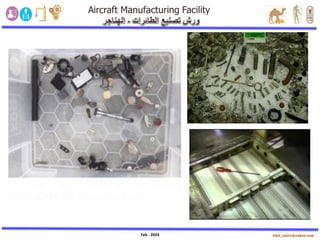
Foreign Object Debris (FOD)
FOD consists of a wide range of materials, including
• broken pavement,
• trash,
• soda cans,
• paperclips,
• employee ID badges,
• tools,
• screws,
• nuts, bolts,
• gloves and
• other pieces of clothing, and
• wildlife/birds.
• building materials,
• condensation,
• water,
• manufacturing waste,
• Broken light bulbs,
• fireproofing fibers,
• paint chips and
• other building-related foreign debris
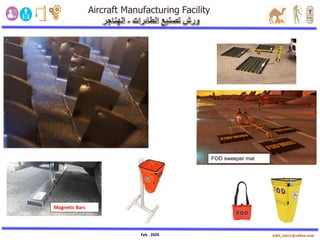
need to be prevented from entering the manufacturing process.
FOD is found on all aircraft operating areas airside, including aprons, manufacturing
workshops, taxiways, and runways.
Feb . 2024
Feb . 2024
FOD sweeper mat
Magnetic Bars
Feb . 2024
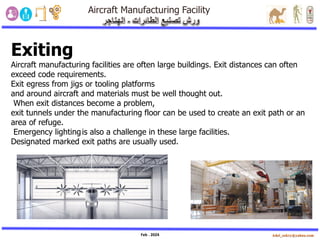
Exiting
Aircraft manufacturing facilities are often large buildings. Exit distances can often
exceed code requirements.
Exit egress from jigs or tooling platforms
and around aircraft and materials must be well thought out.
When exit distances become a problem,
exit tunnels under the manufacturing floor can be used to create an exit path or an
area of refuge.
Emergency lightingis also a challenge in these large facilities.
Designated marked exit paths are usually used.
Feb . 2024
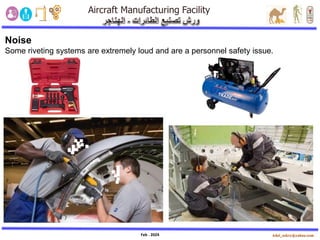
Noise
Some riveting systems are extremely loud and are a personnel safety issue.
Feb . 2024
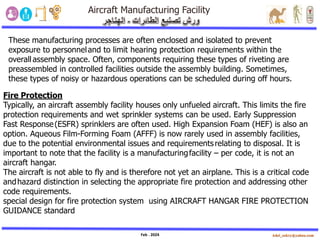
These manufacturing processes are often enclosed and isolated to prevent
exposure to personneland to limit hearing protection requirements within the
overallassembly space. Often, components requiring these types of riveting are
preassembled in controlled facilities outside the assembly building. Sometimes,
these types of noisy or hazardous operations can be scheduled during off hours.
Fire Protection
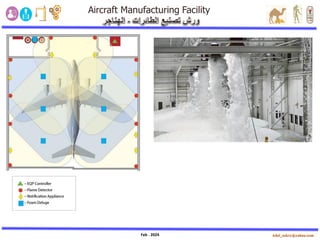
Typically, an aircraft assembly facility houses only unfueled aircraft. This limits the fire
protection requirements and wet sprinkler systems can be used. Early Suppression
Fast Response(ESFR) sprinklers are often used. High Expansion Foam (HEF) is also an
option. Aqueous Film-Forming Foam (AFFF) is now rarely used in assembly facilities,
due to the potential environmental issues and requirementsrelating to disposal. It is
important to note that the facility is a manufacturingfacility – per code, it is not an
aircraft hangar.
The aircraft is not able to fly and is therefore not yet an airplane. This is a critical code
andhazard distinction in selecting the appropriate fire protection and addressing other
code requirements.
special design for fire protection system using AIRCRAFT HANGAR FIRE PROTECTION
GUIDANCE standard
Feb . 2024
Feb . 2024
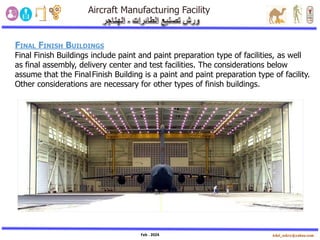
FINAL FINISH BUILDINGS
Final Finish Buildings include paint and paint preparation type of facilities, as well
as final assembly, delivery center and test facilities. The considerations below
assume that the FinalFinish Building is a paint and paint preparation type of facility.
Other considerations are necessary for other types of finish buildings.
Feb . 2024
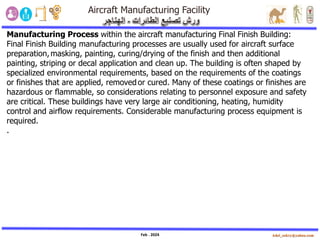
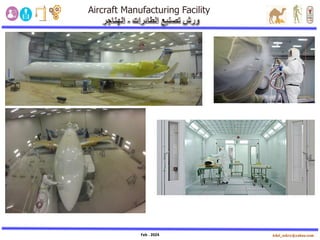
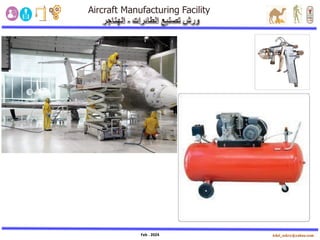
Manufacturing Process within the aircraft manufacturing Final Finish Building:
Final Finish Building manufacturing processes are usually used for aircraft surface
preparation,masking, painting, curing/drying of the finish and then additional
painting, striping or decal application and clean up. The building is often shaped by
specialized environmental requirements, based on the requirements of the coatings
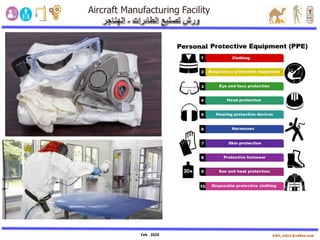
or finishes that are applied, removedor cured. Many of these coatings or finishes are
hazardous or flammable, so considerations relating to personnel exposure and safety
are critical. These buildings have very large air conditioning, heating, humidity
control and airflow requirements. Considerable manufacturing process equipment is
required.
.
Feb . 2024
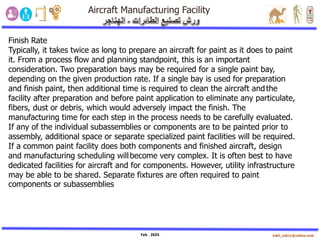
Finish Rate
Typically, it takes twice as long to prepare an aircraft for paint as it does to paint
it. From a process flow and planning standpoint, this is an important
consideration. Two preparation bays may be required for a single paint bay,
depending on the given production rate. If a single bay is used for preparation
and finish paint, then additional time is required to clean the aircraft andthe
facility after preparation and before paint application to eliminate any particulate,
fibers, dust or debris, which would adversely impact the finish. The
manufacturing time for each step in the process needs to be carefully evaluated.
If any of the individual subassemblies or components are to be painted prior to
assembly, additional space or separate specialized paint facilities will be required.
If a common paint facility does both components and finished aircraft, design
and manufacturing scheduling willbecome very complex. It is often best to have
dedicated facilities for aircraft and for components. However, utility infrastructure
may be able to be shared. Separate fixtures are often required to paint
components or subassemblies
Feb . 2024
Feb . 2024
Feb . 2024

aircraft manufacturing workshops hangars part4.pdf

  • 1.
  • 2.
    Feb . 2024 Part4 ‫الجزء‬ ‫الرابع‬
  • 3.
    Feb . 2024 ManufacturingUtilities aircraft manufacturing has a high reliance on • clean, dry compressed air as a primary utility. • providing redundancy, reliability, maintainability, and distribution and access flexibility for compressed air is critical. 400Hz aircraft power is often a critical test requirement. • It needs to be close to the aircraft due to voltage loss. • Also, exhaust air for fumesor heat processes is often necessary. • noise level of the portable compressor is forbidden inside the workshop
  • 4.
  • 5.
    Feb . 2024 Additionalutility considerations include: • Critical lighting levels and color are needed for some processes and inspections. • Vacuum is necessary for composite materials assembly and bonding. • Housekeeping vacuums for chip collection and cleanup are often required. Fuel test agents are often piped to critical testing locations during component or assembly testing. Keep in mind, fuel test agents are combustible oils with special requirements, as well. Code officials and insurance underwriters need to understand the fire-related issues with these materials. Hydraulic systems provide aircraft power to function flaps, wings, doors and landinggear. Hydraulic systems need to be filled, drained and may operate at high pressures may be 20 Mpa. Care must be taken for personnel safety, avoiding leaks or spills and toensure over- pressurization or damage does not occur to the aircraft. High volume, low pressure compressed air is used for pneumatic testing, such as fuselage pressure testing. Aircraft grounding is very important. Static electricity can damage sensitive electronic components.
  • 6.
  • 7.
    Feb . 2024 Inan automated assembly factory, data communication is often necessary everywhere on the shop floor, including at the aircraft and all jigs and fixtures. • High speed and wireless networks enable critical data to be available or sent directly from the shop floor.
  • 8.
    Feb . 2024 UtilityDistribution
  • 9.
  • 10.
  • 11.
    Feb . 2024 Gettingeach of the required utilities to the right assembly location in a flexible and adaptable method can be a challenge. The option of overhead utilities distribution is impacted by cranes , while in-floor trenches can impact rolling material handling systems or prevent air bearings from working effectively. Recessed in-floor boxes are an option, but impact flexibility for future factory modifications. In-floor retractable pedestals are expensive, but proving to be a functional alternative. • Electrical cords, • air hoses, • pipes and conduit running across the floor are safety issues, but are often necessary. Each individual manufacturing position may need a different distribution method based on its specific manufacturing or workflow requirements.
  • 12.
    Feb . 2024 ForeignObject Debris (FOD) FOD consists of a wide range of materials, including • broken pavement, • trash, • soda cans, • paperclips, • employee ID badges, • tools, • screws, • nuts, bolts, • gloves and • other pieces of clothing, and • wildlife/birds. • building materials, • condensation, • water, • manufacturing waste, • Broken light bulbs, • fireproofing fibers, • paint chips and • other building-related foreign debris need to be prevented from entering the manufacturing process. FOD is found on all aircraft operating areas airside, including aprons, manufacturing workshops, taxiways, and runways.
  • 13.
  • 14.
    Feb . 2024 FODsweeper mat Magnetic Bars
  • 15.
    Feb . 2024 Exiting Aircraftmanufacturing facilities are often large buildings. Exit distances can often exceed code requirements. Exit egress from jigs or tooling platforms and around aircraft and materials must be well thought out. When exit distances become a problem, exit tunnels under the manufacturing floor can be used to create an exit path or an area of refuge. Emergency lightingis also a challenge in these large facilities. Designated marked exit paths are usually used.
  • 16.
    Feb . 2024 Noise Someriveting systems are extremely loud and are a personnel safety issue.
  • 17.
    Feb . 2024 Thesemanufacturing processes are often enclosed and isolated to prevent exposure to personneland to limit hearing protection requirements within the overallassembly space. Often, components requiring these types of riveting are preassembled in controlled facilities outside the assembly building. Sometimes, these types of noisy or hazardous operations can be scheduled during off hours. Fire Protection Typically, an aircraft assembly facility houses only unfueled aircraft. This limits the fire protection requirements and wet sprinkler systems can be used. Early Suppression Fast Response(ESFR) sprinklers are often used. High Expansion Foam (HEF) is also an option. Aqueous Film-Forming Foam (AFFF) is now rarely used in assembly facilities, due to the potential environmental issues and requirementsrelating to disposal. It is important to note that the facility is a manufacturingfacility – per code, it is not an aircraft hangar. The aircraft is not able to fly and is therefore not yet an airplane. This is a critical code andhazard distinction in selecting the appropriate fire protection and addressing other code requirements. special design for fire protection system using AIRCRAFT HANGAR FIRE PROTECTION GUIDANCE standard
  • 18.
  • 19.
    Feb . 2024 FINALFINISH BUILDINGS Final Finish Buildings include paint and paint preparation type of facilities, as well as final assembly, delivery center and test facilities. The considerations below assume that the FinalFinish Building is a paint and paint preparation type of facility. Other considerations are necessary for other types of finish buildings.
  • 20.
    Feb . 2024 ManufacturingProcess within the aircraft manufacturing Final Finish Building: Final Finish Building manufacturing processes are usually used for aircraft surface preparation,masking, painting, curing/drying of the finish and then additional painting, striping or decal application and clean up. The building is often shaped by specialized environmental requirements, based on the requirements of the coatings or finishes that are applied, removedor cured. Many of these coatings or finishes are hazardous or flammable, so considerations relating to personnel exposure and safety are critical. These buildings have very large air conditioning, heating, humidity control and airflow requirements. Considerable manufacturing process equipment is required. .
  • 21.
    Feb . 2024 FinishRate Typically, it takes twice as long to prepare an aircraft for paint as it does to paint it. From a process flow and planning standpoint, this is an important consideration. Two preparation bays may be required for a single paint bay, depending on the given production rate. If a single bay is used for preparation and finish paint, then additional time is required to clean the aircraft andthe facility after preparation and before paint application to eliminate any particulate, fibers, dust or debris, which would adversely impact the finish. The manufacturing time for each step in the process needs to be carefully evaluated. If any of the individual subassemblies or components are to be painted prior to assembly, additional space or separate specialized paint facilities will be required. If a common paint facility does both components and finished aircraft, design and manufacturing scheduling willbecome very complex. It is often best to have dedicated facilities for aircraft and for components. However, utility infrastructure may be able to be shared. Separate fixtures are often required to paint components or subassemblies
  • 22.
  • 23.
  • 24.