Prepared by
Samikchhya karki
Presentation outline
 Air pollution
• Automobiles
• Industries
• Domestic sources
• Miscellaneous
 Definition
 Sources
What is air pollution ?
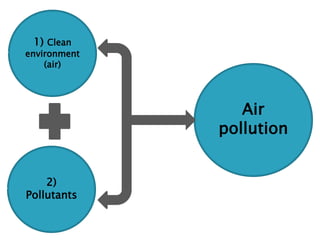
1) Clean
environment
(air)
Air
pollution
2)
Pollutants
Air pollution
 The phenomenon called ‘pollution’ is an inescapable
consequence of the presence of man and his activities.
The term “air pollution” signifies the presence in the
ambient (surrounding)atmosphere of substances (e.g.
gases ,mixture of gases , particulated matter) generated
by the activity of man in the concentrations that interfere
with human health , safety or comfort , or injurious to
vegetation and animals and other environmental media
resulting in chemicals entering the food chain or being
present in drinking water and there by constituting
additional source of human exposure .
 The direct effect of air pollutants in plants ,
animals and soil can influence the structure
and function of ecosystems, including self
regulation activity , thereby affecting the
quality of life .
 In the past air pollution meant smoke
pollution but today air pollution has become
more subtle and recognizes no geographical
or political boundaries .
Air pollution is one of the present-day
health problems throughout the world.
Most air polluted country in the
world is Pakistan recently .
 But before Pakistan , China was the
most air polluted country.
Undesirable change in the air
 Entry of air pollutants ( foreign materials)
like smoke, harmful gas etc in the Clean and
fresh environment
Production of pollutants by the
activities of man
Summary
 Results in the harmful effects to human
health including plants and animals .
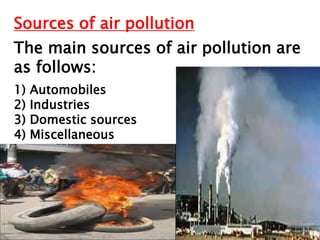
Sources of air pollution
The main sources of air pollution are
as follows:
1) Automobiles
2) Industries
3) Domestic sources
4) Miscellaneous
Details
1)Automobiles
 Motor vehicles are the major source of air
pollution in urban areas
 They emit hydrocarbons, carbon monoxides,
lead, nitrogen oxide and paticulate matters.
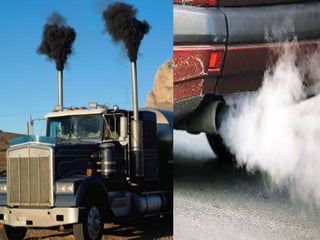
 Diesel engines, when misused are capable of
emitting black smoke and malodorous fumes
Mechanism of air pollution by automobiles
 In presence of sunlight ,
certain of hydrocarbons and oxides of
nitrogen may be converted in the atmosphere
into “ photochemical ” pollutants of
oxidizing
nature .
 Sulphur dioxide : Sulphur dioxide from
vehicle combines with water to form sulphuric
acid and gaseous form of this acid remains in
air and causes pollution of air.
 Lead : combustion of leaded petrol produces
lead and all lead are emitted into the atmosphere
causing air pollution .
Nitrogen dioxide : It emitted from vehicles are
released in the atmosphere and it’s concentration in
the atmosphere increases resulting air pollution.
Particulate matter : The dust and smoke from
vehicle also forms particulate matter which are
released into the environment causing air
pollution.
Contd….
 Carbonmonoxide (CO) : It is the product of
incomplete combustion of carbon. Estimates of
man-made CO emission vary from 350 -600 milion
tonnes per annum. It’s concentration in urban areas
depend upon traffic and weather conditions. It’s
increase concentration in atmosphere results air
pollution.
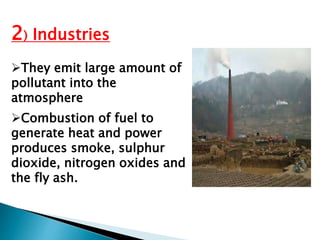
2) Industries
They emit large amount of
pollutant into the
atmosphere
Combustion of fuel to
generate heat and power
produces smoke, sulphur
dioxide, nitrogen oxides and
the fly ash.
Petro chemical industries
generate hydrogen fluoride,
hydrochloric acid and
organic halides
Many industries discharge
carbon monoxide, carbon
dioxide, ozone, hydrogen
sulphide and sulphur
dioxide
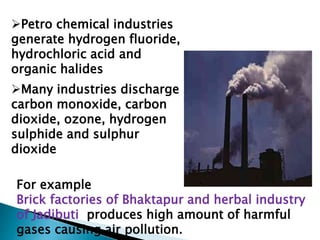
For example
Brick factories of Bhaktapur and herbal industry
of Jadibuti produces high amount of harmful
gases causing air pollution.
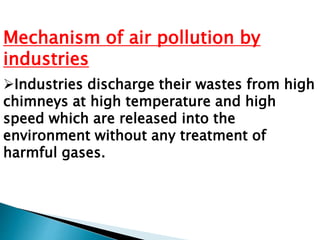
Mechanism of air pollution by
industries
Industries discharge their wastes from high
chimneys at high temperature and high
speed which are released into the
environment without any treatment of
harmful gases.
3) Domestic sources
 Domestic combustion of coal , wood or oil is a
major source of smoke , dust , sulphur dioxide
and nitrogen oxides.
The most direct and important source of air
pollution affecting the health of many people is
tobacco smoke.
* Note : The london disaster of air pollution in
1952 in which thousands had died was due to
domestic coal burning.
Mechanism of air pollution by domestic
sources
 Harmful substances produced from
domestic sources are released into the
atmosphere and pollute the air.
 Tobacco smoke may be inhaled by the
people who do not smoke and this process is
called “Passive Smoking”
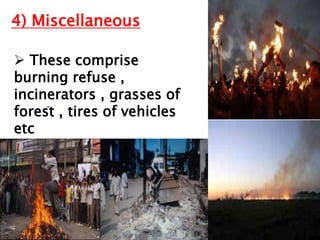
 These comprise
burning refuse ,
incinerators , grasses of
forest , tires of vehicles
etc
4) Miscellaneous
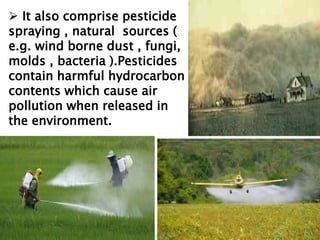
 It also comprise pesticide
spraying , natural sources (
e.g. wind borne dust , fungi,
molds , bacteria ).Pesticides
contain harmful hydrocarbon
contents which cause air
pollution when released in
the environment.
 It also comprise pesticide
spraying , natural sources (
e.g. wind borne dust , fungi,
molds , bacteria ).Pesticides
contain harmful hydrocarbon
contents which cause air
pollution when released in
the environment.
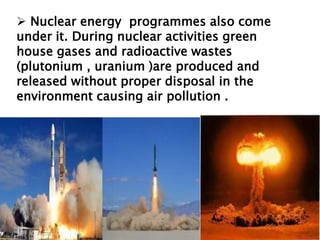
 Nuclear energy programmes also come
under it. During nuclear activities green
house gases and radioactive wastes
(plutonium , uranium )are produced and
released without proper disposal in the
environment causing air pollution .
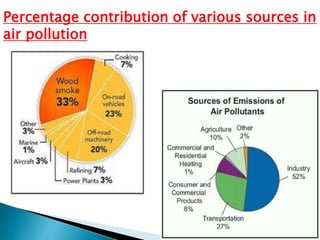
Percentage contribution of various sources in
air pollution
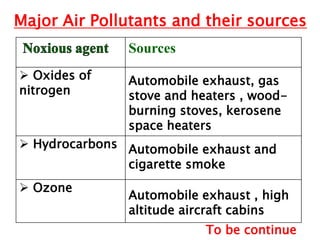
Major Air Pollutants and their sources
Sources
 Oxides of
nitrogen
Automobile exhaust, gas
stove and heaters , wood-
burning stoves, kerosene
space heaters
 Hydrocarbons Automobile exhaust and
cigarette smoke
 Ozone
Automobile exhaust , high
altitude aircraft cabins
To be continue
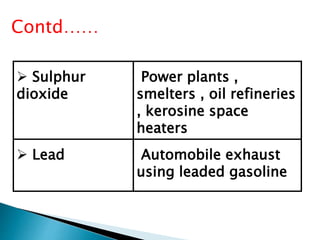
 Sulphur
dioxide
Power plants ,
smelters , oil refineries
, kerosine space
heaters
 Lead Automobile exhaust
using leaded gasoline
Contd……
Thank you !!
Any questions ??????

Air pollution

  • 1.
  • 2.
    Presentation outline  Airpollution • Automobiles • Industries • Domestic sources • Miscellaneous  Definition  Sources
  • 3.
    What is airpollution ?
  • 4.
  • 5.
    Air pollution  Thephenomenon called ‘pollution’ is an inescapable consequence of the presence of man and his activities. The term “air pollution” signifies the presence in the ambient (surrounding)atmosphere of substances (e.g. gases ,mixture of gases , particulated matter) generated by the activity of man in the concentrations that interfere with human health , safety or comfort , or injurious to vegetation and animals and other environmental media resulting in chemicals entering the food chain or being present in drinking water and there by constituting additional source of human exposure .
  • 6.
     The directeffect of air pollutants in plants , animals and soil can influence the structure and function of ecosystems, including self regulation activity , thereby affecting the quality of life .  In the past air pollution meant smoke pollution but today air pollution has become more subtle and recognizes no geographical or political boundaries . Air pollution is one of the present-day health problems throughout the world.
  • 7.
    Most air pollutedcountry in the world is Pakistan recently .  But before Pakistan , China was the most air polluted country.
  • 8.
    Undesirable change inthe air  Entry of air pollutants ( foreign materials) like smoke, harmful gas etc in the Clean and fresh environment Production of pollutants by the activities of man Summary  Results in the harmful effects to human health including plants and animals .
  • 9.
    Sources of airpollution The main sources of air pollution are as follows: 1) Automobiles 2) Industries 3) Domestic sources 4) Miscellaneous
  • 10.
    Details 1)Automobiles  Motor vehiclesare the major source of air pollution in urban areas  They emit hydrocarbons, carbon monoxides, lead, nitrogen oxide and paticulate matters.  Diesel engines, when misused are capable of emitting black smoke and malodorous fumes
  • 12.
    Mechanism of airpollution by automobiles  In presence of sunlight , certain of hydrocarbons and oxides of nitrogen may be converted in the atmosphere into “ photochemical ” pollutants of oxidizing nature .  Sulphur dioxide : Sulphur dioxide from vehicle combines with water to form sulphuric acid and gaseous form of this acid remains in air and causes pollution of air.  Lead : combustion of leaded petrol produces lead and all lead are emitted into the atmosphere causing air pollution .
  • 13.
    Nitrogen dioxide :It emitted from vehicles are released in the atmosphere and it’s concentration in the atmosphere increases resulting air pollution. Particulate matter : The dust and smoke from vehicle also forms particulate matter which are released into the environment causing air pollution. Contd….  Carbonmonoxide (CO) : It is the product of incomplete combustion of carbon. Estimates of man-made CO emission vary from 350 -600 milion tonnes per annum. It’s concentration in urban areas depend upon traffic and weather conditions. It’s increase concentration in atmosphere results air pollution.
  • 14.
    2) Industries They emitlarge amount of pollutant into the atmosphere Combustion of fuel to generate heat and power produces smoke, sulphur dioxide, nitrogen oxides and the fly ash.
  • 15.
    Petro chemical industries generatehydrogen fluoride, hydrochloric acid and organic halides Many industries discharge carbon monoxide, carbon dioxide, ozone, hydrogen sulphide and sulphur dioxide For example Brick factories of Bhaktapur and herbal industry of Jadibuti produces high amount of harmful gases causing air pollution.
  • 16.
    Mechanism of airpollution by industries Industries discharge their wastes from high chimneys at high temperature and high speed which are released into the environment without any treatment of harmful gases.
  • 17.
    3) Domestic sources Domestic combustion of coal , wood or oil is a major source of smoke , dust , sulphur dioxide and nitrogen oxides. The most direct and important source of air pollution affecting the health of many people is tobacco smoke. * Note : The london disaster of air pollution in 1952 in which thousands had died was due to domestic coal burning.
  • 19.
    Mechanism of airpollution by domestic sources  Harmful substances produced from domestic sources are released into the atmosphere and pollute the air.  Tobacco smoke may be inhaled by the people who do not smoke and this process is called “Passive Smoking”
  • 20.
     These comprise burningrefuse , incinerators , grasses of forest , tires of vehicles etc 4) Miscellaneous
  • 21.
     It alsocomprise pesticide spraying , natural sources ( e.g. wind borne dust , fungi, molds , bacteria ).Pesticides contain harmful hydrocarbon contents which cause air pollution when released in the environment.  It also comprise pesticide spraying , natural sources ( e.g. wind borne dust , fungi, molds , bacteria ).Pesticides contain harmful hydrocarbon contents which cause air pollution when released in the environment.
  • 22.
     Nuclear energyprogrammes also come under it. During nuclear activities green house gases and radioactive wastes (plutonium , uranium )are produced and released without proper disposal in the environment causing air pollution .
  • 23.
    Percentage contribution ofvarious sources in air pollution
  • 24.
    Major Air Pollutantsand their sources Sources  Oxides of nitrogen Automobile exhaust, gas stove and heaters , wood- burning stoves, kerosene space heaters  Hydrocarbons Automobile exhaust and cigarette smoke  Ozone Automobile exhaust , high altitude aircraft cabins To be continue
  • 25.
     Sulphur dioxide Power plants, smelters , oil refineries , kerosine space heaters  Lead Automobile exhaust using leaded gasoline Contd……
  • 26.
    Thank you !! Anyquestions ??????