Graduation Exam
                                       Chapter 2 Test

1. Where was the first battle of the Revolutionary War?
     a. Lexington and Concord
     b. Yorktown and Richmond
     c. Saratoga and Bunker Hill
     d. Lexington and Yorktown

2. How many colonists were killed in the Boston Massacre?
        a. 19
        b. 12
        c. 5
        d. 52

3. Why was the Declaration of Independence written?
     a. To tell the world why the colonies wanted to be their own country.
     b. To tell the world why the colonies wanted to stay loyal to Britain.
     c. To tell the world why the colonies did not want to fight.
     d. As a final dissertation of Thomas Jefferson

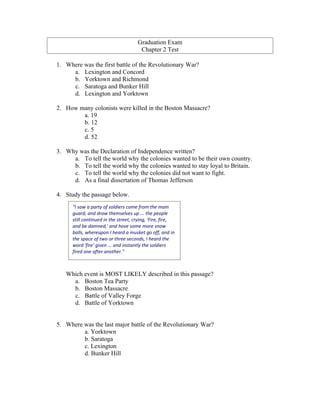
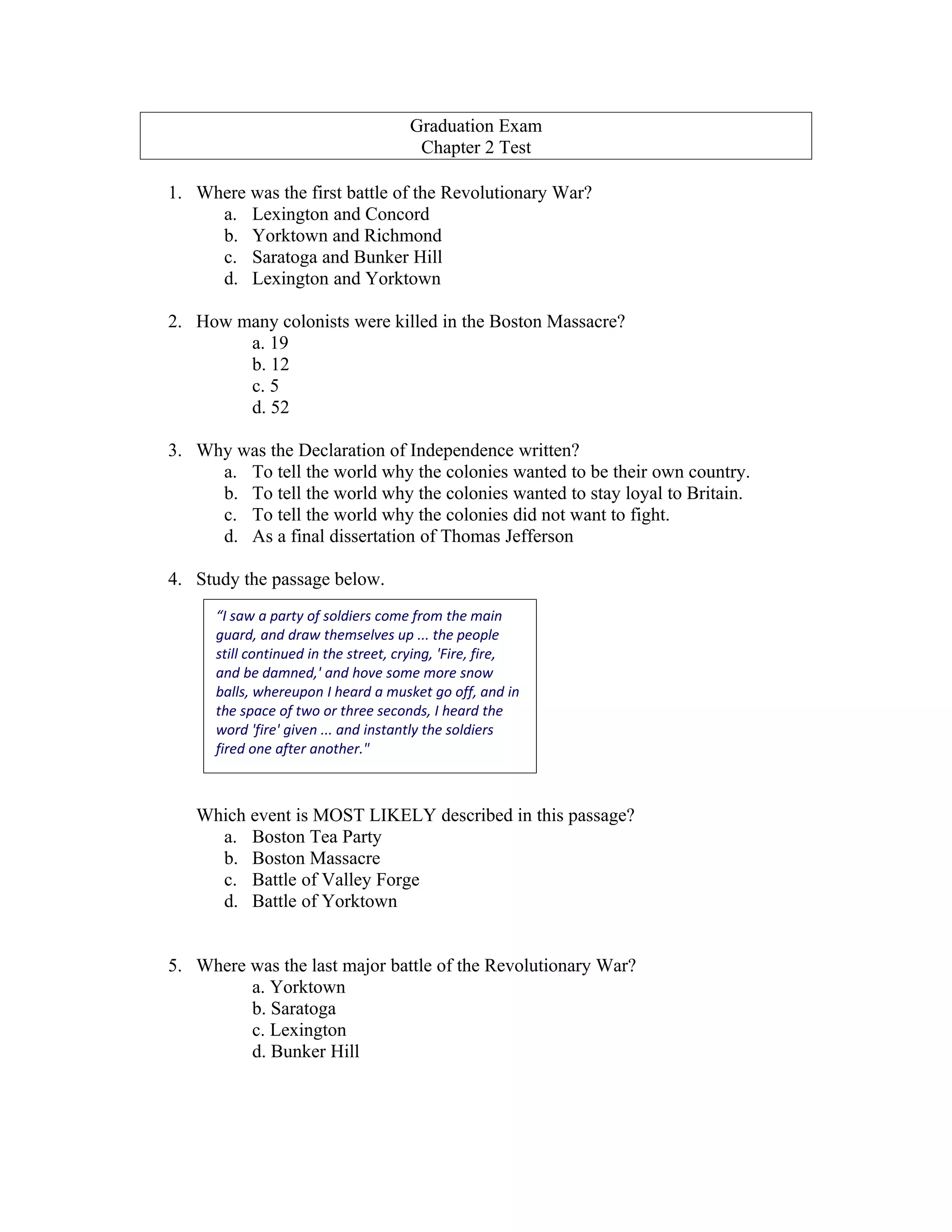
4. Study the passage below.
      “I saw a party of soldiers come from the main
      guard, and draw themselves up ... the people
      still continued in the street, crying, 'Fire, fire,
      and be damned,' and hove some more snow
      balls, whereupon I heard a musket go off, and in
      the space of two or three seconds, I heard the
      word 'fire' given ... and instantly the soldiers
      fired one after another."


   Which event is MOST LIKELY described in this passage?
     a. Boston Tea Party
     b. Boston Massacre
     c. Battle of Valley Forge
     d. Battle of Yorktown


5. Where was the last major battle of the Revolutionary War?
         a. Yorktown
         b. Saratoga
         c. Lexington
         d. Bunker Hill
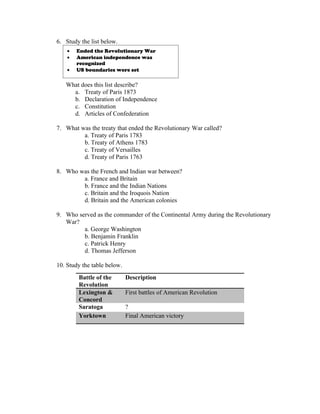
6. Study the list below.
    •   Ended the Revolutionary War
    •   American independence was
        recognized
    •   US boundaries were set

   What does this list describe?
     a. Treaty of Paris 1873
     b. Declaration of Independence
     c. Constitution
     d. Articles of Confederation

7. What was the treaty that ended the Revolutionary War called?
         a. Treaty of Paris 1783
         b. Treaty of Athens 1783
         c. Treaty of Versailles
         d. Treaty of Paris 1763

8. Who was the French and Indian war between?
        a. France and Britain
        b. France and the Indian Nations
        c. Britain and the Iroquois Nation
        d. Britain and the American colonies

9. Who served as the commander of the Continental Army during the Revolutionary
   War?
         a. George Washington
         b. Benjamin Franklin
         c. Patrick Henry
         d. Thomas Jefferson

10. Study the table below.
        Battle of the        Description
        Revolution
        Lexington &          First battles of American Revolution
        Concord
        Saratoga             ?
        Yorktown             Final American victory
Which completes this diagram?
    a. Turning point of the war that caused France to help the colonists fight.
    b. Resulted in the end of the American Revolutionary War
    c. George Washington’s last stand
    d. The only loss of the Revolutionary forces to the British
11. Where were Washington’s troops encamped during the harsh winter of
    1777-1778?
          a. Valley Forge
          b. Washington
          c. Philadelphia
          d. Richmond

12. What was one of the main causes of the War of 1812?
         a. Nationalism
         b. A strong mistrust of Britain
         c. Impressment
         d. Assassination of the British King

13. Which country fought the French during the French and Indian War?
      a. Spain
      b. America
      c. England
      d. Native Americas

14. A result of the French and Indian War was the
       a. need for an increase in taxes on the American colonists by the British
       b. need to divide acquired lands between the existing colonies
       c. call for American colonists to continue to fight the Native Americans
       d. end of French possessions in the Americas

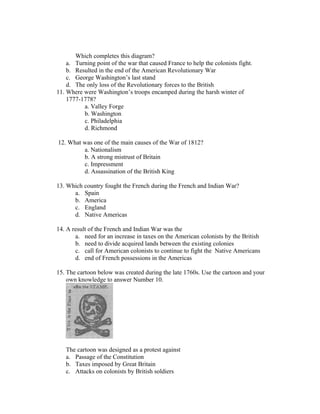
15. The cartoon below was created during the late 1760s. Use the cartoon and your
    own knowledge to answer Number 10.


   The cartoon was designed as a protest against
   a. Passage of the Constitution
   b. Taxes imposed by Great Britain
   c. Attacks on colonists by British soldiers
d. Fighting between colonists and native Americans


16. “I was an advocate of the American Revolution who addressed the House of
    Burgesses, urging them to take military action against England. I am best known
    for my quote, “give me liberty or give me death.” Who am I?
        a. John Adams
        b. Paul Revere
        c. Thomas Paine
        d. Patrick Henry

17. The First and Second Continental Congresses was an attempt
       a. for colonists to begin acting as a national government
       b. disunite the 13 colonies
       c. write a constitution
       d. organize a militia

18. The leader of the Sons of Liberty
       a. Paul Revere
       b. George Washington
       c. Samuel Adams
       d. Patrick Henry

19. Which describes Thomas Jefferson’s role in the Revolution?
      a. Commander in Chief of Revolutionary Forces
      b. Leader of the Sons of Liberty
      c. Philosopher who wrote, “Common Sense”
      d. Author of the Declaration of Independence

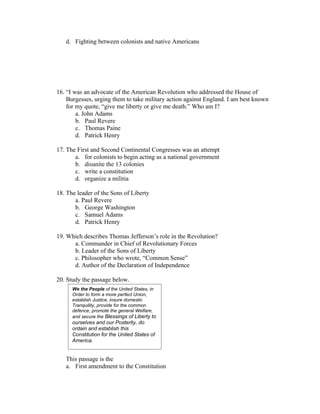
20. Study the passage below.
      We the People of the United States, in
      Order to form a more perfect Union,
      establish Justice, insure domestic
      Tranquility, provide for the common
      defence, promote the general Welfare,
      and secure the Blessings of Liberty to
      ourselves and our Posterity, do
      ordain and establish this
      Constitution for the United States of
      America.


   This passage is the
   a. First amendment to the Constitution
b. Beginning of the Declaration of Independence
c. Preamble to the Constitution
d. Elastic clause of the Constitution

AHSGE Social Studies ch 2 test

  • 1.
    Graduation Exam Chapter 2 Test 1. Where was the first battle of the Revolutionary War? a. Lexington and Concord b. Yorktown and Richmond c. Saratoga and Bunker Hill d. Lexington and Yorktown 2. How many colonists were killed in the Boston Massacre? a. 19 b. 12 c. 5 d. 52 3. Why was the Declaration of Independence written? a. To tell the world why the colonies wanted to be their own country. b. To tell the world why the colonies wanted to stay loyal to Britain. c. To tell the world why the colonies did not want to fight. d. As a final dissertation of Thomas Jefferson 4. Study the passage below. “I saw a party of soldiers come from the main guard, and draw themselves up ... the people still continued in the street, crying, 'Fire, fire, and be damned,' and hove some more snow balls, whereupon I heard a musket go off, and in the space of two or three seconds, I heard the word 'fire' given ... and instantly the soldiers fired one after another." Which event is MOST LIKELY described in this passage? a. Boston Tea Party b. Boston Massacre c. Battle of Valley Forge d. Battle of Yorktown 5. Where was the last major battle of the Revolutionary War? a. Yorktown b. Saratoga c. Lexington d. Bunker Hill
  • 2.
    6. Study thelist below. • Ended the Revolutionary War • American independence was recognized • US boundaries were set What does this list describe? a. Treaty of Paris 1873 b. Declaration of Independence c. Constitution d. Articles of Confederation 7. What was the treaty that ended the Revolutionary War called? a. Treaty of Paris 1783 b. Treaty of Athens 1783 c. Treaty of Versailles d. Treaty of Paris 1763 8. Who was the French and Indian war between? a. France and Britain b. France and the Indian Nations c. Britain and the Iroquois Nation d. Britain and the American colonies 9. Who served as the commander of the Continental Army during the Revolutionary War? a. George Washington b. Benjamin Franklin c. Patrick Henry d. Thomas Jefferson 10. Study the table below. Battle of the Description Revolution Lexington & First battles of American Revolution Concord Saratoga ? Yorktown Final American victory
  • 3.
    Which completes thisdiagram? a. Turning point of the war that caused France to help the colonists fight. b. Resulted in the end of the American Revolutionary War c. George Washington’s last stand d. The only loss of the Revolutionary forces to the British 11. Where were Washington’s troops encamped during the harsh winter of 1777-1778? a. Valley Forge b. Washington c. Philadelphia d. Richmond 12. What was one of the main causes of the War of 1812? a. Nationalism b. A strong mistrust of Britain c. Impressment d. Assassination of the British King 13. Which country fought the French during the French and Indian War? a. Spain b. America c. England d. Native Americas 14. A result of the French and Indian War was the a. need for an increase in taxes on the American colonists by the British b. need to divide acquired lands between the existing colonies c. call for American colonists to continue to fight the Native Americans d. end of French possessions in the Americas 15. The cartoon below was created during the late 1760s. Use the cartoon and your own knowledge to answer Number 10. The cartoon was designed as a protest against a. Passage of the Constitution b. Taxes imposed by Great Britain c. Attacks on colonists by British soldiers
  • 4.
    d. Fighting betweencolonists and native Americans 16. “I was an advocate of the American Revolution who addressed the House of Burgesses, urging them to take military action against England. I am best known for my quote, “give me liberty or give me death.” Who am I? a. John Adams b. Paul Revere c. Thomas Paine d. Patrick Henry 17. The First and Second Continental Congresses was an attempt a. for colonists to begin acting as a national government b. disunite the 13 colonies c. write a constitution d. organize a militia 18. The leader of the Sons of Liberty a. Paul Revere b. George Washington c. Samuel Adams d. Patrick Henry 19. Which describes Thomas Jefferson’s role in the Revolution? a. Commander in Chief of Revolutionary Forces b. Leader of the Sons of Liberty c. Philosopher who wrote, “Common Sense” d. Author of the Declaration of Independence 20. Study the passage below. We the People of the United States, in Order to form a more perfect Union, establish Justice, insure domestic Tranquility, provide for the common defence, promote the general Welfare, and secure the Blessings of Liberty to ourselves and our Posterity, do ordain and establish this Constitution for the United States of America. This passage is the a. First amendment to the Constitution
  • 5.
    b. Beginning ofthe Declaration of Independence c. Preamble to the Constitution d. Elastic clause of the Constitution