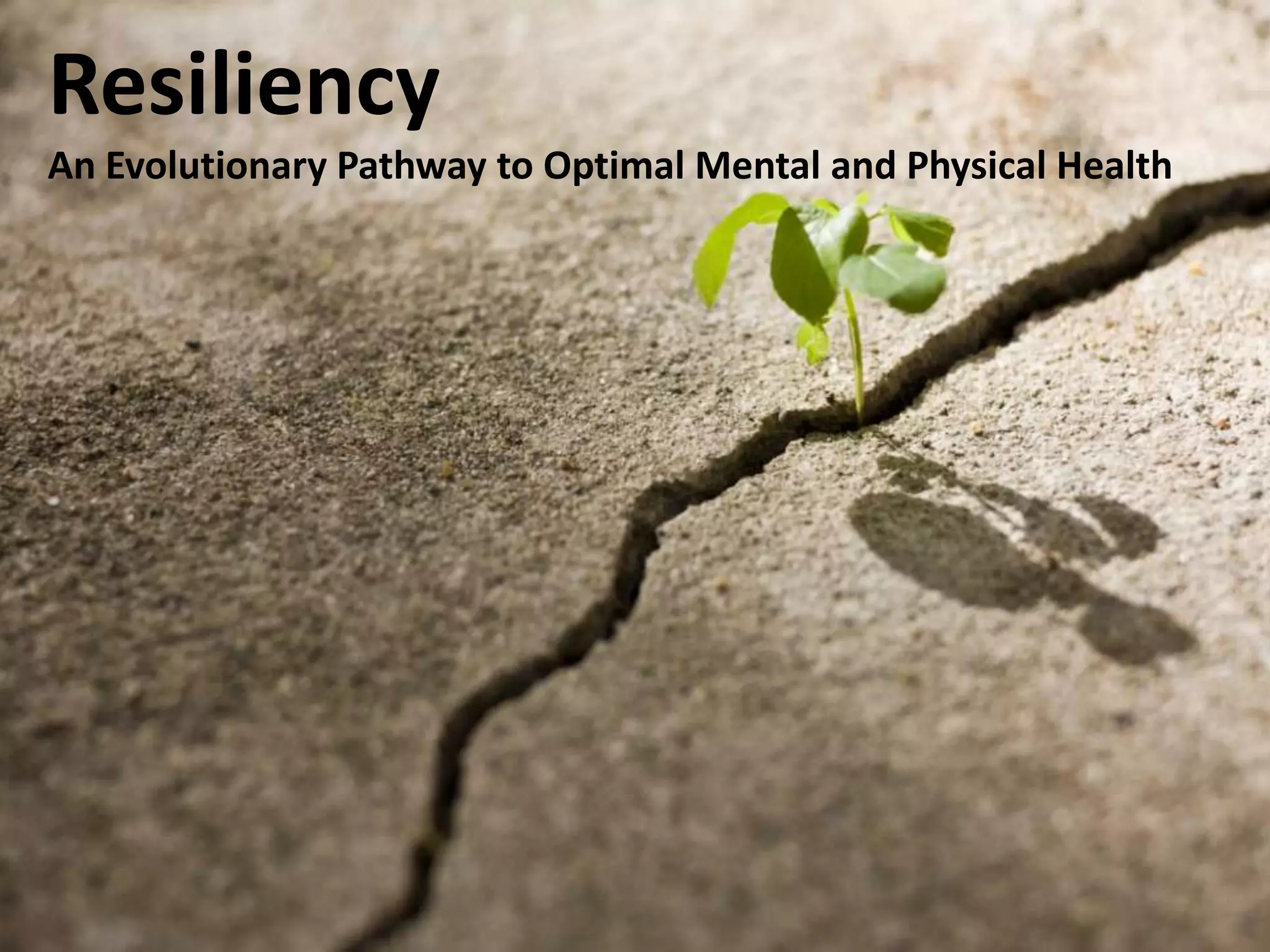






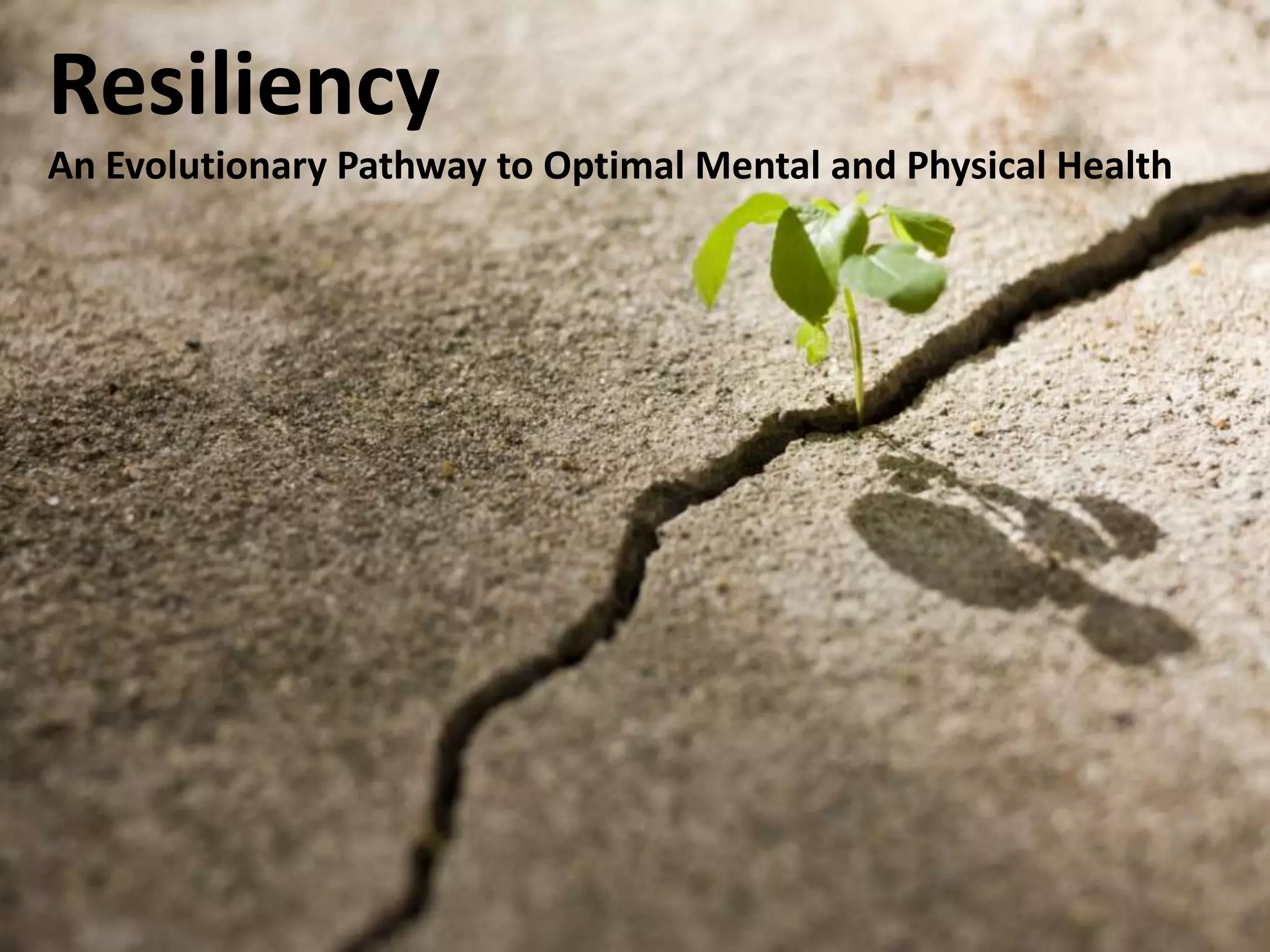
ResiliencyAn Evolutionary Pathway to Optimal Mental and Physical Health
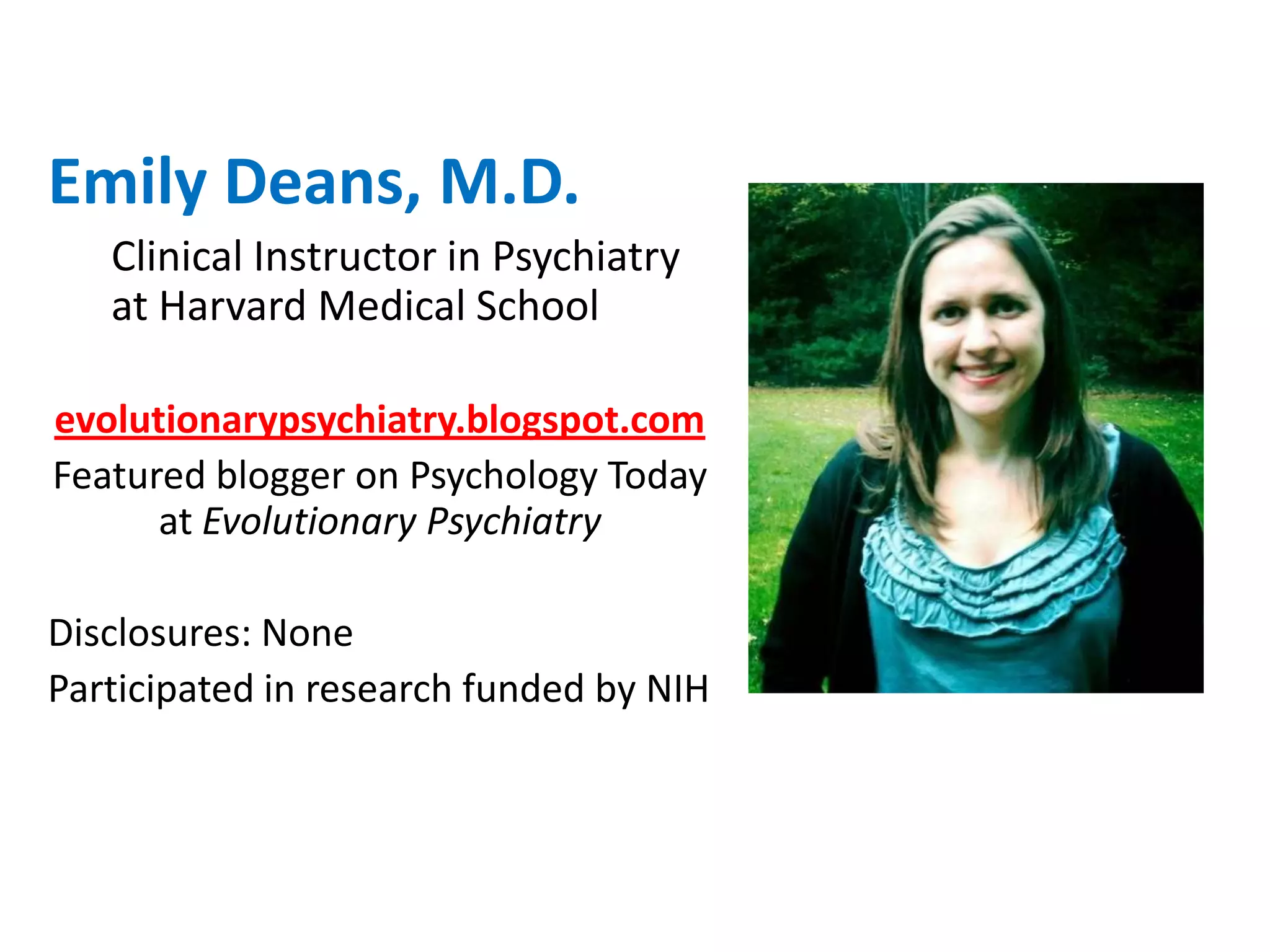
Emily Deans, M.D. Clinical Instructor in Psychiatry at Harvard Medical Schoolevolutionarypsychiatry.blogspot.comFeatured blogger on Psychology Today  at Evolutionary PsychiatryDisclosures: None Participated in research funded by NIH
Jamie ScottPGDipNutMed PGDipSportExMed BSc BPhEdWorkplace Health EducatorNutritionist/Trainerthatpaleoguy.blogspot.comDisclosures: None
Why Evolutionary Medicine for Mental Health?Existing treatments, therapy and medication, are only partially effective.They take a long time, are expensive, or have side effects.No truly novel treatments in 20 years, despite an explosion in neuroscience knowledge since 1990.We need a new approach
Diseases of Civilization (DOC)Related to differences in our current lifestyle compared to our hunter gatherer past.Ultimate pathology of disease is inflammation – true of obesity, autoimmune disease, heart disease, acne… and mental illness.A clue we are dealing with DOC – the recent appearance and/or acceleration of change in illness in recent industrial history.
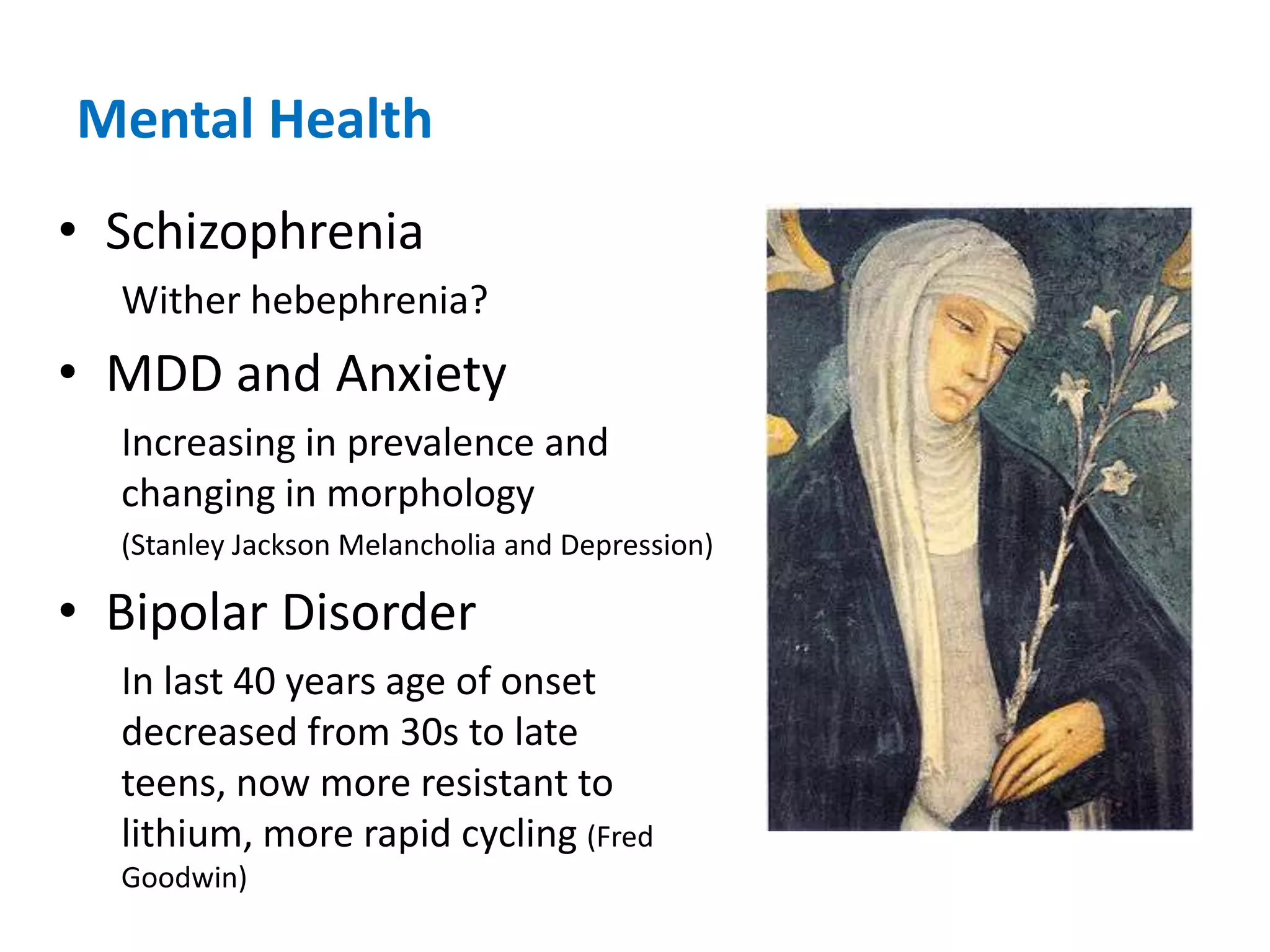
Mental HealthSchizophreniaWither hebephrenia?MDD and AnxietyIncreasing in prevalence and changing in morphology (Stanley Jackson Melancholia and Depression)Bipolar DisorderIn last 40 years age of onset decreased from 30s to late teens, now more resistant to lithium, more rapid cycling (Fred Goodwin)
Mental HealthEating DisordersNow more common in women and men; striking younger cohorts (NIH National Comorbidity Study) AutismIncreasing?  Yale SK study, teachersDementiaDefinitely increasing, but is it just due to aging population?
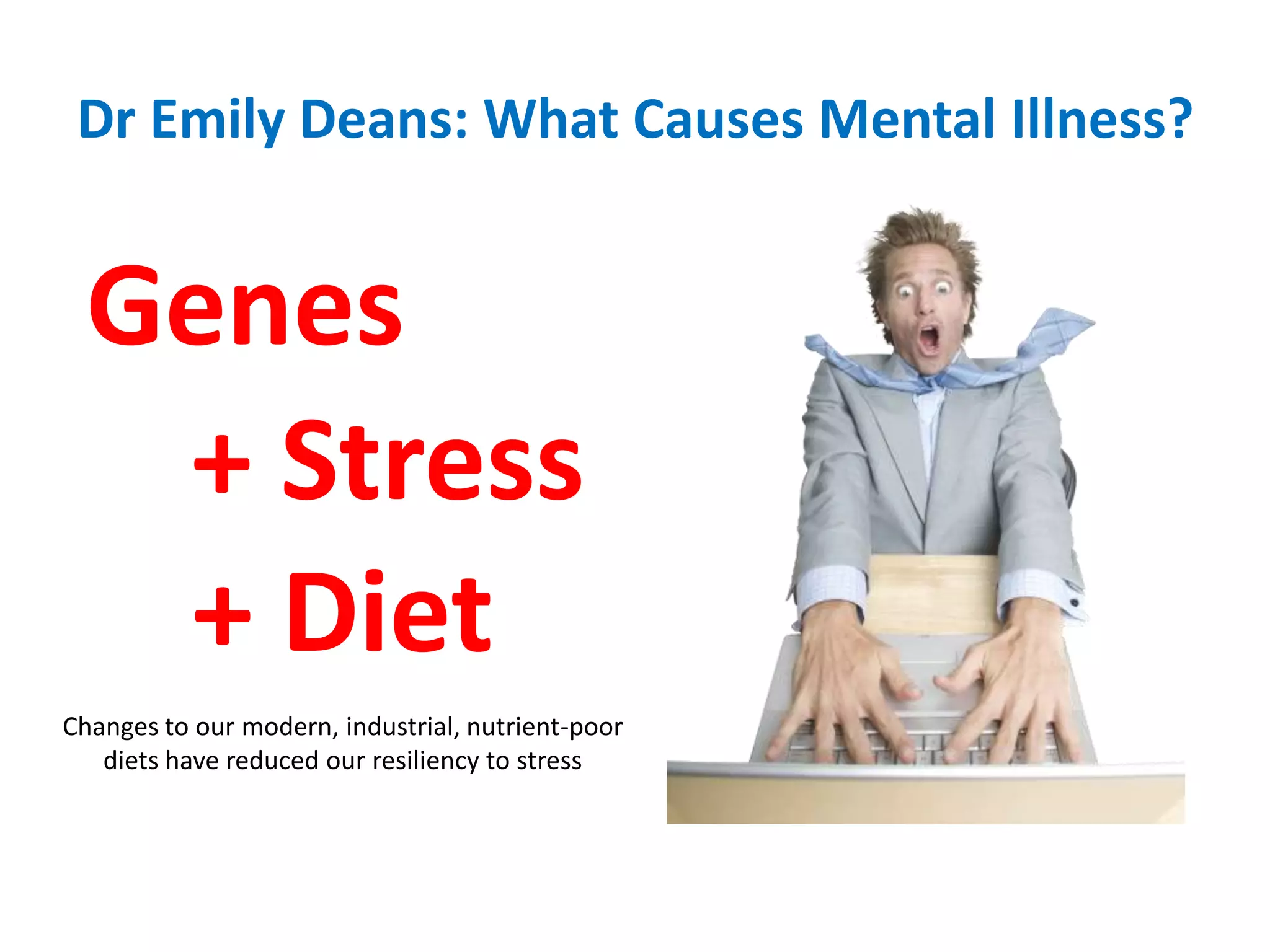
What Causes Mental Illness?Genes+ Stress+ DietChanges to our modern, industrial, nutrient-poor diets have reduced our resiliency to stress
What really causes mental illness?GenesTypically two, three, or more in a single signaling pathway (NRG-erbB in schizophrenia)	One gene - no increased risk	Two genes - 8-fold increased risk	Three genes - 27-fold increased riskThe suspect genes (for schizophrenia, autism, anxiety, depression, etc.) oftenreside in the stress response pathway
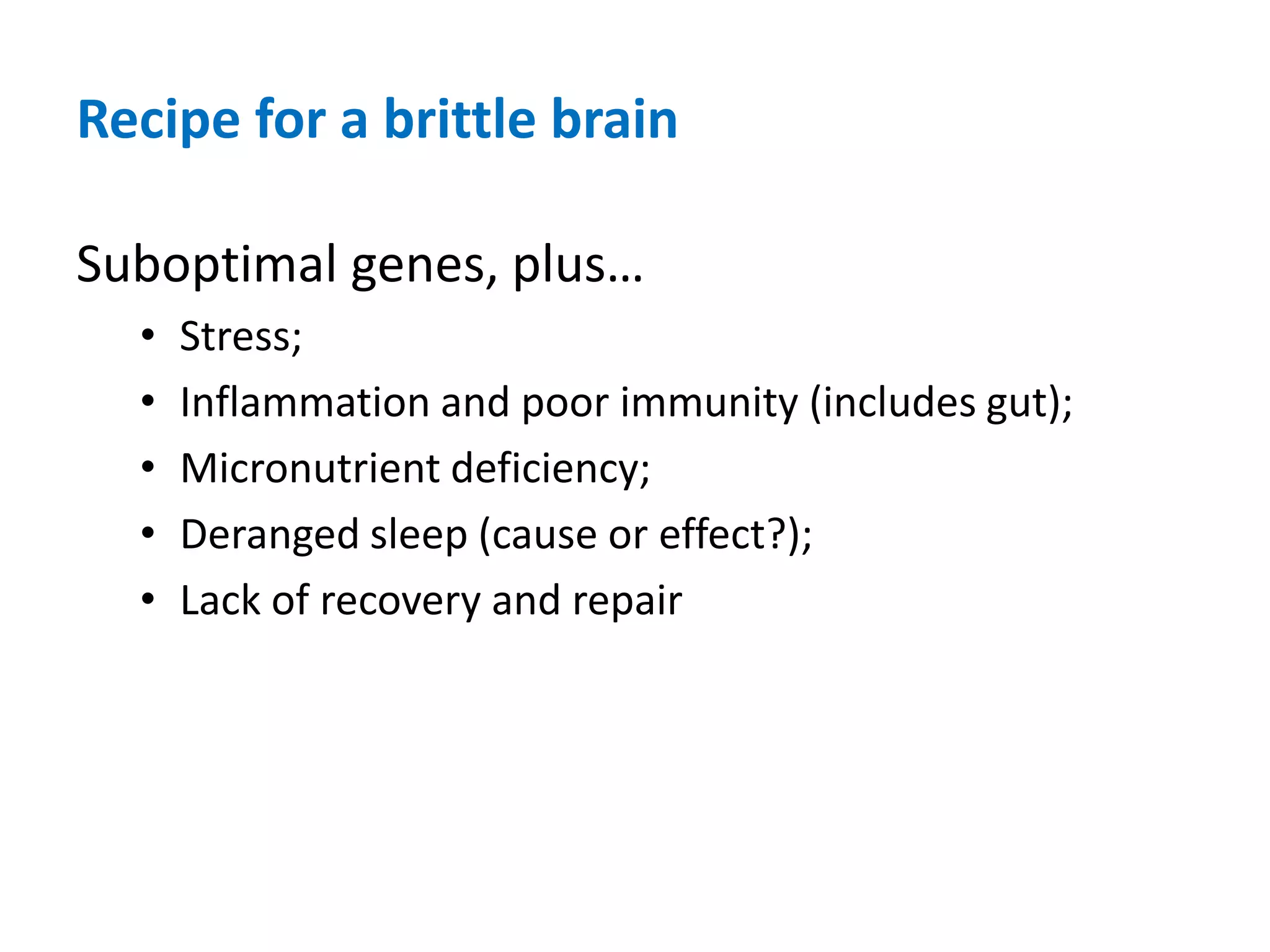
Recipe for a brittle brainSuboptimal genes, plus… Stress;
Inflammation and poor immunity (includes gut);
Micronutrient deficiency;
Deranged sleep (cause or effect?);
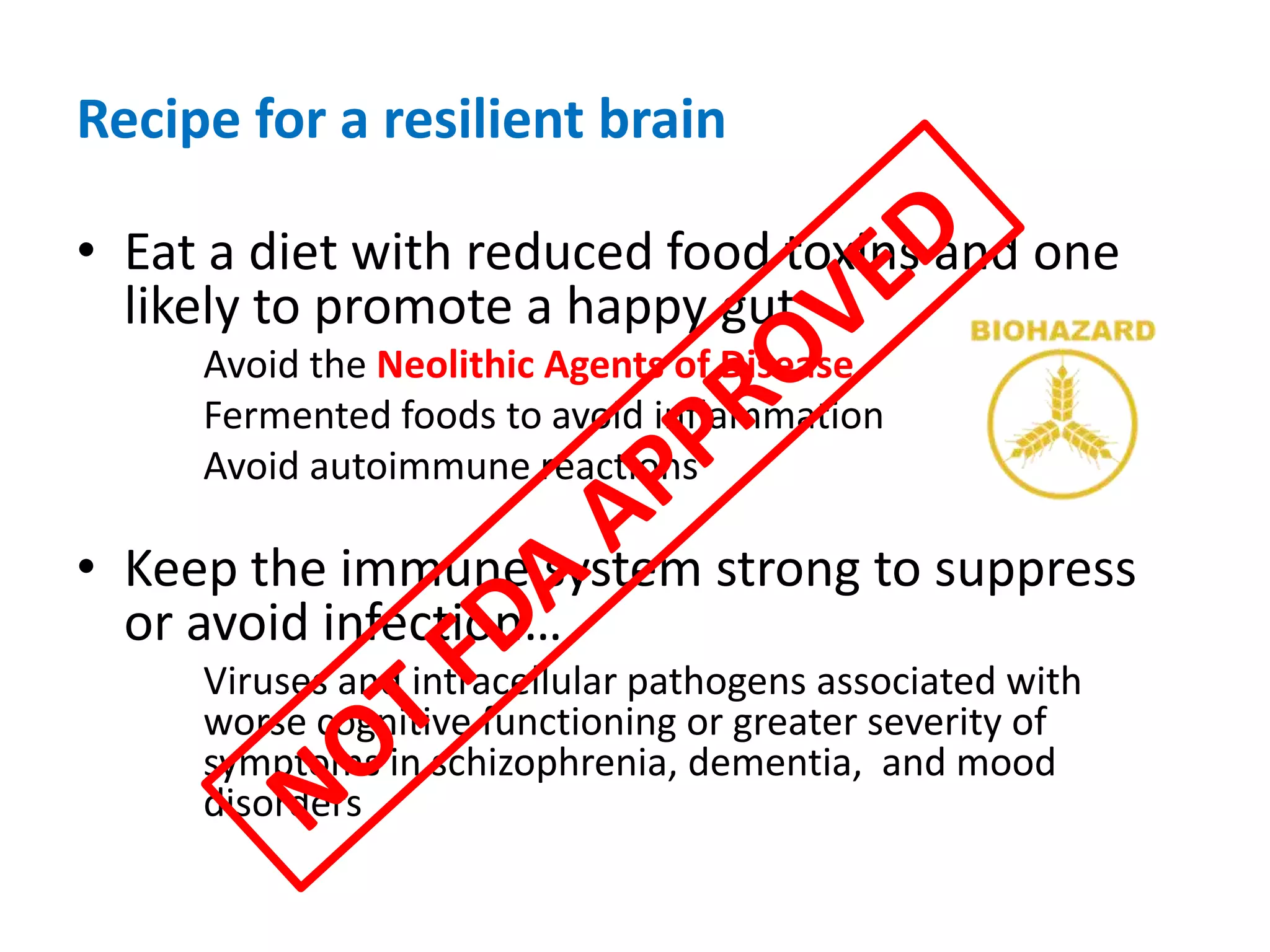
Lack of recovery and repairRecipe for a resilient brainEat a diet with reduced food toxins and one likely to promote a happy gutAvoid the Neolithic Agents of Disease	Fermented foods to avoid inflammation	Avoid autoimmune reactionsKeep the immune system strong to suppress or avoid infection…Viruses and intracellular pathogens associated with 	worse cognitive functioning or greater severity of 	symptoms in schizophrenia, dementia,  and mood 	disordersNOT FDA APPROVED
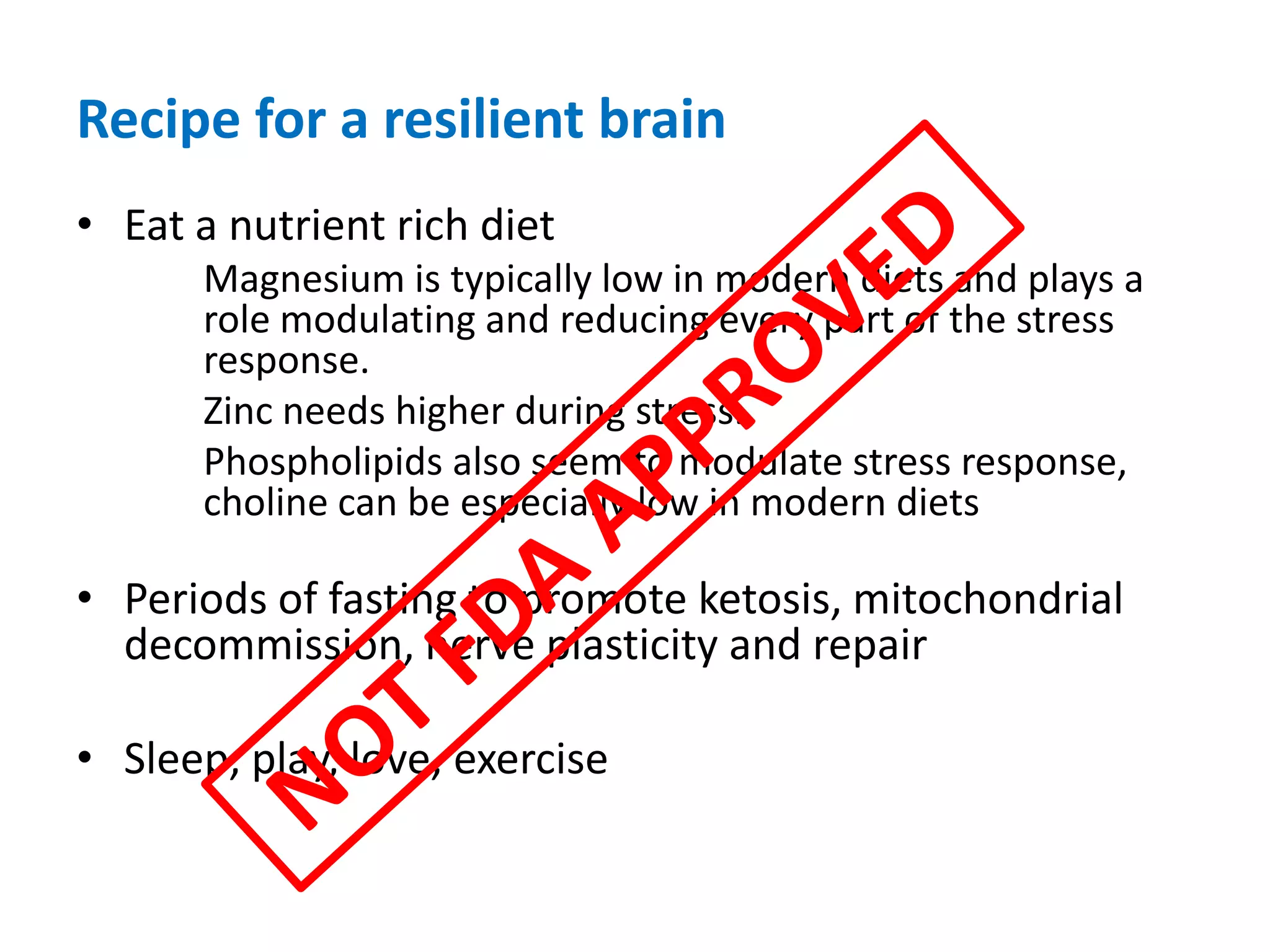
Recipe for a resilient brainEat a nutrient rich dietMagnesium is typically low in modern diets and plays a 	role modulating and reducing every part of the stress 	response. 	Zinc needs higher during stress. 	Phospholipids also seem to modulate stress response, 	choline can be especially low in modern dietsPeriods of fasting to promote ketosis, mitochondrial decommission, nerve plasticity and repairSleep, play, love, exerciseNOT FDA APPROVED
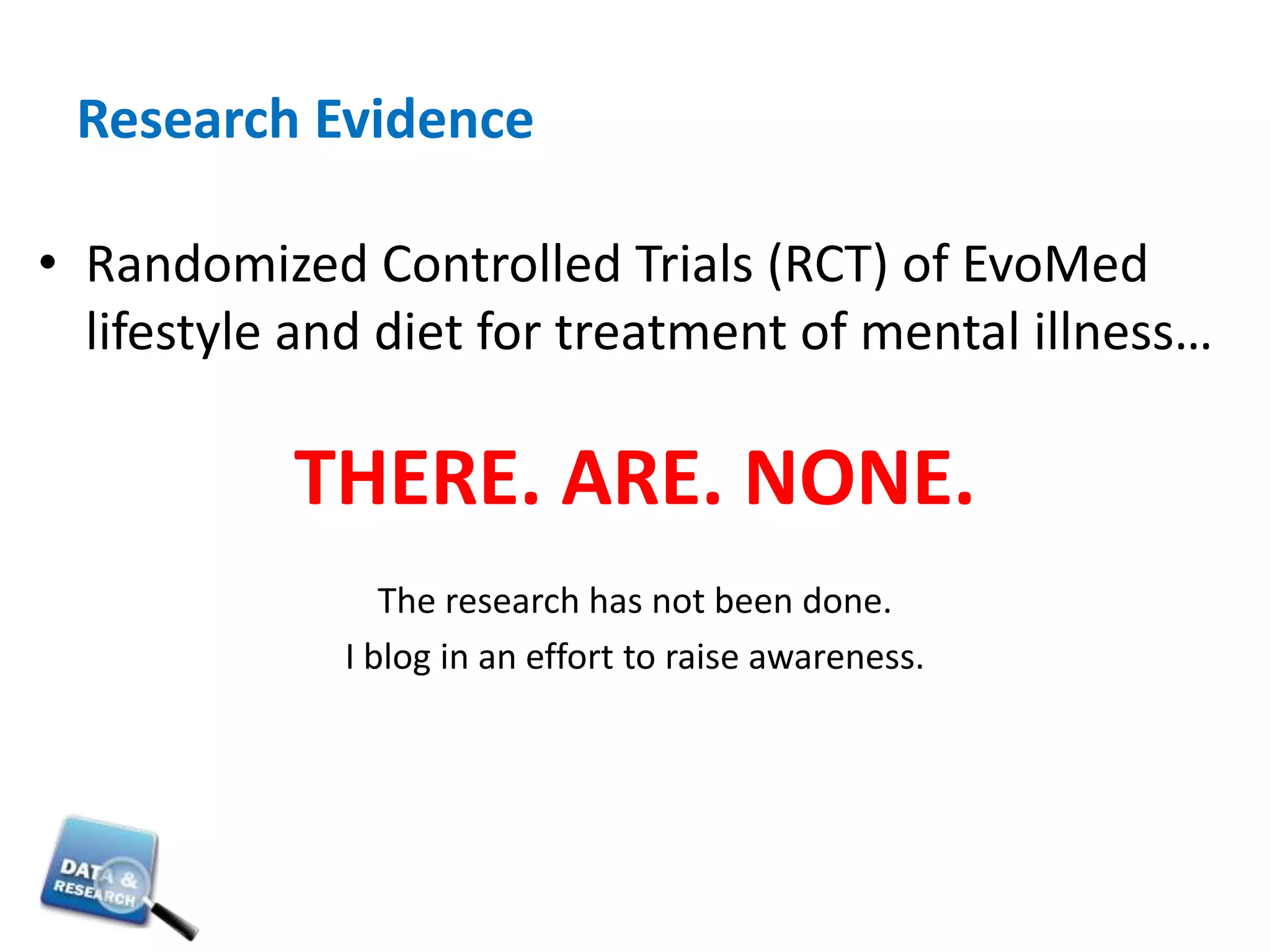
Research EvidenceRandomized Controlled Trials (RCT) of EvoMed lifestyle and diet for treatment of mental illness…THERE. ARE. NONE.The research has not been done.I blog in an effort to raise awareness.
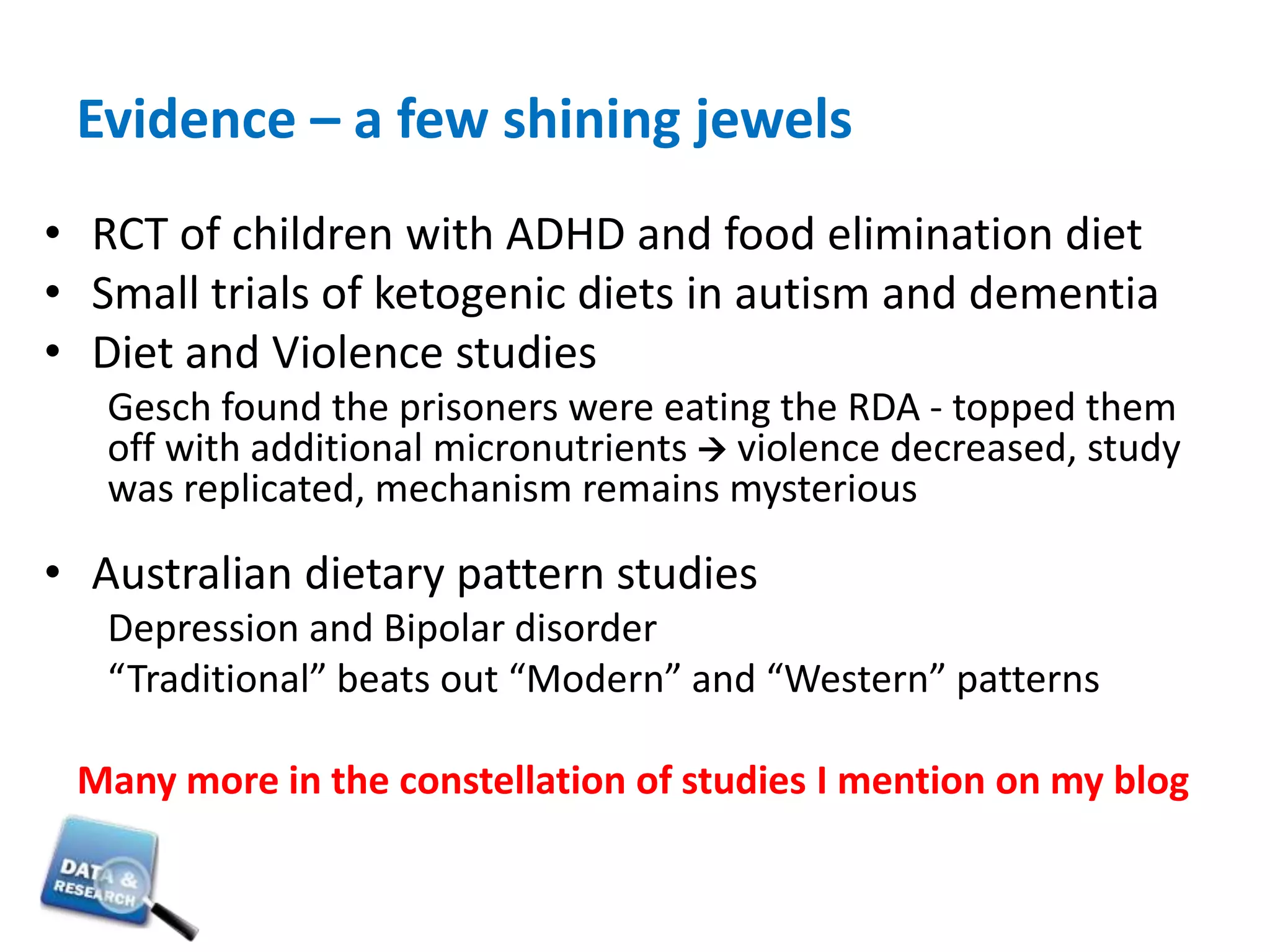
Evidence – a few shining jewelsRCT of children with ADHD and food elimination dietSmall trials of ketogenic diets in autism and dementiaDiet and Violence studiesGeschfound the prisoners were eating the RDA- topped them off with additional micronutrients violence decreased, study was replicated, mechanism remains mysteriousAustralian dietary pattern studies Depression and Bipolar disorder “Traditional” beats out “Modern” and “Western” patternsMany more in the constellation of studies I mention on my blog
The FutureA holistic, evolutionary medicine approach could not only revolutionize mental health treatment, but be preventative for the population.
The Application of Evolutionary Biology to Corporate Health & Wellness ProgrammesNew Zealand Market
The Reality of the Corporate EnvironmentConstant pressure to do more with lessAbsenteeism + PresenteeismHigh cost of employee recruitment + replacementHuman biology rarely given a second thought
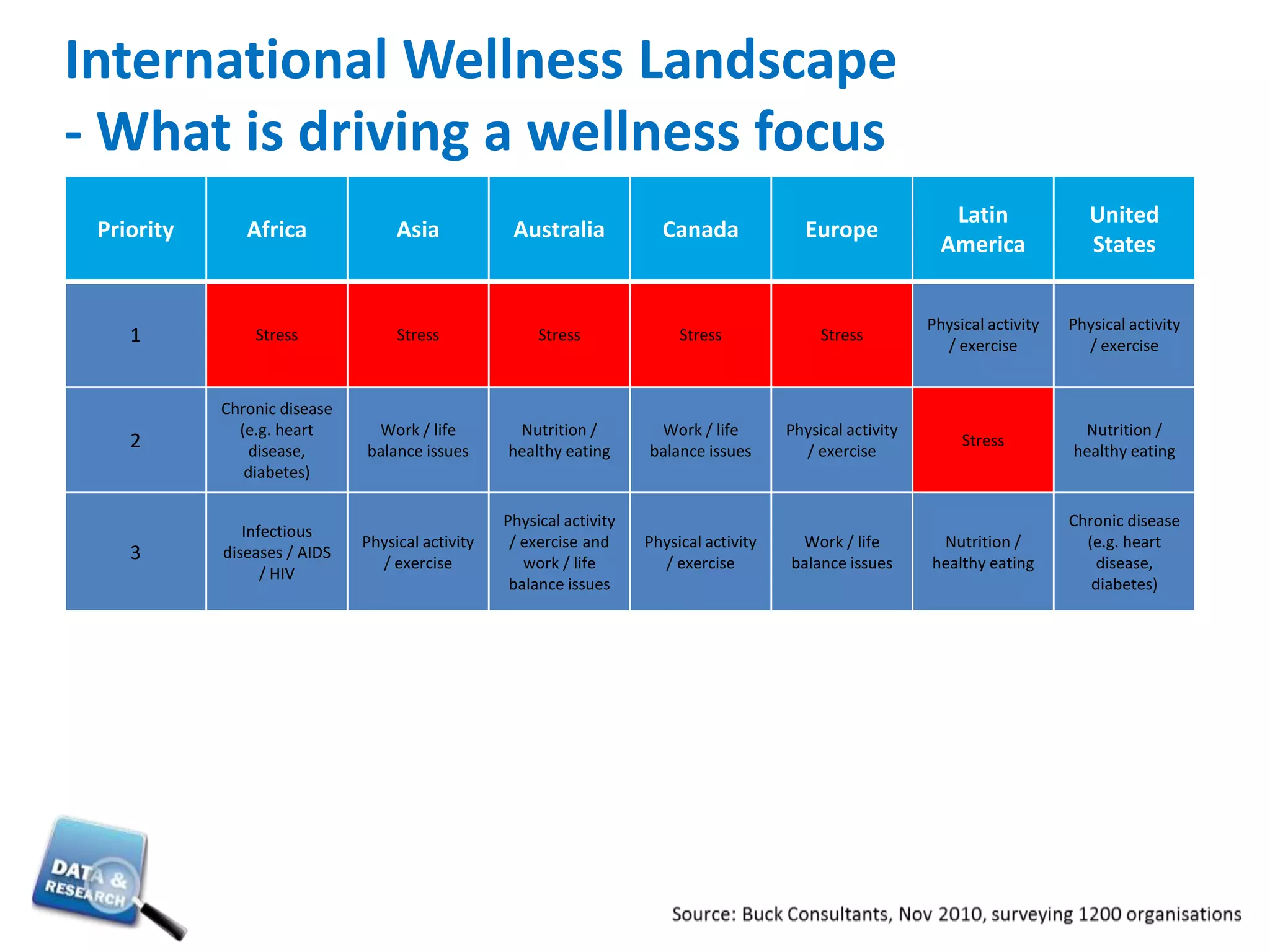
International Wellness Landscape - What is driving a wellness focus
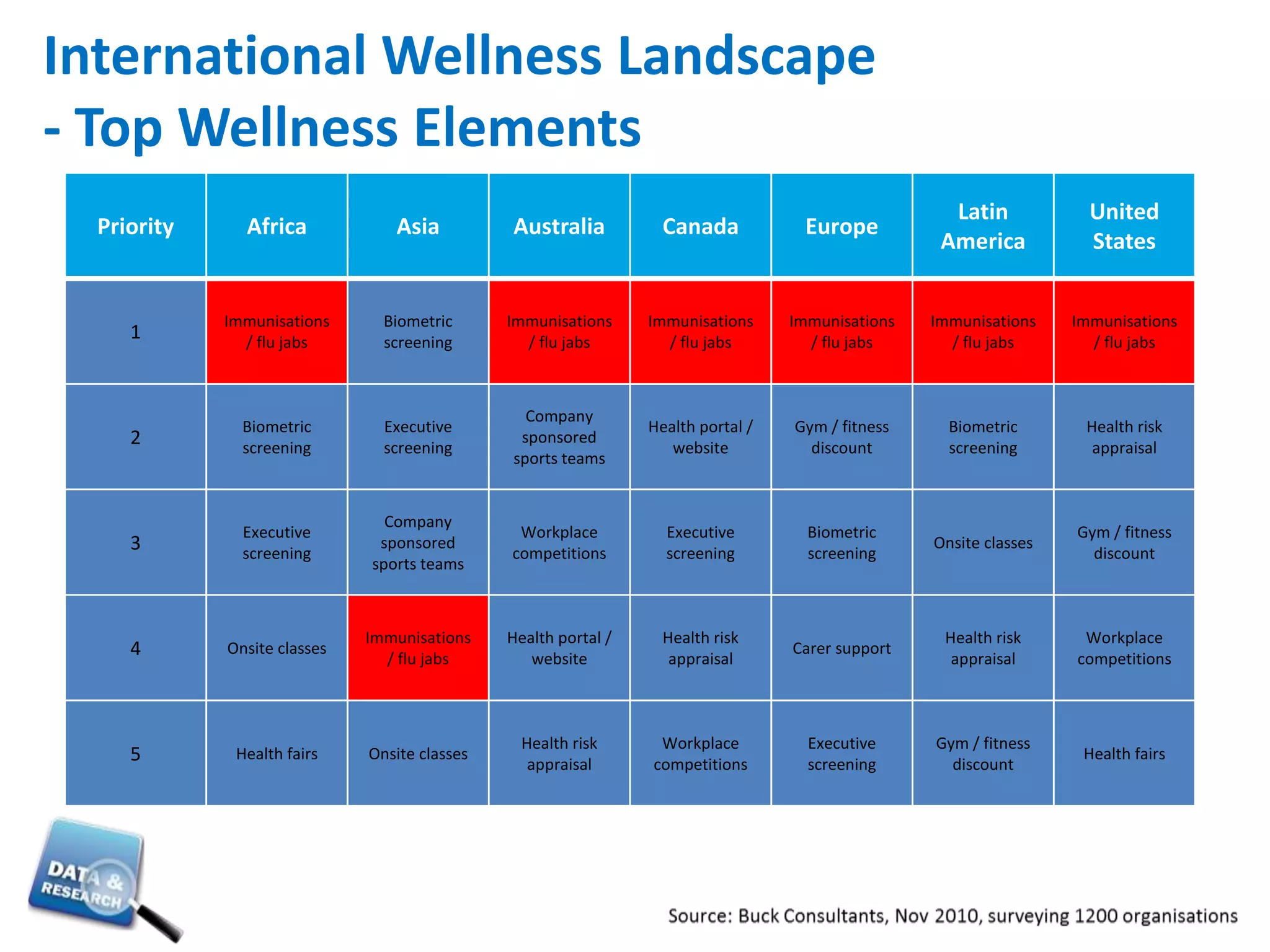
International Wellness Landscape - Top Wellness Elements
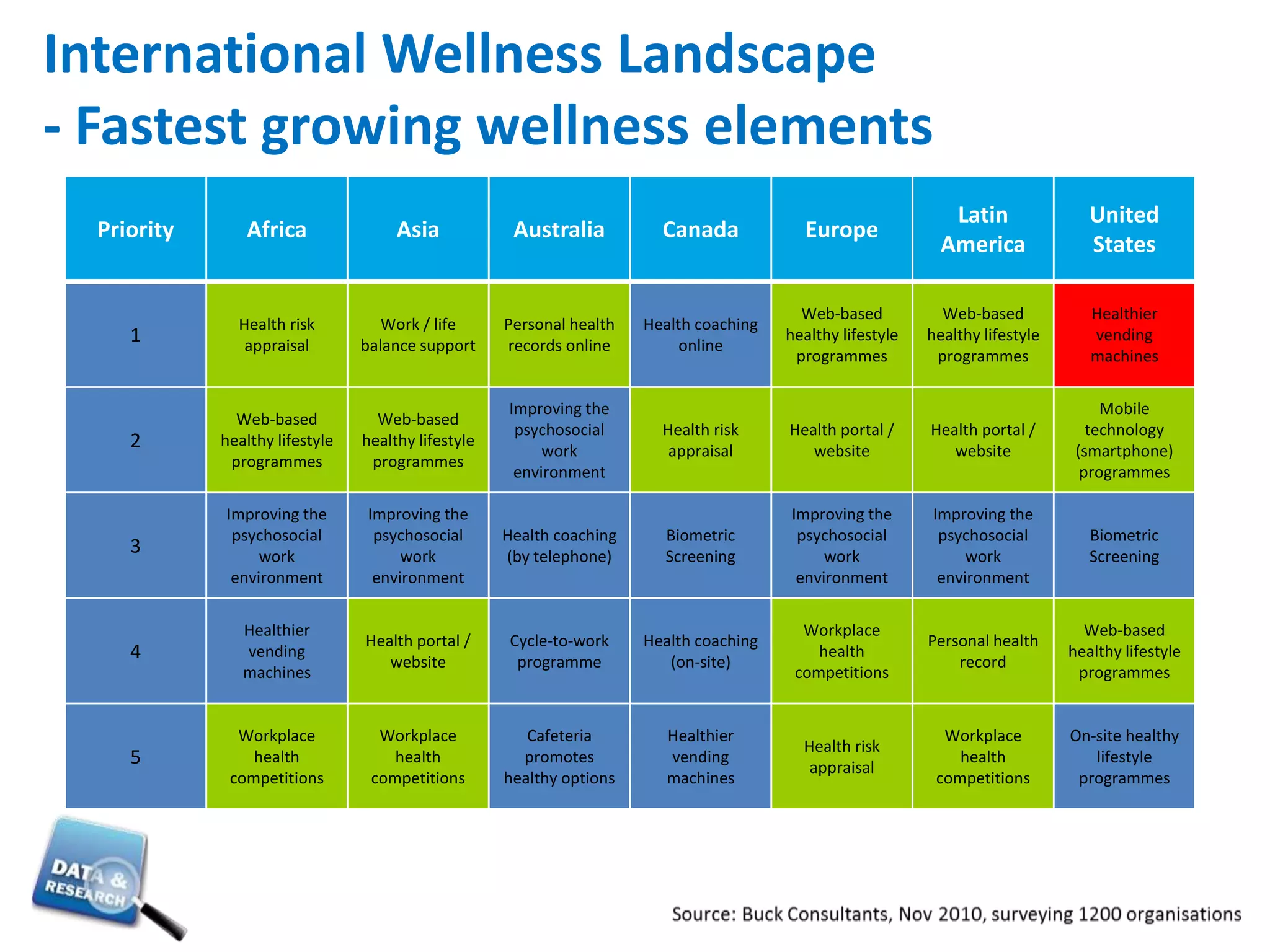
International Wellness Landscape - Fastest growing wellness elements
Dr Emily Deans: What Causes Mental Illness?Genes+ Stress+ DietChanges to our modern, industrial, nutrient-poor diets have reduced our resiliency to stress
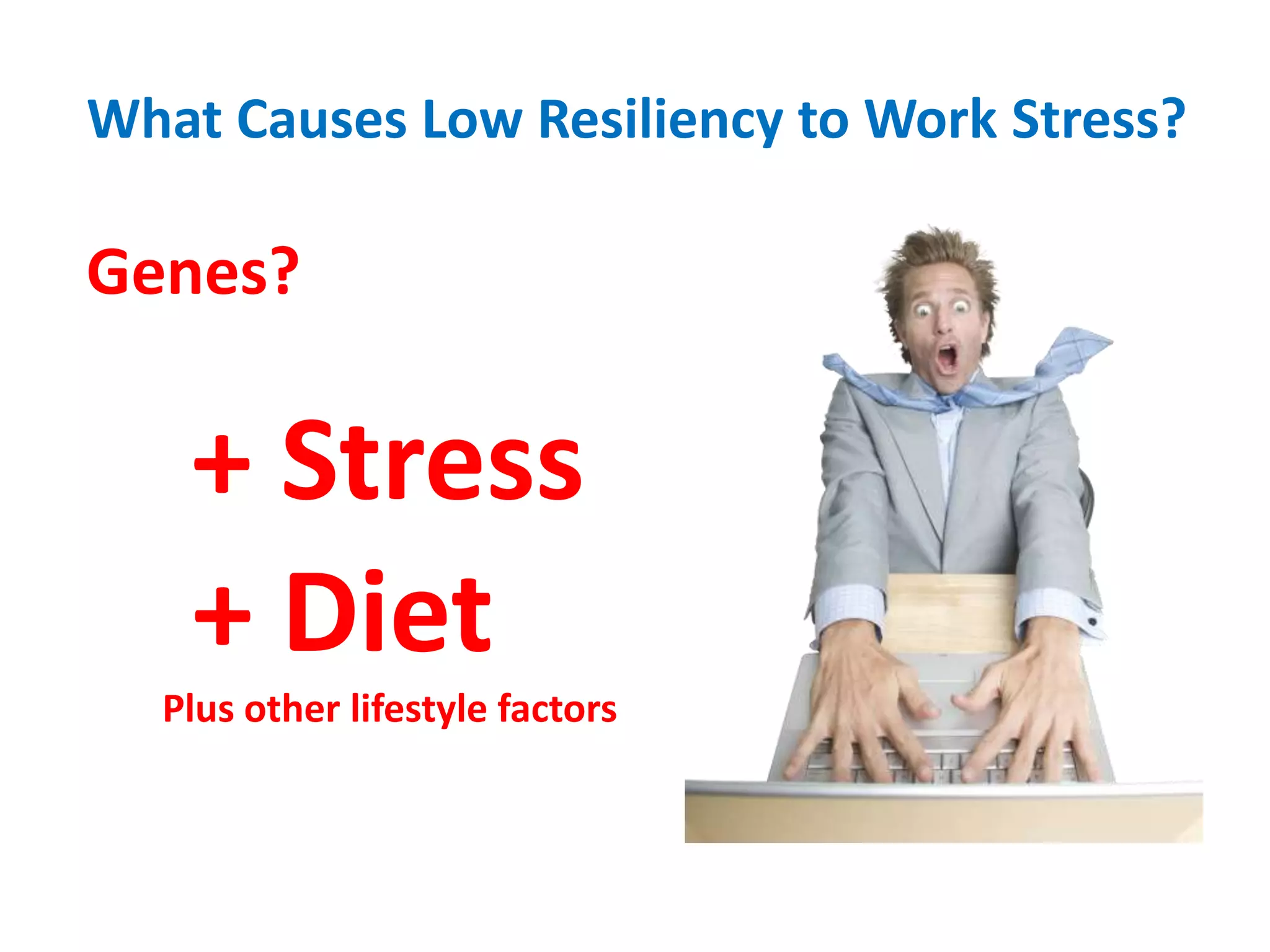
What Causes Low Resiliency to Work Stress?Genes?+ Stress+ DietPlus other lifestyle factors
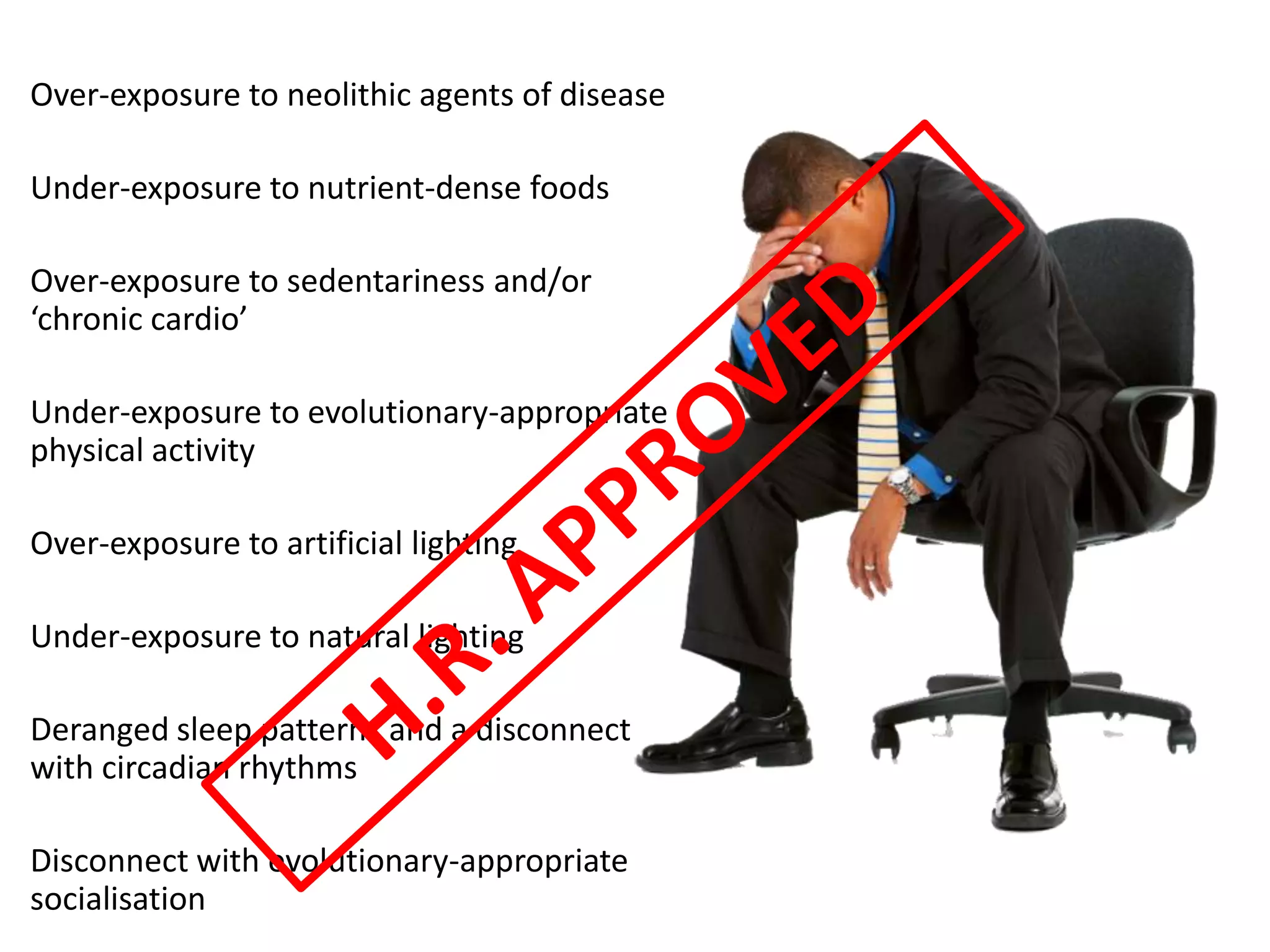
Over-exposure to neolithic agents of diseaseUnder-exposure to nutrient-dense foodsOver-exposure to sedentariness and/or ‘chronic cardio’Under-exposure to evolutionary-appropriate physical activityOver-exposure to artificial lightingUnder-exposure to natural lightingDeranged sleep patterns and a disconnect with circadian rhythms Disconnect with evolutionary-appropriate socialisationH.R. APPROVED
Our evolution designed us for a world very different from that we have constructed for ourselves.  Within a mere instant, in evolutionary terms, we have transformed our environment.But this widening mismatch between our biology and our environment has its costs.  And we cannot evolve our way out of the problem.Mismatch - why our world no longer fits our bodies (Oxford Press, 2006).Prof Peter Gluckman and Mark Hanson
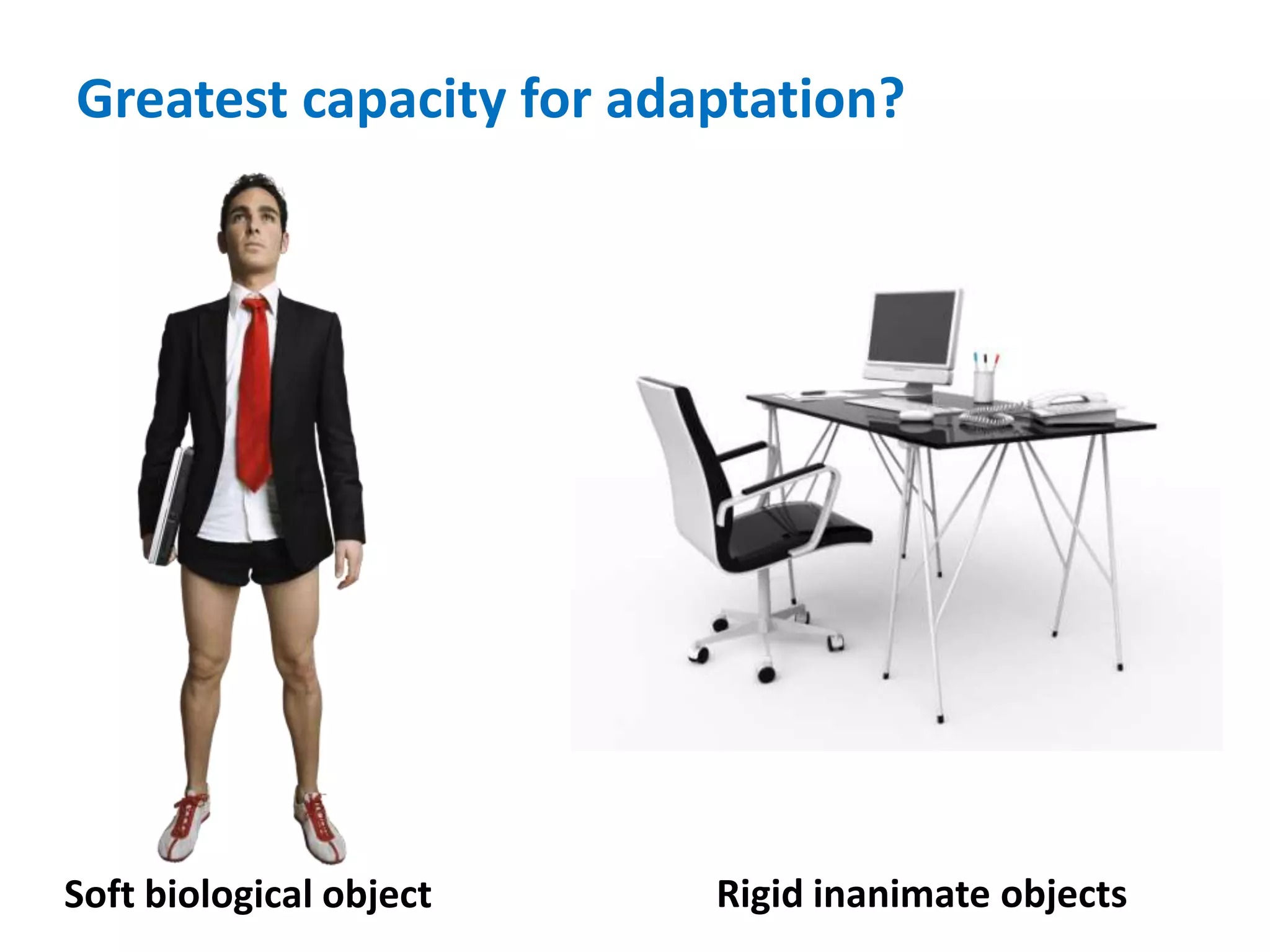
Greatest capacity for adaptation?Soft biological objectRigid inanimate objects
Our Current FocusCreating awareness around how our biology impacts on;health and well-being
stress resiliency
work productivityBuilding Resilience
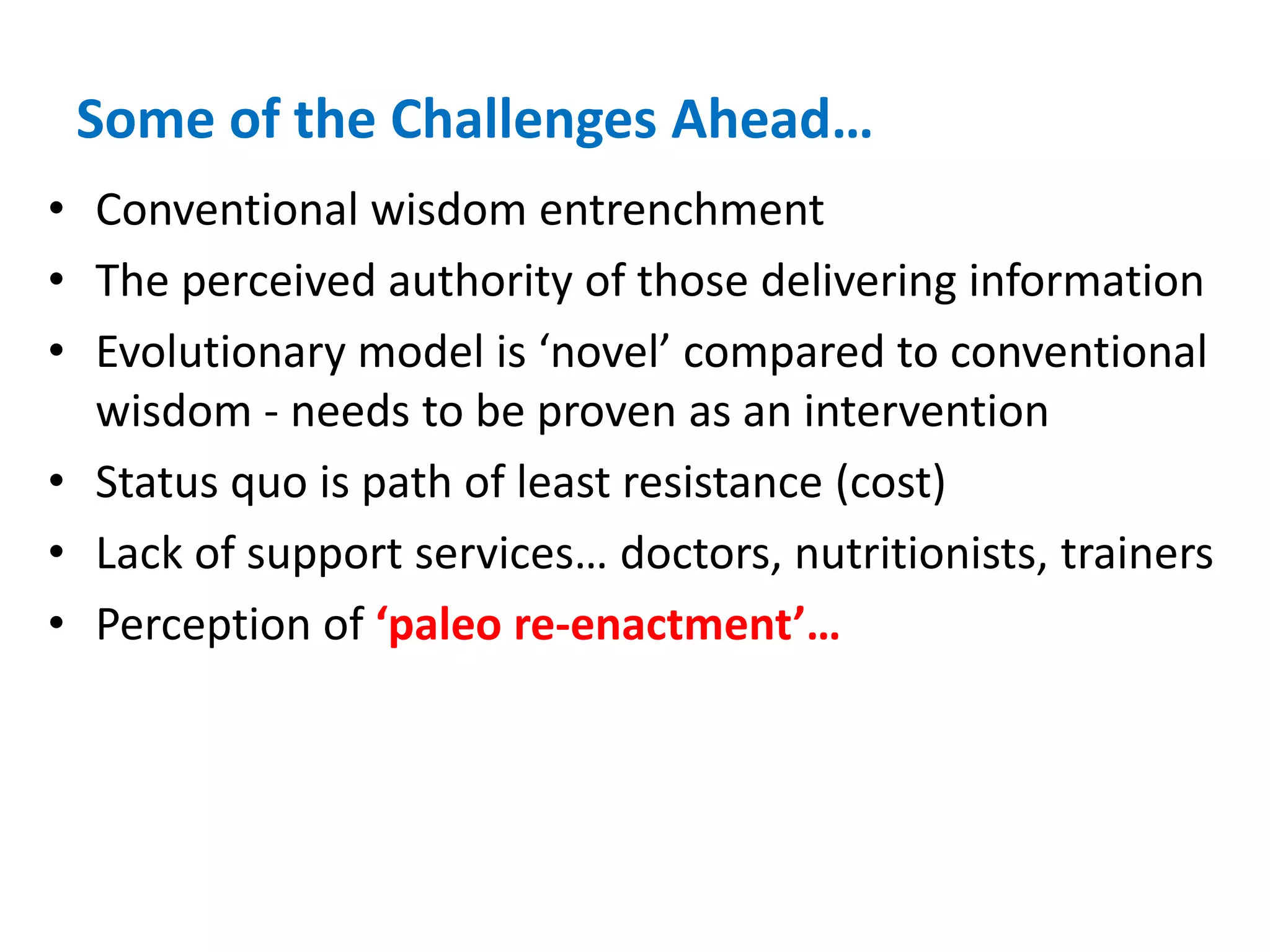
Some of the Challenges Ahead…Conventional wisdom entrenchmentThe perceived authority of those delivering informationEvolutionary model is ‘novel’ compared to conventional wisdom - needs to be proven as an interventionStatus quo is path of least resistance (cost)Lack of support services… doctors, nutritionists, trainersPerception of ‘paleo re-enactment’…

AHS Slides_Emily Deans and Jamie Scott

  • 1.
    ResiliencyAn Evolutionary Pathwayto Optimal Mental and Physical Health
  • 2.
    Emily Deans, M.D.Clinical Instructor in Psychiatry at Harvard Medical Schoolevolutionarypsychiatry.blogspot.comFeatured blogger on Psychology Today at Evolutionary PsychiatryDisclosures: None Participated in research funded by NIH
  • 3.
    Jamie ScottPGDipNutMed PGDipSportExMedBSc BPhEdWorkplace Health EducatorNutritionist/Trainerthatpaleoguy.blogspot.comDisclosures: None
  • 4.
    Why Evolutionary Medicinefor Mental Health?Existing treatments, therapy and medication, are only partially effective.They take a long time, are expensive, or have side effects.No truly novel treatments in 20 years, despite an explosion in neuroscience knowledge since 1990.We need a new approach
  • 5.
    Diseases of Civilization(DOC)Related to differences in our current lifestyle compared to our hunter gatherer past.Ultimate pathology of disease is inflammation – true of obesity, autoimmune disease, heart disease, acne… and mental illness.A clue we are dealing with DOC – the recent appearance and/or acceleration of change in illness in recent industrial history.
  • 6.
    Mental HealthSchizophreniaWither hebephrenia?MDDand AnxietyIncreasing in prevalence and changing in morphology (Stanley Jackson Melancholia and Depression)Bipolar DisorderIn last 40 years age of onset decreased from 30s to late teens, now more resistant to lithium, more rapid cycling (Fred Goodwin)
  • 7.
    Mental HealthEating DisordersNowmore common in women and men; striking younger cohorts (NIH National Comorbidity Study) AutismIncreasing? Yale SK study, teachersDementiaDefinitely increasing, but is it just due to aging population?
  • 8.
    What Causes MentalIllness?Genes+ Stress+ DietChanges to our modern, industrial, nutrient-poor diets have reduced our resiliency to stress
  • 9.
    What really causesmental illness?GenesTypically two, three, or more in a single signaling pathway (NRG-erbB in schizophrenia) One gene - no increased risk Two genes - 8-fold increased risk Three genes - 27-fold increased riskThe suspect genes (for schizophrenia, autism, anxiety, depression, etc.) oftenreside in the stress response pathway
  • 10.
    Recipe for abrittle brainSuboptimal genes, plus… Stress;
  • 11.
    Inflammation and poorimmunity (includes gut);
  • 12.
  • 13.
  • 14.
    Lack of recoveryand repairRecipe for a resilient brainEat a diet with reduced food toxins and one likely to promote a happy gutAvoid the Neolithic Agents of Disease Fermented foods to avoid inflammation Avoid autoimmune reactionsKeep the immune system strong to suppress or avoid infection…Viruses and intracellular pathogens associated with worse cognitive functioning or greater severity of symptoms in schizophrenia, dementia, and mood disordersNOT FDA APPROVED
  • 15.
    Recipe for aresilient brainEat a nutrient rich dietMagnesium is typically low in modern diets and plays a role modulating and reducing every part of the stress response. Zinc needs higher during stress. Phospholipids also seem to modulate stress response, choline can be especially low in modern dietsPeriods of fasting to promote ketosis, mitochondrial decommission, nerve plasticity and repairSleep, play, love, exerciseNOT FDA APPROVED
  • 16.
    Research EvidenceRandomized ControlledTrials (RCT) of EvoMed lifestyle and diet for treatment of mental illness…THERE. ARE. NONE.The research has not been done.I blog in an effort to raise awareness.
  • 17.
    Evidence – afew shining jewelsRCT of children with ADHD and food elimination dietSmall trials of ketogenic diets in autism and dementiaDiet and Violence studiesGeschfound the prisoners were eating the RDA- topped them off with additional micronutrients violence decreased, study was replicated, mechanism remains mysteriousAustralian dietary pattern studies Depression and Bipolar disorder “Traditional” beats out “Modern” and “Western” patternsMany more in the constellation of studies I mention on my blog
  • 18.
    The FutureA holistic,evolutionary medicine approach could not only revolutionize mental health treatment, but be preventative for the population.
  • 19.
    The Application ofEvolutionary Biology to Corporate Health & Wellness ProgrammesNew Zealand Market
  • 21.
    The Reality ofthe Corporate EnvironmentConstant pressure to do more with lessAbsenteeism + PresenteeismHigh cost of employee recruitment + replacementHuman biology rarely given a second thought
  • 22.
    International Wellness Landscape- What is driving a wellness focus
  • 23.
    International Wellness Landscape- Top Wellness Elements
  • 25.
    International Wellness Landscape- Fastest growing wellness elements
  • 27.
    Dr Emily Deans:What Causes Mental Illness?Genes+ Stress+ DietChanges to our modern, industrial, nutrient-poor diets have reduced our resiliency to stress
  • 28.
    What Causes LowResiliency to Work Stress?Genes?+ Stress+ DietPlus other lifestyle factors
  • 29.
    Over-exposure to neolithicagents of diseaseUnder-exposure to nutrient-dense foodsOver-exposure to sedentariness and/or ‘chronic cardio’Under-exposure to evolutionary-appropriate physical activityOver-exposure to artificial lightingUnder-exposure to natural lightingDeranged sleep patterns and a disconnect with circadian rhythms Disconnect with evolutionary-appropriate socialisationH.R. APPROVED
  • 30.
    Our evolution designedus for a world very different from that we have constructed for ourselves. Within a mere instant, in evolutionary terms, we have transformed our environment.But this widening mismatch between our biology and our environment has its costs. And we cannot evolve our way out of the problem.Mismatch - why our world no longer fits our bodies (Oxford Press, 2006).Prof Peter Gluckman and Mark Hanson
  • 31.
    Greatest capacity foradaptation?Soft biological objectRigid inanimate objects
  • 32.
    Our Current FocusCreatingawareness around how our biology impacts on;health and well-being
  • 33.
  • 34.
  • 36.
    Some of theChallenges Ahead…Conventional wisdom entrenchmentThe perceived authority of those delivering informationEvolutionary model is ‘novel’ compared to conventional wisdom - needs to be proven as an interventionStatus quo is path of least resistance (cost)Lack of support services… doctors, nutritionists, trainersPerception of ‘paleo re-enactment’…
  • 38.
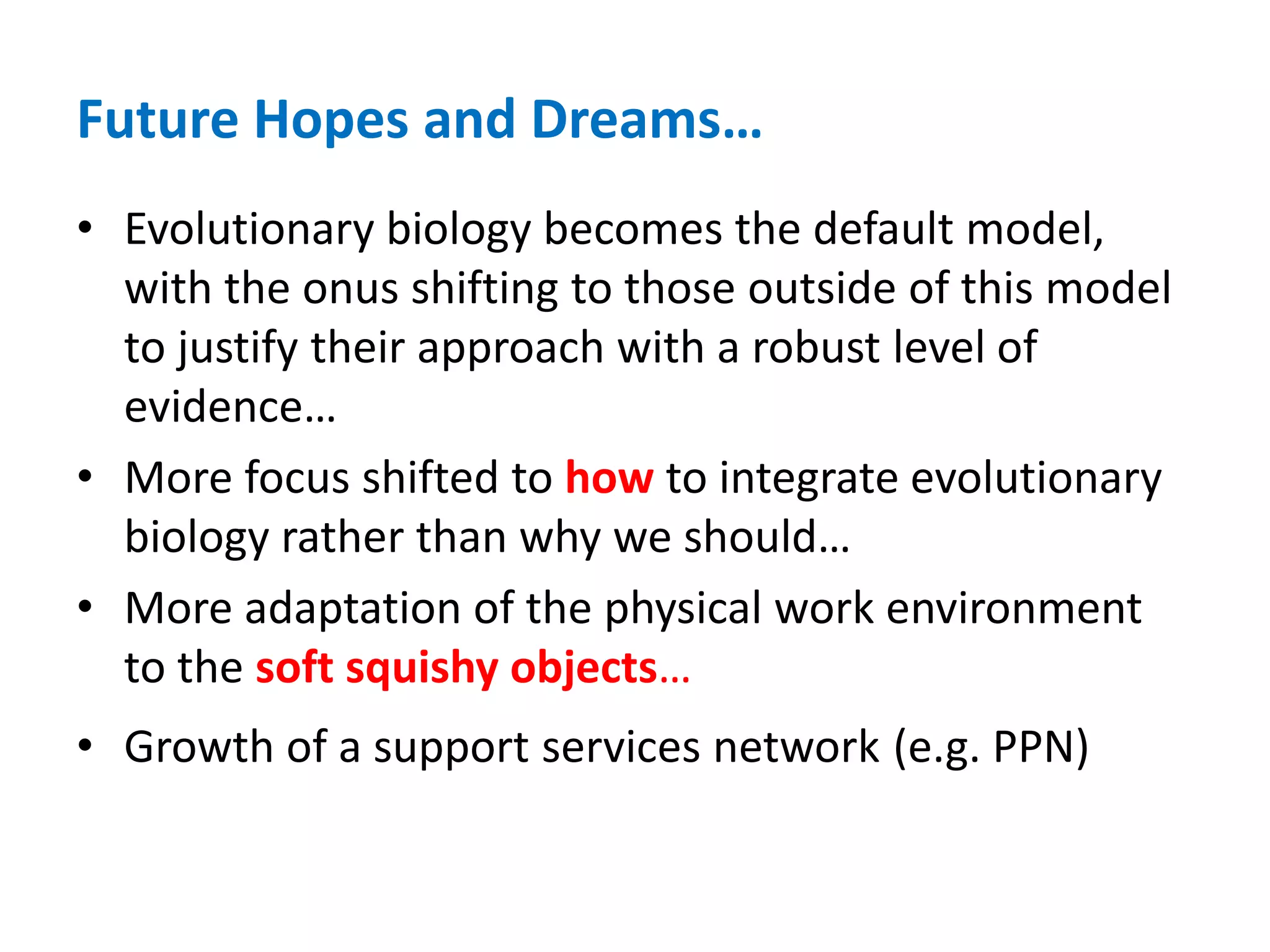
    Future Hopes andDreams…Evolutionary biology becomes the default model, with the onus shifting to those outside of this model to justify their approach with a robust level of evidence…More focus shifted to how to integrate evolutionary biology rather than why we should…More adaptation of the physical work environment to the soft squishy objects…Growth of a support services network(e.g. PPN)
  • 39.
    PHOTO CREDITSSlides 2+3;Emily Deans and Jamie ScottSlide 6; Wikimedia CommonsAll other slides; images licensed from iStockREFERENCES - Emily Deans, M.D.Crystal HA, Dickson D, Davies P, Masur D, Grober E, Lipton RB: The relative frequency of “dementia of unknown etiology” increases with age and is nearly 50%in nonagenarians. Arch Neurol 2000, 57:713-719.Eby, George A, Eby, Karen L.  Rapid recovery from major depression using magnesium treatment.  Med Hypotheses. 2006;67(2):362-70Evangeliou, Athanasios MD. Application of a Ketogenic Diet in Children With Autistic Behavior: Pilot Study.  J Child Neurol February 2003 vol. 18no. 2 113-118Eves A, Gesch B, Food provision and the nutritional implications of food choices made by young adult males, in a young offenders' institution. J Hum Nutr Diet. 2003 Jun;16(3):167-79Gesch, B. et al,
Influence of supplementary vitamins, minerals and essential fatty acids on the antisocial behaviour of young adult prisoners: Randomised, placebo-controlled trial
The British Journal of Psychiatry 2002 181: 22-28Goodwin, Frederick K and Jamison, Kay Redfield.  Manic-Depressive Illness: Bipolar Disorders and Recurrent Depression, Second Edition.  Oxford University Press.  Mar 2007.Hebert LE, Scherr PA, Bienias JL, Bennett DA, Evans DA: Alzheimer disease in the US population. Prevalence estimates using the 2000 census. Arch Neurol 2003, 60:1119–1122.Hellhammer, J. et al. Effects of Soy Lecithin Phosphatidic Acid and Phosphatidylserine Complex (PAS) on the Endocrine and Psychological Responses to Mental Stress. Stress. 2004, Vol. 7, No. 2 , Pages 119-126Hudson, James et al.  The Prevalence and Correlates of Eating Disorders in the National Comorbidity Survey Replication. Biological Psychiatry 1 February 2007 (Vol. 61, Issue 3, Pages 348-358)Jacka, Felice N. et al. Association between magnesium intake and depression and anxiety in community-dwelling adults: the Hordaland Health Study.  Australian and New Zealand Journal of Psychiatry 2009 43:1, 45-52Jacka FN, Pasco JA, Mykletun A, Williams LJ, Hodge AM, O'Reilly SL, Nicholson GC, Kotowicz MA, Berk M, Association of Western and traditional diets with depression and anxiety in women. Am J Psychiatry. 2010 Mar;167(3):305-11Jacka FN, Pasco JA, Mykletun A, Williams LJ, Nicholson GC, Kotowicz MA, Berk M. Diet quality in bipolar disorder in a population-based sample of women. J Affect Disord. 2011 Mar;129(1-3):332-7Jackson, Stanley W.  Melancholia and Depression: From Hippocratic Times to Modern Times.  Yale University Press. 1990
  • 40.
    REFERENCES - EmilyDeans, M.DKessler RC, Berglund P, Demler O, Jin R, Merikangas KR, Walters EE. Lifetime prevalence and age-of-onset distributions of DSM-IV disorders in the National Comorbidity Survey Replication. Arch Gen Psychiatry 2005;62: 593–602Kim, Young Shin, Leventhal, Bennett L., Koh, Yun-Joo, Fombonne, Eric, Laska, Eugene, Lim, Eun-Chung, Cheon, Keun-Ah, Kim, Soo-Jeong, Kim, Young-Key, Lee, HyunKyung, Song, Dong-Ho, Grinker, Roy Richard. Prevalence of Autism Spectrum Disorders in a Total Population Sample. Am J Psychiatry 2011 0: appi.ajp.2011.10101532Le-Niculescu, H. et al. Convergent functional genomics of anxiety disorders: translational identification of genes, biomarkers, pathways and mechanisms. Translational Psychiatry (2011) 1, e9; doi:10.1038/tp.2011.9Mulvhill, B. et al. Prevalence of Autism Spectrum Disorders - Autism and Developmental Disabilities Monitoring Network, United States, 2006.  MMMR Suveillance Summaries December 18, 2009 / 58(SS10);1-20Okusaga O, Yolken RH, Langenberg P, Lapidus M, Arling TA, Dickerson FB, Scrandis DA, Severance E, Cabassa JA, Balis T, Postolache TT.  Association of seropositivity for influenza and coronaviruses with history of mood disorders and suicide attempts. J Affect Disord. 2011 Apr;130(1-2):220-5Pelsser LM, Frankena K, Toorman J, Savelkoul HF, Dubois AE, Pereira RR, Haagen TA, Rommelse NN, Buitelaar JK. Effects of a restricted elimination diet on the behaviour of children with attention-deficit hyperactivity disorder (INCA study): a randomised controlled trial.  Lancet. 2011 Feb 5;377(9764):494-503Schiff M, Bénit P, Coulibaly A, Loublier S, El-Khoury R, Rustin P. Mitochondrial response to controlled nutrition in health and disease. Nutr Rev. 2011 Feb;69(2):65-7Szewczyk B, Kubera M, Nowak G. The role of zinc in neurodegenerative inflammatory pathways in depression. ProgNeuropsychopharmacolBiol Psychiatry. 2011 Apr 29;35(3):693-701Urosevic N, Martins RN.  Infection and Alzheimer's disease: the APOE epsilon4 connection and lipid metabolism. J Alzheimers Dis. 2008 May;13(4):421-35Yaffe, Kristine Yaffe et al. Mild Cognitive Impairment, Dementia, and Their Subtypes in Oldest Old Women. Arch Neurol. 2011;68(5):631-636.Yolken RH, Torrey EF, Lieberman JA, Yang S, Dickerson FB. Serological evidence of exposure to Herpes Simplex Virus type 1 is associated with cognitive deficits in the CATIE schizophrenia sample. Schizophr Res. 2011 May;128(1-3):61-5.Zaalberg, A., Nijman, H., Bulten, E., Stroosma, L. and van der Staak, C. (2010), Effects of nutritional supplements on aggression, rule-breaking, and psychopathology among young adult prisoners. Aggressive Behavior, 36: 117–126. doi: 10.1002/ab.20335Zeisel, Steven H, and da Costa, Kerry-Ann. Choline: An Essential Nutrient for Public Health.  Nutr Rev. 2009 November; 67(11): 615–623.
  • 41.
    ResiliencyAn Evolutionary Pathwayto Optimal Mental and Physical Health

Editor's Notes

  • #23 Psychosocial work environment: managing work demands and personal control, balancing effort and reward, supporting respect and trust in the workplace.