Agriculture & Forestry Notes 1 for CSS/ PMS
Compiled by:
Mr. Seetal Daas (contact via: seetal.daas@gmail.com)
AGRICULTURE AND FORESTRY
Part-I: Agriculture
Concept of Integrated Agriculture:
Integrated agriculture in Pakistan emphasizes the harmonious utilization of various
natural resources to enhance agricultural productivity while ensuring sustainability.
Here’s a breakdown of the key components:
1. Land
• Soil Management: Ensuring healthy soils through practices like crop
rotation, cover cropping, and organic amendments.
• Land Use Planning: Optimal allocation of land for different types of crops
and livestock based on soil characteristics and climate.
2. Water
• Irrigation Systems: Utilizing efficient irrigation methods (drip, sprinkler) to
conserve water and improve crop yield.
• Water Harvesting: Implementing techniques to capture and store rainwater,
particularly in arid regions.
3. Biological Resources
• Biodiversity: Promoting diverse crops and livestock to enhance resilience
against pests and diseases.
• Agroforestry: Integrating trees with crops and livestock to improve soil
health and provide additional income sources.
4. Environmental Considerations
• Ecosystem Services: Protecting natural ecosystems that support agriculture,
such as wetlands and forests.
• Sustainable Practices: Reducing chemical inputs and adopting organic
farming practices to minimize environmental impact.
5. Solar Energy
• Renewable Energy Utilization: Harnessing solar energy for irrigation,
heating, and powering agricultural machinery.
Agriculture & Forestry Notes 2 for CSS/ PMS
Compiled by:
Mr. Seetal Daas (contact via: seetal.daas@gmail.com)
• Photosynthesis Optimization: Using practices that enhance photosynthesis
efficiency, such as intercropping.
6. Energy
• Sustainable Energy Solutions: Incorporating biogas and biofuels to power
agricultural operations, reducing reliance on fossil fuels.
• Energy Efficiency: Employing energy-efficient technologies in farming
equipment and processes.
Conclusion:
The integrated agriculture approach in Pakistan aims to optimize the use of these
natural resources collectively, leading to increased agricultural productivity,
improved food security, and environmental sustainability. By focusing on the
interconnections between these components, farmers can develop resilient systems
that adapt to changing climatic conditions and economic pressures.
Challenges in Pakistan’s Agriculture:
Pakistan’s agriculture sector faces numerous challenges that hinder its productivity
and sustainability. Here’s an analytical overview of the present scenario, future
prospects, and strategies for improvement across various sectors:
1. Current Issues in Agriculture
• Water Scarcity: Overextraction of groundwater and inefficient irrigation
practices lead to severe water shortages.
• Soil Degradation: Continuous use of chemical fertilizers and monoculture
has led to soil fertility loss and erosion.
• Climate Change: Extreme weather events, shifting rainfall patterns, and
rising temperatures affect crop yields.
• Pest and Disease Pressure: Increased pest resistance and emerging diseases
threaten crop and livestock health.
• Economic Constraints: Farmers often lack access to credit, markets, and
technology, limiting their productivity.
• Infrastructure Deficiencies: Poor transportation and storage facilities lead to
post-harvest losses.
Agriculture & Forestry Notes 3 for CSS/ PMS
Compiled by:
Mr. Seetal Daas (contact via: seetal.daas@gmail.com)
2. Future Prospects
• Technological Innovations: Adoption of precision agriculture,
biotechnology, and digital farming tools can enhance productivity.
• Sustainable Practices: Increasing emphasis on organic farming and
agroecological practices can improve resilience.
• Market Access: Enhancing supply chains and market infrastructure can help
farmers get better prices for their produce.
• Climate-Resilient Varieties: Development of drought- and flood-resistant
crop varieties will be crucial for adaptation.
Strategies for Improvement
A. Crop Management
• Diversification: Encourage crop rotation and intercropping to enhance soil
health and reduce pest outbreaks.
• Sustainable Fertilizer Use: Promote organic fertilizers and integrated
nutrient management systems.
• Water Management: Implement water-saving irrigation technologies like
drip and sprinkler systems.
B. Livestock Management
• Genetic Improvement: Focus on breeding programs to enhance livestock
productivity and disease resistance.
• Health Management: Improve veterinary services and vaccination programs
to prevent livestock diseases.
• Integrated Systems: Encourage agro-pastoral systems that combine crop and
livestock farming.
C. Fisheries
• Sustainable Practices: Promote responsible fishing and aquaculture practices
to ensure long-term sustainability.
• Capacity Building: Train fish farmers on best practices, disease management,
and feed optimization.
D. Cottage Industry
Agriculture & Forestry Notes 4 for CSS/ PMS
Compiled by:
Mr. Seetal Daas (contact via: seetal.daas@gmail.com)
• Skill Development: Provide training programs for rural artisans to enhance
product quality and marketability.
• Access to Markets: Develop local and international market linkages for
cottage industry products.
E. Resource Management
• Soil Conservation: Implement practices such as contour farming and
terracing to prevent soil erosion.
• Water Resource Management: Invest in rainwater harvesting and watershed
management programs.
F. Rural Development
• Infrastructure Development: Improve rural roads, storage facilities, and
access to energy to boost agricultural productivity.
• Microfinance Solutions: Expand access to credit for smallholder farmers to
invest in modern farming techniques.
Institutions and Policies
Current Issues
• Fragmented Policies: Lack of coherence between agricultural policies and
other sectors like water and environment.
• Weak Institutional Framework: Limited capacity of agricultural institutions
to implement and monitor policies effectively.
• Research Gaps: Insufficient investment in agricultural research and
development limits innovation.
Options for Improvement
• Integrated Policy Framework: Develop a cohesive policy that aligns
agriculture, water management, and rural development strategies.
• Strengthening Institutions: Enhance the capacity of agricultural research
organizations and extension services to better serve farmers.
• Public-Private Partnerships: Encourage collaboration between government,
NGOs, and the private sector to boost innovation and investment in
agriculture.
Agriculture & Forestry Notes 5 for CSS/ PMS
Compiled by:
Mr. Seetal Daas (contact via: seetal.daas@gmail.com)
Conclusion:
Addressing the challenges in Pakistan’s agriculture requires a multifaceted approach
that combines technological innovation, sustainable practices, and effective policy
frameworks. By focusing on the interconnections within the agricultural sector and
investing in capacity building, Pakistan can enhance its agricultural productivity and
ensure food security for its growing population.
Elements of Climate and their Relationship with Crop Growth:
Understanding the relationship between climate elements and crop growth is crucial
for effective farming systems. Here’s an overview of the key elements and their
interconnections:
1. Climate Elements and Crop Growth
• Temperature: Affects seed germination, flowering, and maturity. Different
crops have optimal temperature ranges for growth.
• Precipitation: Determines water availability, impacting irrigation needs and
crop yields. Excessive rainfall can lead to waterlogging.
• Humidity: Influences transpiration rates and pest/disease prevalence. High
humidity can promote fungal diseases.
• Sunlight: Essential for photosynthesis. Variations in sunlight affect growth
rates and yields of crops.
• Wind: Can cause physical damage to crops and affect moisture loss through
evaporation.
2. Farming Systems
• Conventional vs. Sustainable: Traditional systems often rely on chemical
inputs, while sustainable systems focus on crop rotation, organic inputs, and
conservation practices.
• Integrated Farming: Combines crops, livestock, and other enterprises to
maximize resource use efficiency and reduce risks.
3. Biological Nitrogen Fixation
• Role in Agriculture: Leguminous crops (e.g., peas, beans) can fix
atmospheric nitrogen, improving soil fertility.
Agriculture & Forestry Notes 6 for CSS/ PMS
Compiled by:
Mr. Seetal Daas (contact via: seetal.daas@gmail.com)
• Climate Influence: Temperature and moisture conditions affect the activity
of nitrogen-fixing bacteria, impacting crop growth.
4. Soil Profile, Structure, and Texture
• Soil Profile: The vertical arrangement of soil layers (horizons) affects root
development and nutrient availability.
• Soil Structure: Well-structured soils allow better air and water movement,
essential for healthy crop growth.
• Soil Texture: The proportion of sand, silt, and clay influences water retention,
drainage, and nutrient availability. For example, clay retains water but may
restrict root growth.
5. Soil Fertility
• Essential Nutrients: Nitrogen, phosphorus, and potassium are vital for crop
growth. Soil fertility management involves balancing these nutrients through
organic and inorganic fertilizers.
• Climate Impact: Climate conditions can affect nutrient cycling and
availability. For example, high temperatures may accelerate organic matter
decomposition, altering nutrient dynamics.
6. Soil Erosion and Conservation
• Erosion Factors: Wind and water erosion can deplete topsoil, reducing
fertility and impacting crop yields. Intense rainfall can exacerbate this.
• Conservation Practices: Techniques such as contour farming, terracing, and
cover cropping help prevent erosion and maintain soil health.
7. Waterlogging and Salinity
• Waterlogging: Excess water can suffocate roots, leading to reduced crop
growth. Poor drainage and high rainfall can exacerbate this issue.
• Salinity: High salt concentrations in the soil can inhibit water uptake by
plants. It often results from poor irrigation practices and can be worsened by
evaporation in arid climates.
• Management Strategies: Implementing proper drainage systems and
selecting salt-tolerant crop varieties can mitigate these issues.
Agriculture & Forestry Notes 7 for CSS/ PMS
Compiled by:
Mr. Seetal Daas (contact via: seetal.daas@gmail.com)
Conclusion:
The interplay between climate elements and agricultural practices significantly
impacts crop growth and productivity. By understanding these relationships, farmers
can adopt better management strategies that enhance soil health, optimize water use,
and improve overall crop performance, leading to sustainable agricultural systems.
Genetic Improvement for Crop Production:
Genetic improvement in crop production is essential for enhancing yield, resilience,
and sustainability. Here’s an overview of key aspects, including genetically modified
organisms (GMO) and seed production technology.
1. Genetically Modified Organisms (GMOs)
Overview
• Definition: GMOs are crops that have been genetically altered using
biotechnology to exhibit specific traits such as pest resistance, herbicide
tolerance, or improved nutritional content.
• Advantages:
i. Increased Yield: GMOs can lead to higher productivity by reducing
losses from pests and diseases.
ii. Pest and Disease Resistance: Crops like Bt cotton and Bt corn produce
their own insecticides, reducing the need for chemical pesticides.
iii. Herbicide Tolerance: Crops engineered to resist specific herbicides
allow for easier weed management without damaging the crops.
iv. Enhanced Nutritional Value: Biofortified crops, such as Golden Rice,
are designed to provide essential nutrients, addressing malnutrition.
Challenges
• Public Perception: There is ongoing debate and skepticism regarding the
safety and ethics of GMOs, impacting adoption rates.
• Biodiversity Concerns: The use of GMOs may impact local biodiversity and
lead to unintended consequences in ecosystems.
• Regulatory Hurdles: Strict regulations can delay the approval and
commercialization of GMO crops.
Agriculture & Forestry Notes 8 for CSS/ PMS
Compiled by:
Mr. Seetal Daas (contact via: seetal.daas@gmail.com)
2. Seed Production Technology
Seed Quality and Production
• Hybrid Seed Production: Hybrid seeds are produced by crossbreeding
different plant varieties to produce offspring with desirable traits, such as
higher yields or disease resistance.
• Seed Treatment: Treatments may include fungicides and insecticides to
protect seeds during germination and early growth stages.
Advances in Seed Technology
• Precision Breeding: Techniques like CRISPR and genome editing allow for
precise modifications in crops, improving traits without introducing foreign
DNA.
• Tissue Culture: This technique enables the propagation of plants in a
controlled environment, ensuring disease-free and uniform seed production.
• Seed Coating Technology: Enhancements such as polymer coatings can
improve seed performance, protect against pests, and provide nutrients during
early growth.
Seed Distribution and Accessibility
• Research and Development: Investment in research to develop high-quality,
region-specific seeds can improve local food security.
• Farmer Education: Educating farmers on the benefits of quality seeds and
proper planting techniques can lead to better adoption and crop performance.
• Seed Banks: Establishing seed banks helps conserve genetic diversity and
provides a resource for breeding programs.
Conclusion:
Genetic improvement through GMOs and advanced seed production technologies
plays a crucial role in modern agriculture. These innovations help address challenges
such as food security, climate resilience, and sustainability. However, balancing the
benefits with public perception, regulatory considerations, and biodiversity
protection is essential for the responsible advancement of agricultural
biotechnology.
Agriculture & Forestry Notes 9 for CSS/ PMS
Compiled by:
Mr. Seetal Daas (contact via: seetal.daas@gmail.com)
Horticulture:
Horticulture is a branch of agriculture that focuses on the cultivation of plants,
including fruits, vegetables, nuts, seeds, herbs, mushrooms, algae, flowers,
seaweeds, and non-food crops. Key areas within horticulture include floriculture,
landscaping, and pest and disease management.
1. Floriculture
• Definition: Floriculture is the cultivation of flowering and ornamental plants
for gardens, floral industry, and landscaping.
• Key Practices:
i. Plant Propagation: Techniques include seeds, cuttings, and tissue
culture to produce quality flowers.
ii. Soil and Fertilization: Soil health is maintained through appropriate
amendments and fertilizers tailored for flowering plants.
iii. Water Management: Efficient irrigation systems (like drip irrigation)
are used to optimize water use and ensure healthy plant growth.
• Economic Importance: The floriculture industry contributes significantly to
the economy by providing employment and generating income through
exports of cut flowers, potted plants, and landscaping services.
2. Landscaping
• Definition: Landscaping involves designing and maintaining outdoor spaces
using plants, trees, and other features to enhance aesthetic and functional
value.
• Key Elements:
i. Design Principles: Incorporating color, texture, and seasonal interest
to create visually appealing spaces.
ii. Plant Selection: Choosing appropriate plants based on climate, soil,
and water availability to ensure sustainability.
iii. Maintenance: Regular upkeep, including pruning, fertilizing, and pest
control, to maintain the health and appearance of landscapes.
3. Pests and Diseases of Agricultural Crops
Agriculture & Forestry Notes 10 for CSS/ PMS
Compiled by:
Mr. Seetal Daas (contact via: seetal.daas@gmail.com)
• Common Pests:
i. Insects: Aphids, caterpillars, and beetles can damage crops through
feeding and transmitting diseases.
ii. Weeds: Compete with crops for nutrients, water, and light, hindering
growth.
• Common Diseases:
i. Fungal: Powdery mildew, root rot, and blight can significantly reduce
crop yields.
ii. Bacterial and Viral: Bacterial wilt and viral infections can lead to crop
failure.
4. Pest Control Strategies
Integrated Pest Management (IPM)
• Definition: IPM is a holistic approach to pest control that integrates various
management strategies to minimize pest damage while reducing the use of
chemical pesticides.
• Components of IPM:
i. Monitoring and Identification: Regularly scout for pests and
accurately identify them to determine the appropriate control measures.
ii. Cultural Controls: Practices such as crop rotation, intercropping, and
proper sanitation to create an environment less conducive to pests.
iii. Biological Controls: Utilizing natural predators (e.g., ladybugs for
aphids) or pathogens (e.g., fungi that attack pest insects) to manage pest
populations.
iv. Mechanical and Physical Controls: Methods such as traps, barriers,
or handpicking to reduce pest numbers.
v. Chemical Controls: When necessary, using pesticides judiciously and
as a last resort, selecting targeted and environmentally friendly options.
Conclusion:
Horticulture encompasses a diverse range of practices that enhance both aesthetic
and agricultural value. Floriculture and landscaping contribute significantly to
Agriculture & Forestry Notes 11 for CSS/ PMS
Compiled by:
Mr. Seetal Daas (contact via: seetal.daas@gmail.com)
economies and communities, while effective pest and disease management is crucial
for maintaining healthy crops. Integrated pest management serves as a sustainable
approach, balancing agricultural productivity with environmental health. By
adopting these practices, the horticulture sector can thrive while minimizing its
impact on ecosystems.
Rainfed and Irrigated Agriculture:
Rainfed and irrigated agriculture are two primary farming systems that depend on
different water sources and management practices. Here’s a detailed overview of
each system, their characteristics, advantages, challenges, and potential strategies
for improvement.
1. Rainfed Agriculture:
Overview
• Definition: Rainfed agriculture relies on rainfall for water supply, with no
supplemental irrigation. It is commonly practiced in regions where water
resources are limited.
• Characteristics:
o Depends on local rainfall patterns and seasonal variations.
o Crops are typically sown during the rainy season.
o Soil moisture availability is crucial for crop growth.
Advantages
• Cost-Effective: Lower infrastructure costs compared to irrigation systems.
• Sustainability: Utilizes natural rainfall, reducing reliance on water extraction
from rivers or aquifers.
• Soil Conservation: Encourages practices that promote soil health and
moisture retention.
Challenges
• Variable Rainfall: Dependence on unpredictable rainfall can lead to crop
failures during droughts or flooding.
• Soil Degradation: Erosion and nutrient depletion can occur without proper
management.
Agriculture & Forestry Notes 12 for CSS/ PMS
Compiled by:
Mr. Seetal Daas (contact via: seetal.daas@gmail.com)
• Limited Crop Diversity: Farmers often stick to drought-resistant crops,
which can limit biodiversity.
Improvement Strategies
• Soil Management: Implementing conservation tillage, cover cropping, and
organic amendments to enhance soil moisture retention.
• Crop Selection: Growing drought-resistant and indigenous crop varieties that
are better adapted to local conditions.
• Rainwater Harvesting: Building structures to capture and store rainwater for
use during dry spells.
2. Irrigated Agriculture
Overview
• Definition: Irrigated agriculture involves applying controlled amounts of
water to crops to enhance growth and yield. It is prevalent in areas with
insufficient rainfall.
• Characteristics:
o Water is supplied from various sources, including rivers, lakes,
groundwater, and reservoirs.
o Irrigation systems can be surface, drip, or sprinkler-based, depending
on the crop and available resources.
Advantages
• Increased Yields: More reliable water supply allows for higher crop
productivity and multiple cropping seasons.
• Diverse Crop Production: Enables the cultivation of a wider range of crops,
including those that require more water.
• Drought Mitigation: Reduces vulnerability to droughts by ensuring
consistent water availability.
Challenges
• Water Scarcity: Over-extraction of water resources can lead to depletion of
aquifers and rivers.
Agriculture & Forestry Notes 13 for CSS/ PMS
Compiled by:
Mr. Seetal Daas (contact via: seetal.daas@gmail.com)
• Soil Salinity: Poor irrigation practices can result in salinization, harming soil
health and crop yields.
• Infrastructure Costs: Initial setup for irrigation systems can be high, and
ongoing maintenance is required.
Improvement Strategies
• Efficient Irrigation: Implementing precision irrigation techniques like drip
or subsurface irrigation to optimize water use.
• Water Management Policies: Developing and enforcing regulations to
manage water resources sustainably.
• Soil Management: Using practices such as leaching and the application of
gypsum to mitigate salinity issues.
Conclusion
Both rainfed and irrigated agriculture play crucial roles in food production and rural
livelihoods. Understanding their respective advantages and challenges is essential
for developing effective agricultural policies and practices. Integrating sustainable
practices, improving water management, and adapting to climate change are key to
enhancing productivity and resilience in both systems. By adopting strategies
tailored to local conditions, farmers can optimize their agricultural systems for better
yields and sustainability.
Part-II: Forestry
Forest, Rangelands and Wild Life Importance and Significance:
Forests, rangelands, and wildlife are vital components of the Earth’s ecosystems,
providing numerous environmental, economic, and social benefits. Here’s an
overview of their importance and significance:
1. Forests
Importance
• Biodiversity: Forests are home to approximately 80% of the world’s
terrestrial biodiversity, supporting countless species of plants, animals, and
microorganisms.
• Carbon Sequestration: Trees absorb carbon dioxide, playing a crucial role
in mitigating climate change by reducing greenhouse gases in the atmosphere.
Agriculture & Forestry Notes 14 for CSS/ PMS
Compiled by:
Mr. Seetal Daas (contact via: seetal.daas@gmail.com)
• Soil Conservation: Forests help prevent soil erosion and maintain soil
fertility through leaf litter and root systems that stabilize the ground.
• Water Regulation: Forests play a key role in maintaining the water cycle,
regulating flow, and improving water quality by filtering pollutants.
• Economic Resources: They provide timber, non-timber forest products (like
fruits, nuts, and medicinal plants), and contribute to livelihoods through
forestry and tourism.
Significance
• Cultural Value: Forests hold significant cultural, spiritual, and recreational
value for many communities, offering spaces for traditional practices and
activities.
• Climate Regulation: They influence local and global climate patterns,
contributing to rainfall and temperature moderation.
2. Rangelands
Importance
• Livestock Grazing: Rangelands are crucial for grazing livestock, supporting
pastoral communities and contributing to food security and livelihoods.
• Biodiversity: These ecosystems support a variety of flora and fauna,
including many species adapted to arid and semi-arid environments.
• Soil and Water Conservation: Healthy rangelands prevent soil erosion,
enhance soil fertility, and help retain water in landscapes prone to drought.
Significance
• Cultural Heritage: Rangelands are often tied to the cultural identity and
traditions of pastoral communities, who rely on these lands for their way of
life.
• Carbon Storage: They also contribute to carbon sequestration, albeit to a
lesser extent than forests.
3. Wildlife
Importance
Agriculture & Forestry Notes 15 for CSS/ PMS
Compiled by:
Mr. Seetal Daas (contact via: seetal.daas@gmail.com)
• Ecosystem Health: Wildlife plays a critical role in maintaining ecosystem
balance through processes such as pollination, seed dispersal, and predator-
prey dynamics.
• Biodiversity: The presence of diverse wildlife species enhances ecosystem
resilience and adaptability to environmental changes.
• Economic Value: Wildlife contributes to economies through ecotourism,
hunting, and the sustainable use of wildlife resources.
Significance
• Cultural and Aesthetic Value: Wildlife is integral to many cultures, often
symbolizing heritage, spirituality, and natural beauty. Wildlife observation
and photography contribute to recreation and tourism.
• Scientific Research: Wildlife studies provide insights into ecological
processes, conservation strategies, and climate change impacts.
Conclusion:
Forests, rangelands, and wildlife are interdependent and form essential ecosystems
that support life on Earth. Their conservation and sustainable management are
crucial for maintaining biodiversity, mitigating climate change, and ensuring the
livelihoods of millions of people. Protecting these natural resources is not only an
environmental imperative but also vital for social, cultural, and economic well-
being. Sustainable practices, policies, and community engagement are essential for
preserving these invaluable ecosystems for future generations.
Forest management and utilization, wood based industries in Pakistan,
silviculture:
Forest Management and Utilization in Pakistan:
Pakistan's forest resources are crucial for the country's economy, biodiversity, and
environmental health. Effective forest management and sustainable utilization
practices are essential for maintaining these resources.
1. Forest Management
• Sustainable Practices: Implementing sustainable forest management (SFM)
practices helps ensure that forests meet the needs of present and future
generations. This includes maintaining biodiversity, protecting soil and water
resources, and ensuring forest health.
Agriculture & Forestry Notes 16 for CSS/ PMS
Compiled by:
Mr. Seetal Daas (contact via: seetal.daas@gmail.com)
• Community Involvement: Engaging local communities in forest
management is vital. Community-based forestry programs can empower local
populations and enhance conservation efforts.
• Reforestation and Afforestation: Efforts to reforest degraded areas and
afforest barren lands are crucial for increasing forest cover and enhancing
carbon sequestration.
• Policy and Regulation: Strong policies and regulatory frameworks are
needed to combat deforestation, illegal logging, and land conversion.
Effective monitoring and enforcement mechanisms are essential.
2. Utilization of Forest Resources
• Timber Production: Forests provide timber, which is vital for construction,
furniture making, and other industries. Sustainable harvesting practices ensure
that timber extraction does not compromise forest health.
• Non-Timber Forest Products (NTFPs): Forests offer a variety of NTFPs,
including fruits, nuts, medicinal plants, and resins. Promoting the sustainable
harvesting of these products can enhance livelihoods while preserving
ecosystems.
• Ecotourism: Forests have significant potential for ecotourism, which can
provide economic benefits while promoting conservation and awareness.
Wood-Based Industries in Pakistan:
1. Overview
Wood-based industries are a critical sector in Pakistan's economy, providing jobs
and contributing to GDP. These industries include timber processing, furniture
manufacturing, and the production of paper and wood products.
2. Key Industries
• Furniture Manufacturing: Pakistan has a rich tradition of handcrafted
furniture. The industry has the potential for growth by incorporating modern
design and production techniques.
• Timber Processing: Sawmills and processing plants convert raw timber into
usable products, such as lumber, plywood, and veneers.
Agriculture & Forestry Notes 17 for CSS/ PMS
Compiled by:
Mr. Seetal Daas (contact via: seetal.daas@gmail.com)
• Paper and Pulp Industry: Utilizing wood and non-wood fibers, this sector
produces paper products. Sustainable sourcing of raw materials is essential to
reduce environmental impact.
3. Challenges
• Deforestation and Resource Depletion: Unsustainable logging practices
threaten forest resources, impacting the availability of raw materials for
industries.
• Lack of Technology: Many wood-based industries in Pakistan lack modern
technology, which can limit productivity and competitiveness.
• Regulatory Issues: Inconsistent regulations and lack of enforcement can lead
to illegal logging and unsustainable practices.
Silviculture
Definition: Silviculture is the practice of managing and cultivating forests to meet
diverse objectives, including timber production, wildlife habitat, recreation, and
conservation.
2. Key Practices
• Site Preparation: Ensuring that the land is suitable for planting trees, which
may include clearing, tilling, and enriching the soil.
• Planting Techniques: Choosing appropriate tree species and planting
methods based on local conditions, climate, and intended use.
• Thinning and Pruning: These practices promote healthy growth and improve
timber quality by reducing competition among trees and removing lower
branches.
• Harvesting: Implementing sustainable harvesting techniques ensures that
forests can regenerate and continue to provide resources.
3. Importance in Pakistan
• Restoration of Degraded Lands: Silviculture can help restore degraded
lands and increase forest cover, which is vital for ecological balance.
• Biodiversity Conservation: Proper silvicultural practices can enhance
habitat quality for various species, contributing to biodiversity conservation.
Agriculture & Forestry Notes 18 for CSS/ PMS
Compiled by:
Mr. Seetal Daas (contact via: seetal.daas@gmail.com)
• Economic Benefits: Effective silviculture can lead to improved timber quality
and yield, supporting the wood-based industries and contributing to local
economies.
Conclusion:
Forest management, utilization of wood-based industries, and silviculture are
interconnected aspects of sustainable forestry in Pakistan. By promoting sustainable
practices and involving local communities, Pakistan can enhance its forest resources,
support economic development, and conserve biodiversity. Addressing challenges
such as deforestation and technological gaps is essential for the long-term health and
productivity of forests and associated industries.
Range Management and Utilization:
Range Management: involves the careful management of rangelands to sustain
their ecological health and productivity. Rangelands, which include grasslands,
savannas, shrublands, and some forested areas, are essential for livestock grazing,
wildlife habitat, and ecosystem services.
Global Perspective:
1. Importance of Rangelands
• Ecosystem Services: Rangelands provide critical services such as carbon
storage, water regulation, and soil conservation.
• Biodiversity: They support a wide variety of plant and animal species,
contributing to global biodiversity.
• Livestock Production: A significant portion of the world's livestock is raised
on rangelands, providing meat, milk, and other products.
2. Management Practices
• Sustainable Grazing: Rotational grazing systems help prevent overgrazing
and promote plant recovery.
• Restoration Efforts: Degraded rangelands can be restored through
techniques such as reseeding native plants and managing livestock density.
• Integrated Approaches: Combining wildlife conservation with livestock
production to enhance ecological and economic outcomes.
3. Challenges
Agriculture & Forestry Notes 19 for CSS/ PMS
Compiled by:
Mr. Seetal Daas (contact via: seetal.daas@gmail.com)
• Climate Change: Changing weather patterns can affect forage availability
and water resources.
• Overgrazing: Unsustainable grazing practices can lead to soil degradation,
loss of vegetation, and desertification.
• Land Use Conflicts: Competing demands for land for agriculture,
urbanization, and conservation can threaten rangeland sustainability.
Rangeland Management in Pakistan:
1. Significance of Rangelands
• Economic Contribution: Rangelands support the livelihoods of pastoral
communities and contribute to the economy through livestock production.
• Biodiversity: Pakistan's rangelands are home to diverse flora and fauna, some
of which are endemic to the region.
2. Current Practices
• Traditional Grazing Systems: Many communities practice nomadic or semi-
nomadic grazing, moving livestock to access seasonal pastures.
• Community-Based Management: In some areas, local communities are
involved in managing rangelands, promoting sustainable practices.
3. Challenges in Pakistan
• Overgrazing: Increased livestock numbers and unsustainable grazing
practices lead to significant degradation of rangeland resources.
• Desertification: Factors such as deforestation, climate change, and
unsustainable land use contribute to desertification in arid regions.
• Water Scarcity: Limited water resources exacerbate rangeland degradation,
affecting both livestock and wildlife.
4. Improvement Strategies
• Sustainable Grazing Practices: Implementing rotational grazing and
controlled stocking rates to allow vegetation recovery.
• Restoration Initiatives: Reseeding native grasses and managing invasive
species to restore degraded rangelands.
Agriculture & Forestry Notes 20 for CSS/ PMS
Compiled by:
Mr. Seetal Daas (contact via: seetal.daas@gmail.com)
• Policy and Education: Developing policies that promote sustainable
rangeland management and educating local communities on best practices.
Conclusion:
Effective rangeland management is essential for sustaining ecosystems, supporting
livelihoods, and preserving biodiversity both globally and in Pakistan. By adopting
sustainable practices and addressing challenges such as overgrazing and climate
change, it is possible to enhance the productivity and health of rangelands, benefiting
both local communities and the environment.
National and International Forest Wealth Statistics:
1. Pakistan's Forest Wealth
• Forest Cover: As of recent estimates, Pakistan's forest cover is approximately
5% of its total land area, which translates to around 4.2 million hectares. This
is relatively low compared to global averages.
• Types of Forests:
o Coniferous Forests: Predominantly found in the northern mountainous
regions, comprising about 47% of the total forest area.
o Broadleaf Forests: Includes mixed forests in temperate regions.
o Scrub Forests: Common in arid and semi-arid areas, accounting for
around 40% of the forest cover.
• Deforestation Rate: The country faces a significant deforestation rate,
estimated at around 2% per year, primarily due to logging, urbanization, and
agricultural expansion.
• Economic Contribution: Forests contribute to the economy through timber,
non-timber forest products, and ecosystem services, valued at approximately
$1.4 billion annually.
2. International Forest Wealth
• Global Forest Cover: According to the Food and Agriculture Organization
(FAO), the global forest cover is approximately 31% of the world's land area,
covering about 4 billion hectares.
• Forests by Region:
Agriculture & Forestry Notes 21 for CSS/ PMS
Compiled by:
Mr. Seetal Daas (contact via: seetal.daas@gmail.com)
o Asia-Pacific: Approximately 25% of global forests, with significant
areas in countries like China, India, and Indonesia.
o Europe: Accounts for about 25% of the world's forest area, with
countries like Russia and Sweden having large forested areas.
o North America: About 17% of global forests, with the United States
and Canada being major contributors.
• Deforestation Trends: Globally, the rate of deforestation has decreased over
the past decade, yet the loss of forests continues, with an estimated 10 million
hectares lost annually.
• Reforestation Efforts: Many countries are engaged in reforestation and
afforestation efforts. For example, China’s reforestation programs have
significantly increased forest cover over the past few decades.
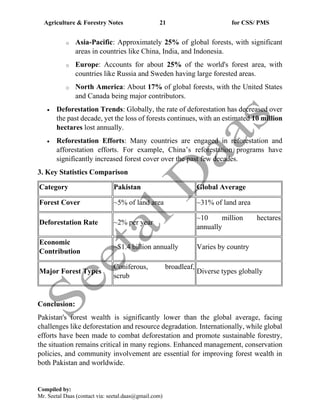
3. Key Statistics Comparison
Category Pakistan Global Average
Forest Cover ~5% of land area ~31% of land area
Deforestation Rate ~2% per year
~10 million hectares
annually
Economic
Contribution
~$1.4 billion annually Varies by country
Major Forest Types
Coniferous, broadleaf,
scrub
Diverse types globally
Conclusion:
Pakistan's forest wealth is significantly lower than the global average, facing
challenges like deforestation and resource degradation. Internationally, while global
efforts have been made to combat deforestation and promote sustainable forestry,
the situation remains critical in many regions. Enhanced management, conservation
policies, and community involvement are essential for improving forest wealth in
both Pakistan and worldwide.
Agriculture & Forestry Notes 22 for CSS/ PMS
Compiled by:
Mr. Seetal Daas (contact via: seetal.daas@gmail.com)
Role of Wildlife as Value Addition to Forestry in Pakistan and Globally:
Wildlife plays a crucial role in enhancing the value of forestry by contributing to
ecological health, economic benefits, and cultural significance. Here’s an overview
of how wildlife adds value to forestry both in Pakistan and globally.
1. Ecological Contributions
Biodiversity Maintenance
• Ecosystem Stability: Wildlife supports biodiversity, which is essential for
maintaining healthy ecosystems. Diverse species contribute to resilience
against diseases and climate changes.
• Pollination and Seed Dispersal: Many animal species, including birds and
mammals, play vital roles in pollinating plants and dispersing seeds, aiding
forest regeneration and diversity.
Habitat Quality
• Nutrient Cycling: Wildlife contributes to nutrient cycling through their
waste, which enriches the soil and promotes plant growth.
• Predation Control: Natural predators help manage pest populations,
reducing the need for chemical interventions and promoting healthier forests.
2. Economic Benefits
Eco-Tourism
• Income Generation: Wildlife attracts tourists, leading to economic benefits
through eco-tourism. In Pakistan, national parks and wildlife reserves can
boost local economies while promoting conservation.
• Sustainable Practices: Eco-tourism encourages sustainable forest
management practices, ensuring that wildlife habitats are preserved.
Non-Timber Forest Products (NTFPs)
• Wildlife and NTFPs: Many wildlife species are associated with the
production of NTFPs such as honey, mushrooms, and medicinal plants. These
products provide additional income to forest-dependent communities.
3. Cultural and Social Significance
Cultural Heritage
Agriculture & Forestry Notes 23 for CSS/ PMS
Compiled by:
Mr. Seetal Daas (contact via: seetal.daas@gmail.com)
• Symbolism and Tradition: Wildlife often holds cultural significance for
local communities, forming part of their heritage and identity. This cultural
connection can foster community support for conservation efforts.
Education and Awareness
• Conservation Education: Wildlife provides educational opportunities that
raise awareness about biodiversity and the importance of forest ecosystems,
fostering a conservation ethic among communities.
4. Challenges and Management
Threats to Wildlife
• Habitat Loss: Deforestation and land-use change threaten wildlife
populations and, by extension, the ecological value of forests.
• Human-Wildlife Conflict: In some areas, competition for resources can lead
to conflicts, necessitating effective management strategies.
Sustainable Management
• Integrated Approaches: Effective forest management practices that integrate
wildlife conservation can enhance both forest health and economic outcomes.
• Community Involvement: Engaging local communities in wildlife
conservation and management can lead to sustainable practices that benefit
both people and ecosystems.
Conclusion:
Wildlife is integral to the value of forestry, enhancing ecological stability, providing
economic benefits through eco-tourism and NTFPs, and holding cultural
significance. In Pakistan, as well as globally, recognizing and promoting the role of
wildlife in forestry can lead to more sustainable and profitable forestry practices.
Effective management strategies that integrate wildlife conservation into forest
management are essential for maintaining the health and productivity of forest
ecosystems.
Forest Based Wildlife Reservations of Pakistan and their Management, Eco-
Tourism:
Forest-Based Wildlife Reserves in Pakistan:
Agriculture & Forestry Notes 24 for CSS/ PMS
Compiled by:
Mr. Seetal Daas (contact via: seetal.daas@gmail.com)
Pakistan is home to several forest-based wildlife reserves that play a crucial role in
conserving biodiversity, protecting endangered species, and promoting eco-tourism.
Here’s an overview of notable wildlife reserves, their management practices, and the
role of eco-tourism.
1. Key Wildlife Reserves
• Kaghan Valley National Park
o Location: Mansehra District, Khyber Pakhtunkhwa.
o Features: Home to diverse wildlife, including the Himalayan black
bear, markhor, and various bird species. The park is known for its
stunning landscapes and rich biodiversity.
• Khunjerab National Park
o Location: Gilgit-Baltistan.
o Features: This high-altitude park protects the habitat of the endangered
snow leopard, ibex, and several migratory bird species. It serves as a
vital conservation area due to its unique ecosystem.
• Margalla Hills National Park
o Location: Near Islamabad.
o Features: Rich in flora and fauna, it supports species such as leopards,
monkeys, and a variety of birds. The park is easily accessible and
promotes outdoor activities.
• Chitral Gol National Park
o Location: Chitral District, Khyber Pakhtunkhwa.
o Features: Known for its diverse ecosystems, it is home to the rare
Markhor and numerous bird species. The park plays a critical role in
the conservation of unique habitats.
2. Management Practices
• Conservation Strategies:
o Protected Area Management: These reserves are managed under
specific guidelines to protect wildlife and habitats, including anti-
poaching efforts and habitat restoration.
Agriculture & Forestry Notes 25 for CSS/ PMS
Compiled by:
Mr. Seetal Daas (contact via: seetal.daas@gmail.com)
o Community Involvement: Engaging local communities in
conservation efforts helps in sustainable resource management and
reduces human-wildlife conflicts.
• Research and Monitoring: Ongoing research and monitoring programs are
essential for assessing wildlife populations and habitat health, informing
management decisions.
• Regulation and Policy: Strict regulations against illegal hunting and logging
are enforced to protect the reserves' ecological integrity.
Eco-Tourism in Pakistan
1. Role of Eco-Tourism
• Economic Benefits: Eco-tourism generates income for local communities and
provides financial support for conservation efforts. It can help fund park
management and infrastructure development.
• Awareness and Education: Eco-tourism promotes environmental awareness
and education among visitors, fostering a greater appreciation for wildlife and
natural resources.
• Community Development: Eco-tourism initiatives can empower local
communities by providing jobs and encouraging sustainable practices, helping
them benefit directly from conservation efforts.
2. Challenges and Opportunities
• Infrastructure Development: While eco-tourism has potential, inadequate
infrastructure (roads, facilities) can limit accessibility to some reserves.
Investment in sustainable infrastructure is essential.
• Balancing Conservation and Tourism: It's crucial to balance eco-tourism
activities with conservation needs to prevent habitat degradation and
disturbance to wildlife.
• Promoting Lesser-Known Areas: Efforts to promote lesser-known wildlife
reserves can help distribute tourism benefits more evenly and reduce pressure
on popular destinations.
Agriculture & Forestry Notes 26 for CSS/ PMS
Compiled by:
Mr. Seetal Daas (contact via: seetal.daas@gmail.com)
Conclusion:
Forest-based wildlife reserves in Pakistan play a vital role in conserving biodiversity
and promoting eco-tourism. Effective management practices that involve local
communities, alongside sustainable eco-tourism initiatives, can enhance the
conservation of these critical ecosystems while providing economic benefits. By
focusing on both wildlife protection and responsible tourism, Pakistan can foster a
sustainable approach to natural resource management.
Forestry, Agroforestry, Social Forestry, and Forest Biometrics in Pakistan and
Globally:
Forestry, agroforestry, social forestry, and forest biometrics are critical aspects of
sustainable land management, enhancing biodiversity, and supporting livelihoods.
Here’s an overview of each, highlighting their importance in Pakistan and globally.
1. Forestry
Overview
• Definition: Forestry involves the management, conservation, and use of
forests and forest resources for various purposes, including timber production,
habitat conservation, and recreation.
In Pakistan
• Forest Cover: Approximately 5% of the land area, primarily composed of
coniferous forests in the north and scrub forests in arid regions.
• Management Challenges: Issues like deforestation, illegal logging, and
overgrazing impact forest health and sustainability.
• Conservation Efforts: Initiatives like reforestation projects and community-
based forest management aim to restore degraded areas and increase forest
cover.
Globally
• Global Forest Area: About 31% of the world’s land area is covered by
forests, providing essential ecosystem services.
• Sustainable Forestry Practices: Many countries are implementing
sustainable forest management (SFM) practices to balance economic, social,
and environmental objectives.
Agriculture & Forestry Notes 27 for CSS/ PMS
Compiled by:
Mr. Seetal Daas (contact via: seetal.daas@gmail.com)
2. Agroforestry
Overview
• Definition: Agroforestry is the integration of trees and shrubs into agricultural
landscapes, enhancing productivity, biodiversity, and sustainability.
In Pakistan
• Practices: Common practices include alley cropping, intercropping with
trees, and silvopastoral systems.
• Benefits: Agroforestry enhances soil fertility, improves water retention, and
provides additional income through timber and non-timber forest products.
• Challenges: Limited awareness and technical knowledge among farmers can
hinder the adoption of agroforestry practices.
Globally
• Importance: Agroforestry is recognized worldwide for its role in food
security, climate change mitigation, and biodiversity conservation.
• Successful Models: Countries like Brazil and India have implemented
successful agroforestry systems that integrate food production with forest
conservation.
3. Social Forestry
Overview
• Definition: Social forestry focuses on the management and utilization of
forests to meet the needs of local communities, enhancing their livelihoods
and well-being.
In Pakistan
• Community Involvement: Initiatives often involve local communities in
forest management, providing them with rights to harvest non-timber forest
products.
• Projects: Programs like the Forest for Livelihoods Project aim to empower
communities, improve forest governance, and enhance socio-economic
conditions.
Agriculture & Forestry Notes 28 for CSS/ PMS
Compiled by:
Mr. Seetal Daas (contact via: seetal.daas@gmail.com)
• Challenges: Balancing community needs with conservation goals can be
complex and requires effective governance structures.
Globally
• Global Practices: Social forestry has gained traction in many countries,
promoting community-based management and participatory approaches.
• Benefits: Enhances local livelihoods, improves forest health, and fosters a
sense of ownership among communities.
4. Forest Biometrics
Overview
• Definition: Forest biometrics involves the measurement and analysis of forest
attributes, such as tree height, diameter, volume, and biomass, to inform
management decisions.
In Pakistan
• Data Collection: Limited capacity for systematic data collection and analysis
hampers effective forest management.
• Use in Planning: Biometrics can help assess forest health, determine growth
rates, and plan sustainable harvesting practices.
Globally
• Technological Advances: The use of remote sensing, GIS, and drones is
revolutionizing forest biometrics, allowing for more accurate and
comprehensive data collection.
• Importance: Accurate forest inventory and monitoring are essential for
sustainable forest management, policy formulation, and conservation efforts.
Conclusion:
Forestry, agroforestry, social forestry, and forest biometrics are interconnected
aspects of sustainable land and resource management. In Pakistan, these practices
are essential for addressing environmental challenges, supporting local
communities, and enhancing biodiversity. Globally, the integration of innovative
technologies and community involvement is key to achieving sustainable forest
management and addressing climate change. By prioritizing these approaches, both
Agriculture & Forestry Notes 29 for CSS/ PMS
Compiled by:
Mr. Seetal Daas (contact via: seetal.daas@gmail.com)
Pakistan and the international community can work towards a more sustainable and
resilient future.
Socio-Economic and Ecological Impact of Manmade Forests:
Manmade forests, also known as plantation forests, are established through the
deliberate planting of trees for various purposes. These forests can have significant
socio-economic and ecological impacts, which can be both positive and negative.
1. Socio-Economic Impact
Positive Impacts
• Employment Opportunities: Manmade forests can create jobs in planting,
maintenance, and harvesting, benefiting local communities and boosting local
economies.
• Timber and Non-Timber Products: They provide a sustainable source of
timber, fuelwood, and non-timber forest products (NTFPs) such as fruits, nuts,
and medicinal plants, contributing to livelihoods.
• Ecosystem Services: Manmade forests can improve air quality, stabilize soils,
and enhance water quality, providing essential services that benefit
communities.
• Rural Development: The establishment of manmade forests can lead to
infrastructure development, such as roads and facilities, improving access to
markets and services.
• Recreation and Tourism: Manmade forests can attract eco-tourism,
providing additional income streams and promoting conservation awareness.
Negative Impacts
• Displacement of Communities: Establishing manmade forests can
sometimes lead to the displacement of local communities or limit their access
to traditional lands and resources.
• Economic Dependence: Communities may become overly reliant on
manmade forests for income, which can be risky if the forest is not managed
sustainably or if market conditions change.
2. Ecological Impact
Positive Impacts
Agriculture & Forestry Notes 30 for CSS/ PMS
Compiled by:
Mr. Seetal Daas (contact via: seetal.daas@gmail.com)
• Biodiversity Conservation: While often less biodiverse than natural forests,
manmade forests can provide habitat for various species and help conserve
threatened flora and fauna.
• Carbon Sequestration: They play a role in mitigating climate change by
absorbing carbon dioxide, contributing to global carbon storage efforts.
• Soil and Water Conservation: Manmade forests can improve soil stability,
reduce erosion, and enhance water retention, benefiting local ecosystems.
• Reforestation and Afforestation: Establishing manmade forests can help
restore degraded lands and combat desertification, improving the overall
health of the landscape.
Negative Impacts
• Biodiversity Loss: Plantations often focus on a limited number of tree
species, leading to reduced biodiversity and habitat loss for native species.
• Altered Ecosystems: Manmade forests can change local hydrology and soil
composition, potentially leading to negative impacts on surrounding natural
ecosystems.
• Invasive Species: Planting non-native species can lead to the introduction of
invasive species that may outcompete local flora and disrupt ecosystems.
• Reduced Resilience: Monoculture plantations can be more susceptible to
pests and diseases, making them less resilient to environmental changes
compared to diverse natural forests.
Conclusion:
Manmade forests offer significant socio-economic benefits, including job creation
and resource provision, while also playing a role in ecological restoration and
climate change mitigation. However, careful planning and management are essential
to mitigate potential negative impacts, such as biodiversity loss and community
displacement. Balancing economic needs with ecological integrity is crucial for the
sustainable development of manmade forests, ensuring they contribute positively to
both people and the environment.
Agriculture & Forestry Notes 31 for CSS/ PMS
Compiled by:
Mr. Seetal Daas (contact via: seetal.daas@gmail.com)
Watershed Management and Role of Forests in Prevailing Climate Change
Dilemma:
Watershed management is critical for maintaining water quality, regulating water
flow, and supporting ecosystems. Forests play a vital role in this process, particularly
in the context of climate change. Here’s an overview of watershed management, the
role of forests, and their significance in Pakistan and globally.
1. Watershed Management
Definition
Watershed management involves the planning and implementation of land and water
resource practices to optimize water usage, protect ecosystems, and improve the
quality of life for communities within a watershed.
Objectives
• Soil Conservation: Reducing soil erosion and sedimentation in water bodies.
• Water Quality Improvement: Protecting water sources from pollutants and
ensuring clean drinking water.
• Biodiversity Protection: Preserving habitats for flora and fauna within the
watershed.
• Sustainable Resource Use: Balancing ecological health with human needs
for agriculture, industry, and domestic use.
2. Role of Forests in Watershed Management
In Pakistan
• Erosion Control: Forests help prevent soil erosion by stabilizing soil with
tree roots. This is crucial in mountainous regions like the Northern Areas and
Khyber Pakhtunkhwa.
• Water Regulation: Forests regulate water flow and enhance groundwater
recharge, which is vital for agriculture and drinking water supplies, especially
in arid regions.
• Microclimate Regulation: Forests contribute to local climate regulation by
maintaining humidity and reducing temperature extremes, which can
influence agricultural productivity.
Agriculture & Forestry Notes 32 for CSS/ PMS
Compiled by:
Mr. Seetal Daas (contact via: seetal.daas@gmail.com)
• Biodiversity Conservation: Forested watersheds support diverse
ecosystems, providing habitats for various species and maintaining ecological
balance.
Globally
• Carbon Sequestration: Forests play a crucial role in absorbing carbon
dioxide, mitigating climate change impacts by reducing greenhouse gases in
the atmosphere.
• Flood Mitigation: Forested watersheds can reduce the severity of floods by
absorbing excess rainfall and regulating streamflow.
• Sustainable Forestry Practices: Globally, sustainable forestry practices
integrated into watershed management contribute to long-term ecological
health and community livelihoods.
3. Climate Change Dilemmas
In Pakistan
• Increasing Vulnerability: Climate change has led to altered precipitation
patterns, causing both droughts and floods, affecting water availability and
agricultural productivity.
• Deforestation: Urbanization, agricultural expansion, and illegal logging
exacerbate the impact of climate change, reducing forest cover and their
protective functions.
• Community Resilience: Strengthening forest management and watershed
protection can enhance community resilience to climate impacts, providing
resources and ecological stability.
Globally
• Global Warming Effects: Climate change leads to rising temperatures,
changing precipitation patterns, and increased frequency of extreme weather
events, affecting water resources worldwide.
• Integrated Approaches: Successful watershed management that
incorporates forestry can help mitigate climate change impacts, promoting
adaptive capacity in vulnerable regions.
Agriculture & Forestry Notes 33 for CSS/ PMS
Compiled by:
Mr. Seetal Daas (contact via: seetal.daas@gmail.com)
• International Cooperation: Global initiatives like REDD+ (Reducing
Emissions from Deforestation and Forest Degradation) emphasize the
importance of forests in combating climate change through sustainable
management.
Conclusion:
Watershed management, supported by healthy forests, is vital for addressing the
challenges posed by climate change both in Pakistan and globally. Forests provide
essential ecosystem services, regulate water cycles, and enhance community
resilience. Prioritizing sustainable land management practices and integrating
forestry into watershed management strategies will be crucial for fostering a more
sustainable and climate-resilient future.
National Forest Laws and Policies at National Level, Biodiversity &
Environment:
Pakistan's forest laws and policies play a crucial role in managing forest resources,
conserving biodiversity, and protecting the environment. Here’s an overview of the
key frameworks, laws, and policies at the national level.
1. Key Forest Laws
Forest Act of 1927
• Overview: This is the primary legislation governing forest management in
Pakistan. It categorizes forests into reserved, protected, and village forests.
• Objectives: Aims to regulate forest use, prevent deforestation, and ensure
sustainable management of forest resources.
Pakistan Environmental Protection Act (PEPA) 1997
• Overview: Establishes a framework for environmental protection, including
the management of natural resources and biodiversity.
• Key Provisions: Introduces Environmental Impact Assessments (EIAs) for
projects affecting forests and biodiversity.
Wildlife Protection Ordinance 1972
• Overview: Focuses on the conservation of wildlife and their habitats,
regulating hunting and trade of endangered species.
Agriculture & Forestry Notes 34 for CSS/ PMS
Compiled by:
Mr. Seetal Daas (contact via: seetal.daas@gmail.com)
• Provisions: Establishes protected areas and reserves to safeguard critical
habitats.
2. National Policies
National Forest Policy (2001)
• Goals: Aims to enhance forest cover, promote sustainable forest management,
and involve local communities in forestry practices.
• Key Components:
o Community Participation: Encourages the involvement of local
communities in forest management.
o Biodiversity Conservation: Integrates biodiversity conservation
strategies into forest management practices.
National Biodiversity Strategy and Action Plan (NBSAP)
• Overview: A comprehensive framework aimed at preserving Pakistan's rich
biodiversity.
• Objectives:
o Conservation of Ecosystems: Focuses on the conservation of diverse
ecosystems, including forests, wetlands, and mountains.
o Sustainable Use of Biodiversity: Promotes the sustainable use of
biological resources to benefit local communities.
Pakistan Climate Change Policy (2012)
• Importance: Addresses the impacts of climate change on forests and
biodiversity, emphasizing the need for adaptation and mitigation strategies.
• Integration: Aims to integrate climate considerations into forestry and land
use planning.
3. Biodiversity Conservation Initiatives
Protected Areas Network
• Overview: Pakistan has established a network of protected areas, including
national parks and wildlife sanctuaries, to conserve biodiversity.
Agriculture & Forestry Notes 35 for CSS/ PMS
Compiled by:
Mr. Seetal Daas (contact via: seetal.daas@gmail.com)
• Examples: Khunjerab National Park, Margalla Hills National Park, and
Chitral Gol National Park.
Afforestation and Reforestation Programs
• Objectives: Programs like the Ten Billion Tree Tsunami aim to increase
forest cover, combat climate change, and restore degraded ecosystems.
• Community Engagement: Emphasizes community involvement in planting
and maintaining trees.
Invasive Species Management
• Policies: Efforts are being made to control and manage invasive species that
threaten native biodiversity and forest health.
4. Challenges and Opportunities
Challenges
• Deforestation: High rates of deforestation due to illegal logging,
urbanization, and agricultural expansion.
• Weak Enforcement: Limited capacity and resources for enforcing existing
laws and regulations.
• Climate Change: Increasing threats to forest ecosystems and biodiversity due
to climate change impacts.
Opportunities
• Community-Led Initiatives: Strengthening community participation can
enhance sustainable management practices and conservation efforts.
• International Support: Engaging with international organizations for
technical and financial assistance in biodiversity conservation and sustainable
forestry.
Conclusion:
Pakistan’s forest laws and policies are critical for promoting sustainable forest
management and conserving biodiversity. While challenges persist, there are
significant opportunities for enhancing community engagement and integrating
environmental considerations into national development strategies. Strengthening
Agriculture & Forestry Notes 36 for CSS/ PMS
Compiled by:
Mr. Seetal Daas (contact via: seetal.daas@gmail.com)
these frameworks will be essential for protecting Pakistan’s rich natural heritage and
ensuring sustainable development.
OVERVIEWS OF FPSC RECOMMENDED BOOKS
"Shaping the Future of Water for Agriculture"
Authors: World Bank and the United States Department of Agriculture (USDA)
Publication Date: 2018
Focus: This report addresses the critical relationship between water management
and agricultural productivity, particularly in the context of global challenges such as
climate change, population growth, and food security.
Key Themes:
1. Water Scarcity: The book highlights the increasing pressure on freshwater
resources due to rising agricultural demands, urbanization, and climate
variability. It emphasizes the urgency of efficient water use in agriculture to
ensure food security.
2. Sustainable Practices: It advocates for sustainable water management
practices that can enhance agricultural productivity while conserving water
resources. Techniques such as drip irrigation, rainwater harvesting, and crop
selection based on water availability are discussed.
3. Policy Recommendations: The report provides policy frameworks aimed at
improving water governance, incentivizing efficient water use, and fostering
collaboration among stakeholders, including governments, farmers, and
private sectors.
4. Innovative Solutions: The authors emphasize the need for technological
innovation, such as precision agriculture and advanced irrigation systems, to
optimize water use in farming.
5. Climate Change Adaptation: The book discusses strategies for adapting
agricultural practices to the impacts of climate change, stressing the
importance of resilience in water management.
6. Global Case Studies: It includes examples from various countries
showcasing successful water management initiatives in agriculture,
illustrating best practices and lessons learned.
Agriculture & Forestry Notes 37 for CSS/ PMS
Compiled by:
Mr. Seetal Daas (contact via: seetal.daas@gmail.com)
Conclusion:
"Shaping the Future of Water for Agriculture" serves as a comprehensive guide for
policymakers, practitioners, and researchers, providing insights into the challenges
and opportunities in water management for agriculture. It emphasizes that effective
water management is crucial not only for agricultural productivity but also for
broader goals related to food security, environmental sustainability, and economic
development.
"Participatory Rural Development in Pakistan"
Author: M. H. Khan
Focus: This book explores the concept and practice of participatory rural
development (PRD) in Pakistan, emphasizing the importance of community
involvement in the development process.
Key Themes:
1. Concept of Participatory Development:
o The book discusses the principles of participatory development,
highlighting the necessity of engaging local communities in decision-
making processes that affect their lives and livelihoods.
2. Historical Context:
o Khan provides a historical overview of rural development initiatives in
Pakistan, assessing past approaches and their effectiveness in
addressing the needs of rural populations.
3. Community Empowerment:
o The author emphasizes the significance of empowering communities
by building their capacities and encouraging local ownership of
development projects.
4. Case Studies and Examples:
o The book includes various case studies that illustrate successful
participatory development projects, showcasing strategies that have
effectively improved the socio-economic conditions of rural
communities.
5. Policy Implications:
Agriculture & Forestry Notes 38 for CSS/ PMS
Compiled by:
Mr. Seetal Daas (contact via: seetal.daas@gmail.com)
o Khan discusses the implications of participatory rural development for
policymakers, advocating for the integration of participatory
approaches in government programs and strategies.
6. Challenges:
o The text addresses the challenges faced in implementing participatory
development, such as bureaucratic resistance, lack of resources, and
socio-cultural barriers.
Conclusion:
"Participatory Rural Development in Pakistan" is a critical resource for
understanding how participatory approaches can enhance rural development efforts
in Pakistan. By focusing on community engagement and empowerment, Khan
provides valuable insights for policymakers, development practitioners, and
researchers aiming to create sustainable and inclusive rural development strategies.
The book underscores that meaningful participation is essential for achieving lasting
improvements in the livelihoods of rural populations.
"Fundamentals of Soil Science"
Author: Henry D. Foth
Focus: This foundational text provides a comprehensive introduction to the
principles of soil science, covering the physical, chemical, and biological properties
of soils and their significance in agricultural and environmental contexts.
Key Themes:
1. Soil Formation and Classification:
o The book discusses the processes of soil formation, including
weathering and organic matter accumulation, and presents
classification systems that categorize soils based on their properties and
horizons.
2. Physical Properties of Soil:
o Foth covers key physical characteristics such as soil texture, structure,
porosity, and moisture retention, explaining their implications for plant
growth and water movement.
3. Chemical Properties of Soil:
Agriculture & Forestry Notes 39 for CSS/ PMS
Compiled by:
Mr. Seetal Daas (contact via: seetal.daas@gmail.com)
o The text explores soil chemistry, including pH, nutrient availability,
cation exchange capacity, and the role of organic matter in soil fertility
and health.
4. Biological Properties of Soil:
o The author examines the soil ecosystem, focusing on microorganisms,
macroorganisms, and their interactions, emphasizing the importance of
soil biology in nutrient cycling and soil health.
5. Soil Management:
o The book addresses practical aspects of soil management in agriculture,
discussing practices that enhance soil productivity, prevent erosion, and
promote sustainability.
6. Environmental Considerations:
o Foth highlights the role of soils in environmental issues, including
pollution, land degradation, and climate change, underscoring the need
for responsible soil management.
Conclusion:
"Fundamentals of Soil Science" serves as an essential resource for students,
educators, and professionals in agriculture, environmental science, and related
fields. Foth's comprehensive approach provides a solid foundation in soil science,
equipping readers with the knowledge to understand and manage soils effectively
for sustainable agricultural practices and environmental stewardship.
"Irrigation Principles & Practices"
Authors: O.W. Isrealson and E. Hansen Vaughn
Focus: This book provides an in-depth exploration of the principles and practices of
irrigation, emphasizing the design, management, and efficiency of irrigation systems
in agricultural settings.
Key Themes:
1. Irrigation Fundamentals:
o The authors introduce the basic concepts of irrigation, including the
importance of water in agriculture, types of irrigation systems, and the
principles of water movement in soils.
Agriculture & Forestry Notes 40 for CSS/ PMS
Compiled by:
Mr. Seetal Daas (contact via: seetal.daas@gmail.com)
2. Design of Irrigation Systems:
o The book covers the technical aspects of designing irrigation systems,
including layout, selection of components, and sizing of pipes and
channels to ensure effective water delivery.
3. Water Management:
o Emphasis is placed on efficient water management practices that
maximize crop yield while minimizing waste. This includes scheduling
irrigation, monitoring soil moisture, and adapting to climatic
conditions.
4. Irrigation Methods:
o Various irrigation methods are discussed, including surface, drip, and
sprinkler irrigation. The advantages and disadvantages of each method
are evaluated in the context of different crops and environmental
conditions.
5. Soil-Water Relationships:
o The authors explore the interaction between soil and water, discussing
concepts such as field capacity, wilting point, and soil water retention,
which are crucial for effective irrigation management.
6. Environmental Considerations:
o The book highlights the environmental impacts of irrigation practices,
including water conservation, salinity issues, and the importance of
sustainable practices to protect water resources.
7. Case Studies and Applications:
o Practical examples and case studies illustrate the application of
irrigation principles in real-world scenarios, helping readers understand
the complexities of irrigation management.
Conclusion:
"Irrigation Principles & Practices" is an essential resource for students, agricultural
professionals, and practitioners involved in water resource management. The book’s
comprehensive approach equips readers with the knowledge and skills needed to
Agriculture & Forestry Notes 41 for CSS/ PMS
Compiled by:
Mr. Seetal Daas (contact via: seetal.daas@gmail.com)
design and manage efficient irrigation systems that enhance agricultural productivity
while promoting sustainable water use.

Agriculture & Forestry Notes for CSS.PMS new.pdf

  • 1.
    Agriculture & ForestryNotes 1 for CSS/ PMS Compiled by: Mr. Seetal Daas (contact via: seetal.daas@gmail.com) AGRICULTURE AND FORESTRY Part-I: Agriculture Concept of Integrated Agriculture: Integrated agriculture in Pakistan emphasizes the harmonious utilization of various natural resources to enhance agricultural productivity while ensuring sustainability. Here’s a breakdown of the key components: 1. Land • Soil Management: Ensuring healthy soils through practices like crop rotation, cover cropping, and organic amendments. • Land Use Planning: Optimal allocation of land for different types of crops and livestock based on soil characteristics and climate. 2. Water • Irrigation Systems: Utilizing efficient irrigation methods (drip, sprinkler) to conserve water and improve crop yield. • Water Harvesting: Implementing techniques to capture and store rainwater, particularly in arid regions. 3. Biological Resources • Biodiversity: Promoting diverse crops and livestock to enhance resilience against pests and diseases. • Agroforestry: Integrating trees with crops and livestock to improve soil health and provide additional income sources. 4. Environmental Considerations • Ecosystem Services: Protecting natural ecosystems that support agriculture, such as wetlands and forests. • Sustainable Practices: Reducing chemical inputs and adopting organic farming practices to minimize environmental impact. 5. Solar Energy • Renewable Energy Utilization: Harnessing solar energy for irrigation, heating, and powering agricultural machinery.
  • 2.
    Agriculture & ForestryNotes 2 for CSS/ PMS Compiled by: Mr. Seetal Daas (contact via: seetal.daas@gmail.com) • Photosynthesis Optimization: Using practices that enhance photosynthesis efficiency, such as intercropping. 6. Energy • Sustainable Energy Solutions: Incorporating biogas and biofuels to power agricultural operations, reducing reliance on fossil fuels. • Energy Efficiency: Employing energy-efficient technologies in farming equipment and processes. Conclusion: The integrated agriculture approach in Pakistan aims to optimize the use of these natural resources collectively, leading to increased agricultural productivity, improved food security, and environmental sustainability. By focusing on the interconnections between these components, farmers can develop resilient systems that adapt to changing climatic conditions and economic pressures. Challenges in Pakistan’s Agriculture: Pakistan’s agriculture sector faces numerous challenges that hinder its productivity and sustainability. Here’s an analytical overview of the present scenario, future prospects, and strategies for improvement across various sectors: 1. Current Issues in Agriculture • Water Scarcity: Overextraction of groundwater and inefficient irrigation practices lead to severe water shortages. • Soil Degradation: Continuous use of chemical fertilizers and monoculture has led to soil fertility loss and erosion. • Climate Change: Extreme weather events, shifting rainfall patterns, and rising temperatures affect crop yields. • Pest and Disease Pressure: Increased pest resistance and emerging diseases threaten crop and livestock health. • Economic Constraints: Farmers often lack access to credit, markets, and technology, limiting their productivity. • Infrastructure Deficiencies: Poor transportation and storage facilities lead to post-harvest losses.
  • 3.
    Agriculture & ForestryNotes 3 for CSS/ PMS Compiled by: Mr. Seetal Daas (contact via: seetal.daas@gmail.com) 2. Future Prospects • Technological Innovations: Adoption of precision agriculture, biotechnology, and digital farming tools can enhance productivity. • Sustainable Practices: Increasing emphasis on organic farming and agroecological practices can improve resilience. • Market Access: Enhancing supply chains and market infrastructure can help farmers get better prices for their produce. • Climate-Resilient Varieties: Development of drought- and flood-resistant crop varieties will be crucial for adaptation. Strategies for Improvement A. Crop Management • Diversification: Encourage crop rotation and intercropping to enhance soil health and reduce pest outbreaks. • Sustainable Fertilizer Use: Promote organic fertilizers and integrated nutrient management systems. • Water Management: Implement water-saving irrigation technologies like drip and sprinkler systems. B. Livestock Management • Genetic Improvement: Focus on breeding programs to enhance livestock productivity and disease resistance. • Health Management: Improve veterinary services and vaccination programs to prevent livestock diseases. • Integrated Systems: Encourage agro-pastoral systems that combine crop and livestock farming. C. Fisheries • Sustainable Practices: Promote responsible fishing and aquaculture practices to ensure long-term sustainability. • Capacity Building: Train fish farmers on best practices, disease management, and feed optimization. D. Cottage Industry
  • 4.
    Agriculture & ForestryNotes 4 for CSS/ PMS Compiled by: Mr. Seetal Daas (contact via: seetal.daas@gmail.com) • Skill Development: Provide training programs for rural artisans to enhance product quality and marketability. • Access to Markets: Develop local and international market linkages for cottage industry products. E. Resource Management • Soil Conservation: Implement practices such as contour farming and terracing to prevent soil erosion. • Water Resource Management: Invest in rainwater harvesting and watershed management programs. F. Rural Development • Infrastructure Development: Improve rural roads, storage facilities, and access to energy to boost agricultural productivity. • Microfinance Solutions: Expand access to credit for smallholder farmers to invest in modern farming techniques. Institutions and Policies Current Issues • Fragmented Policies: Lack of coherence between agricultural policies and other sectors like water and environment. • Weak Institutional Framework: Limited capacity of agricultural institutions to implement and monitor policies effectively. • Research Gaps: Insufficient investment in agricultural research and development limits innovation. Options for Improvement • Integrated Policy Framework: Develop a cohesive policy that aligns agriculture, water management, and rural development strategies. • Strengthening Institutions: Enhance the capacity of agricultural research organizations and extension services to better serve farmers. • Public-Private Partnerships: Encourage collaboration between government, NGOs, and the private sector to boost innovation and investment in agriculture.
  • 5.
    Agriculture & ForestryNotes 5 for CSS/ PMS Compiled by: Mr. Seetal Daas (contact via: seetal.daas@gmail.com) Conclusion: Addressing the challenges in Pakistan’s agriculture requires a multifaceted approach that combines technological innovation, sustainable practices, and effective policy frameworks. By focusing on the interconnections within the agricultural sector and investing in capacity building, Pakistan can enhance its agricultural productivity and ensure food security for its growing population. Elements of Climate and their Relationship with Crop Growth: Understanding the relationship between climate elements and crop growth is crucial for effective farming systems. Here’s an overview of the key elements and their interconnections: 1. Climate Elements and Crop Growth • Temperature: Affects seed germination, flowering, and maturity. Different crops have optimal temperature ranges for growth. • Precipitation: Determines water availability, impacting irrigation needs and crop yields. Excessive rainfall can lead to waterlogging. • Humidity: Influences transpiration rates and pest/disease prevalence. High humidity can promote fungal diseases. • Sunlight: Essential for photosynthesis. Variations in sunlight affect growth rates and yields of crops. • Wind: Can cause physical damage to crops and affect moisture loss through evaporation. 2. Farming Systems • Conventional vs. Sustainable: Traditional systems often rely on chemical inputs, while sustainable systems focus on crop rotation, organic inputs, and conservation practices. • Integrated Farming: Combines crops, livestock, and other enterprises to maximize resource use efficiency and reduce risks. 3. Biological Nitrogen Fixation • Role in Agriculture: Leguminous crops (e.g., peas, beans) can fix atmospheric nitrogen, improving soil fertility.
  • 6.
    Agriculture & ForestryNotes 6 for CSS/ PMS Compiled by: Mr. Seetal Daas (contact via: seetal.daas@gmail.com) • Climate Influence: Temperature and moisture conditions affect the activity of nitrogen-fixing bacteria, impacting crop growth. 4. Soil Profile, Structure, and Texture • Soil Profile: The vertical arrangement of soil layers (horizons) affects root development and nutrient availability. • Soil Structure: Well-structured soils allow better air and water movement, essential for healthy crop growth. • Soil Texture: The proportion of sand, silt, and clay influences water retention, drainage, and nutrient availability. For example, clay retains water but may restrict root growth. 5. Soil Fertility • Essential Nutrients: Nitrogen, phosphorus, and potassium are vital for crop growth. Soil fertility management involves balancing these nutrients through organic and inorganic fertilizers. • Climate Impact: Climate conditions can affect nutrient cycling and availability. For example, high temperatures may accelerate organic matter decomposition, altering nutrient dynamics. 6. Soil Erosion and Conservation • Erosion Factors: Wind and water erosion can deplete topsoil, reducing fertility and impacting crop yields. Intense rainfall can exacerbate this. • Conservation Practices: Techniques such as contour farming, terracing, and cover cropping help prevent erosion and maintain soil health. 7. Waterlogging and Salinity • Waterlogging: Excess water can suffocate roots, leading to reduced crop growth. Poor drainage and high rainfall can exacerbate this issue. • Salinity: High salt concentrations in the soil can inhibit water uptake by plants. It often results from poor irrigation practices and can be worsened by evaporation in arid climates. • Management Strategies: Implementing proper drainage systems and selecting salt-tolerant crop varieties can mitigate these issues.
  • 7.
    Agriculture & ForestryNotes 7 for CSS/ PMS Compiled by: Mr. Seetal Daas (contact via: seetal.daas@gmail.com) Conclusion: The interplay between climate elements and agricultural practices significantly impacts crop growth and productivity. By understanding these relationships, farmers can adopt better management strategies that enhance soil health, optimize water use, and improve overall crop performance, leading to sustainable agricultural systems. Genetic Improvement for Crop Production: Genetic improvement in crop production is essential for enhancing yield, resilience, and sustainability. Here’s an overview of key aspects, including genetically modified organisms (GMO) and seed production technology. 1. Genetically Modified Organisms (GMOs) Overview • Definition: GMOs are crops that have been genetically altered using biotechnology to exhibit specific traits such as pest resistance, herbicide tolerance, or improved nutritional content. • Advantages: i. Increased Yield: GMOs can lead to higher productivity by reducing losses from pests and diseases. ii. Pest and Disease Resistance: Crops like Bt cotton and Bt corn produce their own insecticides, reducing the need for chemical pesticides. iii. Herbicide Tolerance: Crops engineered to resist specific herbicides allow for easier weed management without damaging the crops. iv. Enhanced Nutritional Value: Biofortified crops, such as Golden Rice, are designed to provide essential nutrients, addressing malnutrition. Challenges • Public Perception: There is ongoing debate and skepticism regarding the safety and ethics of GMOs, impacting adoption rates. • Biodiversity Concerns: The use of GMOs may impact local biodiversity and lead to unintended consequences in ecosystems. • Regulatory Hurdles: Strict regulations can delay the approval and commercialization of GMO crops.
  • 8.
    Agriculture & ForestryNotes 8 for CSS/ PMS Compiled by: Mr. Seetal Daas (contact via: seetal.daas@gmail.com) 2. Seed Production Technology Seed Quality and Production • Hybrid Seed Production: Hybrid seeds are produced by crossbreeding different plant varieties to produce offspring with desirable traits, such as higher yields or disease resistance. • Seed Treatment: Treatments may include fungicides and insecticides to protect seeds during germination and early growth stages. Advances in Seed Technology • Precision Breeding: Techniques like CRISPR and genome editing allow for precise modifications in crops, improving traits without introducing foreign DNA. • Tissue Culture: This technique enables the propagation of plants in a controlled environment, ensuring disease-free and uniform seed production. • Seed Coating Technology: Enhancements such as polymer coatings can improve seed performance, protect against pests, and provide nutrients during early growth. Seed Distribution and Accessibility • Research and Development: Investment in research to develop high-quality, region-specific seeds can improve local food security. • Farmer Education: Educating farmers on the benefits of quality seeds and proper planting techniques can lead to better adoption and crop performance. • Seed Banks: Establishing seed banks helps conserve genetic diversity and provides a resource for breeding programs. Conclusion: Genetic improvement through GMOs and advanced seed production technologies plays a crucial role in modern agriculture. These innovations help address challenges such as food security, climate resilience, and sustainability. However, balancing the benefits with public perception, regulatory considerations, and biodiversity protection is essential for the responsible advancement of agricultural biotechnology.
  • 9.
    Agriculture & ForestryNotes 9 for CSS/ PMS Compiled by: Mr. Seetal Daas (contact via: seetal.daas@gmail.com) Horticulture: Horticulture is a branch of agriculture that focuses on the cultivation of plants, including fruits, vegetables, nuts, seeds, herbs, mushrooms, algae, flowers, seaweeds, and non-food crops. Key areas within horticulture include floriculture, landscaping, and pest and disease management. 1. Floriculture • Definition: Floriculture is the cultivation of flowering and ornamental plants for gardens, floral industry, and landscaping. • Key Practices: i. Plant Propagation: Techniques include seeds, cuttings, and tissue culture to produce quality flowers. ii. Soil and Fertilization: Soil health is maintained through appropriate amendments and fertilizers tailored for flowering plants. iii. Water Management: Efficient irrigation systems (like drip irrigation) are used to optimize water use and ensure healthy plant growth. • Economic Importance: The floriculture industry contributes significantly to the economy by providing employment and generating income through exports of cut flowers, potted plants, and landscaping services. 2. Landscaping • Definition: Landscaping involves designing and maintaining outdoor spaces using plants, trees, and other features to enhance aesthetic and functional value. • Key Elements: i. Design Principles: Incorporating color, texture, and seasonal interest to create visually appealing spaces. ii. Plant Selection: Choosing appropriate plants based on climate, soil, and water availability to ensure sustainability. iii. Maintenance: Regular upkeep, including pruning, fertilizing, and pest control, to maintain the health and appearance of landscapes. 3. Pests and Diseases of Agricultural Crops
  • 10.
    Agriculture & ForestryNotes 10 for CSS/ PMS Compiled by: Mr. Seetal Daas (contact via: seetal.daas@gmail.com) • Common Pests: i. Insects: Aphids, caterpillars, and beetles can damage crops through feeding and transmitting diseases. ii. Weeds: Compete with crops for nutrients, water, and light, hindering growth. • Common Diseases: i. Fungal: Powdery mildew, root rot, and blight can significantly reduce crop yields. ii. Bacterial and Viral: Bacterial wilt and viral infections can lead to crop failure. 4. Pest Control Strategies Integrated Pest Management (IPM) • Definition: IPM is a holistic approach to pest control that integrates various management strategies to minimize pest damage while reducing the use of chemical pesticides. • Components of IPM: i. Monitoring and Identification: Regularly scout for pests and accurately identify them to determine the appropriate control measures. ii. Cultural Controls: Practices such as crop rotation, intercropping, and proper sanitation to create an environment less conducive to pests. iii. Biological Controls: Utilizing natural predators (e.g., ladybugs for aphids) or pathogens (e.g., fungi that attack pest insects) to manage pest populations. iv. Mechanical and Physical Controls: Methods such as traps, barriers, or handpicking to reduce pest numbers. v. Chemical Controls: When necessary, using pesticides judiciously and as a last resort, selecting targeted and environmentally friendly options. Conclusion: Horticulture encompasses a diverse range of practices that enhance both aesthetic and agricultural value. Floriculture and landscaping contribute significantly to
  • 11.
    Agriculture & ForestryNotes 11 for CSS/ PMS Compiled by: Mr. Seetal Daas (contact via: seetal.daas@gmail.com) economies and communities, while effective pest and disease management is crucial for maintaining healthy crops. Integrated pest management serves as a sustainable approach, balancing agricultural productivity with environmental health. By adopting these practices, the horticulture sector can thrive while minimizing its impact on ecosystems. Rainfed and Irrigated Agriculture: Rainfed and irrigated agriculture are two primary farming systems that depend on different water sources and management practices. Here’s a detailed overview of each system, their characteristics, advantages, challenges, and potential strategies for improvement. 1. Rainfed Agriculture: Overview • Definition: Rainfed agriculture relies on rainfall for water supply, with no supplemental irrigation. It is commonly practiced in regions where water resources are limited. • Characteristics: o Depends on local rainfall patterns and seasonal variations. o Crops are typically sown during the rainy season. o Soil moisture availability is crucial for crop growth. Advantages • Cost-Effective: Lower infrastructure costs compared to irrigation systems. • Sustainability: Utilizes natural rainfall, reducing reliance on water extraction from rivers or aquifers. • Soil Conservation: Encourages practices that promote soil health and moisture retention. Challenges • Variable Rainfall: Dependence on unpredictable rainfall can lead to crop failures during droughts or flooding. • Soil Degradation: Erosion and nutrient depletion can occur without proper management.
  • 12.
    Agriculture & ForestryNotes 12 for CSS/ PMS Compiled by: Mr. Seetal Daas (contact via: seetal.daas@gmail.com) • Limited Crop Diversity: Farmers often stick to drought-resistant crops, which can limit biodiversity. Improvement Strategies • Soil Management: Implementing conservation tillage, cover cropping, and organic amendments to enhance soil moisture retention. • Crop Selection: Growing drought-resistant and indigenous crop varieties that are better adapted to local conditions. • Rainwater Harvesting: Building structures to capture and store rainwater for use during dry spells. 2. Irrigated Agriculture Overview • Definition: Irrigated agriculture involves applying controlled amounts of water to crops to enhance growth and yield. It is prevalent in areas with insufficient rainfall. • Characteristics: o Water is supplied from various sources, including rivers, lakes, groundwater, and reservoirs. o Irrigation systems can be surface, drip, or sprinkler-based, depending on the crop and available resources. Advantages • Increased Yields: More reliable water supply allows for higher crop productivity and multiple cropping seasons. • Diverse Crop Production: Enables the cultivation of a wider range of crops, including those that require more water. • Drought Mitigation: Reduces vulnerability to droughts by ensuring consistent water availability. Challenges • Water Scarcity: Over-extraction of water resources can lead to depletion of aquifers and rivers.
  • 13.
    Agriculture & ForestryNotes 13 for CSS/ PMS Compiled by: Mr. Seetal Daas (contact via: seetal.daas@gmail.com) • Soil Salinity: Poor irrigation practices can result in salinization, harming soil health and crop yields. • Infrastructure Costs: Initial setup for irrigation systems can be high, and ongoing maintenance is required. Improvement Strategies • Efficient Irrigation: Implementing precision irrigation techniques like drip or subsurface irrigation to optimize water use. • Water Management Policies: Developing and enforcing regulations to manage water resources sustainably. • Soil Management: Using practices such as leaching and the application of gypsum to mitigate salinity issues. Conclusion Both rainfed and irrigated agriculture play crucial roles in food production and rural livelihoods. Understanding their respective advantages and challenges is essential for developing effective agricultural policies and practices. Integrating sustainable practices, improving water management, and adapting to climate change are key to enhancing productivity and resilience in both systems. By adopting strategies tailored to local conditions, farmers can optimize their agricultural systems for better yields and sustainability. Part-II: Forestry Forest, Rangelands and Wild Life Importance and Significance: Forests, rangelands, and wildlife are vital components of the Earth’s ecosystems, providing numerous environmental, economic, and social benefits. Here’s an overview of their importance and significance: 1. Forests Importance • Biodiversity: Forests are home to approximately 80% of the world’s terrestrial biodiversity, supporting countless species of plants, animals, and microorganisms. • Carbon Sequestration: Trees absorb carbon dioxide, playing a crucial role in mitigating climate change by reducing greenhouse gases in the atmosphere.
  • 14.
    Agriculture & ForestryNotes 14 for CSS/ PMS Compiled by: Mr. Seetal Daas (contact via: seetal.daas@gmail.com) • Soil Conservation: Forests help prevent soil erosion and maintain soil fertility through leaf litter and root systems that stabilize the ground. • Water Regulation: Forests play a key role in maintaining the water cycle, regulating flow, and improving water quality by filtering pollutants. • Economic Resources: They provide timber, non-timber forest products (like fruits, nuts, and medicinal plants), and contribute to livelihoods through forestry and tourism. Significance • Cultural Value: Forests hold significant cultural, spiritual, and recreational value for many communities, offering spaces for traditional practices and activities. • Climate Regulation: They influence local and global climate patterns, contributing to rainfall and temperature moderation. 2. Rangelands Importance • Livestock Grazing: Rangelands are crucial for grazing livestock, supporting pastoral communities and contributing to food security and livelihoods. • Biodiversity: These ecosystems support a variety of flora and fauna, including many species adapted to arid and semi-arid environments. • Soil and Water Conservation: Healthy rangelands prevent soil erosion, enhance soil fertility, and help retain water in landscapes prone to drought. Significance • Cultural Heritage: Rangelands are often tied to the cultural identity and traditions of pastoral communities, who rely on these lands for their way of life. • Carbon Storage: They also contribute to carbon sequestration, albeit to a lesser extent than forests. 3. Wildlife Importance
  • 15.
    Agriculture & ForestryNotes 15 for CSS/ PMS Compiled by: Mr. Seetal Daas (contact via: seetal.daas@gmail.com) • Ecosystem Health: Wildlife plays a critical role in maintaining ecosystem balance through processes such as pollination, seed dispersal, and predator- prey dynamics. • Biodiversity: The presence of diverse wildlife species enhances ecosystem resilience and adaptability to environmental changes. • Economic Value: Wildlife contributes to economies through ecotourism, hunting, and the sustainable use of wildlife resources. Significance • Cultural and Aesthetic Value: Wildlife is integral to many cultures, often symbolizing heritage, spirituality, and natural beauty. Wildlife observation and photography contribute to recreation and tourism. • Scientific Research: Wildlife studies provide insights into ecological processes, conservation strategies, and climate change impacts. Conclusion: Forests, rangelands, and wildlife are interdependent and form essential ecosystems that support life on Earth. Their conservation and sustainable management are crucial for maintaining biodiversity, mitigating climate change, and ensuring the livelihoods of millions of people. Protecting these natural resources is not only an environmental imperative but also vital for social, cultural, and economic well- being. Sustainable practices, policies, and community engagement are essential for preserving these invaluable ecosystems for future generations. Forest management and utilization, wood based industries in Pakistan, silviculture: Forest Management and Utilization in Pakistan: Pakistan's forest resources are crucial for the country's economy, biodiversity, and environmental health. Effective forest management and sustainable utilization practices are essential for maintaining these resources. 1. Forest Management • Sustainable Practices: Implementing sustainable forest management (SFM) practices helps ensure that forests meet the needs of present and future generations. This includes maintaining biodiversity, protecting soil and water resources, and ensuring forest health.
  • 16.
    Agriculture & ForestryNotes 16 for CSS/ PMS Compiled by: Mr. Seetal Daas (contact via: seetal.daas@gmail.com) • Community Involvement: Engaging local communities in forest management is vital. Community-based forestry programs can empower local populations and enhance conservation efforts. • Reforestation and Afforestation: Efforts to reforest degraded areas and afforest barren lands are crucial for increasing forest cover and enhancing carbon sequestration. • Policy and Regulation: Strong policies and regulatory frameworks are needed to combat deforestation, illegal logging, and land conversion. Effective monitoring and enforcement mechanisms are essential. 2. Utilization of Forest Resources • Timber Production: Forests provide timber, which is vital for construction, furniture making, and other industries. Sustainable harvesting practices ensure that timber extraction does not compromise forest health. • Non-Timber Forest Products (NTFPs): Forests offer a variety of NTFPs, including fruits, nuts, medicinal plants, and resins. Promoting the sustainable harvesting of these products can enhance livelihoods while preserving ecosystems. • Ecotourism: Forests have significant potential for ecotourism, which can provide economic benefits while promoting conservation and awareness. Wood-Based Industries in Pakistan: 1. Overview Wood-based industries are a critical sector in Pakistan's economy, providing jobs and contributing to GDP. These industries include timber processing, furniture manufacturing, and the production of paper and wood products. 2. Key Industries • Furniture Manufacturing: Pakistan has a rich tradition of handcrafted furniture. The industry has the potential for growth by incorporating modern design and production techniques. • Timber Processing: Sawmills and processing plants convert raw timber into usable products, such as lumber, plywood, and veneers.
  • 17.
    Agriculture & ForestryNotes 17 for CSS/ PMS Compiled by: Mr. Seetal Daas (contact via: seetal.daas@gmail.com) • Paper and Pulp Industry: Utilizing wood and non-wood fibers, this sector produces paper products. Sustainable sourcing of raw materials is essential to reduce environmental impact. 3. Challenges • Deforestation and Resource Depletion: Unsustainable logging practices threaten forest resources, impacting the availability of raw materials for industries. • Lack of Technology: Many wood-based industries in Pakistan lack modern technology, which can limit productivity and competitiveness. • Regulatory Issues: Inconsistent regulations and lack of enforcement can lead to illegal logging and unsustainable practices. Silviculture Definition: Silviculture is the practice of managing and cultivating forests to meet diverse objectives, including timber production, wildlife habitat, recreation, and conservation. 2. Key Practices • Site Preparation: Ensuring that the land is suitable for planting trees, which may include clearing, tilling, and enriching the soil. • Planting Techniques: Choosing appropriate tree species and planting methods based on local conditions, climate, and intended use. • Thinning and Pruning: These practices promote healthy growth and improve timber quality by reducing competition among trees and removing lower branches. • Harvesting: Implementing sustainable harvesting techniques ensures that forests can regenerate and continue to provide resources. 3. Importance in Pakistan • Restoration of Degraded Lands: Silviculture can help restore degraded lands and increase forest cover, which is vital for ecological balance. • Biodiversity Conservation: Proper silvicultural practices can enhance habitat quality for various species, contributing to biodiversity conservation.
  • 18.
    Agriculture & ForestryNotes 18 for CSS/ PMS Compiled by: Mr. Seetal Daas (contact via: seetal.daas@gmail.com) • Economic Benefits: Effective silviculture can lead to improved timber quality and yield, supporting the wood-based industries and contributing to local economies. Conclusion: Forest management, utilization of wood-based industries, and silviculture are interconnected aspects of sustainable forestry in Pakistan. By promoting sustainable practices and involving local communities, Pakistan can enhance its forest resources, support economic development, and conserve biodiversity. Addressing challenges such as deforestation and technological gaps is essential for the long-term health and productivity of forests and associated industries. Range Management and Utilization: Range Management: involves the careful management of rangelands to sustain their ecological health and productivity. Rangelands, which include grasslands, savannas, shrublands, and some forested areas, are essential for livestock grazing, wildlife habitat, and ecosystem services. Global Perspective: 1. Importance of Rangelands • Ecosystem Services: Rangelands provide critical services such as carbon storage, water regulation, and soil conservation. • Biodiversity: They support a wide variety of plant and animal species, contributing to global biodiversity. • Livestock Production: A significant portion of the world's livestock is raised on rangelands, providing meat, milk, and other products. 2. Management Practices • Sustainable Grazing: Rotational grazing systems help prevent overgrazing and promote plant recovery. • Restoration Efforts: Degraded rangelands can be restored through techniques such as reseeding native plants and managing livestock density. • Integrated Approaches: Combining wildlife conservation with livestock production to enhance ecological and economic outcomes. 3. Challenges
  • 19.
    Agriculture & ForestryNotes 19 for CSS/ PMS Compiled by: Mr. Seetal Daas (contact via: seetal.daas@gmail.com) • Climate Change: Changing weather patterns can affect forage availability and water resources. • Overgrazing: Unsustainable grazing practices can lead to soil degradation, loss of vegetation, and desertification. • Land Use Conflicts: Competing demands for land for agriculture, urbanization, and conservation can threaten rangeland sustainability. Rangeland Management in Pakistan: 1. Significance of Rangelands • Economic Contribution: Rangelands support the livelihoods of pastoral communities and contribute to the economy through livestock production. • Biodiversity: Pakistan's rangelands are home to diverse flora and fauna, some of which are endemic to the region. 2. Current Practices • Traditional Grazing Systems: Many communities practice nomadic or semi- nomadic grazing, moving livestock to access seasonal pastures. • Community-Based Management: In some areas, local communities are involved in managing rangelands, promoting sustainable practices. 3. Challenges in Pakistan • Overgrazing: Increased livestock numbers and unsustainable grazing practices lead to significant degradation of rangeland resources. • Desertification: Factors such as deforestation, climate change, and unsustainable land use contribute to desertification in arid regions. • Water Scarcity: Limited water resources exacerbate rangeland degradation, affecting both livestock and wildlife. 4. Improvement Strategies • Sustainable Grazing Practices: Implementing rotational grazing and controlled stocking rates to allow vegetation recovery. • Restoration Initiatives: Reseeding native grasses and managing invasive species to restore degraded rangelands.
  • 20.
    Agriculture & ForestryNotes 20 for CSS/ PMS Compiled by: Mr. Seetal Daas (contact via: seetal.daas@gmail.com) • Policy and Education: Developing policies that promote sustainable rangeland management and educating local communities on best practices. Conclusion: Effective rangeland management is essential for sustaining ecosystems, supporting livelihoods, and preserving biodiversity both globally and in Pakistan. By adopting sustainable practices and addressing challenges such as overgrazing and climate change, it is possible to enhance the productivity and health of rangelands, benefiting both local communities and the environment. National and International Forest Wealth Statistics: 1. Pakistan's Forest Wealth • Forest Cover: As of recent estimates, Pakistan's forest cover is approximately 5% of its total land area, which translates to around 4.2 million hectares. This is relatively low compared to global averages. • Types of Forests: o Coniferous Forests: Predominantly found in the northern mountainous regions, comprising about 47% of the total forest area. o Broadleaf Forests: Includes mixed forests in temperate regions. o Scrub Forests: Common in arid and semi-arid areas, accounting for around 40% of the forest cover. • Deforestation Rate: The country faces a significant deforestation rate, estimated at around 2% per year, primarily due to logging, urbanization, and agricultural expansion. • Economic Contribution: Forests contribute to the economy through timber, non-timber forest products, and ecosystem services, valued at approximately $1.4 billion annually. 2. International Forest Wealth • Global Forest Cover: According to the Food and Agriculture Organization (FAO), the global forest cover is approximately 31% of the world's land area, covering about 4 billion hectares. • Forests by Region:
  • 21.
    Agriculture & ForestryNotes 21 for CSS/ PMS Compiled by: Mr. Seetal Daas (contact via: seetal.daas@gmail.com) o Asia-Pacific: Approximately 25% of global forests, with significant areas in countries like China, India, and Indonesia. o Europe: Accounts for about 25% of the world's forest area, with countries like Russia and Sweden having large forested areas. o North America: About 17% of global forests, with the United States and Canada being major contributors. • Deforestation Trends: Globally, the rate of deforestation has decreased over the past decade, yet the loss of forests continues, with an estimated 10 million hectares lost annually. • Reforestation Efforts: Many countries are engaged in reforestation and afforestation efforts. For example, China’s reforestation programs have significantly increased forest cover over the past few decades. 3. Key Statistics Comparison Category Pakistan Global Average Forest Cover ~5% of land area ~31% of land area Deforestation Rate ~2% per year ~10 million hectares annually Economic Contribution ~$1.4 billion annually Varies by country Major Forest Types Coniferous, broadleaf, scrub Diverse types globally Conclusion: Pakistan's forest wealth is significantly lower than the global average, facing challenges like deforestation and resource degradation. Internationally, while global efforts have been made to combat deforestation and promote sustainable forestry, the situation remains critical in many regions. Enhanced management, conservation policies, and community involvement are essential for improving forest wealth in both Pakistan and worldwide.
  • 22.
    Agriculture & ForestryNotes 22 for CSS/ PMS Compiled by: Mr. Seetal Daas (contact via: seetal.daas@gmail.com) Role of Wildlife as Value Addition to Forestry in Pakistan and Globally: Wildlife plays a crucial role in enhancing the value of forestry by contributing to ecological health, economic benefits, and cultural significance. Here’s an overview of how wildlife adds value to forestry both in Pakistan and globally. 1. Ecological Contributions Biodiversity Maintenance • Ecosystem Stability: Wildlife supports biodiversity, which is essential for maintaining healthy ecosystems. Diverse species contribute to resilience against diseases and climate changes. • Pollination and Seed Dispersal: Many animal species, including birds and mammals, play vital roles in pollinating plants and dispersing seeds, aiding forest regeneration and diversity. Habitat Quality • Nutrient Cycling: Wildlife contributes to nutrient cycling through their waste, which enriches the soil and promotes plant growth. • Predation Control: Natural predators help manage pest populations, reducing the need for chemical interventions and promoting healthier forests. 2. Economic Benefits Eco-Tourism • Income Generation: Wildlife attracts tourists, leading to economic benefits through eco-tourism. In Pakistan, national parks and wildlife reserves can boost local economies while promoting conservation. • Sustainable Practices: Eco-tourism encourages sustainable forest management practices, ensuring that wildlife habitats are preserved. Non-Timber Forest Products (NTFPs) • Wildlife and NTFPs: Many wildlife species are associated with the production of NTFPs such as honey, mushrooms, and medicinal plants. These products provide additional income to forest-dependent communities. 3. Cultural and Social Significance Cultural Heritage
  • 23.
    Agriculture & ForestryNotes 23 for CSS/ PMS Compiled by: Mr. Seetal Daas (contact via: seetal.daas@gmail.com) • Symbolism and Tradition: Wildlife often holds cultural significance for local communities, forming part of their heritage and identity. This cultural connection can foster community support for conservation efforts. Education and Awareness • Conservation Education: Wildlife provides educational opportunities that raise awareness about biodiversity and the importance of forest ecosystems, fostering a conservation ethic among communities. 4. Challenges and Management Threats to Wildlife • Habitat Loss: Deforestation and land-use change threaten wildlife populations and, by extension, the ecological value of forests. • Human-Wildlife Conflict: In some areas, competition for resources can lead to conflicts, necessitating effective management strategies. Sustainable Management • Integrated Approaches: Effective forest management practices that integrate wildlife conservation can enhance both forest health and economic outcomes. • Community Involvement: Engaging local communities in wildlife conservation and management can lead to sustainable practices that benefit both people and ecosystems. Conclusion: Wildlife is integral to the value of forestry, enhancing ecological stability, providing economic benefits through eco-tourism and NTFPs, and holding cultural significance. In Pakistan, as well as globally, recognizing and promoting the role of wildlife in forestry can lead to more sustainable and profitable forestry practices. Effective management strategies that integrate wildlife conservation into forest management are essential for maintaining the health and productivity of forest ecosystems. Forest Based Wildlife Reservations of Pakistan and their Management, Eco- Tourism: Forest-Based Wildlife Reserves in Pakistan:
  • 24.
    Agriculture & ForestryNotes 24 for CSS/ PMS Compiled by: Mr. Seetal Daas (contact via: seetal.daas@gmail.com) Pakistan is home to several forest-based wildlife reserves that play a crucial role in conserving biodiversity, protecting endangered species, and promoting eco-tourism. Here’s an overview of notable wildlife reserves, their management practices, and the role of eco-tourism. 1. Key Wildlife Reserves • Kaghan Valley National Park o Location: Mansehra District, Khyber Pakhtunkhwa. o Features: Home to diverse wildlife, including the Himalayan black bear, markhor, and various bird species. The park is known for its stunning landscapes and rich biodiversity. • Khunjerab National Park o Location: Gilgit-Baltistan. o Features: This high-altitude park protects the habitat of the endangered snow leopard, ibex, and several migratory bird species. It serves as a vital conservation area due to its unique ecosystem. • Margalla Hills National Park o Location: Near Islamabad. o Features: Rich in flora and fauna, it supports species such as leopards, monkeys, and a variety of birds. The park is easily accessible and promotes outdoor activities. • Chitral Gol National Park o Location: Chitral District, Khyber Pakhtunkhwa. o Features: Known for its diverse ecosystems, it is home to the rare Markhor and numerous bird species. The park plays a critical role in the conservation of unique habitats. 2. Management Practices • Conservation Strategies: o Protected Area Management: These reserves are managed under specific guidelines to protect wildlife and habitats, including anti- poaching efforts and habitat restoration.
  • 25.
    Agriculture & ForestryNotes 25 for CSS/ PMS Compiled by: Mr. Seetal Daas (contact via: seetal.daas@gmail.com) o Community Involvement: Engaging local communities in conservation efforts helps in sustainable resource management and reduces human-wildlife conflicts. • Research and Monitoring: Ongoing research and monitoring programs are essential for assessing wildlife populations and habitat health, informing management decisions. • Regulation and Policy: Strict regulations against illegal hunting and logging are enforced to protect the reserves' ecological integrity. Eco-Tourism in Pakistan 1. Role of Eco-Tourism • Economic Benefits: Eco-tourism generates income for local communities and provides financial support for conservation efforts. It can help fund park management and infrastructure development. • Awareness and Education: Eco-tourism promotes environmental awareness and education among visitors, fostering a greater appreciation for wildlife and natural resources. • Community Development: Eco-tourism initiatives can empower local communities by providing jobs and encouraging sustainable practices, helping them benefit directly from conservation efforts. 2. Challenges and Opportunities • Infrastructure Development: While eco-tourism has potential, inadequate infrastructure (roads, facilities) can limit accessibility to some reserves. Investment in sustainable infrastructure is essential. • Balancing Conservation and Tourism: It's crucial to balance eco-tourism activities with conservation needs to prevent habitat degradation and disturbance to wildlife. • Promoting Lesser-Known Areas: Efforts to promote lesser-known wildlife reserves can help distribute tourism benefits more evenly and reduce pressure on popular destinations.
  • 26.
    Agriculture & ForestryNotes 26 for CSS/ PMS Compiled by: Mr. Seetal Daas (contact via: seetal.daas@gmail.com) Conclusion: Forest-based wildlife reserves in Pakistan play a vital role in conserving biodiversity and promoting eco-tourism. Effective management practices that involve local communities, alongside sustainable eco-tourism initiatives, can enhance the conservation of these critical ecosystems while providing economic benefits. By focusing on both wildlife protection and responsible tourism, Pakistan can foster a sustainable approach to natural resource management. Forestry, Agroforestry, Social Forestry, and Forest Biometrics in Pakistan and Globally: Forestry, agroforestry, social forestry, and forest biometrics are critical aspects of sustainable land management, enhancing biodiversity, and supporting livelihoods. Here’s an overview of each, highlighting their importance in Pakistan and globally. 1. Forestry Overview • Definition: Forestry involves the management, conservation, and use of forests and forest resources for various purposes, including timber production, habitat conservation, and recreation. In Pakistan • Forest Cover: Approximately 5% of the land area, primarily composed of coniferous forests in the north and scrub forests in arid regions. • Management Challenges: Issues like deforestation, illegal logging, and overgrazing impact forest health and sustainability. • Conservation Efforts: Initiatives like reforestation projects and community- based forest management aim to restore degraded areas and increase forest cover. Globally • Global Forest Area: About 31% of the world’s land area is covered by forests, providing essential ecosystem services. • Sustainable Forestry Practices: Many countries are implementing sustainable forest management (SFM) practices to balance economic, social, and environmental objectives.
  • 27.
    Agriculture & ForestryNotes 27 for CSS/ PMS Compiled by: Mr. Seetal Daas (contact via: seetal.daas@gmail.com) 2. Agroforestry Overview • Definition: Agroforestry is the integration of trees and shrubs into agricultural landscapes, enhancing productivity, biodiversity, and sustainability. In Pakistan • Practices: Common practices include alley cropping, intercropping with trees, and silvopastoral systems. • Benefits: Agroforestry enhances soil fertility, improves water retention, and provides additional income through timber and non-timber forest products. • Challenges: Limited awareness and technical knowledge among farmers can hinder the adoption of agroforestry practices. Globally • Importance: Agroforestry is recognized worldwide for its role in food security, climate change mitigation, and biodiversity conservation. • Successful Models: Countries like Brazil and India have implemented successful agroforestry systems that integrate food production with forest conservation. 3. Social Forestry Overview • Definition: Social forestry focuses on the management and utilization of forests to meet the needs of local communities, enhancing their livelihoods and well-being. In Pakistan • Community Involvement: Initiatives often involve local communities in forest management, providing them with rights to harvest non-timber forest products. • Projects: Programs like the Forest for Livelihoods Project aim to empower communities, improve forest governance, and enhance socio-economic conditions.
  • 28.
    Agriculture & ForestryNotes 28 for CSS/ PMS Compiled by: Mr. Seetal Daas (contact via: seetal.daas@gmail.com) • Challenges: Balancing community needs with conservation goals can be complex and requires effective governance structures. Globally • Global Practices: Social forestry has gained traction in many countries, promoting community-based management and participatory approaches. • Benefits: Enhances local livelihoods, improves forest health, and fosters a sense of ownership among communities. 4. Forest Biometrics Overview • Definition: Forest biometrics involves the measurement and analysis of forest attributes, such as tree height, diameter, volume, and biomass, to inform management decisions. In Pakistan • Data Collection: Limited capacity for systematic data collection and analysis hampers effective forest management. • Use in Planning: Biometrics can help assess forest health, determine growth rates, and plan sustainable harvesting practices. Globally • Technological Advances: The use of remote sensing, GIS, and drones is revolutionizing forest biometrics, allowing for more accurate and comprehensive data collection. • Importance: Accurate forest inventory and monitoring are essential for sustainable forest management, policy formulation, and conservation efforts. Conclusion: Forestry, agroforestry, social forestry, and forest biometrics are interconnected aspects of sustainable land and resource management. In Pakistan, these practices are essential for addressing environmental challenges, supporting local communities, and enhancing biodiversity. Globally, the integration of innovative technologies and community involvement is key to achieving sustainable forest management and addressing climate change. By prioritizing these approaches, both
  • 29.
    Agriculture & ForestryNotes 29 for CSS/ PMS Compiled by: Mr. Seetal Daas (contact via: seetal.daas@gmail.com) Pakistan and the international community can work towards a more sustainable and resilient future. Socio-Economic and Ecological Impact of Manmade Forests: Manmade forests, also known as plantation forests, are established through the deliberate planting of trees for various purposes. These forests can have significant socio-economic and ecological impacts, which can be both positive and negative. 1. Socio-Economic Impact Positive Impacts • Employment Opportunities: Manmade forests can create jobs in planting, maintenance, and harvesting, benefiting local communities and boosting local economies. • Timber and Non-Timber Products: They provide a sustainable source of timber, fuelwood, and non-timber forest products (NTFPs) such as fruits, nuts, and medicinal plants, contributing to livelihoods. • Ecosystem Services: Manmade forests can improve air quality, stabilize soils, and enhance water quality, providing essential services that benefit communities. • Rural Development: The establishment of manmade forests can lead to infrastructure development, such as roads and facilities, improving access to markets and services. • Recreation and Tourism: Manmade forests can attract eco-tourism, providing additional income streams and promoting conservation awareness. Negative Impacts • Displacement of Communities: Establishing manmade forests can sometimes lead to the displacement of local communities or limit their access to traditional lands and resources. • Economic Dependence: Communities may become overly reliant on manmade forests for income, which can be risky if the forest is not managed sustainably or if market conditions change. 2. Ecological Impact Positive Impacts
  • 30.
    Agriculture & ForestryNotes 30 for CSS/ PMS Compiled by: Mr. Seetal Daas (contact via: seetal.daas@gmail.com) • Biodiversity Conservation: While often less biodiverse than natural forests, manmade forests can provide habitat for various species and help conserve threatened flora and fauna. • Carbon Sequestration: They play a role in mitigating climate change by absorbing carbon dioxide, contributing to global carbon storage efforts. • Soil and Water Conservation: Manmade forests can improve soil stability, reduce erosion, and enhance water retention, benefiting local ecosystems. • Reforestation and Afforestation: Establishing manmade forests can help restore degraded lands and combat desertification, improving the overall health of the landscape. Negative Impacts • Biodiversity Loss: Plantations often focus on a limited number of tree species, leading to reduced biodiversity and habitat loss for native species. • Altered Ecosystems: Manmade forests can change local hydrology and soil composition, potentially leading to negative impacts on surrounding natural ecosystems. • Invasive Species: Planting non-native species can lead to the introduction of invasive species that may outcompete local flora and disrupt ecosystems. • Reduced Resilience: Monoculture plantations can be more susceptible to pests and diseases, making them less resilient to environmental changes compared to diverse natural forests. Conclusion: Manmade forests offer significant socio-economic benefits, including job creation and resource provision, while also playing a role in ecological restoration and climate change mitigation. However, careful planning and management are essential to mitigate potential negative impacts, such as biodiversity loss and community displacement. Balancing economic needs with ecological integrity is crucial for the sustainable development of manmade forests, ensuring they contribute positively to both people and the environment.
  • 31.
    Agriculture & ForestryNotes 31 for CSS/ PMS Compiled by: Mr. Seetal Daas (contact via: seetal.daas@gmail.com) Watershed Management and Role of Forests in Prevailing Climate Change Dilemma: Watershed management is critical for maintaining water quality, regulating water flow, and supporting ecosystems. Forests play a vital role in this process, particularly in the context of climate change. Here’s an overview of watershed management, the role of forests, and their significance in Pakistan and globally. 1. Watershed Management Definition Watershed management involves the planning and implementation of land and water resource practices to optimize water usage, protect ecosystems, and improve the quality of life for communities within a watershed. Objectives • Soil Conservation: Reducing soil erosion and sedimentation in water bodies. • Water Quality Improvement: Protecting water sources from pollutants and ensuring clean drinking water. • Biodiversity Protection: Preserving habitats for flora and fauna within the watershed. • Sustainable Resource Use: Balancing ecological health with human needs for agriculture, industry, and domestic use. 2. Role of Forests in Watershed Management In Pakistan • Erosion Control: Forests help prevent soil erosion by stabilizing soil with tree roots. This is crucial in mountainous regions like the Northern Areas and Khyber Pakhtunkhwa. • Water Regulation: Forests regulate water flow and enhance groundwater recharge, which is vital for agriculture and drinking water supplies, especially in arid regions. • Microclimate Regulation: Forests contribute to local climate regulation by maintaining humidity and reducing temperature extremes, which can influence agricultural productivity.
  • 32.
    Agriculture & ForestryNotes 32 for CSS/ PMS Compiled by: Mr. Seetal Daas (contact via: seetal.daas@gmail.com) • Biodiversity Conservation: Forested watersheds support diverse ecosystems, providing habitats for various species and maintaining ecological balance. Globally • Carbon Sequestration: Forests play a crucial role in absorbing carbon dioxide, mitigating climate change impacts by reducing greenhouse gases in the atmosphere. • Flood Mitigation: Forested watersheds can reduce the severity of floods by absorbing excess rainfall and regulating streamflow. • Sustainable Forestry Practices: Globally, sustainable forestry practices integrated into watershed management contribute to long-term ecological health and community livelihoods. 3. Climate Change Dilemmas In Pakistan • Increasing Vulnerability: Climate change has led to altered precipitation patterns, causing both droughts and floods, affecting water availability and agricultural productivity. • Deforestation: Urbanization, agricultural expansion, and illegal logging exacerbate the impact of climate change, reducing forest cover and their protective functions. • Community Resilience: Strengthening forest management and watershed protection can enhance community resilience to climate impacts, providing resources and ecological stability. Globally • Global Warming Effects: Climate change leads to rising temperatures, changing precipitation patterns, and increased frequency of extreme weather events, affecting water resources worldwide. • Integrated Approaches: Successful watershed management that incorporates forestry can help mitigate climate change impacts, promoting adaptive capacity in vulnerable regions.
  • 33.
    Agriculture & ForestryNotes 33 for CSS/ PMS Compiled by: Mr. Seetal Daas (contact via: seetal.daas@gmail.com) • International Cooperation: Global initiatives like REDD+ (Reducing Emissions from Deforestation and Forest Degradation) emphasize the importance of forests in combating climate change through sustainable management. Conclusion: Watershed management, supported by healthy forests, is vital for addressing the challenges posed by climate change both in Pakistan and globally. Forests provide essential ecosystem services, regulate water cycles, and enhance community resilience. Prioritizing sustainable land management practices and integrating forestry into watershed management strategies will be crucial for fostering a more sustainable and climate-resilient future. National Forest Laws and Policies at National Level, Biodiversity & Environment: Pakistan's forest laws and policies play a crucial role in managing forest resources, conserving biodiversity, and protecting the environment. Here’s an overview of the key frameworks, laws, and policies at the national level. 1. Key Forest Laws Forest Act of 1927 • Overview: This is the primary legislation governing forest management in Pakistan. It categorizes forests into reserved, protected, and village forests. • Objectives: Aims to regulate forest use, prevent deforestation, and ensure sustainable management of forest resources. Pakistan Environmental Protection Act (PEPA) 1997 • Overview: Establishes a framework for environmental protection, including the management of natural resources and biodiversity. • Key Provisions: Introduces Environmental Impact Assessments (EIAs) for projects affecting forests and biodiversity. Wildlife Protection Ordinance 1972 • Overview: Focuses on the conservation of wildlife and their habitats, regulating hunting and trade of endangered species.
  • 34.
    Agriculture & ForestryNotes 34 for CSS/ PMS Compiled by: Mr. Seetal Daas (contact via: seetal.daas@gmail.com) • Provisions: Establishes protected areas and reserves to safeguard critical habitats. 2. National Policies National Forest Policy (2001) • Goals: Aims to enhance forest cover, promote sustainable forest management, and involve local communities in forestry practices. • Key Components: o Community Participation: Encourages the involvement of local communities in forest management. o Biodiversity Conservation: Integrates biodiversity conservation strategies into forest management practices. National Biodiversity Strategy and Action Plan (NBSAP) • Overview: A comprehensive framework aimed at preserving Pakistan's rich biodiversity. • Objectives: o Conservation of Ecosystems: Focuses on the conservation of diverse ecosystems, including forests, wetlands, and mountains. o Sustainable Use of Biodiversity: Promotes the sustainable use of biological resources to benefit local communities. Pakistan Climate Change Policy (2012) • Importance: Addresses the impacts of climate change on forests and biodiversity, emphasizing the need for adaptation and mitigation strategies. • Integration: Aims to integrate climate considerations into forestry and land use planning. 3. Biodiversity Conservation Initiatives Protected Areas Network • Overview: Pakistan has established a network of protected areas, including national parks and wildlife sanctuaries, to conserve biodiversity.
  • 35.
    Agriculture & ForestryNotes 35 for CSS/ PMS Compiled by: Mr. Seetal Daas (contact via: seetal.daas@gmail.com) • Examples: Khunjerab National Park, Margalla Hills National Park, and Chitral Gol National Park. Afforestation and Reforestation Programs • Objectives: Programs like the Ten Billion Tree Tsunami aim to increase forest cover, combat climate change, and restore degraded ecosystems. • Community Engagement: Emphasizes community involvement in planting and maintaining trees. Invasive Species Management • Policies: Efforts are being made to control and manage invasive species that threaten native biodiversity and forest health. 4. Challenges and Opportunities Challenges • Deforestation: High rates of deforestation due to illegal logging, urbanization, and agricultural expansion. • Weak Enforcement: Limited capacity and resources for enforcing existing laws and regulations. • Climate Change: Increasing threats to forest ecosystems and biodiversity due to climate change impacts. Opportunities • Community-Led Initiatives: Strengthening community participation can enhance sustainable management practices and conservation efforts. • International Support: Engaging with international organizations for technical and financial assistance in biodiversity conservation and sustainable forestry. Conclusion: Pakistan’s forest laws and policies are critical for promoting sustainable forest management and conserving biodiversity. While challenges persist, there are significant opportunities for enhancing community engagement and integrating environmental considerations into national development strategies. Strengthening
  • 36.
    Agriculture & ForestryNotes 36 for CSS/ PMS Compiled by: Mr. Seetal Daas (contact via: seetal.daas@gmail.com) these frameworks will be essential for protecting Pakistan’s rich natural heritage and ensuring sustainable development. OVERVIEWS OF FPSC RECOMMENDED BOOKS "Shaping the Future of Water for Agriculture" Authors: World Bank and the United States Department of Agriculture (USDA) Publication Date: 2018 Focus: This report addresses the critical relationship between water management and agricultural productivity, particularly in the context of global challenges such as climate change, population growth, and food security. Key Themes: 1. Water Scarcity: The book highlights the increasing pressure on freshwater resources due to rising agricultural demands, urbanization, and climate variability. It emphasizes the urgency of efficient water use in agriculture to ensure food security. 2. Sustainable Practices: It advocates for sustainable water management practices that can enhance agricultural productivity while conserving water resources. Techniques such as drip irrigation, rainwater harvesting, and crop selection based on water availability are discussed. 3. Policy Recommendations: The report provides policy frameworks aimed at improving water governance, incentivizing efficient water use, and fostering collaboration among stakeholders, including governments, farmers, and private sectors. 4. Innovative Solutions: The authors emphasize the need for technological innovation, such as precision agriculture and advanced irrigation systems, to optimize water use in farming. 5. Climate Change Adaptation: The book discusses strategies for adapting agricultural practices to the impacts of climate change, stressing the importance of resilience in water management. 6. Global Case Studies: It includes examples from various countries showcasing successful water management initiatives in agriculture, illustrating best practices and lessons learned.
  • 37.
    Agriculture & ForestryNotes 37 for CSS/ PMS Compiled by: Mr. Seetal Daas (contact via: seetal.daas@gmail.com) Conclusion: "Shaping the Future of Water for Agriculture" serves as a comprehensive guide for policymakers, practitioners, and researchers, providing insights into the challenges and opportunities in water management for agriculture. It emphasizes that effective water management is crucial not only for agricultural productivity but also for broader goals related to food security, environmental sustainability, and economic development. "Participatory Rural Development in Pakistan" Author: M. H. Khan Focus: This book explores the concept and practice of participatory rural development (PRD) in Pakistan, emphasizing the importance of community involvement in the development process. Key Themes: 1. Concept of Participatory Development: o The book discusses the principles of participatory development, highlighting the necessity of engaging local communities in decision- making processes that affect their lives and livelihoods. 2. Historical Context: o Khan provides a historical overview of rural development initiatives in Pakistan, assessing past approaches and their effectiveness in addressing the needs of rural populations. 3. Community Empowerment: o The author emphasizes the significance of empowering communities by building their capacities and encouraging local ownership of development projects. 4. Case Studies and Examples: o The book includes various case studies that illustrate successful participatory development projects, showcasing strategies that have effectively improved the socio-economic conditions of rural communities. 5. Policy Implications:
  • 38.
    Agriculture & ForestryNotes 38 for CSS/ PMS Compiled by: Mr. Seetal Daas (contact via: seetal.daas@gmail.com) o Khan discusses the implications of participatory rural development for policymakers, advocating for the integration of participatory approaches in government programs and strategies. 6. Challenges: o The text addresses the challenges faced in implementing participatory development, such as bureaucratic resistance, lack of resources, and socio-cultural barriers. Conclusion: "Participatory Rural Development in Pakistan" is a critical resource for understanding how participatory approaches can enhance rural development efforts in Pakistan. By focusing on community engagement and empowerment, Khan provides valuable insights for policymakers, development practitioners, and researchers aiming to create sustainable and inclusive rural development strategies. The book underscores that meaningful participation is essential for achieving lasting improvements in the livelihoods of rural populations. "Fundamentals of Soil Science" Author: Henry D. Foth Focus: This foundational text provides a comprehensive introduction to the principles of soil science, covering the physical, chemical, and biological properties of soils and their significance in agricultural and environmental contexts. Key Themes: 1. Soil Formation and Classification: o The book discusses the processes of soil formation, including weathering and organic matter accumulation, and presents classification systems that categorize soils based on their properties and horizons. 2. Physical Properties of Soil: o Foth covers key physical characteristics such as soil texture, structure, porosity, and moisture retention, explaining their implications for plant growth and water movement. 3. Chemical Properties of Soil:
  • 39.
    Agriculture & ForestryNotes 39 for CSS/ PMS Compiled by: Mr. Seetal Daas (contact via: seetal.daas@gmail.com) o The text explores soil chemistry, including pH, nutrient availability, cation exchange capacity, and the role of organic matter in soil fertility and health. 4. Biological Properties of Soil: o The author examines the soil ecosystem, focusing on microorganisms, macroorganisms, and their interactions, emphasizing the importance of soil biology in nutrient cycling and soil health. 5. Soil Management: o The book addresses practical aspects of soil management in agriculture, discussing practices that enhance soil productivity, prevent erosion, and promote sustainability. 6. Environmental Considerations: o Foth highlights the role of soils in environmental issues, including pollution, land degradation, and climate change, underscoring the need for responsible soil management. Conclusion: "Fundamentals of Soil Science" serves as an essential resource for students, educators, and professionals in agriculture, environmental science, and related fields. Foth's comprehensive approach provides a solid foundation in soil science, equipping readers with the knowledge to understand and manage soils effectively for sustainable agricultural practices and environmental stewardship. "Irrigation Principles & Practices" Authors: O.W. Isrealson and E. Hansen Vaughn Focus: This book provides an in-depth exploration of the principles and practices of irrigation, emphasizing the design, management, and efficiency of irrigation systems in agricultural settings. Key Themes: 1. Irrigation Fundamentals: o The authors introduce the basic concepts of irrigation, including the importance of water in agriculture, types of irrigation systems, and the principles of water movement in soils.
  • 40.
    Agriculture & ForestryNotes 40 for CSS/ PMS Compiled by: Mr. Seetal Daas (contact via: seetal.daas@gmail.com) 2. Design of Irrigation Systems: o The book covers the technical aspects of designing irrigation systems, including layout, selection of components, and sizing of pipes and channels to ensure effective water delivery. 3. Water Management: o Emphasis is placed on efficient water management practices that maximize crop yield while minimizing waste. This includes scheduling irrigation, monitoring soil moisture, and adapting to climatic conditions. 4. Irrigation Methods: o Various irrigation methods are discussed, including surface, drip, and sprinkler irrigation. The advantages and disadvantages of each method are evaluated in the context of different crops and environmental conditions. 5. Soil-Water Relationships: o The authors explore the interaction between soil and water, discussing concepts such as field capacity, wilting point, and soil water retention, which are crucial for effective irrigation management. 6. Environmental Considerations: o The book highlights the environmental impacts of irrigation practices, including water conservation, salinity issues, and the importance of sustainable practices to protect water resources. 7. Case Studies and Applications: o Practical examples and case studies illustrate the application of irrigation principles in real-world scenarios, helping readers understand the complexities of irrigation management. Conclusion: "Irrigation Principles & Practices" is an essential resource for students, agricultural professionals, and practitioners involved in water resource management. The book’s comprehensive approach equips readers with the knowledge and skills needed to
  • 41.
    Agriculture & ForestryNotes 41 for CSS/ PMS Compiled by: Mr. Seetal Daas (contact via: seetal.daas@gmail.com) design and manage efficient irrigation systems that enhance agricultural productivity while promoting sustainable water use.