1
2
 AGING :- It is defined as the sum of all
morphologic & functional alterations that occur
in an organism and lead to functional
impairment which decline the ability to survive
stress.
 GERONTOLOGY:- Is the study of aging in all its
aspects biologic, physiologic, sociologic &
psychologic.
Definitions
3
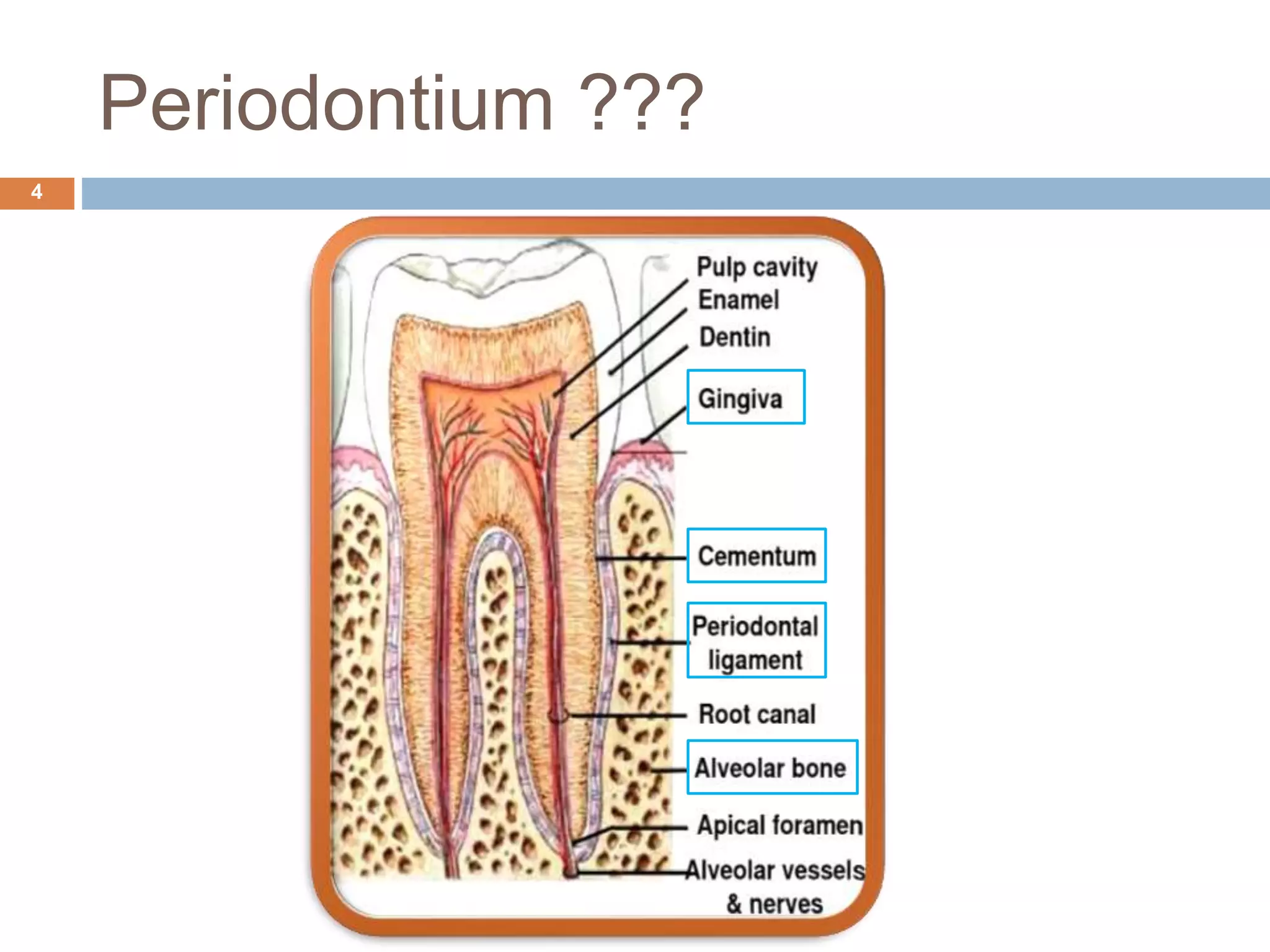
Periodontium ???
4
5
The changes in aging periodontium
can be categorized into
 Intrinsic changes
 Stochastic changes
 Physiologic changes
 Functional changes
 Clinical changes
6
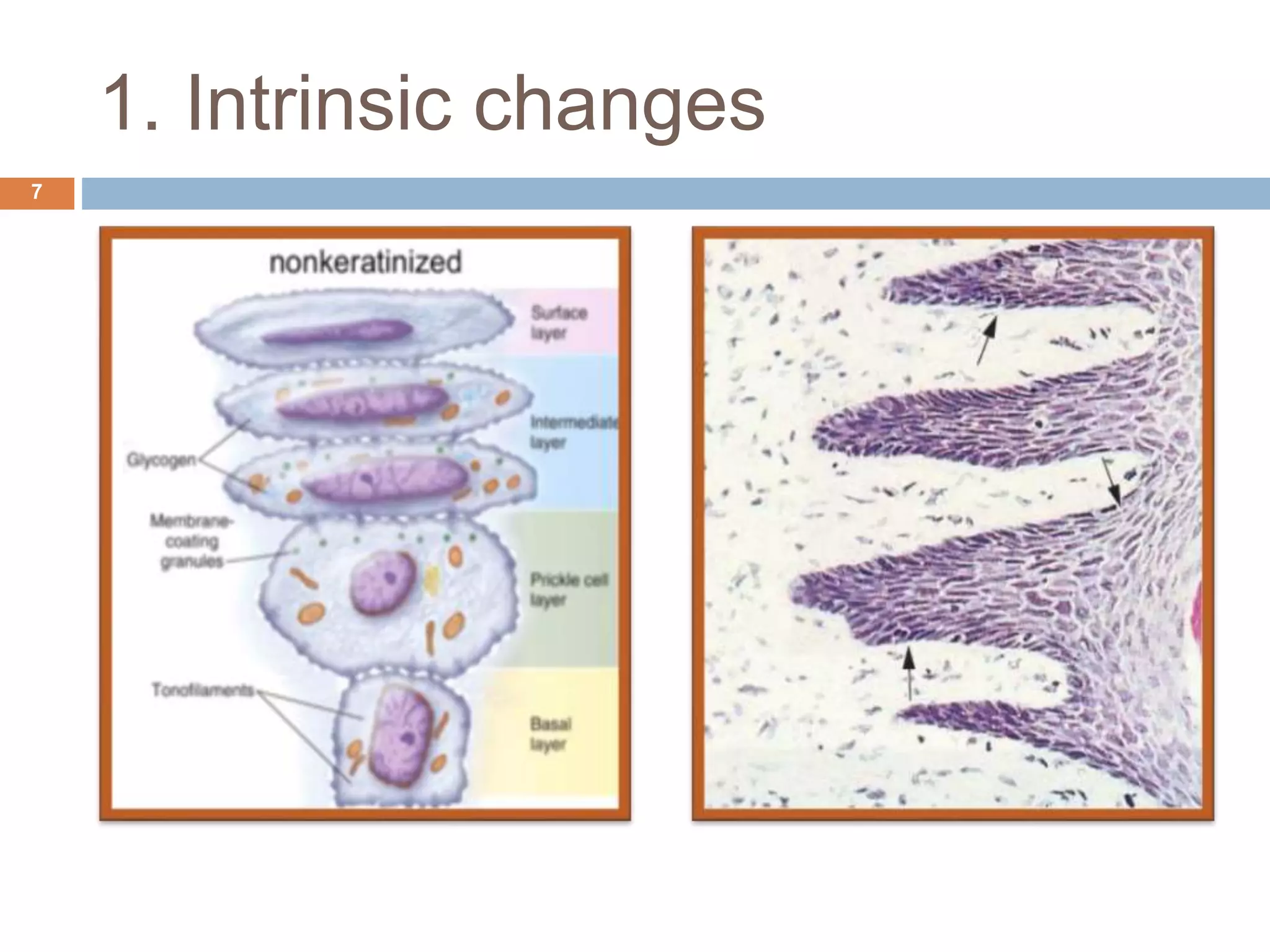
1. Intrinsic changes
7
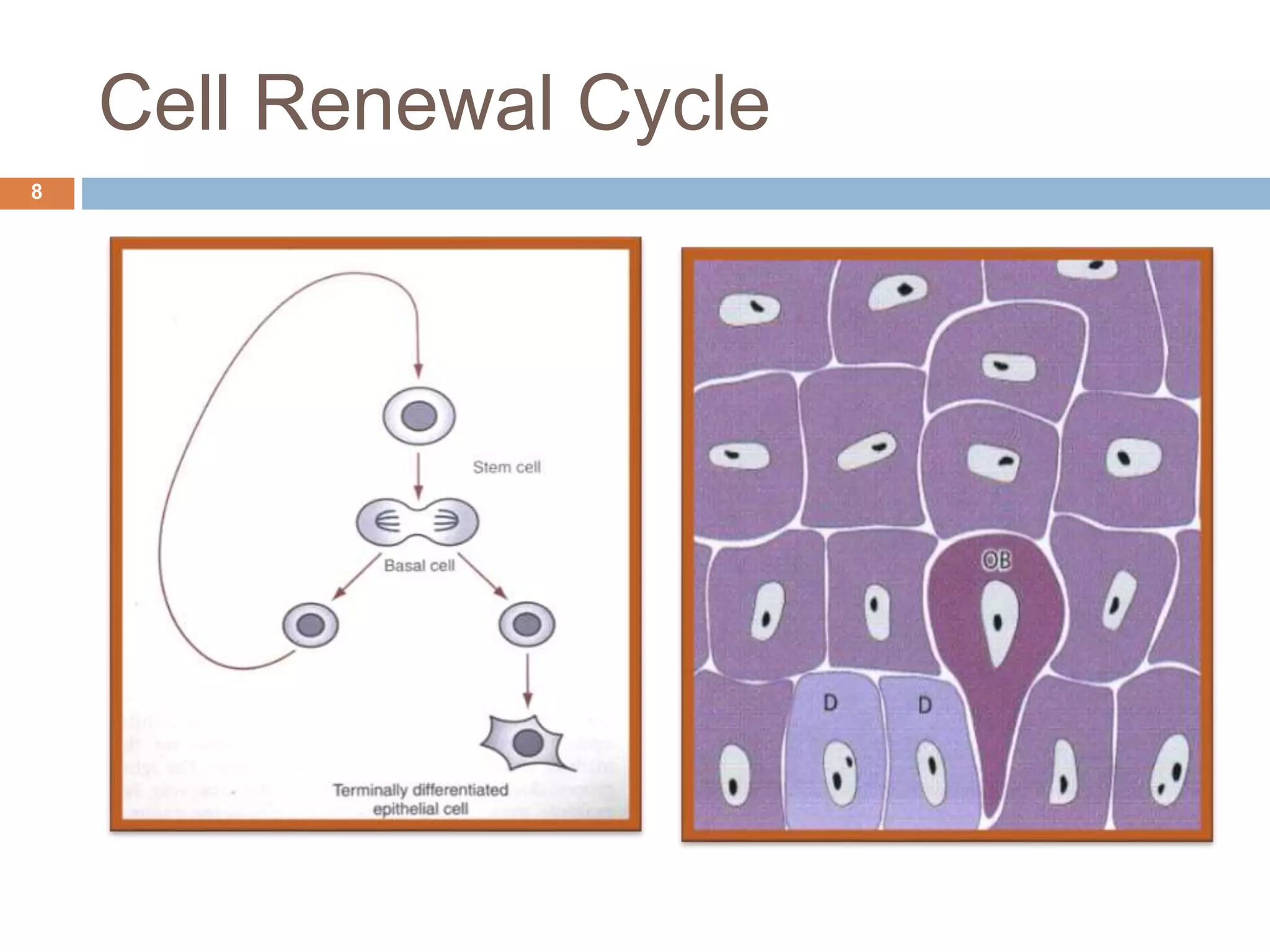
Cell Renewal Cycle
8
Hay flicks limit/ Telomere
shortening
 Hayflick, an American microbiologist.
 Replicative senescence   the number of
progenitor cells.
 The decreased cellular component has a
concomitant effect to decrease cellular reserve
and protein synthesis.
 This affects the oral epithelium in that the
tissue becomes thin, with reduced
keratinization.
9
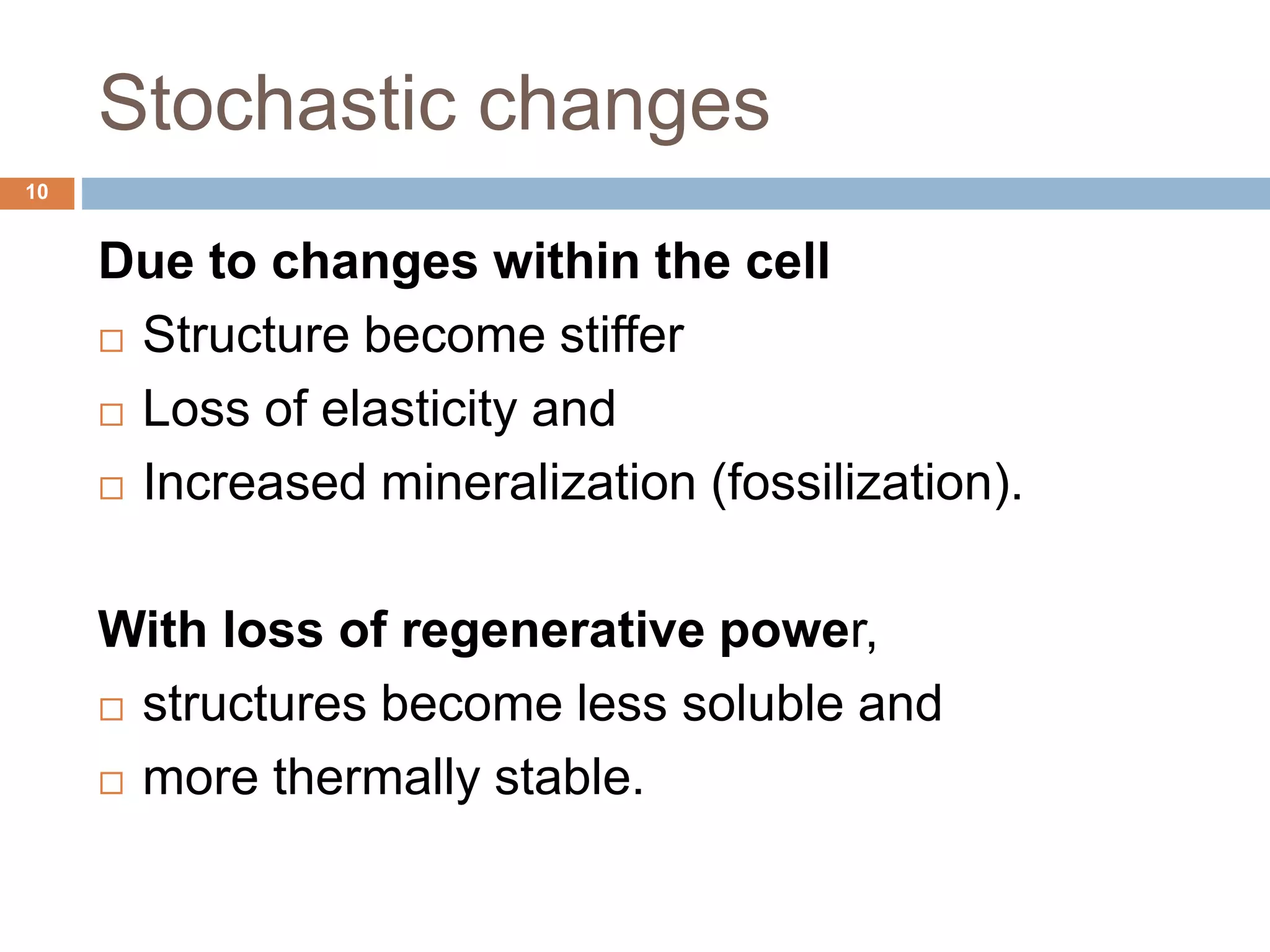
Stochastic changes
Due to changes within the cell
 Structure become stiffer
 Loss of elasticity and
 Increased mineralization (fossilization).
With loss of regenerative power,
 structures become less soluble and
 more thermally stable.
10
 Somatic mutations lead to decreased protein
synthesis and structurally altered proteins.
 Free radicals contribute to the accumulation of
waste in the cell.
 All these changes produce a decline in the
physiological processes of the tissue.
 Primarily: due to aging
 Secondarily: due to physiological deterioration.
11
Physiologic changes
 Gingival epithelium:
 Thinning and
decreased
keratinization
 Increase in epithelial
permeability to
bacterial antigens
 Flatting of rete pegs
and altered cell
density
 Decreased resistance
to functional trauma
12
 Gingival connective
tissue:
 Quantitative &
Qualitative changes in
collagen.
 Coarser and denser
gingival connective
tissue.
 ↑ denaturing
 ↑ rate of conversion of
soluble to insoluble
collagen
 ↑ mechanical strength
13
 Periodontal ligament:
 Decrease in the no of
collagen fibers: reduction
or loss in tissue elasticity.
 Increased amounts of
elastic fiber.
 Decreased organic matrix
(mucopolysaccharides)
production
 Decreased Epithelial cell
rests
14
 Cementum:
 Increase in cemental
width/ thickness
 Upto 5 to 10 times with
increasing age
 The increase in width is
greater in apically and
lingually.
 Increasing surface
irregularity.
15
 Alveolar bone:
 Decrease in bone density
 Increase in bone resorption
 Decrease in vascularity.
 Irregular periodontal surface
of bone
 Less regular insertion of
collagen fibers.
 Healing rate of bone in
extraction sockets appears
to be unaffected by
increasing age.
16
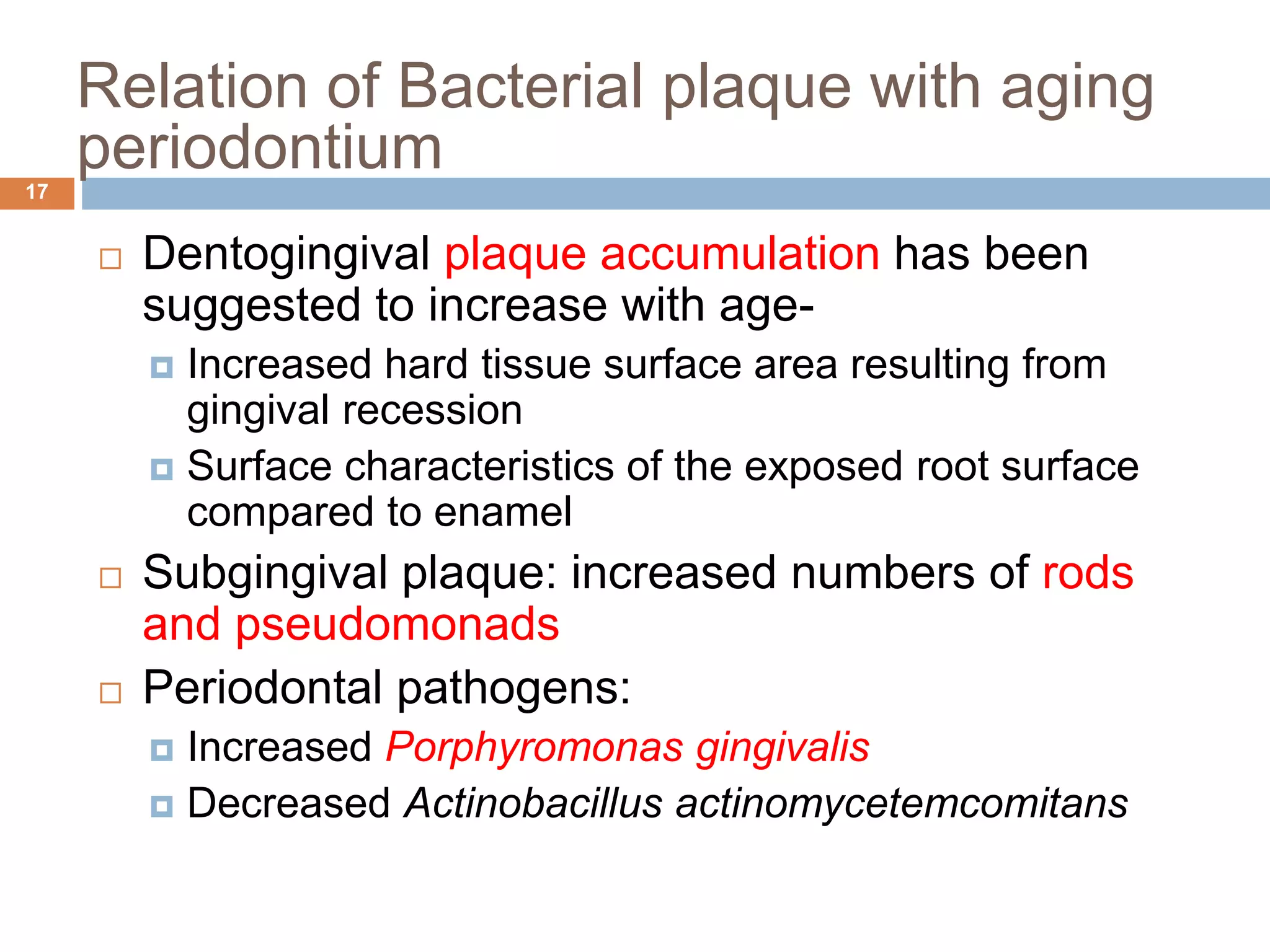
 Dentogingival plaque accumulation has been
suggested to increase with age-
 Increased hard tissue surface area resulting from
gingival recession
 Surface characteristics of the exposed root surface
compared to enamel
 Subgingival plaque: increased numbers of rods
and pseudomonads
 Periodontal pathogens:
 Increased Porphyromonas gingivalis
 Decreased Actinobacillus actinomycetemcomitans
Relation of Bacterial plaque with aging
periodontium17
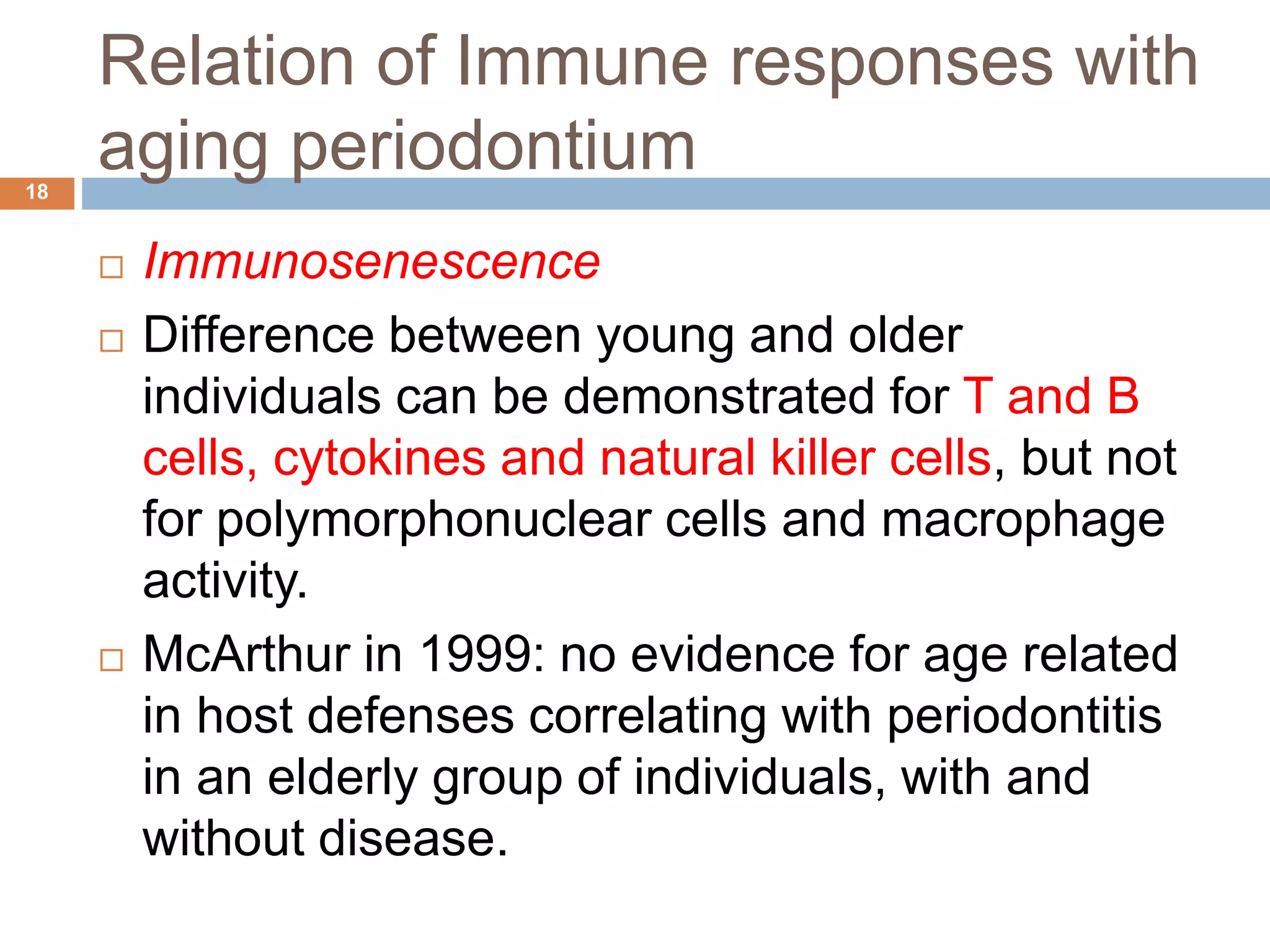
Relation of Immune responses with
aging periodontium
 Immunosenescence
 Difference between young and older
individuals can be demonstrated for T and B
cells, cytokines and natural killer cells, but not
for polymorphonuclear cells and macrophage
activity.
 McArthur in 1999: no evidence for age related
in host defenses correlating with periodontitis
in an elderly group of individuals, with and
without disease.
18
Functional changes
 Abnormality in T cell function: more susceptible
for viral and fungal infection.
 Inflammation, when persist, develops more
rapidly and more severely.
 Decrease the healing capacity and rate.
19
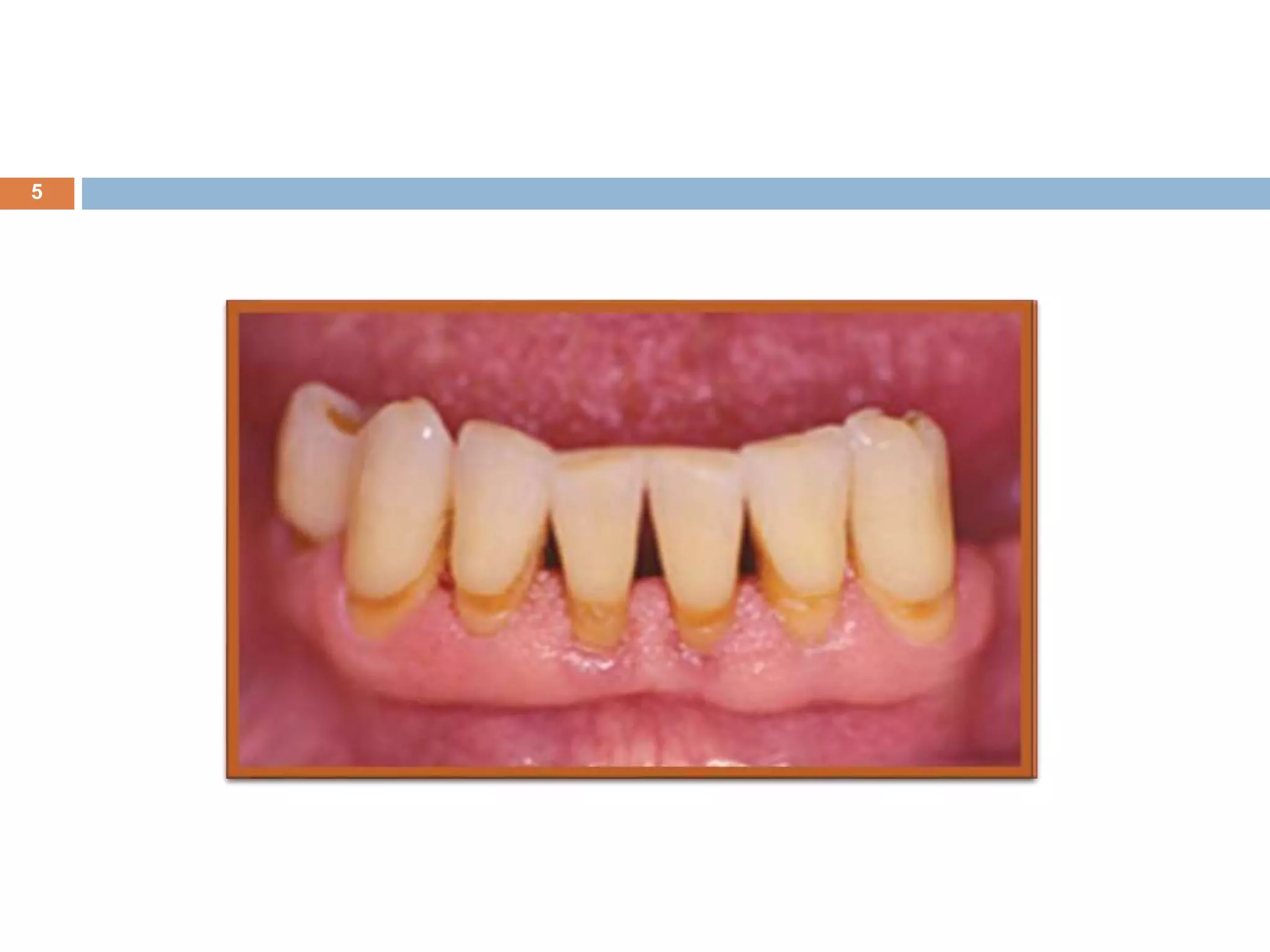
Clinical changes
 Migration of junctional epithelium from its
position in healthy individual (on enamel) to
more apical position on the root surface with
accompanying gingival recession.
 The consensus is that gingival recession is not
an inevitable physiologic process of aging but
is explained by cumulative effects of
inflammation or trauma on the periodontium.
20
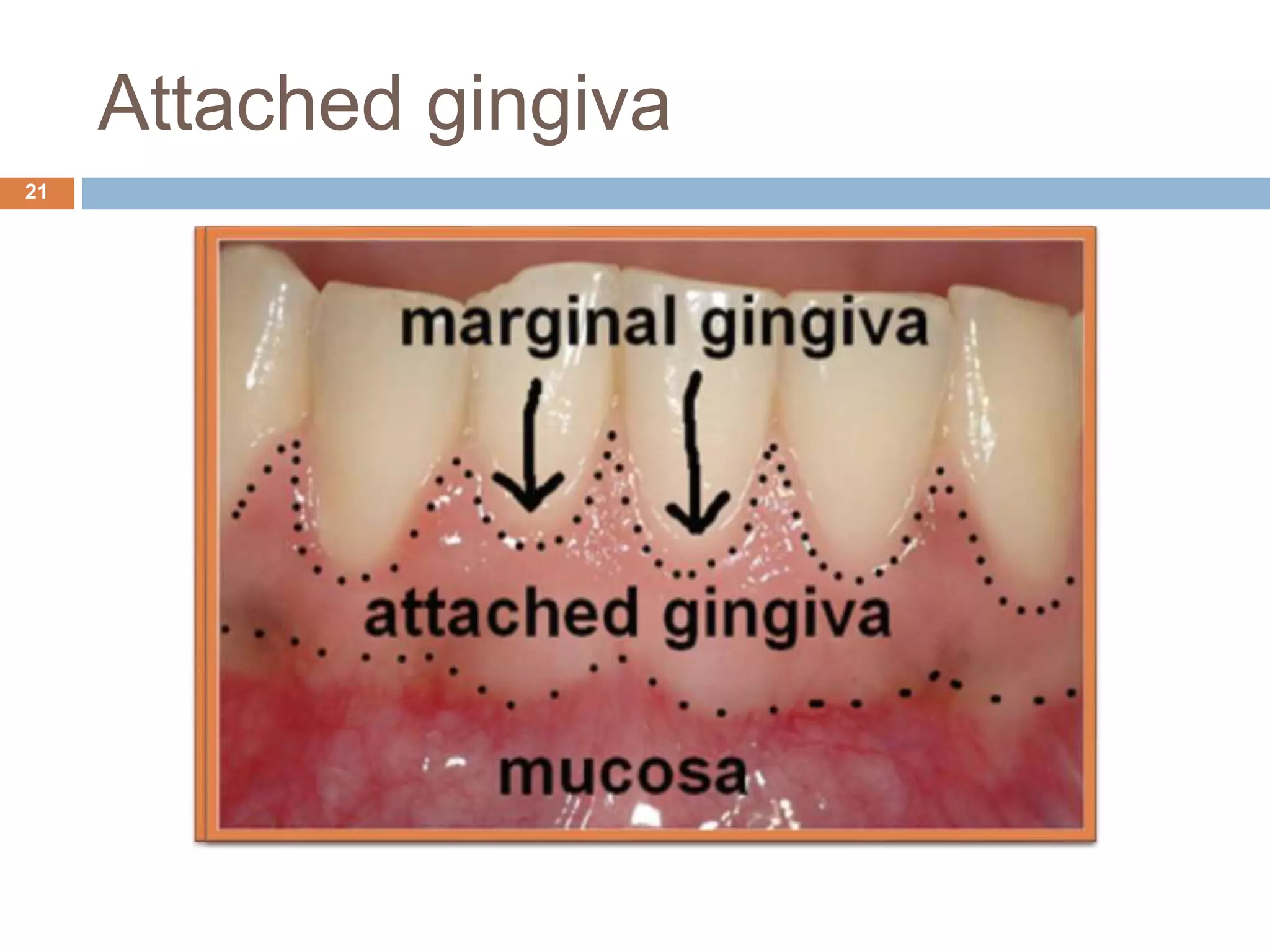
Attached gingiva
21
Width of attached gingiva
22
Xerostomia
 Saliva plays an essential role in maintaining
oral health.
 Antimicrobial activity
 Buffering capacity
 Lubrication of the oral cavity
 Transport of taste sensors
 Digestive function
23
 Loss of acinar cells with aging.
 Medications: tricyclic antidepressants,
antihistamines, antihypertensives, and
diuretics.
 Radiation treatment, Sjohren’s syndrome,
poorly controlled diabetes, bone marrow
transplantation, thyroid disorders, and
depression-
24
 Xerostomia screening by
 Sialometry
 Oral examination
 Sialometry:
 Precise collection of saliva for 5 to 15 min from
gland
 Parotid gland-Stensen’s duct: modified Carlson-
Crittenden collectors
25
 Oral examination: tongue blade
26
 Signs of xerostomia:
 Intraoral dryness
 Burning sensations
 Altered tongue surface
 Dysphagia
 Cheilosis
 Alterations in taste
 Difficulty with speech
 Root caries
27
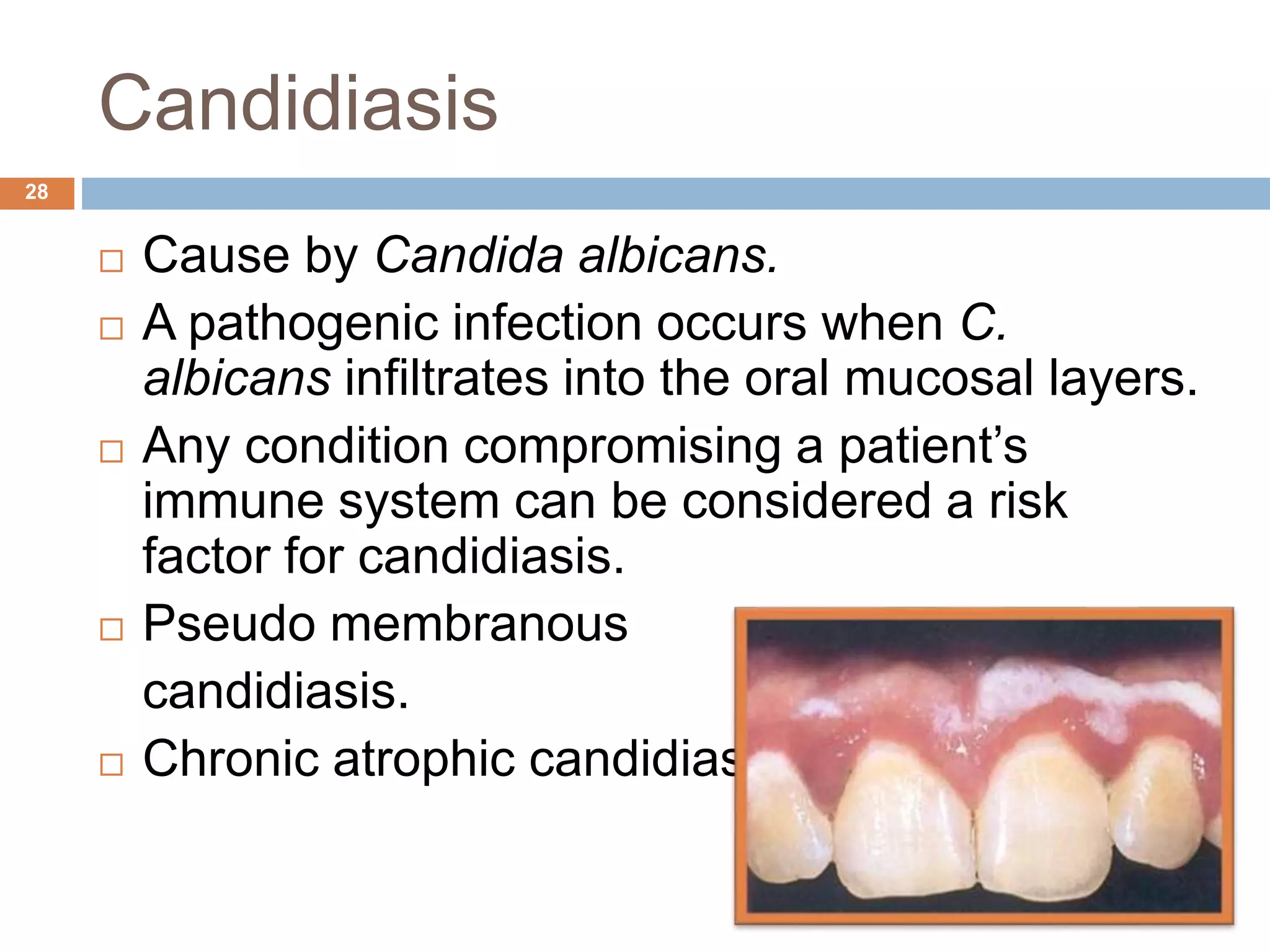
Candidiasis
 Cause by Candida albicans.
 A pathogenic infection occurs when C.
albicans infiltrates into the oral mucosal layers.
 Any condition compromising a patient’s
immune system can be considered a risk
factor for candidiasis.
 Pseudo membranous
candidiasis.
 Chronic atrophic candidiasis
28
Periodontal disease in older
adults
 Age is either nonexistent or provides a small
and clinically insignificant increased risk of
loss of periodontal support.
29
 Chronic periodontitis
 Prevalence of periodontal disease is expected
to increase with age, as a result of cumulative
disease progression over time, not
susceptibility.
 Severe or moderate chronic periodontitis???
 Systemic disease
30
On progression of periodontal
disease
 Greater inflammatory response in older adults-
 Greater size of infiltrated connective tissue
 Increased gingival crevicular fluid flow
 Increased gingival index
 Increased loss of connective tissue:
 Chronic mechanical trauma from toothbrushing
 Iatrogenic damage from unfavorable restorative
dentistry or repeated scaling and root planing
31
Periodontal treatment planning
 Prevention, comfort, function, esthetics and
ease of maintenance are the criteria for
successful management of an older adult.
 To preserve
function
 Eliminate or
prevent the
progression of
inflammatory
disease.
32
 Factors which influence periodontal treatment
outcome or progression of the disease :
 medical and mental health status,
 medications,
 functional status,
 lifestyle behaviors that.
 Periodontal disease severity, ability to perform
oral hygiene procedures and ability to tolerate
treatment should be evaluated.
33
 The risks and benefits of both surgical and non
surgical therapy should be considered.
 Nonsurgical approach is often the first
treatment choice.
 Age alone is not a contraindication of surgery.
 Maintenance of surgical results.
 Pallative support periodontal care.
34
Response to treatment of the
periodontium
 The successful treatment of periodontal
requires both meticulous plaque control by the
patient at home and meticulous supragingival
debridement by therapist.
 Despite the histologic changes in the
periodontium with aging, no differences in
response to nonsurgical or surgical treatment
have been shown for periodontitis
35
Prevention of periodontal disease and
maintenance of periodontal health in older
adults
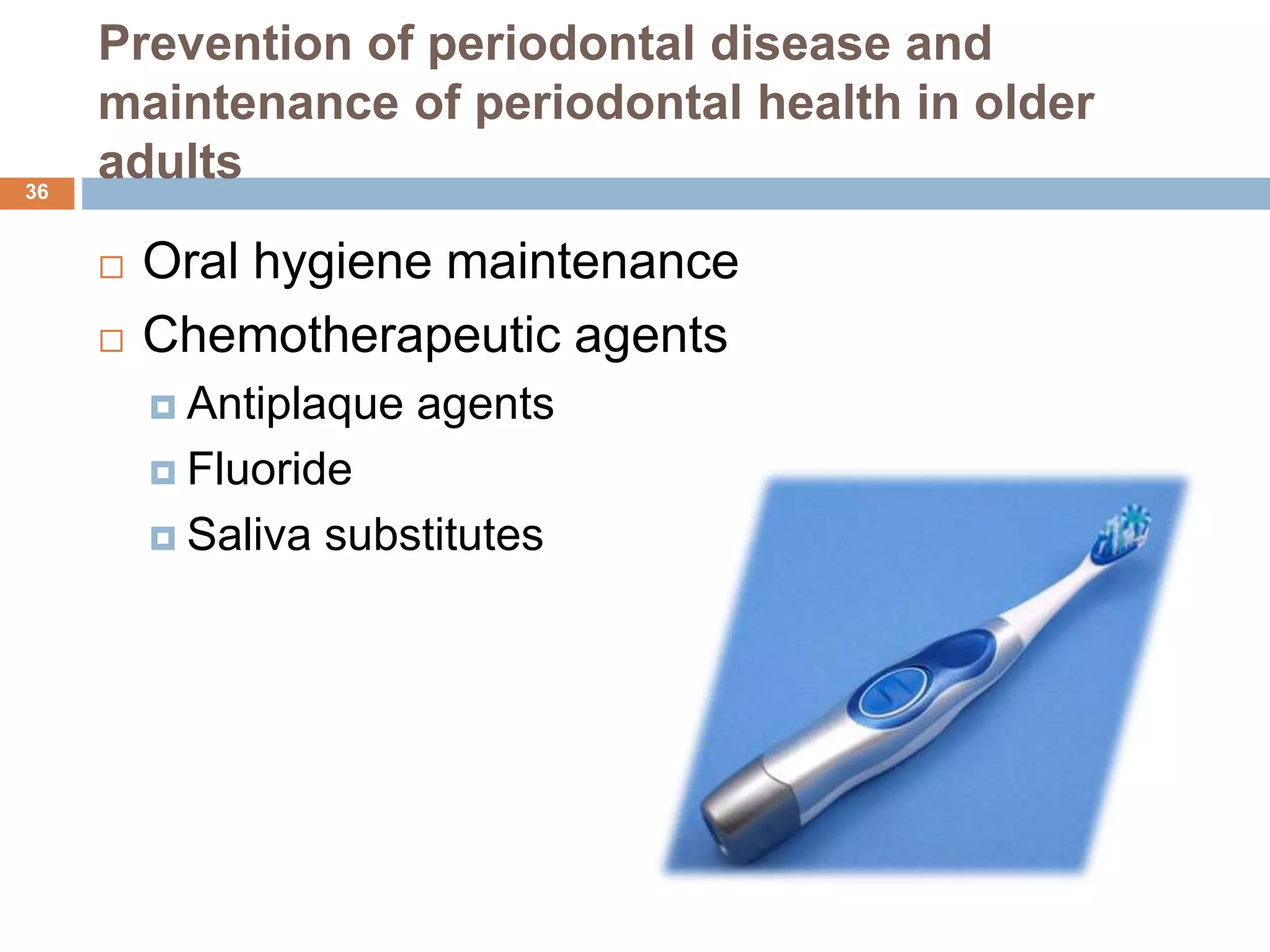
 Oral hygiene maintenance
 Chemotherapeutic agents
 Antiplaque agents
 Fluoride
 Saliva substitutes
36
Antiplaue agents
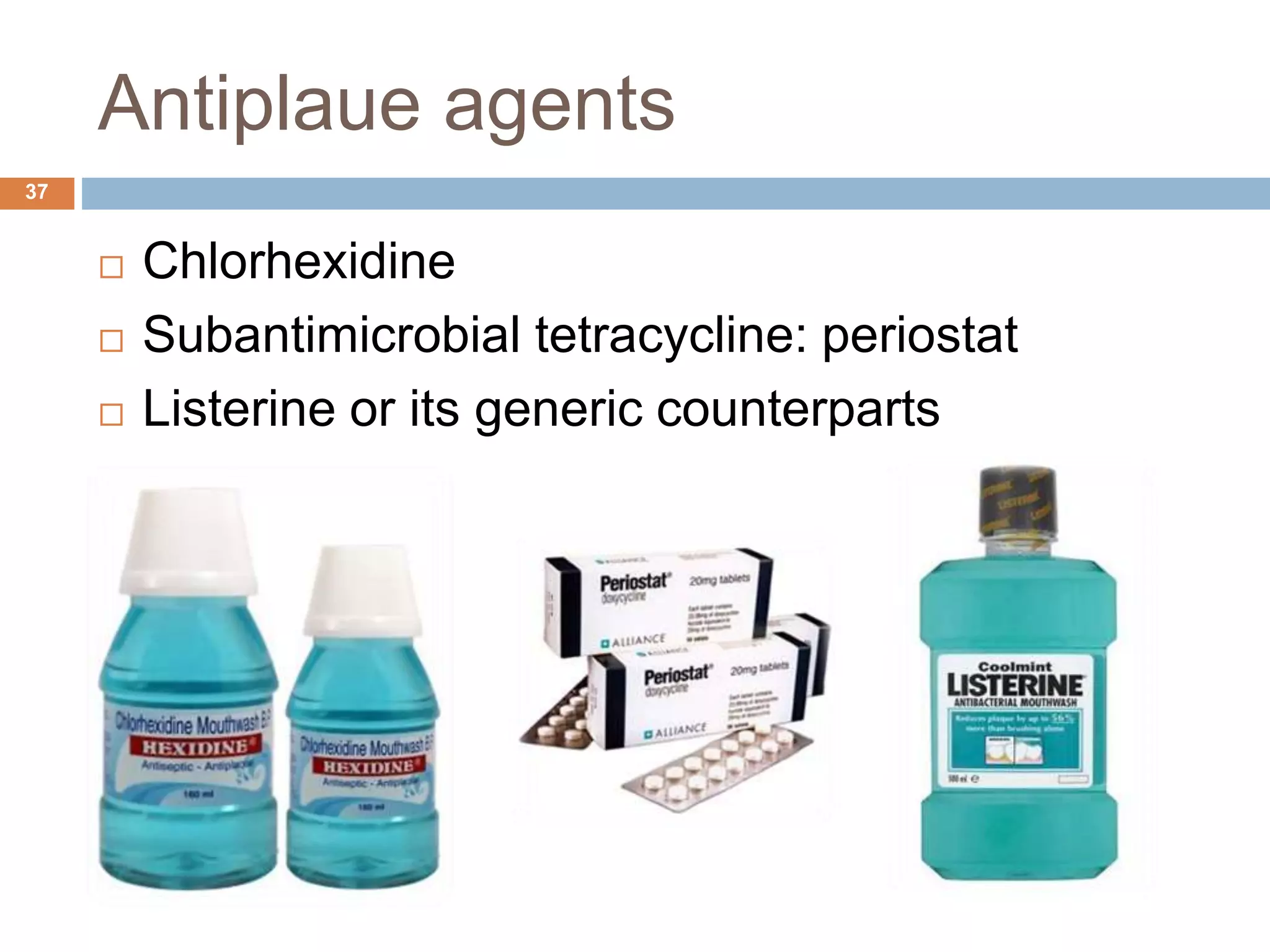
 Chlorhexidine
 Subantimicrobial tetracycline: periostat
 Listerine or its generic counterparts
37
 Fluoride:
 Natural cavity fighter
 Reduce enamel solubility
 Promotes remineralization of early carious
lesions
 Is bactericidal to bacterial plaque
 OTC: 230-1500 ppm
 Professional: 9050-22,600 ppm
38
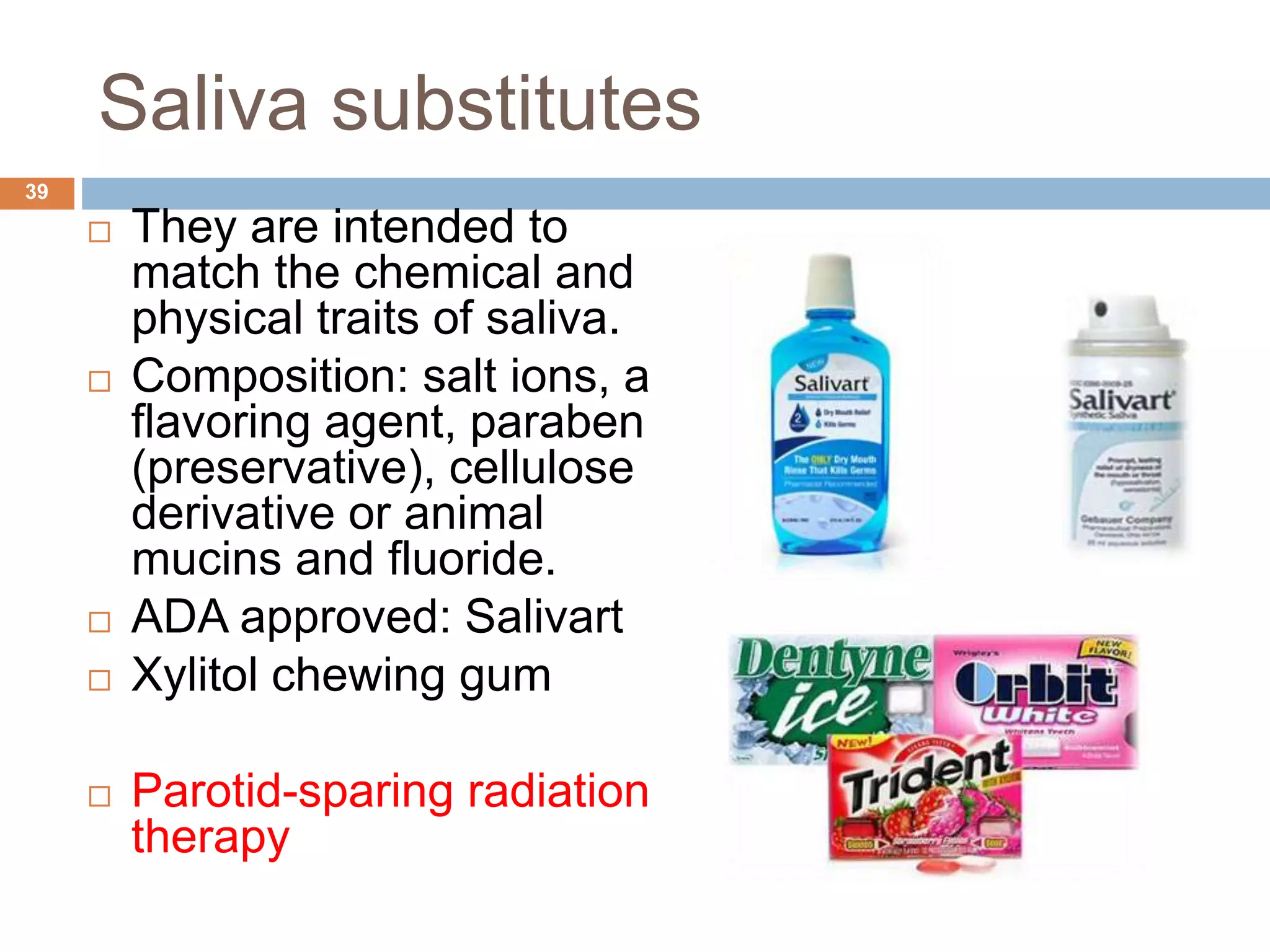
Saliva substitutes
 They are intended to
match the chemical and
physical traits of saliva.
 Composition: salt ions, a
flavoring agent, paraben
(preservative), cellulose
derivative or animal
mucins and fluoride.
 ADA approved: Salivart
 Xylitol chewing gum
 Parotid-sparing radiation
therapy
39
5 golden rules for healty teeth
1. Brush your teeth twice daily
2. Rinse your mouth after every meal
3. Eat fresh fruits and vegetables
4. Do not eat sweet in between meals
5. Visit your dentist every six months
40
41

Aging and periodontium

  • 1.
  • 2.
  • 3.
     AGING :-It is defined as the sum of all morphologic & functional alterations that occur in an organism and lead to functional impairment which decline the ability to survive stress.  GERONTOLOGY:- Is the study of aging in all its aspects biologic, physiologic, sociologic & psychologic. Definitions 3
  • 4.
  • 5.
  • 6.
    The changes inaging periodontium can be categorized into  Intrinsic changes  Stochastic changes  Physiologic changes  Functional changes  Clinical changes 6
  • 7.
  • 8.
  • 9.
    Hay flicks limit/Telomere shortening  Hayflick, an American microbiologist.  Replicative senescence   the number of progenitor cells.  The decreased cellular component has a concomitant effect to decrease cellular reserve and protein synthesis.  This affects the oral epithelium in that the tissue becomes thin, with reduced keratinization. 9
  • 10.
    Stochastic changes Due tochanges within the cell  Structure become stiffer  Loss of elasticity and  Increased mineralization (fossilization). With loss of regenerative power,  structures become less soluble and  more thermally stable. 10
  • 11.
     Somatic mutationslead to decreased protein synthesis and structurally altered proteins.  Free radicals contribute to the accumulation of waste in the cell.  All these changes produce a decline in the physiological processes of the tissue.  Primarily: due to aging  Secondarily: due to physiological deterioration. 11
  • 12.
    Physiologic changes  Gingivalepithelium:  Thinning and decreased keratinization  Increase in epithelial permeability to bacterial antigens  Flatting of rete pegs and altered cell density  Decreased resistance to functional trauma 12
  • 13.
     Gingival connective tissue: Quantitative & Qualitative changes in collagen.  Coarser and denser gingival connective tissue.  ↑ denaturing  ↑ rate of conversion of soluble to insoluble collagen  ↑ mechanical strength 13
  • 14.
     Periodontal ligament: Decrease in the no of collagen fibers: reduction or loss in tissue elasticity.  Increased amounts of elastic fiber.  Decreased organic matrix (mucopolysaccharides) production  Decreased Epithelial cell rests 14
  • 15.
     Cementum:  Increasein cemental width/ thickness  Upto 5 to 10 times with increasing age  The increase in width is greater in apically and lingually.  Increasing surface irregularity. 15
  • 16.
     Alveolar bone: Decrease in bone density  Increase in bone resorption  Decrease in vascularity.  Irregular periodontal surface of bone  Less regular insertion of collagen fibers.  Healing rate of bone in extraction sockets appears to be unaffected by increasing age. 16
  • 17.
     Dentogingival plaqueaccumulation has been suggested to increase with age-  Increased hard tissue surface area resulting from gingival recession  Surface characteristics of the exposed root surface compared to enamel  Subgingival plaque: increased numbers of rods and pseudomonads  Periodontal pathogens:  Increased Porphyromonas gingivalis  Decreased Actinobacillus actinomycetemcomitans Relation of Bacterial plaque with aging periodontium17
  • 18.
    Relation of Immuneresponses with aging periodontium  Immunosenescence  Difference between young and older individuals can be demonstrated for T and B cells, cytokines and natural killer cells, but not for polymorphonuclear cells and macrophage activity.  McArthur in 1999: no evidence for age related in host defenses correlating with periodontitis in an elderly group of individuals, with and without disease. 18
  • 19.
    Functional changes  Abnormalityin T cell function: more susceptible for viral and fungal infection.  Inflammation, when persist, develops more rapidly and more severely.  Decrease the healing capacity and rate. 19
  • 20.
    Clinical changes  Migrationof junctional epithelium from its position in healthy individual (on enamel) to more apical position on the root surface with accompanying gingival recession.  The consensus is that gingival recession is not an inevitable physiologic process of aging but is explained by cumulative effects of inflammation or trauma on the periodontium. 20
  • 21.
  • 22.
  • 23.
    Xerostomia  Saliva playsan essential role in maintaining oral health.  Antimicrobial activity  Buffering capacity  Lubrication of the oral cavity  Transport of taste sensors  Digestive function 23
  • 24.
     Loss ofacinar cells with aging.  Medications: tricyclic antidepressants, antihistamines, antihypertensives, and diuretics.  Radiation treatment, Sjohren’s syndrome, poorly controlled diabetes, bone marrow transplantation, thyroid disorders, and depression- 24
  • 25.
     Xerostomia screeningby  Sialometry  Oral examination  Sialometry:  Precise collection of saliva for 5 to 15 min from gland  Parotid gland-Stensen’s duct: modified Carlson- Crittenden collectors 25
  • 26.
     Oral examination:tongue blade 26
  • 27.
     Signs ofxerostomia:  Intraoral dryness  Burning sensations  Altered tongue surface  Dysphagia  Cheilosis  Alterations in taste  Difficulty with speech  Root caries 27
  • 28.
    Candidiasis  Cause byCandida albicans.  A pathogenic infection occurs when C. albicans infiltrates into the oral mucosal layers.  Any condition compromising a patient’s immune system can be considered a risk factor for candidiasis.  Pseudo membranous candidiasis.  Chronic atrophic candidiasis 28
  • 29.
    Periodontal disease inolder adults  Age is either nonexistent or provides a small and clinically insignificant increased risk of loss of periodontal support. 29
  • 30.
     Chronic periodontitis Prevalence of periodontal disease is expected to increase with age, as a result of cumulative disease progression over time, not susceptibility.  Severe or moderate chronic periodontitis???  Systemic disease 30
  • 31.
    On progression ofperiodontal disease  Greater inflammatory response in older adults-  Greater size of infiltrated connective tissue  Increased gingival crevicular fluid flow  Increased gingival index  Increased loss of connective tissue:  Chronic mechanical trauma from toothbrushing  Iatrogenic damage from unfavorable restorative dentistry or repeated scaling and root planing 31
  • 32.
    Periodontal treatment planning Prevention, comfort, function, esthetics and ease of maintenance are the criteria for successful management of an older adult.  To preserve function  Eliminate or prevent the progression of inflammatory disease. 32
  • 33.
     Factors whichinfluence periodontal treatment outcome or progression of the disease :  medical and mental health status,  medications,  functional status,  lifestyle behaviors that.  Periodontal disease severity, ability to perform oral hygiene procedures and ability to tolerate treatment should be evaluated. 33
  • 34.
     The risksand benefits of both surgical and non surgical therapy should be considered.  Nonsurgical approach is often the first treatment choice.  Age alone is not a contraindication of surgery.  Maintenance of surgical results.  Pallative support periodontal care. 34
  • 35.
    Response to treatmentof the periodontium  The successful treatment of periodontal requires both meticulous plaque control by the patient at home and meticulous supragingival debridement by therapist.  Despite the histologic changes in the periodontium with aging, no differences in response to nonsurgical or surgical treatment have been shown for periodontitis 35
  • 36.
    Prevention of periodontaldisease and maintenance of periodontal health in older adults  Oral hygiene maintenance  Chemotherapeutic agents  Antiplaque agents  Fluoride  Saliva substitutes 36
  • 37.
    Antiplaue agents  Chlorhexidine Subantimicrobial tetracycline: periostat  Listerine or its generic counterparts 37
  • 38.
     Fluoride:  Naturalcavity fighter  Reduce enamel solubility  Promotes remineralization of early carious lesions  Is bactericidal to bacterial plaque  OTC: 230-1500 ppm  Professional: 9050-22,600 ppm 38
  • 39.
    Saliva substitutes  Theyare intended to match the chemical and physical traits of saliva.  Composition: salt ions, a flavoring agent, paraben (preservative), cellulose derivative or animal mucins and fluoride.  ADA approved: Salivart  Xylitol chewing gum  Parotid-sparing radiation therapy 39
  • 40.
    5 golden rulesfor healty teeth 1. Brush your teeth twice daily 2. Rinse your mouth after every meal 3. Eat fresh fruits and vegetables 4. Do not eat sweet in between meals 5. Visit your dentist every six months 40
  • 41.

Editor's Notes

  • #4 Oral cavity example in aging…teeth wear Gerentology….periodontology… Why want to study aging in periodontium?? Do you think there will be change in young like you ppl and older adults?? In oral cavity what all changes you can see??? Increasing in the life expectancy of population more older adults… Due to advance in maintenance of oral cavity increase tooth survival/retained… So here as a periodontologist come into picture… Also a upcoming brach is coming geriatric dentistry…interdiscipinary treatment approach… Physician nurse psychiatrist….also the dentist….so you should know all changes that can be seen in older alduts..also know as geriatric person interdisciplinary
  • #5 Healthy periodontium
  • #6 What changes you can think that will be there for older adults???
  • #8 Cells are of three types: contionous diving, stable, permanent/ terminally differentiated Epthelium of gingiva…continous diving cells Layers of epithelium…4 layers…basal, spinosum, granulosum, corneum.. Basal cells have progenitor cells…
  • #9 cell divide by mitotic cell division… One cell give rise to 2 daugther cells 1- amplifying cell…contious division 2- become keratinocyte Balance between cell division and cell shedding
  • #10 In older adults… Decrease in cell renewal Fewer cell…decrease in regenerative process… Reason..hay flick…
  • #11 Due to changes with in the cells…crosslinking…morphological and physiological changes Try to retain what is there…..
  • #12 Loss of elasticity and increased resistance of tissue..decreased permeability..decreased nutrition….accumulation of waste Decreased blood flow secondarily decrease cellular function.
  • #14 Indicate increased collagen stabilization Greater collagen contain in older adults despite of decreased collagen synthesis
  • #15 Decrease in vascularity Parallel to the gingival fibroblasts Decrease in width of periodontal ligament space
  • #16 Less remodeling capacity….resorption bays
  • #17 Bone resorption and bone formation in a balanced manner
  • #18 Before going to functional changes….
  • #20 Decreased in renewal and vascularity…decreased healing
  • #21 Recession is exposure of the root surface by an apical shift in the position of the gingiva. Apparent: visible Actual: hidden + visible
  • #23 The width of the attached gingiva would be expected to decrease with age, but the opposite appears to be true . Passive eruption
  • #24 Diagram of dry mouth
  • #29 Long term use of antibiotics Steroid therapy Chemotherapy DM Head and neck radiation therapy HIV Wipe by guaze psedomembranous
  • #31 More suspectibile to severe periodontal disease but..advanced disease site have lost teeth earlier in life..suggesting older adults is not a risk factor. Cardiovascular disease and diabetis
  • #34 Periodontal healing and recurrence of disease are not influenced by age.
  • #35 Implants…. Reduced osteogentic potential of the bone graft…
  • #37 Older adults may have difficulty performing adequate oral hygiene The newer, lightweight, electrical powered toothbrushes may be more benifical because of compromised health, altered metal status, medications, or altered mobility and dexterity.
  • #40 Dispensed in spray bottle, rinse bottle or oral swab stick