Agile Teams and Collaboration:
What’s New About Agile?
Johanna Rothman
New: Hiring Geeks That Fit
@johannarothman
www.jrothman.com
jr@jrothman.com
781-641-4046
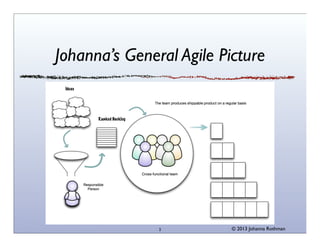
Johanna’s General Agile Picture

2

© 2013 Johanna Rothman
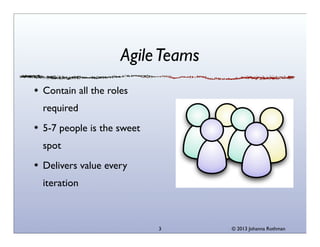
Agile Teams
Contain all the roles
required
5-7 people is the sweet
spot
Delivers value every
iteration

3

© 2013 Johanna Rothman
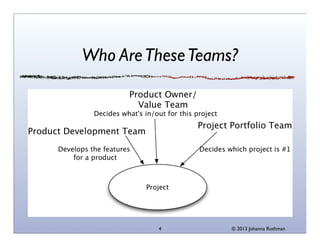
Who Are These Teams?

4

© 2013 Johanna Rothman
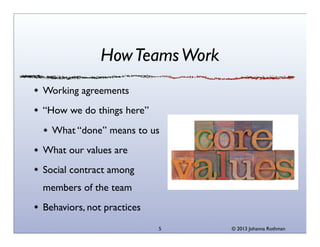
How Teams Work
Working agreements
“How we do things here”
What “done” means to us
What our values are
Social contract among
members of the team
Behaviors, not practices
5

© 2013 Johanna Rothman
Areas for Discussion for Team
Working Agreements
Values:
Sustainable pace
We have core hours and we respect them
Working agreements
What done means
Timebox everything
Respect the timebox
Ground rules:
One person talking
Group norms:
How we treat meeting times
6

© 2013 Johanna Rothman
Team Chartering
Project charters for the
project
Vision: brief and
compelling: Where are we
headed?
Release criteria:
What does done mean
for the project?
7

© 2013 Johanna Rothman
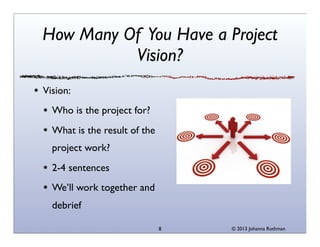
How Many Of You Have a Project
Vision?
Vision:
Who is the project for?
What is the result of the
project work?
2-4 sentences
We’ll work together and
debrief
8

© 2013 Johanna Rothman
Who Here Has Release Criteria?
The vital few criteria by
which we will judge the
done-ness of the project
Balance scorecard
We’ll work together and
debrief

9

© 2013 Johanna Rothman
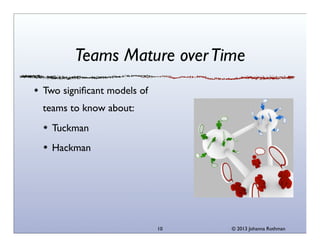
Teams Mature over Time
Two significant models of
teams to know about:
Tuckman
Hackman

10

© 2013 Johanna Rothman
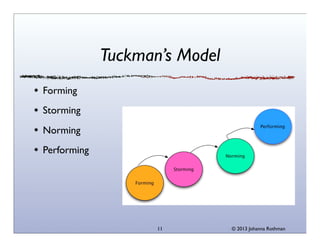
Tuckman’s Model
Forming
Storming
Norming
Performing

11

© 2013 Johanna Rothman
Keep Teams Together Once the
Project is Complete
Agile team members learn
how to collaborate with
each other. That learning is
expensive. Don’t waste the
investment.
Flow work through the
teams
12

© 2013 Johanna Rothman
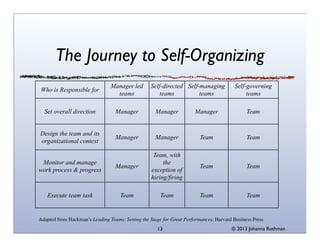
The Journey to Self-Organizing
Who is Responsible for

Manager led
teams

Self-directed Self-managing
teams
teams

Self-governing
teams

Set overall direction

Manager

Manager

Manager

Team

Design the team and its
organizational context

Manager

Manager

Team

Team

Monitor and manage
work process & progress

Manager

Team, with
the
exception of
hiring/firing

Team

Team

Execute team task

Team

Team

Team

Team

Adapted from Hackman’s Leading Teams: Setting the Stage for Great Performances, Harvard Business Press
13

© 2013 Johanna Rothman
Hackman
Teams evolve from
manager-led to selforganizing teams
Very few teams start as selfmanaging teams

14

© 2013 Johanna Rothman
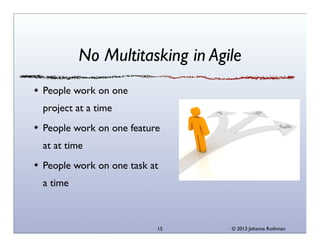
No Multitasking in Agile
People work on one
project at a time
People work on one feature
at at time
People work on one task at
a time

15

© 2013 Johanna Rothman
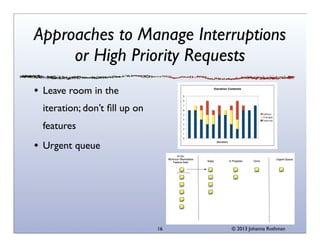
Approaches to Manage Interruptions
or High Priority Requests
Leave room in the
iteration; don’t fill up on
features
Urgent queue

16

© 2013 Johanna Rothman
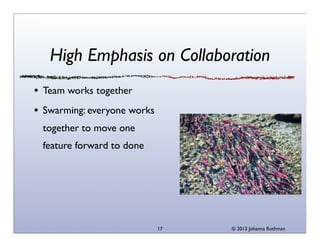
High Emphasis on Collaboration
Team works together
Swarming: everyone works
together to move one
feature forward to done

17

© 2013 Johanna Rothman
High Emphasis on Facilitation
We facilitate each other’s
work with feedback and
coaching, meta-feedback
and meta-coaching
Not a manager’s job

18

© 2013 Johanna Rothman
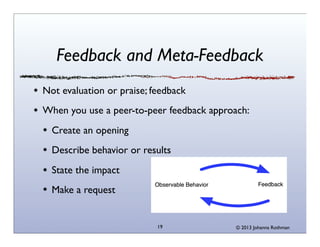
Feedback and Meta-Feedback
Not evaluation or praise; feedback
When you use a peer-to-peer feedback approach:
Create an opening
Describe behavior or results
State the impact
Make a request

19

© 2013 Johanna Rothman
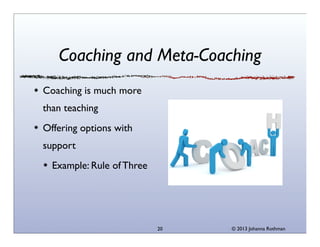
Coaching and Meta-Coaching
Coaching is much more
than teaching
Offering options with
support
Example: Rule of Three

20

© 2013 Johanna Rothman
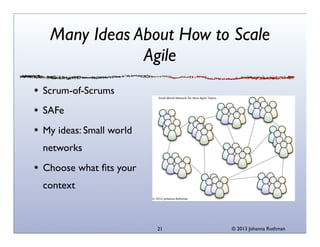
Many Ideas About How to Scale
Agile
Scrum-of-Scrums
SAFe
My ideas: Small world
networks
Choose what fits your
context

21

© 2013 Johanna Rothman
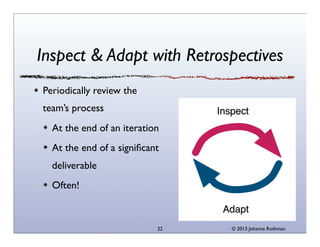
Inspect & Adapt with Retrospectives
Periodically review the
team’s process
At the end of an iteration
At the end of a significant
deliverable
Often!

22

© 2013 Johanna Rothman
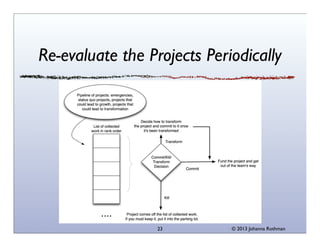
Re-evaluate the Projects Periodically

23

© 2013 Johanna Rothman
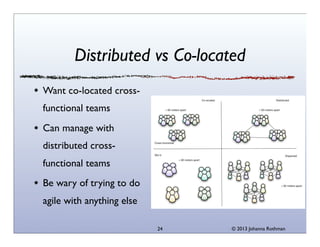
Distributed vs Co-located
Want co-located crossfunctional teams
Can manage with
distributed crossfunctional teams
Be wary of trying to do
agile with anything else
24

© 2013 Johanna Rothman
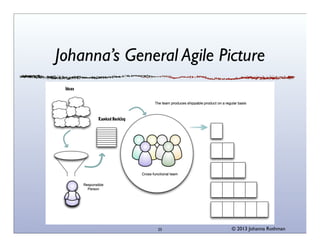
Johanna’s General Agile Picture

25

© 2013 Johanna Rothman
What questions do you have?
or,
What challenges do you see where
you work?

26

© 2013 Johanna Rothman
Let’s Stay in Touch...
Pragmatic Manager:
www.jrothman.com/pragmaticmanager
Please link with me on LinkedIn

27

© 2013 Johanna Rothman

Agile teams.collaboration.charter

  • 1.
    Agile Teams andCollaboration: What’s New About Agile? Johanna Rothman New: Hiring Geeks That Fit @johannarothman www.jrothman.com jr@jrothman.com 781-641-4046
  • 2.
    Johanna’s General AgilePicture 2 © 2013 Johanna Rothman
  • 3.
    Agile Teams Contain allthe roles required 5-7 people is the sweet spot Delivers value every iteration 3 © 2013 Johanna Rothman
  • 4.
    Who Are TheseTeams? 4 © 2013 Johanna Rothman
  • 5.
    How Teams Work Workingagreements “How we do things here” What “done” means to us What our values are Social contract among members of the team Behaviors, not practices 5 © 2013 Johanna Rothman
  • 6.
    Areas for Discussionfor Team Working Agreements Values: Sustainable pace We have core hours and we respect them Working agreements What done means Timebox everything Respect the timebox Ground rules: One person talking Group norms: How we treat meeting times 6 © 2013 Johanna Rothman
  • 7.
    Team Chartering Project chartersfor the project Vision: brief and compelling: Where are we headed? Release criteria: What does done mean for the project? 7 © 2013 Johanna Rothman
  • 8.
    How Many OfYou Have a Project Vision? Vision: Who is the project for? What is the result of the project work? 2-4 sentences We’ll work together and debrief 8 © 2013 Johanna Rothman
  • 9.
    Who Here HasRelease Criteria? The vital few criteria by which we will judge the done-ness of the project Balance scorecard We’ll work together and debrief 9 © 2013 Johanna Rothman
  • 10.
    Teams Mature overTime Two significant models of teams to know about: Tuckman Hackman 10 © 2013 Johanna Rothman
  • 11.
  • 12.
    Keep Teams TogetherOnce the Project is Complete Agile team members learn how to collaborate with each other. That learning is expensive. Don’t waste the investment. Flow work through the teams 12 © 2013 Johanna Rothman
  • 13.
    The Journey toSelf-Organizing Who is Responsible for Manager led teams Self-directed Self-managing teams teams Self-governing teams Set overall direction Manager Manager Manager Team Design the team and its organizational context Manager Manager Team Team Monitor and manage work process & progress Manager Team, with the exception of hiring/firing Team Team Execute team task Team Team Team Team Adapted from Hackman’s Leading Teams: Setting the Stage for Great Performances, Harvard Business Press 13 © 2013 Johanna Rothman
  • 14.
    Hackman Teams evolve from manager-ledto selforganizing teams Very few teams start as selfmanaging teams 14 © 2013 Johanna Rothman
  • 15.
    No Multitasking inAgile People work on one project at a time People work on one feature at at time People work on one task at a time 15 © 2013 Johanna Rothman
  • 16.
    Approaches to ManageInterruptions or High Priority Requests Leave room in the iteration; don’t fill up on features Urgent queue 16 © 2013 Johanna Rothman
  • 17.
    High Emphasis onCollaboration Team works together Swarming: everyone works together to move one feature forward to done 17 © 2013 Johanna Rothman
  • 18.
    High Emphasis onFacilitation We facilitate each other’s work with feedback and coaching, meta-feedback and meta-coaching Not a manager’s job 18 © 2013 Johanna Rothman
  • 19.
    Feedback and Meta-Feedback Notevaluation or praise; feedback When you use a peer-to-peer feedback approach: Create an opening Describe behavior or results State the impact Make a request 19 © 2013 Johanna Rothman
  • 20.
    Coaching and Meta-Coaching Coachingis much more than teaching Offering options with support Example: Rule of Three 20 © 2013 Johanna Rothman
  • 21.
    Many Ideas AboutHow to Scale Agile Scrum-of-Scrums SAFe My ideas: Small world networks Choose what fits your context 21 © 2013 Johanna Rothman
  • 22.
    Inspect & Adaptwith Retrospectives Periodically review the team’s process At the end of an iteration At the end of a significant deliverable Often! 22 © 2013 Johanna Rothman
  • 23.
    Re-evaluate the ProjectsPeriodically 23 © 2013 Johanna Rothman
  • 24.
    Distributed vs Co-located Wantco-located crossfunctional teams Can manage with distributed crossfunctional teams Be wary of trying to do agile with anything else 24 © 2013 Johanna Rothman
  • 25.
    Johanna’s General AgilePicture 25 © 2013 Johanna Rothman
  • 26.
    What questions doyou have? or, What challenges do you see where you work? 26 © 2013 Johanna Rothman
  • 27.
    Let’s Stay inTouch... Pragmatic Manager: www.jrothman.com/pragmaticmanager Please link with me on LinkedIn 27 © 2013 Johanna Rothman