Downloaded 163 times

Agent-based modeling (ABM) is a technique that models systems as collections of autonomous decision-making entities called agents. When the agents interact, emergent properties arise that are not explicitly programmed. A simple example models predators, prey, and a shared environment where grass grows back over time. The agents follow rules like needing energy to survive and reproduce. Running the model many times shows how population dynamics can emerge from agent interactions. ABM is useful for explanatory, exploratory, and predictive modeling across domains like ecology, social networks, and supply chains. Popular platforms include NetLogo and Repast for building agent-based models.
Introduction to Agent Based Modeling (ABM). ABM is a technique involving autonomous agents interacting in a system.
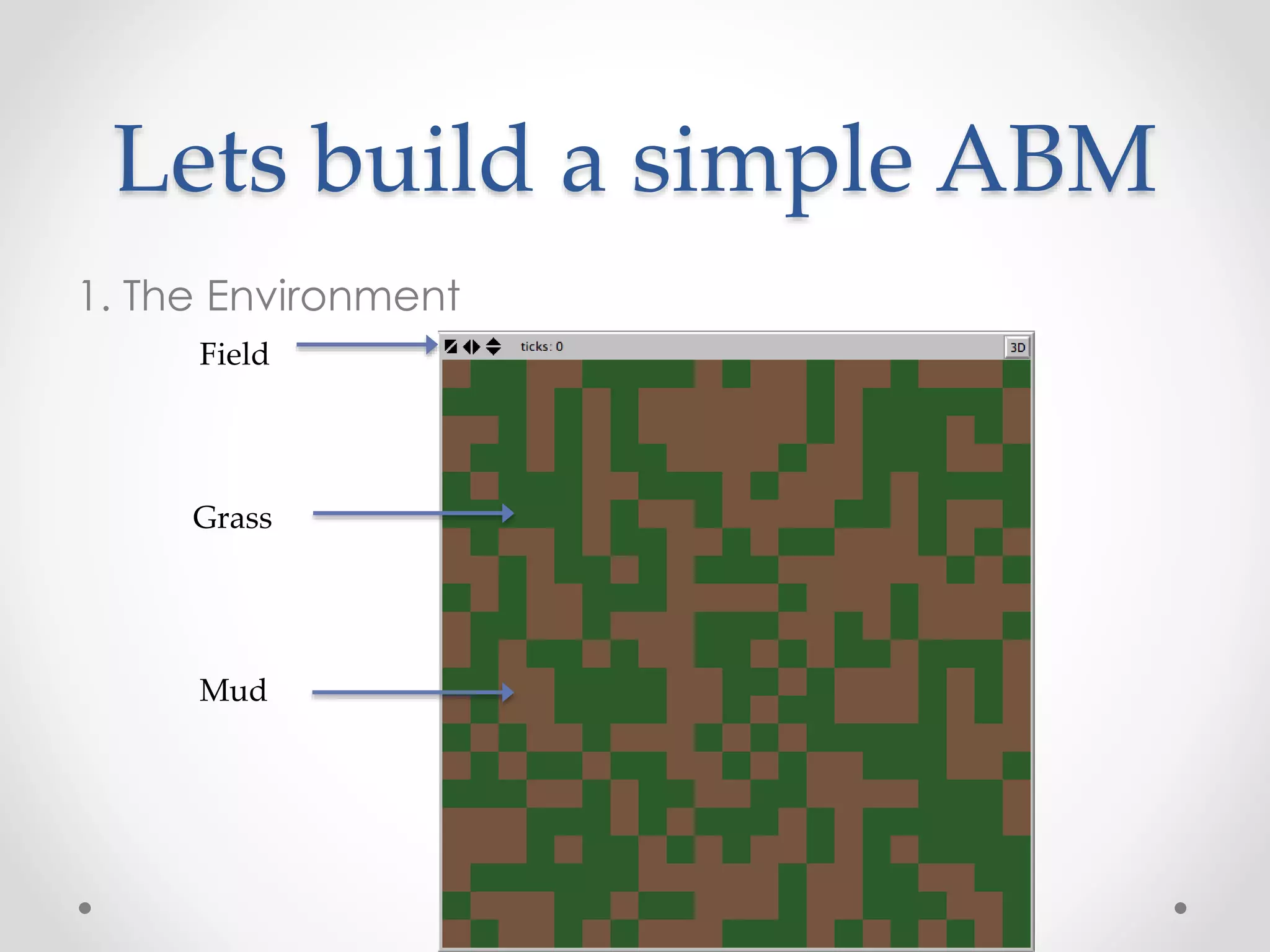
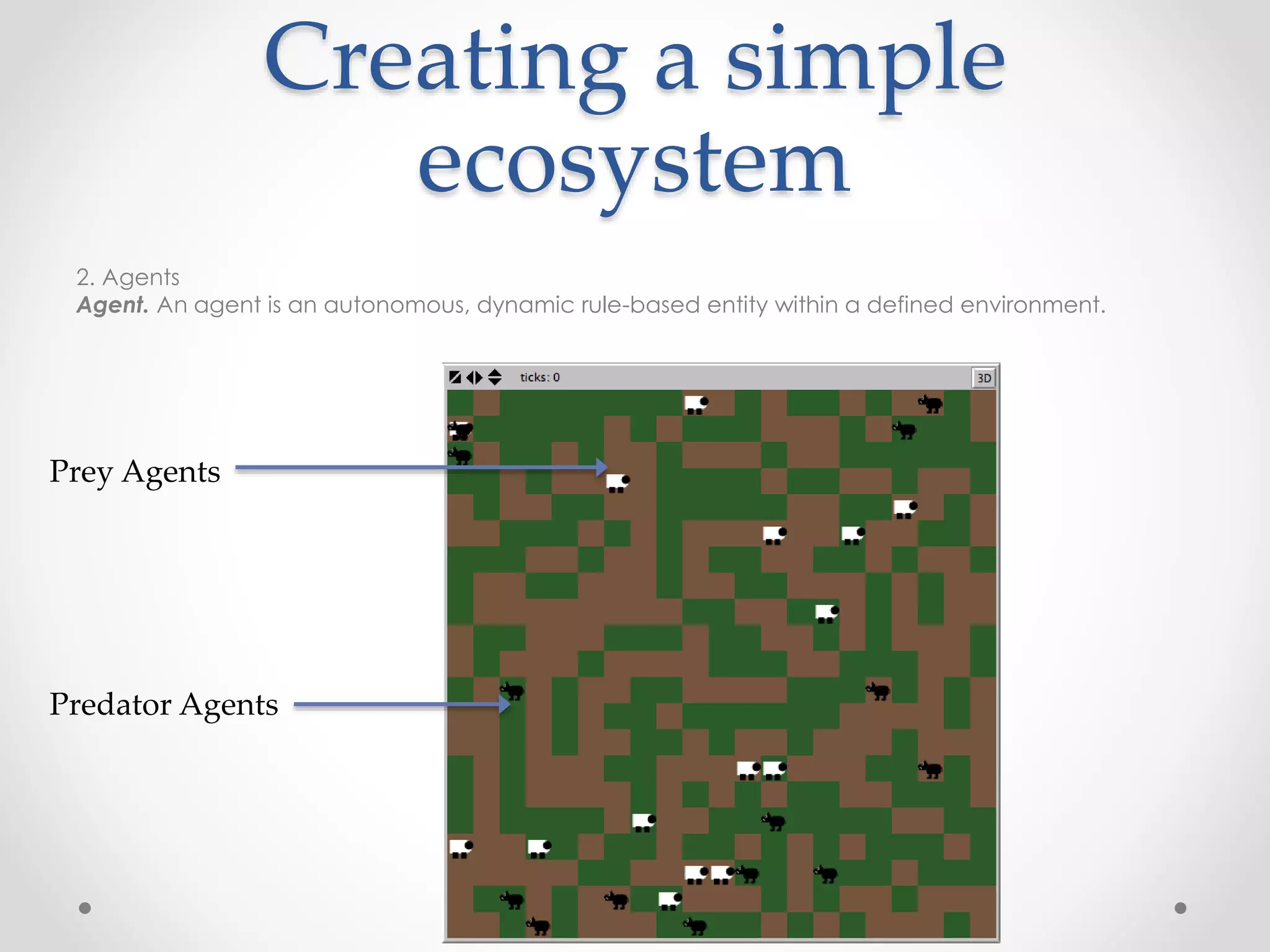
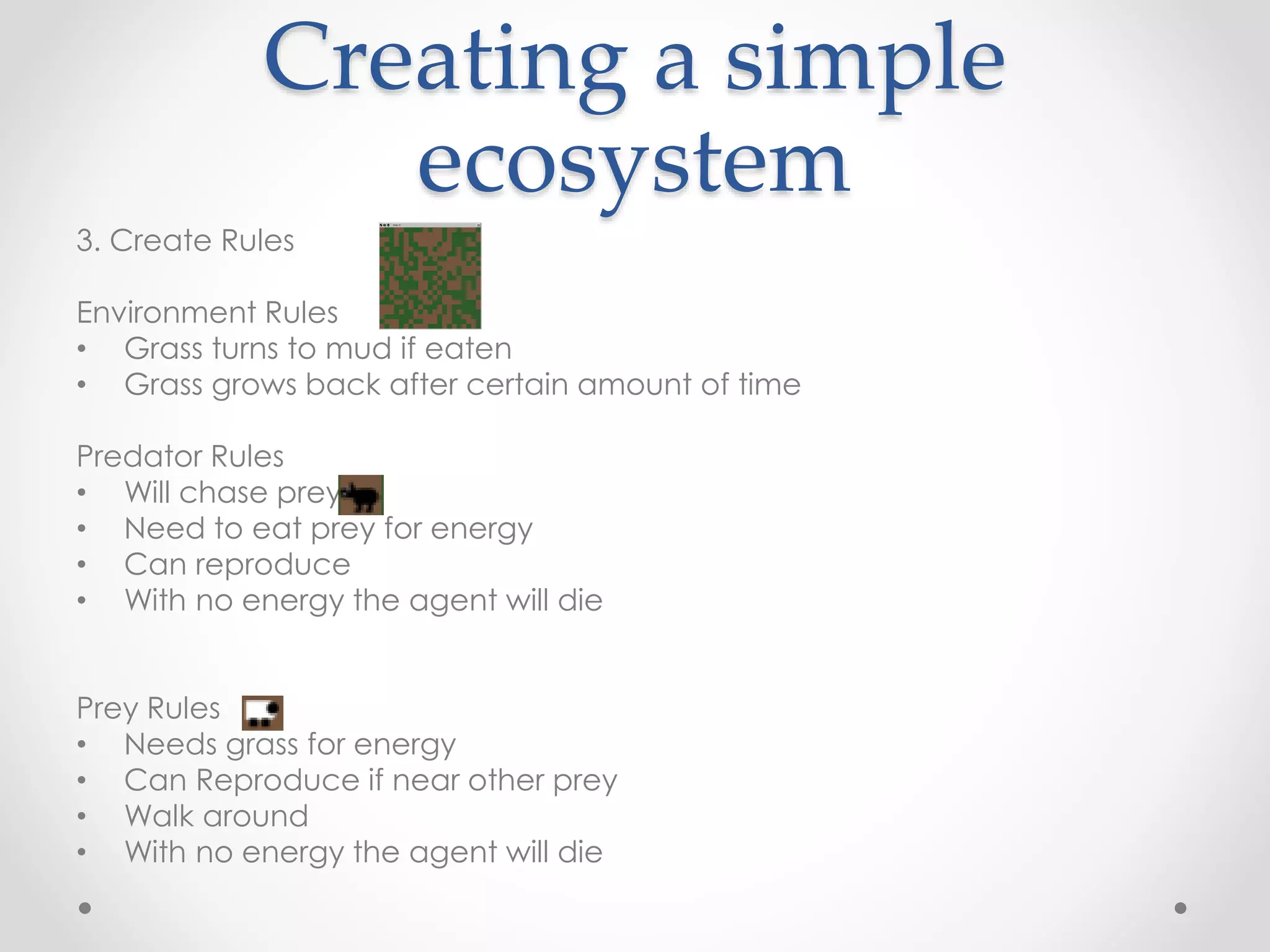
Creating a simple ecosystem with agents like predators and prey, and establishing environmental and agent rules.
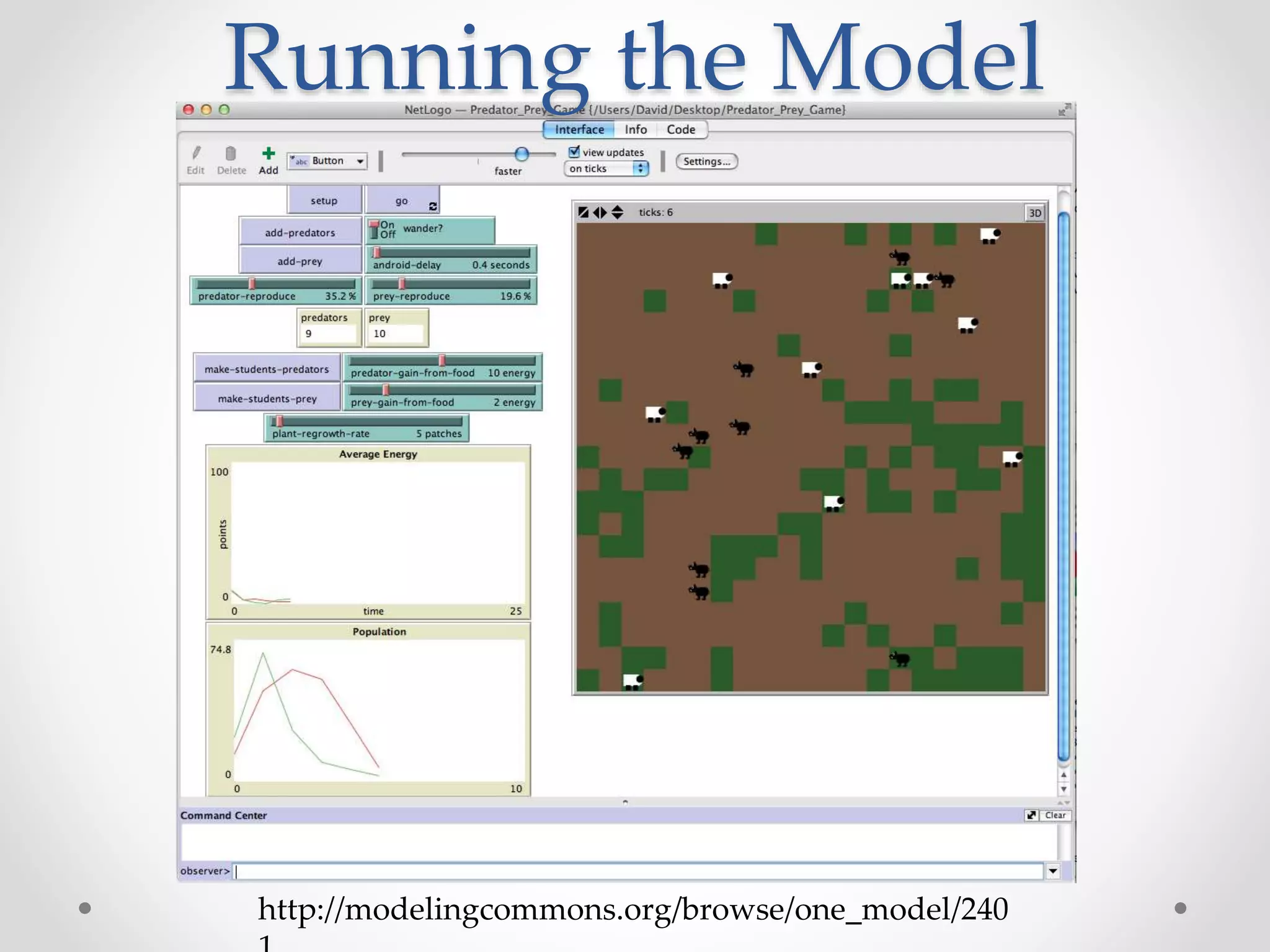
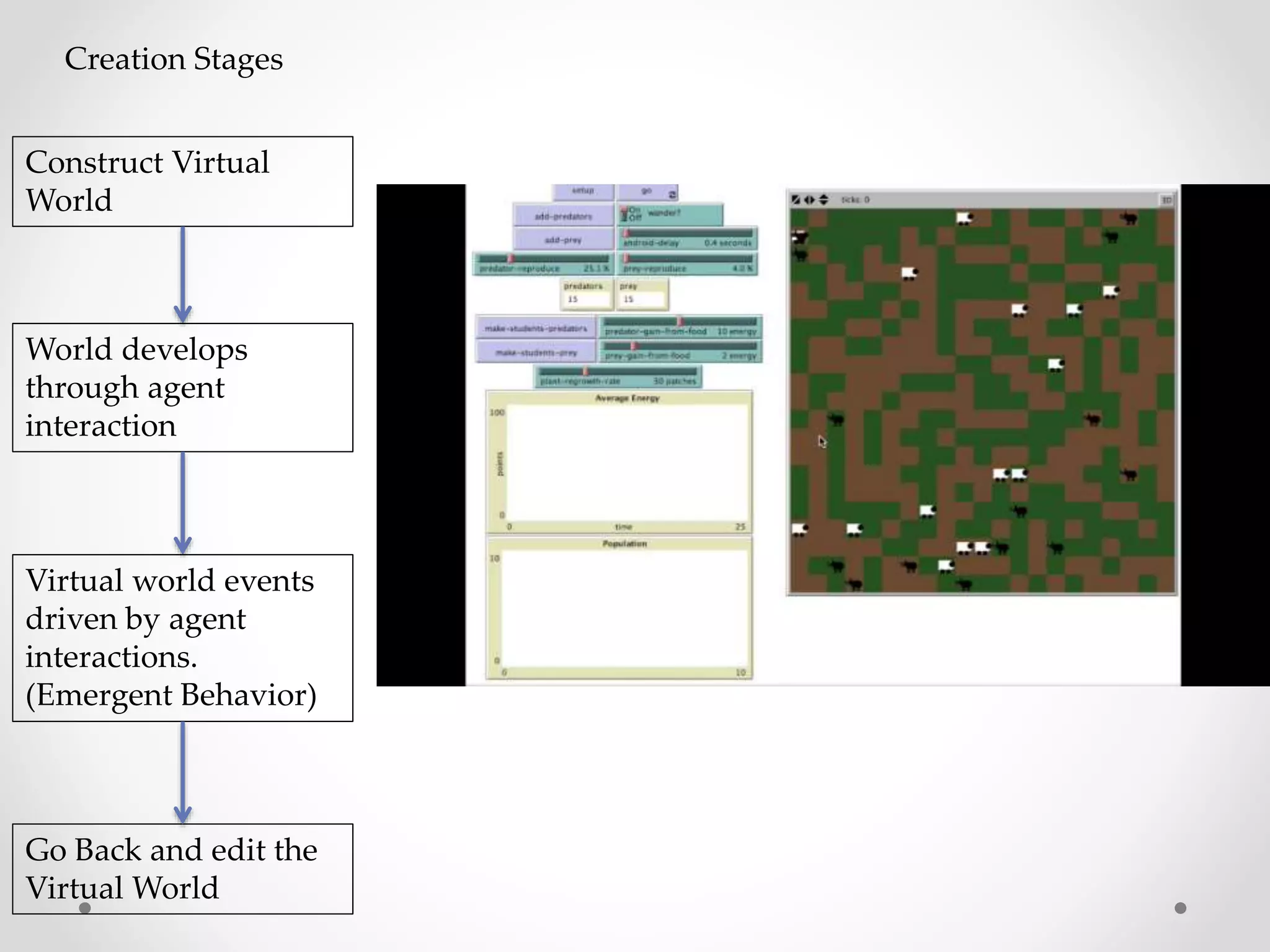
Running the ABM and developing a virtual world through agent interactions which lead to emergent behaviors.
Simulation of predator-prey dynamics with an interactive learning model involving wolves and sheep.
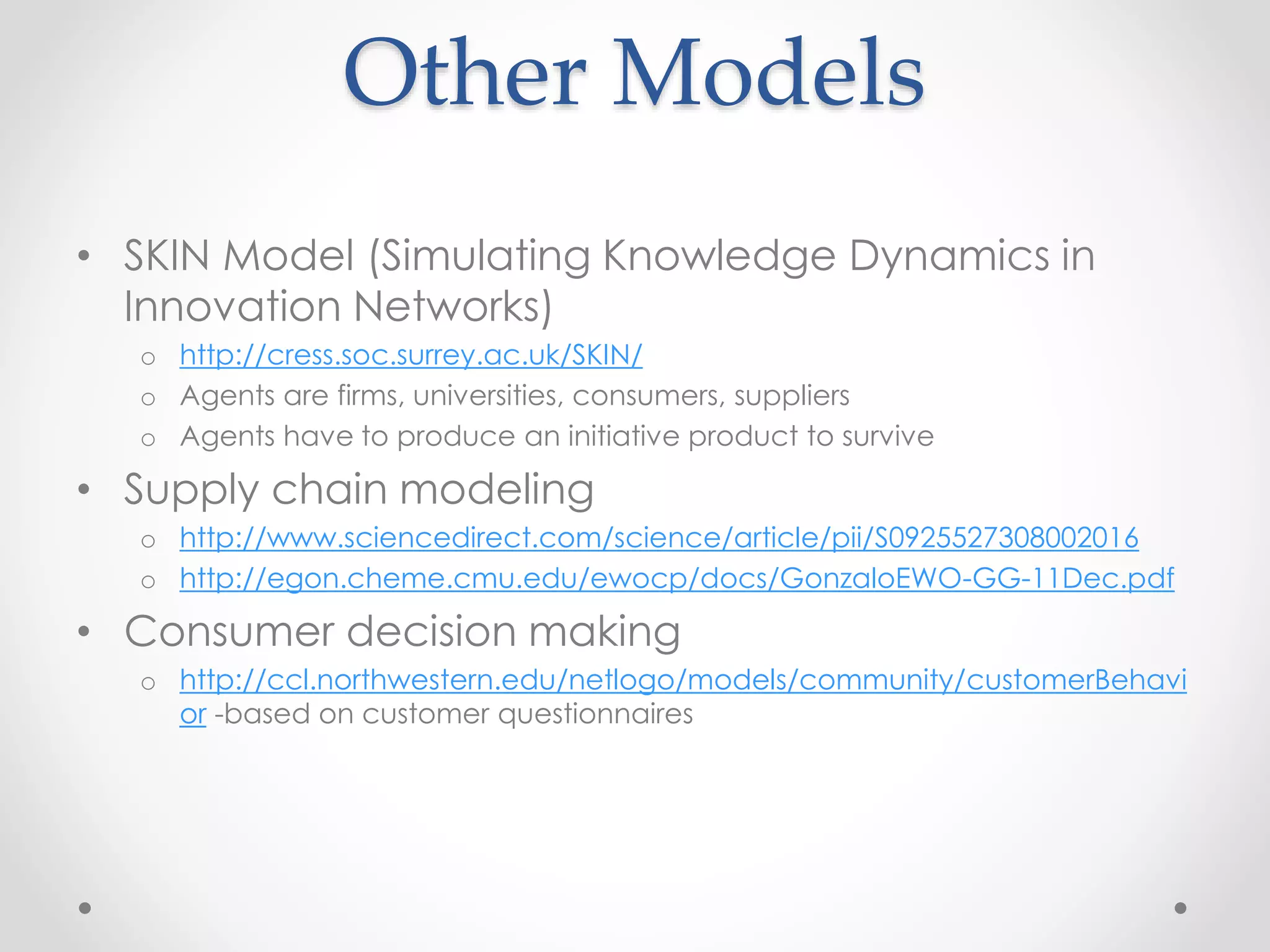
Overview of various ABM applications including SKIN Model, Supply Chain modeling, and consumer decision-making processes.
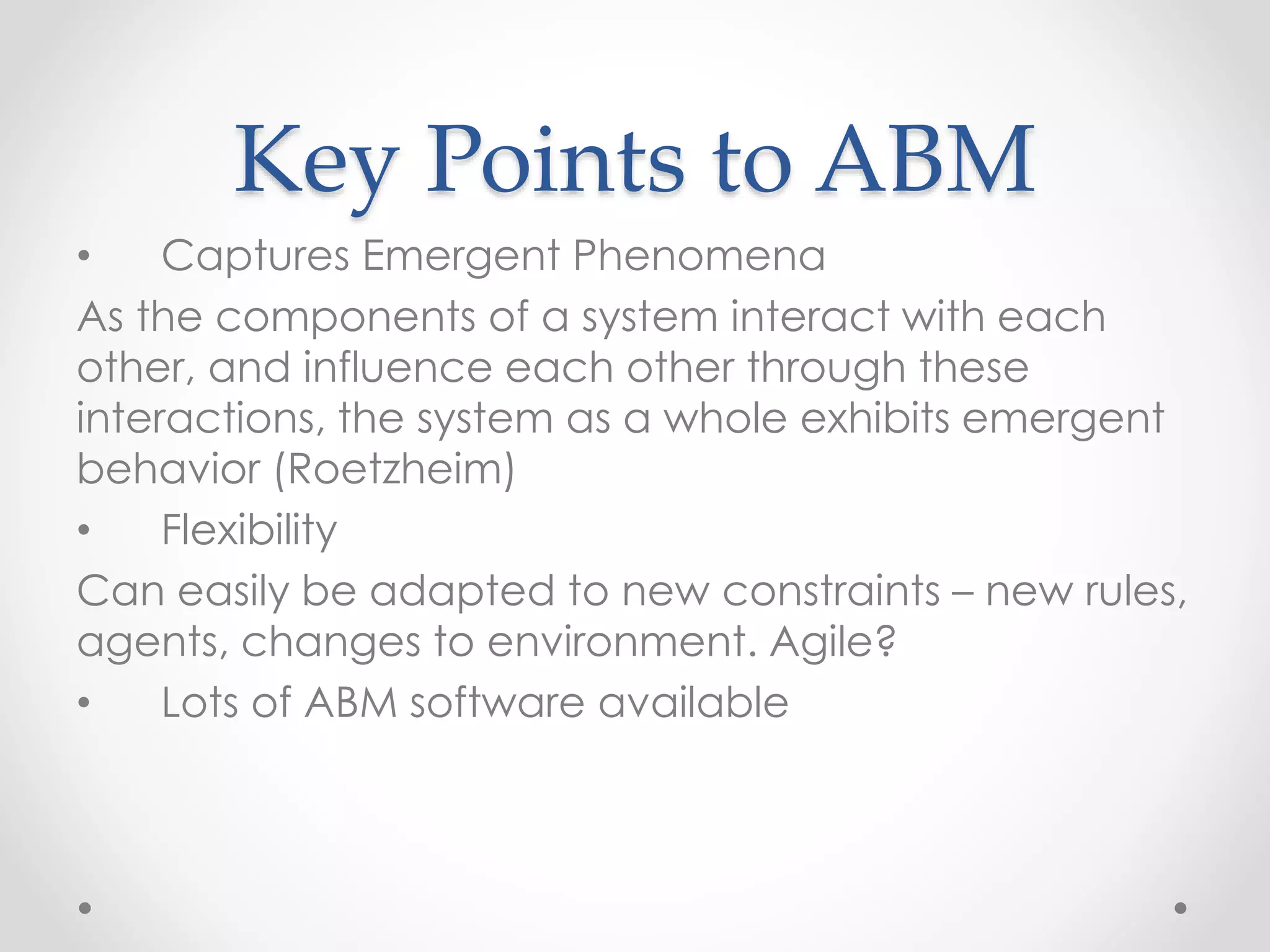
Important aspects of ABM: capturing emergent phenomena, flexibility, and the availability of ABM software.
Personal opinion on the strengths of ABM in explanatory, exploratory, and predictive modeling.
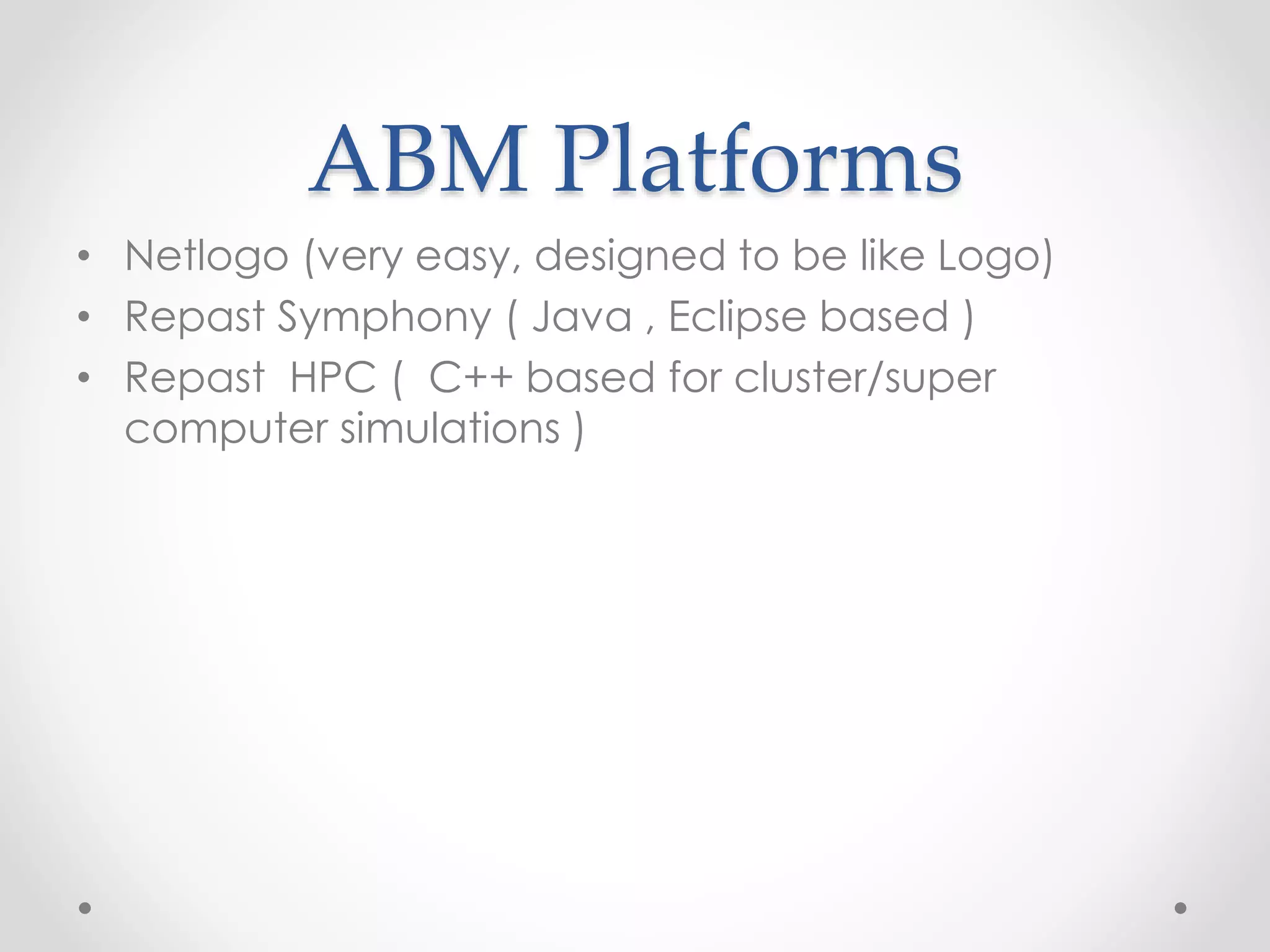
Presentation of various ABM platforms including Netlogo and Repast for different types of simulations.
Useful online resources for exploring ABM tools and research journals.


