Road towards
independence
• Post-WWII- a focus on self-determination in
Europe
• Colonialism seemed to contradict the spirit of the
Allies fight against Nazi Germany and Fascist
Italy
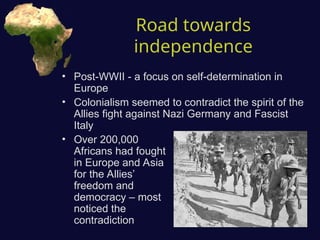
• Over 200,000
Africans had fought
in Europe and Asia
for the Allies’
freedom and
democracy – most
noticed the
contradiction
3.
Road towards
Independence
• MostEuropeans planned a “long
transition” period to independence
• By mid-1950’s pace increased
• 1960 considered the year of Africa
with so many nations gaining
independence
4.
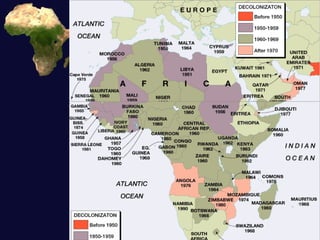
Independence
• Three majorroutes:
– Peaceful / Negotiated independence
• Typically achieved in non-settler colonies, ex =
Ghana
– Violent
• Typically occurred in settler colonies, ex =
Kenya, Algeria
– Incomplete
• White settler minority population given political
power in decolonization, ex = S. Africa
Settler Colonies
• Differentobstacles met by settler vs.
non-settler colonies - what might
they be? What is the difference?
• Settler colonies in Algeria (one
million) and Kenya (40,000) pushed
governments to defeat nationalist
uprisings
8.
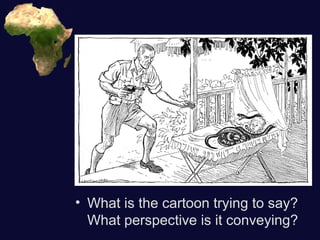
• What isthe cartoon trying to say?
What perspective is it conveying?
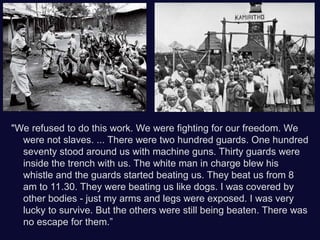
"We refused todo this work. We were fighting for our freedom. We
were not slaves. ... There were two hundred guards. One hundred
seventy stood around us with machine guns. Thirty guards were
inside the trench with us. The white man in charge blew his
whistle and the guards started beating us. They beat us from 8
am to 11.30. They were beating us like dogs. I was covered by
other bodies - just my arms and legs were exposed. I was very
lucky to survive. But the others were still being beaten. There was
no escape for them.”
11.
Settler Colonies
• BothKenya and Algeria uprisings
would be eventually smashed
• Weariness and new anti-colonial
sentiments lead to independence
anyway
• Most French Algerians leave, most
British Kenyans stay
Ghana & Nkrumah’sVision
• 1st
black African majority to gain
independence in 1957
Nkrumah’s Goals:
• Unify Africa politically and
economically (Pan-Africanism)
• Harness vast natural resources
• Reduce Western influence
• Positive economic influence
Garrison State:
South Africa
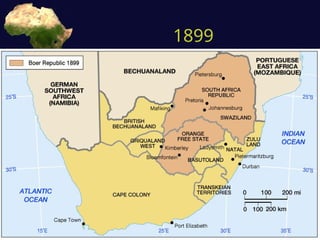
•1910: Union of S. Africa
• 1948: Afrikaner government begins
apartheid policies to institutionalize white
supremacy
– Separate, unequal facilities
– Pass laws require pass books for blacks
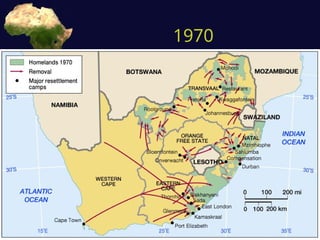
– Blacks resettled into infertile, resource depleted
homelands to ensure segregation & “protect” African
culture
• 1961: Full independence
Garrison State:
South Africa
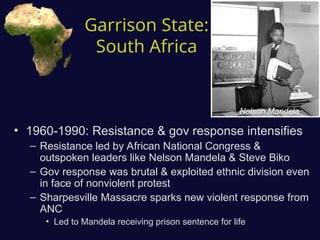
•1960-1990: Resistance & gov response intensifies
– Resistance led by African National Congress &
outspoken leaders like Nelson Mandela & Steve Biko
– Gov response was brutal & exploited ethnic division even
in face of nonviolent protest
– Sharpesville Massacre sparks new violent response from
ANC
• Led to Mandela receiving prison sentence for life
Nelson Mandela
25.
Garrison State:
South Africa
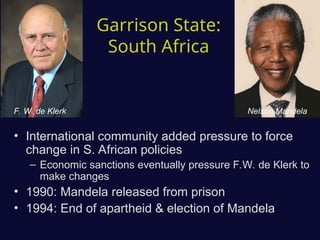
•International community added pressure to force
change in S. African policies
– Economic sanctions eventually pressure F.W. de Klerk to
make changes
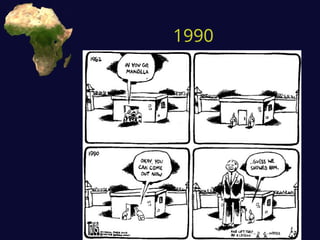
• 1990: Mandela released from prison
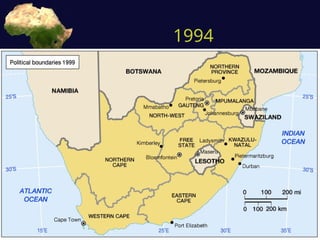
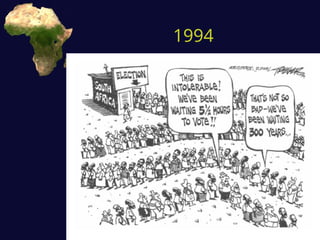
• 1994: End of apartheid & election of Mandela
Nelson Mandela
F. W. de Klerk
External Challenges
• Westerninvestments remain
– Impact?
• Economic dependence on former
colonial powers
• Cold War (USSR v. US) struggle to
spread influence
31.
Internal Challenges
• Tribalallegiances
• Illiteracy / under developed
education system
• No tradition of ongoing political
leadership in modern times
• Religious differences
• Diverse geography and climate
• Established social hierarchies
32.
Results of Decolonization
•Nationalist parties & African elites
gain power
– Use anti-colonial legacy to maintain
power & cloud ineptitude & favoritism
• Economic dependence on West
coupled with political corruption
cripples attempts to diversify economy
– Stuck in cash crop ag & extraction of
resources
33.
Results of Decolonization
•Initial political parties reflected
ethnic, regional, or religious groups -
few true national parties
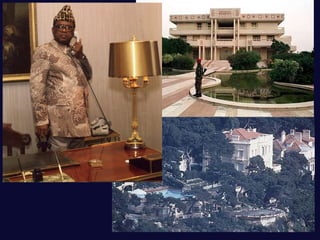
• Power often gained by corrupt
African “strongmen” (dictators) who
ignored the social needs of people
• Large loans to modernize economies
squandered by those in power -
leave little progress, lots of debt
Editor's Notes
#2 Many Africans returned home to find they had only fought for the European’s
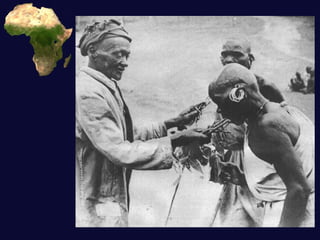
#9 A Mau Mau oathing ceremony. Essentially, the Mau Mau oath was a declaration that they wanted to rid themselves of the English in Kenya. They wanted their land back. The British portrayed this oathing as one of the most terrible things around and put over 80,000 into detention camps and killed over 13,000. White settlers help drive the policy.
#10 Rounding up Mau Mau “rebels” - and a “protected” settlement.
#32 The same pattern being a dependence on a cash crop or western control of the extraction of a resource (gold, diamonds, etc.)
#33 The same pattern being a dependence on a cash crop or western control of the extraction of a resource (gold, diamonds, etc.)