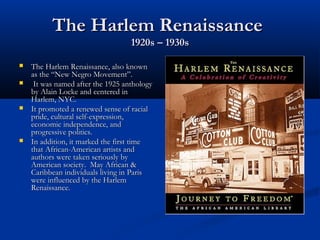
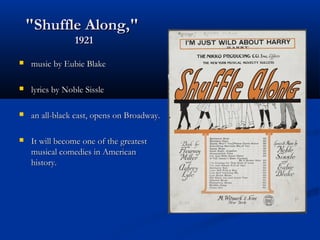
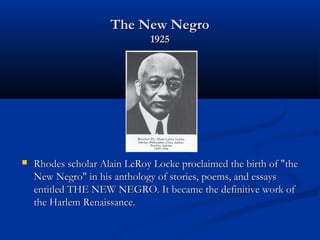
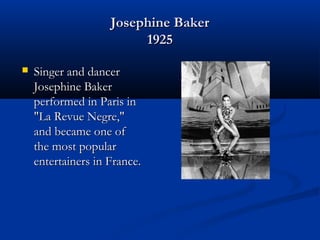
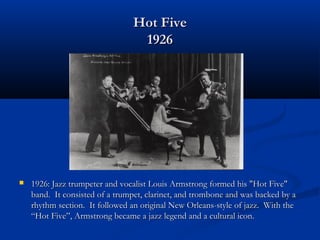
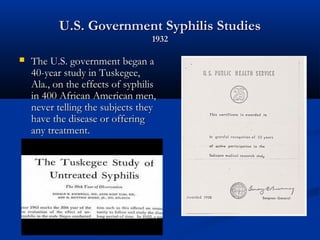
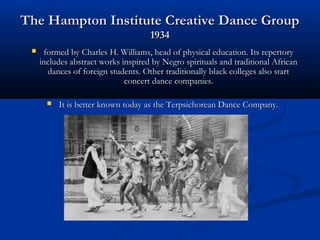
The document summarizes key events in the African American influence on civil rights and dance from the 1920s to the 1940s. It describes the Harlem Renaissance as a period of cultural flowering and renewed racial pride for African Americans. Important events included the Broadway musical "Shuffle Along" in 1921, Josephine Baker's performances in Paris in 1925, and Louis Armstrong forming his influential "Hot Five" jazz band in 1926. The document also notes controversial U.S. government syphilis studies on Black men from 1932 to 1972 and the founding of dance companies at historically Black colleges in the 1930s and 1940s.