
Case report
2
Patient profile
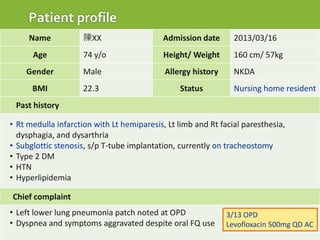
Name 陳XX Admission date 2013/03/16
Age 74 y/o Height/ Weight 160 cm/ 57kg
Gender Male Allergy history NKDA
BMI 22.3 Status Nursing home resident
Past history
• Rt medulla infarction with Lt hemiparesis, Lt limb and Rt facial paresthesia,
dysphagia, and dysarthria
• Subglottic stenosis, s/p T-tube implantation, currently on tracheostomy
• Type 2 DM
• HTN
• Hyperlipidemia
Chief complaint
• Left lower lung pneumonia patch noted at OPD
• Dyspnea and symptoms aggravated despite oral FQ use
3/13 OPD
Levofloxacin 500mg QD AC
Lab data on 3/16
3
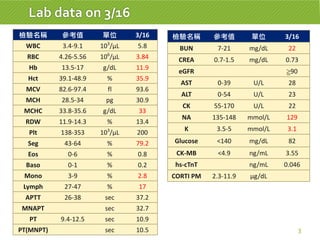
檢驗名稱 參考值 單位 3/16
WBC 3.4-9.1 103
/μL 5.8
RBC 4.26-5.56 106
/μL 3.84
Hb 13.5-17 g/dL 11.9
Hct 39.1-48.9 % 35.9
MCV 82.6-97.4 fl 93.6
MCH 28.5-34 pg 30.9
MCHC 33.8-35.6 g/dL 33
RDW 11.9-14.3 % 13.4
Plt 138-353 103
/μL 200
Seg 43-64 % 79.2
Eos 0-6 % 0.8
Baso 0-1 % 0.2
Mono 3-9 % 2.8
Lymph 27-47 % 17
APTT 26-38 sec 37.2
MNAPT sec 32.7
PT 9.4-12.5 sec 10.9
PT(MNPT) sec 10.5
檢驗名稱 參考值 單位 3/16
BUN 7-21 mg/dL 22
CREA 0.7-1.5 mg/dL 0.73
eGFR ≧90
AST 0-39 U/L 28
ALT 0-54 U/L 23
CK 55-170 U/L 22
NA 135-148 mmol/L 129
K 3.5-5 mmol/L 3.1
Glucose <140 mg/dL 82
CK-MB <4.9 ng/mL 3.55
hs-cTnT ng/mL 0.046
CORTI PM 2.3-11.9 μg/dL
Hospital course
4
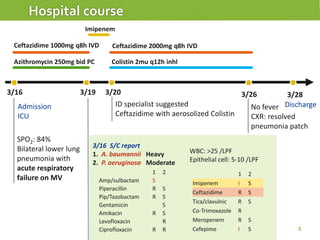
3/16
Ceftazidime 1000mg q8h IVD
Azithromycin 250mg bid PC
Imipenem
3/28
DischargeAdmission
ICU
SPO2: 84%
Bilateral lower lung
pneumonia with
acute respiratory
failure on MV
3/20
Colistin 2mu q12h inhl
Ceftazidime 2000mg q8h IVD
ID specialist suggested
Ceftazidime with aerosolized Colistin
3/19
3/16 S/C report
1. A. baumannii Heavy
2. P. aeruginosa Moderate
WBC: >25 /LPF
Epithelial cell: 5-10 /LPF
1 2
Amp/sulbactam S
Piperacillin R S
Pip/Tazobactam R S
Gentamicin S
Amikacin R S
Levofloxacin R
Ciprofloxacin R R
1 2
Imipenem I S
Ceftazidime R S
Tica/clavulnic R S
Co-Trimoxazole R
Meropenem R S
Cefepime I S
3/26
No fever
CXR: resolved
pneumonia patch
TPR
DischargeTerbutaline 1amp q12h neb
Acetylcysteine 600mg bid
Hydrocortisone 50mg q12h
Pantoprazole 40mg q12h
Rosuvastatin 10mg qd PC
Lercanidipine 10mg qd AC
Hydralazine 50mg tid PC
Co-Diovan 80/12.5 mg 1# qd PC
Carvedilol 25mg bid
NPH + RI
Glimepiride 2mg QD AC
Metformin 500mg tid
Sennoside A+B 12.5mg/tab 2# hs
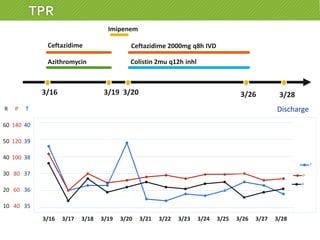
3/16 3/283/19 3/263/20
Ceftazidime
Azithromycin Colistin 2mu q12h inhl
Ceftazidime 2000mg q8h IVD
Imipenem
Cortisol: 16.5 μg/dL
T
P
R
R P T
60 140 40
50 120 39
40 100 38
30 80 37
20 60 36
10 40 35
3/16 3/17 3/18 3/19 3/20 3/21 3/22 3/23 3/24 3/25 3/26 3/27 3/28
Discharge
Outline
 Rationale for using the nebulized route
 Aerosolized antibiotics to treat HAP/ VAP
 Administration considerations
 Safety concerns
 Summary
HAP – hospital-acquired pneumonia
VAP – ventilator-associated pneumonia 6
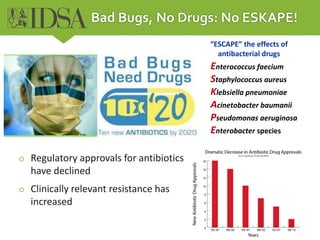
Bad Bugs, No Drugs: No ESKAPE!
 Regulatory approvals for antibiotics
have declined
 Clinically relevant resistance has
increased
7
Enterococcus faecium
Staphylococcus aureus
Klebsiella pneumoniae
Acinetobacter baumanii
Pseudomonas aeruginosa
Enterobacter species
“ESCAPE” the effects of
antibacterial drugs
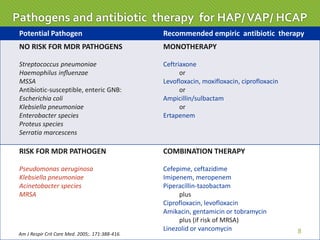
Potential Pathogen Recommended empiric antibiotic therapy
NO RISK FOR MDR PATHOGENS
Streptococcus pneumoniae
Haemophilus influenzae
MSSA
Antibiotic-susceptible, enteric GNB:
Escherichia coli
Klebsiella pneumoniae
Enterobacter species
Proteus species
Serratia marcescens
MONOTHERAPY
Ceftriaxone
or
Levofloxacin, moxifloxacin, ciprofloxacin
or
Ampicillin/sulbactam
or
Ertapenem
RISK FOR MDR PATHOGEN
Pseudomonas aeruginosa
Klebsiella pneumoniae
Acinetobacter species
MRSA
COMBINATION THERAPY
Cefepime, ceftazidime
Imipenem, meropenem
Piperacillin-tazobactam
plus
Ciprofloxacin, levofloxacin
Amikacin, gentamicin or tobramycin
plus (if risk of MRSA)
Linezolid or vancomycin
Am J Respir Crit Care Med. 2005;. 171:388-416. 8
Pathogens and antibiotic therapy for HAP/VAP/ HCAP
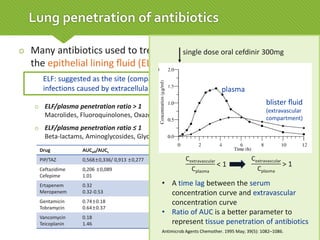
 Many antibiotics used to treat HAP have poor penetration into
the epithelial lining fluid (ELF) of the lungs
 ELF/plasma penetration ratio > 1
Macrolides, Fluoroquinolones, Oxazolidinones
 ELF/plasma penetration ratio ≤ 1
Beta-lactams, Aminoglycosides, Glycopeptides
a Clin Pharmacokinet. 2011 Oct;50(10):637-64.
b Chest 2004;125:965-973.
c Antimicrob Agents Chemother. 2008 Jan;52(1):24-36.
CID 2010; 51(S1):S103–S110
9
Lung penetration of antibiotics
Drug AUCelf/AUCs
PIP/TAZ 0,568±0,336/ 0,913 ±0,277
Ceftazidime
Cefepime
0,206 ±0,089
1.01
Ertapenem
Meropenem
0.32
0.32-0.53
Gentamicin
Tobramycin
0.74±0.18
0.64±0.37
Vancomycin
Teicoplanin
0.18
1.46
Drug AUCelf/AUCs
Ciprofloxacin
Gatifloxacin
Levofloxacin
Moxifloxacin
0.82c
1.77c
2.08c
5.18c
Clarithromycin
Azithromycin
14
13.3b
Linezolid
Tigecycline
1.04±0.28
1.32c
ELF: suggested as the site (compartment) of antimicrobial activity against lung
infections caused by extracellular pathogens
• A time lag between the serum
concentration curve and extravascular
concentration curve
• Ratio of AUC is a better parameter to
represent tissue penetration of antibiotics
single dose oral cefdinir 300mg
plasma
blister fluid
(extravascular
compartment)
Antimicrob Agents Chemother. 1995 May; 39(5): 1082–1086.
Cextravascular
Cplasma
< 1
Cextravascular
Cplasma
> 1
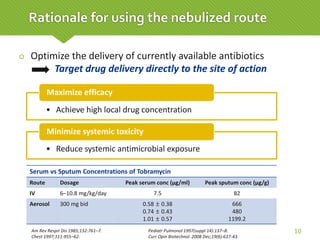
 Optimize the delivery of currently available antibiotics
Target drug delivery directly to the site of action
10
Rationale for using the nebulized route
• Achieve high local drug concentration
Maximize efficacy
• Reduce systemic antimicrobial exposure
Minimize systemic toxicity
Serum vs Sputum Concentrations of Tobramycin
Route Dosage Peak serum conc (µg/ml) Peak sputum conc (µg/g)
IV 6–10.8 mg/kg/day 7.5 82
Aerosol 300 mg bid 0.58 ± 0.38
0.74 ± 0.43
1.01 ± 0.57
666
480
1199.2
Am Rev Respir Dis 1985;132:761–7.
Chest 1997;111:955–62.
Pediatr Pulmonol 1997(suppl 14):137–8.
Curr Opin Biotechnol. 2008 Dec;19(6):637-43.
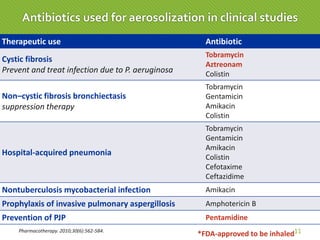
Therapeutic use Antibiotic
Cystic fibrosis
Prevent and treat infection due to P. aeruginosa
Tobramycin
Aztreonam
Colistin
Non–cystic fibrosis bronchiectasis
suppression therapy
Tobramycin
Gentamicin
Amikacin
Colistin
Hospital-acquired pneumonia
Tobramycin
Gentamicin
Amikacin
Colistin
Cefotaxime
Ceftazidime
Nontuberculosis mycobacterial infection Amikacin
Prophylaxis of invasive pulmonary aspergillosis Amphotericin B
Prevention of PJP Pentamidine
Pharmacotherapy. 2010;30(6):562-584. 11
Antibiotics used for aerosolization in clinical studies
*FDA-approved to be inhaled
Aerosolized antibiotics to
treat HAP/VAP
HAP – hospital-acquired pneumonia
VAP – ventilator-associated pneumonia
12
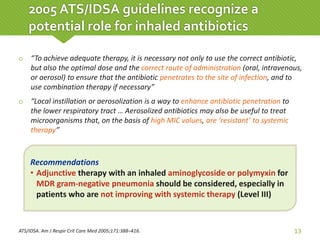
 “To achieve adequate therapy, it is necessary not only to use the correct antibiotic,
but also the optimal dose and the correct route of administration (oral, intravenous,
or aerosol) to ensure that the antibiotic penetrates to the site of infection, and to
use combination therapy if necessary”
 “Local instillation or aerosolization is a way to enhance antibiotic penetration to
the lower respiratory tract … Aerosolized antibiotics may also be useful to treat
microorganisms that, on the basis of high MIC values, are ‘resistant’ to systemic
therapy”
ATS/IDSA. Am J Respir Crit Care Med 2005;171:388–416. 13
2005 ATS/IDSA guidelines recognize a
potential role for inhaled antibiotics
Recommendations
• Adjunctive therapy with an inhaled aminoglycoside or polymyxin for
MDR gram-negative pneumonia should be considered, especially in
patients who are not improving with systemic therapy (Level III)
14
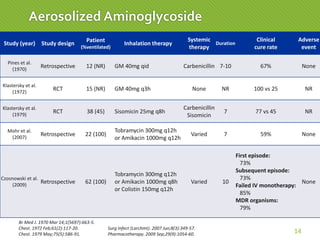
Aerosolized Aminoglycoside
Study (year) Study design
Patient
(%ventilated)
Inhalation therapy
Systemic
therapy
Duration
Clinical
cure rate
Adverse
event
Pines et al.
(1970)
Retrospective 12 (NR) GM 40mg qid Carbenicillin 7-10 67% None
Klastersky et al.
(1972)
RCT 15 (NR) GM 40mg q3h None NR 100 vs 25 NR
Klastersky et al.
(1979)
RCT 38 (45) Sisomicin 25mg q8h
Carbenicillin
Sisomicin
7 77 vs 45 NR
Mohr et al.
(2007)
Retrospective 22 (100)
Tobramycin 300mg q12h
or Amikacin 1000mg q12h
Varied 7 59% None
Czosnowski et al.
(2009)
Retrospective 62 (100)
Tobramycin 300mg q12h
or Amikacin 1000mg q8h
or Colistin 150mg q12h
Varied 10
First episode:
73%
Subsequent episode:
73%
Failed IV monotherapy:
85%
MDR organisms:
79%
None
Br Med J. 1970 Mar 14;1(5697):663-5.
Chest. 1972 Feb;61(2):117-20.
Chest. 1979 May;75(5):586-91.
Surg Infect (Larchmt). 2007 Jun;8(3):349-57.
Pharmacotherapy. 2009 Sep;29(9):1054-60.
J Antimicrob Chemother. 2004 Aug;54(2):566-9.
Crit Care. 2005 Feb;9(1):R53-9.
Clin Infect Dis. 2005 Sep 1;41(5):754-7.
Diagn Microbiol Infect Dis. 2007 Jun;58(2):235-40. 15
Aerosolized Colistin
Study (year) Study design
Patient
(%ventilated)
Inhalation dose
Systemic
therapy
Duration
Clinical
cure rate
Adverse event
Sobieszczyk et al.
(2004)
Observational 8 (NR)
2.5 mg/kg/day divided
every 6 h
Varied 19 76%
Possible
nephrotoxicity
(n = 2)
Michalopoulos et
al.
(2005)
Observational 8 (100) 33–198 mg/day Varied 10.5 87.5%
1 worsening of
renal function
Kwa et al. (2005) Observational 21 (14) 33mg bid Varied 14 86% NR
Pereira et al. (2007) Observational 14 (79) Polymyxin B 16.5 mg Polymyxin B 14 93%
Cough/
bronchospasm
(n = 4) 29%
Respir Med. 2008 Mar;102(3):407-12.
J Microbiol Immunol Infect. 2010 Aug;43(4):323-31.
16
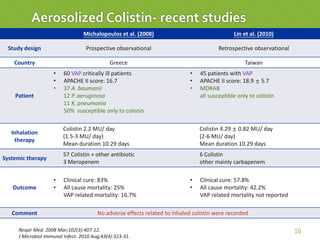
Aerosolized Colistin- recent studies
Michalopoulos et al. (2008) Lin et al. (2010)
Study design Prospective observational Retrospective observational
Country Greece Taiwan
Patient
• 60 VAP critically ill patients
• APACHE II score: 16.7
• 37 A. baumanii
12 P. aeruginosa
11 K. pneumonia
50% susceptible only to colistin
• 45 patients with VAP
• APACHE II score: 18.9 ± 5.7
• MDRAB
all susceptible only to colistin
Inhalation
therapy
Colistin 2.2 MU/ day
(1.5-3 MU/ day)
Mean duration 10.29 days
Colistin 4.29 ± 0.82 MU/ day
(2-6 MU/ day)
Mean duration 10.29 days
Systemic therapy
57 Colistin + other antibiotic
3 Meropenem
6 Colistin
other mainly carbapenem
Outcome
• Clinical cure: 83%
• All cause mortality: 25%
VAP related mortality: 16.7%
• Clinical cure: 57.8%
• All cause mortality: 42.2%
VAP related mortality not reported
Comment No adverse effects related to inhaled colistin were recorded
Clin Infect Dis. 2010 Dec 1;51(11):1238-44.
17
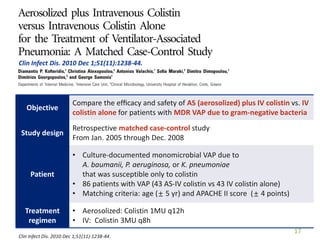
Objective
Compare the efficacy and safety of AS (aerosolized) plus IV colistin vs. IV
colistin alone for patients with MDR VAP due to gram-negative bacteria
Study design
Retrospective matched case-control study
From Jan. 2005 through Dec. 2008
Patient
• Culture-documented monomicrobial VAP due to
A. baumanii, P. aeruginosa, or K. pneumoniae
that was susceptible only to colistin
• 86 patients with VAP (43 AS-IV colistin vs 43 IV colistin alone)
• Matching criteria: age (± 5 yr) and APACHE II score (± 4 points)
Treatment
regimen
• Aerosolized: Colistin 1MU q12h
• IV: Colistin 3MU q8h
Clin Infect Dis. 2010 Dec 1;51(11):1238-44.
18
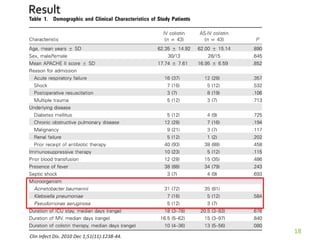
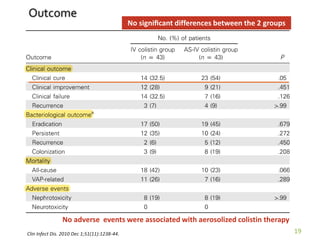
Result
Clin Infect Dis. 2010 Dec 1;51(11):1238-44. 19
Outcome
No significant differences between the 2 groups
No adverse events were associated with aerosolized colistin therapy
Clin Infect Dis. 2010 Dec 1;51(11):1238-44. 20
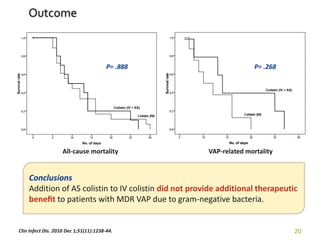
Outcome
VAP-related mortalityAll-cause mortality
P= .888 P= .268
Conclusions
Addition of AS colistin to IV colistin did not provide additional therapeutic
benefit to patients with MDR VAP due to gram-negative bacteria.
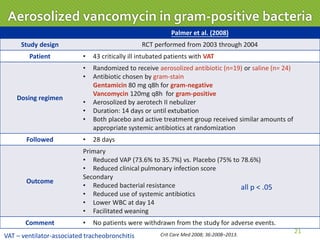
Palmer et al. (2008)
Study design RCT performed from 2003 through 2004
Patient • 43 critically ill intubated patients with VAT
Dosing regimen
• Randomized to receive aerosolized antibiotic (n=19) or saline (n= 24)
• Antibiotic chosen by gram-stain
Gentamicin 80 mg q8h for gram-negative
Vancomycin 120mg q8h for gram-positive
• Aerosolized by aerotech II nebulizer
• Duration: 14 days or until extubation
• Both placebo and active treatment group received similar amounts of
appropriate systemic antibiotics at randomization
Followed • 28 days
Outcome
Primary
• Reduced VAP (73.6% to 35.7%) vs. Placebo (75% to 78.6%)
• Reduced clinical pulmonary infection score
Secondary
• Reduced bacterial resistance
• Reduced use of systemic antibiotics
• Lower WBC at day 14
• Facilitated weaning
Comment • No patients were withdrawn from the study for adverse events.
VAT – ventilator-associated tracheobronchitis Crit Care Med 2008; 36:2008–2013.
21
Aerosolized vancomycin in gram-positive bacteria
all p < .05
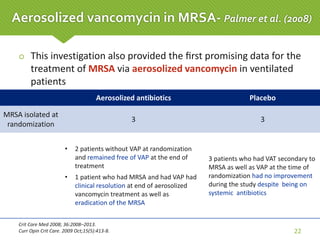
 This investigation also provided the first promising data for the
treatment of MRSA via aerosolized vancomycin in ventilated
patients
Crit Care Med 2008; 36:2008–2013.
Curr Opin Crit Care. 2009 Oct;15(5):413-8. 22
Aerosolized vancomycin in MRSA- Palmer et al. (2008)
Aerosolized antibiotics Placebo
MRSA isolated at
randomization
3 3
• 2 patients without VAP at randomization
and remained free of VAP at the end of
treatment
• 1 patient who had MRSA and had VAP had
clinical resolution at end of aerosolized
vancomycin treatment as well as
eradication of the MRSA
3 patients who had VAT secondary to
MRSA as well as VAP at the time of
randomization had no improvement
during the study despite being on
systemic antibiotics
Administration considerations
23
 How much drug actually reaches the site of infection?
 Dosage, drug delivery, pulmonary deposition
 Highly variable with over a tenfold difference in delivery
depending on the administration techniques use
 How long does the antibiotic stay in the lung?
 Clearance from the lung
 Systemic exposure
 Active in infected lung tissue?
 Stability and activity in pulmonary secretions and special
environments in the lung
Expert Rev Anti Infect Ther. 2011 Nov;9(11):993-1000.
Am J Respir Crit Care Med. 2003 Nov 15;168(10):1205-9.
Curr Opin Biotechnol. 2008 Dec;19(6):637-43. 24
Aerosolized delivery of antibiotics
 Method of aerosol delivery
 Humidifying leads to aerosol losses and decrease drug delivery by up to 40%
 Breath-actuated nebulization administer a higher dose than continuous
nebulization
 Type of nebulizer
 Characteristic of aerosolized particles
 Mean mass aerodynamic diameter(MMAD)
 Determine regional deposition within the lung
 Average size of particles generated by a drug-nebulizer combination
 Patient-specific factors
 Degree of airway obstruction
 Breathing pattern
 Lung transplant recipients
Pharmacotherapy. 2010;30(6):562-584.
Transplantation 2003;75: 1571–4.
Am J Transplant 2006;6:2765–73.
25
Factors Related to Aerosolized Delivery
Le Brun PP et al. Pharm World Sci 2000;22:7–81
Dhand R. J Aerosol Med 2008;21:1–16
Pharmacotherapy. 2010;30(6):562-584.
26
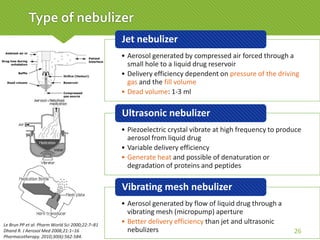
Type of nebulizer
• Aerosol generated by compressed air forced through a
small hole to a liquid drug reservoir
• Delivery efficiency dependent on pressure of the driving
gas and the fill volume
• Dead volume: 1-3 ml
Jet nebulizer
• Piezoelectric crystal vibrate at high frequency to produce
aerosol from liquid drug
• Variable delivery efficiency
• Generate heat and possible of denaturation or
degradation of proteins and peptides
Ultrasonic nebulizer
• Aerosol generated by flow of liquid drug through a
vibrating mesh (micropump) aperture
• Better delivery efficiency than jet and ultrasonic
nebulizers
Vibrating mesh nebulizer
 Method of aerosol delivery
 Humidifying leads to aerosol losses and decrease drug delivery by up to 40%
 Breath-actuated nebulization administer a higher dose than continuous
nebulization
 Type of nebulizer
 Characteristic of aerosolized particles
 Mean mass aerodynamic diameter(MMAD)
 Determine regional deposition within the lung
 Differ for each drug-nebulizer combination
 Patient-specific factors
 Degree of airway obstruction
 Breathing pattern
 Lung transplant recipients
Pharmacotherapy. 2010;30(6):562-584.
Transplantation 2003;75: 1571–4.
Am J Transplant 2006;6:2765–73.
27
Factors Related to Aerosolized Delivery
Pharmacotherapy. 2010;30(6):562-584.
28
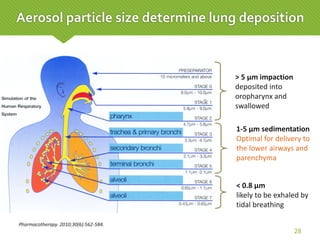
Aerosol particle size determine lung deposition
> 5 µm impaction
deposited into
oropharynx and
swallowed
1-5 µm sedimentation
Optimal for delivery to
the lower airways and
parenchyma
< 0.8 µm
likely to be exhaled by
tidal breathing
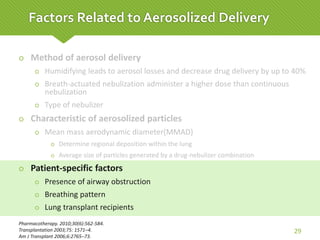
 Method of aerosol delivery
 Humidifying leads to aerosol losses and decrease drug delivery by up to 40%
 Breath-actuated nebulization administer a higher dose than continuous
nebulization
 Type of nebulizer
 Characteristic of aerosolized particles
 Mean mass aerodynamic diameter(MMAD)
 Determine regional deposition within the lung
 Average size of particles generated by a drug-nebulizer combination
 Patient-specific factors
 Presence of airway obstruction
 Breathing pattern
 Lung transplant recipients
Pharmacotherapy. 2010;30(6):562-584.
Transplantation 2003;75: 1571–4.
Am J Transplant 2006;6:2765–73.
29
Factors Related to Aerosolized Delivery
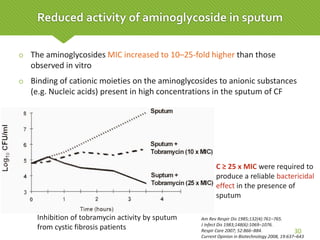
 The aminoglycosides MIC increased to 10–25-fold higher than those
observed in vitro
 Binding of cationic moieties on the aminoglycosides to anionic substances
(e.g. Nucleic acids) present in high concentrations in the sputum of CF
Am Rev Respir Dis 1985;132(4):761–765.
J Infect Dis 1983;148(6):1069–1076.
Respir Care 2007; 52:866–884.
Current Opinion in Biotechnology 2008, 19:637–643
30
Reduced activity of aminoglycoside in sputum
C ≥ 25 x MIC were required to
produce a reliable bactericidal
effect in the presence of
sputum
Inhibition of tobramycin activity by sputum
from cystic fibrosis patients
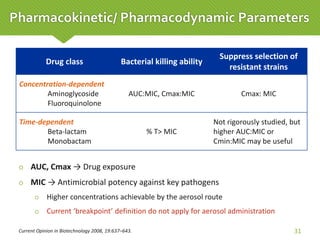
 AUC, Cmax → Drug exposure
 MIC → Antimicrobial potency against key pathogens
 Higher concentrations achievable by the aerosol route
 Current ‘breakpoint’ definition do not apply for aerosol administration
Current Opinion in Biotechnology 2008, 19:637–643. 31
Pharmacokinetic/ Pharmacodynamic Parameters
Drug class Bacterial killing ability
Suppress selection of
resistant strains
Concentration-dependent
Aminoglycoside
Fluoroquinolone
AUC:MIC, Cmax:MIC Cmax: MIC
Time-dependent
Beta-lactam
Monobactam
% T> MIC
Not rigorously studied, but
higher AUC:MIC or
Cmin:MIC may be useful
Safety Concerns of
Aerosolized Antibiotics
32
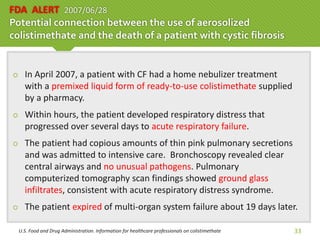
FDA ALERT 2007/06/28
Potential connection between the use of aerosolized
colistimethate and the death of a patient with cystic fibrosis
U.S. Food and Drug Administration. Information for healthcare professionals on colistimethate 33
 In April 2007, a patient with CF had a home nebulizer treatment
with a premixed liquid form of ready-to-use colistimethate supplied
by a pharmacy.
 Within hours, the patient developed respiratory distress that
progressed over several days to acute respiratory failure.
 The patient had copious amounts of thin pink pulmonary secretions
and was admitted to intensive care. Bronchoscopy revealed clear
central airways and no unusual pathogens. Pulmonary
computerized tomography scan findings showed ground glass
infiltrates, consistent with acute respiratory distress syndrome.
 The patient expired of multi-organ system failure about 19 days later.
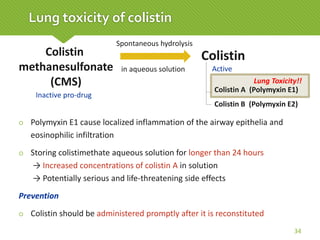
 Polymyxin E1 cause localized inflammation of the airway epithelia and
eosinophilic infiltration
 Storing colistimethate aqueous solution for longer than 24 hours
→ Increased concentrations of colistin A in solution
→ Potentially serious and life-threatening side effects
Prevention
 Colistin should be administered promptly after it is reconstituted
34
Lung toxicity of colistin
Colistin
methanesulfonate
(CMS)
Colistin
Inactive pro-drug
Spontaneous hydrolysis
in aqueous solution Active
Colistin A (Polymyxin E1)
Colistin B (Polymyxin E2)
Lung Toxicity!!
35
Plausible Mechanisms of Adverse Effects
• Direct exposure to the drug or excipient
Local respiratory effect
• Systemic absorption from lung
Systemic effect
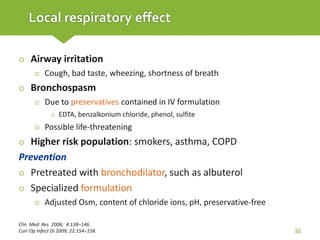
 Airway irritation
 Cough, bad taste, wheezing, shortness of breath
 Bronchospasm
 Due to preservatives contained in IV formulation
 EDTA, benzalkonium chloride, phenol, sulfite
 Possible life-threatening
 Higher risk population: smokers, asthma, COPD
Prevention
 Pretreated with bronchodilator, such as albuterol
 Specialized formulation
 Adjusted Osm, content of chloride ions, pH, preservative-free
Clin Med Res 2006; 4:138–146.
Curr Op Infect Di 2009; 22:154–158. 36
Local respiratory effect
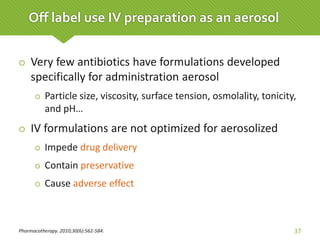
 Very few antibiotics have formulations developed
specifically for administration aerosol
 Particle size, viscosity, surface tension, osmolality, tonicity,
and pH…
 IV formulations are not optimized for aerosolized
 Impede drug delivery
 Contain preservative
 Cause adverse effect
Pharmacotherapy. 2010;30(6):562-584. 37
Off label use IV preparation as an aerosol
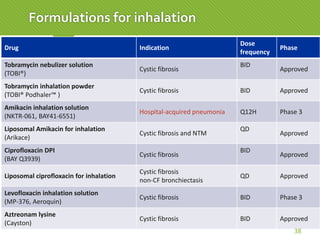
Drug Indication
Dose
frequency
Phase
Tobramycin nebulizer solution
(TOBI®)
Cystic fibrosis
BID
Approved
Tobramycin inhalation powder
(TOBI® Podhaler™ )
Cystic fibrosis BID Approved
Amikacin inhalation solution
(NKTR-061, BAY41-6551)
Hospital-acquired pneumonia Q12H Phase 3
Liposomal Amikacin for inhalation
(Arikace)
Cystic fibrosis and NTM
QD
Approved
Ciprofloxacin DPI
(BAY Q3939)
Cystic fibrosis
BID
Approved
Liposomal ciprofloxacin for inhalation
Cystic fibrosis
non-CF bronchiectasis
QD Approved
Levofloxacin inhalation solution
(MP-376, Aeroquin)
Cystic fibrosis BID Phase 3
Aztreonam lysine
(Cayston)
Cystic fibrosis BID Approved
38
Formulations for inhalation
Pharmacotherapy. 2010;30(6):562-584. 39
Adverse effects have been reported
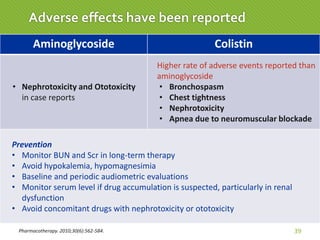
Aminoglycoside Colistin
• Nephrotoxicity and Ototoxicity
in case reports
Higher rate of adverse events reported than
aminoglycoside
• Bronchospasm
• Chest tightness
• Nephrotoxicity
• Apnea due to neuromuscular blockade
Prevention
• Monitor BUN and Scr in long-term therapy
• Avoid hypokalemia, hypomagnesimia
• Baseline and periodic audiometric evaluations
• Monitor serum level if drug accumulation is suspected, particularly in renal
dysfunction
• Avoid concomitant drugs with nephrotoxicity or ototoxicity
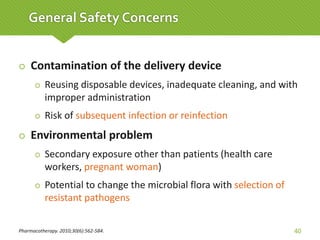
 Contamination of the delivery device
 Reusing disposable devices, inadequate cleaning, and with
improper administration
 Risk of subsequent infection or reinfection
 Environmental problem
 Secondary exposure other than patients (health care
workers, pregnant woman)
 Potential to change the microbial flora with selection of
resistant pathogens
Pharmacotherapy. 2010;30(6):562-584. 40
General Safety Concerns
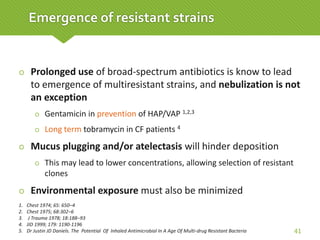
 Prolonged use of broad-spectrum antibiotics is know to lead
to emergence of multiresistant strains, and nebulization is not
an exception
 Gentamicin in prevention of HAP/VAP 1,2,3
 Long term tobramycin in CF patients 4
 Mucus plugging and/or atelectasis will hinder deposition
 This may lead to lower concentrations, allowing selection of resistant
clones
 Environmental exposure must also be minimized
1. Chest 1974; 65: 650–4
2. Chest 1975; 68:302–6
3. J Trauma 1978; 18:188–93
4. JID 1999; 179: 1190-1196
5. Dr Justin JD Daniels. The Potential Of Inhaled Antimicrobial In A Age Of Multi-drug Resistant Bacteria 41
Emergence of resistant strains
42
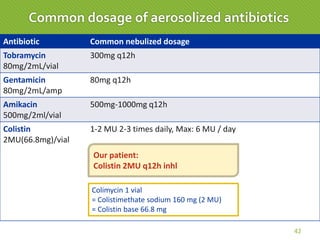
Common dosage of aerosolized antibiotics
Our patient:
Colistin 2mu q12h inhl
Antibiotic Common nebulized dosage
Tobramycin
80mg/2mL/vial
300mg q12h
Gentamicin
80mg/2mL/amp
80mg q12h
Amikacin
500mg/2ml/vial
500mg-1000mg q12h
Colistin
2MU(66.8mg)/vial
1-2 MU 2-3 times daily, Max: 6 MU / day
Colimycin 1 vial
= Colistimethate sodium 160 mg (2 MU)
= Colistin base 66.8 mg
Our patient:
Colistin 2MU q12h inhl
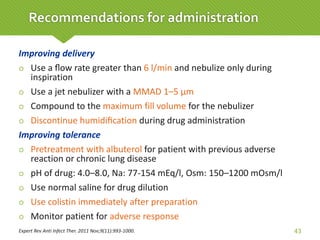
Improving delivery
 Use a flow rate greater than 6 l/min and nebulize only during
inspiration
 Use a jet nebulizer with a MMAD 1–5 µm
 Compound to the maximum fill volume for the nebulizer
 Discontinue humidification during drug administration
Improving tolerance
 Pretreatment with albuterol for patient with previous adverse
reaction or chronic lung disease
 pH of drug: 4.0–8.0, Na: 77-154 mEq/l, Osm: 150–1200 mOsm/l
 Use normal saline for drug dilution
 Use colistin immediately after preparation
 Monitor patient for adverse response
Expert Rev Anti Infect Ther. 2011 Nov;9(11):993-1000. 43
Recommendations for administration
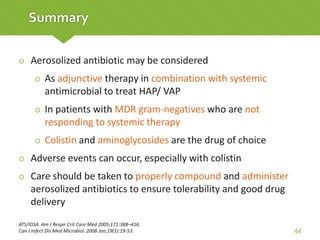
 Aerosolized antibiotic may be considered
 As adjunctive therapy in combination with systemic
antimicrobial to treat HAP/ VAP
 In patients with MDR gram-negatives who are not
responding to systemic therapy
 Colistin and aminoglycosides are the drug of choice
 Adverse events can occur, especially with colistin
 Care should be taken to properly compound and administer
aerosolized antibiotics to ensure tolerability and good drug
delivery
ATS/IDSA. Am J Respir Crit Care Med 2005;171:388–416.
Can J Infect Dis Med Microbiol. 2008 Jan;19(1):19-53. 44
Summary

Aerosolezed abx case report

  • 1.
  • 2.
    2 Patient profile Name 陳XXAdmission date 2013/03/16 Age 74 y/o Height/ Weight 160 cm/ 57kg Gender Male Allergy history NKDA BMI 22.3 Status Nursing home resident Past history • Rt medulla infarction with Lt hemiparesis, Lt limb and Rt facial paresthesia, dysphagia, and dysarthria • Subglottic stenosis, s/p T-tube implantation, currently on tracheostomy • Type 2 DM • HTN • Hyperlipidemia Chief complaint • Left lower lung pneumonia patch noted at OPD • Dyspnea and symptoms aggravated despite oral FQ use 3/13 OPD Levofloxacin 500mg QD AC
  • 3.
    Lab data on3/16 3 檢驗名稱 參考值 單位 3/16 WBC 3.4-9.1 103 /μL 5.8 RBC 4.26-5.56 106 /μL 3.84 Hb 13.5-17 g/dL 11.9 Hct 39.1-48.9 % 35.9 MCV 82.6-97.4 fl 93.6 MCH 28.5-34 pg 30.9 MCHC 33.8-35.6 g/dL 33 RDW 11.9-14.3 % 13.4 Plt 138-353 103 /μL 200 Seg 43-64 % 79.2 Eos 0-6 % 0.8 Baso 0-1 % 0.2 Mono 3-9 % 2.8 Lymph 27-47 % 17 APTT 26-38 sec 37.2 MNAPT sec 32.7 PT 9.4-12.5 sec 10.9 PT(MNPT) sec 10.5 檢驗名稱 參考值 單位 3/16 BUN 7-21 mg/dL 22 CREA 0.7-1.5 mg/dL 0.73 eGFR ≧90 AST 0-39 U/L 28 ALT 0-54 U/L 23 CK 55-170 U/L 22 NA 135-148 mmol/L 129 K 3.5-5 mmol/L 3.1 Glucose <140 mg/dL 82 CK-MB <4.9 ng/mL 3.55 hs-cTnT ng/mL 0.046 CORTI PM 2.3-11.9 μg/dL
  • 4.
    Hospital course 4 3/16 Ceftazidime 1000mgq8h IVD Azithromycin 250mg bid PC Imipenem 3/28 DischargeAdmission ICU SPO2: 84% Bilateral lower lung pneumonia with acute respiratory failure on MV 3/20 Colistin 2mu q12h inhl Ceftazidime 2000mg q8h IVD ID specialist suggested Ceftazidime with aerosolized Colistin 3/19 3/16 S/C report 1. A. baumannii Heavy 2. P. aeruginosa Moderate WBC: >25 /LPF Epithelial cell: 5-10 /LPF 1 2 Amp/sulbactam S Piperacillin R S Pip/Tazobactam R S Gentamicin S Amikacin R S Levofloxacin R Ciprofloxacin R R 1 2 Imipenem I S Ceftazidime R S Tica/clavulnic R S Co-Trimoxazole R Meropenem R S Cefepime I S 3/26 No fever CXR: resolved pneumonia patch
  • 5.
    TPR DischargeTerbutaline 1amp q12hneb Acetylcysteine 600mg bid Hydrocortisone 50mg q12h Pantoprazole 40mg q12h Rosuvastatin 10mg qd PC Lercanidipine 10mg qd AC Hydralazine 50mg tid PC Co-Diovan 80/12.5 mg 1# qd PC Carvedilol 25mg bid NPH + RI Glimepiride 2mg QD AC Metformin 500mg tid Sennoside A+B 12.5mg/tab 2# hs 3/16 3/283/19 3/263/20 Ceftazidime Azithromycin Colistin 2mu q12h inhl Ceftazidime 2000mg q8h IVD Imipenem Cortisol: 16.5 μg/dL T P R R P T 60 140 40 50 120 39 40 100 38 30 80 37 20 60 36 10 40 35 3/16 3/17 3/18 3/19 3/20 3/21 3/22 3/23 3/24 3/25 3/26 3/27 3/28 Discharge
  • 6.
    Outline  Rationale forusing the nebulized route  Aerosolized antibiotics to treat HAP/ VAP  Administration considerations  Safety concerns  Summary HAP – hospital-acquired pneumonia VAP – ventilator-associated pneumonia 6
  • 7.
    Bad Bugs, NoDrugs: No ESKAPE!  Regulatory approvals for antibiotics have declined  Clinically relevant resistance has increased 7 Enterococcus faecium Staphylococcus aureus Klebsiella pneumoniae Acinetobacter baumanii Pseudomonas aeruginosa Enterobacter species “ESCAPE” the effects of antibacterial drugs
  • 8.
    Potential Pathogen Recommendedempiric antibiotic therapy NO RISK FOR MDR PATHOGENS Streptococcus pneumoniae Haemophilus influenzae MSSA Antibiotic-susceptible, enteric GNB: Escherichia coli Klebsiella pneumoniae Enterobacter species Proteus species Serratia marcescens MONOTHERAPY Ceftriaxone or Levofloxacin, moxifloxacin, ciprofloxacin or Ampicillin/sulbactam or Ertapenem RISK FOR MDR PATHOGEN Pseudomonas aeruginosa Klebsiella pneumoniae Acinetobacter species MRSA COMBINATION THERAPY Cefepime, ceftazidime Imipenem, meropenem Piperacillin-tazobactam plus Ciprofloxacin, levofloxacin Amikacin, gentamicin or tobramycin plus (if risk of MRSA) Linezolid or vancomycin Am J Respir Crit Care Med. 2005;. 171:388-416. 8 Pathogens and antibiotic therapy for HAP/VAP/ HCAP
  • 9.
     Many antibioticsused to treat HAP have poor penetration into the epithelial lining fluid (ELF) of the lungs  ELF/plasma penetration ratio > 1 Macrolides, Fluoroquinolones, Oxazolidinones  ELF/plasma penetration ratio ≤ 1 Beta-lactams, Aminoglycosides, Glycopeptides a Clin Pharmacokinet. 2011 Oct;50(10):637-64. b Chest 2004;125:965-973. c Antimicrob Agents Chemother. 2008 Jan;52(1):24-36. CID 2010; 51(S1):S103–S110 9 Lung penetration of antibiotics Drug AUCelf/AUCs PIP/TAZ 0,568±0,336/ 0,913 ±0,277 Ceftazidime Cefepime 0,206 ±0,089 1.01 Ertapenem Meropenem 0.32 0.32-0.53 Gentamicin Tobramycin 0.74±0.18 0.64±0.37 Vancomycin Teicoplanin 0.18 1.46 Drug AUCelf/AUCs Ciprofloxacin Gatifloxacin Levofloxacin Moxifloxacin 0.82c 1.77c 2.08c 5.18c Clarithromycin Azithromycin 14 13.3b Linezolid Tigecycline 1.04±0.28 1.32c ELF: suggested as the site (compartment) of antimicrobial activity against lung infections caused by extracellular pathogens • A time lag between the serum concentration curve and extravascular concentration curve • Ratio of AUC is a better parameter to represent tissue penetration of antibiotics single dose oral cefdinir 300mg plasma blister fluid (extravascular compartment) Antimicrob Agents Chemother. 1995 May; 39(5): 1082–1086. Cextravascular Cplasma < 1 Cextravascular Cplasma > 1
  • 10.
     Optimize thedelivery of currently available antibiotics Target drug delivery directly to the site of action 10 Rationale for using the nebulized route • Achieve high local drug concentration Maximize efficacy • Reduce systemic antimicrobial exposure Minimize systemic toxicity Serum vs Sputum Concentrations of Tobramycin Route Dosage Peak serum conc (µg/ml) Peak sputum conc (µg/g) IV 6–10.8 mg/kg/day 7.5 82 Aerosol 300 mg bid 0.58 ± 0.38 0.74 ± 0.43 1.01 ± 0.57 666 480 1199.2 Am Rev Respir Dis 1985;132:761–7. Chest 1997;111:955–62. Pediatr Pulmonol 1997(suppl 14):137–8. Curr Opin Biotechnol. 2008 Dec;19(6):637-43.
  • 11.
    Therapeutic use Antibiotic Cysticfibrosis Prevent and treat infection due to P. aeruginosa Tobramycin Aztreonam Colistin Non–cystic fibrosis bronchiectasis suppression therapy Tobramycin Gentamicin Amikacin Colistin Hospital-acquired pneumonia Tobramycin Gentamicin Amikacin Colistin Cefotaxime Ceftazidime Nontuberculosis mycobacterial infection Amikacin Prophylaxis of invasive pulmonary aspergillosis Amphotericin B Prevention of PJP Pentamidine Pharmacotherapy. 2010;30(6):562-584. 11 Antibiotics used for aerosolization in clinical studies *FDA-approved to be inhaled
  • 12.
    Aerosolized antibiotics to treatHAP/VAP HAP – hospital-acquired pneumonia VAP – ventilator-associated pneumonia 12
  • 13.
     “To achieveadequate therapy, it is necessary not only to use the correct antibiotic, but also the optimal dose and the correct route of administration (oral, intravenous, or aerosol) to ensure that the antibiotic penetrates to the site of infection, and to use combination therapy if necessary”  “Local instillation or aerosolization is a way to enhance antibiotic penetration to the lower respiratory tract … Aerosolized antibiotics may also be useful to treat microorganisms that, on the basis of high MIC values, are ‘resistant’ to systemic therapy” ATS/IDSA. Am J Respir Crit Care Med 2005;171:388–416. 13 2005 ATS/IDSA guidelines recognize a potential role for inhaled antibiotics Recommendations • Adjunctive therapy with an inhaled aminoglycoside or polymyxin for MDR gram-negative pneumonia should be considered, especially in patients who are not improving with systemic therapy (Level III)
  • 14.
    14 Aerosolized Aminoglycoside Study (year)Study design Patient (%ventilated) Inhalation therapy Systemic therapy Duration Clinical cure rate Adverse event Pines et al. (1970) Retrospective 12 (NR) GM 40mg qid Carbenicillin 7-10 67% None Klastersky et al. (1972) RCT 15 (NR) GM 40mg q3h None NR 100 vs 25 NR Klastersky et al. (1979) RCT 38 (45) Sisomicin 25mg q8h Carbenicillin Sisomicin 7 77 vs 45 NR Mohr et al. (2007) Retrospective 22 (100) Tobramycin 300mg q12h or Amikacin 1000mg q12h Varied 7 59% None Czosnowski et al. (2009) Retrospective 62 (100) Tobramycin 300mg q12h or Amikacin 1000mg q8h or Colistin 150mg q12h Varied 10 First episode: 73% Subsequent episode: 73% Failed IV monotherapy: 85% MDR organisms: 79% None Br Med J. 1970 Mar 14;1(5697):663-5. Chest. 1972 Feb;61(2):117-20. Chest. 1979 May;75(5):586-91. Surg Infect (Larchmt). 2007 Jun;8(3):349-57. Pharmacotherapy. 2009 Sep;29(9):1054-60.
  • 15.
    J Antimicrob Chemother.2004 Aug;54(2):566-9. Crit Care. 2005 Feb;9(1):R53-9. Clin Infect Dis. 2005 Sep 1;41(5):754-7. Diagn Microbiol Infect Dis. 2007 Jun;58(2):235-40. 15 Aerosolized Colistin Study (year) Study design Patient (%ventilated) Inhalation dose Systemic therapy Duration Clinical cure rate Adverse event Sobieszczyk et al. (2004) Observational 8 (NR) 2.5 mg/kg/day divided every 6 h Varied 19 76% Possible nephrotoxicity (n = 2) Michalopoulos et al. (2005) Observational 8 (100) 33–198 mg/day Varied 10.5 87.5% 1 worsening of renal function Kwa et al. (2005) Observational 21 (14) 33mg bid Varied 14 86% NR Pereira et al. (2007) Observational 14 (79) Polymyxin B 16.5 mg Polymyxin B 14 93% Cough/ bronchospasm (n = 4) 29%
  • 16.
    Respir Med. 2008Mar;102(3):407-12. J Microbiol Immunol Infect. 2010 Aug;43(4):323-31. 16 Aerosolized Colistin- recent studies Michalopoulos et al. (2008) Lin et al. (2010) Study design Prospective observational Retrospective observational Country Greece Taiwan Patient • 60 VAP critically ill patients • APACHE II score: 16.7 • 37 A. baumanii 12 P. aeruginosa 11 K. pneumonia 50% susceptible only to colistin • 45 patients with VAP • APACHE II score: 18.9 ± 5.7 • MDRAB all susceptible only to colistin Inhalation therapy Colistin 2.2 MU/ day (1.5-3 MU/ day) Mean duration 10.29 days Colistin 4.29 ± 0.82 MU/ day (2-6 MU/ day) Mean duration 10.29 days Systemic therapy 57 Colistin + other antibiotic 3 Meropenem 6 Colistin other mainly carbapenem Outcome • Clinical cure: 83% • All cause mortality: 25% VAP related mortality: 16.7% • Clinical cure: 57.8% • All cause mortality: 42.2% VAP related mortality not reported Comment No adverse effects related to inhaled colistin were recorded
  • 17.
    Clin Infect Dis.2010 Dec 1;51(11):1238-44. 17 Objective Compare the efficacy and safety of AS (aerosolized) plus IV colistin vs. IV colistin alone for patients with MDR VAP due to gram-negative bacteria Study design Retrospective matched case-control study From Jan. 2005 through Dec. 2008 Patient • Culture-documented monomicrobial VAP due to A. baumanii, P. aeruginosa, or K. pneumoniae that was susceptible only to colistin • 86 patients with VAP (43 AS-IV colistin vs 43 IV colistin alone) • Matching criteria: age (± 5 yr) and APACHE II score (± 4 points) Treatment regimen • Aerosolized: Colistin 1MU q12h • IV: Colistin 3MU q8h Clin Infect Dis. 2010 Dec 1;51(11):1238-44.
  • 18.
    Clin Infect Dis.2010 Dec 1;51(11):1238-44. 18 Result
  • 19.
    Clin Infect Dis.2010 Dec 1;51(11):1238-44. 19 Outcome No significant differences between the 2 groups No adverse events were associated with aerosolized colistin therapy
  • 20.
    Clin Infect Dis.2010 Dec 1;51(11):1238-44. 20 Outcome VAP-related mortalityAll-cause mortality P= .888 P= .268 Conclusions Addition of AS colistin to IV colistin did not provide additional therapeutic benefit to patients with MDR VAP due to gram-negative bacteria.
  • 21.
    Palmer et al.(2008) Study design RCT performed from 2003 through 2004 Patient • 43 critically ill intubated patients with VAT Dosing regimen • Randomized to receive aerosolized antibiotic (n=19) or saline (n= 24) • Antibiotic chosen by gram-stain Gentamicin 80 mg q8h for gram-negative Vancomycin 120mg q8h for gram-positive • Aerosolized by aerotech II nebulizer • Duration: 14 days or until extubation • Both placebo and active treatment group received similar amounts of appropriate systemic antibiotics at randomization Followed • 28 days Outcome Primary • Reduced VAP (73.6% to 35.7%) vs. Placebo (75% to 78.6%) • Reduced clinical pulmonary infection score Secondary • Reduced bacterial resistance • Reduced use of systemic antibiotics • Lower WBC at day 14 • Facilitated weaning Comment • No patients were withdrawn from the study for adverse events. VAT – ventilator-associated tracheobronchitis Crit Care Med 2008; 36:2008–2013. 21 Aerosolized vancomycin in gram-positive bacteria all p < .05
  • 22.
     This investigationalso provided the first promising data for the treatment of MRSA via aerosolized vancomycin in ventilated patients Crit Care Med 2008; 36:2008–2013. Curr Opin Crit Care. 2009 Oct;15(5):413-8. 22 Aerosolized vancomycin in MRSA- Palmer et al. (2008) Aerosolized antibiotics Placebo MRSA isolated at randomization 3 3 • 2 patients without VAP at randomization and remained free of VAP at the end of treatment • 1 patient who had MRSA and had VAP had clinical resolution at end of aerosolized vancomycin treatment as well as eradication of the MRSA 3 patients who had VAT secondary to MRSA as well as VAP at the time of randomization had no improvement during the study despite being on systemic antibiotics
  • 23.
  • 24.
     How muchdrug actually reaches the site of infection?  Dosage, drug delivery, pulmonary deposition  Highly variable with over a tenfold difference in delivery depending on the administration techniques use  How long does the antibiotic stay in the lung?  Clearance from the lung  Systemic exposure  Active in infected lung tissue?  Stability and activity in pulmonary secretions and special environments in the lung Expert Rev Anti Infect Ther. 2011 Nov;9(11):993-1000. Am J Respir Crit Care Med. 2003 Nov 15;168(10):1205-9. Curr Opin Biotechnol. 2008 Dec;19(6):637-43. 24 Aerosolized delivery of antibiotics
  • 25.
     Method ofaerosol delivery  Humidifying leads to aerosol losses and decrease drug delivery by up to 40%  Breath-actuated nebulization administer a higher dose than continuous nebulization  Type of nebulizer  Characteristic of aerosolized particles  Mean mass aerodynamic diameter(MMAD)  Determine regional deposition within the lung  Average size of particles generated by a drug-nebulizer combination  Patient-specific factors  Degree of airway obstruction  Breathing pattern  Lung transplant recipients Pharmacotherapy. 2010;30(6):562-584. Transplantation 2003;75: 1571–4. Am J Transplant 2006;6:2765–73. 25 Factors Related to Aerosolized Delivery
  • 26.
    Le Brun PPet al. Pharm World Sci 2000;22:7–81 Dhand R. J Aerosol Med 2008;21:1–16 Pharmacotherapy. 2010;30(6):562-584. 26 Type of nebulizer • Aerosol generated by compressed air forced through a small hole to a liquid drug reservoir • Delivery efficiency dependent on pressure of the driving gas and the fill volume • Dead volume: 1-3 ml Jet nebulizer • Piezoelectric crystal vibrate at high frequency to produce aerosol from liquid drug • Variable delivery efficiency • Generate heat and possible of denaturation or degradation of proteins and peptides Ultrasonic nebulizer • Aerosol generated by flow of liquid drug through a vibrating mesh (micropump) aperture • Better delivery efficiency than jet and ultrasonic nebulizers Vibrating mesh nebulizer
  • 27.
     Method ofaerosol delivery  Humidifying leads to aerosol losses and decrease drug delivery by up to 40%  Breath-actuated nebulization administer a higher dose than continuous nebulization  Type of nebulizer  Characteristic of aerosolized particles  Mean mass aerodynamic diameter(MMAD)  Determine regional deposition within the lung  Differ for each drug-nebulizer combination  Patient-specific factors  Degree of airway obstruction  Breathing pattern  Lung transplant recipients Pharmacotherapy. 2010;30(6):562-584. Transplantation 2003;75: 1571–4. Am J Transplant 2006;6:2765–73. 27 Factors Related to Aerosolized Delivery
  • 28.
    Pharmacotherapy. 2010;30(6):562-584. 28 Aerosol particlesize determine lung deposition > 5 µm impaction deposited into oropharynx and swallowed 1-5 µm sedimentation Optimal for delivery to the lower airways and parenchyma < 0.8 µm likely to be exhaled by tidal breathing
  • 29.
     Method ofaerosol delivery  Humidifying leads to aerosol losses and decrease drug delivery by up to 40%  Breath-actuated nebulization administer a higher dose than continuous nebulization  Type of nebulizer  Characteristic of aerosolized particles  Mean mass aerodynamic diameter(MMAD)  Determine regional deposition within the lung  Average size of particles generated by a drug-nebulizer combination  Patient-specific factors  Presence of airway obstruction  Breathing pattern  Lung transplant recipients Pharmacotherapy. 2010;30(6):562-584. Transplantation 2003;75: 1571–4. Am J Transplant 2006;6:2765–73. 29 Factors Related to Aerosolized Delivery
  • 30.
     The aminoglycosidesMIC increased to 10–25-fold higher than those observed in vitro  Binding of cationic moieties on the aminoglycosides to anionic substances (e.g. Nucleic acids) present in high concentrations in the sputum of CF Am Rev Respir Dis 1985;132(4):761–765. J Infect Dis 1983;148(6):1069–1076. Respir Care 2007; 52:866–884. Current Opinion in Biotechnology 2008, 19:637–643 30 Reduced activity of aminoglycoside in sputum C ≥ 25 x MIC were required to produce a reliable bactericidal effect in the presence of sputum Inhibition of tobramycin activity by sputum from cystic fibrosis patients
  • 31.
     AUC, Cmax→ Drug exposure  MIC → Antimicrobial potency against key pathogens  Higher concentrations achievable by the aerosol route  Current ‘breakpoint’ definition do not apply for aerosol administration Current Opinion in Biotechnology 2008, 19:637–643. 31 Pharmacokinetic/ Pharmacodynamic Parameters Drug class Bacterial killing ability Suppress selection of resistant strains Concentration-dependent Aminoglycoside Fluoroquinolone AUC:MIC, Cmax:MIC Cmax: MIC Time-dependent Beta-lactam Monobactam % T> MIC Not rigorously studied, but higher AUC:MIC or Cmin:MIC may be useful
  • 32.
  • 33.
    FDA ALERT 2007/06/28 Potentialconnection between the use of aerosolized colistimethate and the death of a patient with cystic fibrosis U.S. Food and Drug Administration. Information for healthcare professionals on colistimethate 33  In April 2007, a patient with CF had a home nebulizer treatment with a premixed liquid form of ready-to-use colistimethate supplied by a pharmacy.  Within hours, the patient developed respiratory distress that progressed over several days to acute respiratory failure.  The patient had copious amounts of thin pink pulmonary secretions and was admitted to intensive care. Bronchoscopy revealed clear central airways and no unusual pathogens. Pulmonary computerized tomography scan findings showed ground glass infiltrates, consistent with acute respiratory distress syndrome.  The patient expired of multi-organ system failure about 19 days later.
  • 34.
     Polymyxin E1cause localized inflammation of the airway epithelia and eosinophilic infiltration  Storing colistimethate aqueous solution for longer than 24 hours → Increased concentrations of colistin A in solution → Potentially serious and life-threatening side effects Prevention  Colistin should be administered promptly after it is reconstituted 34 Lung toxicity of colistin Colistin methanesulfonate (CMS) Colistin Inactive pro-drug Spontaneous hydrolysis in aqueous solution Active Colistin A (Polymyxin E1) Colistin B (Polymyxin E2) Lung Toxicity!!
  • 35.
    35 Plausible Mechanisms ofAdverse Effects • Direct exposure to the drug or excipient Local respiratory effect • Systemic absorption from lung Systemic effect
  • 36.
     Airway irritation Cough, bad taste, wheezing, shortness of breath  Bronchospasm  Due to preservatives contained in IV formulation  EDTA, benzalkonium chloride, phenol, sulfite  Possible life-threatening  Higher risk population: smokers, asthma, COPD Prevention  Pretreated with bronchodilator, such as albuterol  Specialized formulation  Adjusted Osm, content of chloride ions, pH, preservative-free Clin Med Res 2006; 4:138–146. Curr Op Infect Di 2009; 22:154–158. 36 Local respiratory effect
  • 37.
     Very fewantibiotics have formulations developed specifically for administration aerosol  Particle size, viscosity, surface tension, osmolality, tonicity, and pH…  IV formulations are not optimized for aerosolized  Impede drug delivery  Contain preservative  Cause adverse effect Pharmacotherapy. 2010;30(6):562-584. 37 Off label use IV preparation as an aerosol
  • 38.
    Drug Indication Dose frequency Phase Tobramycin nebulizersolution (TOBI®) Cystic fibrosis BID Approved Tobramycin inhalation powder (TOBI® Podhaler™ ) Cystic fibrosis BID Approved Amikacin inhalation solution (NKTR-061, BAY41-6551) Hospital-acquired pneumonia Q12H Phase 3 Liposomal Amikacin for inhalation (Arikace) Cystic fibrosis and NTM QD Approved Ciprofloxacin DPI (BAY Q3939) Cystic fibrosis BID Approved Liposomal ciprofloxacin for inhalation Cystic fibrosis non-CF bronchiectasis QD Approved Levofloxacin inhalation solution (MP-376, Aeroquin) Cystic fibrosis BID Phase 3 Aztreonam lysine (Cayston) Cystic fibrosis BID Approved 38 Formulations for inhalation
  • 39.
    Pharmacotherapy. 2010;30(6):562-584. 39 Adverseeffects have been reported Aminoglycoside Colistin • Nephrotoxicity and Ototoxicity in case reports Higher rate of adverse events reported than aminoglycoside • Bronchospasm • Chest tightness • Nephrotoxicity • Apnea due to neuromuscular blockade Prevention • Monitor BUN and Scr in long-term therapy • Avoid hypokalemia, hypomagnesimia • Baseline and periodic audiometric evaluations • Monitor serum level if drug accumulation is suspected, particularly in renal dysfunction • Avoid concomitant drugs with nephrotoxicity or ototoxicity
  • 40.
     Contamination ofthe delivery device  Reusing disposable devices, inadequate cleaning, and with improper administration  Risk of subsequent infection or reinfection  Environmental problem  Secondary exposure other than patients (health care workers, pregnant woman)  Potential to change the microbial flora with selection of resistant pathogens Pharmacotherapy. 2010;30(6):562-584. 40 General Safety Concerns
  • 41.
     Prolonged useof broad-spectrum antibiotics is know to lead to emergence of multiresistant strains, and nebulization is not an exception  Gentamicin in prevention of HAP/VAP 1,2,3  Long term tobramycin in CF patients 4  Mucus plugging and/or atelectasis will hinder deposition  This may lead to lower concentrations, allowing selection of resistant clones  Environmental exposure must also be minimized 1. Chest 1974; 65: 650–4 2. Chest 1975; 68:302–6 3. J Trauma 1978; 18:188–93 4. JID 1999; 179: 1190-1196 5. Dr Justin JD Daniels. The Potential Of Inhaled Antimicrobial In A Age Of Multi-drug Resistant Bacteria 41 Emergence of resistant strains
  • 42.
    42 Common dosage ofaerosolized antibiotics Our patient: Colistin 2mu q12h inhl Antibiotic Common nebulized dosage Tobramycin 80mg/2mL/vial 300mg q12h Gentamicin 80mg/2mL/amp 80mg q12h Amikacin 500mg/2ml/vial 500mg-1000mg q12h Colistin 2MU(66.8mg)/vial 1-2 MU 2-3 times daily, Max: 6 MU / day Colimycin 1 vial = Colistimethate sodium 160 mg (2 MU) = Colistin base 66.8 mg Our patient: Colistin 2MU q12h inhl
  • 43.
    Improving delivery  Usea flow rate greater than 6 l/min and nebulize only during inspiration  Use a jet nebulizer with a MMAD 1–5 µm  Compound to the maximum fill volume for the nebulizer  Discontinue humidification during drug administration Improving tolerance  Pretreatment with albuterol for patient with previous adverse reaction or chronic lung disease  pH of drug: 4.0–8.0, Na: 77-154 mEq/l, Osm: 150–1200 mOsm/l  Use normal saline for drug dilution  Use colistin immediately after preparation  Monitor patient for adverse response Expert Rev Anti Infect Ther. 2011 Nov;9(11):993-1000. 43 Recommendations for administration
  • 44.
     Aerosolized antibioticmay be considered  As adjunctive therapy in combination with systemic antimicrobial to treat HAP/ VAP  In patients with MDR gram-negatives who are not responding to systemic therapy  Colistin and aminoglycosides are the drug of choice  Adverse events can occur, especially with colistin  Care should be taken to properly compound and administer aerosolized antibiotics to ensure tolerability and good drug delivery ATS/IDSA. Am J Respir Crit Care Med 2005;171:388–416. Can J Infect Dis Med Microbiol. 2008 Jan;19(1):19-53. 44 Summary