1
Advancing access to
information through
collaboration
Ina Smith
20 October 2015
Central University of Technology Open Access
Week 19-25 October 2015
What is Open Access about?
In a statement released by Linda Jarvis,
Chief Financial Officer at Wits, her office
explains the increase:
“Some of the key reasons are:
The rand-dollar exchange rate has fallen by
approximately 22%, which has resulted in a
substantial increase in the amount of money
that we pay for all library books, journals,
electronic resources research equipment
that are procured in dollars and euros.”
http://connect.citizen.co.za/25760/why-is-
wits-raising-its-fees/
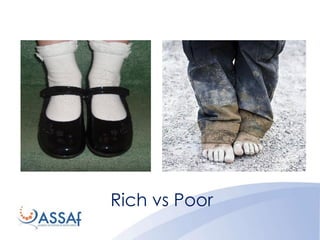
Rich vs Poor
Berlin Declaration
• We define open access as a comprehensive
source of human knowledge and cultural
heritage that has been approved by the
scientific community.
• In order to realize the vision of a global and
accessible representation of knowledge, the
future Web has to be sustainable,
interactive, and transparent. Content and
software tools must be openly accessible
and compatible.
http://openaccess.mpg.de/Berlin-Declaration
Why Open Access?
• Research is expensive – funded with tax
payers’ money
• Publishing research on WWW comes at
minimal cost
• Open access accelerates pace of scientific
discovery, encourages innovation, enriches
education, stimulate economy – to improve
public good …
http://openaccess.mpg.de/Berlin-Declaration
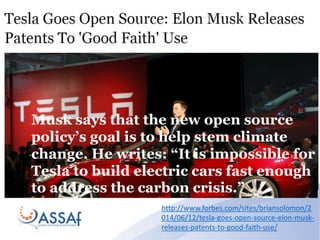
Musk says that the new open source
policy’s goal is to help stem climate
change. He writes: “It is impossible for
Tesla to build electric cars fast enough
to address the carbon crisis.”
http://www.forbes.com/sites/briansolomon/2
014/06/12/tesla-goes-open-source-elon-musk-
releases-patents-to-good-faith-use/
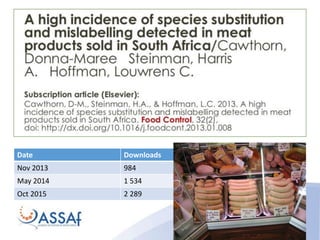
Date Downloads
Nov 2013 984
May 2014 1 534
Oct 2015 2 289
• Open scholarly repositories
• Open scholarly journals
• Open scholarly monographs
• Open scholarly conference proceedings
• Open data set repositories
• Open Educational Resources (OERs)
• Massive Open Online Courses (MOOCs)
Approaches to Open Access
Every part of the scientific method is
nowadays becoming an open,
collaborative, and participative process:
• Transparency in experimental methodology,
observation, and collection of data
• Public availability and reusability of scientific data
• Public accessibility and transparency of scientific
communication
• Using web-based tools to facilitate scientific
collaboration
Open Science
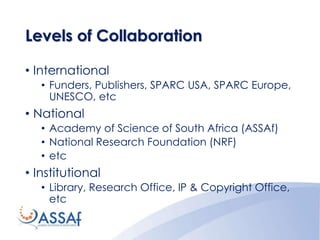
• International
• Funders, Publishers, SPARC USA, SPARC Europe,
UNESCO, etc
• National
• Academy of Science of South Africa (ASSAf)
• National Research Foundation (NRF)
• etc
• Institutional
• Library, Research Office, IP & Copyright Office,
etc
Levels of Collaboration
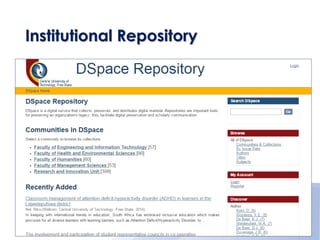
Institutional Repository
Institutional Stakeholders @ CUT
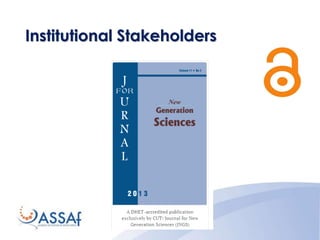
Institutional Stakeholders
Library as a Stakeholder (1)
• Library Management
• Strategic planning – increase impact, visibility, ROI
• Portfolio for driving OA
• Library budget
• Subject Librarians
• Recommend OA journals for publication,
authoritative vs predatory
• Assist with publishing process
• Data Management Planning
• Knowledge of repositories
Library as a Stakeholder (2)
• Subject Librarians (cont.)
• Copyright, Creative Commons Licensing,
Plagiarism, File formats (open), ORCIDs, etc.
• Cataloguers
• What you put in is what you get out
• Metadata NB!
• Standardisation - names
• Inter-library Loans
• Requests helps to prioritise in terms of
digitisation
Library as a Stakeholder (3)
• Support research
• Increase research
throughput
• Disseminate
research output
For librarians to survive
• High level of IT competency
• Self-learning & lifelong learning
• Analytical & critical thinking skills
• Collaborate
• Targeted intervention into National System
of Innovation (NSI) – focus on:
• Quality, quantity, worldwide visibility of
research publications
• Fostering of new generation highly competent
& productive scientists, scholars
• Recommendations re publishing & funding of
SA research
ASSAf Scholarly Publishing Unit (SPU)
Quality, Quantity, Visibility (1)
Selected journals indexed by SciELO South
Africa, Web of Science portal (58)
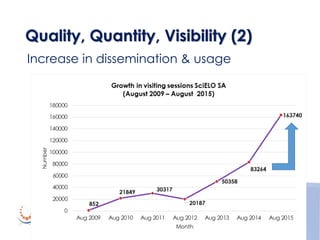
Quality, Quantity, Visibility (2)
Increase in dissemination & usage
Quality, Quantity, Visibility (3)
SciELO South Africa included in DHET list of
accredited indices
Norwegian Registry for Scientific Journals,
Series and Publishers
Quality, Quantity, Visibility (4)
Applying best practise
Fostering new generation scholars
(1)
• Webinars (ORCID, Creative Commons,
OJS)
• Training & consultancy (OJS)
• A-Z resource of scholarly publishing
https://academyofsciencesa.wikispaces.c
om
• Workshop on Good Practise Publishing
(CrossRef)
Fostering new generation scholars
(2)
• National Code of Best Practice in Editorial
Discretion and Peer Review for South
African Scholarly Journals
• National Scholarly Editors Forum Meeting
(NSEF)
• SciELO South Africa User’s Group Meeting
• Building capacity …
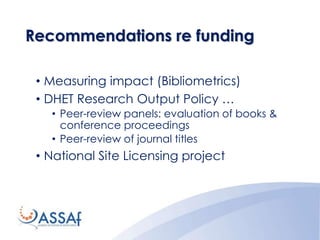
Recommendations re funding
• Measuring impact (Bibliometrics)
• DHET Research Output Policy …
• Peer-review panels: evaluation of books &
conference proceedings
• Peer-review of journal titles
• National Site Licensing project
SA Scholarly Journal Landscape (1)
• Feb – April 2015
• 303 DHET accredited journal titles (incl.
DHET, WoS, IBSS) (2 discont.)
• 58 titles indexed by SciELO SA
• 146 Open Access (59 on Directory of
Open Access Journals)
• 279 titles have a web page (154 have
online ISSN)
• 65 titles indexed by WoS (20 on SciELO SA)
• 41 listed on IBSS
• 115 indexed by Scopus
• 163 titles peer-reviewed by ASSAf
• 47 titles published by Taylor & Francis
• Next: Status re DOIs, ORCIDs, APCs
SA Scholarly Journal Landscape (2)
Total of 31 nationally; 16 universities (2 275
internationally)
SA Scholarly Repository Landscape
Next …
• Part of workflow
• Consistent growth
• Accreditation
• Trusted Repository
• Financial sustainability
• Organisational viability
• Technological & Procedural suitability
• Administrative responsibility
• Etc.
• Standardisation …
SPARC Africa Chapter
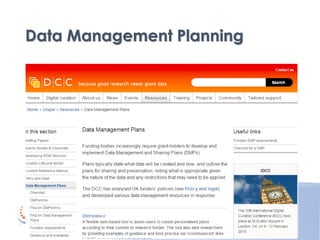
Data Management Planning
DIRISA
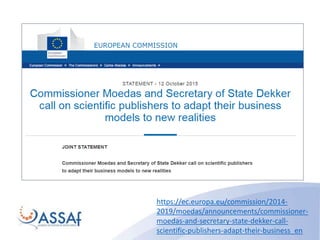
https://ec.europa.eu/commission/2014-
2019/moedas/announcements/commissioner-
moedas-and-secretary-state-dekker-call-
scientific-publishers-adapt-their-business_en
https://ec.europa.eu/commission/2014-
2019/moedas/announcements/commissioner-
moedas-and-secretary-state-dekker-call-
scientific-publishers-adapt-their-business_en
“Can publishers afford to stay out
of that trend?”
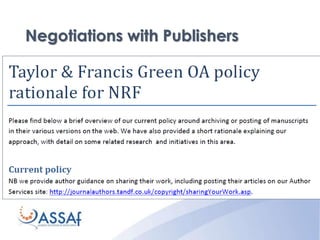
NRF Statement
Negotiations with Publishers
National OA Policy
https://theconversation.com
Thank you!
Ina Smith
Planning Manager, ASSAf
ina@assaf.org.za

Advancing Open Access through Collaboration

  • 1.
    1 Advancing access to informationthrough collaboration Ina Smith 20 October 2015 Central University of Technology Open Access Week 19-25 October 2015
  • 2.
    What is OpenAccess about?
  • 3.
    In a statementreleased by Linda Jarvis, Chief Financial Officer at Wits, her office explains the increase: “Some of the key reasons are: The rand-dollar exchange rate has fallen by approximately 22%, which has resulted in a substantial increase in the amount of money that we pay for all library books, journals, electronic resources research equipment that are procured in dollars and euros.” http://connect.citizen.co.za/25760/why-is- wits-raising-its-fees/
  • 5.
  • 6.
    Berlin Declaration • Wedefine open access as a comprehensive source of human knowledge and cultural heritage that has been approved by the scientific community. • In order to realize the vision of a global and accessible representation of knowledge, the future Web has to be sustainable, interactive, and transparent. Content and software tools must be openly accessible and compatible. http://openaccess.mpg.de/Berlin-Declaration
  • 7.
    Why Open Access? •Research is expensive – funded with tax payers’ money • Publishing research on WWW comes at minimal cost • Open access accelerates pace of scientific discovery, encourages innovation, enriches education, stimulate economy – to improve public good … http://openaccess.mpg.de/Berlin-Declaration
  • 8.
    Musk says thatthe new open source policy’s goal is to help stem climate change. He writes: “It is impossible for Tesla to build electric cars fast enough to address the carbon crisis.” http://www.forbes.com/sites/briansolomon/2 014/06/12/tesla-goes-open-source-elon-musk- releases-patents-to-good-faith-use/
  • 9.
    Date Downloads Nov 2013984 May 2014 1 534 Oct 2015 2 289
  • 12.
    • Open scholarlyrepositories • Open scholarly journals • Open scholarly monographs • Open scholarly conference proceedings • Open data set repositories • Open Educational Resources (OERs) • Massive Open Online Courses (MOOCs) Approaches to Open Access
  • 13.
    Every part ofthe scientific method is nowadays becoming an open, collaborative, and participative process: • Transparency in experimental methodology, observation, and collection of data • Public availability and reusability of scientific data • Public accessibility and transparency of scientific communication • Using web-based tools to facilitate scientific collaboration Open Science
  • 14.
    • International • Funders,Publishers, SPARC USA, SPARC Europe, UNESCO, etc • National • Academy of Science of South Africa (ASSAf) • National Research Foundation (NRF) • etc • Institutional • Library, Research Office, IP & Copyright Office, etc Levels of Collaboration
  • 15.
  • 16.
  • 17.
  • 18.
    Library as aStakeholder (1) • Library Management • Strategic planning – increase impact, visibility, ROI • Portfolio for driving OA • Library budget • Subject Librarians • Recommend OA journals for publication, authoritative vs predatory • Assist with publishing process • Data Management Planning • Knowledge of repositories
  • 19.
    Library as aStakeholder (2) • Subject Librarians (cont.) • Copyright, Creative Commons Licensing, Plagiarism, File formats (open), ORCIDs, etc. • Cataloguers • What you put in is what you get out • Metadata NB! • Standardisation - names • Inter-library Loans • Requests helps to prioritise in terms of digitisation
  • 20.
    Library as aStakeholder (3) • Support research • Increase research throughput • Disseminate research output
  • 21.
    For librarians tosurvive • High level of IT competency • Self-learning & lifelong learning • Analytical & critical thinking skills • Collaborate
  • 22.
    • Targeted interventioninto National System of Innovation (NSI) – focus on: • Quality, quantity, worldwide visibility of research publications • Fostering of new generation highly competent & productive scientists, scholars • Recommendations re publishing & funding of SA research ASSAf Scholarly Publishing Unit (SPU)
  • 23.
    Quality, Quantity, Visibility(1) Selected journals indexed by SciELO South Africa, Web of Science portal (58)
  • 24.
    Quality, Quantity, Visibility(2) Increase in dissemination & usage
  • 25.
    Quality, Quantity, Visibility(3) SciELO South Africa included in DHET list of accredited indices Norwegian Registry for Scientific Journals, Series and Publishers
  • 26.
    Quality, Quantity, Visibility(4) Applying best practise
  • 29.
    Fostering new generationscholars (1) • Webinars (ORCID, Creative Commons, OJS) • Training & consultancy (OJS) • A-Z resource of scholarly publishing https://academyofsciencesa.wikispaces.c om • Workshop on Good Practise Publishing (CrossRef)
  • 30.
    Fostering new generationscholars (2) • National Code of Best Practice in Editorial Discretion and Peer Review for South African Scholarly Journals • National Scholarly Editors Forum Meeting (NSEF) • SciELO South Africa User’s Group Meeting • Building capacity …
  • 32.
    Recommendations re funding •Measuring impact (Bibliometrics) • DHET Research Output Policy … • Peer-review panels: evaluation of books & conference proceedings • Peer-review of journal titles • National Site Licensing project
  • 33.
    SA Scholarly JournalLandscape (1) • Feb – April 2015 • 303 DHET accredited journal titles (incl. DHET, WoS, IBSS) (2 discont.) • 58 titles indexed by SciELO SA • 146 Open Access (59 on Directory of Open Access Journals)
  • 34.
    • 279 titleshave a web page (154 have online ISSN) • 65 titles indexed by WoS (20 on SciELO SA) • 41 listed on IBSS • 115 indexed by Scopus • 163 titles peer-reviewed by ASSAf • 47 titles published by Taylor & Francis • Next: Status re DOIs, ORCIDs, APCs SA Scholarly Journal Landscape (2)
  • 35.
    Total of 31nationally; 16 universities (2 275 internationally) SA Scholarly Repository Landscape
  • 36.
    Next … • Partof workflow • Consistent growth • Accreditation • Trusted Repository • Financial sustainability • Organisational viability • Technological & Procedural suitability • Administrative responsibility • Etc. • Standardisation …
  • 38.
  • 39.
  • 40.
  • 41.
  • 42.
  • 43.
  • 44.
  • 45.
  • 46.
  • 47.
    Thank you! Ina Smith PlanningManager, ASSAf ina@assaf.org.za