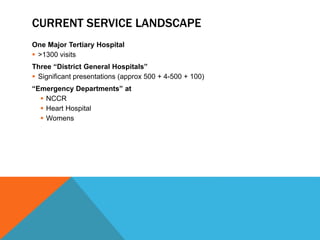
CURRENT SERVICE LANDSCAPE
One Major Tertiary Hospital
 >1300 visits
Three “District General Hospitals”
 Significant presentations (approx 500 + 4-500 + 100)
“Emergency Departments” at
 NCCR
 Heart Hospital
 Womens
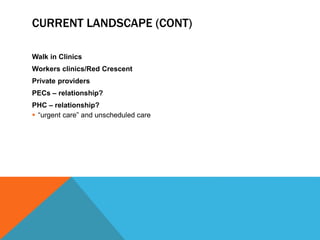
CURRENT LANDSCAPE (CONT)
Walk in Clinics
Workers clinics/Red Crescent
Private providers
PECs – relationship?
PHC – relationship?
 “urgent care” and unscheduled care
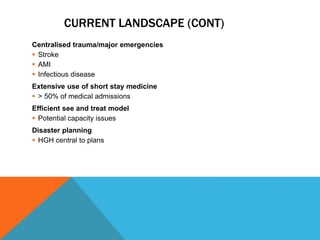
CURRENT LANDSCAPE (CONT)
Centralised trauma/major emergencies
 Stroke
 AMI
 Infectious disease
Extensive use of short stay medicine
 > 50% of medical admissions
Efficient see and treat model
 Potential capacity issues
Disaster planning
 HGH central to plans
CURRENT SERVICE LANDSCAPE (CONT)
HMC
All doctors EM Board
 Or trainee
Moving to Board + fellowship
Subspecialities developing
 Toxicology
 Crit care
 Disaster
 Prehospital etc
Non HMC?
Nurses?
PRESENT DIFFICULTIES
Lack of capacity – inpatient beds
Poor/inadequate facilities
 Due to rapid development
Recruitment Poor
Suboptimal postgraduate training programs
 Changing rapidly
 Need adequate clinical material/supervision for this to occur
PRESENT DIFFICULTIES
Security
 Staff safety
Poor clinical decision making
Care of elderly/terminally ill
Expectations of local community
 Male/female/children
 Wait times
 Personalised service….
FUTURE SERVICE LANDSCAPE
Insurance
 Emergency casemix
 Short stay
 Emergency admits
 Chance for “cherry picking”
Alternate Providers
 Red Crescent
 Private Clinics
 Private Hospitals
 Sidra
 Mass Casualty Hospital
FUTURE SERVICE LANDSCAPE
Dangers
 Lack of skilled labour
 New services “cannibalise” services already here
 Inflation of wages
 Lack of 24/7 specialties (spread too thin across entities)
 Lack of clinical exposure for specialists
 Over-servicing for profit
 Lack of coordination between services
 Unrealistic expectations from Nationals
RECOMMENDATIONS FOR FUTURE SERVICE
IMPROVEMENT
Need Critical Clinical Mass for major emergencies
 Present population only 2mil
Coordination between emergency services
 Matrix of services provided
 Integrated across Qatar
 Clinical pathways for Trauma/stroke/STEMI etc
Accreditation of EDs
Accreditation of practitioners
Quality framework for reporting
 Registries of key conditions
National Guidelines for high risk/common conditions
Standardised Signage
EVIDENCE BASE
Centralisation of services for serious conditions
 Good evidence
 Trauma
 Stroke
 Cardiac Arrest
 STEMI
 Specific elements of clinical pathways
 Volume, clinical exposure, skills maintenance
 Some evidence
Specialised Training for EM
Short Stay Medicine
Standards for facilities
 Infection control
 Privacy
 Equipment
 Space
Trauma – paeds centre vs high volume adult trauma centre?

Adult Emergency

  • 2.
    CURRENT SERVICE LANDSCAPE OneMajor Tertiary Hospital  >1300 visits Three “District General Hospitals”  Significant presentations (approx 500 + 4-500 + 100) “Emergency Departments” at  NCCR  Heart Hospital  Womens
  • 3.
    CURRENT LANDSCAPE (CONT) Walkin Clinics Workers clinics/Red Crescent Private providers PECs – relationship? PHC – relationship?  “urgent care” and unscheduled care
  • 4.
    CURRENT LANDSCAPE (CONT) Centralisedtrauma/major emergencies  Stroke  AMI  Infectious disease Extensive use of short stay medicine  > 50% of medical admissions Efficient see and treat model  Potential capacity issues Disaster planning  HGH central to plans
  • 5.
    CURRENT SERVICE LANDSCAPE(CONT) HMC All doctors EM Board  Or trainee Moving to Board + fellowship Subspecialities developing  Toxicology  Crit care  Disaster  Prehospital etc Non HMC? Nurses?
  • 6.
    PRESENT DIFFICULTIES Lack ofcapacity – inpatient beds Poor/inadequate facilities  Due to rapid development Recruitment Poor Suboptimal postgraduate training programs  Changing rapidly  Need adequate clinical material/supervision for this to occur
  • 7.
    PRESENT DIFFICULTIES Security  Staffsafety Poor clinical decision making Care of elderly/terminally ill Expectations of local community  Male/female/children  Wait times  Personalised service….
  • 8.
    FUTURE SERVICE LANDSCAPE Insurance Emergency casemix  Short stay  Emergency admits  Chance for “cherry picking” Alternate Providers  Red Crescent  Private Clinics  Private Hospitals  Sidra  Mass Casualty Hospital
  • 9.
    FUTURE SERVICE LANDSCAPE Dangers Lack of skilled labour  New services “cannibalise” services already here  Inflation of wages  Lack of 24/7 specialties (spread too thin across entities)  Lack of clinical exposure for specialists  Over-servicing for profit  Lack of coordination between services  Unrealistic expectations from Nationals
  • 10.
    RECOMMENDATIONS FOR FUTURESERVICE IMPROVEMENT Need Critical Clinical Mass for major emergencies  Present population only 2mil Coordination between emergency services  Matrix of services provided  Integrated across Qatar  Clinical pathways for Trauma/stroke/STEMI etc Accreditation of EDs Accreditation of practitioners Quality framework for reporting  Registries of key conditions National Guidelines for high risk/common conditions Standardised Signage
  • 11.
    EVIDENCE BASE Centralisation ofservices for serious conditions  Good evidence  Trauma  Stroke  Cardiac Arrest  STEMI  Specific elements of clinical pathways  Volume, clinical exposure, skills maintenance  Some evidence Specialised Training for EM Short Stay Medicine Standards for facilities  Infection control  Privacy  Equipment  Space Trauma – paeds centre vs high volume adult trauma centre?