ADOPTION OF AI IN
HUMAN RESOURCE
MANAGEMENT
Presented By:- Group
7
Sneha Shaw
Divya Singhal
Zaisha Chadha
Tanvi Mangal
Shireen Iftkhar Ahmed
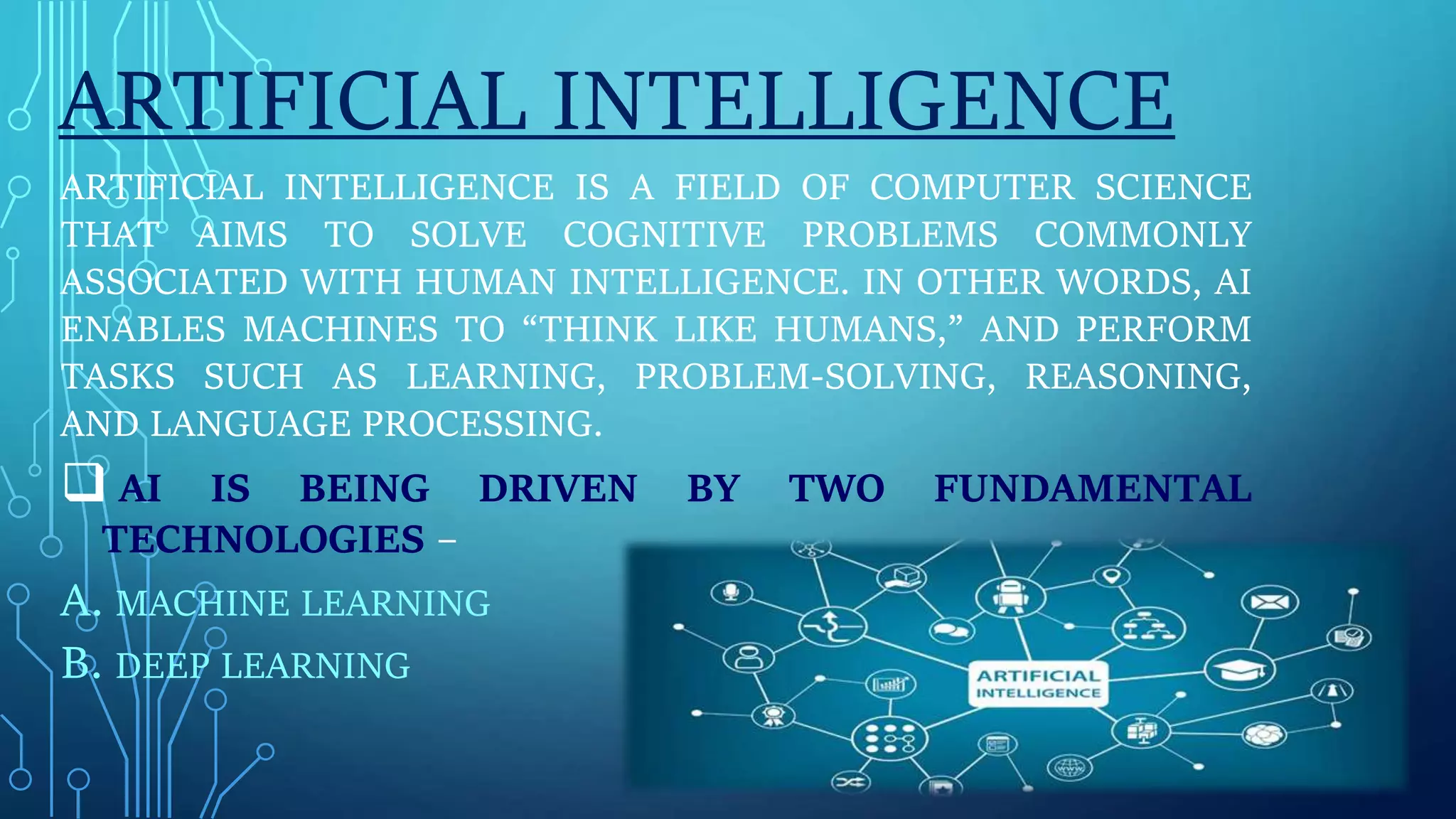
ARTIFICIAL INTELLIGENCE
ARTIFICIAL INTELLIGENCE IS A FIELD OF COMPUTER SCIENCE
THAT AIMS TO SOLVE COGNITIVE PROBLEMS COMMONLY
ASSOCIATED WITH HUMAN INTELLIGENCE. IN OTHER WORDS, AI
ENABLES MACHINES TO “THINK LIKE HUMANS,” AND PERFORM
TASKS SUCH AS LEARNING, PROBLEM-SOLVING, REASONING,
AND LANGUAGE PROCESSING.
 AI IS BEING DRIVEN BY TWO FUNDAMENTAL
TECHNOLOGIES –
A. MACHINE LEARNING
B. DEEP LEARNING
MACHINE LEARNING ?
Machine learning is a branch of artificial intelligence that enables
machines to learn from and make predictions based on data.
 The roots of machine learning are embedded in pattern recognition and
the concept that algorithms can learn from recorded data without being
programmed to do so.
DEEP LEARNING
Deep learning is a branch of machine
learning that trains a computer to
learn from large amounts of data
through neural network architecture
Artificial neural networks are one of
the main tools used in Deep learning
It is a more advanced form of
machine learning that breaks down
data into layers of abstraction.
Instead of organizing data to run through predefined equations, deep
learning sets up basic parameters about the data and trains the
computer to learn on its own by recognizing patterns using multiple
neural network layers for processing (like neurons in the brain).
Key use cases of Machine Learning in the HR
context:
A. Anomaly detection: Identify items, events or observations which
do not conform to an expected pattern or other items in a dataset.
B. Background verification: Machine learning-powered predictive
models can extract meaning and raise red flags based on structured
and unstructured data points from applicants’ resumes.
C. Employee Attrition: Find employees who are at high risk of
attrition, enabling HR to proactively engage with them and retain
them.
D. Content personalization: Provide a more personalized
employee experience by using predictive analytics to recommend
career paths, professional development programs or optimize a
career site based on prior applicant actions
Key use cases of
Deep Learning
Image and
video
recognition
Recommendation
engines
Chatbots
Speech
recognition
Consulting firm Mercer's Global Talent Trends 2019 report.
Eighty-eight percent of companies globally already use AI in some way for
HR, with 100 percent of Chinese firms and 83 percent of U.S. employers
relying on some form of the technology.
Overall, Mercer found, when it comes to AI for HR, companies are:
 Using chatbots to look up information such as company policies or benefits
(56 percent).
 Identifying the best candidates based on publicly available data, like social
media profiles (44 percent).
 Providing recommendations for learning and training to employees (43
percent).
 Using chatbots to engage with candidates during recruitment (41 percent).
 Screening and assessing candidates during recruitment (40 percent).
Real-time analytics
and artificial
intelligence (AI)
driven
recommendation
engines
EMPLOYEE
ENGAGEMENT
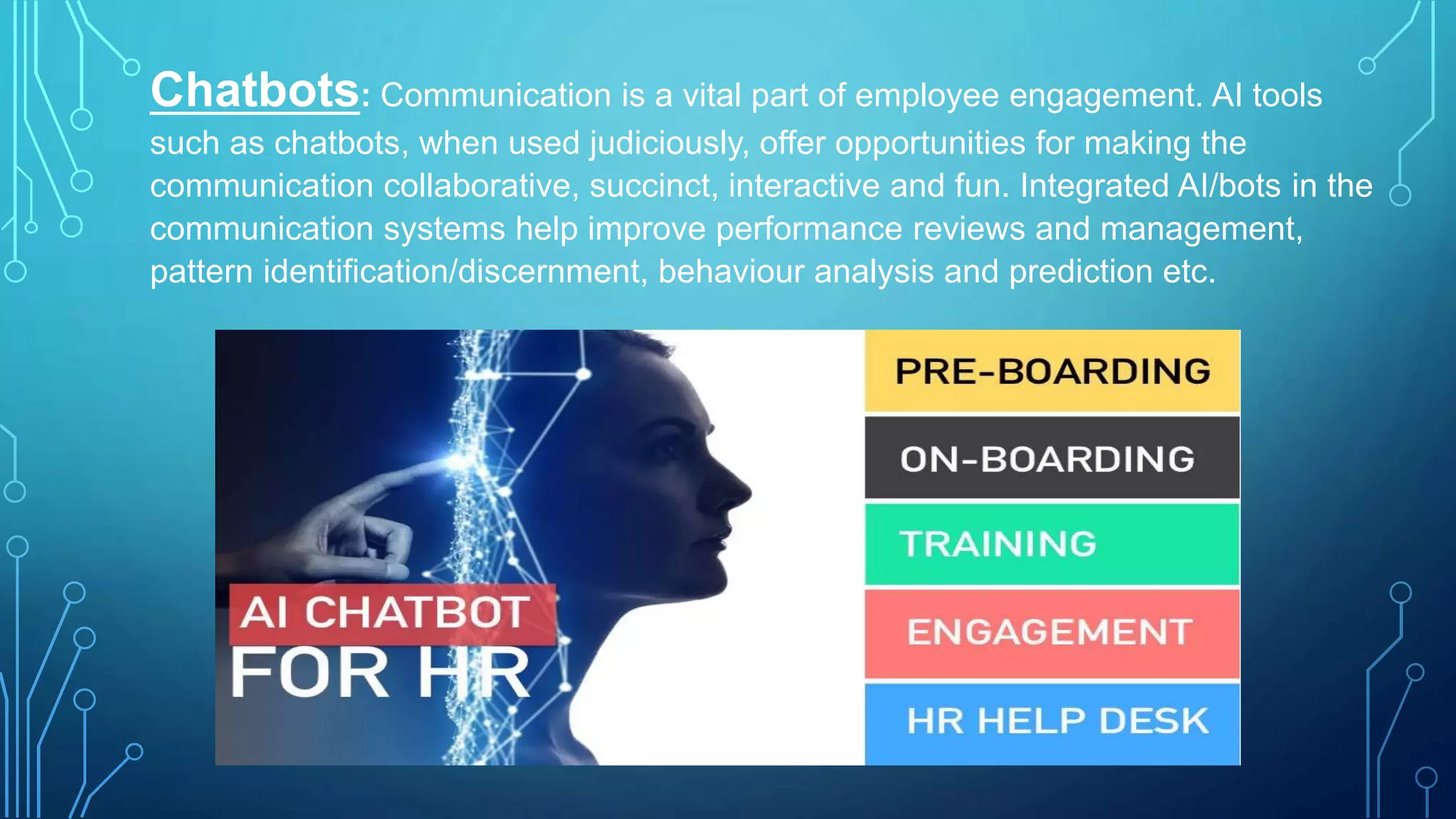
Chatbots: Communication is a vital part of employee engagement. AI tools
such as chatbots, when used judiciously, offer opportunities for making the
communication collaborative, succinct, interactive and fun. Integrated AI/bots in the
communication systems help improve performance reviews and management,
pattern identification/discernment, behaviour analysis and prediction etc.
Data mining and Predictive analysis: Measuring engagement level,
collating relevant results therefrom and providing options will be the game
changer that AI will drive.
Natural Language Processing and Machine learning: Developments in
NLP/ML have made sentiment analysis of written/spoken language easier.
Pulse surveys have become game changers for measuring impacts and
tracking practices in real time.
AI AND VR IN TRAINING
‱ Virtual Human The training tool
from Talespin is powered by artificial
intelligence (AI), and leverages virtual
reality (VR) and augmented reality (AR)
technology to create realistic, human-
like situations and impart soft skill
training.
AI in benefits
administration
HR BOT by Sparkhound
is a Chatbot that
demystify’s employee
benefits.
RECRUITMENT
About 42 percent of employers are worried they won’t be
able to find the talent they need, according to a survey
conducted by Careerbuilder, and 72.8 percent say they’re
struggling to find relevant candidates.
Powered by AI and
NLP
THE INDIAN SCENARIO
In India these factors are causing reluctance in adopting AI in HR
functions
‱ Credible & Quality Data
‱ Lack of skilled AI Professionals
‱ Employee’s apprehensions
SITUATION IS NOT AS GRIM
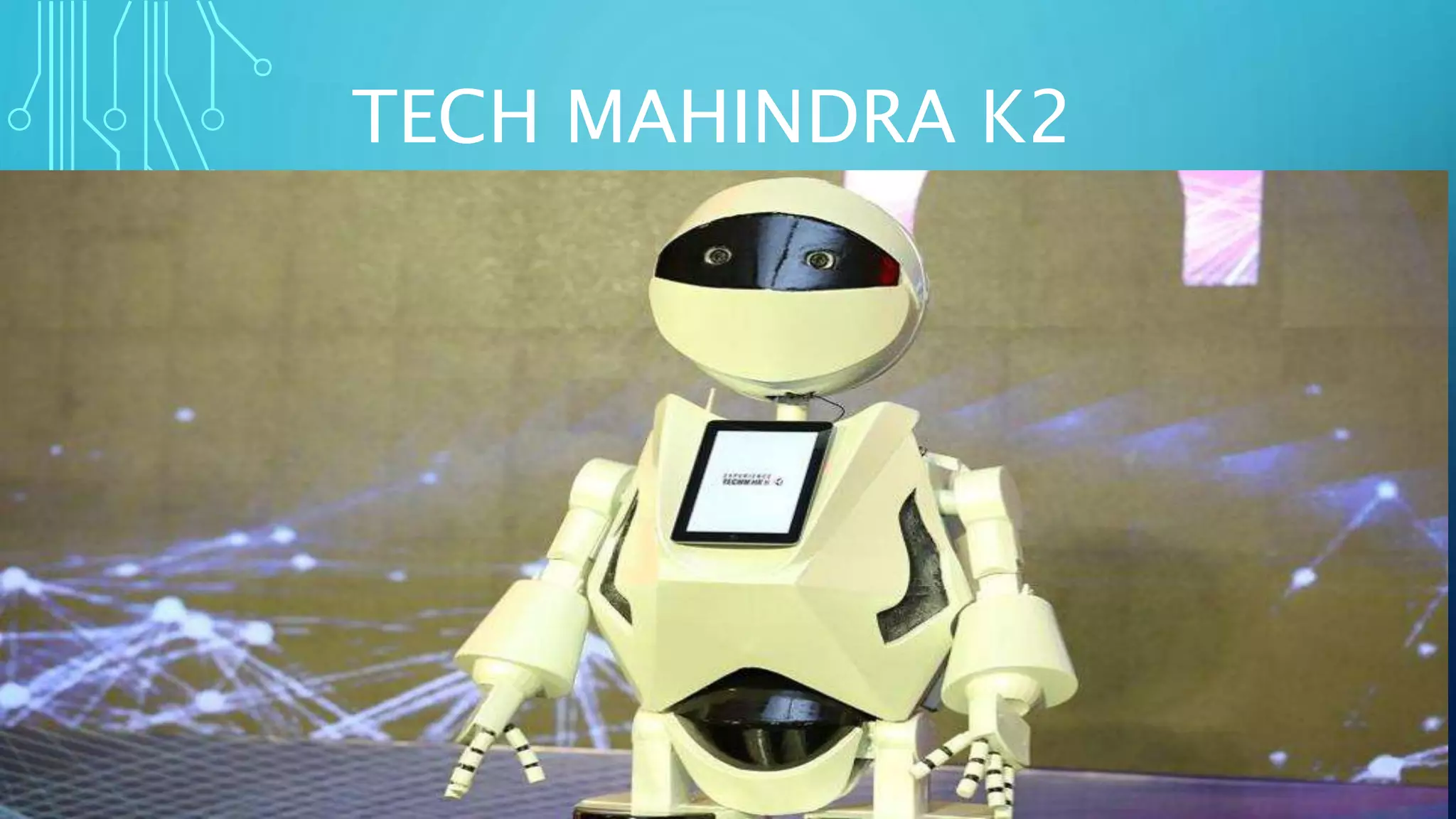
TECH MAHINDRA K2
TECH MAHINDRA TALEX
Companies around the world planning to invest
in AI this year are targeting:
 Chatbots for employee self-service, such as
changing benefits or requesting time off.
 The ability to identify employees who are
disengaged or at risk of leaving.
 Suggestions of job openings or career paths
for current employees.
 Help in the performance management
process.
 Customization or improving benchmarking in
compensation.
Conclusion

Adoption of ai in human resource management

  • 1.
    ADOPTION OF AIIN HUMAN RESOURCE MANAGEMENT Presented By:- Group 7 Sneha Shaw Divya Singhal Zaisha Chadha Tanvi Mangal Shireen Iftkhar Ahmed
  • 2.
    ARTIFICIAL INTELLIGENCE ARTIFICIAL INTELLIGENCEIS A FIELD OF COMPUTER SCIENCE THAT AIMS TO SOLVE COGNITIVE PROBLEMS COMMONLY ASSOCIATED WITH HUMAN INTELLIGENCE. IN OTHER WORDS, AI ENABLES MACHINES TO “THINK LIKE HUMANS,” AND PERFORM TASKS SUCH AS LEARNING, PROBLEM-SOLVING, REASONING, AND LANGUAGE PROCESSING.  AI IS BEING DRIVEN BY TWO FUNDAMENTAL TECHNOLOGIES – A. MACHINE LEARNING B. DEEP LEARNING
  • 3.
    MACHINE LEARNING ? Machinelearning is a branch of artificial intelligence that enables machines to learn from and make predictions based on data.  The roots of machine learning are embedded in pattern recognition and the concept that algorithms can learn from recorded data without being programmed to do so.
  • 4.
    DEEP LEARNING Deep learningis a branch of machine learning that trains a computer to learn from large amounts of data through neural network architecture Artificial neural networks are one of the main tools used in Deep learning It is a more advanced form of machine learning that breaks down data into layers of abstraction.
  • 5.
    Instead of organizingdata to run through predefined equations, deep learning sets up basic parameters about the data and trains the computer to learn on its own by recognizing patterns using multiple neural network layers for processing (like neurons in the brain).
  • 7.
    Key use casesof Machine Learning in the HR context: A. Anomaly detection: Identify items, events or observations which do not conform to an expected pattern or other items in a dataset. B. Background verification: Machine learning-powered predictive models can extract meaning and raise red flags based on structured and unstructured data points from applicants’ resumes.
  • 8.
    C. Employee Attrition:Find employees who are at high risk of attrition, enabling HR to proactively engage with them and retain them. D. Content personalization: Provide a more personalized employee experience by using predictive analytics to recommend career paths, professional development programs or optimize a career site based on prior applicant actions
  • 9.
    Key use casesof Deep Learning Image and video recognition Recommendation engines Chatbots Speech recognition
  • 10.
    Consulting firm Mercer'sGlobal Talent Trends 2019 report. Eighty-eight percent of companies globally already use AI in some way for HR, with 100 percent of Chinese firms and 83 percent of U.S. employers relying on some form of the technology. Overall, Mercer found, when it comes to AI for HR, companies are:  Using chatbots to look up information such as company policies or benefits (56 percent).  Identifying the best candidates based on publicly available data, like social media profiles (44 percent).  Providing recommendations for learning and training to employees (43 percent).  Using chatbots to engage with candidates during recruitment (41 percent).  Screening and assessing candidates during recruitment (40 percent).
  • 11.
    Real-time analytics and artificial intelligence(AI) driven recommendation engines EMPLOYEE ENGAGEMENT
  • 12.
    Chatbots: Communication isa vital part of employee engagement. AI tools such as chatbots, when used judiciously, offer opportunities for making the communication collaborative, succinct, interactive and fun. Integrated AI/bots in the communication systems help improve performance reviews and management, pattern identification/discernment, behaviour analysis and prediction etc.
  • 13.
    Data mining andPredictive analysis: Measuring engagement level, collating relevant results therefrom and providing options will be the game changer that AI will drive. Natural Language Processing and Machine learning: Developments in NLP/ML have made sentiment analysis of written/spoken language easier. Pulse surveys have become game changers for measuring impacts and tracking practices in real time.
  • 14.
    AI AND VRIN TRAINING ‱ Virtual Human The training tool from Talespin is powered by artificial intelligence (AI), and leverages virtual reality (VR) and augmented reality (AR) technology to create realistic, human- like situations and impart soft skill training.
  • 16.
    AI in benefits administration HRBOT by Sparkhound is a Chatbot that demystify’s employee benefits.
  • 17.
    RECRUITMENT About 42 percentof employers are worried they won’t be able to find the talent they need, according to a survey conducted by Careerbuilder, and 72.8 percent say they’re struggling to find relevant candidates.
  • 19.
  • 20.
    THE INDIAN SCENARIO InIndia these factors are causing reluctance in adopting AI in HR functions ‱ Credible & Quality Data ‱ Lack of skilled AI Professionals ‱ Employee’s apprehensions
  • 21.
  • 22.
  • 23.
  • 24.
    Companies around theworld planning to invest in AI this year are targeting:  Chatbots for employee self-service, such as changing benefits or requesting time off.  The ability to identify employees who are disengaged or at risk of leaving.  Suggestions of job openings or career paths for current employees.  Help in the performance management process.  Customization or improving benchmarking in compensation. Conclusion