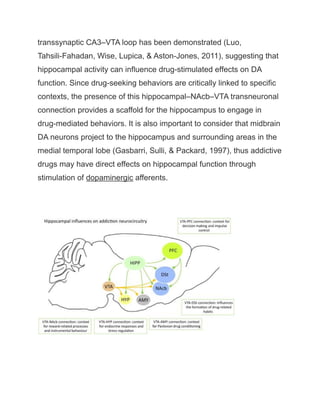
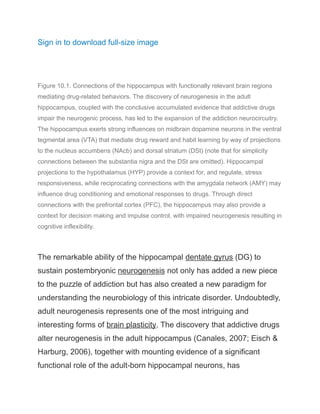
This document discusses addictive behavior and the neurobiology of addiction. It defines addictive behavior as compulsive drug use despite negative consequences and craving effects beyond pain relief. It describes how drugs of abuse hijack the brain's reward system and lead to long-term changes in gene expression and neural plasticity through mechanisms like conditioning and memory formation. These changes help explain why addiction is persistent and why drug cues can trigger intense craving and relapse. The neurobiology of addiction involves dysregulation of the dopamine and other neurotransmitter systems in the brain's reward pathways.