SRI VENKATESWARA VETERINARY UNIVERSITY
PRESENTED BY: PRALAYAKANTI PUHAN
ID NO- TV/22-56
TOPIC: ACUTE PHASE PROTEINS IN RUMINANTS
COLLEGE OF VETERINARY SCIENCE, TIRUPATI
DEPARTMENT OF VETERINARY BIOCHEMISTRY
GUIDED BY: DR. T. V. CHAITANYA KUMAR
Table of contents
01
04
02
05
03
06
Introduction VARIOUS APP in
ruminants
Structure and
functions
Factors
affecting app
Diagnostic &
prognostic
value of app
Therapeutic
implications of
app
moniotoring
Introduction
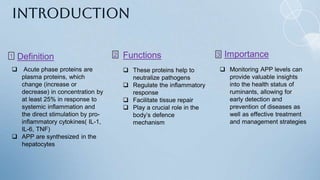
 Acute phase proteins are
plasma proteins, which
change (increase or
decrease) in concentration by
at least 25% in response to
systemic inflammation and
the direct stimulation by pro-
inflammatory cytokines( IL-1,
IL-6, TNF)
 APP are synthesized in the
hepatocytes
Definition
1 Functions 3
 These proteins help to
neutralize pathogens
 Regulate the inflammatory
response
 Facilitate tissue repair
 Play a crucial role in the
body’s defence
mechanism
Importance
2
 Monitoring APP levels can
provide valuable insights
into the health status of
ruminants, allowing for
early detection and
prevention of diseases as
well as effective treatment
and management strategies
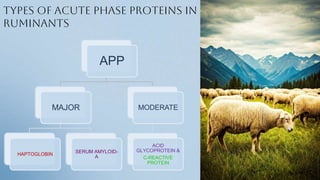
Types of Acute Phase Proteins in
ruminants
APP
MAJOR
HAPTOGLOBIN
SERUM AMYLOID-
A
MODERATE
ACID
GLYCOPROTEIN &
C-REACTIVE
PROTEIN
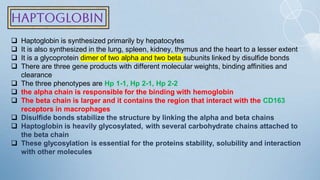
Haptoglobin
 Haptoglobin is synthesized primarily by hepatocytes
 It is also synthesized in the lung, spleen, kidney, thymus and the heart to a lesser extent
 It is a glycoprotein dimer of two alpha and two beta subunits linked by disulfide bonds
 There are three gene products with different molecular weights, binding affinities and
clearance
 The three phenotypes are Hp 1-1, Hp 2-1, Hp 2-2
 the alpha chain is responsible for the binding with hemoglobin
 The beta chain is larger and it contains the region that interact with the CD163
receptors in macrophages
 Disulfide bonds stabilize the structure by linking the alpha and beta chains
 Haptoglobin is heavily glycosylated, with several carbohydrate chains attached to
the beta chain
 These glycosylation is essential for the proteins stability, solubility and interaction
with other molecules
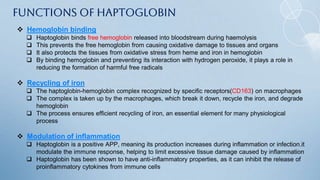
Functions of haptoglobin
 Hemoglobin binding
 Haptoglobin binds free hemoglobin released into bloodstream during haemolysis
 This prevents the free hemoglobin from causing oxidative damage to tissues and organs
 It also protects the tissues from oxidative stress from heme and iron in hemoglobin
 By binding hemoglobin and preventing its interaction with hydrogen peroxide, it plays a role in
reducing the formation of harmful free radicals
 Recycling of iron
 The haptoglobin-hemoglobin complex recognized by specific receptors(CD163) on macrophages
 The complex is taken up by the macrophages, which break it down, recycle the iron, and degrade
hemoglobin
 The process ensures efficient recycling of iron, an essential element for many physiological
process
 Modulation of inflammation
 Haptoglobin is a positive APP, meaning its production increases during inflammation or infection.it
modulate the immune response, helping to limit excessive tissue damage caused by inflammation
 Haptoglobin has been shown to have anti-inflammatory properties, as it can inhibit the release of
proinflammatory cytokines from immune cells
Step 1
Hemoglobin
releases
from RBC
Step 2
Recognition
by
haptoglobin
Step 3
Binding of
haptoglobin
to
hemoglobin
Step 4
Formation of
Hp-Hb
complex
Step 5
Clearance of
the complex
Step 6
Degradation
and recycling
Hp-hb interaction
Serum amyloid-A
 SAA is a family of apolipoproteins that are primarily associated with HDL in plasma
 It plays a key role in acute phase inflammatory response
 These proteins are small, with a molecular weight of 12-14 kDa
 The primary structure consists of about 104-112 amino acids depending upon the specific
isoform and species
 There are different isoforms of SAA ,i.e, SAA1, SAA2, SAA3 with slight variation in their
amino acid sequence
 the N terminal region is crucial for SAA’s binding to HDL, as well as its role in
inflammation and cell signaling
 SAA proteins are predominantly composed of alpha helices
Functions of SAA
 Acute phase response
 SAA levels rise dramatically up to 1000 fold in response to inflammatory stimuli such as infection,
trauma, or autoimmune diseases
 SAA helps to modulate both innate and adaptive immune responses
 It promotes the recruitment of neutrophils and macrophages to sites of inflammation, aiding in the
defence against pathogens
 Role in lipid metabolism
 SAA binds to HDL particle during inflammation, altering their composition. This is important as HDL
typical functions in reverse cholesterol transport, and SAA may help to redirect HDL toward
inflamed tissues where cholesterols needed for tissue repair or pathogen defence
 SAA contributes to the redistribution of cholesterol during APR, promoting the transport from
tissues back to liver for clearance, a process that can help remove excess cholesterol during
inflammation
 Interaction with receptors
 SAA interacts with various cell surface receptors such as TLRs(toll like receptors) and FPR2(formyl
peptide receptor), which are involved in immune signalling. These interactions lead to the activation
of inflammatory pathways.
 Antimicrobial activities
 SAA can bind and neutralize certain bacteria and their components, such as
lipopolysachharides. This reduces the bacterial load and mitigates the harmful effects of
bacterial toxins
 Role in chronic inflammation and diseases
 Persistent elevation of SAA is associated with chronic inflammatory diseases such as
rheumatoid arthritis, atherosclerosis and inflammatory bowel diseases
 SAA plays s role in secondary amyloidosis, a condition where misfolded SAA proteins
segregate to form amyloid fibrils that deposit in tissues, leading to organ dysfunction
 Tumorigenesis
 Elevated levels of SAA have been associated with certain type of cancer.
 SAA can promote tumor growth by enhancing inflammation in the tumor
microenvironment as well as by influencing cancer cell survival proliferation, migration.
C-REACTIVE PROTEIN
 CRP is a small protein with a molecular weight of about 115kDa for the
pentameric form
 The CRP monomers predominantly adopt a beta sheet conformation
 CRP requires calcium ions for its ligand binding activity. Each CRP
monomer contains specific ca- binding sites which are crucial for its
interaction with phosphocholine, a molecule found on the dead or
dying cells
 CRP belongs to pentraxin family of proteins , meaning it composed of
5 identical monomers arranged in a circular or discoid shape
 The pentameric arrangement gives CRP a characteristic structure with
a central pore and five binding sites, one on each monomer, enabling it
to bind multiple ligand simultaneously
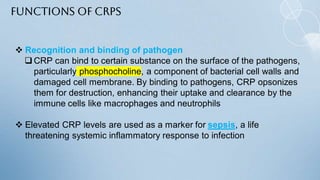
Functions of CRPs
 Recognition and binding of pathogen
 CRP can bind to certain substance on the surface of the pathogens,
particularly phosphocholine, a component of bacterial cell walls and
damaged cell membrane. By binding to pathogens, CRP opsonizes
them for destruction, enhancing their uptake and clearance by the
immune cells like macrophages and neutrophils
 Elevated CRP levels are used as a marker for sepsis, a life
threatening systemic inflammatory response to infection
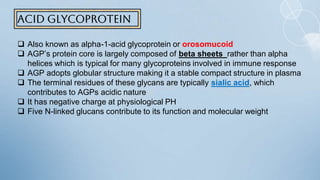
Acid glycoprotein
 Also known as alpha-1-acid glycoprotein or orosomucoid
 AGP’s protein core is largely composed of beta sheets rather than alpha
helices which is typical for many glycoproteins involved in immune response
 AGP adopts globular structure making it a stable compact structure in plasma
 The terminal residues of these glycans are typically sialic acid, which
contributes to AGPs acidic nature
 It has negative charge at physiological PH
 Five N-linked glucans contribute to its function and molecular weight
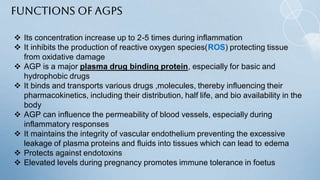
Functions of AGPs
 Its concentration increase up to 2-5 times during inflammation
 It inhibits the production of reactive oxygen species(ROS) protecting tissue
from oxidative damage
 AGP is a major plasma drug binding protein, especially for basic and
hydrophobic drugs
 It binds and transports various drugs ,molecules, thereby influencing their
pharmacokinetics, including their distribution, half life, and bio availability in the
body
 AGP can influence the permeability of blood vessels, especially during
inflammatory responses
 It maintains the integrity of vascular endothelium preventing the excessive
leakage of plasma proteins and fluids into tissues which can lead to edema
 Protects against endotoxins
 Elevated levels during pregnancy promotes immune tolerance in foetus
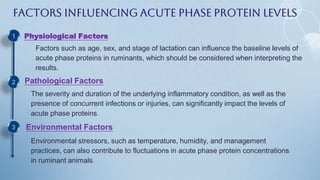
Factors Influencing Acute Phase Protein Levels
Physiological Factors
Factors such as age, sex, and stage of lactation can influence the baseline levels of
acute phase proteins in ruminants, which should be considered when interpreting the
results.
Pathological Factors
The severity and duration of the underlying inflammatory condition, as well as the
presence of concurrent infections or injuries, can significantly impact the levels of
acute phase proteins.
Environmental Factors
Environmental stressors, such as temperature, humidity, and management
practices, can also contribute to fluctuations in acute phase protein concentrations
in ruminant animals.
1
2
3
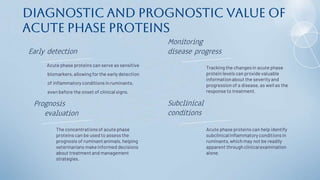
Diagnostic and Prognostic Value of
Acute Phase Proteins
Acute phase proteins can serve as sensitive
biomarkers,allowing for the early detection
of inflammatoryconditions in ruminants,
even before the onset of clinicalsigns.
Tracking the changesin acute phase
protein levelscan provide valuable
informationabout the severityand
progression of a disease,as well as the
response to treatment.
The concentrationsof acute phase
proteins can be used to assess the
prognosis of ruminantanimals,helping
veterinarians makeinformed decisions
about treatmentand management
strategies.
Acute phase proteinscan help identify
subclinicalinflammatoryconditions in
ruminants,which may not be readily
apparent throughclinicalexamination
alone.
Early detection
Monitoring
disease progress
Subclinical
conditions
Prognosis
evaluation
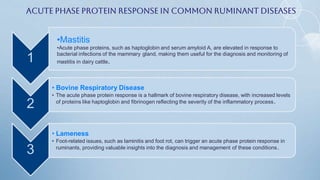
1
•Mastitis
•Acute phase proteins, such as haptoglobin and serum amyloid A, are elevated in response to
bacterial infections of the mammary gland, making them useful for the diagnosis and monitoring of
mastitis in dairy cattle.
2
• Bovine Respiratory Disease
• The acute phase protein response is a hallmark of bovine respiratory disease, with increased levels
of proteins like haptoglobin and fibrinogen reflecting the severity of the inflammatory process.
3
• Lameness
• Foot-related issues, such as laminitis and foot rot, can trigger an acute phase protein response in
ruminants, providing valuable insights into the diagnosis and management of these conditions.
Acute Phase Protein Response in Common Ruminant Diseases
Therapeutic Implications of APP Monitoring
Treatment Guidance
Monitoring acute phase protein levels can help guide the selection and duration of appropriate antimicrobial,
anti-inflammatory, or supportive treatments for ruminant diseases.
Treatment Efficacy
Tracking changes in acute phase protein concentrations can provide valuable insights into the
effectiveness of therapeutic interventions, allowing for timely adjustments to the treatment plan.
Recovery Monitoring
Acute phase proteins can be used to monitor the recovery and healing process in ruminant animals,
ensuring that the underlying condition is resolving and the animal is returning to a healthy state.
Conclusion and Future Research Directions
Conclusion
Acute phase proteins have emerged as valuable biomarkers in ruminant
health management, providing a deeper understanding of the complex
physiological and pathological processes occurring within the animal.
Continued research and advancements in this field will enhance our ability
to detect, monitor, and manage a wide range of diseases in ruminant
livestock.
Future Direction
Ongoing research is focused on exploring the potential of acute phase
proteins for early disease detection, personalizing treatment strategies,
and predicting clinical outcomes in ruminants. Additionally, the
development of rapid and cost-effective testing methods will further
improve the accessibility and practical application of acute phase protein
monitoring in field settings.
Thank you

ACUTE PHASE PROTEINS IN RUMINANTS.pdf

  • 1.
    SRI VENKATESWARA VETERINARYUNIVERSITY PRESENTED BY: PRALAYAKANTI PUHAN ID NO- TV/22-56 TOPIC: ACUTE PHASE PROTEINS IN RUMINANTS COLLEGE OF VETERINARY SCIENCE, TIRUPATI DEPARTMENT OF VETERINARY BIOCHEMISTRY GUIDED BY: DR. T. V. CHAITANYA KUMAR
  • 2.
    Table of contents 01 04 02 05 03 06 IntroductionVARIOUS APP in ruminants Structure and functions Factors affecting app Diagnostic & prognostic value of app Therapeutic implications of app moniotoring
  • 3.
    Introduction  Acute phaseproteins are plasma proteins, which change (increase or decrease) in concentration by at least 25% in response to systemic inflammation and the direct stimulation by pro- inflammatory cytokines( IL-1, IL-6, TNF)  APP are synthesized in the hepatocytes Definition 1 Functions 3  These proteins help to neutralize pathogens  Regulate the inflammatory response  Facilitate tissue repair  Play a crucial role in the body’s defence mechanism Importance 2  Monitoring APP levels can provide valuable insights into the health status of ruminants, allowing for early detection and prevention of diseases as well as effective treatment and management strategies
  • 4.
    Types of AcutePhase Proteins in ruminants APP MAJOR HAPTOGLOBIN SERUM AMYLOID- A MODERATE ACID GLYCOPROTEIN & C-REACTIVE PROTEIN
  • 5.
    Haptoglobin  Haptoglobin issynthesized primarily by hepatocytes  It is also synthesized in the lung, spleen, kidney, thymus and the heart to a lesser extent  It is a glycoprotein dimer of two alpha and two beta subunits linked by disulfide bonds  There are three gene products with different molecular weights, binding affinities and clearance  The three phenotypes are Hp 1-1, Hp 2-1, Hp 2-2  the alpha chain is responsible for the binding with hemoglobin  The beta chain is larger and it contains the region that interact with the CD163 receptors in macrophages  Disulfide bonds stabilize the structure by linking the alpha and beta chains  Haptoglobin is heavily glycosylated, with several carbohydrate chains attached to the beta chain  These glycosylation is essential for the proteins stability, solubility and interaction with other molecules
  • 6.
    Functions of haptoglobin Hemoglobin binding  Haptoglobin binds free hemoglobin released into bloodstream during haemolysis  This prevents the free hemoglobin from causing oxidative damage to tissues and organs  It also protects the tissues from oxidative stress from heme and iron in hemoglobin  By binding hemoglobin and preventing its interaction with hydrogen peroxide, it plays a role in reducing the formation of harmful free radicals  Recycling of iron  The haptoglobin-hemoglobin complex recognized by specific receptors(CD163) on macrophages  The complex is taken up by the macrophages, which break it down, recycle the iron, and degrade hemoglobin  The process ensures efficient recycling of iron, an essential element for many physiological process  Modulation of inflammation  Haptoglobin is a positive APP, meaning its production increases during inflammation or infection.it modulate the immune response, helping to limit excessive tissue damage caused by inflammation  Haptoglobin has been shown to have anti-inflammatory properties, as it can inhibit the release of proinflammatory cytokines from immune cells
  • 7.
    Step 1 Hemoglobin releases from RBC Step2 Recognition by haptoglobin Step 3 Binding of haptoglobin to hemoglobin Step 4 Formation of Hp-Hb complex Step 5 Clearance of the complex Step 6 Degradation and recycling Hp-hb interaction
  • 8.
    Serum amyloid-A  SAAis a family of apolipoproteins that are primarily associated with HDL in plasma  It plays a key role in acute phase inflammatory response  These proteins are small, with a molecular weight of 12-14 kDa  The primary structure consists of about 104-112 amino acids depending upon the specific isoform and species  There are different isoforms of SAA ,i.e, SAA1, SAA2, SAA3 with slight variation in their amino acid sequence  the N terminal region is crucial for SAA’s binding to HDL, as well as its role in inflammation and cell signaling  SAA proteins are predominantly composed of alpha helices
  • 9.
    Functions of SAA Acute phase response  SAA levels rise dramatically up to 1000 fold in response to inflammatory stimuli such as infection, trauma, or autoimmune diseases  SAA helps to modulate both innate and adaptive immune responses  It promotes the recruitment of neutrophils and macrophages to sites of inflammation, aiding in the defence against pathogens  Role in lipid metabolism  SAA binds to HDL particle during inflammation, altering their composition. This is important as HDL typical functions in reverse cholesterol transport, and SAA may help to redirect HDL toward inflamed tissues where cholesterols needed for tissue repair or pathogen defence  SAA contributes to the redistribution of cholesterol during APR, promoting the transport from tissues back to liver for clearance, a process that can help remove excess cholesterol during inflammation  Interaction with receptors  SAA interacts with various cell surface receptors such as TLRs(toll like receptors) and FPR2(formyl peptide receptor), which are involved in immune signalling. These interactions lead to the activation of inflammatory pathways.
  • 10.
     Antimicrobial activities SAA can bind and neutralize certain bacteria and their components, such as lipopolysachharides. This reduces the bacterial load and mitigates the harmful effects of bacterial toxins  Role in chronic inflammation and diseases  Persistent elevation of SAA is associated with chronic inflammatory diseases such as rheumatoid arthritis, atherosclerosis and inflammatory bowel diseases  SAA plays s role in secondary amyloidosis, a condition where misfolded SAA proteins segregate to form amyloid fibrils that deposit in tissues, leading to organ dysfunction  Tumorigenesis  Elevated levels of SAA have been associated with certain type of cancer.  SAA can promote tumor growth by enhancing inflammation in the tumor microenvironment as well as by influencing cancer cell survival proliferation, migration.
  • 11.
    C-REACTIVE PROTEIN  CRPis a small protein with a molecular weight of about 115kDa for the pentameric form  The CRP monomers predominantly adopt a beta sheet conformation  CRP requires calcium ions for its ligand binding activity. Each CRP monomer contains specific ca- binding sites which are crucial for its interaction with phosphocholine, a molecule found on the dead or dying cells  CRP belongs to pentraxin family of proteins , meaning it composed of 5 identical monomers arranged in a circular or discoid shape  The pentameric arrangement gives CRP a characteristic structure with a central pore and five binding sites, one on each monomer, enabling it to bind multiple ligand simultaneously
  • 12.
    Functions of CRPs Recognition and binding of pathogen  CRP can bind to certain substance on the surface of the pathogens, particularly phosphocholine, a component of bacterial cell walls and damaged cell membrane. By binding to pathogens, CRP opsonizes them for destruction, enhancing their uptake and clearance by the immune cells like macrophages and neutrophils  Elevated CRP levels are used as a marker for sepsis, a life threatening systemic inflammatory response to infection
  • 13.
    Acid glycoprotein  Alsoknown as alpha-1-acid glycoprotein or orosomucoid  AGP’s protein core is largely composed of beta sheets rather than alpha helices which is typical for many glycoproteins involved in immune response  AGP adopts globular structure making it a stable compact structure in plasma  The terminal residues of these glycans are typically sialic acid, which contributes to AGPs acidic nature  It has negative charge at physiological PH  Five N-linked glucans contribute to its function and molecular weight
  • 14.
    Functions of AGPs Its concentration increase up to 2-5 times during inflammation  It inhibits the production of reactive oxygen species(ROS) protecting tissue from oxidative damage  AGP is a major plasma drug binding protein, especially for basic and hydrophobic drugs  It binds and transports various drugs ,molecules, thereby influencing their pharmacokinetics, including their distribution, half life, and bio availability in the body  AGP can influence the permeability of blood vessels, especially during inflammatory responses  It maintains the integrity of vascular endothelium preventing the excessive leakage of plasma proteins and fluids into tissues which can lead to edema  Protects against endotoxins  Elevated levels during pregnancy promotes immune tolerance in foetus
  • 15.
    Factors Influencing AcutePhase Protein Levels Physiological Factors Factors such as age, sex, and stage of lactation can influence the baseline levels of acute phase proteins in ruminants, which should be considered when interpreting the results. Pathological Factors The severity and duration of the underlying inflammatory condition, as well as the presence of concurrent infections or injuries, can significantly impact the levels of acute phase proteins. Environmental Factors Environmental stressors, such as temperature, humidity, and management practices, can also contribute to fluctuations in acute phase protein concentrations in ruminant animals. 1 2 3
  • 16.
    Diagnostic and PrognosticValue of Acute Phase Proteins Acute phase proteins can serve as sensitive biomarkers,allowing for the early detection of inflammatoryconditions in ruminants, even before the onset of clinicalsigns. Tracking the changesin acute phase protein levelscan provide valuable informationabout the severityand progression of a disease,as well as the response to treatment. The concentrationsof acute phase proteins can be used to assess the prognosis of ruminantanimals,helping veterinarians makeinformed decisions about treatmentand management strategies. Acute phase proteinscan help identify subclinicalinflammatoryconditions in ruminants,which may not be readily apparent throughclinicalexamination alone. Early detection Monitoring disease progress Subclinical conditions Prognosis evaluation
  • 17.
    1 •Mastitis •Acute phase proteins,such as haptoglobin and serum amyloid A, are elevated in response to bacterial infections of the mammary gland, making them useful for the diagnosis and monitoring of mastitis in dairy cattle. 2 • Bovine Respiratory Disease • The acute phase protein response is a hallmark of bovine respiratory disease, with increased levels of proteins like haptoglobin and fibrinogen reflecting the severity of the inflammatory process. 3 • Lameness • Foot-related issues, such as laminitis and foot rot, can trigger an acute phase protein response in ruminants, providing valuable insights into the diagnosis and management of these conditions. Acute Phase Protein Response in Common Ruminant Diseases
  • 18.
    Therapeutic Implications ofAPP Monitoring Treatment Guidance Monitoring acute phase protein levels can help guide the selection and duration of appropriate antimicrobial, anti-inflammatory, or supportive treatments for ruminant diseases. Treatment Efficacy Tracking changes in acute phase protein concentrations can provide valuable insights into the effectiveness of therapeutic interventions, allowing for timely adjustments to the treatment plan. Recovery Monitoring Acute phase proteins can be used to monitor the recovery and healing process in ruminant animals, ensuring that the underlying condition is resolving and the animal is returning to a healthy state.
  • 19.
    Conclusion and FutureResearch Directions Conclusion Acute phase proteins have emerged as valuable biomarkers in ruminant health management, providing a deeper understanding of the complex physiological and pathological processes occurring within the animal. Continued research and advancements in this field will enhance our ability to detect, monitor, and manage a wide range of diseases in ruminant livestock. Future Direction Ongoing research is focused on exploring the potential of acute phase proteins for early disease detection, personalizing treatment strategies, and predicting clinical outcomes in ruminants. Additionally, the development of rapid and cost-effective testing methods will further improve the accessibility and practical application of acute phase protein monitoring in field settings.

  • 20.