Acute Kidney Injury in Children
Azilah Sulaiman
• Case scenario…..
2
Discussion…
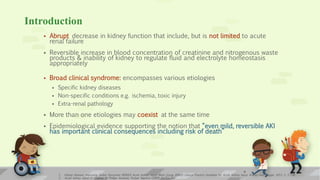
Introduction
 Abrupt decrease in kidney function that include, but is not limited to acute
renal failure
 Reversible increase in blood concentration of creatinine and nitrogenous waste
products & inability of kidney to regulate fluid and electrolyte homeostasis
appropriately
 Broad clinical syndrome: encompasses various etiologies
 Specific kidney diseases
 Non-specific conditions e.g. ischemia, toxic injury
 Extra-renal pathology
 More than one etiologies may coexist at the same time
 Epidemiological evidence supporting the notion that “even mild, reversible AKI
has important clinical consequences including risk of death”
1. Kidney Disease: Improving Global Outcomes (KDIGO) Acute Kidney Injury Work Group. KDIGO Clinical Practice Guideline for Acute Kidney Injury. Kidney inter., Suppl. 2012; 2: 1–138
2. Acute kidney injury in children, S. Phillips Andreoli, Pediatr Nephrol (2009) 24:253–263
4
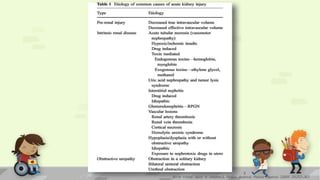
Acute kidney injury in children,S. Phillips Andreoli, Pediatr Nephrol (2009) 24:253–263
5
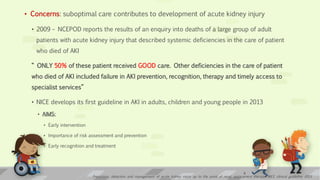
• Concerns: suboptimal care contributes to development of acute kidney injury
• 2009 – NCEPOD reports the results of an enquiry into deaths of a large group of adult
patients with acute kidney injury that described systemic deficiencies in the care of patient
who died of AKI
“ ONLY 50% of these patient received GOOD care. Other deficiencies in the care of patient
who died of AKI included failure in AKI prevention, recognition, therapy and timely access to
specialist services”
• NICE develops its first guideline in AKI in adults, children and young people in 2013
• AIMS:
• Early intervention
• Importance of risk assessment and prevention
• Early recognition and treatment
Prevention, detection and management of acute kidney injury up to the point of renal replacement therapy; NICE clinical guideline 2013
6
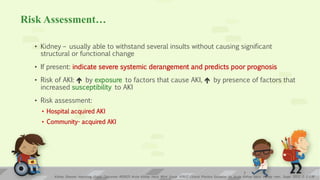
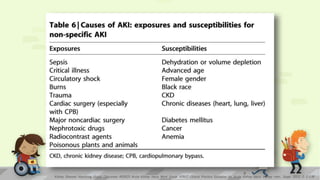
Risk Assessment…
• Kidney – usually able to withstand several insults without causing significant
structural or functional change
• If present: indicate severe systemic derangement and predicts poor prognosis
• Risk of AKI:  by exposure to factors that cause AKI,  by presence of factors that
increased susceptibility to AKI
• Risk assessment:
• Hospital acquired AKI
• Community- acquired AKI
7
Kidney Disease: Improving Global Outcomes (KDIGO) Acute Kidney Injury Work Group. KDIGO Clinical Practice Guideline for Acute Kidney Injury. Kidney inter., Suppl. 2012; 2: 1–138
8
Kidney Disease: Improving Global Outcomes (KDIGO) Acute Kidney Injury Work Group. KDIGO Clinical Practice Guideline for Acute Kidney Injury. Kidney inter., Suppl. 2012; 2: 1–138
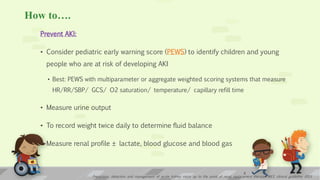
How to….
Prevent AKI:
• Consider pediatric early warning score (PEWS) to identify children and young
people who are at risk of developing AKI
• Best: PEWS with multiparameter or aggregate weighted scoring systems that measure
HR/RR/SBP/ GCS/ O2 saturation/ temperature/ capillary refill time
• Measure urine output
• To record weight twice daily to determine fluid balance
• Measure renal profile ± lactate, blood glucose and blood gas
9
Prevention, detection and management of acute kidney injury up to the point of renal replacement therapy; NICE clinical guideline 2013
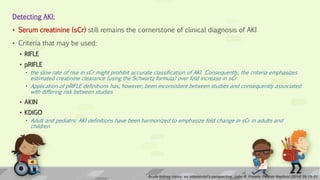
Detecting AKI:
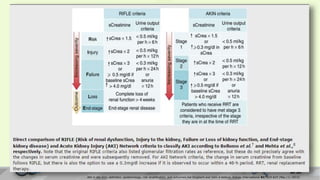
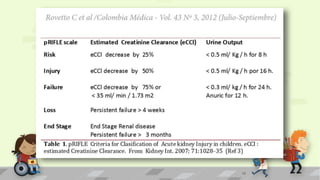
• Serum creatinine (sCr) still remains the cornerstone of clinical diagnosis of AKI
• Criteria that may be used:
• RIFLE
• pRIFLE
• the slow rate of rise in sCr might prohibit accurate classification of AKI. Consequently, the criteria emphasizes
estimated creatinine clearance (using the Schwartz formula) over fold increase in sCr
• Application of pRIFLE definitions has, however, been inconsistent between studies and consequently associated
with differing risk between studies
• AKIN
• KDIGO
• Adult and pediatric AKI definitions have been harmonized to emphasize fold change in sCr in adults and
children
Acute kidney injury: an intensivist’s perspective, John R. Prowle, Pediatr Nephrol (2014) 29:13–21
10
AKI in the ICU: definition, epidemiology, risk stratification, and outcomes,Kai Singbartl and John A Kellum, Kidney International 81, 819-825 (May (1) 2012)
11
12
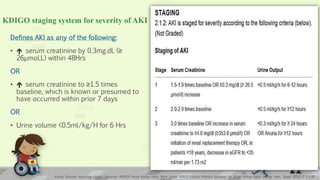
KDIGO staging system for severity of AKI
Defines AKI as any of the following:
•  serum creatinine by 0.3mg.dL (≥
26µmol.L) within 48Hrs
OR
•  serum creatinine to ≥1.5 times
baseline, which is known or presumed to
have occurred within prior 7 days
OR
• Urine volume <0.5ml/kg/H for 6 Hrs
Kidney Disease: Improving Global Outcomes (KDIGO) Acute Kidney Injury Work Group. KDIGO Clinical Practice Guideline for Acute Kidney Injury. Kidney inter., Suppl. 2012; 2: 1–138
13
14
Management of AKI
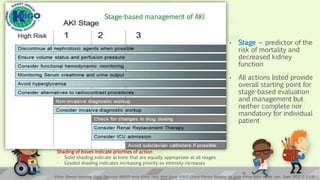
Stage-based management of AKI
Shading of boxes indicate priorities of action
- Solid shading indicate actions that are equally appropriate at all stages
- Graded shading indicates increasing priority as intensity increases
• Stage – predictor of the
risk of mortality and
decreased kidney
function
• All actions listed provide
overall starting point for
stage-based evaluation
and management but
neither complete nor
mandatory for individual
patient
Kidney Disease: Improving Global Outcomes (KDIGO) Acute Kidney Injury Work Group. KDIGO Clinical Practice Guideline for Acute Kidney Injury. Kidney inter., Suppl. 2012; 2: 1–138
16
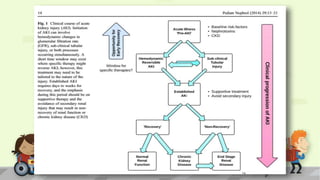
Fluid Management
Fluid overload
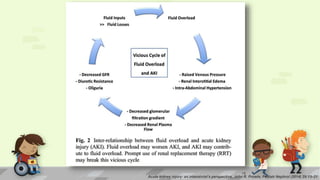
• Associated with increased morbidity and mortality in adult and children developing AKI
• Degree of fluid overload has been suggested as an Index of AKI severity in pediatric
population
• Associated with impaired recovery of renal function in patient surviving critical illness
“Children have smaller window of appropriate treatment as they are more at risk of harm from
inadequate cardiac preload & more sensitive to adverse effects of fluid overload”
17
Acute kidney injury: an intensivist’s perspective, John R. Prowle, Pediatr Nephrol (2014) 29:13–21
18
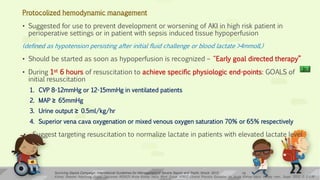
Protocolized hemodynamic management
• Suggested for use to prevent development or worsening of AKI in high risk patient in
perioperative settings or in patient with sepsis induced tissue hypoperfusion
(defined as hypotension persisting after initial fluid challenge or blood lactate >4mmolL)
• Should be started as soon as hypoperfusion is recognized – “Early goal directed therapy”
• During 1st 6 hours of resuscitation to achieve specific physiologic end-points: GOALS of
initial resuscitation
1. CVP 8-12mmHg or 12-15mmHg in ventilated patients
2. MAP ≥ 65mmHg
3. Urine output ≥ 0.5ml/kg/hr
4. Superior vena cava oxygenation or mixed venous oxygen saturation 70% or 65% respectively
• Suggest targeting resuscitation to normalize lactate in patients with elevated lactate level
Kidney Disease: Improving Global Outcomes (KDIGO) Acute Kidney Injury Work Group. KDIGO Clinical Practice Guideline for Acute Kidney Injury. Kidney inter., Suppl. 2012; 2: 1–138
Surviving Sepsis Campaign: International Guidelines for Management of Severe Sepsis and Septic Shock: 2012 19
Diuretics and dopamine receptor agonist
• Diuretics and “ renal dose” dopamine commonly used to prevent or limit AKI
Diuretics:
• Observational studies: 59-70% of patient with AKI were given diuretics at the time
of nephrology consultation or before the start of RRT
• Stimulation of urine output eases management of AKI but conversion of oliguric to
non-oliguric AKI – not proven to alter the course of renal failure
• Retrospective study does actually demonstrated the use of diuretics in AKI was
associated with adverse outcome
• High dose of frusemide can cause ototoxicity, continued use in individual patients
with AKI need to take into consideration the risk and potential benefits or lack of
benefits
• Using diuretics is not recommended to prevent AKI or treat AKI except in the
management of fluid overload
Kidney Disease: Improving Global Outcomes (KDIGO) Acute Kidney Injury Work Group. KDIGO Clinical Practice Guideline for Acute Kidney Injury. Kidney inter., Suppl. 2012; 2: 1–138
21
‘Renal dose’ dopamine
• 0.5µg/kg/min to 3-5µg/kg/min
• To improve renal perfusion following ischemic insult – common in
intensive units
• Action: increased renal blood flow by promoting vasodilatation
• May improve urine output by promoting natriuresis
• No definitive studies to demonstrate low dose dopamine are effective in
decreasing need for dialysis or improve survival times in patient with AKI
• Some study showed that renal dose dopamine is not effective in therapy
of AKI and one study demonstrated that low doses worsened renal
perfusion and renal function
Lauschke A, Teichgraber UKM, Frei U, Eckardt KU (2006) “Low-dose” dopamine worsens renal perfusion in patients with acute renal failure. Kidney Int
69:1669–1674
Kidney Disease: Improving Global Outcomes (KDIGO) Acute Kidney Injury Work Group. KDIGO Clinical Practice Guideline for Acute Kidney Injury. Kidney inter., Suppl. 2012; 2: 1–138
22
General supportive management
Glycemic control
• Tight glycemic control frequently used in patient at risk of AKI or developed AKI
• Help reduce severity of AKI
• Intensive Insulin Therapy (IIT – glucose 4.44-6.11mmol/L) vs. Conventional Insulin therapy (CIT-
glucose 9.99-11.1mmol/L) in critically ill patient
• Risk of hypoglycemia is higher in IIT (NICE-SUGAR trial in adult)
• Work group suggestion: using insulin to prevent hyperglycemia
• Aim glucose control between 6.11mmol/L to 8.33mmol/L
Kidney Disease: Improving Global Outcomes (KDIGO) Acute Kidney Injury Work Group. KDIGO Clinical Practice Guideline for Acute Kidney Injury. Kidney inter., Suppl. 2012; 2: 1–138
23
Nutritional aspect:
• Protein-calorie malnutrition is an important independent predictor of in-hospital mortality in
patients with AKI
• Must consider metabolic derangement and proinflammatory state associated with renal failure
and derangement of nutritional balance due to RRT
• Suggest achieving total energy intake of 20-30kcal/kg/day in patients with any stage of AKI
• Avoid restriction of protein intake with the aim of preventing or delaying initiation of RRT
• Protein administration:
• 0.8-1.0g/kg/day in noncatabolic AKI
• 1.0-1.5g/kg/day in patient with AKI on dialysis
• Up to maximum 1.7g/kg/day in patient on continuous renal replacement therapy (CRRT) and in
hypercatabolic patient
• Suggest enteral feeding – help maintain gut integrity, reduce gut atrophy & bacterial or
endotoxin translocation
Kidney Disease: Improving Global Outcomes (KDIGO) Acute Kidney Injury Work Group. KDIGO Clinical Practice Guideline for Acute Kidney Injury. Kidney inter., Suppl. 2012; 2: 1–138
24
Referring to Nephrologist:
• Discuss the management of acute kidney injury with nephrologist as soon as possible
and within 24hours of detection when ≥ 1 of the following present:
1. When patients meet the criteria for renal replacement therapy
2. Possible diagnosis that may need specialist treatment (e.g. vasculitis, glomerulonephritis,
tubulointerstitial nephritis or myeloma)
3. Acute kidney injury with no clear cause
4. Inadequate response to treatment
5. Complications associated with AKI
6. Stage 3 AKI according to pRIFLE, AKIN or KDIGO criteria
7. Renal transplant patient
8. Chronic kidney disease stage 4 or 5
Prevention, detection and management of acute kidney injury up to the point of renal replacement therapy; NICE clinical guideline 2013
25
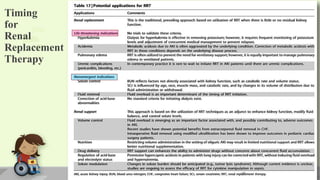
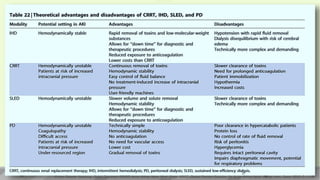
Timing
for
Renal
Replacement
Therapy
26
Kidney Disease: Improving Global Outcomes (KDIGO) Acute Kidney Injury Work Group. KDIGO Clinical Practice Guideline for Acute Kidney Injury. Kidney inter., Suppl. 2012; 2: 1–138
27
• Discontinue RRT when it is no longer required, either because intrinsic kidney
function has recovered to the point that it is adequate to meet patient needs,
or because RRT is no longer consistent with the goals of care
28
Prognosis of AKI
• Highly dependent on etiology of AKI
• Those developing AKI as a part of multiorgan failure has higher mortality rate than
children with intrinsic cause of AKI e.g. HUS, or RPGN.
• Recovery: depends on etiology
• Nephrotoxic AKI and hypoxic/ischemic AKI – usually recover normal renal function
• Some still can have CKD
• Children that suffer substantial loss of nephrons as in HUS/ RPGN – at risk of renal failure
long after initial insult
• Follow up:
1. Adult- 2-3years
2. Children and young people: longer follow up beyond puberty
3. Important complications for children – hypertension, proteinuria, reduced renal
function
1. Acute kidney injury in children, S. Phillips Andreoli, Pediatr Nephrol (2009) 24:253–263
2. Prevention, detection and management of acute kidney injury up to the point of renal replacement therapy; NICE clinical guideline 201329
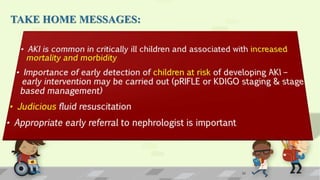
TAKE HOME MESSAGES:
30
REFERENCES:
1. Kidney Disease: Improving Global Outcomes (KDIGO) Acute Kidney Injury Work Group. KDIGO Clinical
Practice Guideline for Acute Kidney Injury. Kidney inter., Suppl. 2012; 2: 1–138.
2. Acute kidney injury: an intensivist’s perspective, John R. Prowle, Pediatr Nephrol (2014) 29:13–21
3. AKI in the ICU: definition, epidemiology, risk stratification, and outcomes, Kai Singbartl and John A
Kellum, Kidney International 81, 819-825 (May (1) 2012
4. Prevention, detection and management of acute kidney injury up to the point of renal replacement
therapy; NICE clinical guideline 2013
5. Surviving Sepsis Campaign: International Guidelines for Management of Severe Sepsis and Septic Shock:
2012
6. Acute kidney injury in children, S. Phillips Andreoli, Pediatr Nephrol (2009) 24:253–263

Acute kidney injury slideshare

  • 1.
    Acute Kidney Injuryin Children Azilah Sulaiman
  • 2.
  • 3.
  • 4.
    Introduction  Abrupt decreasein kidney function that include, but is not limited to acute renal failure  Reversible increase in blood concentration of creatinine and nitrogenous waste products & inability of kidney to regulate fluid and electrolyte homeostasis appropriately  Broad clinical syndrome: encompasses various etiologies  Specific kidney diseases  Non-specific conditions e.g. ischemia, toxic injury  Extra-renal pathology  More than one etiologies may coexist at the same time  Epidemiological evidence supporting the notion that “even mild, reversible AKI has important clinical consequences including risk of death” 1. Kidney Disease: Improving Global Outcomes (KDIGO) Acute Kidney Injury Work Group. KDIGO Clinical Practice Guideline for Acute Kidney Injury. Kidney inter., Suppl. 2012; 2: 1–138 2. Acute kidney injury in children, S. Phillips Andreoli, Pediatr Nephrol (2009) 24:253–263 4
  • 5.
    Acute kidney injuryin children,S. Phillips Andreoli, Pediatr Nephrol (2009) 24:253–263 5
  • 6.
    • Concerns: suboptimalcare contributes to development of acute kidney injury • 2009 – NCEPOD reports the results of an enquiry into deaths of a large group of adult patients with acute kidney injury that described systemic deficiencies in the care of patient who died of AKI “ ONLY 50% of these patient received GOOD care. Other deficiencies in the care of patient who died of AKI included failure in AKI prevention, recognition, therapy and timely access to specialist services” • NICE develops its first guideline in AKI in adults, children and young people in 2013 • AIMS: • Early intervention • Importance of risk assessment and prevention • Early recognition and treatment Prevention, detection and management of acute kidney injury up to the point of renal replacement therapy; NICE clinical guideline 2013 6
  • 7.
    Risk Assessment… • Kidney– usually able to withstand several insults without causing significant structural or functional change • If present: indicate severe systemic derangement and predicts poor prognosis • Risk of AKI:  by exposure to factors that cause AKI,  by presence of factors that increased susceptibility to AKI • Risk assessment: • Hospital acquired AKI • Community- acquired AKI 7 Kidney Disease: Improving Global Outcomes (KDIGO) Acute Kidney Injury Work Group. KDIGO Clinical Practice Guideline for Acute Kidney Injury. Kidney inter., Suppl. 2012; 2: 1–138
  • 8.
    8 Kidney Disease: ImprovingGlobal Outcomes (KDIGO) Acute Kidney Injury Work Group. KDIGO Clinical Practice Guideline for Acute Kidney Injury. Kidney inter., Suppl. 2012; 2: 1–138
  • 9.
    How to…. Prevent AKI: •Consider pediatric early warning score (PEWS) to identify children and young people who are at risk of developing AKI • Best: PEWS with multiparameter or aggregate weighted scoring systems that measure HR/RR/SBP/ GCS/ O2 saturation/ temperature/ capillary refill time • Measure urine output • To record weight twice daily to determine fluid balance • Measure renal profile ± lactate, blood glucose and blood gas 9 Prevention, detection and management of acute kidney injury up to the point of renal replacement therapy; NICE clinical guideline 2013
  • 10.
    Detecting AKI: • Serumcreatinine (sCr) still remains the cornerstone of clinical diagnosis of AKI • Criteria that may be used: • RIFLE • pRIFLE • the slow rate of rise in sCr might prohibit accurate classification of AKI. Consequently, the criteria emphasizes estimated creatinine clearance (using the Schwartz formula) over fold increase in sCr • Application of pRIFLE definitions has, however, been inconsistent between studies and consequently associated with differing risk between studies • AKIN • KDIGO • Adult and pediatric AKI definitions have been harmonized to emphasize fold change in sCr in adults and children Acute kidney injury: an intensivist’s perspective, John R. Prowle, Pediatr Nephrol (2014) 29:13–21 10
  • 11.
    AKI in theICU: definition, epidemiology, risk stratification, and outcomes,Kai Singbartl and John A Kellum, Kidney International 81, 819-825 (May (1) 2012) 11
  • 12.
  • 13.
    KDIGO staging systemfor severity of AKI Defines AKI as any of the following: •  serum creatinine by 0.3mg.dL (≥ 26µmol.L) within 48Hrs OR •  serum creatinine to ≥1.5 times baseline, which is known or presumed to have occurred within prior 7 days OR • Urine volume <0.5ml/kg/H for 6 Hrs Kidney Disease: Improving Global Outcomes (KDIGO) Acute Kidney Injury Work Group. KDIGO Clinical Practice Guideline for Acute Kidney Injury. Kidney inter., Suppl. 2012; 2: 1–138 13
  • 14.
  • 15.
  • 16.
    Stage-based management ofAKI Shading of boxes indicate priorities of action - Solid shading indicate actions that are equally appropriate at all stages - Graded shading indicates increasing priority as intensity increases • Stage – predictor of the risk of mortality and decreased kidney function • All actions listed provide overall starting point for stage-based evaluation and management but neither complete nor mandatory for individual patient Kidney Disease: Improving Global Outcomes (KDIGO) Acute Kidney Injury Work Group. KDIGO Clinical Practice Guideline for Acute Kidney Injury. Kidney inter., Suppl. 2012; 2: 1–138 16
  • 17.
    Fluid Management Fluid overload •Associated with increased morbidity and mortality in adult and children developing AKI • Degree of fluid overload has been suggested as an Index of AKI severity in pediatric population • Associated with impaired recovery of renal function in patient surviving critical illness “Children have smaller window of appropriate treatment as they are more at risk of harm from inadequate cardiac preload & more sensitive to adverse effects of fluid overload” 17
  • 18.
    Acute kidney injury:an intensivist’s perspective, John R. Prowle, Pediatr Nephrol (2014) 29:13–21 18
  • 19.
    Protocolized hemodynamic management •Suggested for use to prevent development or worsening of AKI in high risk patient in perioperative settings or in patient with sepsis induced tissue hypoperfusion (defined as hypotension persisting after initial fluid challenge or blood lactate >4mmolL) • Should be started as soon as hypoperfusion is recognized – “Early goal directed therapy” • During 1st 6 hours of resuscitation to achieve specific physiologic end-points: GOALS of initial resuscitation 1. CVP 8-12mmHg or 12-15mmHg in ventilated patients 2. MAP ≥ 65mmHg 3. Urine output ≥ 0.5ml/kg/hr 4. Superior vena cava oxygenation or mixed venous oxygen saturation 70% or 65% respectively • Suggest targeting resuscitation to normalize lactate in patients with elevated lactate level Kidney Disease: Improving Global Outcomes (KDIGO) Acute Kidney Injury Work Group. KDIGO Clinical Practice Guideline for Acute Kidney Injury. Kidney inter., Suppl. 2012; 2: 1–138 Surviving Sepsis Campaign: International Guidelines for Management of Severe Sepsis and Septic Shock: 2012 19
  • 20.
    Diuretics and dopaminereceptor agonist • Diuretics and “ renal dose” dopamine commonly used to prevent or limit AKI Diuretics: • Observational studies: 59-70% of patient with AKI were given diuretics at the time of nephrology consultation or before the start of RRT • Stimulation of urine output eases management of AKI but conversion of oliguric to non-oliguric AKI – not proven to alter the course of renal failure • Retrospective study does actually demonstrated the use of diuretics in AKI was associated with adverse outcome • High dose of frusemide can cause ototoxicity, continued use in individual patients with AKI need to take into consideration the risk and potential benefits or lack of benefits • Using diuretics is not recommended to prevent AKI or treat AKI except in the management of fluid overload Kidney Disease: Improving Global Outcomes (KDIGO) Acute Kidney Injury Work Group. KDIGO Clinical Practice Guideline for Acute Kidney Injury. Kidney inter., Suppl. 2012; 2: 1–138 21
  • 21.
    ‘Renal dose’ dopamine •0.5µg/kg/min to 3-5µg/kg/min • To improve renal perfusion following ischemic insult – common in intensive units • Action: increased renal blood flow by promoting vasodilatation • May improve urine output by promoting natriuresis • No definitive studies to demonstrate low dose dopamine are effective in decreasing need for dialysis or improve survival times in patient with AKI • Some study showed that renal dose dopamine is not effective in therapy of AKI and one study demonstrated that low doses worsened renal perfusion and renal function Lauschke A, Teichgraber UKM, Frei U, Eckardt KU (2006) “Low-dose” dopamine worsens renal perfusion in patients with acute renal failure. Kidney Int 69:1669–1674 Kidney Disease: Improving Global Outcomes (KDIGO) Acute Kidney Injury Work Group. KDIGO Clinical Practice Guideline for Acute Kidney Injury. Kidney inter., Suppl. 2012; 2: 1–138 22
  • 22.
    General supportive management Glycemiccontrol • Tight glycemic control frequently used in patient at risk of AKI or developed AKI • Help reduce severity of AKI • Intensive Insulin Therapy (IIT – glucose 4.44-6.11mmol/L) vs. Conventional Insulin therapy (CIT- glucose 9.99-11.1mmol/L) in critically ill patient • Risk of hypoglycemia is higher in IIT (NICE-SUGAR trial in adult) • Work group suggestion: using insulin to prevent hyperglycemia • Aim glucose control between 6.11mmol/L to 8.33mmol/L Kidney Disease: Improving Global Outcomes (KDIGO) Acute Kidney Injury Work Group. KDIGO Clinical Practice Guideline for Acute Kidney Injury. Kidney inter., Suppl. 2012; 2: 1–138 23
  • 23.
    Nutritional aspect: • Protein-caloriemalnutrition is an important independent predictor of in-hospital mortality in patients with AKI • Must consider metabolic derangement and proinflammatory state associated with renal failure and derangement of nutritional balance due to RRT • Suggest achieving total energy intake of 20-30kcal/kg/day in patients with any stage of AKI • Avoid restriction of protein intake with the aim of preventing or delaying initiation of RRT • Protein administration: • 0.8-1.0g/kg/day in noncatabolic AKI • 1.0-1.5g/kg/day in patient with AKI on dialysis • Up to maximum 1.7g/kg/day in patient on continuous renal replacement therapy (CRRT) and in hypercatabolic patient • Suggest enteral feeding – help maintain gut integrity, reduce gut atrophy & bacterial or endotoxin translocation Kidney Disease: Improving Global Outcomes (KDIGO) Acute Kidney Injury Work Group. KDIGO Clinical Practice Guideline for Acute Kidney Injury. Kidney inter., Suppl. 2012; 2: 1–138 24
  • 24.
    Referring to Nephrologist: •Discuss the management of acute kidney injury with nephrologist as soon as possible and within 24hours of detection when ≥ 1 of the following present: 1. When patients meet the criteria for renal replacement therapy 2. Possible diagnosis that may need specialist treatment (e.g. vasculitis, glomerulonephritis, tubulointerstitial nephritis or myeloma) 3. Acute kidney injury with no clear cause 4. Inadequate response to treatment 5. Complications associated with AKI 6. Stage 3 AKI according to pRIFLE, AKIN or KDIGO criteria 7. Renal transplant patient 8. Chronic kidney disease stage 4 or 5 Prevention, detection and management of acute kidney injury up to the point of renal replacement therapy; NICE clinical guideline 2013 25
  • 25.
  • 26.
    Kidney Disease: ImprovingGlobal Outcomes (KDIGO) Acute Kidney Injury Work Group. KDIGO Clinical Practice Guideline for Acute Kidney Injury. Kidney inter., Suppl. 2012; 2: 1–138 27
  • 27.
    • Discontinue RRTwhen it is no longer required, either because intrinsic kidney function has recovered to the point that it is adequate to meet patient needs, or because RRT is no longer consistent with the goals of care 28
  • 28.
    Prognosis of AKI •Highly dependent on etiology of AKI • Those developing AKI as a part of multiorgan failure has higher mortality rate than children with intrinsic cause of AKI e.g. HUS, or RPGN. • Recovery: depends on etiology • Nephrotoxic AKI and hypoxic/ischemic AKI – usually recover normal renal function • Some still can have CKD • Children that suffer substantial loss of nephrons as in HUS/ RPGN – at risk of renal failure long after initial insult • Follow up: 1. Adult- 2-3years 2. Children and young people: longer follow up beyond puberty 3. Important complications for children – hypertension, proteinuria, reduced renal function 1. Acute kidney injury in children, S. Phillips Andreoli, Pediatr Nephrol (2009) 24:253–263 2. Prevention, detection and management of acute kidney injury up to the point of renal replacement therapy; NICE clinical guideline 201329
  • 29.
  • 30.
    REFERENCES: 1. Kidney Disease:Improving Global Outcomes (KDIGO) Acute Kidney Injury Work Group. KDIGO Clinical Practice Guideline for Acute Kidney Injury. Kidney inter., Suppl. 2012; 2: 1–138. 2. Acute kidney injury: an intensivist’s perspective, John R. Prowle, Pediatr Nephrol (2014) 29:13–21 3. AKI in the ICU: definition, epidemiology, risk stratification, and outcomes, Kai Singbartl and John A Kellum, Kidney International 81, 819-825 (May (1) 2012 4. Prevention, detection and management of acute kidney injury up to the point of renal replacement therapy; NICE clinical guideline 2013 5. Surviving Sepsis Campaign: International Guidelines for Management of Severe Sepsis and Septic Shock: 2012 6. Acute kidney injury in children, S. Phillips Andreoli, Pediatr Nephrol (2009) 24:253–263

Editor's Notes

  • #7 National Confidential Enquiry into Patient Outcome and Death (NCEPOD Investigate for acute kidney injury, by measuring serum creatinine and comparing with baseline, in children and young people with acute illness if any of the following are likely or present: chronic kidney disease heart failure liver disease history of acute kidney injury oliguria (urine output less than 0.5 ml/kg/hour) young age, neurological or cognitive impairment or disability, which may mean limited access to fluids because of reliance on a parent or carer hypovolaemia use of drugs with nephrotoxic potential (such as NSAIDs, aminoglycosides, ACE inhibitors, ARBs and diuretics) within the past week, especially if hypovolaemic symptoms or history of urological obstruction, or conditions that may lead to obstruction sepsis a deteriorating paediatric early warning score severe diarrhoea (children and young people with bloody diarrhoea are at particular risk) symptoms or signs of nephritis (such as oedema or haematuria) haematological malignancy hypotension
  • #8 Risk assessment in community-acquired AKI is different from hospital-acquired AKI, for two main reasons: i) Available evidence on risk factors is largely derived from hospital data and extrapolation to the community setting is questionable. ii) The opportunity to intervene, prior to exposure, is quite limited. Most patients are seen only after having suffered an exposure (trauma, infection, poisonous plant, or animal
  • #11  RIFLE (Risk, Injury, Failure, Loss, End Stage) criteria [2] revolutionized our approach to AKI Research by focusing on changes in sCr that more directly reflect changes in GFR. The RIFLE criteria for AKI were later modified for pediatric use in the pRIFLE criteria [1], refined by the recommendations of the AKIN (Acute Kidney Injury Network) group [4], and finally unified in the 2012 KDIGO (Kidney Disease Improving Global Outcomes) guidelines for the diagnosis and management of AKI in adults and children
  • #20 Rationale – 17.7% absolute reduction in 28 days mortality rate If ScvO2 is not available, lactate normalization may be a feasible option in the patient with severe sepsis-induced tissue hypoperfusion. ScvO2 and lactate normalization may also be used as a combined endpoint when both are available
  • #22 Loop diuretics have several effects that may protect against AKI. They may decrease oxygen consumption in the loop of Henle by inhibiting sodium transport, thus potentially lessening ischemic injury. Loop diuretics act at the luminal surface of the thick ascending limb of the loop of Henle and inhibit the Na-K-2Cl cotransporter,184,185 resulting in a loss of the high medullary osmolality and decreased ability to reabsorb water. Inhibition of active sodium transport also reduces renal tubular oxygen consumption, potentially decreasing ischemic damage of the most vulnerable outer medullary tubular segments; therefore, furosemide might protect kidneys against ischemic injury. Furosemide also might hasten recovery of AKI by washing out necrotic debris blocking tubules, and by inhibiting prostaglandin dehydrogenase, which reduces renovascular resistance and increases renal blood flow Based on these properties, loop diuretics might be expected to prevent or ameliorate AKI. When to stop diuretics if started?
  • #25 Clinical studies have suggested that enteral feeding is associated with improved outcome/survival in ICU patients. Hence, enteral nutrition is the recommended form of nutritional support for patients with AKI. If oral feeding is not possible, then enteral feeding (tube feeding) should be initiated within 24 hours, and has been shown to be safe and effective