ACUTE GASTROENTERITIS
Muhd Adam Haikal bin Anuar
1129200919457
INTRODUCTION
• It is a clinical syndrome often characterized by
1. Increased stool frequency, with loose consistency
>3 loose or watery stools in 24 hours
2. With or without vomiting, fever and abdominal pain.
• It is the leading cause of morbidity and mortality in childhood phase.
• Dehydration and electrolyte loss are the main cause of death in acute
gastroenteritis patients
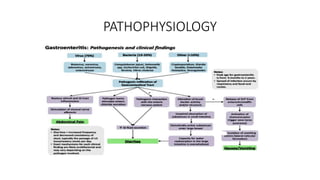
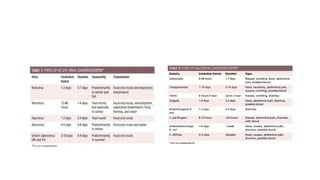
PATHOPHYSIOLOGY
CLINICAL PRESENTATION
• Although viral enteric infections are asymptomatic at first, but the clinical
presentation varies.
• Patient may be presented with
1. Diarrhea
2. Vomitting
3. Fever
4. Abdominal cramping
HISTORY TAKING
 Duration of illness
 Frequency, volume and character of stools
 Frequency, volume and character of vomiting
 Urine output
 Weight loss association
 Recent intake of foods and fluids
 Immunization history
 Exposue of infections
PHYSICAL FINDINGS
• Growth parameters - body weight
• Vital signs
 Temperature > 38’C or > 40’C in bacterial gastroenteritis
 Weak, rapid or absent pulse
 Decrease blood pressure
• Sunken anterior fontanelle, sunken eyes
• Tacky, dry, or parched mucous membranes
• Deep respirations
• Severe, localized pain, rebound tenderness, marked abdominal distension
DIAGNOSIS
• The diagnosis of acute viral gastroenteritis is made clinically.
• Any child with evidence of systemic infection should have complete workup,
including
Full blood count
Blood culture
 Stool culture
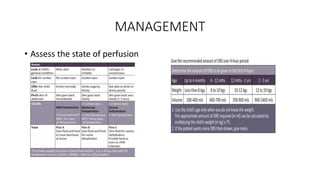
MANAGEMENT
• Assess the state of perfusion
SEVERE DEHYDRATION
1. Asses Airway, Breathing and Circulation
2. Start Intravenous or intraosseous fluid immediately
3. Initial fluids are 20ml/kg of 0.9% normal saline or Hartmann’s solution as rapid IV
bolus (repeat if necessary)
4. Rehydation by isotonic solution of 0.9% NS or Hartmann’s solution
5. Start maintenance - ORS, 5ml/kg/hour
6. If the child starts to feed without vomitting, rehydrate according to
plan A and B
INDICATIONS FOR HOSPITAL ADMISSION
 Severe dehydation or patient is in shock
 Failure of ORS treatment and needed for intravenous therapy
 Other possible illnesses or uncertainty of diagnosis
 Inadequate care if treated at home
 Social and logistical concerns
COMPLICATIONS
• Hypovolemia/dehydration
• Electrolyte abnormalities
• Carbohydrate intolerance

ACUTE GASTROENTERITIS.pptx

  • 1.
    ACUTE GASTROENTERITIS Muhd AdamHaikal bin Anuar 1129200919457
  • 2.
    INTRODUCTION • It isa clinical syndrome often characterized by 1. Increased stool frequency, with loose consistency >3 loose or watery stools in 24 hours 2. With or without vomiting, fever and abdominal pain. • It is the leading cause of morbidity and mortality in childhood phase. • Dehydration and electrolyte loss are the main cause of death in acute gastroenteritis patients
  • 3.
  • 5.
    CLINICAL PRESENTATION • Althoughviral enteric infections are asymptomatic at first, but the clinical presentation varies. • Patient may be presented with 1. Diarrhea 2. Vomitting 3. Fever 4. Abdominal cramping
  • 6.
    HISTORY TAKING  Durationof illness  Frequency, volume and character of stools  Frequency, volume and character of vomiting  Urine output  Weight loss association  Recent intake of foods and fluids  Immunization history  Exposue of infections
  • 7.
    PHYSICAL FINDINGS • Growthparameters - body weight • Vital signs  Temperature > 38’C or > 40’C in bacterial gastroenteritis  Weak, rapid or absent pulse  Decrease blood pressure • Sunken anterior fontanelle, sunken eyes • Tacky, dry, or parched mucous membranes • Deep respirations • Severe, localized pain, rebound tenderness, marked abdominal distension
  • 8.
    DIAGNOSIS • The diagnosisof acute viral gastroenteritis is made clinically. • Any child with evidence of systemic infection should have complete workup, including Full blood count Blood culture  Stool culture
  • 9.
    MANAGEMENT • Assess thestate of perfusion
  • 10.
    SEVERE DEHYDRATION 1. AssesAirway, Breathing and Circulation 2. Start Intravenous or intraosseous fluid immediately 3. Initial fluids are 20ml/kg of 0.9% normal saline or Hartmann’s solution as rapid IV bolus (repeat if necessary) 4. Rehydation by isotonic solution of 0.9% NS or Hartmann’s solution 5. Start maintenance - ORS, 5ml/kg/hour 6. If the child starts to feed without vomitting, rehydrate according to plan A and B
  • 11.
    INDICATIONS FOR HOSPITALADMISSION  Severe dehydation or patient is in shock  Failure of ORS treatment and needed for intravenous therapy  Other possible illnesses or uncertainty of diagnosis  Inadequate care if treated at home  Social and logistical concerns
  • 12.
    COMPLICATIONS • Hypovolemia/dehydration • Electrolyteabnormalities • Carbohydrate intolerance