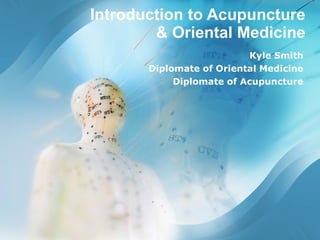
Introduction to Acupuncture & Oriental Medicine Kyle Smith Diplomate of Oriental Medicine Diplomate of Acupuncture
Introduction History of Oriental Medicine Foundations of Oriental Medicine Modalities of Chinese Medicine 1 2 3 4
Introduction Me! Graduated from Midwest College of Oriental Medicine  Sept. 2008 Bachelor of Science Degree in Nutrition Master of Science Degree in Oriental Medicine
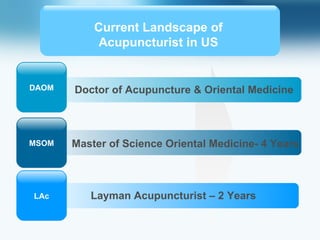
Master of Science Oriental Medicine- 4 Years Layman Acupuncturist – 2 Years Doctor of Acupuncture & Oriental Medicine DAOM MSOM LAc Current Landscape of Acupuncturist in US
Introduction to Oriental Medicine History Written Records Thousands of years old Medical Classics books written from 500 A.D. -1200 A.D. Foundation of Oriental Medical schools in China – 1950’s Integrated into Hospital in 1960’s after efficacy studies Dissemination Europe – 17 th  Century United States – 1972 (Nixon)
Foundations to Oriental Medicine Our bodies are our own best healers! When in balance Causes of imbalance Stress, Trauma, Poor Diet, Hereditary Conditions, Environmental Factors, Excess Emotional Issues Each Person is Unique Empirical vs. Scientific Evidence Oriental Medicine vs. Palliative Care
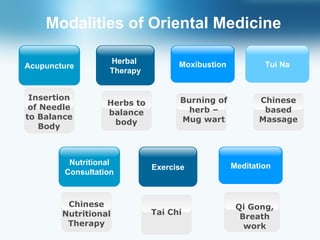
Insertion of Needle to Balance Body Herbs to balance body Burning of herb – Mug wart Chinese based Massage Modalities of Oriental Medicine Chinese Nutritional Therapy Tai Chi Qi Gong, Breath work Acupuncture Herbal  Therapy Moxibustion Tui Na Nutritional Consultation Exercise Meditation
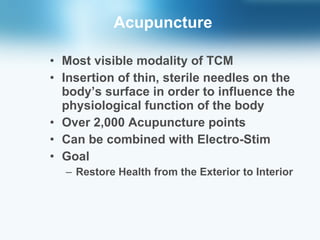
Acupuncture Most visible modality of TCM Insertion of thin, sterile needles on the body’s surface in order to influence the physiological function of the body Over 2,000 Acupuncture points Can be combined with Electro-Stim Goal  Restore Health from the Exterior to Interior
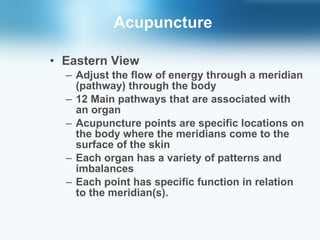
Acupuncture Eastern View Adjust the flow of energy through a meridian (pathway) through the body 12 Main pathways that are associated with an organ Acupuncture points are specific locations on the body where the meridians come to the surface of the skin Each organ has a variety of patterns and imbalances Each point has specific function in relation to the meridian(s).
Acupuncture Western View Creates a micro- injury that causes the body to react Body releases Endorphins and Enkephalins Relieve pain and take away swelling Focus the bodies healing capabilities to a specific area World Health Organization (W.H.O.) Gastrointestinal, Orthopedic, Eye, Bronchopulmonary, Respiratory, and Neurological Disorders
Herbal Therapy Can treat internal and external complaints Topical applications for external injury, skin complaints, focused healing Ingested herbal therapies more common Work internal to external Herbal Sources Majority are plant based Roots, leaves, stems, berries, seeds Different forms Tincture, pills, decoction
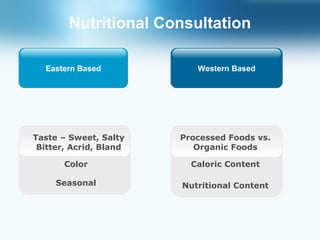
Taste – Sweet, Salty Bitter, Acrid, Bland Herbs to balance body Nutritional Consultation Color Seasonal Processed Foods vs. Organic Foods Caloric Content Nutritional Content Eastern Based Western Based
Whole Food Vs. Synthetic/Fractionalized Supplements 95%  of all supplements made by Pharmaceutical companies Synthetic Supplements Modified in laboratory – Patented Fractionalized Supplements “ Active” ingredient removed from Complex Missing Enzymes, Co-Enzymes, antioxidants Whole Food Supplements Ingredients – Food sources, Organ Meats Recognizable compounds that body absorbs
Common Ailments Treated… Allergies/Asthma Immune System Deficiency Anxiety/Depression Infertility Arthritis/Joint Problems Knee Pain Back Pain Macular  Degeneration Menopausal Discomfort Cold/Flu Premenstrual Syndrome Cough/Bronchitis Paralysis/  Numbness Dizziness Rhinitis Drug Addiction/Smoking Sexual Dysfunction Gastrointestinal Disorder Sinusitis Neck Pain/  Stiffness Skin Problems Headache/  Migraine Stress/Tension Tendonitis High Blood  Pressure Vision Problems
Setting Up an Appointment Sign up Today for Free Initial Consultation and First Treatment Availability Brookfield   Office 675 N. Brookfield Road Suite #201 Monday - 4:15pm – 8pm Tuesday – 9-11am , 2:30-6pm Wednesday– 1:30pm – 4:30pm Thursday – 2:30pm- 6pm Friday – 9-11am , 2:30-8pm Q & A Time
Thank You!

Acupuncture introduction - mmac

  • 1.
    Introduction to Acupuncture& Oriental Medicine Kyle Smith Diplomate of Oriental Medicine Diplomate of Acupuncture
  • 2.
    Introduction History ofOriental Medicine Foundations of Oriental Medicine Modalities of Chinese Medicine 1 2 3 4
  • 3.
    Introduction Me! Graduatedfrom Midwest College of Oriental Medicine Sept. 2008 Bachelor of Science Degree in Nutrition Master of Science Degree in Oriental Medicine
  • 4.
    Master of ScienceOriental Medicine- 4 Years Layman Acupuncturist – 2 Years Doctor of Acupuncture & Oriental Medicine DAOM MSOM LAc Current Landscape of Acupuncturist in US
  • 5.
    Introduction to OrientalMedicine History Written Records Thousands of years old Medical Classics books written from 500 A.D. -1200 A.D. Foundation of Oriental Medical schools in China – 1950’s Integrated into Hospital in 1960’s after efficacy studies Dissemination Europe – 17 th Century United States – 1972 (Nixon)
  • 6.
    Foundations to OrientalMedicine Our bodies are our own best healers! When in balance Causes of imbalance Stress, Trauma, Poor Diet, Hereditary Conditions, Environmental Factors, Excess Emotional Issues Each Person is Unique Empirical vs. Scientific Evidence Oriental Medicine vs. Palliative Care
  • 7.
    Insertion of Needleto Balance Body Herbs to balance body Burning of herb – Mug wart Chinese based Massage Modalities of Oriental Medicine Chinese Nutritional Therapy Tai Chi Qi Gong, Breath work Acupuncture Herbal Therapy Moxibustion Tui Na Nutritional Consultation Exercise Meditation
  • 8.
    Acupuncture Most visiblemodality of TCM Insertion of thin, sterile needles on the body’s surface in order to influence the physiological function of the body Over 2,000 Acupuncture points Can be combined with Electro-Stim Goal Restore Health from the Exterior to Interior
  • 9.
    Acupuncture Eastern ViewAdjust the flow of energy through a meridian (pathway) through the body 12 Main pathways that are associated with an organ Acupuncture points are specific locations on the body where the meridians come to the surface of the skin Each organ has a variety of patterns and imbalances Each point has specific function in relation to the meridian(s).
  • 10.
    Acupuncture Western ViewCreates a micro- injury that causes the body to react Body releases Endorphins and Enkephalins Relieve pain and take away swelling Focus the bodies healing capabilities to a specific area World Health Organization (W.H.O.) Gastrointestinal, Orthopedic, Eye, Bronchopulmonary, Respiratory, and Neurological Disorders
  • 11.
    Herbal Therapy Cantreat internal and external complaints Topical applications for external injury, skin complaints, focused healing Ingested herbal therapies more common Work internal to external Herbal Sources Majority are plant based Roots, leaves, stems, berries, seeds Different forms Tincture, pills, decoction
  • 12.
    Taste – Sweet,Salty Bitter, Acrid, Bland Herbs to balance body Nutritional Consultation Color Seasonal Processed Foods vs. Organic Foods Caloric Content Nutritional Content Eastern Based Western Based
  • 13.
    Whole Food Vs.Synthetic/Fractionalized Supplements 95% of all supplements made by Pharmaceutical companies Synthetic Supplements Modified in laboratory – Patented Fractionalized Supplements “ Active” ingredient removed from Complex Missing Enzymes, Co-Enzymes, antioxidants Whole Food Supplements Ingredients – Food sources, Organ Meats Recognizable compounds that body absorbs
  • 14.
    Common Ailments Treated…Allergies/Asthma Immune System Deficiency Anxiety/Depression Infertility Arthritis/Joint Problems Knee Pain Back Pain Macular Degeneration Menopausal Discomfort Cold/Flu Premenstrual Syndrome Cough/Bronchitis Paralysis/ Numbness Dizziness Rhinitis Drug Addiction/Smoking Sexual Dysfunction Gastrointestinal Disorder Sinusitis Neck Pain/ Stiffness Skin Problems Headache/ Migraine Stress/Tension Tendonitis High Blood Pressure Vision Problems
  • 15.
    Setting Up anAppointment Sign up Today for Free Initial Consultation and First Treatment Availability Brookfield Office 675 N. Brookfield Road Suite #201 Monday - 4:15pm – 8pm Tuesday – 9-11am , 2:30-6pm Wednesday– 1:30pm – 4:30pm Thursday – 2:30pm- 6pm Friday – 9-11am , 2:30-8pm Q & A Time
  • 16.