Downloaded 1,071 times
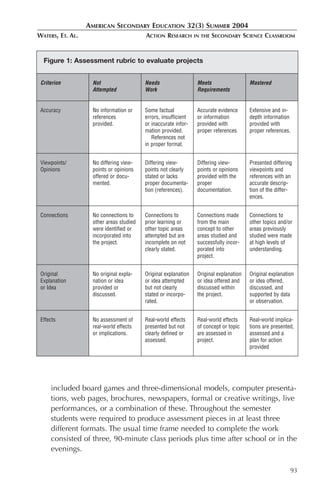
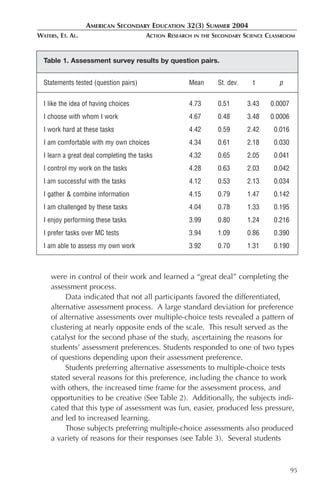

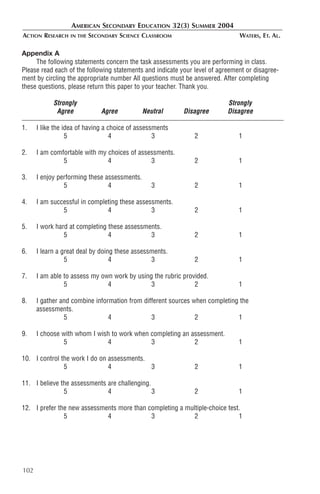
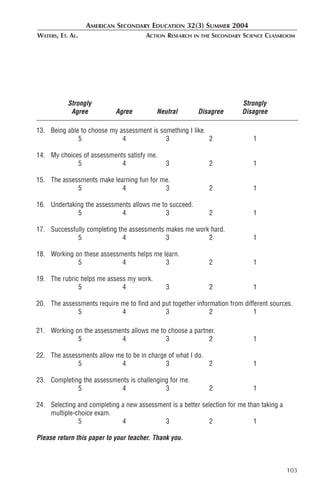
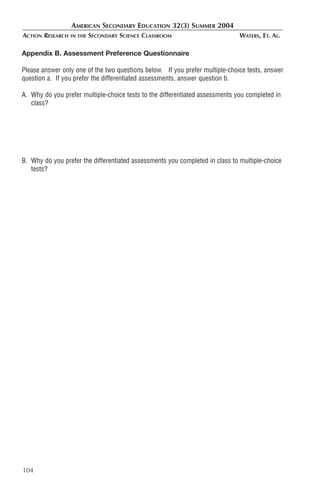


1) The study examined student perceptions of a differentiated, alternative assessment model used in a secondary science classroom that combined non-traditional assessments like projects and presentations with elements of choice, variety, and individualization. 2) Most students preferred the differentiated model to solely traditional assessments, citing factors like increased learning, choice, and extended experience. However, some students still preferred traditional multiple-choice tests. 3) Follow-up questions found that students preferring the alternative model cited increased learning, fun, creativity, and less pressure, while those preferring traditional tests valued efficiency and familiarity.


