ACCESS TO INFORMATION IN
DIGITAL WORLD
Nader-Taghizadeh
University of Nicosia
Content
 Manufactured world of media
 Media literacy and Responsibilities of the

government
 Positive informative aspect of the media
Manufactured world of media
 Who owns the media?
 In what extend authority should control or

own media? Or do they have to control at all?
 People usually believe to those who appear
on media
 Media owners are rich individuals in most of
the countries but …
 In some other countries (middle east) the
authority owns the media
 Almost in every country media are influenced by
politicians

I am quiet sure that you are very familiar with
these information
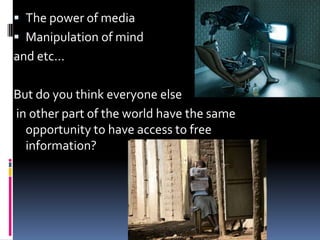
 The power of media
 Manipulation of mind

and etc…
But do you think everyone else
in other part of the world have the same
opportunity to have access to free
information?
The answer is No, they don’t…
In most of the countries such as China, Korea, Iran,
media is highly controlled by the authority
this doesn’t mean that people are not willing to
receive information but they don’t have access
Agenda setting in media
 Selective information
 Predefined images

 Emphasize on certain issues (for example
election)
 Exaggeration of facts and sensitizing events

To sell info and manipulate people’s mind
What we need?
Content analysis of media
If we dig deep into contents of any media
source
We will find many interesting results about
manipulated contents.
But…
 How public can distinguish real facts from

fake or exaggerated news?
 How many percent of people believe the
media? What class? What age group? What
gender?
 US. Hikers arrested

in Iran-spy or not?
Media literacy and
responsibility of the
Government
 According to [T.McGolagle(p.4)] a coherent
rationale could be developed if government were
priorities the three P’s of sound “public policy”.
 Provision of media education for all their
citizens;
 Participation of all their citizens in social,
cultural and economical activities,
 And protection of all citizens in need (either
because of their age, disabilities or their
income).
Technology growth & access to
info
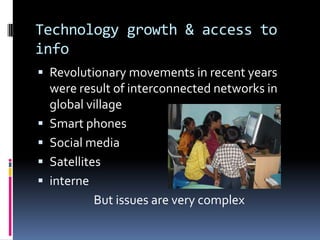
 Revolutionary movements in recent years







were result of interconnected networks in
global village
Smart phones
Social media
Satellites
interne
But issues are very complex
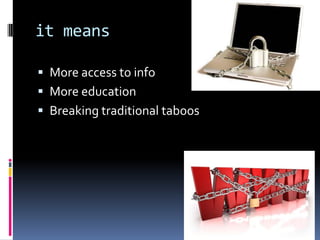
it means
 More access to info
 More education

 Breaking traditional taboos
 Revolutions/changes

 Occupied buffer zone in Nicosia
 Wall street strike
 Arab spring

 Various movements in Iran

Access to information

  • 1.
    ACCESS TO INFORMATIONIN DIGITAL WORLD Nader-Taghizadeh University of Nicosia
  • 2.
    Content  Manufactured worldof media  Media literacy and Responsibilities of the government  Positive informative aspect of the media
  • 3.
    Manufactured world ofmedia  Who owns the media?  In what extend authority should control or own media? Or do they have to control at all?  People usually believe to those who appear on media  Media owners are rich individuals in most of the countries but …  In some other countries (middle east) the authority owns the media
  • 4.
     Almost inevery country media are influenced by politicians I am quiet sure that you are very familiar with these information
  • 5.
     The powerof media  Manipulation of mind and etc… But do you think everyone else in other part of the world have the same opportunity to have access to free information?
  • 6.
    The answer isNo, they don’t… In most of the countries such as China, Korea, Iran, media is highly controlled by the authority this doesn’t mean that people are not willing to receive information but they don’t have access
  • 7.
    Agenda setting inmedia  Selective information  Predefined images  Emphasize on certain issues (for example election)  Exaggeration of facts and sensitizing events To sell info and manipulate people’s mind
  • 8.
    What we need? Contentanalysis of media If we dig deep into contents of any media source We will find many interesting results about manipulated contents.
  • 9.
    But…  How publiccan distinguish real facts from fake or exaggerated news?  How many percent of people believe the media? What class? What age group? What gender?  US. Hikers arrested in Iran-spy or not?
  • 10.
    Media literacy and responsibilityof the Government  According to [T.McGolagle(p.4)] a coherent rationale could be developed if government were priorities the three P’s of sound “public policy”.  Provision of media education for all their citizens;  Participation of all their citizens in social, cultural and economical activities,  And protection of all citizens in need (either because of their age, disabilities or their income).
  • 11.
    Technology growth &access to info  Revolutionary movements in recent years     were result of interconnected networks in global village Smart phones Social media Satellites interne But issues are very complex
  • 12.
    it means  Moreaccess to info  More education  Breaking traditional taboos
  • 13.
     Revolutions/changes  Occupiedbuffer zone in Nicosia  Wall street strike  Arab spring  Various movements in Iran