Presented By:
Eneida Cruz, DNP, RN
Abuse
The willful infliction of physical pain, injury
or mental anguish, unreasonable
confinement, or the willful deprivation of
services which are necessary to maintain a
person’s physical and mental health.
Elder Abuse
The mistreatment or neglect of an elderly
person usually by a relative or other
caregiver. It may or may not be intentional
and an older adult will often suffer several
forms of abuse and neglect at the same
time.
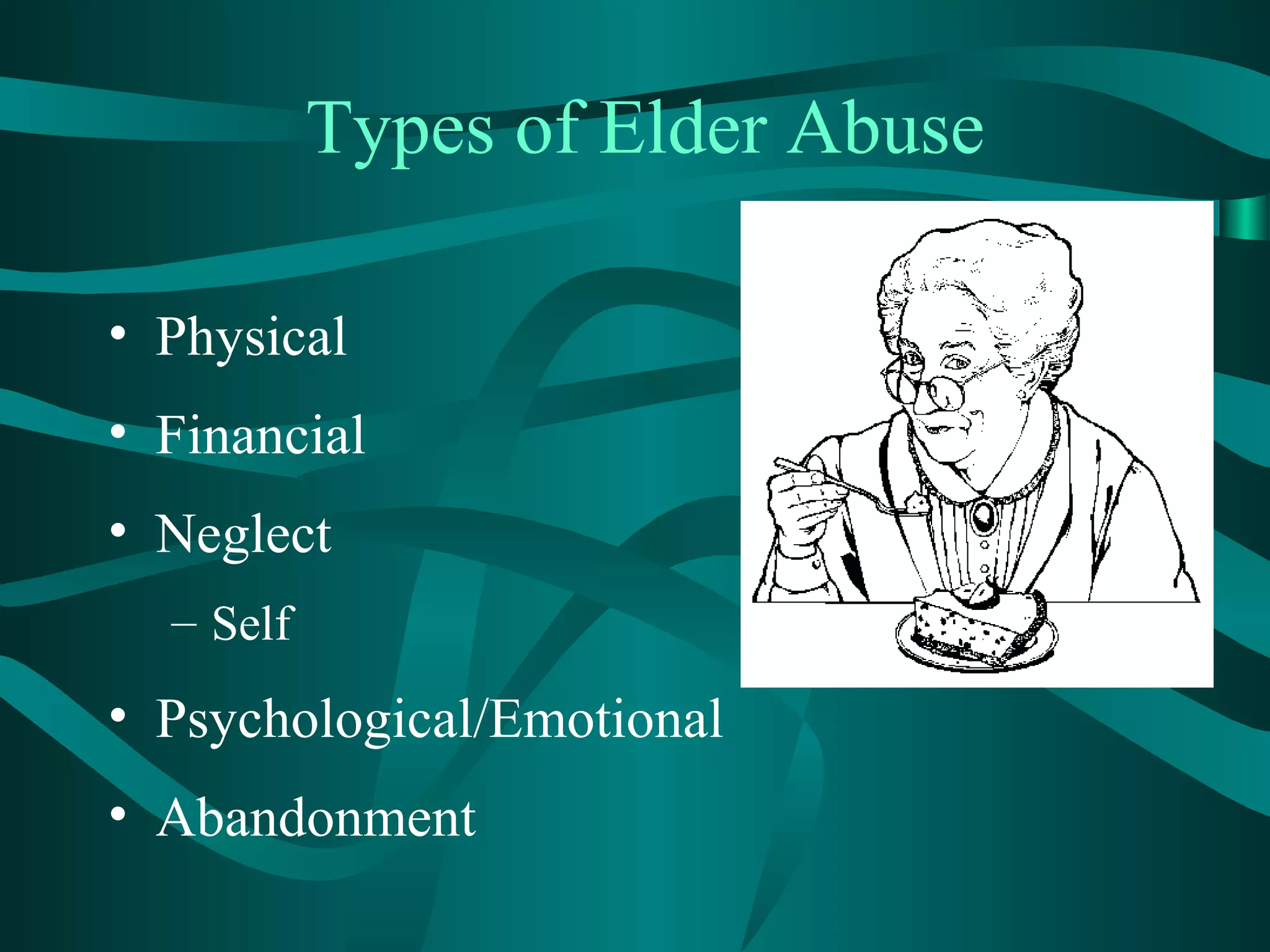
Types of Elder Abuse
• Physical
• Financial
• Neglect
– Self
• Psychological/Emotional
• Abandonment
Intervention
• Suspected Abuse will be reported to the
COO
• Notify Social Services Department at
University Hospital Extension, 2-5727
• Resident of a nursing home or 60 years old
notify the Institutionalized Elderly:
(609) 624-4262
Child Abuse
The mistreatment or neglect of a child that
results in harm or injury. It seriously
damages the child’s self-esteem and inhibits
healthy emotional development of the child.
Types of Child Abuse
• Physical
• Neglect
– Emotional
– Physical
• Verbal
• Emotional
• Sexual
Child Abuse Statistics
• Each day in the United States, more that 4 children die as a result
of child abuse in the home
• Every year 3.3 million reports of child abuse are made
• Child abuse is reported on an average every 10 seconds
• Child abuse occurs at every socioeconomic level, across ethnic
and cultural lines, within all religions and at all levels of
education.
• More children (age 4 and under) die from child abuse and neglect
than any other single, leading cause of death for infants and
young children
Reporting of Child Abuse
• Mandatory
• Contact Social Services at University
Hospital who act as liaison with DYFS and
law enforcement staff
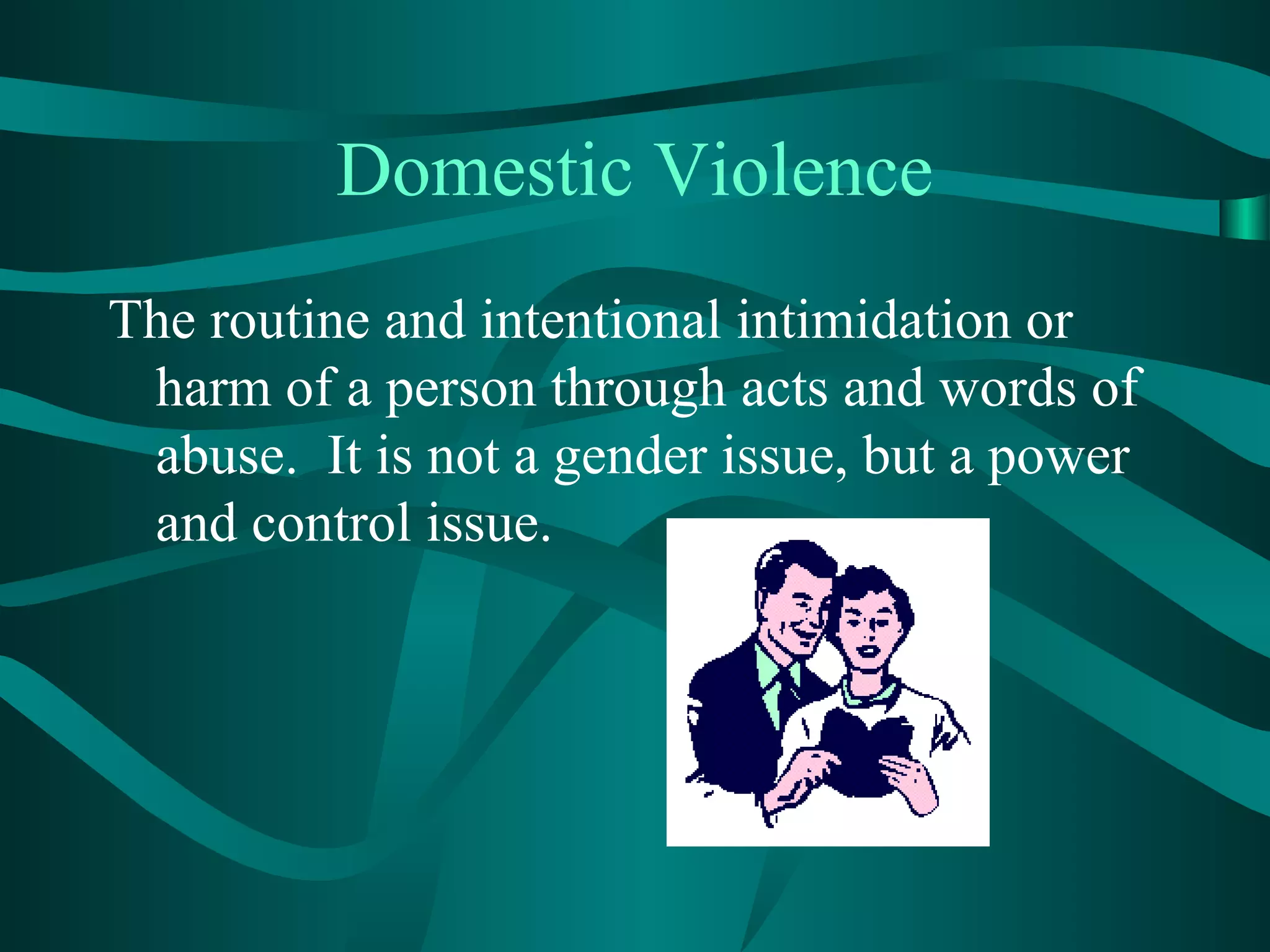
Domestic Violence
The routine and intentional intimidation or
harm of a person through acts and words of
abuse. It is not a gender issue, but a power
and control issue.
Types of Domestic Violence
• Physical
– Actual
– Threat
• Sexual
• Psychological
– Verbal intimidation
– Stalking
– Harassment
• Economics
Cycle of Domestic Violence
Tension
Building
Violence
Seduction
Love
Hope
Fear
Intervention
• Notify Social Services Department at
University Hospital
• Communicate your concern for patient
safety
• Offer resources as needed
“Home is where the heart
is. But home isn’t a
haven for everyone.”

Abuse

  • 1.
  • 2.
    Abuse The willful inflictionof physical pain, injury or mental anguish, unreasonable confinement, or the willful deprivation of services which are necessary to maintain a person’s physical and mental health.
  • 3.
    Elder Abuse The mistreatmentor neglect of an elderly person usually by a relative or other caregiver. It may or may not be intentional and an older adult will often suffer several forms of abuse and neglect at the same time.
  • 4.
    Types of ElderAbuse • Physical • Financial • Neglect – Self • Psychological/Emotional • Abandonment
  • 5.
    Intervention • Suspected Abusewill be reported to the COO • Notify Social Services Department at University Hospital Extension, 2-5727 • Resident of a nursing home or 60 years old notify the Institutionalized Elderly: (609) 624-4262
  • 6.
    Child Abuse The mistreatmentor neglect of a child that results in harm or injury. It seriously damages the child’s self-esteem and inhibits healthy emotional development of the child.
  • 7.
    Types of ChildAbuse • Physical • Neglect – Emotional – Physical • Verbal • Emotional • Sexual
  • 8.
    Child Abuse Statistics •Each day in the United States, more that 4 children die as a result of child abuse in the home • Every year 3.3 million reports of child abuse are made • Child abuse is reported on an average every 10 seconds • Child abuse occurs at every socioeconomic level, across ethnic and cultural lines, within all religions and at all levels of education. • More children (age 4 and under) die from child abuse and neglect than any other single, leading cause of death for infants and young children
  • 9.
    Reporting of ChildAbuse • Mandatory • Contact Social Services at University Hospital who act as liaison with DYFS and law enforcement staff
  • 10.
    Domestic Violence The routineand intentional intimidation or harm of a person through acts and words of abuse. It is not a gender issue, but a power and control issue.
  • 11.
    Types of DomesticViolence • Physical – Actual – Threat • Sexual • Psychological – Verbal intimidation – Stalking – Harassment • Economics
  • 12.
    Cycle of DomesticViolence Tension Building Violence Seduction Love Hope Fear
  • 13.
    Intervention • Notify SocialServices Department at University Hospital • Communicate your concern for patient safety • Offer resources as needed
  • 14.
    “Home is wherethe heart is. But home isn’t a haven for everyone.”