Abstract Art Project
Making Non-Representational Art
Abstract Thought vs. Concrete Thought
• As we grow up, our brains mature and become capable of more
things.
• Toddlers take this literally because they have not yet developed
abstract thought.
• As adults we can remove ourselves from situations and think more
generally about things. This is abstract thought.
• Concrete thought: Using a recipe to make cookies
• Abstract thought: Creating your own cookie recipe
Abstract Art vs. Representational Art
• Representational work looks at specific objects, people, and things.
• Abstract art thinks more generally about these things. Rather than
painting an eye and making it look like an eye, the focus is on the line,
shapes, and colors.
• Like abstract thought, abstract art is bigger picture thinking in the
world of art.
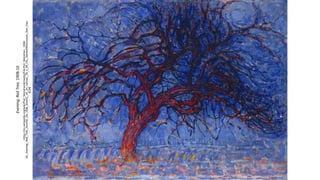
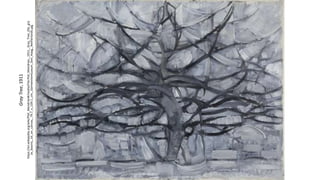
• Abstract art can be based in something representational (ex: a tree
simplified to the point of no longer looking like a tree) or it can be
completely abstract.
Inside Out &
Abstract Thought
Click on the link below to see the idea of abstract thought represented in animation!
The process of
artmaking
• Imitation
• Trying to build the skills and techniques to
recreate something.
• Ex: a still life
• Ex: a portrait
• Interpretation
• Adding your own thoughts, opinions, and
feelings into a work of art.
• Ex: a portrait of a person that conveys
emotion or information, not just a realistic
copy.
• Abstraction
• Expressing feelings and reflections without
relying on figures to help convey it.
What makes an abstract
painting successful or not?
• Line
• Shape
• Color
• Balance
• Unity
• Focal Point
Your Assignment:
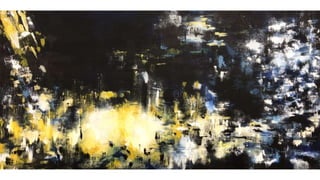
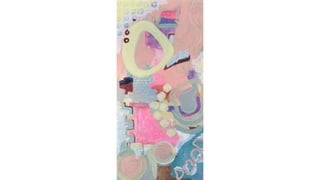
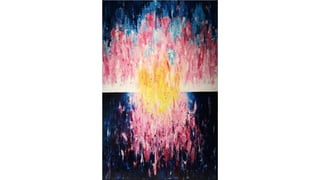
• Create a large scale abstract work of art!
• You must select either line, shape, or
color as the focus of your work of art.
• All three elements will be inherently
included in your work of art, but
one will stand out amongst the rest.
• Selecting one will give you
something to focus on while
creating your work of art.
• Your work of art must also include
balance, unity, and a focal point.
• You may choose to execute your work
large scale in PAINT, PASTEL or CLAY! 
Abstract artists to explore for the Elements
of…
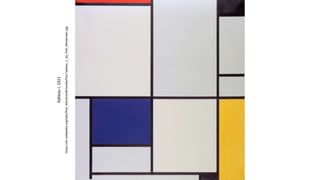
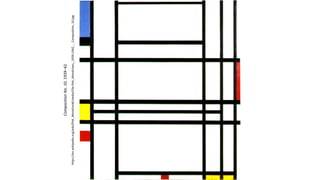
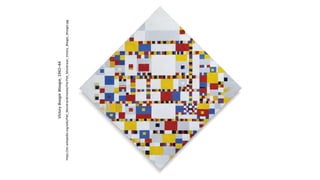
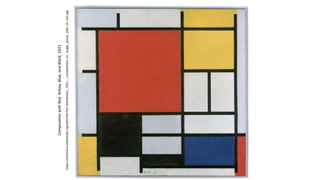
• LINE – Piet Mondrian
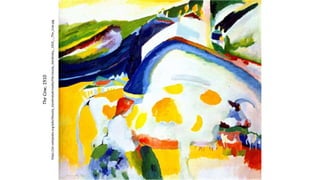
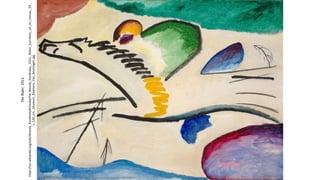
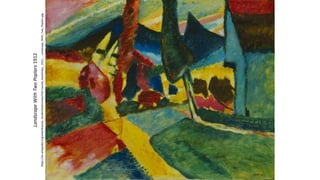
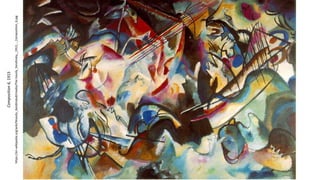
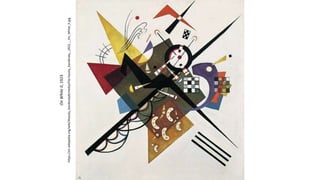
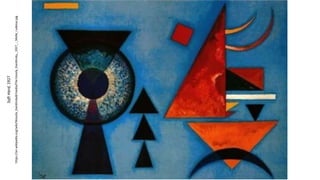
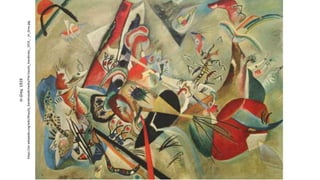
• SHAPE – Wassily Kandinsky
• COLOR – Mark Rothko
And MANY MORE! Please Read through the following slides and then
see the assignment after the last Artist Image slide.
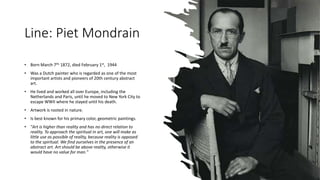
Line: Piet Mondrain
• Born March 7th, 1872, died February 1st, 1944
• Was a Dutch painter who is regarded as one of the most
important artists and pioneers of 20th century abstract
art.
• He lived and worked all over Europe, including the
Netherlands and Paris, until he moved to New York City to
escape WWII where he stayed until his death.
• Artwork is rooted in nature.
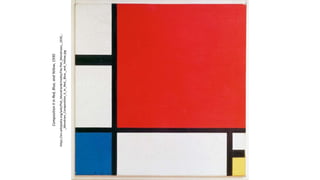
• Is best known for his primary color, geometric paintings.
• "Art is higher than reality and has no direct relation to
reality. To approach the spiritual in art, one will make as
little use as possible of reality, because reality is opposed
to the spiritual. We find ourselves in the presence of an
abstract art. Art should be above reality, otherwise it
would have no value for man."
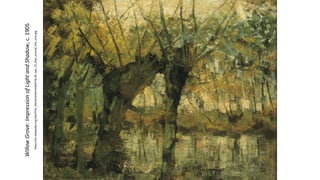
Willow
Grove:
Impression
of
Light
and
Shadow,
c.
1905
https://en.wikipedia.org/wiki/Piet_Mondrian#/media/File:20_sep_13_klee_around_the_core.jpg
Evening;
Red
Tree,
1908-10
https://en.wikipedia.org/wiki/Piet_Mondrian#/media/File:Piet_Mondrian,_1908-
10,_Evening;_Red_Tree_(Avond;_De_rode_boom),_oil_on_canvas,_70_x_99_cm,_Gemeentemuseum_Den_Haa
g.jpg
Gray
Tree,
1911
https://en.wikipedia.org/wiki/Piet_Mondrian#/media/File:Piet_Mondrian,_1911,_Gray_Tree_(De_grij
ze_boom),_oil_on_canvas,_79.7_x_109.1_cm,_Gemeentemuseum_Den_Haag,_Netherlands.jpg
Composition
II
in
Red,
Blue,
and
Yellow,
1930
https://en.wikipedia.org/wiki/Piet_Mondrian#/media/File:Piet_Mondriaan,_1930_-
_Mondrian_Composition_II_in_Red,_Blue,_and_Yellow.jpg
Tableau
I,
1921
https://en.wikipedia.org/wiki/Piet_Mondrian#/media/File:Tableau_I,_by_Piet_Mondriaan.jpg
Composition
No.
10,
1939–42
https://en.wikipedia.org/wiki/Piet_Mondrian#/media/File:Piet_Mondriaan,_1939-1942_-_Composition_10.jpg
Victory
Boogie
Woogie,
1942–44
https://en.wikipedia.org/wiki/Piet_Mondrian#/media/File:Piet_Mondriaan_Victory_Boogie_Woogie.jpg
Composition
with
Red,
Yellow,
Blue,
and
Black,
1921
https://commons.wikimedia.org/wiki/File:Piet_Mondriaan,_1921_-_Composition_en_rouge,_jaune,_bleu_et_noir.jpg
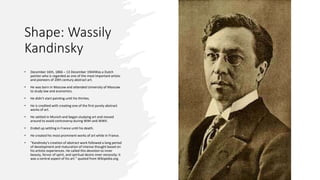
Shape: Wassily
Kandinsky
• December 16th, 1866 – 13 December 1944Was a Dutch
painter who is regarded as one of the most important artists
and pioneers of 20th century abstract art.
• He was born in Moscow and attended University of Moscow
to study law and economics.
• He didn’t start painting until his thirties.
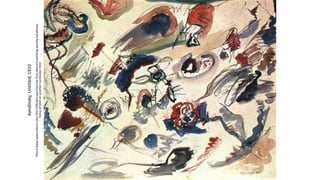
• He is credited with creating one of the first purely abstract
works of art.
• He settled in Munich and began studying art and moved
around to avoid controversy during WWI and WWII.
• Ended up settling in France until his death.
• He created his most prominent works of art while in France.
• “Kandinsky's creation of abstract work followed a long period
of development and maturation of intense thought based on
his artistic experiences. He called this devotion to inner
beauty, fervor of spirit, and spiritual desire inner necessity; it
was a central aspect of his art.” quoted from Wikipedia.org.
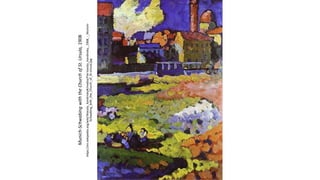
Munich-Schwabing
with
the
Church
of
St.
Ursula,
1908
https://en.wikipedia.org/wiki/Wassily_Kandinsky#/media/File:Vassily_Kandinsky,_1908_-_Munich-
Schwabing_with_the_Church_of_St-Ursula.jpg
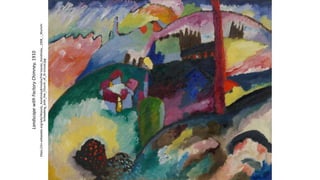
Landscape
with
Factory
Chimney,
1910
https://en.wikipedia.org/wiki/Wassily_Kandinsky#/media/File:Vassily_Kandinsky,_1908_-_Munich-
Schwabing_with_the_Church_of_St-Ursula.jpg
Kandinsky,
Untitled,
1910
http://www.openculture.com/2017/09/who-painted-the-first-abstract-painting-wassily-kandinsky-
hilma-af-klint-or-another-contender.html
The
Cow,
1910
https://en.wikipedia.org/wiki/Wassily_Kandinsky#/media/File:Vassily_Kandinsky,_1910_-_The_Cow.jpg
The
Rider,
1911
https://en.wikipedia.org/wiki/Wassily_Kandinsky#/media/File:Wassily_Kandinsky,_1911,_Reiter_(Lyrishes),_oil_on_canvas,_94_
x_130_cm,_Museum_Boijmans_Van_Beuningen.jpg
Landscape
With
Two
Poplars
1912
https://en.wikipedia.org/wiki/Wassily_Kandinsky#/media/File:Vassilly_Kandinsky,_1912_-_Landscape_With_Two_Poplars.jpg
Composition
6,
1913
https://en.wikipedia.org/wiki/Wassily_Kandinsky#/media/File:Vassily_Kandinsky,_1913_-_Composition_6.jpg
On
White
II,
1923
https://en.wikipedia.org/wiki/Wassily_Kandinsky#/media/File:Vassily_Kandinsky,_1923_-_On_White_II.jpg
Soft
Hard,
1927
https://en.wikipedia.org/wiki/Wassily_Kandinsky#/media/File:Vassily_Kandinsky,_1927_-_Molle_rudesse.jpg
In
Grey,
1919
https://en.wikipedia.org/wiki/Wassily_Kandinsky#/media/File:Vassily_Kandinsky,_1919_-_In_Grey.jpg
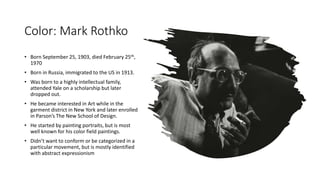
Color: Mark Rothko
• Born September 25, 1903, died February 25th,
1970
• Born in Russia, immigrated to the US in 1913.
• Was born to a highly intellectual family,
attended Yale on a scholarship but later
dropped out.
• He became interested in Art while in the
garment district in New York and later enrolled
in Parson’s The New School of Design.
• He started by painting portraits, but is most
well known for his color field paintings.
• Didn’t want to conform or be categorized in a
particular movement, but is mostly identified
with abstract expressionism
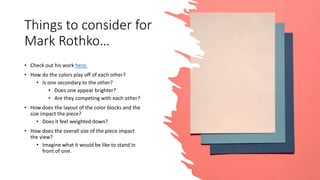
Things to consider for
Mark Rothko…
• Check out his work here.
• How do the colors play off of each other?
• Is one secondary to the other?
• Does one appear brighter?
• Are they competing with each other?
• How does the layout of the color blocks and the
size impact the piece?
• Does it feel weighted down?
• How does the overall size of the piece impact
the view?
• Imagine what it would be like to stand in
front of one.
Mad Men & Mark
Rothko
The debate of
aesthetics…
• This clip brings up many good points about
abstract art and the value of art in general.
• Things to ponder…
• Does all art have to have a meaning?
• Is art about the subject matter or the
experience?
• What makes art valuable? Is it simply
the price tag put on it? Who
determines that?
• What do you want your art to convey?
Brainstorming Activity
Watch THIS VIDEO and then choose an artisteither from the video or
this presentation that inspires you – FILL OUT AN ARTIST RESEARCH
PAPER on the artist & make a sketch in your sketchbook that “borrows”
elements from this artist’s work, but add your own details/qualities to
it.
Your Grade:
• Success of reflecting either line, shape,
or color.
• Success in including balance, unity, and
a focal point.
• Craftsmanship
• Creativity
• Effort
• Understanding of abstraction
Go in with a plan…
• Complete at least three sketches in your
sketchbook.
• Research abstract styles, see what
inspires you. REMEMBER be inspired but
do not copy.
• Work in layers, it may take many layers,
repetition, and experimentation to get
to a point when you are satisfied.
• When do you know when to stop?
Process Pictures:
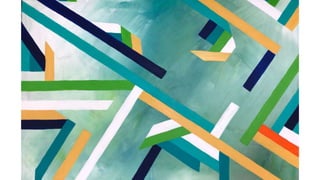
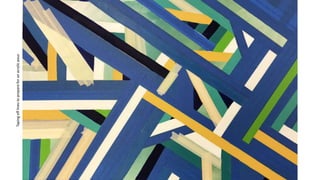
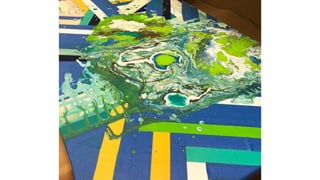
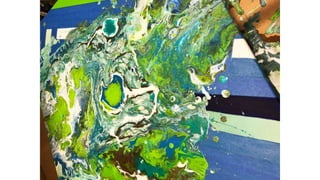
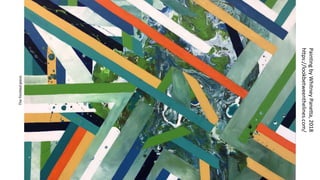
• The artist’s plan:
• Create a work of art that combines organic
and geometric styles.
• Include a pop of color (which will create a
focal point).
• Line will be emphasized.
• Line will help create unity.
• Strike a balance between the geometric
lines and organic paint styles.
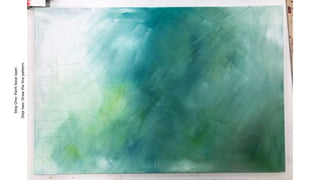
• The base layer makes the piece appear to focus
on color, but the next layer will incorporate line.
Step
One:
Paint
base
layer.
Step
two:
Draw
the
line
pattern.
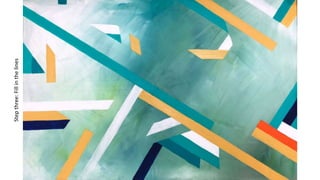
Step
three:
Fill
in
the
lines
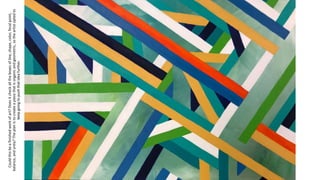
Could
this
be
a
finished
work
of
art?
Does
it
check
all
the
boxes
of
line,
shape,
color,
focal
point,
balance,
and
untiy?
The
plan
is
to
create
a
piece
that
is
organic
and
geometric,
so
the
artist
opted
to
keep
going
to
push
that
idea
further.
Taping
off
lines
to
prepare
for
an
acrylic
pour.
The
finished
piece.
Painting
by
Whitney
Panetta,
2018
https://lookbetweenthelines.com/
Things to consider:
• When to stop and when to continue to
add to your piece.
• If you have a vision, try to see it to the
end.
• Photograph along the way just in case
you take it too far and prefer an earlier
stage.
• Carefully consider each new layer.
THE END

Abstract High School Painting Project Project _2-Dimensional Art