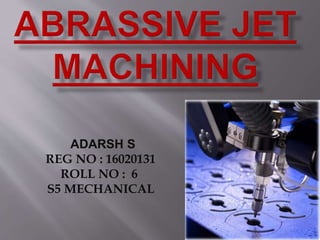
Abrasive jet machining is a non-traditional machining process that uses a high-velocity stream of abrasive particles suspended in a liquid to remove material from a workpiece. It involves mixing abrasive particles with compressed air or water in a mixing chamber before passing the mixture through a nozzle at high velocity onto the workpiece. Common applications include cleaning, drilling, turning, cutting, and engraving. The process provides benefits such as automatic surface cleaning, low equipment costs, and eco-friendliness but suffers from low material removal rates and inability to reuse abrasives. Overall, abrasive jet machining continues to expand due to new software reducing costs and making it accessible to more manufacturers of precision parts.