PRAYER
Prepared by: JOSEPHINE BOND
Professional Education Talisay City College
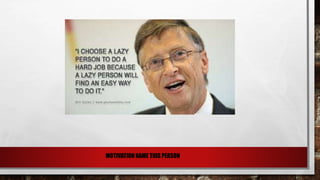
MOTIVATION NAME THIS PERSON
MARKETING MIX
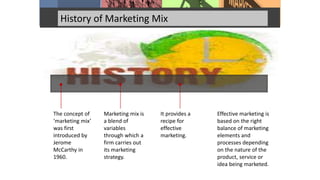
History of Marketing Mix
• • •
The concept of
‘marketing mix’
was first
introduced by
Jerome
McCarthy in
1960.
Marketing mix is
a blend of
variables
through which a
firm carries out
its marketing
strategy.
It provides a
recipe for
effective
marketing.
Effective marketing is
based on the right
balance of marketing
elements and
processes depending
on the nature of the
product, service or
idea being marketed.
•
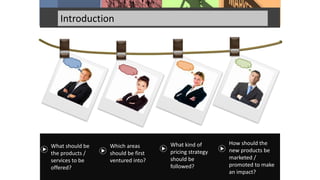
Introduction
What should be
the products /
services to be
offered?
Which areas
should be first
ventured into?
What kind of
pricing strategy
should be
followed?
How should the
new products be
marketed /
promoted to make
an impact?
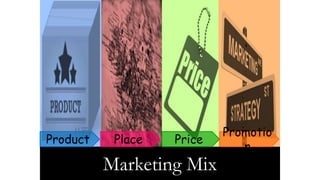
Marketing Mix
Product Place Price
Promotio
n
4 Ps
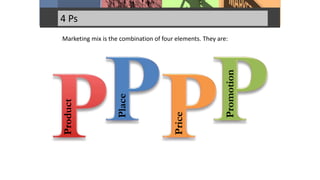
Marketing mix is the combination of four elements. They are:
Product
Place
Price
Promotion
Designing the Right Marketing Mix
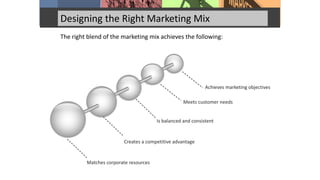
The right blend of the marketing mix achieves the following:
Achieves marketing objectives
Meets customer needs
Is balanced and consistent
Creates a competitive advantage
Matches corporate resources
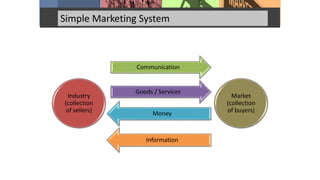
Simple Marketing System
Industry
(collection
of sellers)
Communication
Goods / Services
Money
Information
Market
(collection
of buyers)
Booms & Bithner
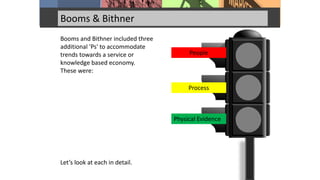
Booms and Bithner included three
additional 'Ps' to accommodate
trends towards a service or
knowledge based economy.
These were:
Let’s look at each in detail.
People
Process
Physical Evidence
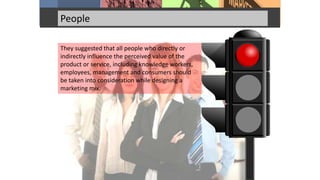
People
They suggested that all people who directly or
indirectly influence the perceived value of the
product or service, including knowledge workers,
employees, management and consumers should
be taken into consideration while designing a
marketing mix.
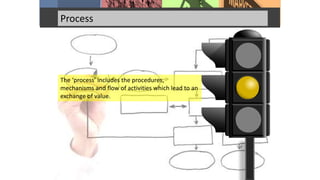
Process
The ‘process’ includes the procedures,
mechanisms and flow of activities which lead to an
exchange of value.
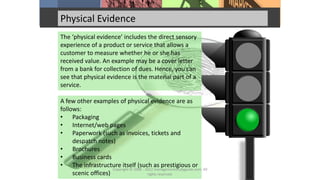
Physical Evidence
The ‘physical evidence’ includes the direct sensory
experience of a product or service that allows a
customer to measure whether he or she has
received value. An example may be a cover letter
from a bank for collection of dues. Hence, you can
see that physical evidence is the material part of a
service.
A few other examples of physical evidence are as
follows:
• Packaging
• Internet/web pages
• Paperwork (such as invoices, tickets and
despatch notes)
• Brochures
• Business cards
• The infrastructure itself (such as prestigious or
scenic offices)
Copyright © 2008 - 2012 managementstudyguide.com. All
rights reserved.
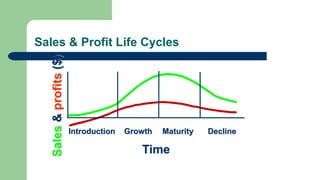
Sales & Profit Life Cycles
Introduction Growth Maturity Decline
Time
Sales&profits($)
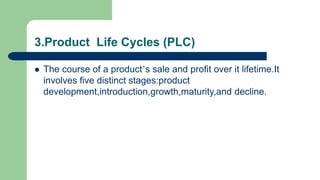
3.Product Life Cycles (PLC)
 The course of a product’s sale and profit over it lifetime.It
involves five distinct stages:product
development,introduction,growth,maturity,and decline.
ASSIGNMENT
 1.Please list the marketing objectives and strategies for each stage.
 2.what strategic option are open to the marketers of products in the mature
stage of the product life cycle?
 3.which product life-cycle stage, if any, is the most important? which stage
is riskiest? which stage appears to hold the greatest profit potential? Be
certain to explain the thinking behind each of your answer.
PRAYER
Prepared by:

Abm MARKETING MIX CLASS DEMO

  • 2.
  • 3.
    Prepared by: JOSEPHINEBOND Professional Education Talisay City College
  • 4.
  • 5.
  • 6.
  • 8.
  • 9.
    History of MarketingMix • • • The concept of ‘marketing mix’ was first introduced by Jerome McCarthy in 1960. Marketing mix is a blend of variables through which a firm carries out its marketing strategy. It provides a recipe for effective marketing. Effective marketing is based on the right balance of marketing elements and processes depending on the nature of the product, service or idea being marketed. •
  • 10.
    Introduction What should be theproducts / services to be offered? Which areas should be first ventured into? What kind of pricing strategy should be followed? How should the new products be marketed / promoted to make an impact?
  • 11.
  • 12.
    4 Ps Marketing mixis the combination of four elements. They are: Product Place Price Promotion
  • 13.
    Designing the RightMarketing Mix The right blend of the marketing mix achieves the following: Achieves marketing objectives Meets customer needs Is balanced and consistent Creates a competitive advantage Matches corporate resources
  • 14.
    Simple Marketing System Industry (collection ofsellers) Communication Goods / Services Money Information Market (collection of buyers)
  • 15.
    Booms & Bithner Boomsand Bithner included three additional 'Ps' to accommodate trends towards a service or knowledge based economy. These were: Let’s look at each in detail. People Process Physical Evidence
  • 16.
    People They suggested thatall people who directly or indirectly influence the perceived value of the product or service, including knowledge workers, employees, management and consumers should be taken into consideration while designing a marketing mix.
  • 17.
    Process The ‘process’ includesthe procedures, mechanisms and flow of activities which lead to an exchange of value.
  • 18.
    Physical Evidence The ‘physicalevidence’ includes the direct sensory experience of a product or service that allows a customer to measure whether he or she has received value. An example may be a cover letter from a bank for collection of dues. Hence, you can see that physical evidence is the material part of a service. A few other examples of physical evidence are as follows: • Packaging • Internet/web pages • Paperwork (such as invoices, tickets and despatch notes) • Brochures • Business cards • The infrastructure itself (such as prestigious or scenic offices) Copyright © 2008 - 2012 managementstudyguide.com. All rights reserved.
  • 19.
    Sales & ProfitLife Cycles Introduction Growth Maturity Decline Time Sales&profits($)
  • 20.
    3.Product Life Cycles(PLC)  The course of a product’s sale and profit over it lifetime.It involves five distinct stages:product development,introduction,growth,maturity,and decline.
  • 22.
    ASSIGNMENT  1.Please listthe marketing objectives and strategies for each stage.  2.what strategic option are open to the marketers of products in the mature stage of the product life cycle?  3.which product life-cycle stage, if any, is the most important? which stage is riskiest? which stage appears to hold the greatest profit potential? Be certain to explain the thinking behind each of your answer.
  • 23.