A&A 450, 253–263 (2006)
DOI: 10.1051/0004-6361:20054372
                                                                                                                Astronomy
                                                                                                                 &
c ESO 2006                                                                                                      Astrophysics


               L -band (3.5 µm) IR-excess in massive star formation
                                                   II. RCW 57/NGC 3576
                                       M. Maercker1,2 , M. G. Burton2 , and C. M. Wright3

1
    Stockholm Observatory, AlbaNova University Center, 106 91 Stockholm, Sweden
    e-mail: maercker@astro.su.se
2
    School of Physics, University of New South Wales, Sydney, NSW 2052, Australia
    e-mail: mgb@phys.unsw.edu.au
3
    School of Physical, Environmental and Mathematical Sciences, University of New South Wales@ADFA Canberra, ACT 2600, Australia
    e-mail: c.wright@adfa.edu.au

Received 18 October 2005 / Accepted 7 December 2005

                                                                ABSTRACT

Context. We present a JHKs L survey of the massive star forming region RCW 57 (NGC 3576) based on L-band data at 3.5 µm taken with
SPIREX (South Pole Infrared Explorer), and 2MASS JHKs data at 1.25–2.2 µm. This is the second of two papers, the first one concerning
a similar JHKs L survey of 30 Doradus.
Aims. Colour–colour and colour-magnitude diagrams are used to detect sources with infrared excess. This excess emission is interpreted as
coming from circumstellar disks, and hence gives the cluster disk fraction (CDF). Based on the CDF and the age of RCW 57, it is possible to
draw conclusions on the formation and early evolution of massive stars.
Methods. The infrared excess is detected by comparing the locations of sources in JHKs L colour–colour and L vs. (Ks − L) colour–magnitude
diagrams to the reddening band due to interstellar extinction.
Results. A total of 251 sources were detected. More than 50% of the 209 sources included in the diagrams have an infrared excess.
Conclusions. Comparison with other JHKs L surveys, including the results on 30 Doradus from the first paper, support a very high initial disk
fraction (>80%) even for massive stars, although there is an indication of a possible faster evolution of circumstellar disks around high mass
stars. 33 sources only found in the L-band indicate the presence of heavily embedded, massive Class I protostars. We also report the detection
of diffuse PAHs emission throughout the RCW 57 region.

Key words. stars: circumstellar matter – stars: formation – stars: evolution – stars: Hertzsprung-Russell (HR) and C-M diagrams –
stars: planetary systems: protoplanetary disks – stars: pre-main sequence


1. Introduction                                                         always clear. JHKs L observations give a larger separation to the
                                                                        IR-excess sources in colour–colour diagrams, whereas JHKs
1.1. IR-excess as a measure of circumstellar disks                      observations tend to underestimate the fraction of stars with
This paper is the second of two papers using IR-excess in the           IR-excess. On account of the difficulties of ground based ob-
JHKs L plane (1.2–3.5 µm) to measure the fraction of sources            servations at longer wavelengths, the L-band (3.5 µm) proves
with circumstellar disks in high mass star forming regions. The         to be the best wavelength for detecting circumstellar disks, al-
first paper concerned 30 Doradus in the LMC (Maercker &                  though longer wavelengths are preferable, if space observations
Burton 2005, from now referred to as Paper I). IR-excess can            are available. Kenyon & Hartmann (1995) show the advantage
be detected using near infrared colour-colour diagrams by com-          of (Ks − L) as a measure of IR-excess by comparing the fre-
paring the position of sources relative to the reddening vec-           quency distributions in young stellar clusters for (H − Ks ) and
tors due to interstellar extinction. The excess radiation above         (Ks − L). Whereas the (H − Ks ) distribution has one clear peak
that of a blackbody can be explained by models of circumstel-           at (H − Ks ) ∼ 0.2–0.4 and a long tail, the (Ks − L) distribution
lar disks around a young stellar object (e.g. Lada & Adams              has a clear second peak at (Ks − L) ∼ 0.8–1.0 made up mostly
1992). Although this excess radiation can be detected using             of class II sources with optically thick, circumstellar disks.
JHKs data (1.2–2.2 µm) alone, the nature of IR-excess is not
                                                                        1.2. RCW 57
    Full Table 7 is only available in electronic form at the CDS via
anonymous ftp to cdsarc.u-strasbg.fr (130.79.128.5) or via              This young massive star forming region, also known as
http://cdsweb.u-strasbg.fr/cgi-bin/qcat?J/A+A/450/253                   NGC 3576, is one of the brightest HII regions in the infrared in


Article published by EDP Sciences and available at http://www.edpsciences.org/aa or http://dx.doi.org/10.1051/0004-6361:20054372
254                           M. Maercker et al.: L-band (3.5 µm) IR-excess in massive star formation. II.

our Galaxy. The kinematic distance is 3.0 ± 0.3 kpc, adopted         Barbosa et al. also found a new MIR source, without a coun-
from De Pree et al. (1999). An asymmetrical structure in the         terpart in the NIR, which is possibly a hot core. In the central
region can be seen in the 21 cm map by Retallack & Goss              region a strong CO J = 2−1 line at 230 GHz was observed
(1980), which extends to the northeast but has a sharp cut off        by White & Phillips (1983). Shock-excited H2 line emission
in the southwest. The spectral energy distributions of five ob-       may also indicate the presence of gas outflows (Figuerêdo et al.
jects detected using a 10 µm map (Frogel & Persson 1974)             2002).
suggest that these are protostellar objects with silicate absorp-
tion features, therefore indicating Class I objects (Persi et al.
1994). Near infrared photometry by Persi et al., together with       2. Observations
an 8–13 µm CVF spectrum of IRS 1 (IRAS 11097-6102 in
the IRAS Point Source Catalogue), show that the majority of          2.1. L-band data from SPIREX
stars (>70%) have an infrared excess in the JHKs plane. 19 of
                                                                     The data at 3.5 µm was taken with the 60 cm South Pole
these sources could be matched with the present data, 15
                                                                     InfraRed Explorer (SPIREX) (Hereld 1994; Burton et al. 2000)
of which we show can also be classified as having an infrared
                                                                     at the Amundsen-Scott South-Pole Station using the Abu cam-
excess in the JHKs L plane. The sources discussed by Persi et al.
                                                                     era equipped with a 1024 × 1024 InSb array (Fowler et al.
are confined to the central region, confirming the youth of the
                                                                     1998) in July and August 1999. Observations were carried out
cluster. Radio recombination lines were detected by McGee &
                                                                     using the L-band filter (λcentral = 3.514 µm, ∆λ = 0.618 µm)
Gardner (1968), Wilson et al. (1970) and De Pree et al. (1999).
                                                                     and had a field of view of 10 and pixel scale 0.6 . The im-
The detection of maser sources in CH3 OH and H2 O (Caswell
                                                                     age is a mosaic of a series of 3 min frames, each shifted
et al. 1995, and 1989 respectively) are indications of early
                                                                     by 15 from each other, interleaved with seperate sky observa-
stages of star formation in a dense circumstellar environment.
                                                                     tions, and comprises a total of 60 min of on-source integration.
Thorough investigations of the central region have been under-
                                                                     Reductions were done automatically using the SPIREX/Abu
taken by Figuerêdo et al. (2002) in the near-infrared (NIR), and
                                                                     pipeline1. Unfortunately the data was not flux calibrated and
Barbosa et al. (2003) in the mid-infrared (MIR). Nine of the
                                                                     seperate observations were necessary to determine the calibra-
MIR sources match sources seen in the L-band image presented
                                                                     tion, as discussed in Paper I (see Sect. 2.4).
here. In the NIR, JHKs colour–colour and colour–magnitude
diagrams show sources affected by excess emission, indicat-
ing the presence of circumstellar disks around the less massive      2.2. Narrow band filters from SPIREX
members of the cluster (Figuerêdo et al. 2002). Eight spectra
of the brightest sources show rising continua towards the IR.        In addition to the L-band data, images were obtained through
Three of these have a clear infrared excess. The detection of        three narrow band filters, centred on the wavelengths of the H2
CO bandheads (2.2935 µm) in emission and absorption in-              v = 1–0 Q-branch lines, a PAHs emission feature, and the hy-
dicates the presence of several sources still heavily embed-         drogen Br α line. The line centres of the filters were 2.42,
ded in their stellar birthclouds (Figuerêdo et al. 2002; Barbosa     3.30 and 4.05 µm, respectively, and their widths 0.034, 0.074
et al. 2003). Based on the radio data (Goss & Shaver 1970),          and 0.054 µm. For the H2 and PAHs filters the data were
RCW 57 can be classified as a Giant HII (GHII) region, with           self-calibrated using interpolated values for magnitudes of the
1.6 × 1050 photons s−1 in the UV (defining sources brighter           sources IRS1, Persi 43 and Persi 106 (stars 88, 74 and 124, re-
than 1050 Lyman continuum photons per second as GHII re-             spectively in Table 7) from those we determined in this Table
gions (Figuerêdo et al. 2002)). A possible ionizing source has       for the Ks and L bands. For the Br α filter, we self-calibrated
been found at the peak emission of the 3.4 cm map (DePree            based on a flux for IRS1 of 16 Jy at 4 µm, as measured by
et al. 1999), the source being a cluster of stars that have bro-     McGregor et al. (1984).
ken out of their natal cocoons but remain hidden behind dark
clouds along the line of sight (Barbosa et al. 2003). The radio
                                                                     2.3. JHKs -band data from 2MASS
peak emission (at ∼RA 11h 11m 51s , Dec −61◦ 18 45 (J2000))
is also hidden behind clouds in the SPIREX image. This is            The L-band observations were complemented with JHKs data
further confirmed by Walsh et al. (2001), who find the peak            from the 2MASS point source catalogue (PSC) (Cutri et al.
of the 8.64 GHz continuum emission to lie at approximately           2003) and atlas images2 . The 2MASS telescopes (Kleinmann
the same position, behind clouds in the N-band image (their          et al. 1994) scanned the sky in both hemispheres in three near
Fig. 2). In their follow up survey, Barbosa et al. for the first      infrared filters (J, H and Ks ; 1.25, 1.65 and 2.2 µm respec-
time resolved IRS 1 into four sources in the 10 µm band, ap-         tively) with limiting magnitudes of m J = 15.8, mH = 15.1
proximately 1.5 apart from each other (Nos. 48, 50, 60 and 60b       and mK = 14.3. The L-band data was first matched with sources
in their paper. Source numbers labelled in Table 7 with “No”         in the PSC. Photometry was also performed on the Ks -band at-
and a number are from Barbosa et al.). One of these shows evi-       las images to derive the magnitudes for any sources that could
dence for a UC HII region and they conclude that the sources in      not be matched with those in the PSC.
the central region of RCW 57 are in the UC HII region phase.
The position of IRS 1 coincides with the brightest L-band              1
                                                                        http://pipe.cis.rit.edu
source in our study (mL = 4.1, #88, Table 7) and is also found         2
                                                                        Available at http://www.ipac.caltech.edu/applications/
in the L-band by Moneti (1992) with magnitude mL = 4.05.             2MASS/IM/
M. Maercker et al.: L-band (3.5 µm) IR-excess in massive star formation. II.                           255

Table 1. Standard star used to calibrate the CASPIR images
(McGregor 1994).

         Name        RA(J2000)         Dec(J2000)        mL
                      (h m s)           (d m s)          Mag
        BS4638       12 11 39.1         −52 22 06       4.501

Table 2. Stars in RCW 57 used for calibration. Bright, isolated stars
were chosen from the SPIREX image and used to calibrate the remain-
ing stars in the image. Their L-band magnitudes were determined from
the standard star, and have an average error of ±0.05 mag.

           id      RA(J2000)         Dec(J2000)        mL
                    (h m s)           (d m s)          Mag
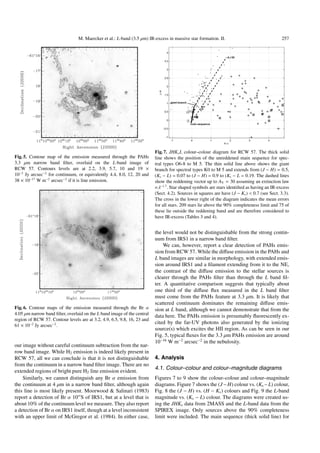
           8        11 11 10.6       –61 17 45.2       7.4               Fig. 1. SPIREX L-band (3.5 µm) image of RCW 57. Total on-source
          19        11 11 19.7       –61 15 26.0       7.2               integration of 60 min; effective resolution 2.6 ; pixel scale 0.6 ;
          173       11 12 25.4       –61 15 11.6       7.6               90% completeness limit at 11.2 mag; faintest star detected 13.5 mag.


2.4. Calibration data from CASPIR
Since the SPIREX L-band image was not flux calibrated, ad-
ditional observations were carried out using the Australian
National University (ANU) 2.3 m telescope at Siding
Spring Observatory, equipped with CASPIR (Cryogenic Array
Spectrometer/Imager) (McGregor 1994). The observations
were carried out in early April 2004 together with the calibra-
tion observations for 30 Doradus (Paper I). A narrow band filter
(λcentral = 3.592 µm, ∆λ = 0.078 µm) was used to avoid satura-
tion due to sky brightness, in contrast to the broader band it was
possible to use with SPIREX because of the lower sky back-
ground at the South Pole. To see whether this introduced an er-
ror, the calibration stars were examined for colour variations
                                                                         Fig. 2. Enlargement of the central region of RCW 57 at L-band
by comparing the L-band to PAH flux ratios. These were found              (3.5 µm) with contours showing the nebulosity. Contour levels are
to be constant within the measurement uncertainties, making it           0.03, 0.2, 0.4, 0.7, 1.0, 1.7, 2.3, 3.0, 8.3 and 20 mJy/arcsec2 .
possible to use the narrow band calibration data. The standard
star used to calibrate the images is listed in Table 1 and the stars
in the SPIREX image used to determine the zero-point correc-             not in the 2MASS PSC catalogue with photometry performed
tion are listed in Table 2. The individual error for the calibrated      on the 2MASS Ks -band atlas images resulted in an additional
stars is ∼0.05 mag which leads to a weighted error in the zero-          17 matches.
point correction of ∼0.03 mag and is included in all subsequent              The mosaiced SPIREX image suffered from irregular dis-
error calculations.                                                      tortions (in the upper most left part of the image a recognizable
                                                                         pattern of 3 stars was 8 off). These were however small over
3. Results                                                               the largest part of the image, and the L-band data could care-
                                                                         fully be matched with the PSC and Ks -band images by marking
3.1. Photometry                                                          the sources in the images and then selecting matches “by hand”,
                                                                         taking local distortions into account. Table 3 lists the statistics
The L-band image of RCW 57 from SPIREX is shown in Fig. 1
                                                                         for detections in the various bands including the statistics when
and an enlargement of the central region overlaid with contour
                                                                         aplying the 90% completeness limit.
lines showing the nebulosity is shown in Fig. 2. The same steps
to obtaining the photometry were undertaken as described for
30 Doradus in Paper I, including fitting coordinates using the            3.2. Sensitivity
Karma package3, running IRAF/daophot to get the photome-
                                                                         The detection threshold was taken to be three times the stan-
try and adding 400 artificial stars using addstar to estimate the
                                                                         dard deviation σsky of a typical region of sky near each source.
errors. This last step resulted in a 90% completeness limit of
                                                                         This resulted in a limit of ∼12 mag at L-band, correspond-
11.2 mag in the L-band. The individual errors for the L-band
                                                                         ing to the 84% completeness limit. The faintest source de-
magnitudes were given by IRAF/daophot. Matching sources
                                                                         tected has a magnitude of mL = 13.5 (69% completeness
 3
     http://www.atnf.csiro.au/karma/                                     limit). However, only sources above the 90% completeness
256                               M. Maercker et al.: L-band (3.5 µm) IR-excess in massive star formation. II.

Table 3. Number of detections in the different bands. The first col-
umn gives the total number of detections in the SPIREX image. The
second column gives the number of stars that could be matched with
the 2MASS PSC. Column three lists the number of stars additionally
matched by comparison of the Ks - and L-band images. The last col-
umn lists the number of stars only found in the SPIREX L-band image.
The second row lists the respective numbers for stars brighter than the
90% completeness limit. Using the (J − Ks ) colour limit determined
in Sect. 3.3 suggests 17 of the stars detected at JHKs L are likely fore-
ground stars.

                                Total      JHKs L        Ks L      L
         all stars               251         201         17       33
   mL < 11.2 (90% limit)         209         168          8       33


limit at mL = 11.2 mag are included in the determination of
the IR-excess fraction (Sect. 4.2).
                                                                            Fig. 3. HKs L (Blue = H, Green = Ks , Red = L) composite colour im-
3.3. Foreground contamination                                               age of RCW 57 created using 2MASS and SPIREX images. Regions
                                                                            bright in the L-band (3.5 µm) can be seen in red or orange, indicating
Unfortunately off-source comparison images were not avail-                   the presence of young stellar objects. Prominent dust lanes are also
able for the SPIREX data. We therefore estimated the con-                   apparent.
tamination by foreground stars using the (J − Ks ) colours
of the stars, to determine a limiting (J − Ks ) colour due to
interstellar reddening. Assuming that sources that are part
of RCW 57 are additionally reddened, excluding all sources
bluer than the (J − Ks ) limit gives a first order estimation
of the number of foreground stars. Figuerêdo et al. (2002)
use the star HD 97499 to determine the interstellar compo-
nent of the reddening to RCW 57. This results in an extinc-
tion parameter of AK = 0.43 which in turn gives a limiting
(J − Ks ) colour of 0.7. This limit corresponds also to a gap
in the J vs. (J − Ks ) diagram for RCW 57, indicating main se-
quence stars between the source and Earth on the blue side of
the gap and the stars belonging to RCW 57 or further away on
the right side of the 0.7 (J−Ks ) colour limit. Applying this limit
to the sources detected in RCW57 results in 17 potential fore-
ground stars. Of these, 3 have moderate IR-excess ((Ks − L) <
2) and 7 have larger excess ((Ks − L) ∼ 3–5). The extreme
red colours in potential foreground stars is suprising. However,
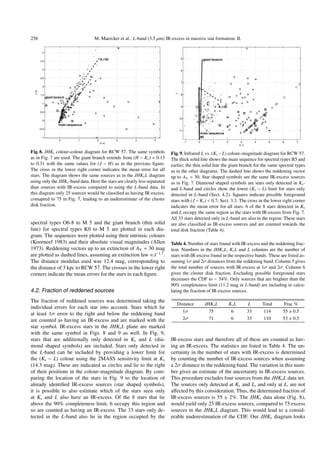
a closer inspection of the Ks - and L-band images shows that the            Fig. 4. Contour map of the emission measured through the H2
2MASS sources possibly are foreground objects close to the                  Q-branch 2.42 µm narrow band filter, overlaid on the 2MASS image
position of embedded stars (on the sky), and therefore result in            of the Ks band emission from the central of RCW 57. Contours levels
large (Ks − L) colours. In two cases (#33 and #43), the J-band              are at 0.8, 1.5, 2.2, 2.9, 4.3, 7.2 and 13 × 10−4 Jy arcsec−2 .
magnitude is only the 95% upper confidence limit (the uncer-
tainty in the magnitude is given as “null” in the PSC, indicating
that the source either was not detected in J-band or is incon-              line filters are similar to the nearby continuum images they are
sistently deblended), resulting in an uncertain (J − Ks ) colour.           overlaid on. Indeed, there is no clear evidence for line emission
Excluding these potential foreground stars decreases the disk               in either the H2 or Br α images, although this does not preclude
fraction from 55% to 54% (see Sect. 5.3). Likely foreground                 their presence.
stars are indicated in Table 7 and are marked with boxes in                     Oliva & Moorwood (1986) report a detection of 2.6 ×
Figs. 7 to 9.                                                               10−13 erg cm−2 s−1 through a 30 beam centred on RCW 57
                                                                            for the H2 Q-branch emission, with the flux falling to approxi-
3.4. Narrow band filters                                                     mately one tenth that value a beam away. Their measurements
                                                                            were through a CVF of similar spectral resolution to the nar-
The three narrow band images are shown in Figs. 4–6. In all                 row band filter we employed, with the line being approxi-
three images the contours showing the emission through the                  mately 10% of the continuum. This would not be apparent in
M. Maercker et al.: L-band (3.5 µm) IR-excess in massive star formation. II.                                 257


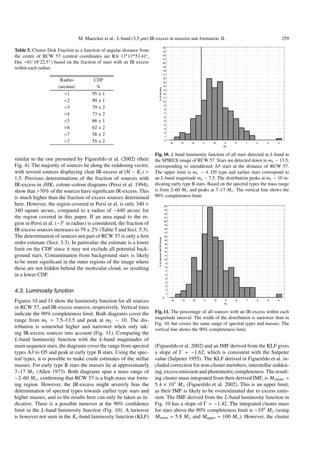
                                                                         Fig. 7. JHKs L colour–colour diagram for RCW 57. The thick solid
Fig. 5. Contour map of the emission measured through the PAHs            line shows the position of the unreddened main sequence for spec-
3.3 µm narrow band filter, overlaid on the L-band image of                tral types O6-8 to M 5. The thin solid line above shows the giant
RCW 57. Contours levels are at 2.2, 3.9, 5.7, 10 and 19 ×                branch for spectral types K0 to M 5 and extends from (J − H) = 0.5,
10−3 Jy arcsec−2 for continuum, or equivalently 4.4, 8.0, 12, 20 and     (Ks − L) = 0.07 to (J − H) = 0.9 to (Ks − L = 0.19. The dashed lines
38 × 10−17 W m−2 arcsec−2 if it is line emission.                        show the reddening vector up to AV = 30 assuming an extinction law
                                                                         ∝λ−1.7 . Star shaped symbols are stars identified as having an IR-excess
                                                                         (Sect. 4.2). Sources in squares are have (J − Ks ) < 0.7 (see Sect. 3.3).
                                                                         The cross in the lower right of the diagram indicates the mean errors
                                                                         for all stars. 209 stars lie above the 90% completeness limit and 75 of
                                                                         these lie outside the reddening band and are therefore considered to
                                                                         have IR-excess (Tables 3 and 4).


                                                                         the level would not be distinguishable from the strong contin-
                                                                         uum from IRS1 in a narrow band filter.
                                                                              We can, however, report a clear detection of PAHs emis-
                                                                         sion from RCW 57. While the diffuse emission in the PAHs and
                                                                         L band images are similar in morphology, with extended emis-
                                                                         sion around IRS1 and a filament extending from it to the NE,
                                                                         the contrast of the diffuse emission to the stellar sources is
                                                                         clearer through the PAHs filter than through the L band fil-
                                                                         ter. A quantitative comparison suggests that typically about
                                                                         one third of the diffuse flux measured in the L band filter
                                                                         must come from the PAHs feature at 3.3 µm. It is likely that
                                                                         scattered continuum dominates the remaining diffuse emis-
Fig. 6. Contour maps of the emission measured through the Br α           sion at L band, although we cannot demonstrate that from the
4.05 µm narrow band filter, overlaid on the L band image of the central
                                                                         data here. The PAHs emission is presumably fluorescently ex-
region of RCW 57. Contour levels are at 3.2, 4.9, 6.5, 9.8, 16, 23 and
                                                                         cited by the far-UV photons also generated by the ionizing
61 × 10−2 Jy arcsec−2 .
                                                                         source(s) which excites the HII region. As can be seen in our
                                                                         Fig. 5, typical fluxes for the 3.3 µm PAHs emission are around
                                                                         10−16 W m−2 arcsec−2 in the nebulosity.
our image without careful continuum subtraction from the nar-
row band image. While H2 emission is indeed likely present in
RCW 57, all we can conclude is that it is not distinguishable            4. Analysis
from the continuum in a narrow band filter image. There are no
                                                                         4.1. Colour–colour and colour–magnitude diagrams
extended regions of bright pure H2 line emission evident.
    Similarly, we cannot distinguish any Br α emission from              Figures 7 to 9 show the colour–colour and colour–magnitude
the continuum at 4 µm in a narrow band filter, although again             diagrams. Figure 7 shows the (J − H) colour vs. (Ks − L) colour,
this line is most likely present. Moorwood & Salinari (1983)             Fig. 8 the (J − H) vs. (H − Ks ) colours and Fig. 9 the L-band
report a detection of Br α 10 S of IRS1, but at a level that is          magnitude vs. (Ks − L) colour. The diagrams were created us-
about 10% of the continuum level we measure. They also report            ing the JHKs data from 2MASS and the L-band data from the
a detection of Br α on IRS1 itself, though at a level inconsistent       SPIREX image. Only sources above the 90% completeness
with an upper limit of McGregor et al. (1984). In either case,           limit were included. The main sequence (thick solid line) for
258                               M. Maercker et al.: L-band (3.5 µm) IR-excess in massive star formation. II.


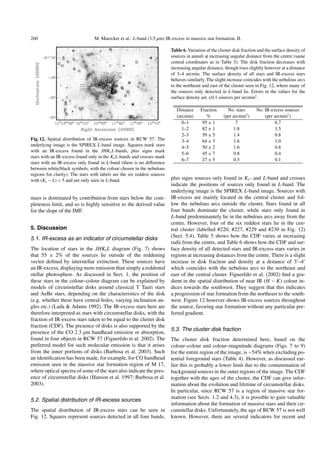
Fig. 8. JHKs colour–colour diagram for RCW 57. The same symbols             Fig. 9. Infrared L vs. (Ks − L) colour–magnitude diagram for RCW 57.
as in Fig. 7 are used. The giant branch extends from (H − Ks ) = 0.13       The thick solid line shows the main sequence for spectral types B5 and
to 0.31 with the same values for (J − H) as in the previous figure.          earlier, the thin solid line the giant branch for the same spectral types
The cross in the lower right corner indicates the mean error for all        as in the other diagrams. The dashed line shows the reddening vector
stars. The diagram shows the same sources as in the JHKs L diagram          up to AV = 30. Star shaped symbols are the same IR-excess sources
using only the JHKs -band data. Here the stars are clearly less separated   as in Fig. 7. Diamond shaped symbols are stars only detected in Ks -
than sources with IR-excess compared to using the L-band data. In           and L-band and circles show the lower (Ks − L) limit for stars only
this diagram only 25 sources would be classified as having IR-excess,        detected in L-band (Sect. 4.2). Squares indicate possible foreground
comapred to 75 in Fig. 7, leading to an underestimate of the cluster        stars with (J − Ks ) < 0.7; Sect. 3.3. The cross in the lower right corner
disk fraction.                                                              indicates the mean error for all stars. 6 of the 8 stars detected in Ks
                                                                            and L occupy the same region as the stars with IR-excess from Fig. 7.
                                                                            All 33 stars detected only in L-band are also in the region. These stars
spectral types O6-8 to M 5 and the giant branch (thin solid                 are also classified as IR-excess sources and are counted towards the
line) for spectral types K0 to M 5 are plotted in each dia-                 total disk fraction (Table 4).
gram. The sequences were plotted using their intrinsic colours
(Koorneef 1983) and their absolute visual magnitudes (Allen                 Table 4. Number of stars found with IR-excess and the reddening frac-
1973). Reddening vectors up to an extinction of AV = 30 mag                 tion. Numbers in the JHKs L, Ks L and L columns are the number of
are plotted as dashed lines, assuming an extinction law ∝λ−1.7 .            stars with IR-excess found in the respective bands. These are listed as-
The distance modulus used was 12.4 mag, corresponding to                    suming 1σ and 2σ distances from the reddening band. Column 5 gives
the distance of 3 kpc to RCW 57. The crosses in the lower right             the total number of sources with IR-excess at 1σ and 2σ. Column 6
corners indicate the mean errors for the stars in each figure.               gives the cluster disk fraction. Excluding possible foreground stars
                                                                            decreases the CDF to ∼ 54%. Only sources that are brighter than the
                                                                            90% completeness limit (11.2 mag in L-band) are including in calcu-
4.2. Fraction of reddened sources                                           lating the fraction of IR-excess sources.

The fraction of reddened sources was determined taking the
                                                                               Distance       JHKs L       Ks L       L       Total       Frac %
individual errors for each star into account. Stars which lie
                                                                                  1σ            75           6       33        114       55 ± 0.5
at least 1σ error to the right and below the reddening band
are counted as having an IR-excess and are marked with the                        2σ            71           6       33        110       53 ± 0.5
star symbol. IR-excess stars in the JHKs L plane are marked
with the same symbol in Figs. 8 and 9 as well. In Fig. 9,
stars that are additionally only detected in Ks and L (dia-                 IR-excess stars and therefore all of these are counted as hav-
mond shaped symbols) are included. Stars only detected in                   ing an IR-excess. The statistics are listed in Table 4. The un-
the L-band can be included by providing a lower limit for                   certainty in the number of stars with IR-excess is determined
the (Ks − L) colour using the 2MASS sensitivity limit at Ks                 by counting the number of IR-excess sources when assuming
(14.3 mag). These are indicated as circles and lie to the right             a 2σ distance to the reddening band. The variation in this num-
of their positions in the colour–magnitude diagram. By com-                 ber gives an estimate of the uncertainty in IR-excess sources.
paring the location of the stars in Fig. 9 to the location of               This procedure excludes four sources from the JHKs L data set.
already identified IR-excess sources (star shaped symbols),                  The sources only detected at Ks and L, and only at L, are not
it is possible to also estimate which of the stars seen only                affected by this consideration. Thus, the determined fraction of
at Ks and L also have an IR-excess. Of the 8 stars that lie                 IR-excess sources is 55 ± 2%. The JHKs data alone (Fig. 8),
above the 90% completeness limit, 6 occupy this region and                  would yield only 25 IR-excess sources, compared to 75 excess
so are counted as having an IR-excess. The 33 stars only de-                sources in the JHKs L diagram. This would lead to a consid-
tected in the L-band also lie in the region occupied by the                 erable underestimation of the CDF. Our JHKs diagram looks
M. Maercker et al.: L-band (3.5 µm) IR-excess in massive star formation. II.                              259

Table 5. Cluster Disk Fraction as a function of angular distance from
the centre of RCW 57 (central coordinates are RA 11h 11m 53.41s ,
Dec −61◦ 18 22.5 ) based on the fraction of stars with an IR excess
within each radius.

                       Radius            CDF
                      (arcmin)            %
                         <1             95 ± 1
                         <2             90 ± 1
                         <3             79 ± 2
                         <4             73 ± 2
                         <5             66 ± 1
                         <6             62 ± 2
                         <7             58 ± 2
                         >7             55 ± 2

                                                                        Fig. 10. L band luminosity function of all stars detected at L-band in
similar to the one presented by Figuerêdo et al. (2002) (their          the SPIREX image of RCW 57. Stars are detected down to mL ∼ 13.5,
Fig. 4). The majority of sources lie along the reddening vector,        corresponding to unreddened A5 stars at the distance of RCW 57.
with several sources displaying clear IR-excess at (H − Ks ) >          The upper limit is mL ∼ 4. O5 type and earlier stars correspond to
1.5. Previous determinations of the fraction of sources with            an L-band magnitude mL ∼ 7.5. The distribution peaks at mL ∼ 10 in-
IR-excess in JHKs colour–colour diagrams (Persi et al. 1994),           dicating early type B stars. Based on the spectral types the mass range
show that >70% of the sources have significant IR-excess. This           is from 2–60 M and peaks at 7–17 M . The vertical line shows the
is much higher than the fraction of excess sources determined           90% completeness limit.
here. However, the region covered in Persi et al. is only 340 ×
340 square arcsec, compared to a radius of ∼440 arcsec for
the region covered in this paper. If an area equal to the re-
gion in Persi et al. (∼3 in radius) is considered, the fraction of
IR-excess sources increases to 79 ± 2% (Table 5 and Sect. 5.3).
The determination of sources not part of RCW 57 is only a first
order estimate (Sect. 3.3). In particular, the estimate is a lower
limit on the CDF since it may not exclude all potential back-
ground stars. Contamination from background stars is likely
to be more significant in the outer regions of the image where
these are not hidden behind the molecular cloud, so resulting
in a lower CDF.


4.3. Luminosity function
Figures 10 and 11 show the luminosity function for all sources
in RCW 57, and IR-excess sources, respectively. Vertical lines
indicate the 90% completeness limit. Both diagrams cover the            Fig. 11. The percentage of all sources with an IR-excess within each
                                                                        magnitude interval. The width of the distribution is narrower than in
range from mL = 7.5–13.5 and peak at mL ∼ 10. The dis-
                                                                        Fig. 10, but covers the same range of spectral types and masses. The
tribution is somewhat higher and narrower when only tak-
                                                                        vertical line shows the 90% completeness limit.
ing IR-excess sources into account (Fig. 11). Comparing the
L-band luminosity function with the L-band magnitudes of
main sequence stars, the diagrams cover the range from spectral         (Figuerêdo et al. 2002) and an IMF derived from the KLF gives
types A3 to O5 and peak at early type B stars. Using the spec-          a slope of Γ = −1.62, which is consistent with the Salpeter
tral types, it is possible to make crude estimates of the stellar       value (Salpeter 1955). The KLF derived in Figuerêdo et al. in-
masses. For early type B stars the masses lie at approximately          cluded correction for non-cluster members, interstellar redden-
7–17 M (Allen 1973). Both diagrams span a mass range of                 ing, excess emission and photometric completeness. The result-
∼2–60 M , confirming that RCW 57 is a high mass star form-               ing cluster mass integrated from their derived IMF, is Mcluster =
ing region. However, the IR-excess might severely bias the              5.4 × 10³ M (Figuerêdo et al. 2002). This is an upper limit,
determination of spectral types towards earlier type stars and          as their IMF is likely to be overestimated due to excess emis-
higher masses, and so the results here can only be taken as in-         sion. The IMF derived from the L-band luminosity function in
dicative. There is a possible turnover at the 90% confidence             Fig. 10 has a slope of Γ = −1.42. The integrated cluster mass
limit in the L-band luminosity function (Fig. 10). A turnover           for stars above the 90% completeness limit is ∼104 M (using
is however not seen in the Ks -band luminosity function (KLF)           Mlower = 5.8 M and Mupper = 100 M ). However, the cluster
260                              M. Maercker et al.: L-band (3.5 µm) IR-excess in massive star formation. II.

                                                                          Table 6. Variation of the cluster disk fraction and the surface density of
                                                                          sources in annuli at increasing angular distance from the centre (same
                                                                          central coordinates as in Table 5). The disk fraction decreases with
                                                                          increasing angular distance, though rises slightly however at a distance
                                                                          of 3–4 arcmin. The surface density of all stars and IR-excess stars
                                                                          behaves similarly. The slight increase coincides with the nebulous arcs
                                                                          to the northeast and east of the cluster seen in Fig. 12, where many of
                                                                          the sources only detected in L-band lie. Errors in the values for the
                                                                          surface density are ±0.1 sources per arcmin2 .

                                                                             Distance     Fraction       No. stars       No. IR-excess sources
                                                                             (arcmin)        %         (per arcmin2 )        (per arcmin2 )
                                                                                0–1        95 ± 1            7                    6.7
                                                                                1–2        82 ± 1           1.8                   1.5
                                                                                2–3        59 ± 5           1.4                   0.8
Fig. 12. Spatial distribution of IR-excess sources in RCW 57. The               3–4        64 ± 3           1.6                   1.0
underlying image is the SPIREX L-band image. Squares mark stars                 4–5        50 ± 2           1.6                   0.8
with an IR-excess found in the JHKs L-bands, plus signs mark
                                                                                5–6        45 ± 7           0.8                   0.4
stars with an IR-excess found only in the Ks L-bands and crosses mark
                                                                                6–7        27 ± 5           0.5                   0.1
stars with an IR-excess only found in L-band (there is no difference
between white/black symbols, with the colour chosen in the nebulous
regions for clarity). The stars with labels are the six reddest sources
with (Ks − L) > 5 and are only seen in L-band.                            plus signs sources only found in Ks - and L-band and crosses
                                                                          indicate the positions of sources only found in L-band. The
                                                                          underlying image is the SPIREX L-band image. Sources with
mass is dominated by contribution from stars below the com-               IR-excess are mainly located in the central cluster and fol-
pleteness limit, and so is highly sensitive to the derived value          low the nebulous arcs outside the cluster. Stars found in all
for the slope of the IMF.                                                 four bands dominate the cluster, while stars only found in
                                                                          L-band predominantely lie in the nebulous arcs away from the
                                                                          centre. However, four of the six reddest stars lie in the cen-
5. Discussion                                                             tral cluster (labelled #220, #227, #229 and #230 in Fig. 12)
                                                                          (Sect. 5.4). Table 5 shows how the CDF varies at increasing
5.1. IR-excess as an indicator of circumstellar disks
                                                                          radii from the centre, and Table 6 shows how the CDF and sur-
The location of stars in the JHKs L diagram (Fig. 7) shows                face density of all detected stars and IR-excess stars varies in
that 55 ± 2% of the sources lie outside of the reddening                  regions at increasing distances from the centre. There is a slight
vector defined by interstellar extinction. These sources have              increase in disk fraction and density at a distance of 3 –4
an IR-excess, displaying more emission than simply a reddened             which coincides with the nebulous arcs to the northeast and
stellar photosphere. As discussed in Sect. 1, the position of             east of the central cluster. Figuerêdo et al. (2002) find a gra-
these stars in the colour–colour diagram can be explained by              dient in the spatial distribution of near IR (H − K) colour in-
models of circumstellar disks around classical T Tauri stars              dices towards the southwest. They suggest that this indicates
and AeBe stars, depending on the characteristics of the disk              a progression of star formation from the northeast to the south-
(e.g. whether these have central holes, varying inclination an-           west. Figure 12 however shows IR-excess sources throughout
gles etc.) (Lada & Adams 1992). The IR-excess stars here are              the source, favoring star formation without any particular pre-
therefore interpreted as stars with circumstellar disks, with the         ferred gradient.
fraction of IR-excess stars taken to be equal to the cluster disk
fraction (CDF). The presence of disks is also supported by the
                                                                          5.3. The cluster disk fraction
presence of the CO 2.3 µm bandhead emission or absorption,
found in four objects in RCW 57 (Figuerêdo et al. 2002). The              The cluster disk fraction determined here, based on the
preferred model for such molecular emission is that it arises             colour–colour and colour–magnitude diagrams (Figs. 7 to 9)
from the inner portions of disks (Barbosa et al. 2003). Such              for the entire region of the image, is ∼54% when excluding po-
an identification has been made, for example, for CO bandhead              tential foreground stars (Table 4). However, as discussed ear-
emission seen in the massive star formation region of M 17,               lier this is probably a lower limit due to the contamination of
where optical spectra of some of the stars also indicate the pres-        background sources in the outer regions of the image. The CDF
ence of circumstellar disks (Hanson et al. 1997; Barbosa et al.           together with the ages of the cluster, the CDF can give infor-
2003).                                                                    mation about the evolution and lifetime of circumstellar disks.
                                                                          In particular, since RCW 57 is a region of massive star for-
                                                                          mation (see Sects. 1.2 and 4.3), it is possible to gain valuable
5.2. Spatial distribution of IR-excess sources
                                                                          information about the formation of massive stars and their cir-
The spatial distribution of IR-excess stars can be seen in                cumstellar disks. Unfortunately, the age of RCW 57 is not well
Fig. 12. Squares represent sources detected in all four bands,            known. However, there are several indicators for recent and
M. Maercker et al.: L-band (3.5 µm) IR-excess in massive star formation. II.                                261

Table 7. (The complete table (251 rows) is only available in electronic form at the CDS). Magnitudes for all sources (including foreground
sources and sources below the 90% completeness limit) in RCW 57. Stars with measurements in all four bands are listed first. Then stars with
measurements in Ks and L only, and finally stars just detected in L-band. Column 1 gives the source id. Columns 2 and 3 the RA and Dec
respectively in J2000. The coordinates for sources found in all four bands are from the 2MASS point source catalogue (PSC), positions for the
remaining stars are determined by reference to 2MASS images. Columns 4, 6, 8 and 10 give the JHKs - and L-band magnitudes respectively.
Columns 5, 7, 9 and 11 give the photometric errors. For sources detected in all bands, the JHKs magnitudes and errors are taken from the
2MASS PSC. A “null” as error indicates a 95% confidence upper limit for the 2MASS magnitude in the PSC. The L-band errors are combined
from the errors in daophot and the errors due to the zero point correction. Sources only detected in the Ks - and L-bands have magnitudes
determined from this work. For sources not detected at J, H or Ks the upper limits on these magnitudes are 15.8, 15.1 and 14.3 respectively.
Stars with an IR-excess are marked with an “e” in Col. 12 (comments). Likely foreground stars are marked with “fg”. Stars that match sources
in Persi et al. (1994) are marked with “Persi” together with the id assigned in their paper. Stars that match the MIR sources in Barbosa et al.
(2003) are marked with “No” and the id used in their paper.

     id     RA(J2000)        Dec(J2000)        mJ        σJ        mH        σH        mK         σK        mL        σL        Comments
             (h m s)           (d m s)
     1      11 10 50.0       –61 18 20.2       09.8      0.02     08.9      0.03       08.6      0.02      08.3       0.06
     2      11 10 56.8       –61 17 08.6       09.7      0.02     08.9      0.05       08.5      0.02      08.5       0.04
     3      11 10 59.1       –61 17 58.3       12.6      0.02     10.7      0.02       09.9      0.02      09.3       0.07
     4      11 10 59.9       –61 18 39.8       15.1      0.06     14.6      0.12       14.3      0.08      09.7       0.04           e
     5      11 11 05.2       –61 15 32.8       10.4      0.02     09.7      0.02       09.4      0.02      09.4       0.06
     .
     .
     .


ongoing star formation, such as CO 2.3 µm bandhead emis-
sion and absorption, the detection of CH3 OH and H2 O maser
sources and the clustering of IR-excess sources in the central
region (Sects. 1.2 and 5.2). Within a radius of ∼4 of the cen-
tre of the cluster, the fraction of sources with an IR-excess is
∼73% (Table 5). This high IR-excess fraction, interpreted as
the cluster disk fraction (CDF) (Sect. 5.1), suggests that the re-
gion is young. These signs of early stages of star formation,
combined with the fast evolution timescales for massive pre-
main sequence stars (on the order of 105 to 106 years), indicates
an upper limit for the age of RCW 57 of ∼1–2 Myr, and an age
spread within this limit.
    In Fig. 13, the resulting CDF and age of RCW 57 are com-
pared to earlier JHKL surveys of clusters in the Galaxy (Haisch
et al. 2001) and the results for 30 Doradus from Paper I. For the
purpose of comparison we have assumed an age for RCW 57
of 1.5 ± 1 Myr. The data from Haisch et al. was determined
in a similar way to this paper using JHKL colour–colour di-
agrams. The ages for the Trapezium, IC 348, NGC 2264 and                 Fig. 13. Cluster disk fraction (CDF) for 7 clusters by Haisch et al.
NGC 2024 were determined using pre-main-sequence (PMS)                   (2001) and 30 Doradus (Paper I) vs. their mean ages. The CDFs were
tracks, the ages for NGC 2362 and NGC 1960 were determined               determined using JHKs L data as described in the text (Sect. 5.3) and
using post-main-sequence isochrone fitting in HR-diagrams                 Paper I. The location of RCW 57 is indicated by a circle with error bars
                                                                         indicating the uncertainty in age and disk fraction. The dot-dashed line
(Haisch et al. 2001). The systemetic error in the upper right
                                                                         is the best fit determined by Haisch et al. (2001).
corner of Fig. 13 gives their estimate of the overall systematic
error introduced in using different PMS tracks. The clusters in-
cluded cover a range of masses and ages (0.3 Myr to 30 Myr).             only take the inner 5 –6 into account (cf. the region consid-
The error in the CDF for RCW 57 is ±12% and includes                     ered by Persi et al. 1994), this increases the CDF to 60–65%.
the error due to the uncertainty in the number of IR-excess              In the central arcmin the disk fraction is even higher, ∼95%.
sources (±2%). It also allows for the uncertainty in determin-           Considering the additional uncertainty in the age, our data is
ing the number of foreground stars. The position of RCW 57               consistent with the predictions of Haisch et al. for the rela-
in Fig. 13 lies below the least-squares straight line fit to the          tion between disk fraction and age. Certainly, the disk frac-
data of Haisch et al. However, this position on the diagram              tion is much higher than that determined for the oldest clus-
is clearly uncertain. The CDF determined includes data cov-              ter NGC 2362. However, as with 30 Doradus (Paper I), our
ering the entire SPIREX image, although the outer regions                best estimates of the disk fraction as a function of age lie below
might be biased towards stars not belonging to RCW 57. If we             the relation determined by Haisch et al. Both 30 Doradus and
262                             M. Maercker et al.: L-band (3.5 µm) IR-excess in massive star formation. II.

RCW 57 are high mass star formation regions, where the evolu-          has been presented. The L-band photometry from SPIREX was
tion timescales for the most massive members is expected to be         combined with JHKs data from 2MASS to determine the frac-
less than 106 yr. Nevertheless, if the CDF had been determined         tion of sources with IR-excess in JHKs L colour–colour and
from the JHKs data alone, the result would have appeared to fall       colour magnitude diagrams. As for 30 Doradus, it is appar-
significantly below that of the Haisch et al. data. In RCW 57, it       ent that the JHKs data alone would considerably underestimate
is possible that the external photoevaporation of circumstellar        the fraction of IR-excess sources, with only 25 sources clas-
disks decreases the CDF. Lifetimes for photoevaporated disks           sified as having an IR-excess. Using the JHKs L data, 75 are
may then be of order of 0.1 Myr (cf. Hollenbach et al. 1994). If       counted towards the total fraction of stars with an IR-excess in
this is true for RCW 57, the initial disk fraction would be higher     the JHKs L diagram. More than 50% of detected L-band sources
than determined here from the JHKs L data. Extrapolating the           have an IR-excess. This is, however, likely to still be a lower
best fit suggests that the age for circumstellar disks is no more       estimate, since foreground contamination has not fully been
than ∼6 Myr.                                                           taken into account. Limiting the analysis to the inner ∼6 of
                                                                       the source, the disk fraction increases to ∼65%. The results
                                                                       were compared to earlier surveys (Haisch et al. 2001) of clus-
5.4. The cluster core
                                                                       ters of varying ages and masses in the Galaxy (ages between
Several very red sources ((Ks −L) > 4.5) lie in the central region     0.3 Myr for NGC 2024 to 4.5 Myr for NGC 2362; masses down
(r < 1 ) and in the bright arc to the southeast of the central clus-   to 0.13 M for NGC 2024). Although the CDF for RCW 57
ter (Fig. 12). The six reddest sources ((Ks − L) > 5) in our data      lies at the lower end of what is predicted by Haisch et al., it
were only detected in the L-band, with their colours therefore         is still consistent with their data, confirming a very high ini-
only being lower limits. These are labelled in Fig. 12. Four of        tial disk fraction (>80%) and a lifetime of <6 Myr. However,
                                                                                                                     ∼
these lie in the central cluster close to the position of IRS 1        our results for both RCW 57 and 30 Doradus (Paper I) suggest
(#226, #227, #229 and #230). The remaining two lie in the              a faster evolution of circumstellar disks around high mass stars,
bright arc to the southeast (#232 and #235). While we cannot           since the disk fractions appear to be slightly lower. This could
classify these sources based on a single measurement, Barbosa          be caused by photoevaporation of the disks due to the intense
et al. (2003) examined the cluster core in the mid-IR, determin-       radiation environment generated by high mass stars.
ing spectral indices for 3 sources. Comparing these to indices         Acknowledgements. This work could not have been conducted with-
for low mass protostars, they find two (Nos. 48, 50) that would         out the great help received from many colleagues within the US
be classified as Class I objects (two of the four sources in IRS 1      CARA and the Australian JACARA organisations whose efforts made
that were resolved by Barbosa et al., see Sect. 1.2). Silicate ab-     the SPIREX/Abu project at the South Pole such a success, to whom
sorption features in the spectra of the five objects seen at 10 µm      we are extremely grateful. We also acknowledge the funding sup-
by Frogel & Persson (1974) in the inner 1.4 square arc min-            port from the Australian Research Council and the Australian Major
utes, also indicates Class I protostellar objects. Barbosa et al.      National Research Facilities program that made this work possible in
(2003) overlay a K-band image of the cluster core with the             the first place. We thank the referee, A. P. Marston, for his percep-
radio continuum map by DePree et al. (1999). None of their             tive comments, which have greatly improved this paper. This pub-
                                                                       lication makes use of data products from the Two Micron All Sky
sources can be associated with the radio peak emission and
                                                                       Survey, which is a joint project of the University of Massachusetts
they suggest that the ionizing source lies hidden behind dark
                                                                       and the Infrared Processing and Analysis Center/California Institute
clouds in the line of sight. The position of the radio peak emis-      of Technology, funded by the National Aeronautics and Space
sion is confirmed by Walsh et al. (2001). As with the results           Administration and the National Science Foundation. This research
from Barbosa et al., none of our L-band sources can be con-            has made use of the NASA/ IPAC Infrared Science Archive, which
nected with the radio continuum peak, which coincides with the         is operated by the Jet Propulsion Laboratory, California Institute of
dark lane just south of the bright cluster core (RA 11h 11m 51s,       Technology, under contract with the National Aeronautics and Space
Dec −61◦ 18 45 (J2000)). The sources we see only at L-band             Administration.
are likely to be massive Class I protostars with circumstellar
disks, still heavily embedded in their dust shells (Lada et al.        References
2000). The fact that they are not detected at shorter wave-
                                                                       Allen, C. W. 1973, Astrophysical Quantities, 3rd Ed. (London: The
lengths, and occupy the same region in the colour–magnitude
                                                                           Athlone Press)
diagram as the IR-excess stars, gives further support to this sug-     Barbosa, C. L., Daminelli, A., Blum, R. D., & Conti, P. S. 2003, AJ,
gestion. In addition, 22 sources only seen in the L-band are               126, 2411
found in the nebulous arcs further away from the cluster core          Behrend, R., & Maeder, A. 2001, A&A, 373, 190
(see Fig. 12). This indicates the possible presence of massive         Burton, M. G., Ashley, M. C. B., Marks, R. D., et al. 2000, ApJ, 542,
protostars in these regions as well, suggesting that massive star          359
formation is not just confined to the central cluster.                  Caswell, J. L., Batchelor, R. A., Foster, J. R., & Wellington, K. S.
                                                                           1989, Austral. J. Phys., 42, 331
                                                                       Caswell, J. L., Vaile, R. A., Ellingsen, S. P., Whiteoak, J. B., & Norris,
6. Conclusions                                                             R. P. 1995, MNRAS, 272, 96
                                                                       Cutri, R. M., Skrutskie, M. F., van Dyk, S., et al. 2003, VizieR On-
As the second of two papers on IR-excess in massive star form-             line Data Catalogue:II/246, Originally published in: University
ing regions measured by the SPIREX telescope at the South                  of Massachusetts and Infrared Processing and Analysis Center,
Pole, L-band photometry for the giant HII region RCW 57                    (IPAC/California Institute of Technology)
M. Maercker et al.: L-band (3.5 µm) IR-excess in massive star formation. II.                              263

DePree, C. G., Nysewander, M. C., & Goss, W. M. 1999, AJ, 117,           Maercker, M., & Burton, M. G. 2005, A&A, 438, 663
    2902                                                                 McGee, R. X., & Gardner, F. F. 1986, Austral. J. Phys. Suppl., 21, 149
Figuerêdo, E., Blum, R. D., Daminelli, A., & Conti, P. S. 2002, AJ,      McGregor, P. J., Persson, S. E., & Geballe, T. R. 1984, PASP, 96, 315
    124, 2739                                                            McGregor, P. J., Hart, J., Downing, M., Hoadley, D., & Bloxham, G.
Fowler, A. M., Sharp, N., Ball, W., et al. 1998, Infrared Astronomical       1994, ExA, 3, 139
    Instrumentation, ed. A. M. Fowler, Proc. SPIE, 3354, 1170            Moneti, A. 1992, A&A, 259, 627
Frogel, J. A., & Persson, S. E. 1974, ApJ, 192, 351                      Moorwood, A. F. M., & Salinari, P. 1983, A&A, 125, 354
Goss, W. M., & Shaver, P. A. 1970, Austral. J. Phys. Astrophys.          Oliva, E., & Moorwood, A. F. M. 1986, A&A, 164, 104
    Suppl., 14, 1                                                        Persi, P., Roth, M., Tapia, M., Ferrari-Toniolo, M., & Marenzi, A. R.
Haisch, K. E., Jr., Lada, E. A., & Lada, C. J. 2001, ApJ, 553, L153          1994, A&A, 282, 474
Hanson, M. M., Howarth, I. D., & Conti, P. S. 1997, ApJ, 489, 698        Rathborne, J. 2003, Young Massive Stars: Traffic Lights for Nearby
Hereld, M. 1994, ExA, 3, 87                                                  Star Formation, Ph.D. Thesis, University of New South Wales,
Hollenbach, D., Johnstone, D., Lizano, S., & Shu, F. 1994, ApJ, 428,         Sydney
    654                                                                  Retallack, D. S., & Goss, W. M. 1980, MNRAS, 193, 261
Kenyon, S. J., & Hartmann, L. 1995, ApJS, 101, 117                       Salpeter, E. E. 1955, ApJ, 121, 161
Kleinmann, S. G., Lysaght, M. G., Pughe, W. L., et al. 1994, Ap&SS,      Walsh, A. J., Bertoldi, F., Burton, M. G., & Nikola, T. 2001, MNRAS,
    217, 11                                                                  326, 36
Koorneef, J. 1983, A&A, 128, 84                                          White, G. J., & Phillips, J. P. 1983, MNRAS, 202, 255
Lada, C. J., & Adams, F. C. 1992, ApJ, 393, 278                          Wilson, T. L., Mezger, P. G., Gradner, F. F., & Milne, D. K. 1970,
Lada, C. J., Muench, A. A., Haisch, K. E., Jr., et al. 2000, AJ, 120,        A&A, 6, 364
    3162

Aa4372 05

  • 1.
    A&A 450, 253–263(2006) DOI: 10.1051/0004-6361:20054372 Astronomy & c ESO 2006 Astrophysics L -band (3.5 µm) IR-excess in massive star formation II. RCW 57/NGC 3576 M. Maercker1,2 , M. G. Burton2 , and C. M. Wright3 1 Stockholm Observatory, AlbaNova University Center, 106 91 Stockholm, Sweden e-mail: maercker@astro.su.se 2 School of Physics, University of New South Wales, Sydney, NSW 2052, Australia e-mail: mgb@phys.unsw.edu.au 3 School of Physical, Environmental and Mathematical Sciences, University of New South Wales@ADFA Canberra, ACT 2600, Australia e-mail: c.wright@adfa.edu.au Received 18 October 2005 / Accepted 7 December 2005 ABSTRACT Context. We present a JHKs L survey of the massive star forming region RCW 57 (NGC 3576) based on L-band data at 3.5 µm taken with SPIREX (South Pole Infrared Explorer), and 2MASS JHKs data at 1.25–2.2 µm. This is the second of two papers, the first one concerning a similar JHKs L survey of 30 Doradus. Aims. Colour–colour and colour-magnitude diagrams are used to detect sources with infrared excess. This excess emission is interpreted as coming from circumstellar disks, and hence gives the cluster disk fraction (CDF). Based on the CDF and the age of RCW 57, it is possible to draw conclusions on the formation and early evolution of massive stars. Methods. The infrared excess is detected by comparing the locations of sources in JHKs L colour–colour and L vs. (Ks − L) colour–magnitude diagrams to the reddening band due to interstellar extinction. Results. A total of 251 sources were detected. More than 50% of the 209 sources included in the diagrams have an infrared excess. Conclusions. Comparison with other JHKs L surveys, including the results on 30 Doradus from the first paper, support a very high initial disk fraction (>80%) even for massive stars, although there is an indication of a possible faster evolution of circumstellar disks around high mass stars. 33 sources only found in the L-band indicate the presence of heavily embedded, massive Class I protostars. We also report the detection of diffuse PAHs emission throughout the RCW 57 region. Key words. stars: circumstellar matter – stars: formation – stars: evolution – stars: Hertzsprung-Russell (HR) and C-M diagrams – stars: planetary systems: protoplanetary disks – stars: pre-main sequence 1. Introduction always clear. JHKs L observations give a larger separation to the IR-excess sources in colour–colour diagrams, whereas JHKs 1.1. IR-excess as a measure of circumstellar disks observations tend to underestimate the fraction of stars with This paper is the second of two papers using IR-excess in the IR-excess. On account of the difficulties of ground based ob- JHKs L plane (1.2–3.5 µm) to measure the fraction of sources servations at longer wavelengths, the L-band (3.5 µm) proves with circumstellar disks in high mass star forming regions. The to be the best wavelength for detecting circumstellar disks, al- first paper concerned 30 Doradus in the LMC (Maercker & though longer wavelengths are preferable, if space observations Burton 2005, from now referred to as Paper I). IR-excess can are available. Kenyon & Hartmann (1995) show the advantage be detected using near infrared colour-colour diagrams by com- of (Ks − L) as a measure of IR-excess by comparing the fre- paring the position of sources relative to the reddening vec- quency distributions in young stellar clusters for (H − Ks ) and tors due to interstellar extinction. The excess radiation above (Ks − L). Whereas the (H − Ks ) distribution has one clear peak that of a blackbody can be explained by models of circumstel- at (H − Ks ) ∼ 0.2–0.4 and a long tail, the (Ks − L) distribution lar disks around a young stellar object (e.g. Lada & Adams has a clear second peak at (Ks − L) ∼ 0.8–1.0 made up mostly 1992). Although this excess radiation can be detected using of class II sources with optically thick, circumstellar disks. JHKs data (1.2–2.2 µm) alone, the nature of IR-excess is not 1.2. RCW 57 Full Table 7 is only available in electronic form at the CDS via anonymous ftp to cdsarc.u-strasbg.fr (130.79.128.5) or via This young massive star forming region, also known as http://cdsweb.u-strasbg.fr/cgi-bin/qcat?J/A+A/450/253 NGC 3576, is one of the brightest HII regions in the infrared in Article published by EDP Sciences and available at http://www.edpsciences.org/aa or http://dx.doi.org/10.1051/0004-6361:20054372
  • 2.
    254 M. Maercker et al.: L-band (3.5 µm) IR-excess in massive star formation. II. our Galaxy. The kinematic distance is 3.0 ± 0.3 kpc, adopted Barbosa et al. also found a new MIR source, without a coun- from De Pree et al. (1999). An asymmetrical structure in the terpart in the NIR, which is possibly a hot core. In the central region can be seen in the 21 cm map by Retallack & Goss region a strong CO J = 2−1 line at 230 GHz was observed (1980), which extends to the northeast but has a sharp cut off by White & Phillips (1983). Shock-excited H2 line emission in the southwest. The spectral energy distributions of five ob- may also indicate the presence of gas outflows (Figuerêdo et al. jects detected using a 10 µm map (Frogel & Persson 1974) 2002). suggest that these are protostellar objects with silicate absorp- tion features, therefore indicating Class I objects (Persi et al. 1994). Near infrared photometry by Persi et al., together with 2. Observations an 8–13 µm CVF spectrum of IRS 1 (IRAS 11097-6102 in the IRAS Point Source Catalogue), show that the majority of 2.1. L-band data from SPIREX stars (>70%) have an infrared excess in the JHKs plane. 19 of The data at 3.5 µm was taken with the 60 cm South Pole these sources could be matched with the present data, 15 InfraRed Explorer (SPIREX) (Hereld 1994; Burton et al. 2000) of which we show can also be classified as having an infrared at the Amundsen-Scott South-Pole Station using the Abu cam- excess in the JHKs L plane. The sources discussed by Persi et al. era equipped with a 1024 × 1024 InSb array (Fowler et al. are confined to the central region, confirming the youth of the 1998) in July and August 1999. Observations were carried out cluster. Radio recombination lines were detected by McGee & using the L-band filter (λcentral = 3.514 µm, ∆λ = 0.618 µm) Gardner (1968), Wilson et al. (1970) and De Pree et al. (1999). and had a field of view of 10 and pixel scale 0.6 . The im- The detection of maser sources in CH3 OH and H2 O (Caswell age is a mosaic of a series of 3 min frames, each shifted et al. 1995, and 1989 respectively) are indications of early by 15 from each other, interleaved with seperate sky observa- stages of star formation in a dense circumstellar environment. tions, and comprises a total of 60 min of on-source integration. Thorough investigations of the central region have been under- Reductions were done automatically using the SPIREX/Abu taken by Figuerêdo et al. (2002) in the near-infrared (NIR), and pipeline1. Unfortunately the data was not flux calibrated and Barbosa et al. (2003) in the mid-infrared (MIR). Nine of the seperate observations were necessary to determine the calibra- MIR sources match sources seen in the L-band image presented tion, as discussed in Paper I (see Sect. 2.4). here. In the NIR, JHKs colour–colour and colour–magnitude diagrams show sources affected by excess emission, indicat- ing the presence of circumstellar disks around the less massive 2.2. Narrow band filters from SPIREX members of the cluster (Figuerêdo et al. 2002). Eight spectra of the brightest sources show rising continua towards the IR. In addition to the L-band data, images were obtained through Three of these have a clear infrared excess. The detection of three narrow band filters, centred on the wavelengths of the H2 CO bandheads (2.2935 µm) in emission and absorption in- v = 1–0 Q-branch lines, a PAHs emission feature, and the hy- dicates the presence of several sources still heavily embed- drogen Br α line. The line centres of the filters were 2.42, ded in their stellar birthclouds (Figuerêdo et al. 2002; Barbosa 3.30 and 4.05 µm, respectively, and their widths 0.034, 0.074 et al. 2003). Based on the radio data (Goss & Shaver 1970), and 0.054 µm. For the H2 and PAHs filters the data were RCW 57 can be classified as a Giant HII (GHII) region, with self-calibrated using interpolated values for magnitudes of the 1.6 × 1050 photons s−1 in the UV (defining sources brighter sources IRS1, Persi 43 and Persi 106 (stars 88, 74 and 124, re- than 1050 Lyman continuum photons per second as GHII re- spectively in Table 7) from those we determined in this Table gions (Figuerêdo et al. 2002)). A possible ionizing source has for the Ks and L bands. For the Br α filter, we self-calibrated been found at the peak emission of the 3.4 cm map (DePree based on a flux for IRS1 of 16 Jy at 4 µm, as measured by et al. 1999), the source being a cluster of stars that have bro- McGregor et al. (1984). ken out of their natal cocoons but remain hidden behind dark clouds along the line of sight (Barbosa et al. 2003). The radio 2.3. JHKs -band data from 2MASS peak emission (at ∼RA 11h 11m 51s , Dec −61◦ 18 45 (J2000)) is also hidden behind clouds in the SPIREX image. This is The L-band observations were complemented with JHKs data further confirmed by Walsh et al. (2001), who find the peak from the 2MASS point source catalogue (PSC) (Cutri et al. of the 8.64 GHz continuum emission to lie at approximately 2003) and atlas images2 . The 2MASS telescopes (Kleinmann the same position, behind clouds in the N-band image (their et al. 1994) scanned the sky in both hemispheres in three near Fig. 2). In their follow up survey, Barbosa et al. for the first infrared filters (J, H and Ks ; 1.25, 1.65 and 2.2 µm respec- time resolved IRS 1 into four sources in the 10 µm band, ap- tively) with limiting magnitudes of m J = 15.8, mH = 15.1 proximately 1.5 apart from each other (Nos. 48, 50, 60 and 60b and mK = 14.3. The L-band data was first matched with sources in their paper. Source numbers labelled in Table 7 with “No” in the PSC. Photometry was also performed on the Ks -band at- and a number are from Barbosa et al.). One of these shows evi- las images to derive the magnitudes for any sources that could dence for a UC HII region and they conclude that the sources in not be matched with those in the PSC. the central region of RCW 57 are in the UC HII region phase. The position of IRS 1 coincides with the brightest L-band 1 http://pipe.cis.rit.edu source in our study (mL = 4.1, #88, Table 7) and is also found 2 Available at http://www.ipac.caltech.edu/applications/ in the L-band by Moneti (1992) with magnitude mL = 4.05. 2MASS/IM/
  • 3.
    M. Maercker etal.: L-band (3.5 µm) IR-excess in massive star formation. II. 255 Table 1. Standard star used to calibrate the CASPIR images (McGregor 1994). Name RA(J2000) Dec(J2000) mL (h m s) (d m s) Mag BS4638 12 11 39.1 −52 22 06 4.501 Table 2. Stars in RCW 57 used for calibration. Bright, isolated stars were chosen from the SPIREX image and used to calibrate the remain- ing stars in the image. Their L-band magnitudes were determined from the standard star, and have an average error of ±0.05 mag. id RA(J2000) Dec(J2000) mL (h m s) (d m s) Mag 8 11 11 10.6 –61 17 45.2 7.4 Fig. 1. SPIREX L-band (3.5 µm) image of RCW 57. Total on-source 19 11 11 19.7 –61 15 26.0 7.2 integration of 60 min; effective resolution 2.6 ; pixel scale 0.6 ; 173 11 12 25.4 –61 15 11.6 7.6 90% completeness limit at 11.2 mag; faintest star detected 13.5 mag. 2.4. Calibration data from CASPIR Since the SPIREX L-band image was not flux calibrated, ad- ditional observations were carried out using the Australian National University (ANU) 2.3 m telescope at Siding Spring Observatory, equipped with CASPIR (Cryogenic Array Spectrometer/Imager) (McGregor 1994). The observations were carried out in early April 2004 together with the calibra- tion observations for 30 Doradus (Paper I). A narrow band filter (λcentral = 3.592 µm, ∆λ = 0.078 µm) was used to avoid satura- tion due to sky brightness, in contrast to the broader band it was possible to use with SPIREX because of the lower sky back- ground at the South Pole. To see whether this introduced an er- ror, the calibration stars were examined for colour variations Fig. 2. Enlargement of the central region of RCW 57 at L-band by comparing the L-band to PAH flux ratios. These were found (3.5 µm) with contours showing the nebulosity. Contour levels are to be constant within the measurement uncertainties, making it 0.03, 0.2, 0.4, 0.7, 1.0, 1.7, 2.3, 3.0, 8.3 and 20 mJy/arcsec2 . possible to use the narrow band calibration data. The standard star used to calibrate the images is listed in Table 1 and the stars in the SPIREX image used to determine the zero-point correc- not in the 2MASS PSC catalogue with photometry performed tion are listed in Table 2. The individual error for the calibrated on the 2MASS Ks -band atlas images resulted in an additional stars is ∼0.05 mag which leads to a weighted error in the zero- 17 matches. point correction of ∼0.03 mag and is included in all subsequent The mosaiced SPIREX image suffered from irregular dis- error calculations. tortions (in the upper most left part of the image a recognizable pattern of 3 stars was 8 off). These were however small over 3. Results the largest part of the image, and the L-band data could care- fully be matched with the PSC and Ks -band images by marking 3.1. Photometry the sources in the images and then selecting matches “by hand”, taking local distortions into account. Table 3 lists the statistics The L-band image of RCW 57 from SPIREX is shown in Fig. 1 for detections in the various bands including the statistics when and an enlargement of the central region overlaid with contour aplying the 90% completeness limit. lines showing the nebulosity is shown in Fig. 2. The same steps to obtaining the photometry were undertaken as described for 30 Doradus in Paper I, including fitting coordinates using the 3.2. Sensitivity Karma package3, running IRAF/daophot to get the photome- The detection threshold was taken to be three times the stan- try and adding 400 artificial stars using addstar to estimate the dard deviation σsky of a typical region of sky near each source. errors. This last step resulted in a 90% completeness limit of This resulted in a limit of ∼12 mag at L-band, correspond- 11.2 mag in the L-band. The individual errors for the L-band ing to the 84% completeness limit. The faintest source de- magnitudes were given by IRAF/daophot. Matching sources tected has a magnitude of mL = 13.5 (69% completeness 3 http://www.atnf.csiro.au/karma/ limit). However, only sources above the 90% completeness
  • 4.
    256 M. Maercker et al.: L-band (3.5 µm) IR-excess in massive star formation. II. Table 3. Number of detections in the different bands. The first col- umn gives the total number of detections in the SPIREX image. The second column gives the number of stars that could be matched with the 2MASS PSC. Column three lists the number of stars additionally matched by comparison of the Ks - and L-band images. The last col- umn lists the number of stars only found in the SPIREX L-band image. The second row lists the respective numbers for stars brighter than the 90% completeness limit. Using the (J − Ks ) colour limit determined in Sect. 3.3 suggests 17 of the stars detected at JHKs L are likely fore- ground stars. Total JHKs L Ks L L all stars 251 201 17 33 mL < 11.2 (90% limit) 209 168 8 33 limit at mL = 11.2 mag are included in the determination of the IR-excess fraction (Sect. 4.2). Fig. 3. HKs L (Blue = H, Green = Ks , Red = L) composite colour im- 3.3. Foreground contamination age of RCW 57 created using 2MASS and SPIREX images. Regions bright in the L-band (3.5 µm) can be seen in red or orange, indicating Unfortunately off-source comparison images were not avail- the presence of young stellar objects. Prominent dust lanes are also able for the SPIREX data. We therefore estimated the con- apparent. tamination by foreground stars using the (J − Ks ) colours of the stars, to determine a limiting (J − Ks ) colour due to interstellar reddening. Assuming that sources that are part of RCW 57 are additionally reddened, excluding all sources bluer than the (J − Ks ) limit gives a first order estimation of the number of foreground stars. Figuerêdo et al. (2002) use the star HD 97499 to determine the interstellar compo- nent of the reddening to RCW 57. This results in an extinc- tion parameter of AK = 0.43 which in turn gives a limiting (J − Ks ) colour of 0.7. This limit corresponds also to a gap in the J vs. (J − Ks ) diagram for RCW 57, indicating main se- quence stars between the source and Earth on the blue side of the gap and the stars belonging to RCW 57 or further away on the right side of the 0.7 (J−Ks ) colour limit. Applying this limit to the sources detected in RCW57 results in 17 potential fore- ground stars. Of these, 3 have moderate IR-excess ((Ks − L) < 2) and 7 have larger excess ((Ks − L) ∼ 3–5). The extreme red colours in potential foreground stars is suprising. However, a closer inspection of the Ks - and L-band images shows that the Fig. 4. Contour map of the emission measured through the H2 2MASS sources possibly are foreground objects close to the Q-branch 2.42 µm narrow band filter, overlaid on the 2MASS image position of embedded stars (on the sky), and therefore result in of the Ks band emission from the central of RCW 57. Contours levels large (Ks − L) colours. In two cases (#33 and #43), the J-band are at 0.8, 1.5, 2.2, 2.9, 4.3, 7.2 and 13 × 10−4 Jy arcsec−2 . magnitude is only the 95% upper confidence limit (the uncer- tainty in the magnitude is given as “null” in the PSC, indicating that the source either was not detected in J-band or is incon- line filters are similar to the nearby continuum images they are sistently deblended), resulting in an uncertain (J − Ks ) colour. overlaid on. Indeed, there is no clear evidence for line emission Excluding these potential foreground stars decreases the disk in either the H2 or Br α images, although this does not preclude fraction from 55% to 54% (see Sect. 5.3). Likely foreground their presence. stars are indicated in Table 7 and are marked with boxes in Oliva & Moorwood (1986) report a detection of 2.6 × Figs. 7 to 9. 10−13 erg cm−2 s−1 through a 30 beam centred on RCW 57 for the H2 Q-branch emission, with the flux falling to approxi- 3.4. Narrow band filters mately one tenth that value a beam away. Their measurements were through a CVF of similar spectral resolution to the nar- The three narrow band images are shown in Figs. 4–6. In all row band filter we employed, with the line being approxi- three images the contours showing the emission through the mately 10% of the continuum. This would not be apparent in
  • 5.
    M. Maercker etal.: L-band (3.5 µm) IR-excess in massive star formation. II. 257 Fig. 7. JHKs L colour–colour diagram for RCW 57. The thick solid Fig. 5. Contour map of the emission measured through the PAHs line shows the position of the unreddened main sequence for spec- 3.3 µm narrow band filter, overlaid on the L-band image of tral types O6-8 to M 5. The thin solid line above shows the giant RCW 57. Contours levels are at 2.2, 3.9, 5.7, 10 and 19 × branch for spectral types K0 to M 5 and extends from (J − H) = 0.5, 10−3 Jy arcsec−2 for continuum, or equivalently 4.4, 8.0, 12, 20 and (Ks − L) = 0.07 to (J − H) = 0.9 to (Ks − L = 0.19. The dashed lines 38 × 10−17 W m−2 arcsec−2 if it is line emission. show the reddening vector up to AV = 30 assuming an extinction law ∝λ−1.7 . Star shaped symbols are stars identified as having an IR-excess (Sect. 4.2). Sources in squares are have (J − Ks ) < 0.7 (see Sect. 3.3). The cross in the lower right of the diagram indicates the mean errors for all stars. 209 stars lie above the 90% completeness limit and 75 of these lie outside the reddening band and are therefore considered to have IR-excess (Tables 3 and 4). the level would not be distinguishable from the strong contin- uum from IRS1 in a narrow band filter. We can, however, report a clear detection of PAHs emis- sion from RCW 57. While the diffuse emission in the PAHs and L band images are similar in morphology, with extended emis- sion around IRS1 and a filament extending from it to the NE, the contrast of the diffuse emission to the stellar sources is clearer through the PAHs filter than through the L band fil- ter. A quantitative comparison suggests that typically about one third of the diffuse flux measured in the L band filter must come from the PAHs feature at 3.3 µm. It is likely that scattered continuum dominates the remaining diffuse emis- Fig. 6. Contour maps of the emission measured through the Br α sion at L band, although we cannot demonstrate that from the 4.05 µm narrow band filter, overlaid on the L band image of the central data here. The PAHs emission is presumably fluorescently ex- region of RCW 57. Contour levels are at 3.2, 4.9, 6.5, 9.8, 16, 23 and cited by the far-UV photons also generated by the ionizing 61 × 10−2 Jy arcsec−2 . source(s) which excites the HII region. As can be seen in our Fig. 5, typical fluxes for the 3.3 µm PAHs emission are around 10−16 W m−2 arcsec−2 in the nebulosity. our image without careful continuum subtraction from the nar- row band image. While H2 emission is indeed likely present in RCW 57, all we can conclude is that it is not distinguishable 4. Analysis from the continuum in a narrow band filter image. There are no 4.1. Colour–colour and colour–magnitude diagrams extended regions of bright pure H2 line emission evident. Similarly, we cannot distinguish any Br α emission from Figures 7 to 9 show the colour–colour and colour–magnitude the continuum at 4 µm in a narrow band filter, although again diagrams. Figure 7 shows the (J − H) colour vs. (Ks − L) colour, this line is most likely present. Moorwood & Salinari (1983) Fig. 8 the (J − H) vs. (H − Ks ) colours and Fig. 9 the L-band report a detection of Br α 10 S of IRS1, but at a level that is magnitude vs. (Ks − L) colour. The diagrams were created us- about 10% of the continuum level we measure. They also report ing the JHKs data from 2MASS and the L-band data from the a detection of Br α on IRS1 itself, though at a level inconsistent SPIREX image. Only sources above the 90% completeness with an upper limit of McGregor et al. (1984). In either case, limit were included. The main sequence (thick solid line) for
  • 6.
    258 M. Maercker et al.: L-band (3.5 µm) IR-excess in massive star formation. II. Fig. 8. JHKs colour–colour diagram for RCW 57. The same symbols Fig. 9. Infrared L vs. (Ks − L) colour–magnitude diagram for RCW 57. as in Fig. 7 are used. The giant branch extends from (H − Ks ) = 0.13 The thick solid line shows the main sequence for spectral types B5 and to 0.31 with the same values for (J − H) as in the previous figure. earlier, the thin solid line the giant branch for the same spectral types The cross in the lower right corner indicates the mean error for all as in the other diagrams. The dashed line shows the reddening vector stars. The diagram shows the same sources as in the JHKs L diagram up to AV = 30. Star shaped symbols are the same IR-excess sources using only the JHKs -band data. Here the stars are clearly less separated as in Fig. 7. Diamond shaped symbols are stars only detected in Ks - than sources with IR-excess compared to using the L-band data. In and L-band and circles show the lower (Ks − L) limit for stars only this diagram only 25 sources would be classified as having IR-excess, detected in L-band (Sect. 4.2). Squares indicate possible foreground comapred to 75 in Fig. 7, leading to an underestimate of the cluster stars with (J − Ks ) < 0.7; Sect. 3.3. The cross in the lower right corner disk fraction. indicates the mean error for all stars. 6 of the 8 stars detected in Ks and L occupy the same region as the stars with IR-excess from Fig. 7. All 33 stars detected only in L-band are also in the region. These stars spectral types O6-8 to M 5 and the giant branch (thin solid are also classified as IR-excess sources and are counted towards the line) for spectral types K0 to M 5 are plotted in each dia- total disk fraction (Table 4). gram. The sequences were plotted using their intrinsic colours (Koorneef 1983) and their absolute visual magnitudes (Allen Table 4. Number of stars found with IR-excess and the reddening frac- 1973). Reddening vectors up to an extinction of AV = 30 mag tion. Numbers in the JHKs L, Ks L and L columns are the number of are plotted as dashed lines, assuming an extinction law ∝λ−1.7 . stars with IR-excess found in the respective bands. These are listed as- The distance modulus used was 12.4 mag, corresponding to suming 1σ and 2σ distances from the reddening band. Column 5 gives the distance of 3 kpc to RCW 57. The crosses in the lower right the total number of sources with IR-excess at 1σ and 2σ. Column 6 corners indicate the mean errors for the stars in each figure. gives the cluster disk fraction. Excluding possible foreground stars decreases the CDF to ∼ 54%. Only sources that are brighter than the 90% completeness limit (11.2 mag in L-band) are including in calcu- 4.2. Fraction of reddened sources lating the fraction of IR-excess sources. The fraction of reddened sources was determined taking the Distance JHKs L Ks L L Total Frac % individual errors for each star into account. Stars which lie 1σ 75 6 33 114 55 ± 0.5 at least 1σ error to the right and below the reddening band are counted as having an IR-excess and are marked with the 2σ 71 6 33 110 53 ± 0.5 star symbol. IR-excess stars in the JHKs L plane are marked with the same symbol in Figs. 8 and 9 as well. In Fig. 9, stars that are additionally only detected in Ks and L (dia- IR-excess stars and therefore all of these are counted as hav- mond shaped symbols) are included. Stars only detected in ing an IR-excess. The statistics are listed in Table 4. The un- the L-band can be included by providing a lower limit for certainty in the number of stars with IR-excess is determined the (Ks − L) colour using the 2MASS sensitivity limit at Ks by counting the number of IR-excess sources when assuming (14.3 mag). These are indicated as circles and lie to the right a 2σ distance to the reddening band. The variation in this num- of their positions in the colour–magnitude diagram. By com- ber gives an estimate of the uncertainty in IR-excess sources. paring the location of the stars in Fig. 9 to the location of This procedure excludes four sources from the JHKs L data set. already identified IR-excess sources (star shaped symbols), The sources only detected at Ks and L, and only at L, are not it is possible to also estimate which of the stars seen only affected by this consideration. Thus, the determined fraction of at Ks and L also have an IR-excess. Of the 8 stars that lie IR-excess sources is 55 ± 2%. The JHKs data alone (Fig. 8), above the 90% completeness limit, 6 occupy this region and would yield only 25 IR-excess sources, compared to 75 excess so are counted as having an IR-excess. The 33 stars only de- sources in the JHKs L diagram. This would lead to a consid- tected in the L-band also lie in the region occupied by the erable underestimation of the CDF. Our JHKs diagram looks
  • 7.
    M. Maercker etal.: L-band (3.5 µm) IR-excess in massive star formation. II. 259 Table 5. Cluster Disk Fraction as a function of angular distance from the centre of RCW 57 (central coordinates are RA 11h 11m 53.41s , Dec −61◦ 18 22.5 ) based on the fraction of stars with an IR excess within each radius. Radius CDF (arcmin) % <1 95 ± 1 <2 90 ± 1 <3 79 ± 2 <4 73 ± 2 <5 66 ± 1 <6 62 ± 2 <7 58 ± 2 >7 55 ± 2 Fig. 10. L band luminosity function of all stars detected at L-band in similar to the one presented by Figuerêdo et al. (2002) (their the SPIREX image of RCW 57. Stars are detected down to mL ∼ 13.5, Fig. 4). The majority of sources lie along the reddening vector, corresponding to unreddened A5 stars at the distance of RCW 57. with several sources displaying clear IR-excess at (H − Ks ) > The upper limit is mL ∼ 4. O5 type and earlier stars correspond to 1.5. Previous determinations of the fraction of sources with an L-band magnitude mL ∼ 7.5. The distribution peaks at mL ∼ 10 in- IR-excess in JHKs colour–colour diagrams (Persi et al. 1994), dicating early type B stars. Based on the spectral types the mass range show that >70% of the sources have significant IR-excess. This is from 2–60 M and peaks at 7–17 M . The vertical line shows the is much higher than the fraction of excess sources determined 90% completeness limit. here. However, the region covered in Persi et al. is only 340 × 340 square arcsec, compared to a radius of ∼440 arcsec for the region covered in this paper. If an area equal to the re- gion in Persi et al. (∼3 in radius) is considered, the fraction of IR-excess sources increases to 79 ± 2% (Table 5 and Sect. 5.3). The determination of sources not part of RCW 57 is only a first order estimate (Sect. 3.3). In particular, the estimate is a lower limit on the CDF since it may not exclude all potential back- ground stars. Contamination from background stars is likely to be more significant in the outer regions of the image where these are not hidden behind the molecular cloud, so resulting in a lower CDF. 4.3. Luminosity function Figures 10 and 11 show the luminosity function for all sources in RCW 57, and IR-excess sources, respectively. Vertical lines indicate the 90% completeness limit. Both diagrams cover the Fig. 11. The percentage of all sources with an IR-excess within each magnitude interval. The width of the distribution is narrower than in range from mL = 7.5–13.5 and peak at mL ∼ 10. The dis- Fig. 10, but covers the same range of spectral types and masses. The tribution is somewhat higher and narrower when only tak- vertical line shows the 90% completeness limit. ing IR-excess sources into account (Fig. 11). Comparing the L-band luminosity function with the L-band magnitudes of main sequence stars, the diagrams cover the range from spectral (Figuerêdo et al. 2002) and an IMF derived from the KLF gives types A3 to O5 and peak at early type B stars. Using the spec- a slope of Γ = −1.62, which is consistent with the Salpeter tral types, it is possible to make crude estimates of the stellar value (Salpeter 1955). The KLF derived in Figuerêdo et al. in- masses. For early type B stars the masses lie at approximately cluded correction for non-cluster members, interstellar redden- 7–17 M (Allen 1973). Both diagrams span a mass range of ing, excess emission and photometric completeness. The result- ∼2–60 M , confirming that RCW 57 is a high mass star form- ing cluster mass integrated from their derived IMF, is Mcluster = ing region. However, the IR-excess might severely bias the 5.4 × 10³ M (Figuerêdo et al. 2002). This is an upper limit, determination of spectral types towards earlier type stars and as their IMF is likely to be overestimated due to excess emis- higher masses, and so the results here can only be taken as in- sion. The IMF derived from the L-band luminosity function in dicative. There is a possible turnover at the 90% confidence Fig. 10 has a slope of Γ = −1.42. The integrated cluster mass limit in the L-band luminosity function (Fig. 10). A turnover for stars above the 90% completeness limit is ∼104 M (using is however not seen in the Ks -band luminosity function (KLF) Mlower = 5.8 M and Mupper = 100 M ). However, the cluster
  • 8.
    260 M. Maercker et al.: L-band (3.5 µm) IR-excess in massive star formation. II. Table 6. Variation of the cluster disk fraction and the surface density of sources in annuli at increasing angular distance from the centre (same central coordinates as in Table 5). The disk fraction decreases with increasing angular distance, though rises slightly however at a distance of 3–4 arcmin. The surface density of all stars and IR-excess stars behaves similarly. The slight increase coincides with the nebulous arcs to the northeast and east of the cluster seen in Fig. 12, where many of the sources only detected in L-band lie. Errors in the values for the surface density are ±0.1 sources per arcmin2 . Distance Fraction No. stars No. IR-excess sources (arcmin) % (per arcmin2 ) (per arcmin2 ) 0–1 95 ± 1 7 6.7 1–2 82 ± 1 1.8 1.5 2–3 59 ± 5 1.4 0.8 Fig. 12. Spatial distribution of IR-excess sources in RCW 57. The 3–4 64 ± 3 1.6 1.0 underlying image is the SPIREX L-band image. Squares mark stars 4–5 50 ± 2 1.6 0.8 with an IR-excess found in the JHKs L-bands, plus signs mark 5–6 45 ± 7 0.8 0.4 stars with an IR-excess found only in the Ks L-bands and crosses mark 6–7 27 ± 5 0.5 0.1 stars with an IR-excess only found in L-band (there is no difference between white/black symbols, with the colour chosen in the nebulous regions for clarity). The stars with labels are the six reddest sources with (Ks − L) > 5 and are only seen in L-band. plus signs sources only found in Ks - and L-band and crosses indicate the positions of sources only found in L-band. The underlying image is the SPIREX L-band image. Sources with mass is dominated by contribution from stars below the com- IR-excess are mainly located in the central cluster and fol- pleteness limit, and so is highly sensitive to the derived value low the nebulous arcs outside the cluster. Stars found in all for the slope of the IMF. four bands dominate the cluster, while stars only found in L-band predominantely lie in the nebulous arcs away from the centre. However, four of the six reddest stars lie in the cen- 5. Discussion tral cluster (labelled #220, #227, #229 and #230 in Fig. 12) (Sect. 5.4). Table 5 shows how the CDF varies at increasing 5.1. IR-excess as an indicator of circumstellar disks radii from the centre, and Table 6 shows how the CDF and sur- The location of stars in the JHKs L diagram (Fig. 7) shows face density of all detected stars and IR-excess stars varies in that 55 ± 2% of the sources lie outside of the reddening regions at increasing distances from the centre. There is a slight vector defined by interstellar extinction. These sources have increase in disk fraction and density at a distance of 3 –4 an IR-excess, displaying more emission than simply a reddened which coincides with the nebulous arcs to the northeast and stellar photosphere. As discussed in Sect. 1, the position of east of the central cluster. Figuerêdo et al. (2002) find a gra- these stars in the colour–colour diagram can be explained by dient in the spatial distribution of near IR (H − K) colour in- models of circumstellar disks around classical T Tauri stars dices towards the southwest. They suggest that this indicates and AeBe stars, depending on the characteristics of the disk a progression of star formation from the northeast to the south- (e.g. whether these have central holes, varying inclination an- west. Figure 12 however shows IR-excess sources throughout gles etc.) (Lada & Adams 1992). The IR-excess stars here are the source, favoring star formation without any particular pre- therefore interpreted as stars with circumstellar disks, with the ferred gradient. fraction of IR-excess stars taken to be equal to the cluster disk fraction (CDF). The presence of disks is also supported by the 5.3. The cluster disk fraction presence of the CO 2.3 µm bandhead emission or absorption, found in four objects in RCW 57 (Figuerêdo et al. 2002). The The cluster disk fraction determined here, based on the preferred model for such molecular emission is that it arises colour–colour and colour–magnitude diagrams (Figs. 7 to 9) from the inner portions of disks (Barbosa et al. 2003). Such for the entire region of the image, is ∼54% when excluding po- an identification has been made, for example, for CO bandhead tential foreground stars (Table 4). However, as discussed ear- emission seen in the massive star formation region of M 17, lier this is probably a lower limit due to the contamination of where optical spectra of some of the stars also indicate the pres- background sources in the outer regions of the image. The CDF ence of circumstellar disks (Hanson et al. 1997; Barbosa et al. together with the ages of the cluster, the CDF can give infor- 2003). mation about the evolution and lifetime of circumstellar disks. In particular, since RCW 57 is a region of massive star for- mation (see Sects. 1.2 and 4.3), it is possible to gain valuable 5.2. Spatial distribution of IR-excess sources information about the formation of massive stars and their cir- The spatial distribution of IR-excess stars can be seen in cumstellar disks. Unfortunately, the age of RCW 57 is not well Fig. 12. Squares represent sources detected in all four bands, known. However, there are several indicators for recent and
  • 9.
    M. Maercker etal.: L-band (3.5 µm) IR-excess in massive star formation. II. 261 Table 7. (The complete table (251 rows) is only available in electronic form at the CDS). Magnitudes for all sources (including foreground sources and sources below the 90% completeness limit) in RCW 57. Stars with measurements in all four bands are listed first. Then stars with measurements in Ks and L only, and finally stars just detected in L-band. Column 1 gives the source id. Columns 2 and 3 the RA and Dec respectively in J2000. The coordinates for sources found in all four bands are from the 2MASS point source catalogue (PSC), positions for the remaining stars are determined by reference to 2MASS images. Columns 4, 6, 8 and 10 give the JHKs - and L-band magnitudes respectively. Columns 5, 7, 9 and 11 give the photometric errors. For sources detected in all bands, the JHKs magnitudes and errors are taken from the 2MASS PSC. A “null” as error indicates a 95% confidence upper limit for the 2MASS magnitude in the PSC. The L-band errors are combined from the errors in daophot and the errors due to the zero point correction. Sources only detected in the Ks - and L-bands have magnitudes determined from this work. For sources not detected at J, H or Ks the upper limits on these magnitudes are 15.8, 15.1 and 14.3 respectively. Stars with an IR-excess are marked with an “e” in Col. 12 (comments). Likely foreground stars are marked with “fg”. Stars that match sources in Persi et al. (1994) are marked with “Persi” together with the id assigned in their paper. Stars that match the MIR sources in Barbosa et al. (2003) are marked with “No” and the id used in their paper. id RA(J2000) Dec(J2000) mJ σJ mH σH mK σK mL σL Comments (h m s) (d m s) 1 11 10 50.0 –61 18 20.2 09.8 0.02 08.9 0.03 08.6 0.02 08.3 0.06 2 11 10 56.8 –61 17 08.6 09.7 0.02 08.9 0.05 08.5 0.02 08.5 0.04 3 11 10 59.1 –61 17 58.3 12.6 0.02 10.7 0.02 09.9 0.02 09.3 0.07 4 11 10 59.9 –61 18 39.8 15.1 0.06 14.6 0.12 14.3 0.08 09.7 0.04 e 5 11 11 05.2 –61 15 32.8 10.4 0.02 09.7 0.02 09.4 0.02 09.4 0.06 . . . ongoing star formation, such as CO 2.3 µm bandhead emis- sion and absorption, the detection of CH3 OH and H2 O maser sources and the clustering of IR-excess sources in the central region (Sects. 1.2 and 5.2). Within a radius of ∼4 of the cen- tre of the cluster, the fraction of sources with an IR-excess is ∼73% (Table 5). This high IR-excess fraction, interpreted as the cluster disk fraction (CDF) (Sect. 5.1), suggests that the re- gion is young. These signs of early stages of star formation, combined with the fast evolution timescales for massive pre- main sequence stars (on the order of 105 to 106 years), indicates an upper limit for the age of RCW 57 of ∼1–2 Myr, and an age spread within this limit. In Fig. 13, the resulting CDF and age of RCW 57 are com- pared to earlier JHKL surveys of clusters in the Galaxy (Haisch et al. 2001) and the results for 30 Doradus from Paper I. For the purpose of comparison we have assumed an age for RCW 57 of 1.5 ± 1 Myr. The data from Haisch et al. was determined in a similar way to this paper using JHKL colour–colour di- agrams. The ages for the Trapezium, IC 348, NGC 2264 and Fig. 13. Cluster disk fraction (CDF) for 7 clusters by Haisch et al. NGC 2024 were determined using pre-main-sequence (PMS) (2001) and 30 Doradus (Paper I) vs. their mean ages. The CDFs were tracks, the ages for NGC 2362 and NGC 1960 were determined determined using JHKs L data as described in the text (Sect. 5.3) and using post-main-sequence isochrone fitting in HR-diagrams Paper I. The location of RCW 57 is indicated by a circle with error bars indicating the uncertainty in age and disk fraction. The dot-dashed line (Haisch et al. 2001). The systemetic error in the upper right is the best fit determined by Haisch et al. (2001). corner of Fig. 13 gives their estimate of the overall systematic error introduced in using different PMS tracks. The clusters in- cluded cover a range of masses and ages (0.3 Myr to 30 Myr). only take the inner 5 –6 into account (cf. the region consid- The error in the CDF for RCW 57 is ±12% and includes ered by Persi et al. 1994), this increases the CDF to 60–65%. the error due to the uncertainty in the number of IR-excess In the central arcmin the disk fraction is even higher, ∼95%. sources (±2%). It also allows for the uncertainty in determin- Considering the additional uncertainty in the age, our data is ing the number of foreground stars. The position of RCW 57 consistent with the predictions of Haisch et al. for the rela- in Fig. 13 lies below the least-squares straight line fit to the tion between disk fraction and age. Certainly, the disk frac- data of Haisch et al. However, this position on the diagram tion is much higher than that determined for the oldest clus- is clearly uncertain. The CDF determined includes data cov- ter NGC 2362. However, as with 30 Doradus (Paper I), our ering the entire SPIREX image, although the outer regions best estimates of the disk fraction as a function of age lie below might be biased towards stars not belonging to RCW 57. If we the relation determined by Haisch et al. Both 30 Doradus and
  • 10.
    262 M. Maercker et al.: L-band (3.5 µm) IR-excess in massive star formation. II. RCW 57 are high mass star formation regions, where the evolu- has been presented. The L-band photometry from SPIREX was tion timescales for the most massive members is expected to be combined with JHKs data from 2MASS to determine the frac- less than 106 yr. Nevertheless, if the CDF had been determined tion of sources with IR-excess in JHKs L colour–colour and from the JHKs data alone, the result would have appeared to fall colour magnitude diagrams. As for 30 Doradus, it is appar- significantly below that of the Haisch et al. data. In RCW 57, it ent that the JHKs data alone would considerably underestimate is possible that the external photoevaporation of circumstellar the fraction of IR-excess sources, with only 25 sources clas- disks decreases the CDF. Lifetimes for photoevaporated disks sified as having an IR-excess. Using the JHKs L data, 75 are may then be of order of 0.1 Myr (cf. Hollenbach et al. 1994). If counted towards the total fraction of stars with an IR-excess in this is true for RCW 57, the initial disk fraction would be higher the JHKs L diagram. More than 50% of detected L-band sources than determined here from the JHKs L data. Extrapolating the have an IR-excess. This is, however, likely to still be a lower best fit suggests that the age for circumstellar disks is no more estimate, since foreground contamination has not fully been than ∼6 Myr. taken into account. Limiting the analysis to the inner ∼6 of the source, the disk fraction increases to ∼65%. The results were compared to earlier surveys (Haisch et al. 2001) of clus- 5.4. The cluster core ters of varying ages and masses in the Galaxy (ages between Several very red sources ((Ks −L) > 4.5) lie in the central region 0.3 Myr for NGC 2024 to 4.5 Myr for NGC 2362; masses down (r < 1 ) and in the bright arc to the southeast of the central clus- to 0.13 M for NGC 2024). Although the CDF for RCW 57 ter (Fig. 12). The six reddest sources ((Ks − L) > 5) in our data lies at the lower end of what is predicted by Haisch et al., it were only detected in the L-band, with their colours therefore is still consistent with their data, confirming a very high ini- only being lower limits. These are labelled in Fig. 12. Four of tial disk fraction (>80%) and a lifetime of <6 Myr. However, ∼ these lie in the central cluster close to the position of IRS 1 our results for both RCW 57 and 30 Doradus (Paper I) suggest (#226, #227, #229 and #230). The remaining two lie in the a faster evolution of circumstellar disks around high mass stars, bright arc to the southeast (#232 and #235). While we cannot since the disk fractions appear to be slightly lower. This could classify these sources based on a single measurement, Barbosa be caused by photoevaporation of the disks due to the intense et al. (2003) examined the cluster core in the mid-IR, determin- radiation environment generated by high mass stars. ing spectral indices for 3 sources. Comparing these to indices Acknowledgements. This work could not have been conducted with- for low mass protostars, they find two (Nos. 48, 50) that would out the great help received from many colleagues within the US be classified as Class I objects (two of the four sources in IRS 1 CARA and the Australian JACARA organisations whose efforts made that were resolved by Barbosa et al., see Sect. 1.2). Silicate ab- the SPIREX/Abu project at the South Pole such a success, to whom sorption features in the spectra of the five objects seen at 10 µm we are extremely grateful. We also acknowledge the funding sup- by Frogel & Persson (1974) in the inner 1.4 square arc min- port from the Australian Research Council and the Australian Major utes, also indicates Class I protostellar objects. Barbosa et al. National Research Facilities program that made this work possible in (2003) overlay a K-band image of the cluster core with the the first place. We thank the referee, A. P. Marston, for his percep- radio continuum map by DePree et al. (1999). None of their tive comments, which have greatly improved this paper. This pub- lication makes use of data products from the Two Micron All Sky sources can be associated with the radio peak emission and Survey, which is a joint project of the University of Massachusetts they suggest that the ionizing source lies hidden behind dark and the Infrared Processing and Analysis Center/California Institute clouds in the line of sight. The position of the radio peak emis- of Technology, funded by the National Aeronautics and Space sion is confirmed by Walsh et al. (2001). As with the results Administration and the National Science Foundation. This research from Barbosa et al., none of our L-band sources can be con- has made use of the NASA/ IPAC Infrared Science Archive, which nected with the radio continuum peak, which coincides with the is operated by the Jet Propulsion Laboratory, California Institute of dark lane just south of the bright cluster core (RA 11h 11m 51s, Technology, under contract with the National Aeronautics and Space Dec −61◦ 18 45 (J2000)). The sources we see only at L-band Administration. are likely to be massive Class I protostars with circumstellar disks, still heavily embedded in their dust shells (Lada et al. References 2000). The fact that they are not detected at shorter wave- Allen, C. W. 1973, Astrophysical Quantities, 3rd Ed. (London: The lengths, and occupy the same region in the colour–magnitude Athlone Press) diagram as the IR-excess stars, gives further support to this sug- Barbosa, C. L., Daminelli, A., Blum, R. D., & Conti, P. S. 2003, AJ, gestion. In addition, 22 sources only seen in the L-band are 126, 2411 found in the nebulous arcs further away from the cluster core Behrend, R., & Maeder, A. 2001, A&A, 373, 190 (see Fig. 12). This indicates the possible presence of massive Burton, M. G., Ashley, M. C. B., Marks, R. D., et al. 2000, ApJ, 542, protostars in these regions as well, suggesting that massive star 359 formation is not just confined to the central cluster. Caswell, J. L., Batchelor, R. A., Foster, J. R., & Wellington, K. S. 1989, Austral. J. Phys., 42, 331 Caswell, J. L., Vaile, R. A., Ellingsen, S. P., Whiteoak, J. B., & Norris, 6. Conclusions R. P. 1995, MNRAS, 272, 96 Cutri, R. M., Skrutskie, M. F., van Dyk, S., et al. 2003, VizieR On- As the second of two papers on IR-excess in massive star form- line Data Catalogue:II/246, Originally published in: University ing regions measured by the SPIREX telescope at the South of Massachusetts and Infrared Processing and Analysis Center, Pole, L-band photometry for the giant HII region RCW 57 (IPAC/California Institute of Technology)
  • 11.
    M. Maercker etal.: L-band (3.5 µm) IR-excess in massive star formation. II. 263 DePree, C. G., Nysewander, M. C., & Goss, W. M. 1999, AJ, 117, Maercker, M., & Burton, M. G. 2005, A&A, 438, 663 2902 McGee, R. X., & Gardner, F. F. 1986, Austral. J. Phys. Suppl., 21, 149 Figuerêdo, E., Blum, R. D., Daminelli, A., & Conti, P. S. 2002, AJ, McGregor, P. J., Persson, S. E., & Geballe, T. R. 1984, PASP, 96, 315 124, 2739 McGregor, P. J., Hart, J., Downing, M., Hoadley, D., & Bloxham, G. Fowler, A. M., Sharp, N., Ball, W., et al. 1998, Infrared Astronomical 1994, ExA, 3, 139 Instrumentation, ed. A. M. Fowler, Proc. SPIE, 3354, 1170 Moneti, A. 1992, A&A, 259, 627 Frogel, J. A., & Persson, S. E. 1974, ApJ, 192, 351 Moorwood, A. F. M., & Salinari, P. 1983, A&A, 125, 354 Goss, W. M., & Shaver, P. A. 1970, Austral. J. Phys. Astrophys. Oliva, E., & Moorwood, A. F. M. 1986, A&A, 164, 104 Suppl., 14, 1 Persi, P., Roth, M., Tapia, M., Ferrari-Toniolo, M., & Marenzi, A. R. Haisch, K. E., Jr., Lada, E. A., & Lada, C. J. 2001, ApJ, 553, L153 1994, A&A, 282, 474 Hanson, M. M., Howarth, I. D., & Conti, P. S. 1997, ApJ, 489, 698 Rathborne, J. 2003, Young Massive Stars: Traffic Lights for Nearby Hereld, M. 1994, ExA, 3, 87 Star Formation, Ph.D. Thesis, University of New South Wales, Hollenbach, D., Johnstone, D., Lizano, S., & Shu, F. 1994, ApJ, 428, Sydney 654 Retallack, D. S., & Goss, W. M. 1980, MNRAS, 193, 261 Kenyon, S. J., & Hartmann, L. 1995, ApJS, 101, 117 Salpeter, E. E. 1955, ApJ, 121, 161 Kleinmann, S. G., Lysaght, M. G., Pughe, W. L., et al. 1994, Ap&SS, Walsh, A. J., Bertoldi, F., Burton, M. G., & Nikola, T. 2001, MNRAS, 217, 11 326, 36 Koorneef, J. 1983, A&A, 128, 84 White, G. J., & Phillips, J. P. 1983, MNRAS, 202, 255 Lada, C. J., & Adams, F. C. 1992, ApJ, 393, 278 Wilson, T. L., Mezger, P. G., Gradner, F. F., & Milne, D. K. 1970, Lada, C. J., Muench, A. A., Haisch, K. E., Jr., et al. 2000, AJ, 120, A&A, 6, 364 3162