Asian Architecture (ARC 2234 / ARC60403) Project 1: Case Study Paper
Topic & Issue Proposal (10%) Due Date: 29 Sept 2015
Preparea two-pagetype-written proposal,including aconceptmapping,asummaryof the topic and/or
issueto be explored,someof the questionsyou hopeto address,alongwith a title, and anannotated
bibliographyof sources.
Studentname and ID: KELVIN NG
Tutor:MRS.SHAHRIANNE
Solution To Maximize The Ventilation Of
Glass Shed, Sekeping Serendah
Research Question(s):
1. What isthe opennessconcept contributed to theventilation oftheglassshed?
2. Why the orientations ofthebuilding affecttheconceptofopenness and howdoesit
affectventilation?
3. How doestheleveling ofthebuilding contributeto theventilation?
4. What kind oflocal material doesglassshed usedto enhancetheventilation?
5. How doesMalay vernacularhouseventilationdesign affectglassshed’sventilation
design?
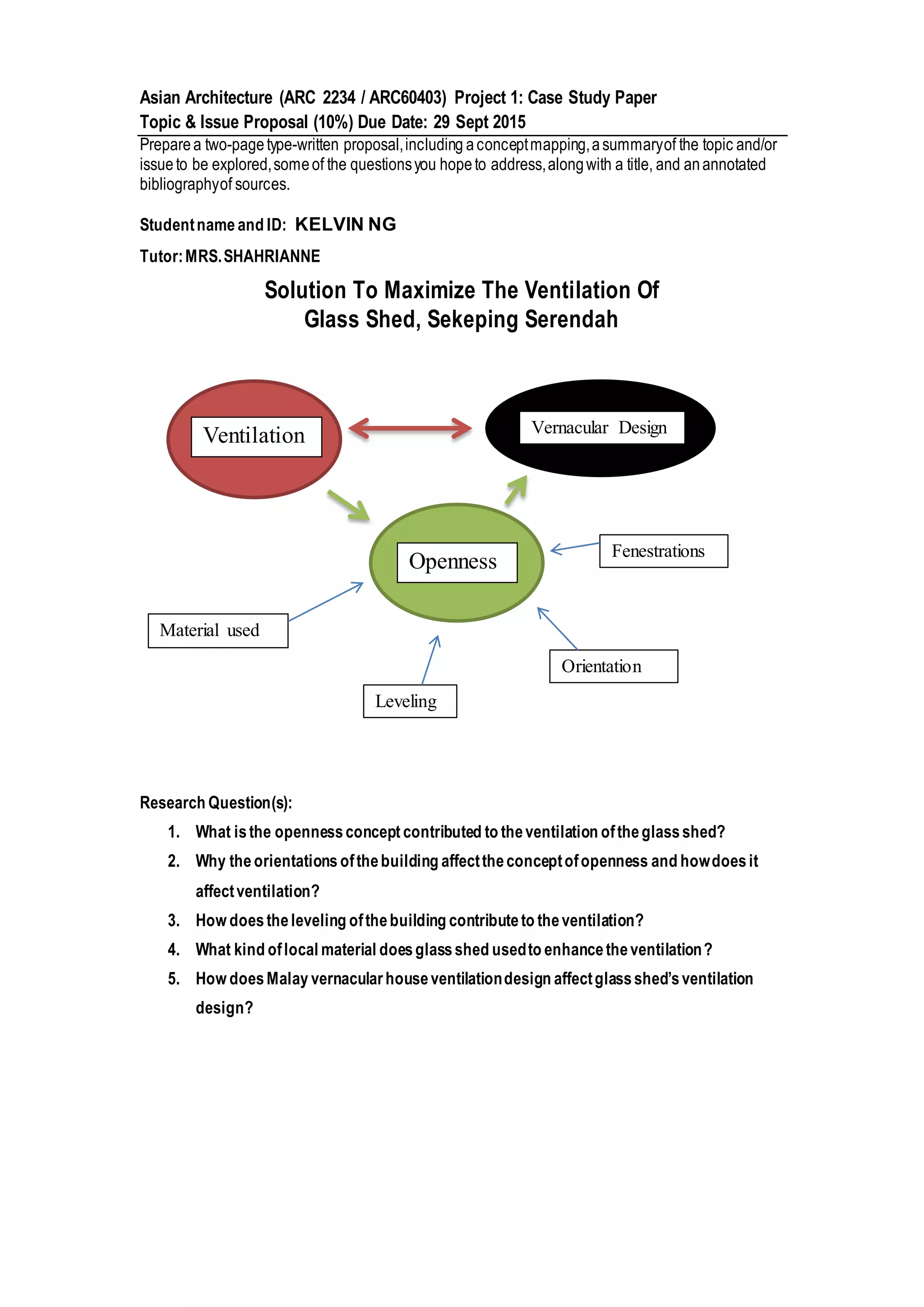
Openness
Ventilation
Material used
Fenestrations
Leveling
Orientation
Vernacular Design
Summary ofthetopic (300words):
Natural ventilationisoneofthekeydesignsin glassshedastheydid notprovideair-
conditioning in theirshed.In orderto maximizetheventilation ofglassshed,theymodifythe
opennessconceptthatmaximizestheairflowin and around building.The orientation ofthe
building also affectstheconceptofopenness,asthedensityofvegetation on each sidewill be
differentwherespacearrangementneedsto bechanged.Sekeping’sprojectsalso tend to push
thedesign with thecontextbeyond theimaginary,thepossibilityto design on difficultterrains
withoutdisturbingthem.GlassShed useleveling responding to thetopographyasitallowsthe
wind passing throughwith fewerobstaclesthatdeceleratesthewind speed. Furthermore,
Sekeping’sprojectsarefamousforusinglocal material such astimber,steel and bricksin their
design,GlassShedcarryingthesamearchitecturallanguagethatcan befound on traditional
Malayhouseswhich workswonderswhen itcomesto ventilation especiallyforhotand humid
countrieslikeMalaysia. However,theventilation design oftheMalayhousesiswell adaptedby
GlassShed’sdesign in termofhierarchyofspace,material used and alsotheroofing design
which enhancesthenatural ventilation.
REFERENCES:
1. Blake, M., & Austin, J. (2013). Thermal Comfort Performance Analysis Using BIM. In
International Conference on Computer Technology for Environmental Sustainability.
New Jersey.
2. Chua, S., & Oh, T. (2010). Review on Malaysia's national energy developments: Key
policies,agencies,programmes and international involvements. Renewable and
Sustainable Energy Reviews, 14(9), 2916-2925.
3. Greenbuilding.com, Energy in Green Building. Retrieved 8 September 2014, from
http://www.greenbuilding.com/knowledgebase/energy-green-building
4. Kibert, C. (2008). Sustainable construction: Green Building Design and Delivery (2nd
Ed.). Hoboken, N.J.:John Wiley & Sons.
5. Makaremi, N., Salleh, E., Jaafar, M., & GhaffarianHoseini, A. (2012). Thermal comfort
conditions ofshaded outdoor spaces in hotand humid climate of Malaysia. Building
and Environment, 48, 7-14.
6. Turrent, D. (2007). Sustainable architecture. London: RIBA Publishing.
7. Winstanley, T. (2011). Harvard Reaches 50 LEED Certified Projects. ArchDaily.
Retrieved 12 September 2014, from http://www.archdaily.com/159157/harvard-
reaches-50-leed-certified-projects/

AA Topic Proposal

  • 1.
    Asian Architecture (ARC2234 / ARC60403) Project 1: Case Study Paper Topic & Issue Proposal (10%) Due Date: 29 Sept 2015 Preparea two-pagetype-written proposal,including aconceptmapping,asummaryof the topic and/or issueto be explored,someof the questionsyou hopeto address,alongwith a title, and anannotated bibliographyof sources. Studentname and ID: KELVIN NG Tutor:MRS.SHAHRIANNE Solution To Maximize The Ventilation Of Glass Shed, Sekeping Serendah Research Question(s): 1. What isthe opennessconcept contributed to theventilation oftheglassshed? 2. Why the orientations ofthebuilding affecttheconceptofopenness and howdoesit affectventilation? 3. How doestheleveling ofthebuilding contributeto theventilation? 4. What kind oflocal material doesglassshed usedto enhancetheventilation? 5. How doesMalay vernacularhouseventilationdesign affectglassshed’sventilation design? Openness Ventilation Material used Fenestrations Leveling Orientation Vernacular Design
  • 2.
    Summary ofthetopic (300words): Naturalventilationisoneofthekeydesignsin glassshedastheydid notprovideair- conditioning in theirshed.In orderto maximizetheventilation ofglassshed,theymodifythe opennessconceptthatmaximizestheairflowin and around building.The orientation ofthe building also affectstheconceptofopenness,asthedensityofvegetation on each sidewill be differentwherespacearrangementneedsto bechanged.Sekeping’sprojectsalso tend to push thedesign with thecontextbeyond theimaginary,thepossibilityto design on difficultterrains withoutdisturbingthem.GlassShed useleveling responding to thetopographyasitallowsthe wind passing throughwith fewerobstaclesthatdeceleratesthewind speed. Furthermore, Sekeping’sprojectsarefamousforusinglocal material such astimber,steel and bricksin their design,GlassShedcarryingthesamearchitecturallanguagethatcan befound on traditional Malayhouseswhich workswonderswhen itcomesto ventilation especiallyforhotand humid countrieslikeMalaysia. However,theventilation design oftheMalayhousesiswell adaptedby GlassShed’sdesign in termofhierarchyofspace,material used and alsotheroofing design which enhancesthenatural ventilation. REFERENCES: 1. Blake, M., & Austin, J. (2013). Thermal Comfort Performance Analysis Using BIM. In International Conference on Computer Technology for Environmental Sustainability. New Jersey. 2. Chua, S., & Oh, T. (2010). Review on Malaysia's national energy developments: Key policies,agencies,programmes and international involvements. Renewable and Sustainable Energy Reviews, 14(9), 2916-2925. 3. Greenbuilding.com, Energy in Green Building. Retrieved 8 September 2014, from http://www.greenbuilding.com/knowledgebase/energy-green-building 4. Kibert, C. (2008). Sustainable construction: Green Building Design and Delivery (2nd Ed.). Hoboken, N.J.:John Wiley & Sons. 5. Makaremi, N., Salleh, E., Jaafar, M., & GhaffarianHoseini, A. (2012). Thermal comfort conditions ofshaded outdoor spaces in hotand humid climate of Malaysia. Building and Environment, 48, 7-14. 6. Turrent, D. (2007). Sustainable architecture. London: RIBA Publishing. 7. Winstanley, T. (2011). Harvard Reaches 50 LEED Certified Projects. ArchDaily. Retrieved 12 September 2014, from http://www.archdaily.com/159157/harvard- reaches-50-leed-certified-projects/