Methodology for the Development of a
Measure of Worker Satisfaction
November 2018
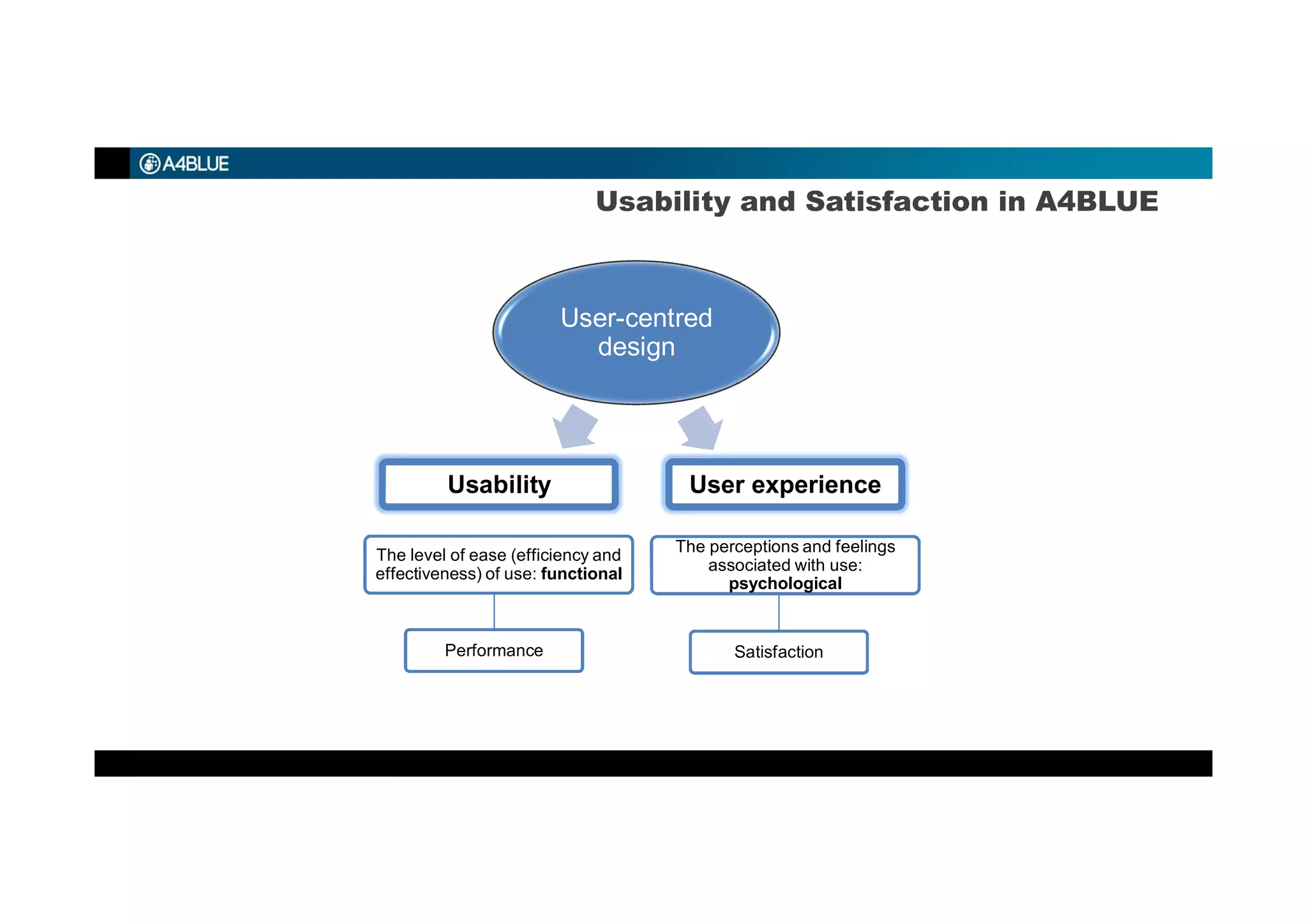
Usability and Satisfaction in A4BLUE
Usability User experience
User-centred
design
The perceptions and feelings
associated with use:
psychological
The level of ease (efficiency and
effectiveness) of use: functional
SatisfactionPerformance
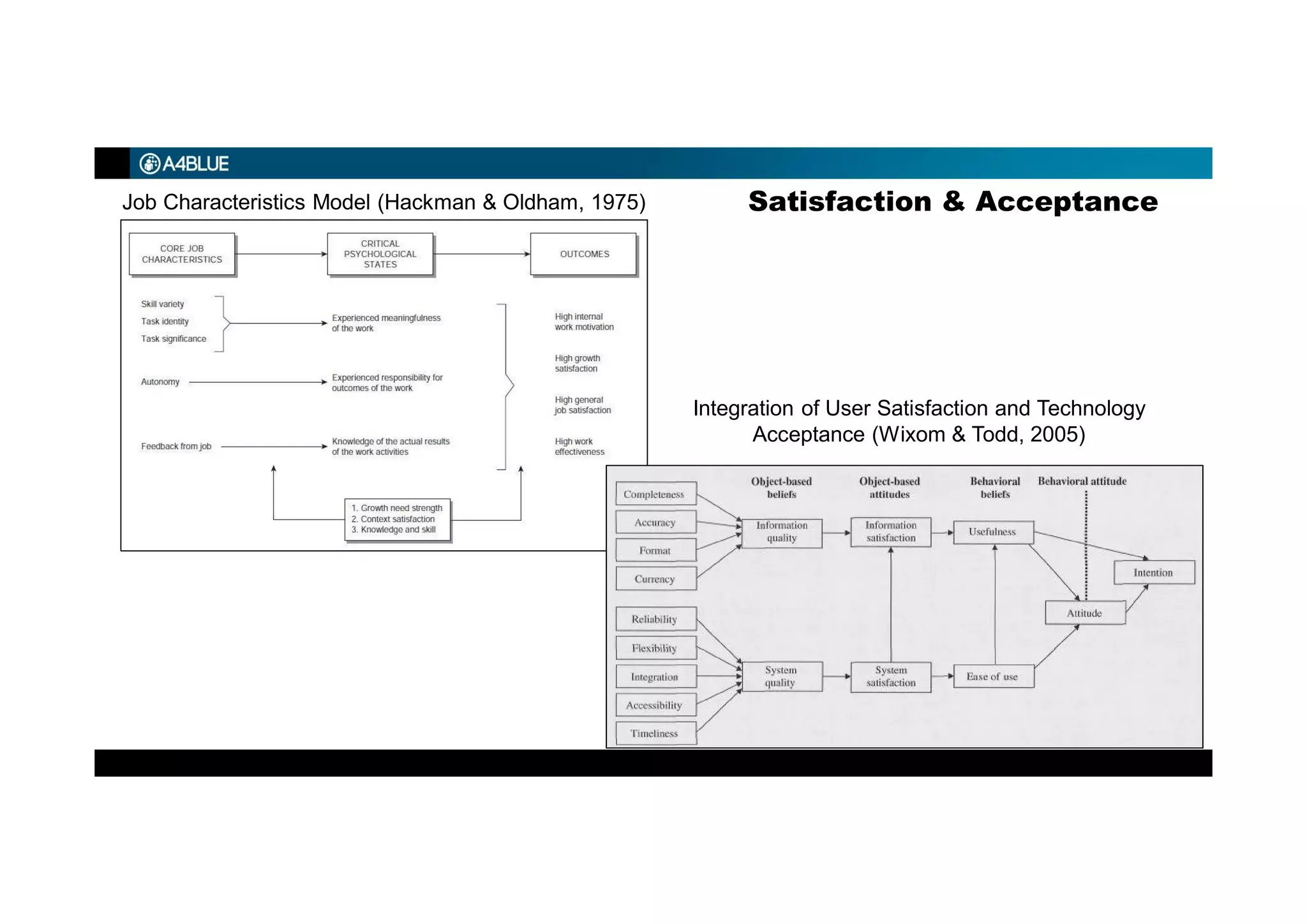
Satisfaction & AcceptanceJob Characteristics Model (Hackman & Oldham, 1975)
Integration of User Satisfaction and Technology
Acceptance (Wixom & Todd, 2005)
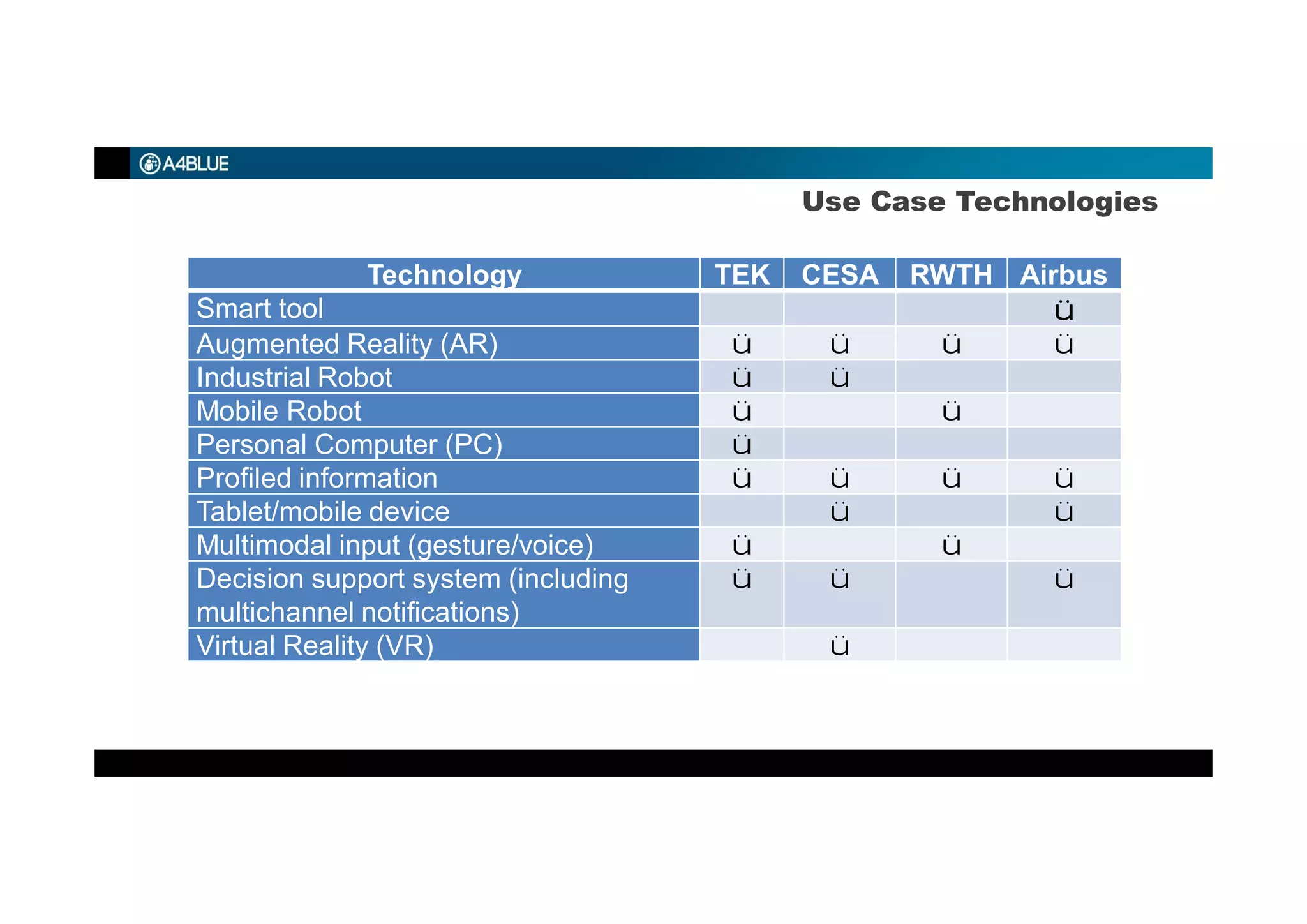
Use Case Technologies
Technology TEK CESA RWTH Airbus
Smart tool ü
Augmented Reality (AR) ü ü ü ü
Industrial Robot ü ü
Mobile Robot ü ü
Personal Computer (PC) ü
Profiled information ü ü ü ü
Tablet/mobile device ü ü
Multimodal input (gesture/voice) ü ü
Decision support system (including
multichannel notifications)
ü ü ü
Virtual Reality (VR) ü
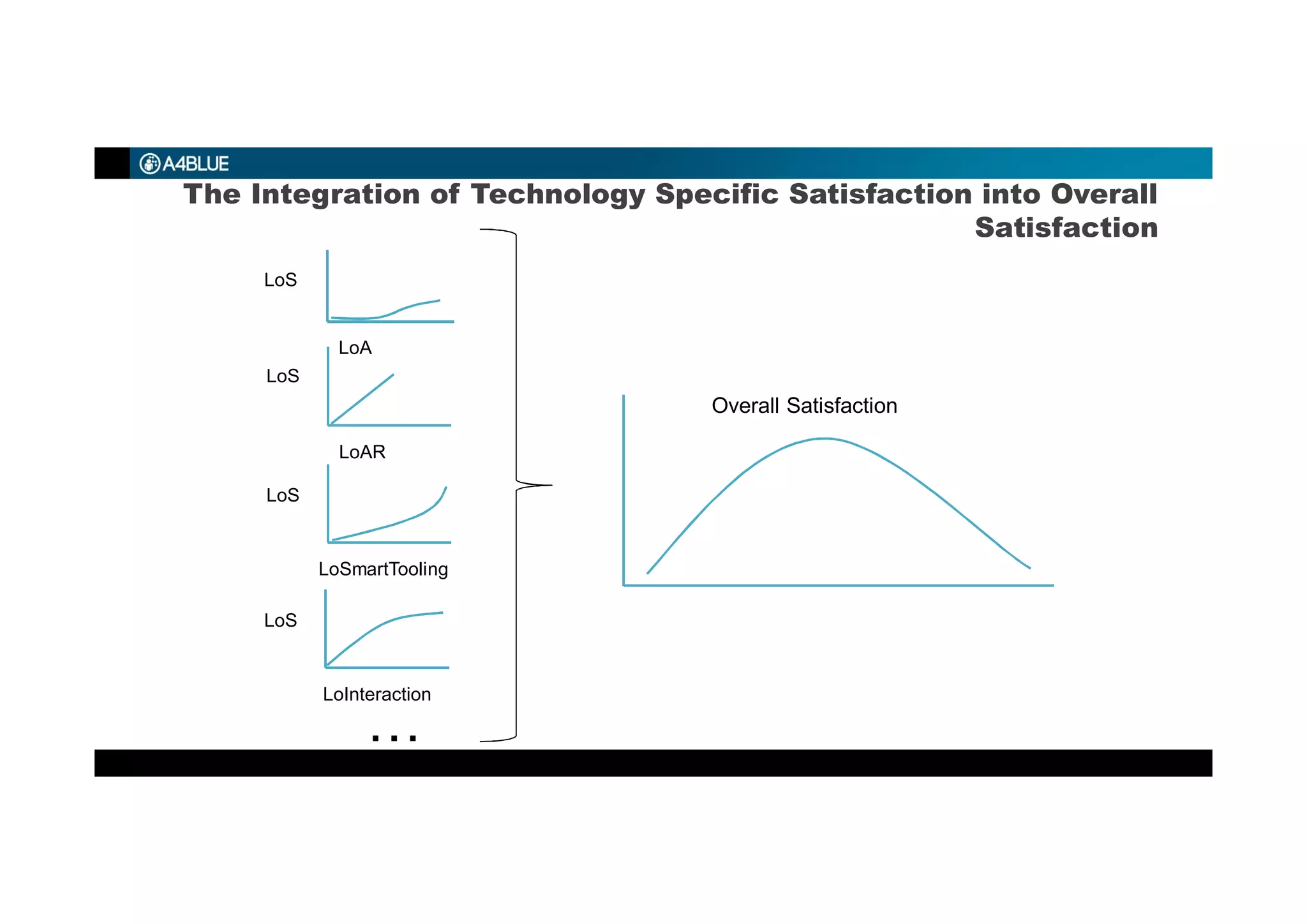
The Integration of Technology Specific Satisfaction into Overall
Satisfaction
Overall Satisfaction
…
LoS
LoInteraction
LoS
LoSmartTooling
LoS
LoAR
LoS
LoA
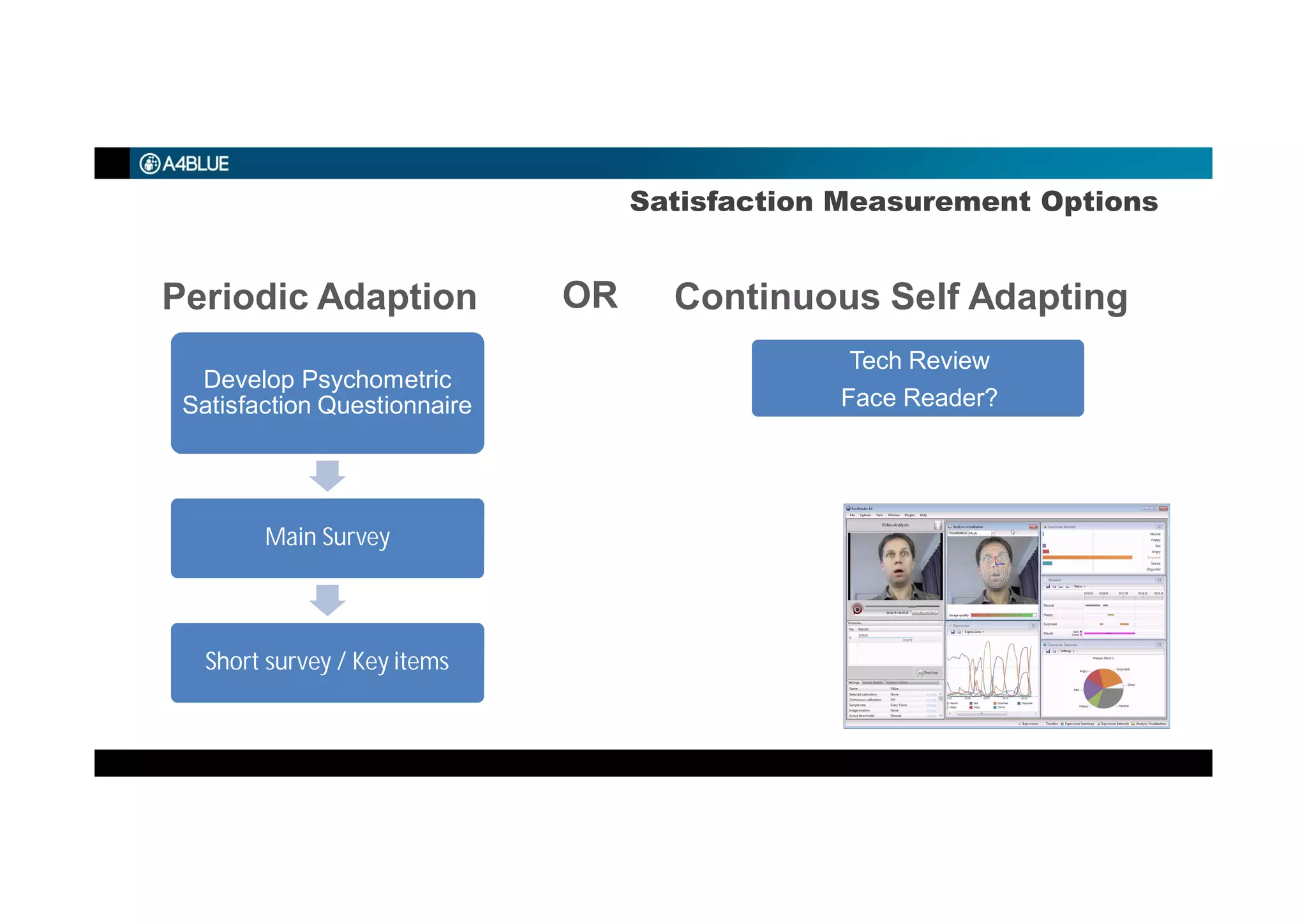
Satisfaction Measurement Options
ORPeriodic Adaption Continuous Self Adapting
Develop Psychometric
Satisfaction Questionnaire
Main Survey
Short survey / Key items
Tech Review
Face Reader?
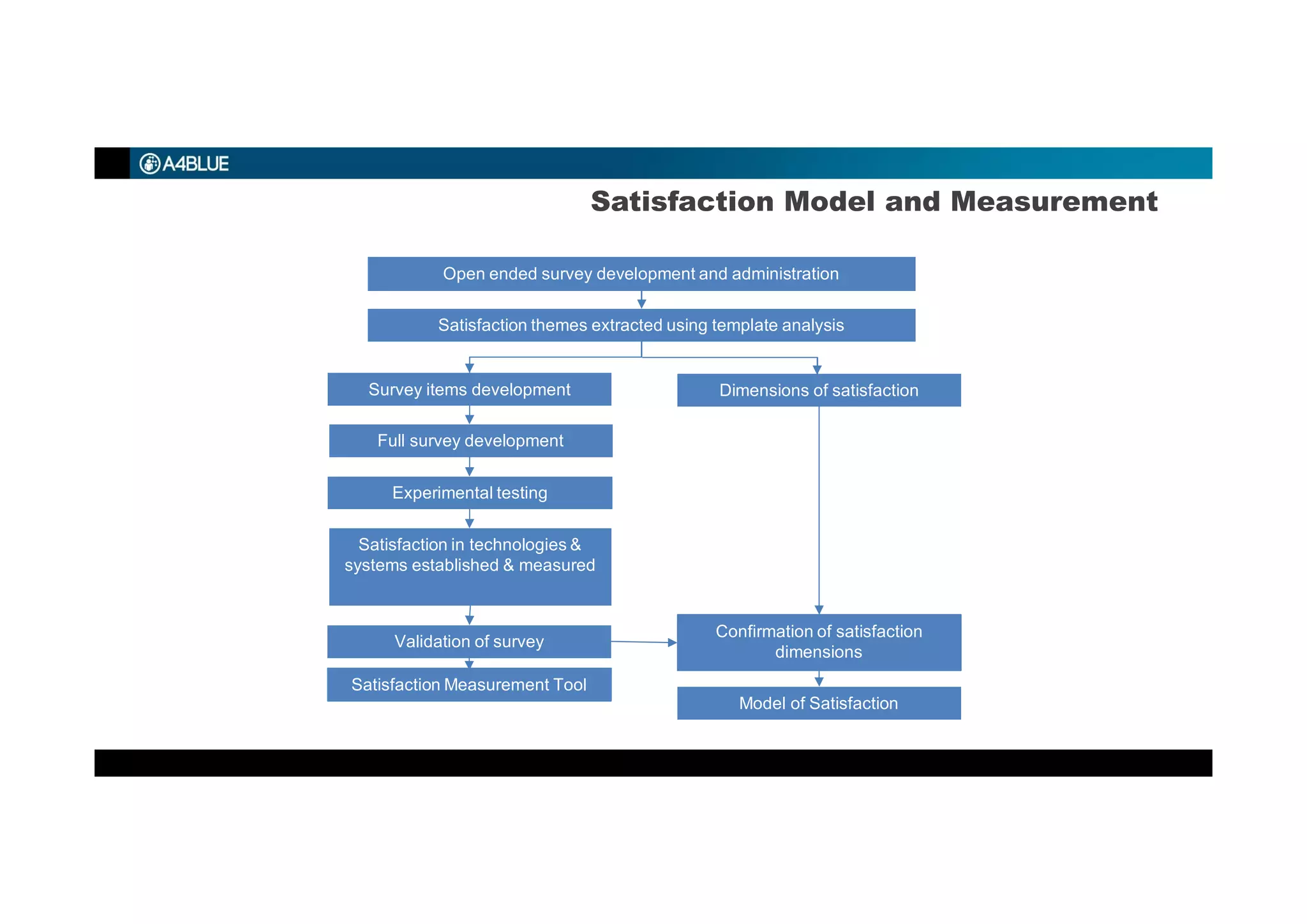
Satisfaction Model and Measurement
Experimental testing
Open ended survey development and administration
Satisfaction themes extracted using template analysis
Survey items development Dimensions of satisfaction
Full survey development
Satisfaction in technologies &
systems established & measured
Model of Satisfaction
Validation of survey
Confirmation of satisfaction
dimensions
Satisfaction Measurement Tool
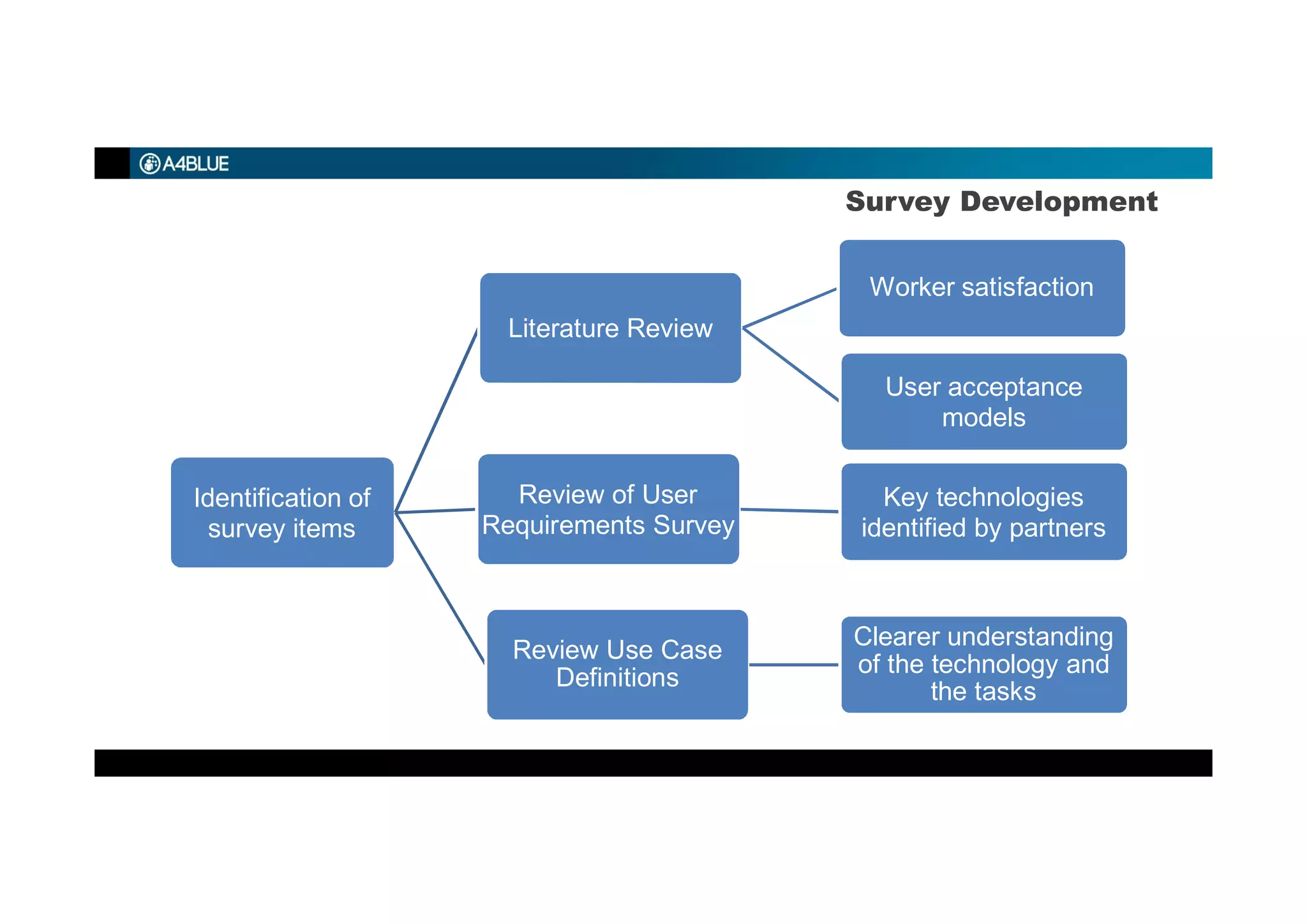
Survey Development
Identification of
survey items
Literature Review
Worker satisfaction
User acceptance
models
Review of User
Requirements Survey
Key technologies
identified by partners
Review Use Case
Definitions
Clearer understanding
of the technology and
the tasks
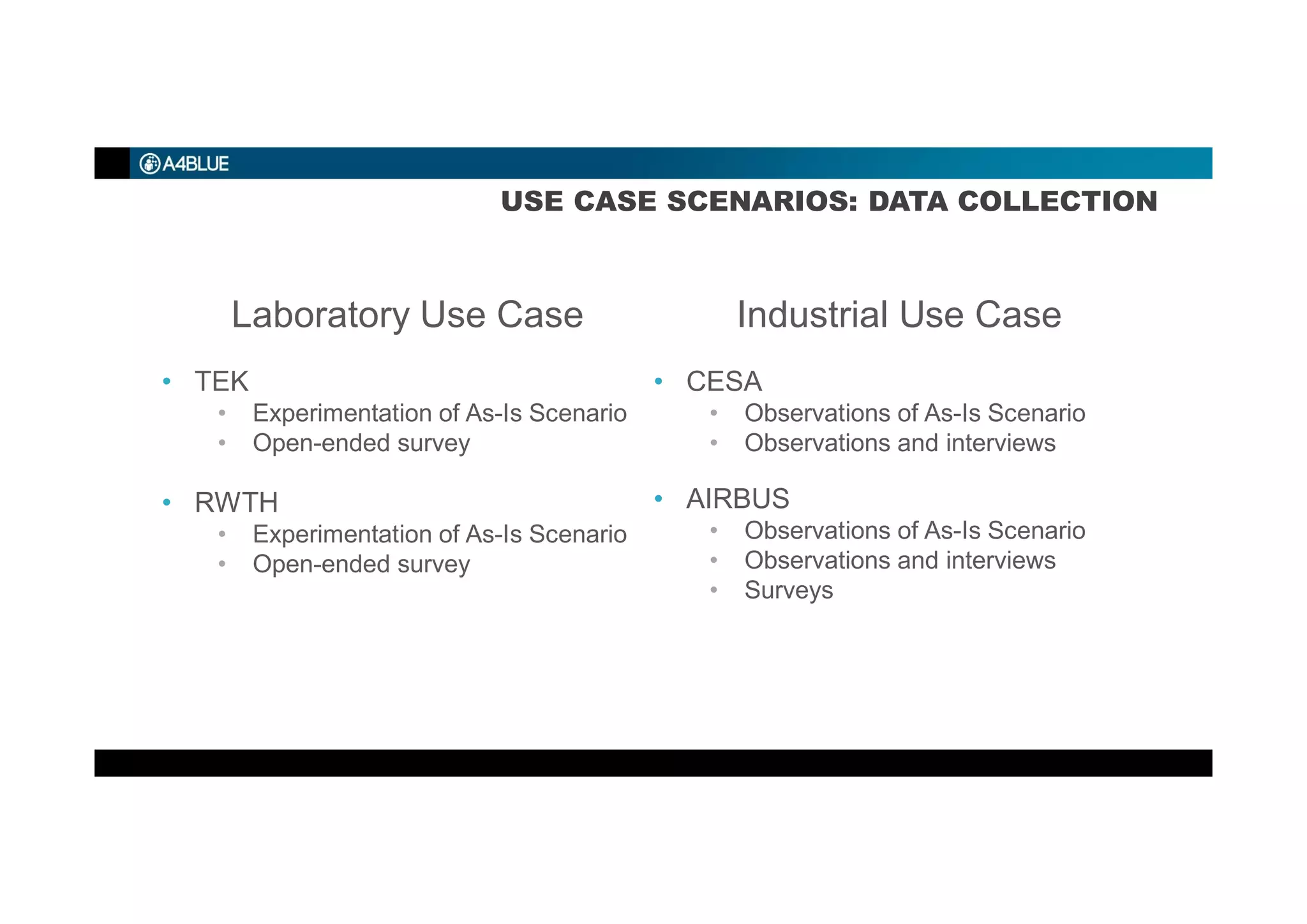
USE CASE SCENARIOS: DATA COLLECTION
Laboratory Use Case
• TEK
• Experimentation of As-Is Scenario
• Open-ended survey
• RWTH
• Experimentation of As-Is Scenario
• Open-ended survey
Industrial Use Case
• CESA
• Observations of As-Is Scenario
• Observations and interviews
• AIRBUS
• Observations of As-Is Scenario
• Observations and interviews
• Surveys
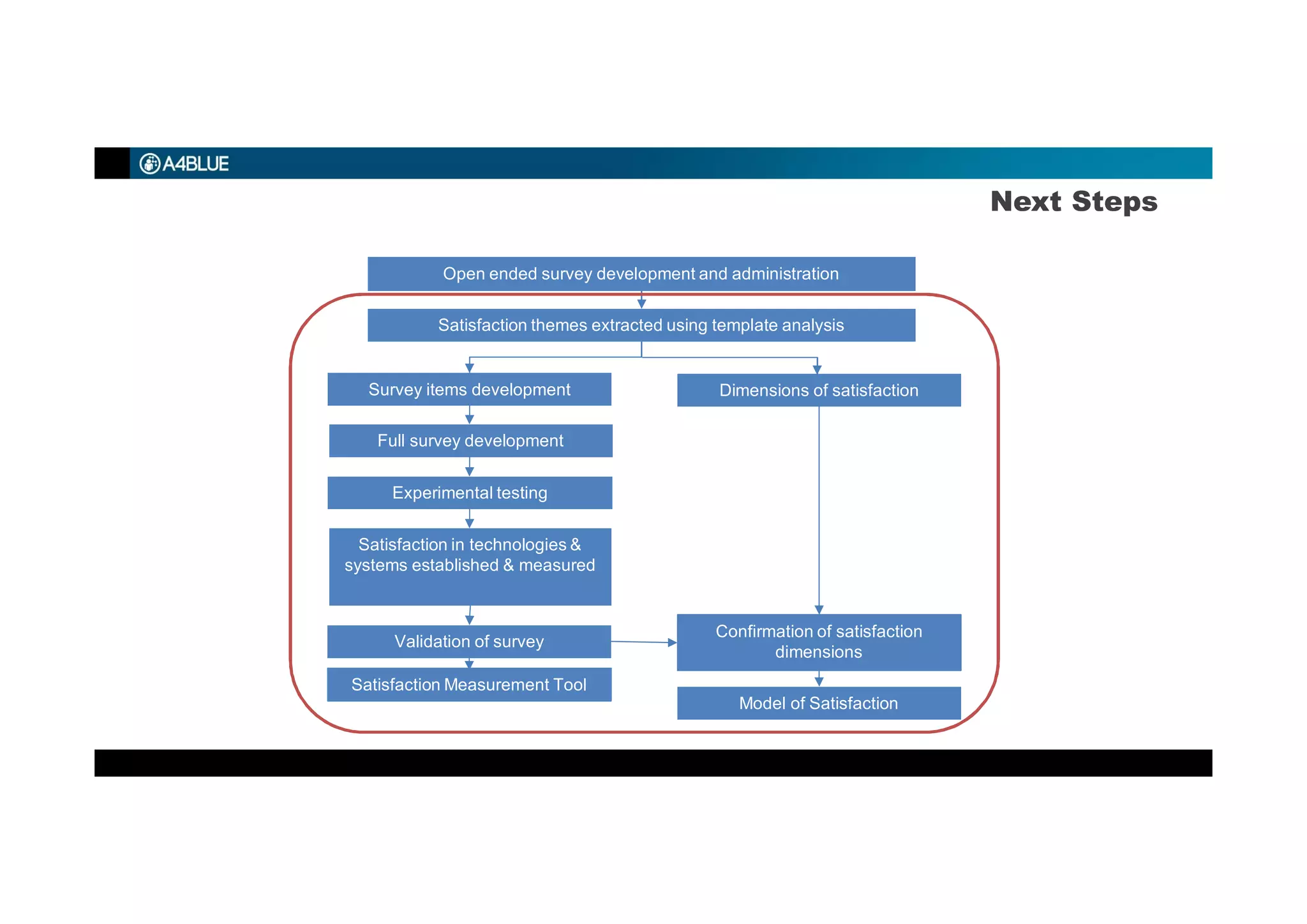
Next Steps
Experimental testing
Open ended survey development and administration
Satisfaction themes extracted using template analysis
Survey items development Dimensions of satisfaction
Full survey development
Satisfaction in technologies &
systems established & measured
Model of Satisfaction
Validation of survey
Confirmation of satisfaction
dimensions
Satisfaction Measurement Tool
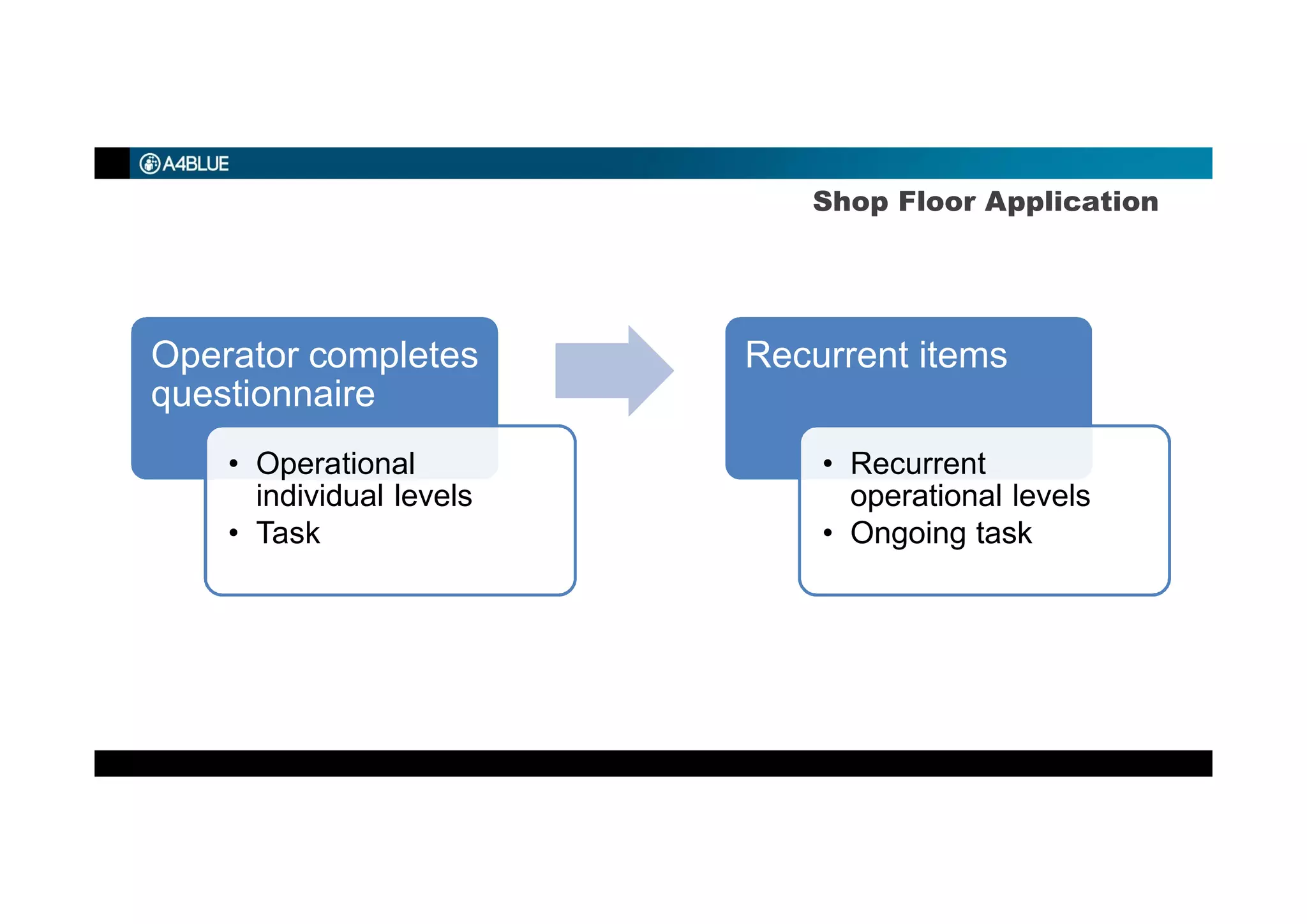
Shop Floor Application
Operator completes
questionnaire
• Operational
individual levels
• Task
Recurrent items
• Recurrent
operational levels
• Ongoing task
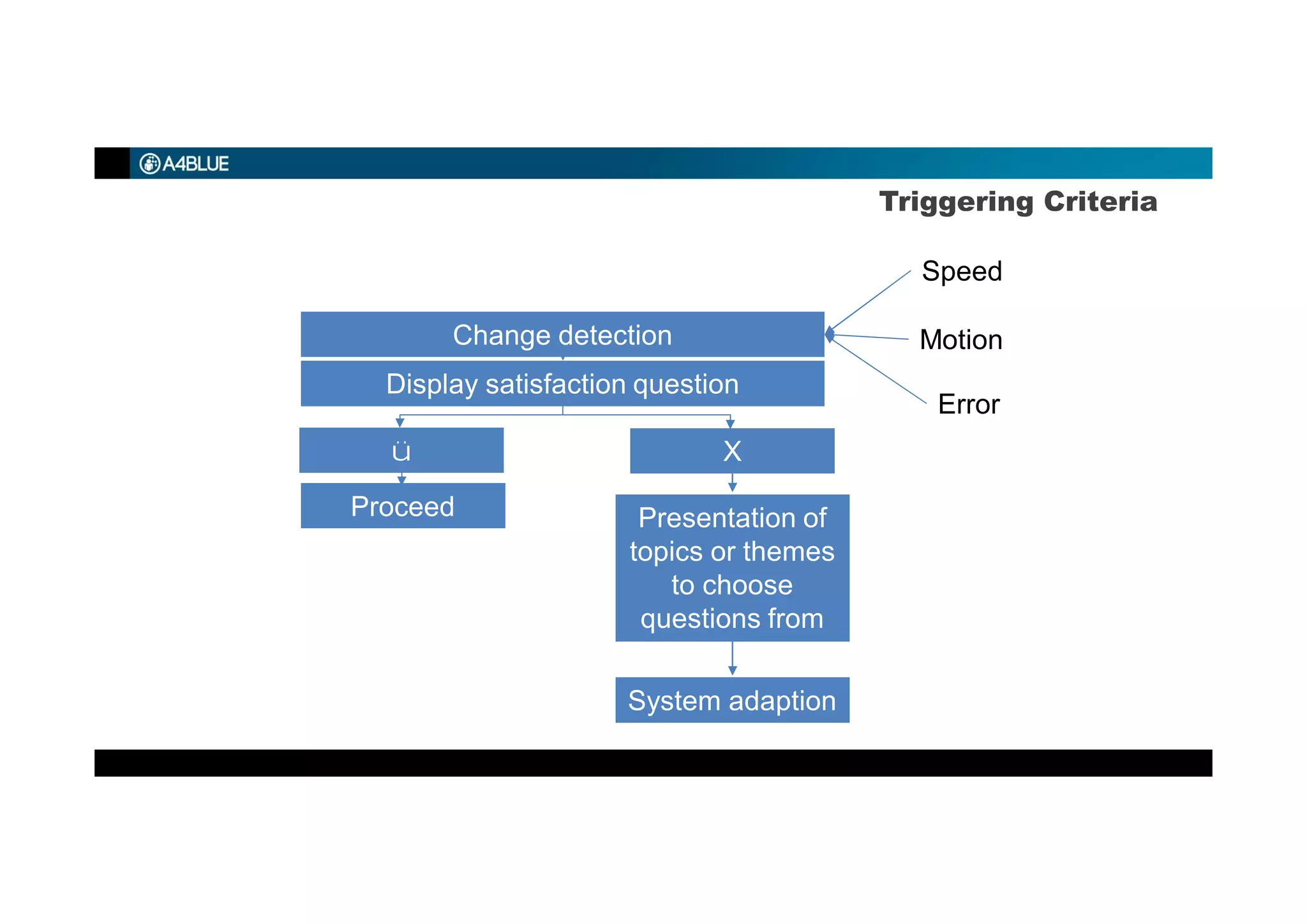
Triggering Criteria
Change detection
Display satisfaction question
ü X
Proceed Presentation of
topics or themes
to choose
questions from
Speed
Motion
Error
System adaption
Back-up slides
Adaptive Automation in Assembly For
BLUE collar workers satisfaction in
Evolvable context
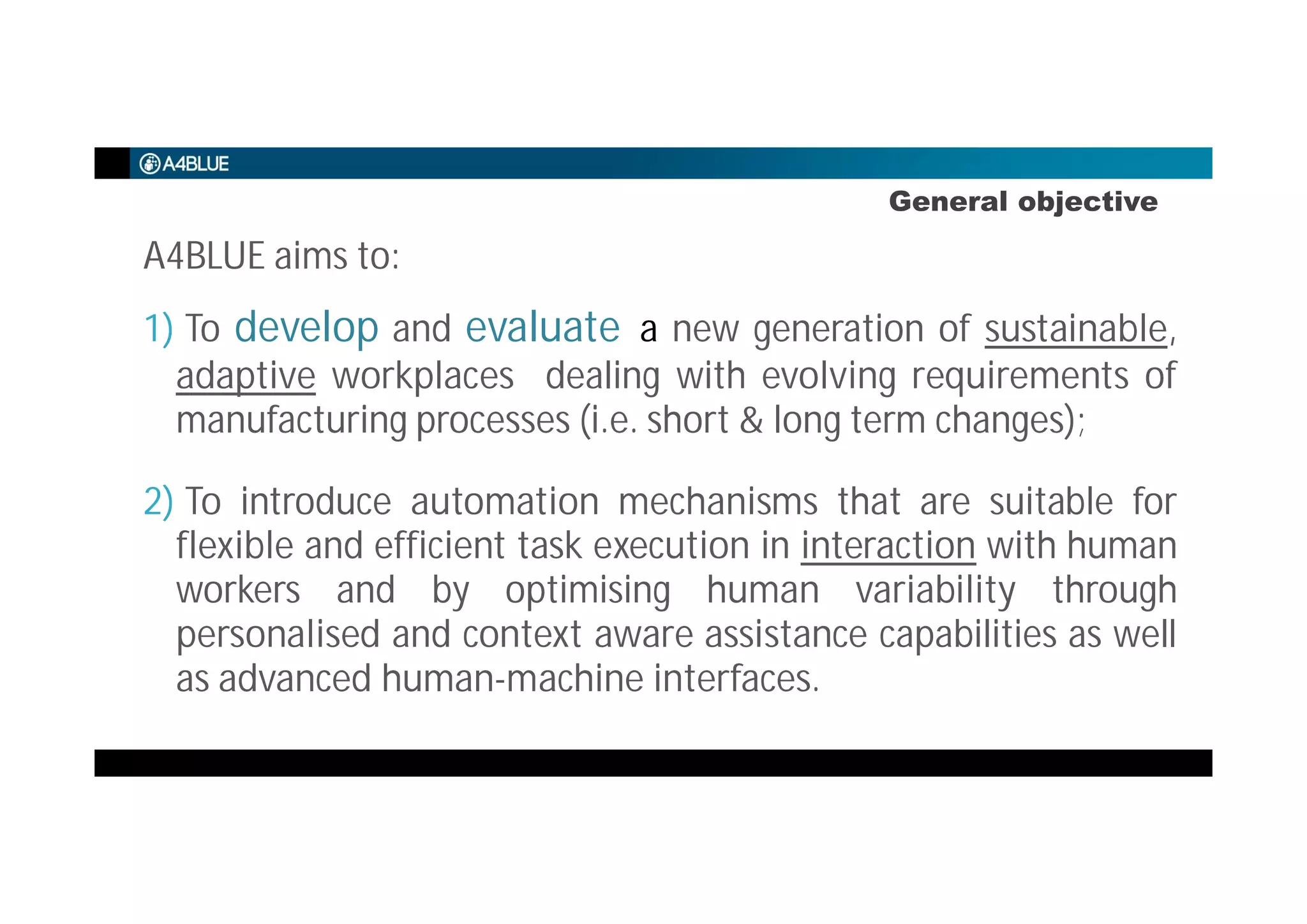
General objective
A4BLUE aims to:
1) To develop and evaluate a new generation of sustainable,
adaptive workplaces dealing with evolving requirements of
manufacturing processes (i.e. short & long term changes);
2) To introduce automation mechanisms that are suitable for
flexible and efficient task execution in interaction with human
workers and by optimising human variability through
personalised and context aware assistance capabilities as well
as advanced human-machine interfaces.
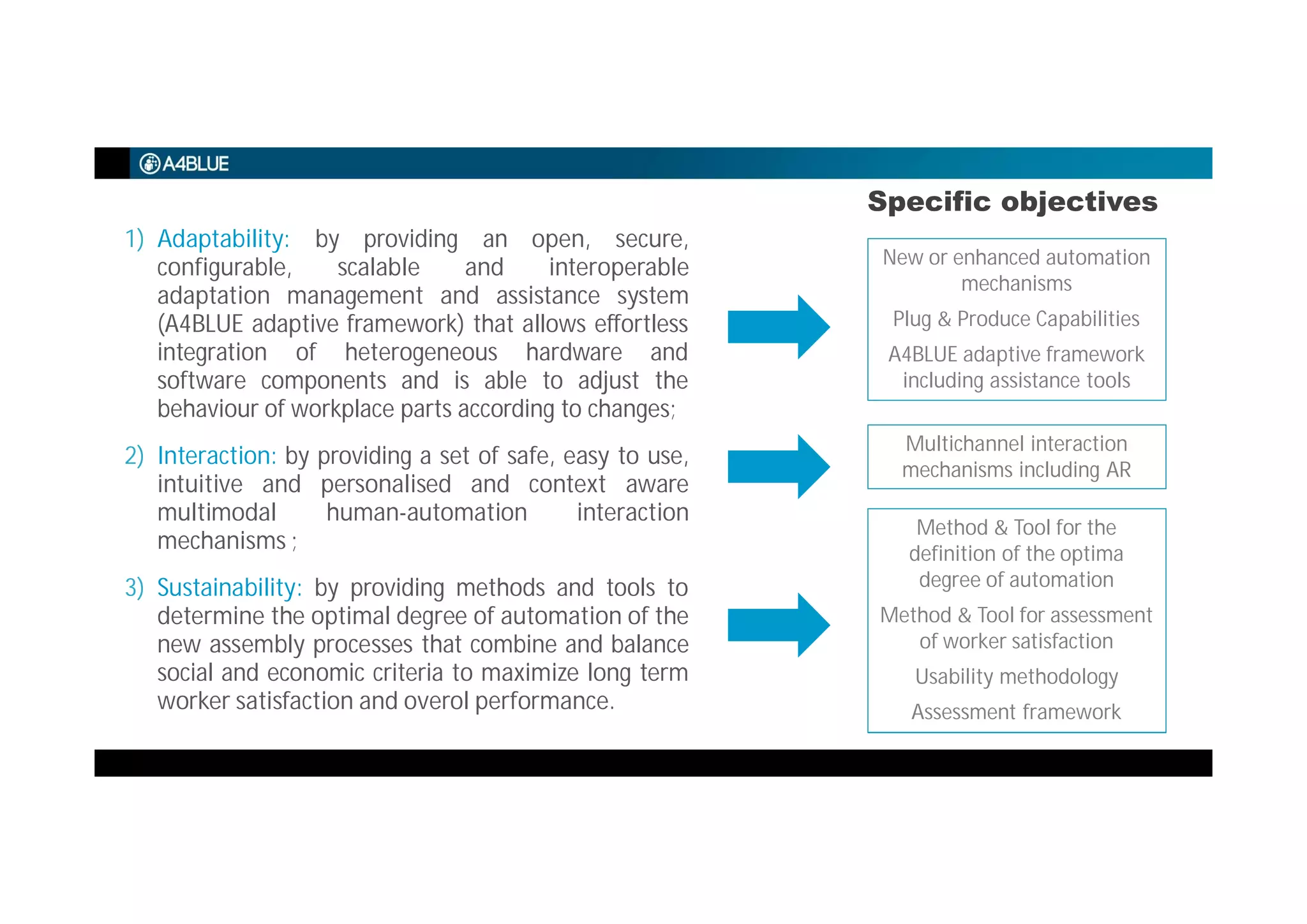
Specific objectives
1) Adaptability: by providing an open, secure,
configurable, scalable and interoperable
adaptation management and assistance system
(A4BLUE adaptive framework) that allows effortless
integration of heterogeneous hardware and
software components and is able to adjust the
behaviour of workplace parts according to changes;
2) Interaction: by providing a set of safe, easy to use,
intuitive and personalised and context aware
multimodal human-automation interaction
mechanisms ;
3) Sustainability: by providing methods and tools to
determine the optimal degree of automation of the
new assembly processes that combine and balance
social and economic criteria to maximize long term
worker satisfaction and overol performance.
New or enhanced automation
mechanisms
Plug & Produce Capabilities
A4BLUE adaptive framework
including assistance tools
Multichannel interaction
mechanisms including AR
Method & Tool for the
definition of the optima
degree of automation
Method & Tool for assessment
of worker satisfaction
Usability methodology
Assessment framework
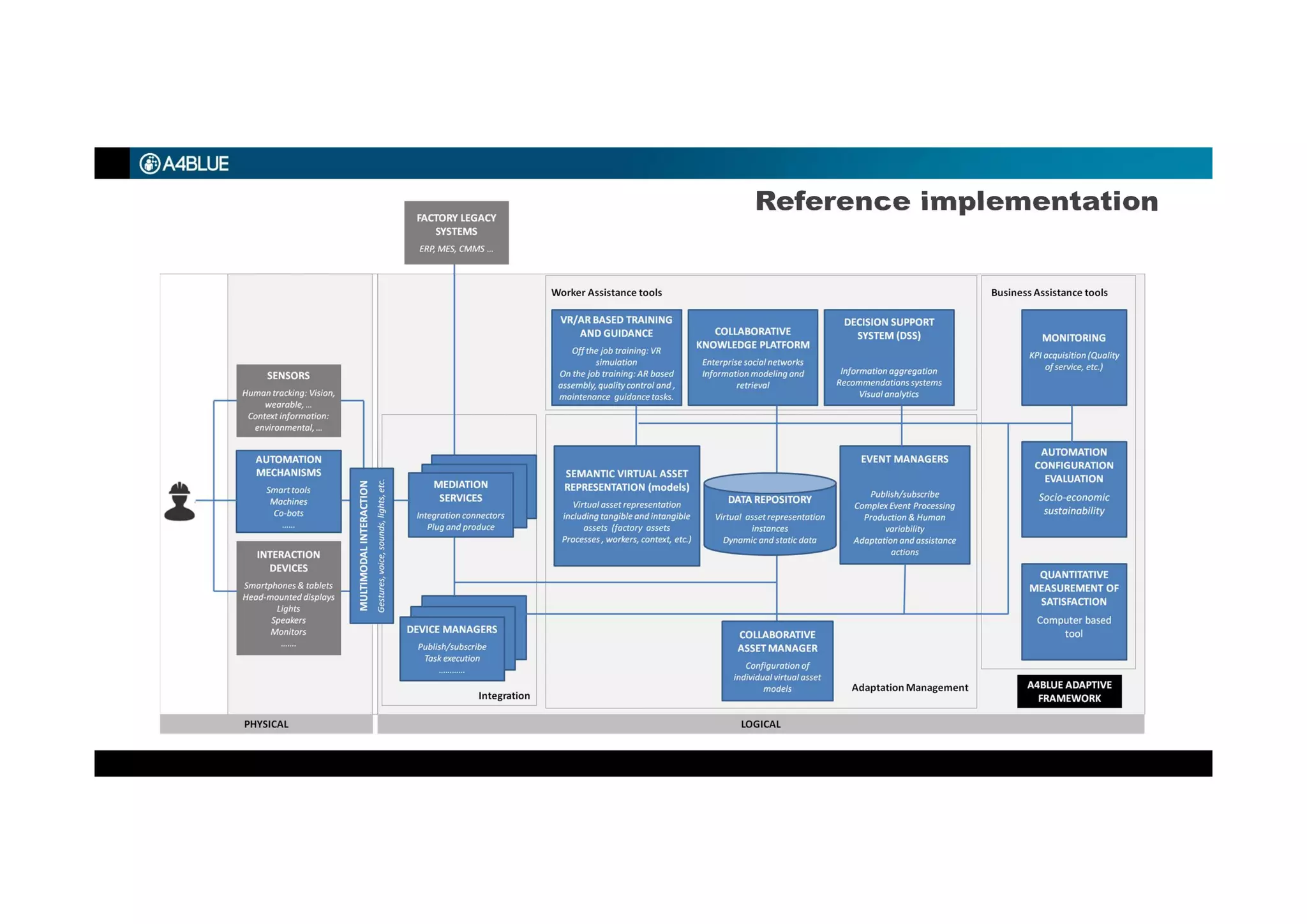
Reference implementation
THANK YOU

A4Blue Presentation: Methodology of the Development of a Measure of Worker Satisfaction

  • 1.
    Methodology for theDevelopment of a Measure of Worker Satisfaction November 2018
  • 2.
    Usability and Satisfactionin A4BLUE Usability User experience User-centred design The perceptions and feelings associated with use: psychological The level of ease (efficiency and effectiveness) of use: functional SatisfactionPerformance
  • 3.
    Satisfaction & AcceptanceJobCharacteristics Model (Hackman & Oldham, 1975) Integration of User Satisfaction and Technology Acceptance (Wixom & Todd, 2005)
  • 4.
    Use Case Technologies TechnologyTEK CESA RWTH Airbus Smart tool ü Augmented Reality (AR) ü ü ü ü Industrial Robot ü ü Mobile Robot ü ü Personal Computer (PC) ü Profiled information ü ü ü ü Tablet/mobile device ü ü Multimodal input (gesture/voice) ü ü Decision support system (including multichannel notifications) ü ü ü Virtual Reality (VR) ü
  • 5.
    The Integration ofTechnology Specific Satisfaction into Overall Satisfaction Overall Satisfaction … LoS LoInteraction LoS LoSmartTooling LoS LoAR LoS LoA
  • 6.
    Satisfaction Measurement Options ORPeriodicAdaption Continuous Self Adapting Develop Psychometric Satisfaction Questionnaire Main Survey Short survey / Key items Tech Review Face Reader?
  • 7.
    Satisfaction Model andMeasurement Experimental testing Open ended survey development and administration Satisfaction themes extracted using template analysis Survey items development Dimensions of satisfaction Full survey development Satisfaction in technologies & systems established & measured Model of Satisfaction Validation of survey Confirmation of satisfaction dimensions Satisfaction Measurement Tool
  • 8.
    Survey Development Identification of surveyitems Literature Review Worker satisfaction User acceptance models Review of User Requirements Survey Key technologies identified by partners Review Use Case Definitions Clearer understanding of the technology and the tasks
  • 9.
    USE CASE SCENARIOS:DATA COLLECTION Laboratory Use Case • TEK • Experimentation of As-Is Scenario • Open-ended survey • RWTH • Experimentation of As-Is Scenario • Open-ended survey Industrial Use Case • CESA • Observations of As-Is Scenario • Observations and interviews • AIRBUS • Observations of As-Is Scenario • Observations and interviews • Surveys
  • 10.
    Next Steps Experimental testing Openended survey development and administration Satisfaction themes extracted using template analysis Survey items development Dimensions of satisfaction Full survey development Satisfaction in technologies & systems established & measured Model of Satisfaction Validation of survey Confirmation of satisfaction dimensions Satisfaction Measurement Tool
  • 11.
    Shop Floor Application Operatorcompletes questionnaire • Operational individual levels • Task Recurrent items • Recurrent operational levels • Ongoing task
  • 12.
    Triggering Criteria Change detection Displaysatisfaction question ü X Proceed Presentation of topics or themes to choose questions from Speed Motion Error System adaption
  • 13.
  • 14.
    Adaptive Automation inAssembly For BLUE collar workers satisfaction in Evolvable context
  • 15.
    General objective A4BLUE aimsto: 1) To develop and evaluate a new generation of sustainable, adaptive workplaces dealing with evolving requirements of manufacturing processes (i.e. short & long term changes); 2) To introduce automation mechanisms that are suitable for flexible and efficient task execution in interaction with human workers and by optimising human variability through personalised and context aware assistance capabilities as well as advanced human-machine interfaces.
  • 16.
    Specific objectives 1) Adaptability:by providing an open, secure, configurable, scalable and interoperable adaptation management and assistance system (A4BLUE adaptive framework) that allows effortless integration of heterogeneous hardware and software components and is able to adjust the behaviour of workplace parts according to changes; 2) Interaction: by providing a set of safe, easy to use, intuitive and personalised and context aware multimodal human-automation interaction mechanisms ; 3) Sustainability: by providing methods and tools to determine the optimal degree of automation of the new assembly processes that combine and balance social and economic criteria to maximize long term worker satisfaction and overol performance. New or enhanced automation mechanisms Plug & Produce Capabilities A4BLUE adaptive framework including assistance tools Multichannel interaction mechanisms including AR Method & Tool for the definition of the optima degree of automation Method & Tool for assessment of worker satisfaction Usability methodology Assessment framework
  • 17.
  • 18.