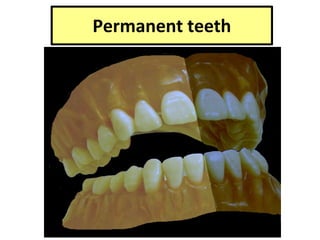
Permanent teeth
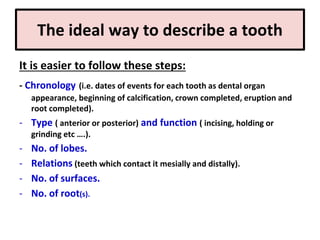
The ideal way to describe a tooth
It is easier to follow these steps:
- Chronology (i.e. dates of events for each tooth as dental organ
appearance, beginning of calcification, crown completed, eruption and
root completed).
- Type ( anterior or posterior) and function ( incising, holding or
grinding etc ….).
- No. of lobes.
- Relations (teeth which contact it mesially and distally).
- No. of surfaces.
- No. of root(s).
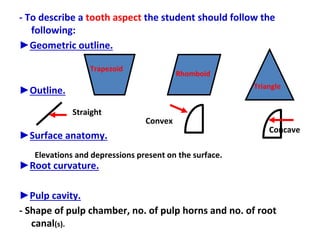
- To describe a tooth aspect the student should follow the
following:
►Geometric outline.
►Outline.
►Surface anatomy.
►Root curvature.
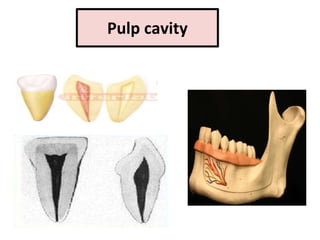
►Pulp cavity.
- Shape of pulp chamber, no. of pulp horns and no. of root
canal(s).
Trapezoid
Rhomboid
Triangle
Straight
Convex
Concave
Elevations and depressions present on the surface.
Pulp cavity
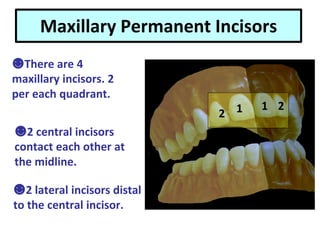
Maxillary Permanent Incisors
☻There are 4
maxillary incisors. 2
per each quadrant.
☻2 central incisors
contact each other at
the midline.
☻2 lateral incisors distal
to the central incisor.
1
2 1 2
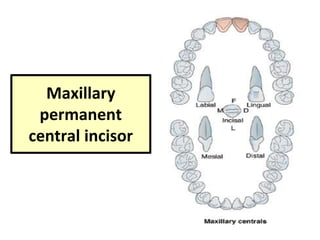
Maxillary
permanent
central incisor
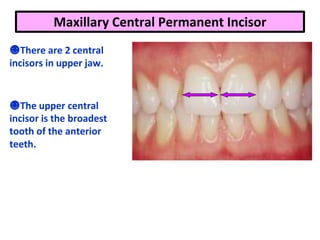
Maxillary Central Permanent Incisor
☻There are 2 central
incisors in upper jaw.
☻The upper central
incisor is the broadest
tooth of the anterior
teeth.
To describe the general characteristics of the
maxillary permanent central incisor we have to
follow the previous steps:
Chronology
Appearance of the dental organ 5m.i.u
First evidence of calcification 3-4 months
Enamel completed 4-5 years
Eruption 7-8 years
Root completed 10 years
Type and function
This tooth has the function of incising food as well as esthetic.
No. of lobes
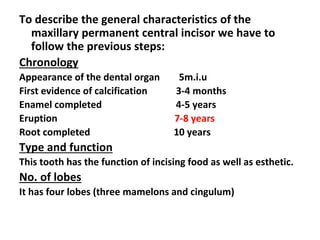
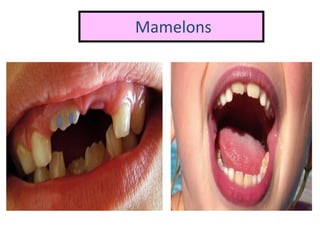
It has four lobes (three mamelons and cingulum)
Mamelons
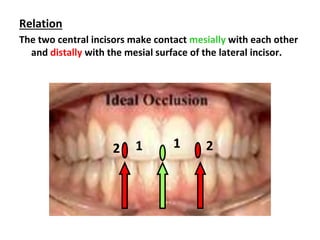
Relation
The two central incisors make contact mesially with each other
and distally with the mesial surface of the lateral incisor.
1 1 2
2
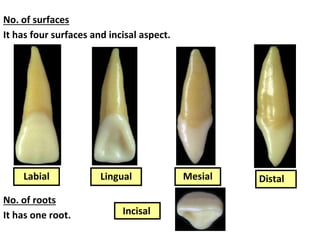
No. of surfaces
It has four surfaces and incisal aspect.
No. of roots
It has one root.
Labial Lingual Mesial Distal
Incisal
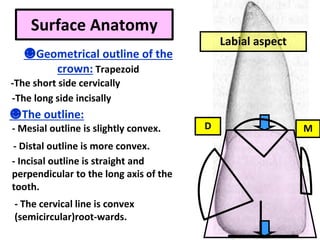
Surface Anatomy
Labial aspect
☻Geometrical outline of the
crown: Trapezoid
-The short side cervically
-The long side incisally
☻The outline:
- Mesial outline is slightly convex.
- Distal outline is more convex.
- Incisal outline is straight and
perpendicular to the long axis of the
tooth.
- The cervical line is convex
(semicircular)root-wards.
D M
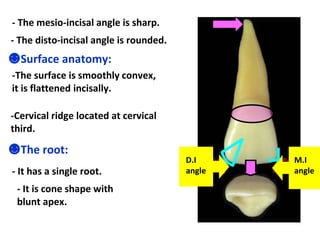
- The mesio-incisal angle is sharp.
- The disto-incisal angle is rounded.
M.I
angle
D.I
angle
☻Surface anatomy:
-The surface is smoothly convex,
it is flattened incisally.
-Cervical ridge located at cervical
third.
☻The root:
- It has a single root.
- It is cone shape with
blunt apex.
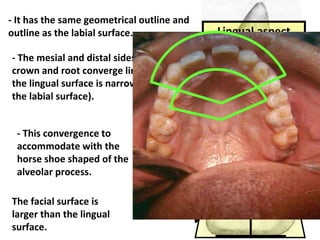
Lingual aspect
- It has the same geometrical outline and
outline as the labial surface.
M D
- The mesial and distal sides of the
crown and root converge lingually (
the lingual surface is narrower than
the labial surface).
- This convergence to
accommodate with the
horse shoe shaped of the
alveolar process.
The facial surface is
larger than the lingual
surface.
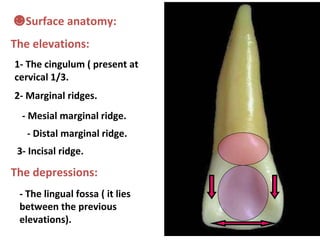
☻Surface anatomy:
The elevations:
1- The cingulum ( present at
cervical 1/3.
2- Marginal ridges.
- Mesial marginal ridge.
- Distal marginal ridge.
3- Incisal ridge.
The depressions:
- The lingual fossa ( it lies
between the previous
elevations).
Mesial aspect
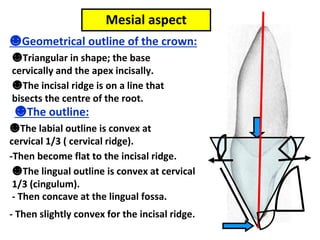
☻Geometrical outline of the crown:
☻Triangular in shape; the base
cervically and the apex incisally.
☻The incisal ridge is on a line that
bisects the centre of the root.
☻The outline:
☻The labial outline is convex at
cervical 1/3 ( cervical ridge).
-Then become flat to the incisal ridge.
☻The lingual outline is convex at cervical
1/3 (cingulum).
- Then concave at the lingual fossa.
- Then slightly convex for the incisal ridge.
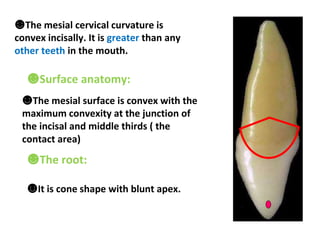
☻The mesial cervical curvature is
convex incisally. It is greater than any
other teeth in the mouth.
☻Surface anatomy:
☻The mesial surface is convex with the
maximum convexity at the junction of
the incisal and middle thirds ( the
contact area)
☻The root:
☻It is cone shape with blunt apex.
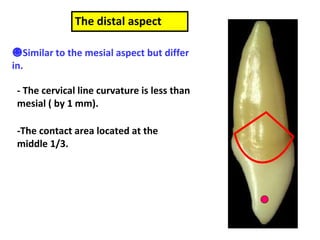
The distal aspect
☻Similar to the mesial aspect but differ
in.
- The cervical line curvature is less than
mesial ( by 1 mm).
-The contact area located at the
middle 1/3.
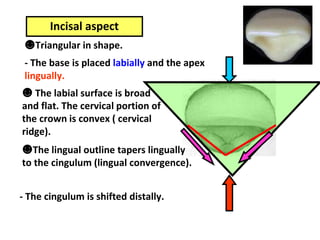
Incisal aspect
☻Triangular in shape.
- The base is placed labially and the apex
lingually.
☻ The labial surface is broad
and flat. The cervical portion of
the crown is convex ( cervical
ridge).
☻The lingual outline tapers lingually
to the cingulum (lingual convergence).
- The cingulum is shifted distally.
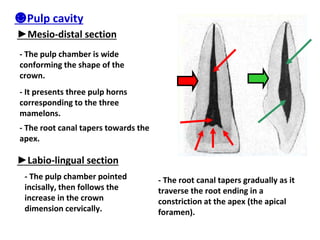
►Mesio-distal section
- The pulp chamber is wide
conforming the shape of the
crown.
- It presents three pulp horns
corresponding to the three
mamelons.
- The root canal tapers towards the
apex.
►Labio-lingual section
- The pulp chamber pointed
incisally, then follows the
increase in the crown
dimension cervically.
- The root canal tapers gradually as it
traverse the root ending in a
constriction at the apex (the apical
foramen).
☻Pulp cavity

a super explanment 01- Maxillary central incisors

  • 2.
  • 3.
    The ideal wayto describe a tooth It is easier to follow these steps: - Chronology (i.e. dates of events for each tooth as dental organ appearance, beginning of calcification, crown completed, eruption and root completed). - Type ( anterior or posterior) and function ( incising, holding or grinding etc ….). - No. of lobes. - Relations (teeth which contact it mesially and distally). - No. of surfaces. - No. of root(s).
  • 4.
    - To describea tooth aspect the student should follow the following: ►Geometric outline. ►Outline. ►Surface anatomy. ►Root curvature. ►Pulp cavity. - Shape of pulp chamber, no. of pulp horns and no. of root canal(s). Trapezoid Rhomboid Triangle Straight Convex Concave Elevations and depressions present on the surface.
  • 5.
  • 6.
    Maxillary Permanent Incisors ☻Thereare 4 maxillary incisors. 2 per each quadrant. ☻2 central incisors contact each other at the midline. ☻2 lateral incisors distal to the central incisor. 1 2 1 2
  • 7.
  • 8.
    Maxillary Central PermanentIncisor ☻There are 2 central incisors in upper jaw. ☻The upper central incisor is the broadest tooth of the anterior teeth.
  • 9.
    To describe thegeneral characteristics of the maxillary permanent central incisor we have to follow the previous steps: Chronology Appearance of the dental organ 5m.i.u First evidence of calcification 3-4 months Enamel completed 4-5 years Eruption 7-8 years Root completed 10 years Type and function This tooth has the function of incising food as well as esthetic. No. of lobes It has four lobes (three mamelons and cingulum)
  • 10.
  • 11.
    Relation The two centralincisors make contact mesially with each other and distally with the mesial surface of the lateral incisor. 1 1 2 2
  • 12.
    No. of surfaces Ithas four surfaces and incisal aspect. No. of roots It has one root. Labial Lingual Mesial Distal Incisal
  • 13.
    Surface Anatomy Labial aspect ☻Geometricaloutline of the crown: Trapezoid -The short side cervically -The long side incisally ☻The outline: - Mesial outline is slightly convex. - Distal outline is more convex. - Incisal outline is straight and perpendicular to the long axis of the tooth. - The cervical line is convex (semicircular)root-wards. D M
  • 14.
    - The mesio-incisalangle is sharp. - The disto-incisal angle is rounded. M.I angle D.I angle ☻Surface anatomy: -The surface is smoothly convex, it is flattened incisally. -Cervical ridge located at cervical third. ☻The root: - It has a single root. - It is cone shape with blunt apex.
  • 15.
    Lingual aspect - Ithas the same geometrical outline and outline as the labial surface. M D - The mesial and distal sides of the crown and root converge lingually ( the lingual surface is narrower than the labial surface). - This convergence to accommodate with the horse shoe shaped of the alveolar process. The facial surface is larger than the lingual surface.
  • 16.
    ☻Surface anatomy: The elevations: 1-The cingulum ( present at cervical 1/3. 2- Marginal ridges. - Mesial marginal ridge. - Distal marginal ridge. 3- Incisal ridge. The depressions: - The lingual fossa ( it lies between the previous elevations).
  • 17.
    Mesial aspect ☻Geometrical outlineof the crown: ☻Triangular in shape; the base cervically and the apex incisally. ☻The incisal ridge is on a line that bisects the centre of the root. ☻The outline: ☻The labial outline is convex at cervical 1/3 ( cervical ridge). -Then become flat to the incisal ridge. ☻The lingual outline is convex at cervical 1/3 (cingulum). - Then concave at the lingual fossa. - Then slightly convex for the incisal ridge.
  • 18.
    ☻The mesial cervicalcurvature is convex incisally. It is greater than any other teeth in the mouth. ☻Surface anatomy: ☻The mesial surface is convex with the maximum convexity at the junction of the incisal and middle thirds ( the contact area) ☻The root: ☻It is cone shape with blunt apex.
  • 19.
    The distal aspect ☻Similarto the mesial aspect but differ in. - The cervical line curvature is less than mesial ( by 1 mm). -The contact area located at the middle 1/3.
  • 20.
    Incisal aspect ☻Triangular inshape. - The base is placed labially and the apex lingually. ☻ The labial surface is broad and flat. The cervical portion of the crown is convex ( cervical ridge). ☻The lingual outline tapers lingually to the cingulum (lingual convergence). - The cingulum is shifted distally.
  • 21.
    ►Mesio-distal section - Thepulp chamber is wide conforming the shape of the crown. - It presents three pulp horns corresponding to the three mamelons. - The root canal tapers towards the apex. ►Labio-lingual section - The pulp chamber pointed incisally, then follows the increase in the crown dimension cervically. - The root canal tapers gradually as it traverse the root ending in a constriction at the apex (the apical foramen). ☻Pulp cavity