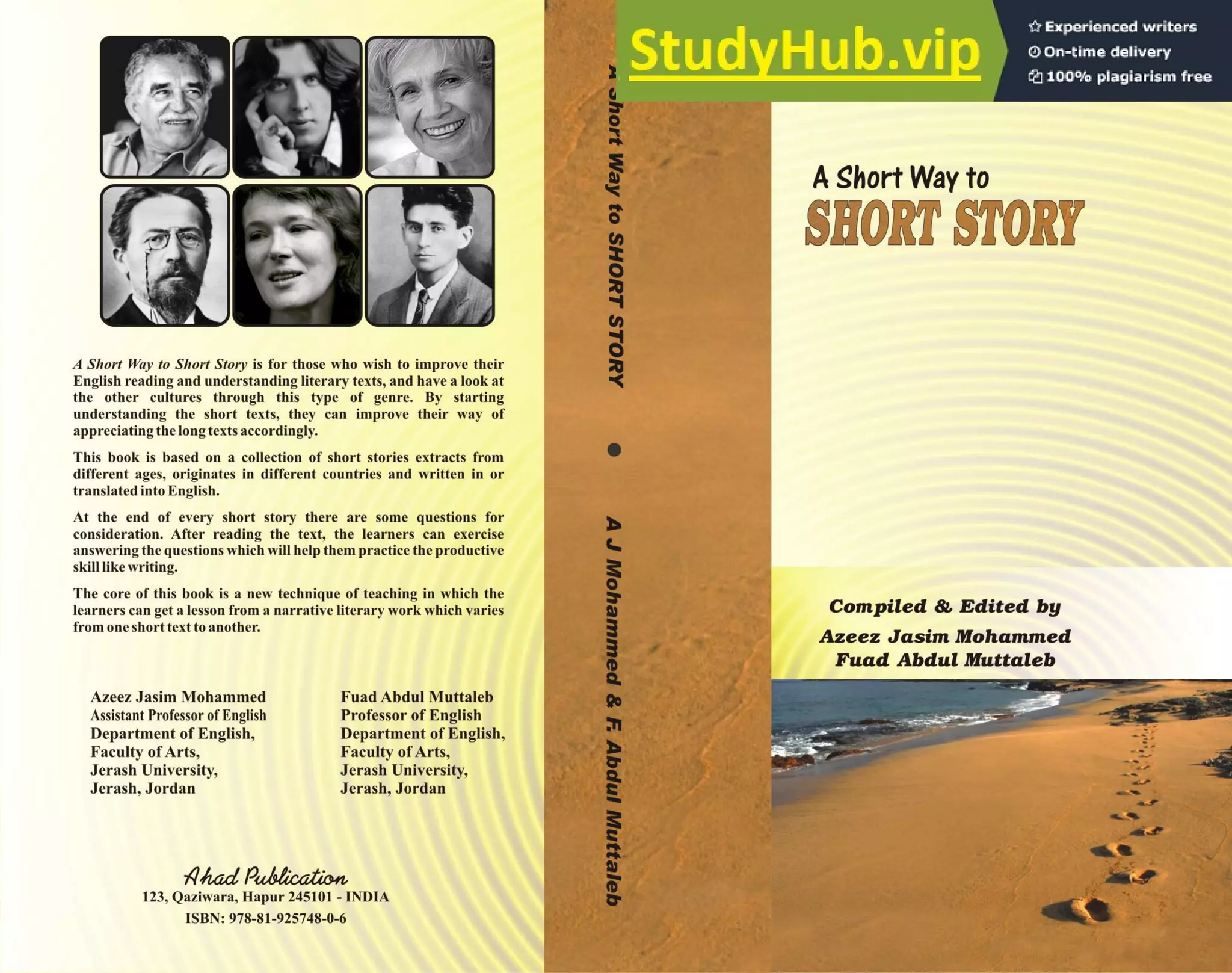
A Short Way to
SHORT STORY
Compiled and Edited by:
Azeez Jasim Mohammed
Fuad Abdul Muttaleb
Ahad Publication
123, Qaziwara, Hapur 245101 – INDIA
A Short Way to Short Story
Editors: Azeez Jasim Mohammed
Fuad Abdul Muttaleb
First Edition: 2016
Published by:
Ahad Publication
123, Qaziwara, Hapur 245101 – INDIA
© Editors
All rights for this book reserved. No part of this book may be reproduced, stored
in a retrieval system, or transmitted, in any form or by any means, electronic,
mechanical, photocopying, recording or otherwise, without the prior permission
of the copyright owner.
ISBN: 978-81-925748-0-6
Price: 200.00 INR
Type Setting & Cover Designing
Mustafa for designing
Al-Rasheed Street, Baghdad, IRAQ
Printed by:
B. K. Offset
Shahdra Delhi- 110032 - INDIA
For
Knowledge Seekers
In
A Dark Age
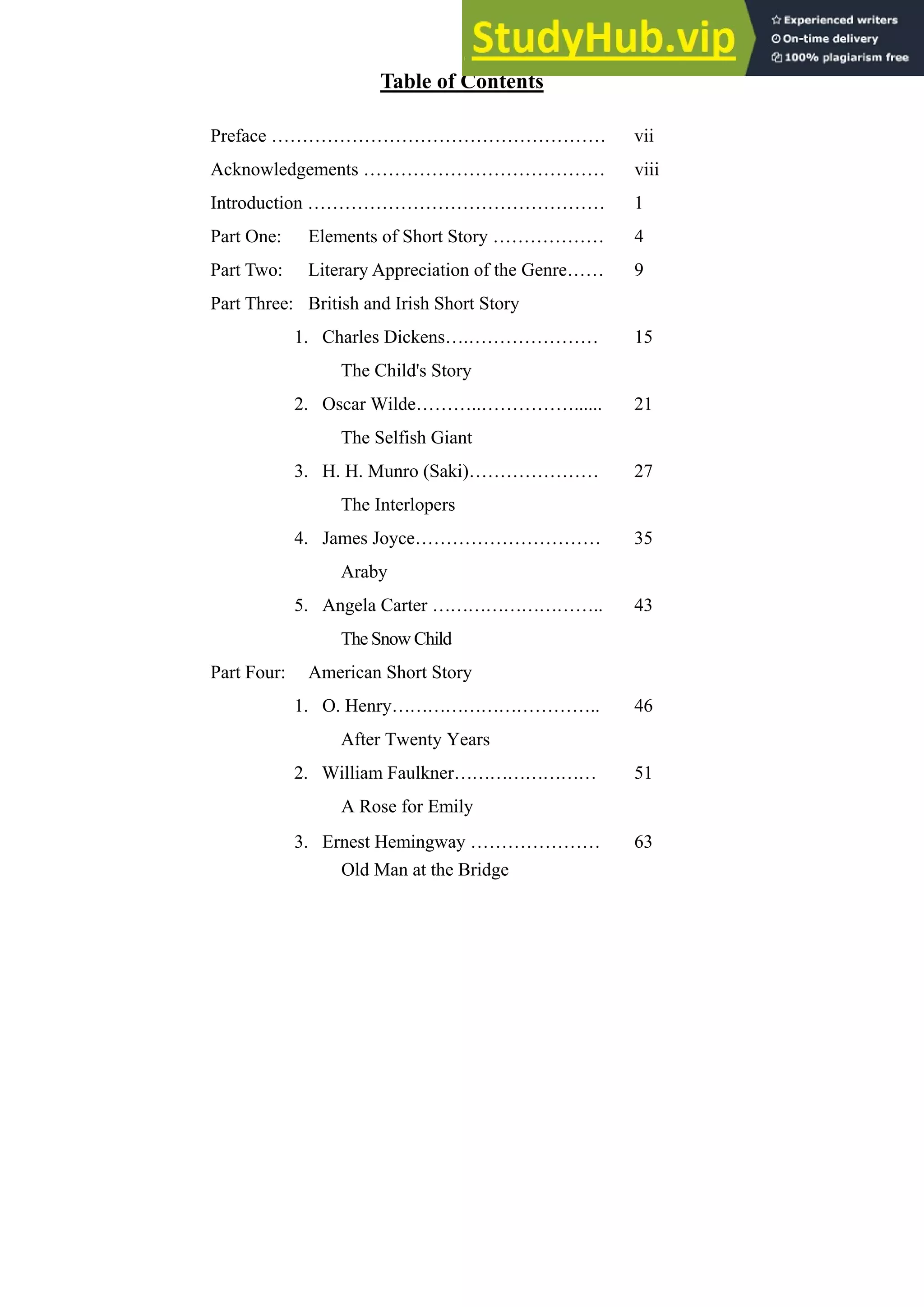
Table of Contents
Preface ……………………………………………… vii
Acknowledgements ………………………………… viii
Introduction ………………………………………… 1
Part One: Elements of Short Story ……………… 4
Part Two: Literary Appreciation of the Genre…… 9
Part Three: British and Irish Short Story
1. Charles Dickens….………………… 15
The Child's Story
2. Oscar Wilde………..……………...... 21
The Selfish Giant
3. H. H. Munro (Saki)………………… 27
The Interlopers
4. James Joyce………………………… 35
Araby
5. Angela Carter ……………………….. 43
The Snow Child
Part Four: American Short Story
1. O. Henry…………………………….. 46
After Twenty Years
2. William Faulkner…………………… 51
A Rose for Emily
3. Ernest Hemingway ………………… 63
Old Man at the Bridge
Table of Contents
4. Shirley Jackson……………………… 67
The Lottery
5. Langston Hughes…………………… 79
Thank You, Ma'am
6. William Saroyan…………………… 84
The Summer of the Beautiful White Horse
Part Five: World Short Story
1. Guy De Maupassant ……………… 94
The Necklace
2. Anton Chekhov…………………… 106
Misery
3. Katherine Mansfield……………… 114
The Apple Tree
4. Franz Kafka……………………… 118
A Hunger Artist
5. Gabriel Garcia Marquez………… 130
A Very Old Man With Enormous Wings
6. Alice Munro……………………… 139
The Eye
References ……………………………………… 153
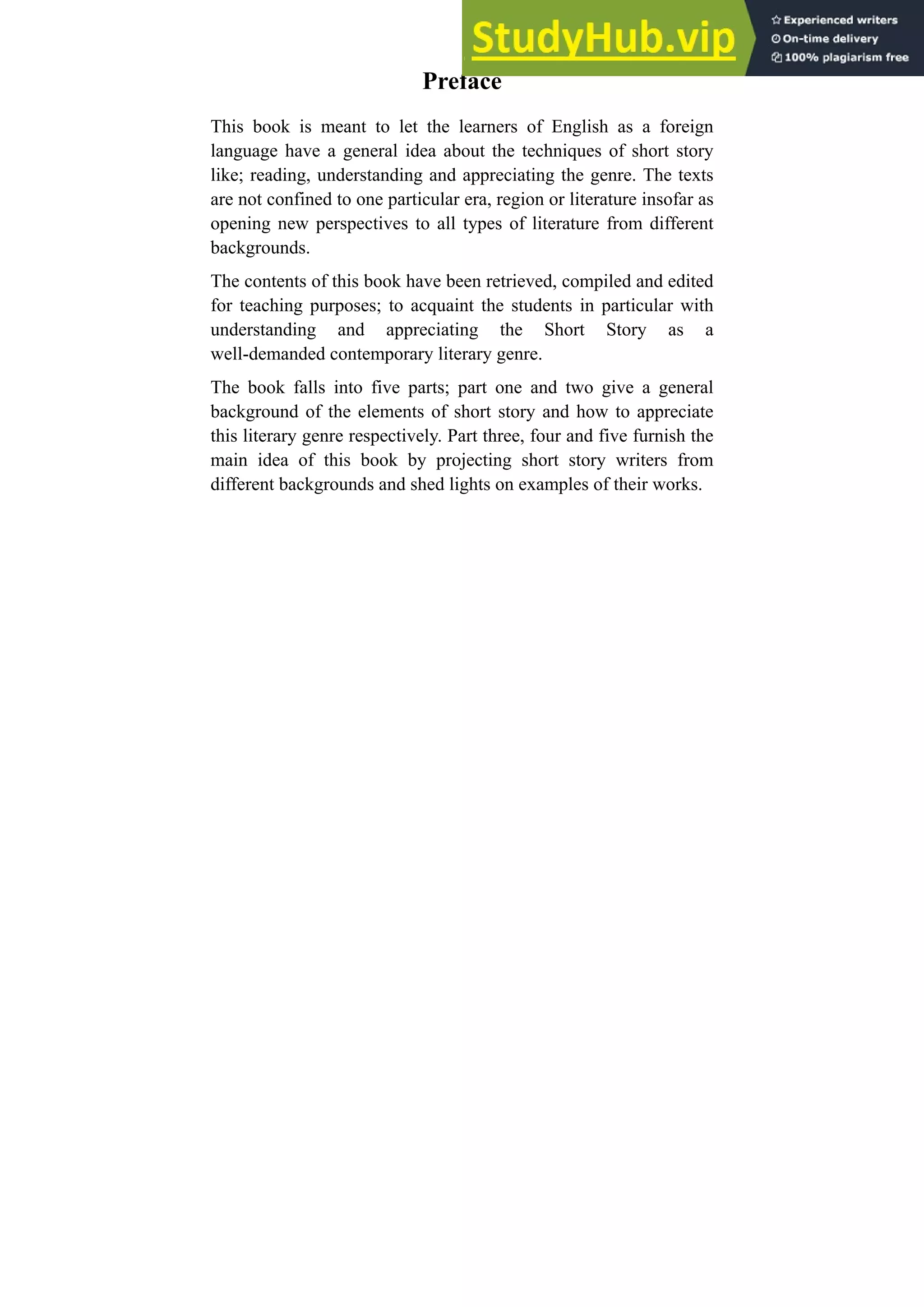
Preface
This book is meant to let the learners of English as a foreign
language have a general idea about the techniques of short story
like; reading, understanding and appreciating the genre. The texts
are not confined to one particular era, region or literature insofar as
opening new perspectives to all types of literature from different
backgrounds.
The contents of this book have been retrieved, compiled and edited
for teaching purposes; to acquaint the students in particular with
understanding and appreciating the Short Story as a
well-demanded contemporary literary genre.
The book falls into five parts; part one and two give a general
background of the elements of short story and how to appreciate
this literary genre respectively. Part three, four and five furnish the
main idea of this book by projecting short story writers from
different backgrounds and shed lights on examples of their works.
Acknowledgements
Our thanks go to Dr. Kishor Kumar who has given us noteworthy
assistance with publication of this book. Thanks to Dr. P. K. Panda,
a professor of English at IIT-BHU. Heartedly thanks to our
families for the lovely and perpetual encouragements. Special
thanks go to our friends who bid us good wishes while preparing
the early draft of this manuscript; Rabeea Mahmood Rabeea, Wa'il
Al-Ali and Masroor Hasan owner of Ahad Publication – India.
I, Azeez Jasim Mohammed, am deeply indebted to the
comradeship of Shakir (Abu Dhafir) and Hamid (Abu Saif), in
whose company I find it easy to visit India and publish this book.
My thanks also go to my cousin Haider.
Our thanks, of course, to those whom we failed to mention.
Editors
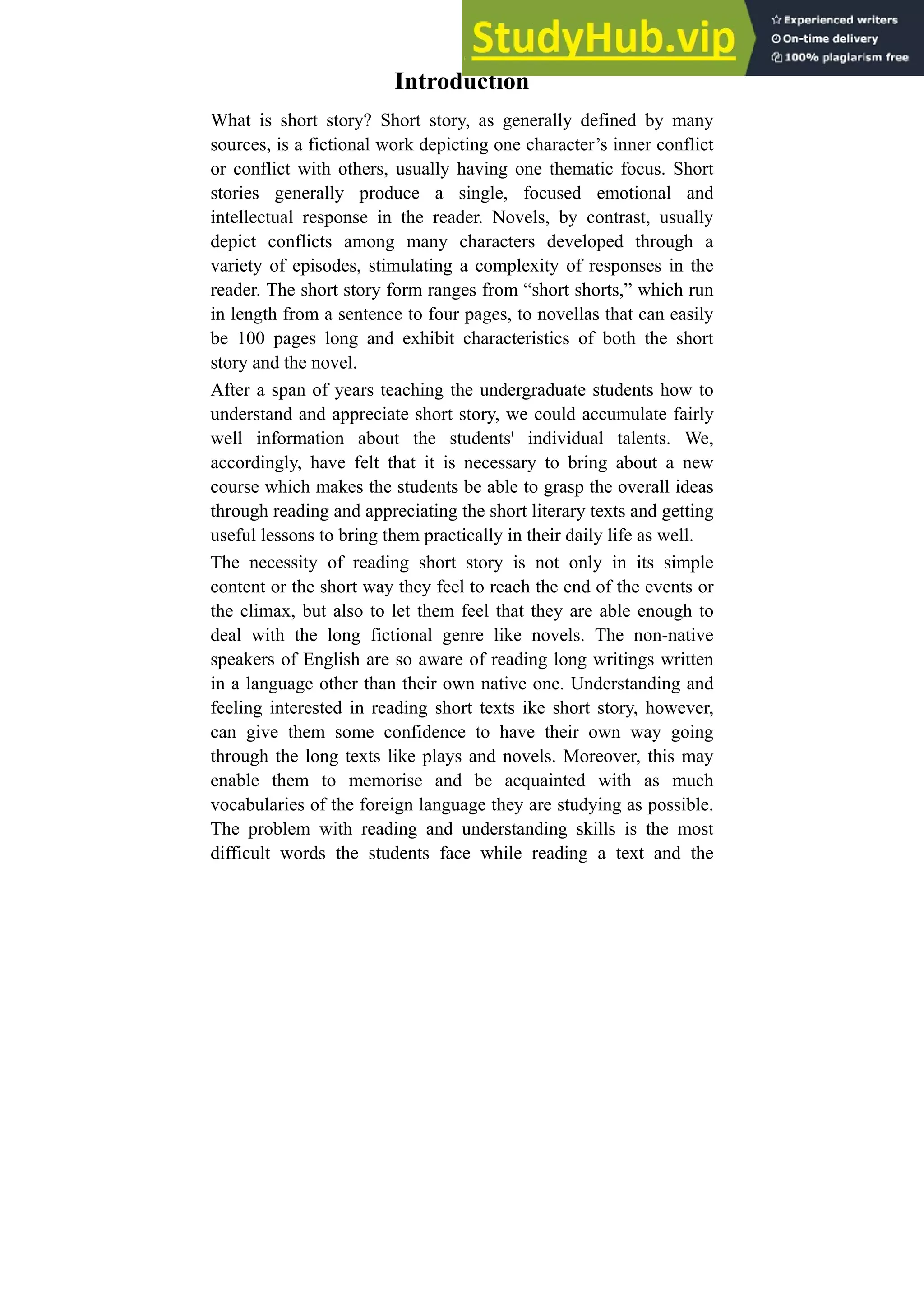
Introduction
What is short story? Short story, as generally defined by many
sources, is a fictional work depicting one character’s inner conflict
or conflict with others, usually having one thematic focus. Short
stories generally produce a single, focused emotional and
intellectual response in the reader. Novels, by contrast, usually
depict conflicts among many characters developed through a
variety of episodes, stimulating a complexity of responses in the
reader. The short story form ranges from “short shorts,” which run
in length from a sentence to four pages, to novellas that can easily
be 100 pages long and exhibit characteristics of both the short
story and the novel.
After a span of years teaching the undergraduate students how to
understand and appreciate short story, we could accumulate fairly
well information about the students' individual talents. We,
accordingly, have felt that it is necessary to bring about a new
course which makes the students be able to grasp the overall ideas
through reading and appreciating the short literary texts and getting
useful lessons to bring them practically in their daily life as well.
The necessity of reading short story is not only in its simple
content or the short way they feel to reach the end of the events or
the climax, but also to let them feel that they are able enough to
deal with the long fictional genre like novels. The non-native
speakers of English are so aware of reading long writings written
in a language other than their own native one. Understanding and
feeling interested in reading short texts ike short story, however,
can give them some confidence to have their own way going
through the long texts like plays and novels. Moreover, this may
enable them to memorise and be acquainted with as much
vocabularies of the foreign language they are studying as possible.
The problem with reading and understanding skills is the most
difficult words the students face while reading a text and the
For more information about the book, please contact the corresponding
editor Dr. Azeez Jasim Mohammed at: azizjasim73@gmail.com

A Short Way to Short Story.pdf

  • 2.
    A Short Wayto SHORT STORY Compiled and Edited by: Azeez Jasim Mohammed Fuad Abdul Muttaleb Ahad Publication 123, Qaziwara, Hapur 245101 – INDIA
  • 3.
    A Short Wayto Short Story Editors: Azeez Jasim Mohammed Fuad Abdul Muttaleb First Edition: 2016 Published by: Ahad Publication 123, Qaziwara, Hapur 245101 – INDIA © Editors All rights for this book reserved. No part of this book may be reproduced, stored in a retrieval system, or transmitted, in any form or by any means, electronic, mechanical, photocopying, recording or otherwise, without the prior permission of the copyright owner. ISBN: 978-81-925748-0-6 Price: 200.00 INR Type Setting & Cover Designing Mustafa for designing Al-Rasheed Street, Baghdad, IRAQ Printed by: B. K. Offset Shahdra Delhi- 110032 - INDIA
  • 4.
  • 6.
    Table of Contents Preface……………………………………………… vii Acknowledgements ………………………………… viii Introduction ………………………………………… 1 Part One: Elements of Short Story ……………… 4 Part Two: Literary Appreciation of the Genre…… 9 Part Three: British and Irish Short Story 1. Charles Dickens….………………… 15 The Child's Story 2. Oscar Wilde………..……………...... 21 The Selfish Giant 3. H. H. Munro (Saki)………………… 27 The Interlopers 4. James Joyce………………………… 35 Araby 5. Angela Carter ……………………….. 43 The Snow Child Part Four: American Short Story 1. O. Henry…………………………….. 46 After Twenty Years 2. William Faulkner…………………… 51 A Rose for Emily 3. Ernest Hemingway ………………… 63 Old Man at the Bridge
  • 7.
    Table of Contents 4.Shirley Jackson……………………… 67 The Lottery 5. Langston Hughes…………………… 79 Thank You, Ma'am 6. William Saroyan…………………… 84 The Summer of the Beautiful White Horse Part Five: World Short Story 1. Guy De Maupassant ……………… 94 The Necklace 2. Anton Chekhov…………………… 106 Misery 3. Katherine Mansfield……………… 114 The Apple Tree 4. Franz Kafka……………………… 118 A Hunger Artist 5. Gabriel Garcia Marquez………… 130 A Very Old Man With Enormous Wings 6. Alice Munro……………………… 139 The Eye References ……………………………………… 153
  • 8.
    Preface This book ismeant to let the learners of English as a foreign language have a general idea about the techniques of short story like; reading, understanding and appreciating the genre. The texts are not confined to one particular era, region or literature insofar as opening new perspectives to all types of literature from different backgrounds. The contents of this book have been retrieved, compiled and edited for teaching purposes; to acquaint the students in particular with understanding and appreciating the Short Story as a well-demanded contemporary literary genre. The book falls into five parts; part one and two give a general background of the elements of short story and how to appreciate this literary genre respectively. Part three, four and five furnish the main idea of this book by projecting short story writers from different backgrounds and shed lights on examples of their works.
  • 9.
    Acknowledgements Our thanks goto Dr. Kishor Kumar who has given us noteworthy assistance with publication of this book. Thanks to Dr. P. K. Panda, a professor of English at IIT-BHU. Heartedly thanks to our families for the lovely and perpetual encouragements. Special thanks go to our friends who bid us good wishes while preparing the early draft of this manuscript; Rabeea Mahmood Rabeea, Wa'il Al-Ali and Masroor Hasan owner of Ahad Publication – India. I, Azeez Jasim Mohammed, am deeply indebted to the comradeship of Shakir (Abu Dhafir) and Hamid (Abu Saif), in whose company I find it easy to visit India and publish this book. My thanks also go to my cousin Haider. Our thanks, of course, to those whom we failed to mention. Editors
  • 10.
    Introduction What is shortstory? Short story, as generally defined by many sources, is a fictional work depicting one character’s inner conflict or conflict with others, usually having one thematic focus. Short stories generally produce a single, focused emotional and intellectual response in the reader. Novels, by contrast, usually depict conflicts among many characters developed through a variety of episodes, stimulating a complexity of responses in the reader. The short story form ranges from “short shorts,” which run in length from a sentence to four pages, to novellas that can easily be 100 pages long and exhibit characteristics of both the short story and the novel. After a span of years teaching the undergraduate students how to understand and appreciate short story, we could accumulate fairly well information about the students' individual talents. We, accordingly, have felt that it is necessary to bring about a new course which makes the students be able to grasp the overall ideas through reading and appreciating the short literary texts and getting useful lessons to bring them practically in their daily life as well. The necessity of reading short story is not only in its simple content or the short way they feel to reach the end of the events or the climax, but also to let them feel that they are able enough to deal with the long fictional genre like novels. The non-native speakers of English are so aware of reading long writings written in a language other than their own native one. Understanding and feeling interested in reading short texts ike short story, however, can give them some confidence to have their own way going through the long texts like plays and novels. Moreover, this may enable them to memorise and be acquainted with as much vocabularies of the foreign language they are studying as possible. The problem with reading and understanding skills is the most difficult words the students face while reading a text and the
  • 11.
    For more informationabout the book, please contact the corresponding editor Dr. Azeez Jasim Mohammed at: azizjasim73@gmail.com