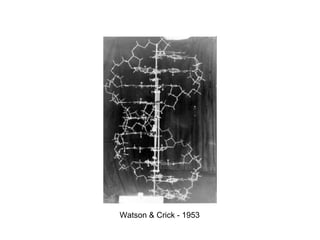
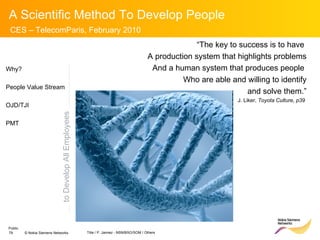
Watson & Crick - 1953
Once upon a time… … a standard pattern to develop all employees… with true managers. Resources Questions & Answers Agenda
HITOSHI KUME: “ The fact is that Japan is a resource-poor nation. To survive, we've always needed to manufacture and export industrial products so that we could import food.”   TAKESHI KEN KAYANO:  “ If products are not good quality, they won't sell. So, even if people work hard, if they make poor quality products they won't sell, and they can not survive.“
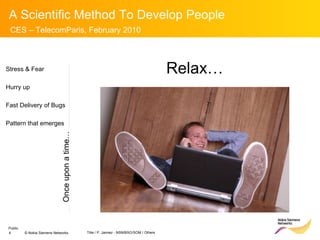
Once upon a time… Stress & Fear Hurry up Fast Delivery of Bugs Pattern that emerges Relax…
Stress & Fear Hurry up Fast Delivery of Bugs Pattern that emerges Until… Once upon a time…
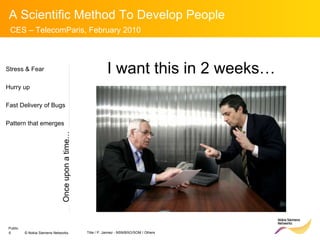
File #: 1172086  Stress & Fear Hurry up Fast Delivery of Bugs Pattern that emerges I want this in 2 weeks… Once upon a time…
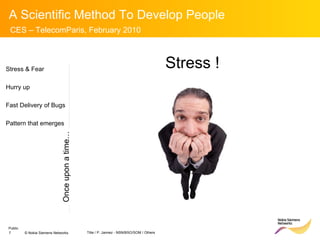
Stress & Fear Hurry up Fast Delivery of Bugs Pattern that emerges Stress ! Once upon a time…
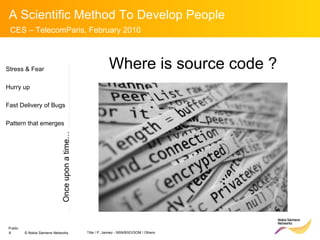
Stress & Fear Hurry up Fast Delivery of Bugs Pattern that emerges Where is source code ? Once upon a time…
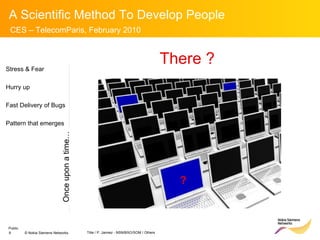
Stress & Fear Hurry up Fast Delivery of Bugs Pattern that emerges There ? Once upon a time… ?
Stress & Fear Hurry up Fast Delivery of Bugs Pattern that emerges Once upon a time…
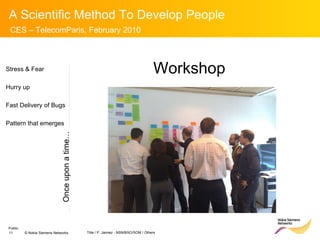
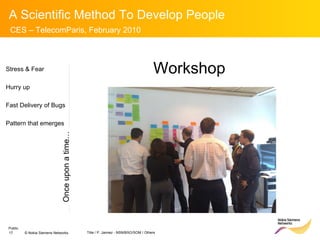
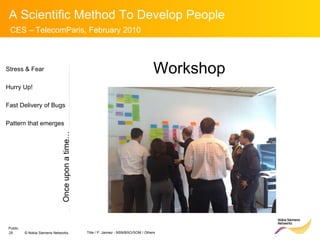
Stress & Fear Hurry up Fast Delivery of Bugs Pattern that emerges Workshop File #: 10737002  Once upon a time…
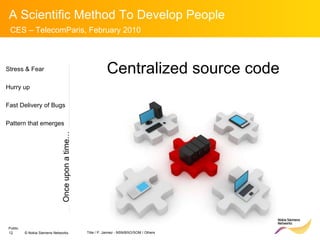
Stress & Fear Hurry up Fast Delivery of Bugs Pattern that emerges Centralized source code Once upon a time…
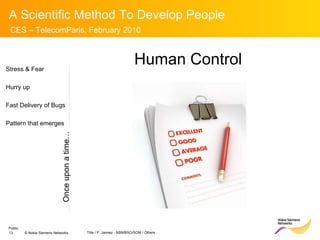
Stress & Fear Hurry up Fast Delivery of Bugs Pattern that emerges Human Control  Once upon a time…
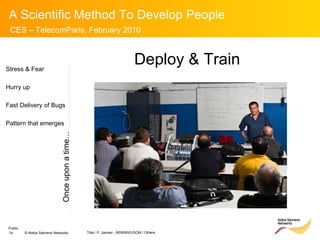
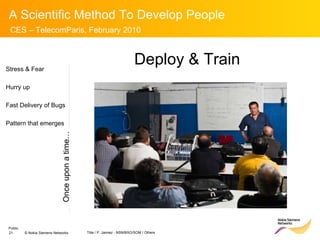
Stress & Fear Hurry up Fast Delivery of Bugs Pattern that emerges Deploy & Train Once upon a time…
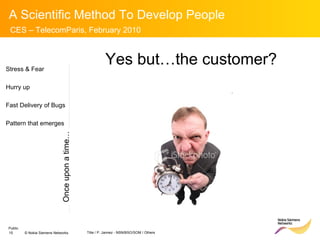
Stress & Fear Hurry up Fast Delivery of Bugs Pattern that emerges Yes but…the customer?  Once upon a time…
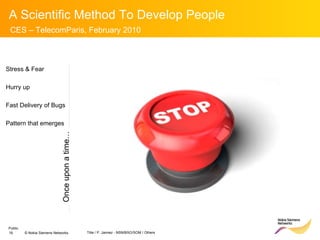
Stress & Fear Hurry up Fast Delivery of Bugs Pattern that emerges Once upon a time…
Stress & Fear Hurry up Fast Delivery of Bugs Pattern that emerges Workshop File #: 10737002  Once upon a time…
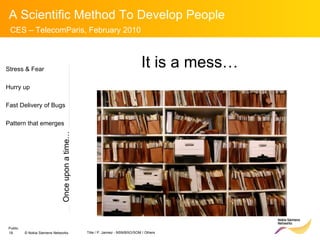
Stress & Fear Hurry up Fast Delivery of Bugs Pattern that emerges It is a mess…  Once upon a time…
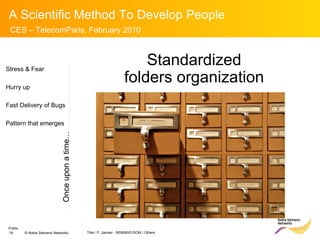
Stress & Fear Hurry up Fast Delivery of Bugs Pattern that emerges Standardized  folders organization  Once upon a time…
Stress & Fear Hurry up Fast Delivery of Bugs Pattern that emerges For Automatic  Software Building  Once upon a time…
Deploy & Train Stress & Fear Hurry up Fast Delivery of Bugs Pattern that emerges Once upon a time…
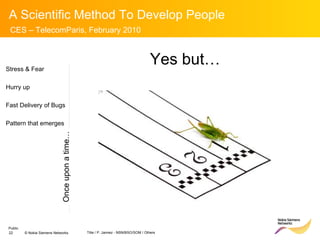
Stress & Fear Hurry up Fast Delivery of Bugs Pattern that emerges Yes but…  Once upon a time…
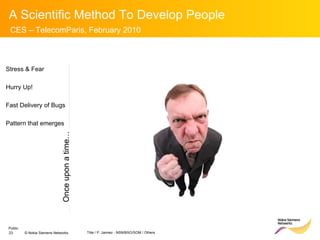
Stress & Fear Hurry Up! Fast Delivery of Bugs Pattern that emerges Once upon a time…
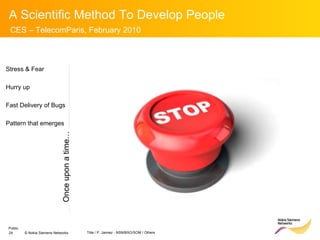
Stress & Fear Hurry up Fast Delivery of Bugs Pattern that emerges Once upon a time…
Workshop Stress & Fear Hurry Up! Fast Delivery of Bugs Pattern that emerges Once upon a time…
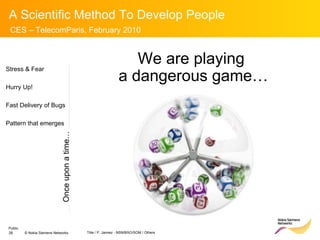
Stress & Fear Hurry Up! Fast Delivery of Bugs Pattern that emerges We are playing  a dangerous game… Once upon a time…
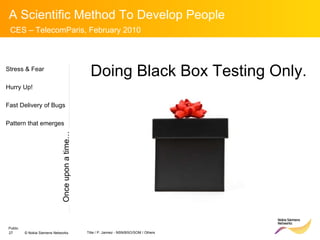
Stress & Fear Hurry Up! Fast Delivery of Bugs Pattern that emerges Doing Black Box Testing Only. Once upon a time…
Stress & Fear Hurry Up! Fast Delivery of Bugs Pattern that emerges ? Once upon a time…
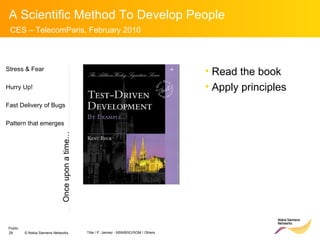
Stress & Fear Hurry Up! Fast Delivery of Bugs Pattern that emerges Read the book Apply principles Once upon a time…
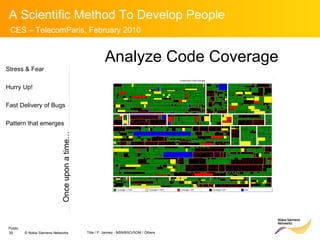
Stress & Fear Hurry Up! Fast Delivery of Bugs Pattern that emerges Analyze Code Coverage Once upon a time…
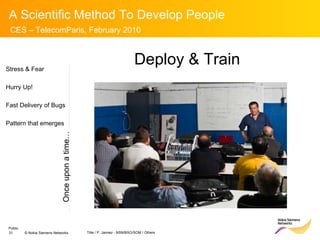
Deploy & Train Stress & Fear Hurry Up! Fast Delivery of Bugs Pattern that emerges Once upon a time…
What  did we learnt ? Stress & Fear Hurry Up! Fast Delivery of Bugs Pattern that emerges Once upon a time…
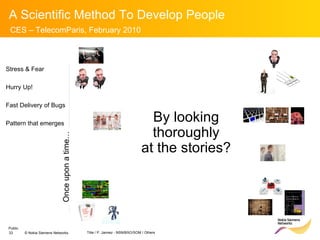
By looking thoroughly at the stories? Stress & Fear Hurry Up! Fast Delivery of Bugs Pattern that emerges Once upon a time…
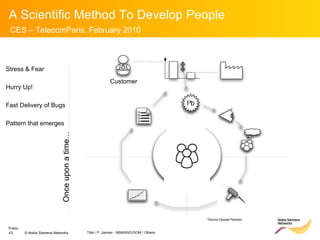
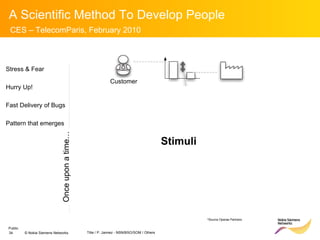
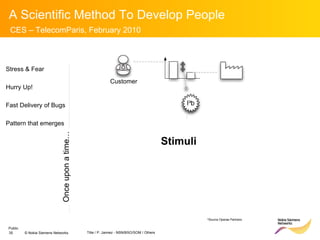
Stress & Fear Hurry Up! Fast Delivery of Bugs Pattern that emerges Stimuli Once upon a time… Customer *Source Operae Partners
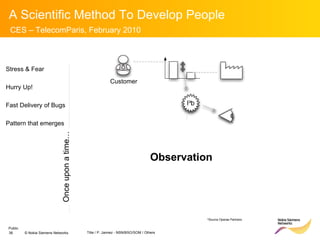
Stress & Fear Hurry Up! Fast Delivery of Bugs Pattern that emerges Observation Once upon a time… Customer *Source Operae Partners
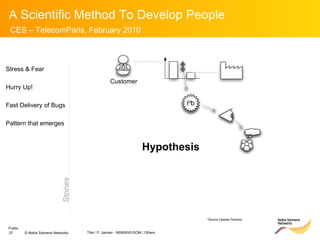
Stories Stress & Fear Hurry Up! Fast Delivery of Bugs Pattern that emerges Hypothesis Customer *Source Operae Partners
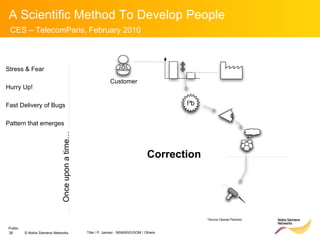
Stress & Fear Hurry Up! Fast Delivery of Bugs Pattern that emerges Correction Once upon a time… Customer *Source Operae Partners
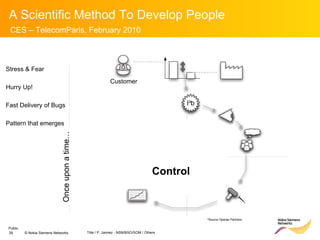
Stress & Fear Hurry Up! Fast Delivery of Bugs Pattern that emerges Control Once upon a time… Customer *Source Operae Partners
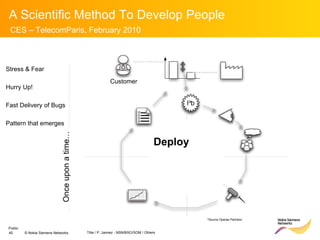
Stress & Fear Hurry Up! Fast Delivery of Bugs Pattern that emerges Deploy Once upon a time… Customer *Source Operae Partners
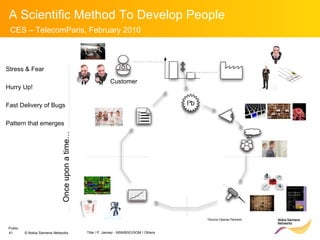
Stress & Fear Hurry Up! Fast Delivery of Bugs Pattern that emerges Once upon a time… Customer *Source Operae Partners
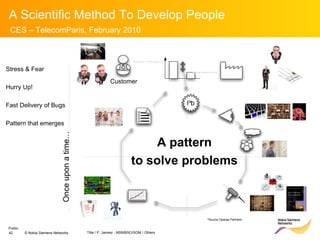
Stress & Fear Hurry Up! Fast Delivery of Bugs Pattern that emerges A pattern to solve problems Once upon a time… Customer *Source Operae Partners
Stress & Fear Hurry Up! Fast Delivery of Bugs Pattern that emerges Once upon a time… Customer *Source Operae Partners
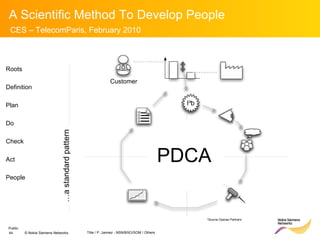
*Source Operae Partners PDCA … a standard pattern Roots Definition Plan Do Check Act People Customer
*Source Operae Partners Which takes  its  roots Roots Definition Plan Do Check Act People … a standard pattern
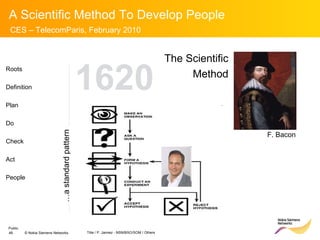
F. Bacon   1620 The Scientific Method Roots Definition Plan Do Check Act People … a standard pattern
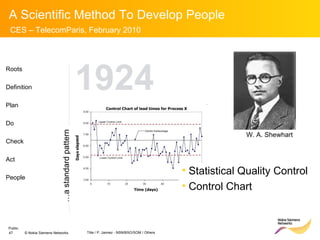
W. A. Shewhart 1924  Statistical Quality Control Control Chart  Roots Definition Plan Do Check Act People … a standard pattern
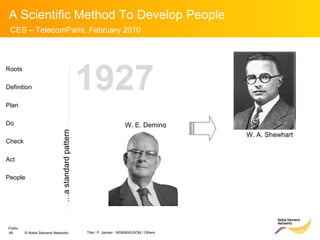
W. E. Deming 1927  W. A. Shewhart Roots Definition Plan Do Check Act People … a standard pattern
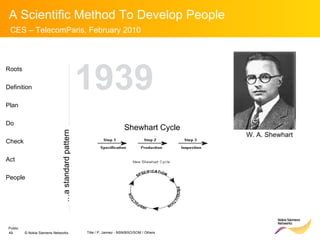
W. A. Shewhart 1939  Roots Definition Plan Do Check Act People Shewhart Cycle … a standard pattern
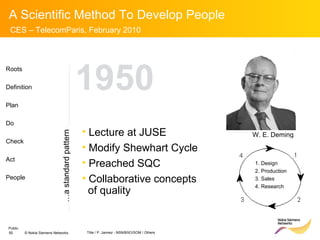
W. E. Deming Lecture at JUSE Modify Shewhart Cycle Preached SQC Collaborative concepts    of quality 1950  1. Design 2. Production 3. Sales 4. Research Roots Definition Plan Do Check Act People … a standard pattern
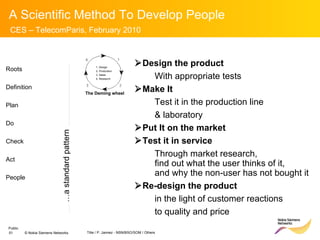
 Design the product With appropriate tests  Make It Test it in the production line  & laboratory  Put It on the market  Test it in service Through market research,  find out what the user thinks of it,  and why the non-user has not bought it  Re-design the product  in the light of customer reactions  to quality and price The Deming wheel Roots Definition Plan Do Check Act People … a standard pattern 1. Design 2. Production 3. Sales 4. Research
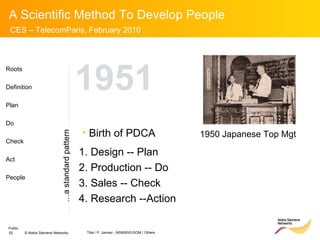
1950 Japanese Top Mgt Birth of PDCA 1951  1. Design -- Plan 2. Production -- Do  3. Sales -- Check  4. Research --Action Roots Definition Plan Do Check Act People … a standard pattern
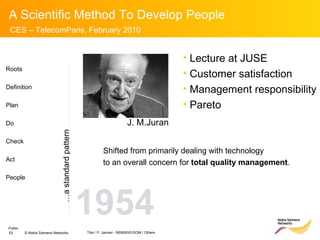
J. M.Juran 1954  Lecture at JUSE Customer satisfaction   Management responsibility Pareto Roots Definition Plan Do Check Act People Shifted from primarily dealing with technology  to an overall concern for  total quality management . … a standard pattern
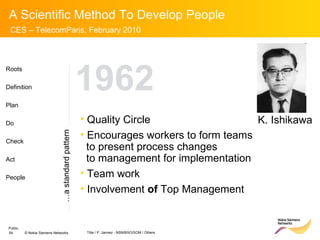
K. Ishikawa   1962  Quality Circle Encourages workers to form teams   to present process changes    to management for implementation Team work Involvement  of  Top Management Roots Definition Plan Do Check Act People … a standard pattern
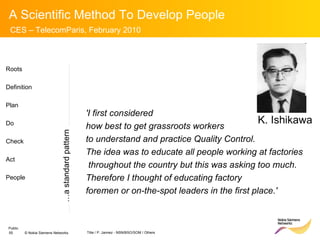
K. Ishikawa   'I first considered  how best to get grassroots workers  to understand and practice Quality Control.  The idea was to educate all people working at factories throughout the country but this was asking too much.  Therefore I thought of educating factory  foremen or on-the-spot leaders in the first place.' Roots Definition Plan Do Check Act People … a standard pattern
“ An improvement cycle  based on the scientific method  of proposing a change in a process,  implementing the change,  measuring the results,  and taking appropriate action.” Lean Lexicon (p. 72)  Roots Definition Plan Do Check Act People … a standard pattern
Continuously applied  by each employee  as individual or as part of a team  Roots Definition Plan Do Check Act People … a standard pattern
Roots Definition Plan Do Check Act People Determine goals  for   a process  and   needed changes  to   achieve them.  … a standard pattern
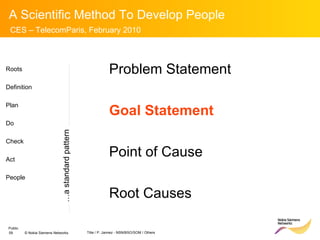
Roots Definition Plan Do Check Act People Problem Statement Goal Statement Point of Cause Root Causes … a standard pattern
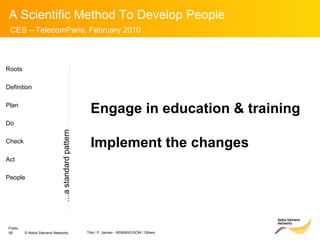
Roots Definition Plan Do Check Act People Engage in education & training Implement the changes … a standard pattern
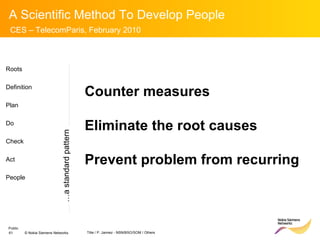
Roots Definition Plan Do Check Act People Counter measures Eliminate the root causes Prevent problem from recurring … a standard pattern
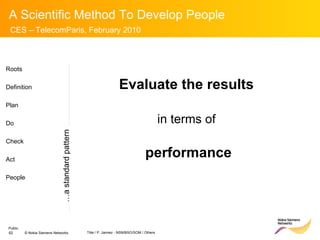
Roots Definition Plan Do Check Act People Evaluate the results  in terms of   performance … a standard pattern
Standardize   and   stabilize the change   or  begin the cycle again,  depending on the results.  Roots Definition Plan Do Check Act People … a standard pattern
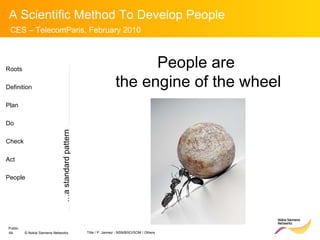
Roots Definition Plan Do Check Act People People are the engine of the wheel … a standard pattern
to Develop All Employees A company  is  a complex system  Why? People Value Stream OJD/TJI PMT
to Develop All Employees Evolving in an unpredictable Environment  Why? People Value Stream OJD/TJI PMT
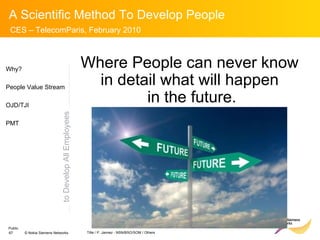
to Develop All Employees Where People can never know  in detail what will happen  in the future. Why? People Value Stream OJD/TJI PMT
to Develop All Employees To survive in such environment a Company has to Why? People Value Stream OJD/TJI PMT
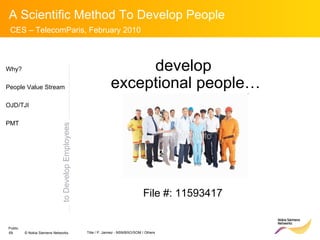
to Develop Employees develop  exceptional people… File #: 11593417   Why? People Value Stream OJD/TJI PMT
to Develop All Employees … able to adapt  the system continuously according  to the current conditions… Why? People Value Stream OJD/TJI PMT
to Develop Employees … and turn the wheel  continuously… Why? People Value Stream OJD/TJI PMT
to Develop Employees … to develop expertise… Why? People Value Stream OJD/TJI PMT
to Develop Employees … in their  Field of Activities and in  Problem Solving … Why? People Value Stream OJD/TJI PMT
to Develop All Employees through… Why? People Value Stream OJD/TJI PMT
to Develop All Employees a Framework   for Continuous   Improvement and Continuous Learning Why? People Value Stream OJT/TJI PMT
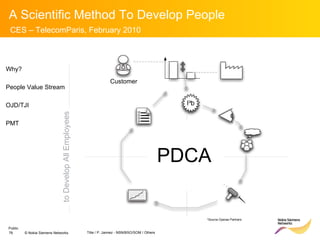
*Source Operae Partners PDCA to Develop All Employees Why? People Value Stream OJD/TJI PMT Customer
to Develop All Employees Which connects the  Two  Value Streams People & Product Why? People Value Stream OJD/TJI PMT
to Develop All Employees to create conditions  of success. Why? People Value Stream OJD/TJI PMT
to Develop All Employees “ The key to success is to have  A production system that highlights problems And a human system that produces people  Who are able and willing to identify and solve them.” J. Liker,  Toyota Culture, p39  Why? People Value Stream OJD/TJI PMT
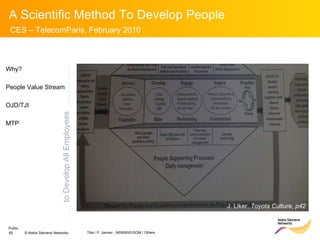
*Source J. Liker to Develop All Employees J. Liker,  Toyota Culture, p42 Why? People Value Stream OJD/TJI MTP
to Develop All Employees Why? People Value Stream OJD/TJI MTP On The Job Development Toyota Job Instruction
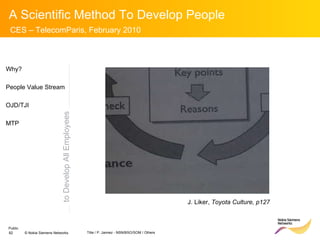
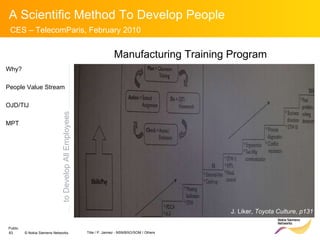
to Develop All Employees Why? People Value Stream OJD/TJI MTP J. Liker,  Toyota Culture, p127
*Source J. Liker to Develop All Employees J. Liker,  Toyota Culture, p42 Why? People Value Stream OJD/TIJ MPT J. Liker,  Toyota Culture, p131 Manufacturing Training Program
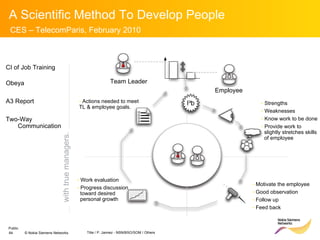
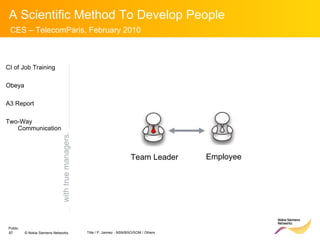
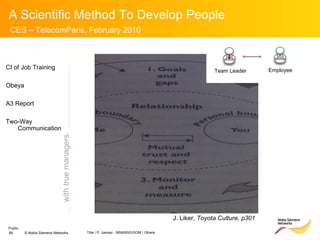
J. Liker,  Toyota Culture, p42 Employee Strengths Weaknesses Know work to be done Provide work to    slightly stretches skills    of employee Motivate the employee  Good observation Follow up  Feed back Work evaluation Progress discussion   toward desired    personal growth Actions needed to meet TL & employee goals. with true managers. CI of Job Training Obeya A3 Report Two-Way  Communication Team Leader
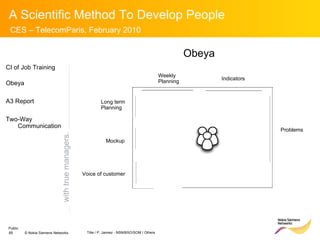
Voice of customer Mockup Long term  Planning Weekly  Planning Indicators Problems with true managers. CI of Job Training Obeya A3 Report Two-Way  Communication Obeya
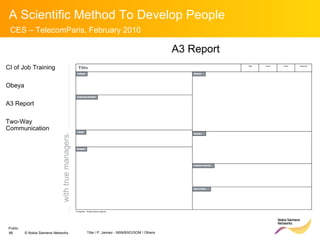
A3 Report with true managers. CI of Job Training Obeya A3 Report Two-Way  Communication
Team Leader Employee with true managers. CI of Job Training Obeya A3 Report Two-Way  Communication
J. Liker,  Toyota Culture, p301 Team Leader Employee with true managers. CI of Job Training Obeya A3 Report Two-Way  Communication
Resources PDCA History Tools Managing People Managing Developing Continuous Improvement System Links Scientific Method http://en.wikipedia.org/wiki/The_scientific_method#DNA_example Francis Bacon http://en.wikipedia.org/wiki/Francis_Bacon W. A. Shewhart http://en.wikipedia.org/wiki/Shewhart W. Edouards Deming http://en.wikipedia.org/wiki/W._Edwards_Deming The W. Edwards Deming Institute http://deming.org/ Dr. Deming's 1950 Lecture to Japanese Top Management http://deming-network.org/deming_1950.htm
Resources PDCA History Tools Managing People Managing Developing Continuous Improvement System Links J. M. Juran http://en.wikipedia.org/wiki/Joseph_M._Juran Japanese Union Of Scientists and Engineers K. Ishikawa http ://en.wikipedia.org/wiki/Kaoru_Ishikawa Pareto http://en.wikipedia.org/wiki/Pareto_principle Articles An Immigrant’s Gift: The Life of Quality Pioneer, Joseph M. Juran Transcript of Television Program
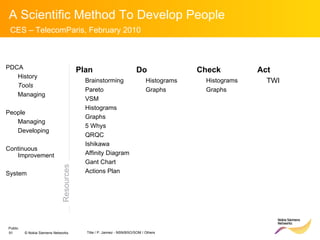
Resources PDCA History Tools Managing People Managing Developing Continuous Improvement System Plan Brainstorming Pareto VSM Histograms Graphs 5 Whys QRQC Ishikawa Affinity Diagram Gant Chart Actions Plan Do Histograms Graphs Check Histograms Graphs Act TWI
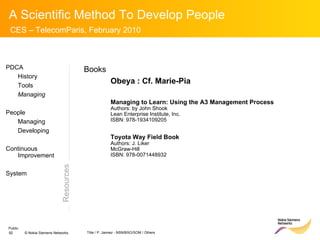
Resources PDCA History Tools Managing People Managing Developing Continuous Improvement System Books Obeya : Cf. Marie-Pia Managing to Learn: Using the A3 Management Process Authors: by John Shook  Lean Enterprise Institute, Inc.   ISBN:  978-1934109205  Toyota Way Field Book Authors: J. Liker  McGraw-Hill ISBN:  978-0071448932
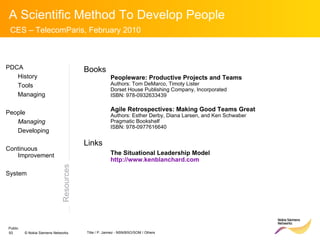
Resources PDCA History Tools Managing People Managing Developing Continuous Improvement System Books   Peopleware: Productive Projects and Teams Authors: Tom DeMarco, Timoty Lister Dorset House Publishing Company, Incorporated ISBN:  978-0932633439   Agile Retrospectives: Making Good Teams Great  Authors: Esther Derby, Diana Larsen, and Ken Schwaber  Pragmatic Bookshelf ISBN: 978-0977616640 Links The Situational Leadership Model http:// www.kenblanchard.com
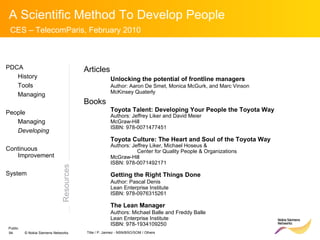
Resources PDCA History Tools Managing People Managing Developing Continuous Improvement System Articles Unlocking the potential of frontline managers Author: Aaron De Smet, Monica McGurk, and Marc Vinson McKinsey Quaterly Books   Toyota Talent: Developing Your People the Toyota Way  Authors: Jeffrey Liker and David Meier McGraw-Hill ISBN: 978-0071477451 Toyota Culture: The Heart and Soul of the Toyota Way  Authors: Jeffrey Liker, Michael Hoseus &  Center for Quality People & Organizations McGraw-Hill ISBN: 978-0071492171 Getting the Right Things Done Author: Pascal Denis Lean Enterprise Institute   ISBN:  978-0976315261 The Lean Manager  Authors:  Michael Balle and Freddy Balle   Lean Enterprise Institute   ISBN:  978-1934109250
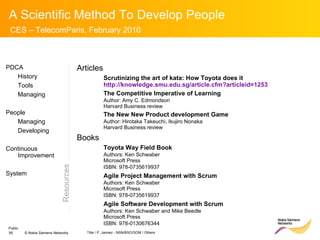
Resources PDCA History Tools Managing People Managing Developing Continuous Improvement System Articles Scrutinizing the art of kata: How Toyota does it http://knowledge.smu.edu.sg/article.cfm?articleid=1253 The Competitive Imperative of Learning Author: Amy C. Edmondson Harvard Business review The New New Product development Game Author: Hirotaka Takeuchi, Ikujiro Nonaka Harvard Business review Books Toyota Way Field Book Authors: Ken Schwaber  Microsoft Press ISBN:  978-0735619937   Agile Project Management with Scrum Authors: Ken Schwaber  Microsoft Press ISBN:  978-0735619937   Agile Software Development with Scrum  Authors: Ken Schwaber and Mike Beedle  Microsoft Press ISBN:  978-0130676344
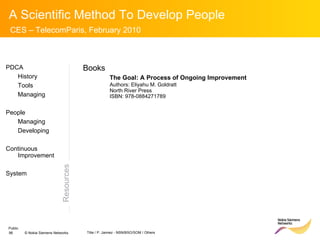
Resources PDCA History Tools Managing People Managing Developing Continuous Improvement System Books The Goal: A Process of Ongoing Improvement Authors: Eliyahu M. Goldratt  North River Press   ISBN:  978-0884271789
Resources PDCA History Tools Managing People Managing Developing Continuous Improvement System Books Managing The Design Factory Authors: Donald G. Reinerstsen  Free Press ISBN:  0-684-83991-1
Q & A Questions & Answers

A scientific method to develop people

  • 1.
  • 2.
    Once upon atime… … a standard pattern to develop all employees… with true managers. Resources Questions & Answers Agenda
  • 3.
    HITOSHI KUME: “The fact is that Japan is a resource-poor nation. To survive, we've always needed to manufacture and export industrial products so that we could import food.” TAKESHI KEN KAYANO: “ If products are not good quality, they won't sell. So, even if people work hard, if they make poor quality products they won't sell, and they can not survive.“
  • 4.
    Once upon atime… Stress & Fear Hurry up Fast Delivery of Bugs Pattern that emerges Relax…
  • 5.
    Stress & FearHurry up Fast Delivery of Bugs Pattern that emerges Until… Once upon a time…
  • 6.
    File #: 1172086 Stress & Fear Hurry up Fast Delivery of Bugs Pattern that emerges I want this in 2 weeks… Once upon a time…
  • 7.
    Stress & FearHurry up Fast Delivery of Bugs Pattern that emerges Stress ! Once upon a time…
  • 8.
    Stress & FearHurry up Fast Delivery of Bugs Pattern that emerges Where is source code ? Once upon a time…
  • 9.
    Stress & FearHurry up Fast Delivery of Bugs Pattern that emerges There ? Once upon a time… ?
  • 10.
    Stress & FearHurry up Fast Delivery of Bugs Pattern that emerges Once upon a time…
  • 11.
    Stress & FearHurry up Fast Delivery of Bugs Pattern that emerges Workshop File #: 10737002 Once upon a time…
  • 12.
    Stress & FearHurry up Fast Delivery of Bugs Pattern that emerges Centralized source code Once upon a time…
  • 13.
    Stress & FearHurry up Fast Delivery of Bugs Pattern that emerges Human Control Once upon a time…
  • 14.
    Stress & FearHurry up Fast Delivery of Bugs Pattern that emerges Deploy & Train Once upon a time…
  • 15.
    Stress & FearHurry up Fast Delivery of Bugs Pattern that emerges Yes but…the customer? Once upon a time…
  • 16.
    Stress & FearHurry up Fast Delivery of Bugs Pattern that emerges Once upon a time…
  • 17.
    Stress & FearHurry up Fast Delivery of Bugs Pattern that emerges Workshop File #: 10737002 Once upon a time…
  • 18.
    Stress & FearHurry up Fast Delivery of Bugs Pattern that emerges It is a mess… Once upon a time…
  • 19.
    Stress & FearHurry up Fast Delivery of Bugs Pattern that emerges Standardized folders organization Once upon a time…
  • 20.
    Stress & FearHurry up Fast Delivery of Bugs Pattern that emerges For Automatic Software Building Once upon a time…
  • 21.
    Deploy & TrainStress & Fear Hurry up Fast Delivery of Bugs Pattern that emerges Once upon a time…
  • 22.
    Stress & FearHurry up Fast Delivery of Bugs Pattern that emerges Yes but… Once upon a time…
  • 23.
    Stress & FearHurry Up! Fast Delivery of Bugs Pattern that emerges Once upon a time…
  • 24.
    Stress & FearHurry up Fast Delivery of Bugs Pattern that emerges Once upon a time…
  • 25.
    Workshop Stress &Fear Hurry Up! Fast Delivery of Bugs Pattern that emerges Once upon a time…
  • 26.
    Stress & FearHurry Up! Fast Delivery of Bugs Pattern that emerges We are playing a dangerous game… Once upon a time…
  • 27.
    Stress & FearHurry Up! Fast Delivery of Bugs Pattern that emerges Doing Black Box Testing Only. Once upon a time…
  • 28.
    Stress & FearHurry Up! Fast Delivery of Bugs Pattern that emerges ? Once upon a time…
  • 29.
    Stress & FearHurry Up! Fast Delivery of Bugs Pattern that emerges Read the book Apply principles Once upon a time…
  • 30.
    Stress & FearHurry Up! Fast Delivery of Bugs Pattern that emerges Analyze Code Coverage Once upon a time…
  • 31.
    Deploy & TrainStress & Fear Hurry Up! Fast Delivery of Bugs Pattern that emerges Once upon a time…
  • 32.
    What didwe learnt ? Stress & Fear Hurry Up! Fast Delivery of Bugs Pattern that emerges Once upon a time…
  • 33.
    By looking thoroughlyat the stories? Stress & Fear Hurry Up! Fast Delivery of Bugs Pattern that emerges Once upon a time…
  • 34.
    Stress & FearHurry Up! Fast Delivery of Bugs Pattern that emerges Stimuli Once upon a time… Customer *Source Operae Partners
  • 35.
    Stress & FearHurry Up! Fast Delivery of Bugs Pattern that emerges Stimuli Once upon a time… Customer *Source Operae Partners
  • 36.
    Stress & FearHurry Up! Fast Delivery of Bugs Pattern that emerges Observation Once upon a time… Customer *Source Operae Partners
  • 37.
    Stories Stress &Fear Hurry Up! Fast Delivery of Bugs Pattern that emerges Hypothesis Customer *Source Operae Partners
  • 38.
    Stress & FearHurry Up! Fast Delivery of Bugs Pattern that emerges Correction Once upon a time… Customer *Source Operae Partners
  • 39.
    Stress & FearHurry Up! Fast Delivery of Bugs Pattern that emerges Control Once upon a time… Customer *Source Operae Partners
  • 40.
    Stress & FearHurry Up! Fast Delivery of Bugs Pattern that emerges Deploy Once upon a time… Customer *Source Operae Partners
  • 41.
    Stress & FearHurry Up! Fast Delivery of Bugs Pattern that emerges Once upon a time… Customer *Source Operae Partners
  • 42.
    Stress & FearHurry Up! Fast Delivery of Bugs Pattern that emerges A pattern to solve problems Once upon a time… Customer *Source Operae Partners
  • 43.
    Stress & FearHurry Up! Fast Delivery of Bugs Pattern that emerges Once upon a time… Customer *Source Operae Partners
  • 44.
    *Source Operae PartnersPDCA … a standard pattern Roots Definition Plan Do Check Act People Customer
  • 45.
    *Source Operae PartnersWhich takes its roots Roots Definition Plan Do Check Act People … a standard pattern
  • 46.
    F. Bacon 1620 The Scientific Method Roots Definition Plan Do Check Act People … a standard pattern
  • 47.
    W. A. Shewhart1924 Statistical Quality Control Control Chart Roots Definition Plan Do Check Act People … a standard pattern
  • 48.
    W. E. Deming1927 W. A. Shewhart Roots Definition Plan Do Check Act People … a standard pattern
  • 49.
    W. A. Shewhart1939 Roots Definition Plan Do Check Act People Shewhart Cycle … a standard pattern
  • 50.
    W. E. DemingLecture at JUSE Modify Shewhart Cycle Preached SQC Collaborative concepts of quality 1950 1. Design 2. Production 3. Sales 4. Research Roots Definition Plan Do Check Act People … a standard pattern
  • 51.
     Design theproduct With appropriate tests  Make It Test it in the production line & laboratory  Put It on the market  Test it in service Through market research, find out what the user thinks of it, and why the non-user has not bought it  Re-design the product in the light of customer reactions to quality and price The Deming wheel Roots Definition Plan Do Check Act People … a standard pattern 1. Design 2. Production 3. Sales 4. Research
  • 52.
    1950 Japanese TopMgt Birth of PDCA 1951 1. Design -- Plan 2. Production -- Do 3. Sales -- Check 4. Research --Action Roots Definition Plan Do Check Act People … a standard pattern
  • 53.
    J. M.Juran 1954 Lecture at JUSE Customer satisfaction Management responsibility Pareto Roots Definition Plan Do Check Act People Shifted from primarily dealing with technology to an overall concern for total quality management . … a standard pattern
  • 54.
    K. Ishikawa 1962 Quality Circle Encourages workers to form teams to present process changes to management for implementation Team work Involvement of Top Management Roots Definition Plan Do Check Act People … a standard pattern
  • 55.
    K. Ishikawa 'I first considered how best to get grassroots workers to understand and practice Quality Control. The idea was to educate all people working at factories throughout the country but this was asking too much. Therefore I thought of educating factory foremen or on-the-spot leaders in the first place.' Roots Definition Plan Do Check Act People … a standard pattern
  • 56.
    “ An improvementcycle based on the scientific method of proposing a change in a process, implementing the change, measuring the results, and taking appropriate action.” Lean Lexicon (p. 72) Roots Definition Plan Do Check Act People … a standard pattern
  • 57.
    Continuously applied by each employee as individual or as part of a team Roots Definition Plan Do Check Act People … a standard pattern
  • 58.
    Roots Definition PlanDo Check Act People Determine goals for a process and needed changes to achieve them. … a standard pattern
  • 59.
    Roots Definition PlanDo Check Act People Problem Statement Goal Statement Point of Cause Root Causes … a standard pattern
  • 60.
    Roots Definition PlanDo Check Act People Engage in education & training Implement the changes … a standard pattern
  • 61.
    Roots Definition PlanDo Check Act People Counter measures Eliminate the root causes Prevent problem from recurring … a standard pattern
  • 62.
    Roots Definition PlanDo Check Act People Evaluate the results in terms of performance … a standard pattern
  • 63.
    Standardize and stabilize the change or begin the cycle again, depending on the results. Roots Definition Plan Do Check Act People … a standard pattern
  • 64.
    Roots Definition PlanDo Check Act People People are the engine of the wheel … a standard pattern
  • 65.
    to Develop AllEmployees A company is a complex system Why? People Value Stream OJD/TJI PMT
  • 66.
    to Develop AllEmployees Evolving in an unpredictable Environment Why? People Value Stream OJD/TJI PMT
  • 67.
    to Develop AllEmployees Where People can never know in detail what will happen in the future. Why? People Value Stream OJD/TJI PMT
  • 68.
    to Develop AllEmployees To survive in such environment a Company has to Why? People Value Stream OJD/TJI PMT
  • 69.
    to Develop Employeesdevelop exceptional people… File #: 11593417 Why? People Value Stream OJD/TJI PMT
  • 70.
    to Develop AllEmployees … able to adapt the system continuously according to the current conditions… Why? People Value Stream OJD/TJI PMT
  • 71.
    to Develop Employees… and turn the wheel continuously… Why? People Value Stream OJD/TJI PMT
  • 72.
    to Develop Employees… to develop expertise… Why? People Value Stream OJD/TJI PMT
  • 73.
    to Develop Employees… in their Field of Activities and in Problem Solving … Why? People Value Stream OJD/TJI PMT
  • 74.
    to Develop AllEmployees through… Why? People Value Stream OJD/TJI PMT
  • 75.
    to Develop AllEmployees a Framework for Continuous Improvement and Continuous Learning Why? People Value Stream OJT/TJI PMT
  • 76.
    *Source Operae PartnersPDCA to Develop All Employees Why? People Value Stream OJD/TJI PMT Customer
  • 77.
    to Develop AllEmployees Which connects the Two Value Streams People & Product Why? People Value Stream OJD/TJI PMT
  • 78.
    to Develop AllEmployees to create conditions of success. Why? People Value Stream OJD/TJI PMT
  • 79.
    to Develop AllEmployees “ The key to success is to have A production system that highlights problems And a human system that produces people Who are able and willing to identify and solve them.” J. Liker, Toyota Culture, p39 Why? People Value Stream OJD/TJI PMT
  • 80.
    *Source J. Likerto Develop All Employees J. Liker, Toyota Culture, p42 Why? People Value Stream OJD/TJI MTP
  • 81.
    to Develop AllEmployees Why? People Value Stream OJD/TJI MTP On The Job Development Toyota Job Instruction
  • 82.
    to Develop AllEmployees Why? People Value Stream OJD/TJI MTP J. Liker, Toyota Culture, p127
  • 83.
    *Source J. Likerto Develop All Employees J. Liker, Toyota Culture, p42 Why? People Value Stream OJD/TIJ MPT J. Liker, Toyota Culture, p131 Manufacturing Training Program
  • 84.
    J. Liker, Toyota Culture, p42 Employee Strengths Weaknesses Know work to be done Provide work to slightly stretches skills of employee Motivate the employee Good observation Follow up Feed back Work evaluation Progress discussion toward desired personal growth Actions needed to meet TL & employee goals. with true managers. CI of Job Training Obeya A3 Report Two-Way Communication Team Leader
  • 85.
    Voice of customerMockup Long term Planning Weekly Planning Indicators Problems with true managers. CI of Job Training Obeya A3 Report Two-Way Communication Obeya
  • 86.
    A3 Report withtrue managers. CI of Job Training Obeya A3 Report Two-Way Communication
  • 87.
    Team Leader Employeewith true managers. CI of Job Training Obeya A3 Report Two-Way Communication
  • 88.
    J. Liker, Toyota Culture, p301 Team Leader Employee with true managers. CI of Job Training Obeya A3 Report Two-Way Communication
  • 89.
    Resources PDCA HistoryTools Managing People Managing Developing Continuous Improvement System Links Scientific Method http://en.wikipedia.org/wiki/The_scientific_method#DNA_example Francis Bacon http://en.wikipedia.org/wiki/Francis_Bacon W. A. Shewhart http://en.wikipedia.org/wiki/Shewhart W. Edouards Deming http://en.wikipedia.org/wiki/W._Edwards_Deming The W. Edwards Deming Institute http://deming.org/ Dr. Deming's 1950 Lecture to Japanese Top Management http://deming-network.org/deming_1950.htm
  • 90.
    Resources PDCA HistoryTools Managing People Managing Developing Continuous Improvement System Links J. M. Juran http://en.wikipedia.org/wiki/Joseph_M._Juran Japanese Union Of Scientists and Engineers K. Ishikawa http ://en.wikipedia.org/wiki/Kaoru_Ishikawa Pareto http://en.wikipedia.org/wiki/Pareto_principle Articles An Immigrant’s Gift: The Life of Quality Pioneer, Joseph M. Juran Transcript of Television Program
  • 91.
    Resources PDCA HistoryTools Managing People Managing Developing Continuous Improvement System Plan Brainstorming Pareto VSM Histograms Graphs 5 Whys QRQC Ishikawa Affinity Diagram Gant Chart Actions Plan Do Histograms Graphs Check Histograms Graphs Act TWI
  • 92.
    Resources PDCA HistoryTools Managing People Managing Developing Continuous Improvement System Books Obeya : Cf. Marie-Pia Managing to Learn: Using the A3 Management Process Authors: by John Shook Lean Enterprise Institute, Inc. ISBN: 978-1934109205 Toyota Way Field Book Authors: J. Liker McGraw-Hill ISBN: 978-0071448932
  • 93.
    Resources PDCA HistoryTools Managing People Managing Developing Continuous Improvement System Books Peopleware: Productive Projects and Teams Authors: Tom DeMarco, Timoty Lister Dorset House Publishing Company, Incorporated ISBN: 978-0932633439 Agile Retrospectives: Making Good Teams Great Authors: Esther Derby, Diana Larsen, and Ken Schwaber Pragmatic Bookshelf ISBN: 978-0977616640 Links The Situational Leadership Model http:// www.kenblanchard.com
  • 94.
    Resources PDCA HistoryTools Managing People Managing Developing Continuous Improvement System Articles Unlocking the potential of frontline managers Author: Aaron De Smet, Monica McGurk, and Marc Vinson McKinsey Quaterly Books Toyota Talent: Developing Your People the Toyota Way Authors: Jeffrey Liker and David Meier McGraw-Hill ISBN: 978-0071477451 Toyota Culture: The Heart and Soul of the Toyota Way Authors: Jeffrey Liker, Michael Hoseus & Center for Quality People & Organizations McGraw-Hill ISBN: 978-0071492171 Getting the Right Things Done Author: Pascal Denis Lean Enterprise Institute ISBN: 978-0976315261 The Lean Manager Authors: Michael Balle and Freddy Balle Lean Enterprise Institute ISBN: 978-1934109250
  • 95.
    Resources PDCA HistoryTools Managing People Managing Developing Continuous Improvement System Articles Scrutinizing the art of kata: How Toyota does it http://knowledge.smu.edu.sg/article.cfm?articleid=1253 The Competitive Imperative of Learning Author: Amy C. Edmondson Harvard Business review The New New Product development Game Author: Hirotaka Takeuchi, Ikujiro Nonaka Harvard Business review Books Toyota Way Field Book Authors: Ken Schwaber Microsoft Press ISBN: 978-0735619937 Agile Project Management with Scrum Authors: Ken Schwaber Microsoft Press ISBN: 978-0735619937 Agile Software Development with Scrum Authors: Ken Schwaber and Mike Beedle Microsoft Press ISBN: 978-0130676344
  • 96.
    Resources PDCA HistoryTools Managing People Managing Developing Continuous Improvement System Books The Goal: A Process of Ongoing Improvement Authors: Eliyahu M. Goldratt North River Press ISBN: 978-0884271789
  • 97.
    Resources PDCA HistoryTools Managing People Managing Developing Continuous Improvement System Books Managing The Design Factory Authors: Donald G. Reinerstsen Free Press ISBN: 0-684-83991-1
  • 98.
    Q & AQuestions & Answers

Editor's Notes

  • #47 1 - La connaissance nous vient sous forme d'objets de la nature, mais que l'on impose nos propres interprétations sur ces objets. 2 - Expose une méthode pour guider l’esprit et avancer dans les sciences et dans la connaissance. 3 - D'après Bacon, nos théories scientifiques sont construites en fonction de la façon dont nous voyons les objets  4 – “la science véritable est la science des causes” 5 - Il abandonne la pensée déductive, qui procède à partir des principes admis par l’autorité des Anciens, au profit de l’«  interprétation de la nature  », où l’expérience enrichit réellement le savoir [13] . En somme, Bacon préconise un raisonnement et une méthode fondés sur le raisonnement expérimental 5 – Peut être résumée à plan do check
  • #48 1 - Shewhart's work pointed out the importance of reducing variation in a manufacturing process and the understanding that continual process-adjustment in reaction to non-conformance actually increased variation and degraded quality. 2 - Shewhart stressed that bringing a production process into a state of statistical control , where there is only chance-cause variation, and keeping it in control, is necessary to predict future output and to manage a process economically. 3 - Dr. Shewhart created the basis for the control chart and the concept of a state of statistical control by carefully designed experiments.
  • #49 1 - Deming began to move toward the application of statistical methods to industrial production and management. 2 - Shewhart's idea of common and special causes of variation led directly to Deming's theory of management. 3 - Deming saw that these ideas could be applied not only to manufacturing processes but also to the processes by which enterprises are led and managed. 4 - This key insight made possible his enormous influence on the economics of the industrialized world after 1950.
  • #50 1 - Shewhart's work pointed out the importance of reducing variation in a manufacturing process and the understanding that continual process-adjustment in reaction to non-conformance actually increased variation and degraded quality. 2 - Shewhart stressed that bringing a production process into a state of statistical control , where there is only chance-cause variation, and keeping it in control, is necessary to predict future output and to manage a process economically. 3 - Dr. Shewhart created the basis for the control chart and the concept of a state of statistical control by carefully designed experiments.
  • #51 1 - Deming began to move toward the application of statistical methods to industrial production and management. 2 - Shewhart's idea of common and special causes of variation led directly to Deming's theory of management. 3 - Deming saw that these ideas could be applied not only to manufacturing processes but also to the processes by which enterprises are led and managed. 4 - This key insight made possible his enormous influence on the economics of the industrialized world after 1950.
  • #52 1 - Deming began to move toward the application of statistical methods to industrial production and management. 2 - Shewhart's idea of common and special causes of variation led directly to Deming's theory of management. 3 - Deming saw that these ideas could be applied not only to manufacturing processes but also to the processes by which enterprises are led and managed. 4 - This key insight made possible his enormous influence on the economics of the industrialized world after 1950.
  • #53 1 - Deming began to move toward the application of statistical methods to industrial production and management. 2 - Shewhart's idea of common and special causes of variation led directly to Deming's theory of management. 3 - Deming saw that these ideas could be applied not only to manufacturing processes but also to the processes by which enterprises are led and managed. 4 - This key insight made possible his enormous influence on the economics of the industrialized world after 1950.
  • #54 1 - It was the Handbook that caught the attention of Japan's industrial leaders in the early fifties. But America's top executives continued to ignore Juran for almost thirty years until they began to get the message from American consumers. 2 - Juran told top managers, first in Japan then around the world, that quality could help cut costs and improve profits.
  • #55 1 - It was the Handbook that caught the attention of Japan's industrial leaders in the early fifties. But America's top executives continued to ignore Juran for almost thirty years until they began to get the message from American consumers. 2 - Juran told top managers, first in Japan then around the world, that quality could help cut costs and improve profits.
  • #56 1 - It was the Handbook that caught the attention of Japan's industrial leaders in the early fifties. But America's top executives continued to ignore Juran for almost thirty years until they began to get the message from American consumers. 2 - Juran told top managers, first in Japan then around the world, that quality could help cut costs and improve profits.