Subject: Religious education
Topic: Karma
Learning objectives: At the end of the lesson, the pupils should be able to:
1) Understand the concept of Karma
2) Enumerate the 12 laws of karma
3) Enumerate the importance of Karma
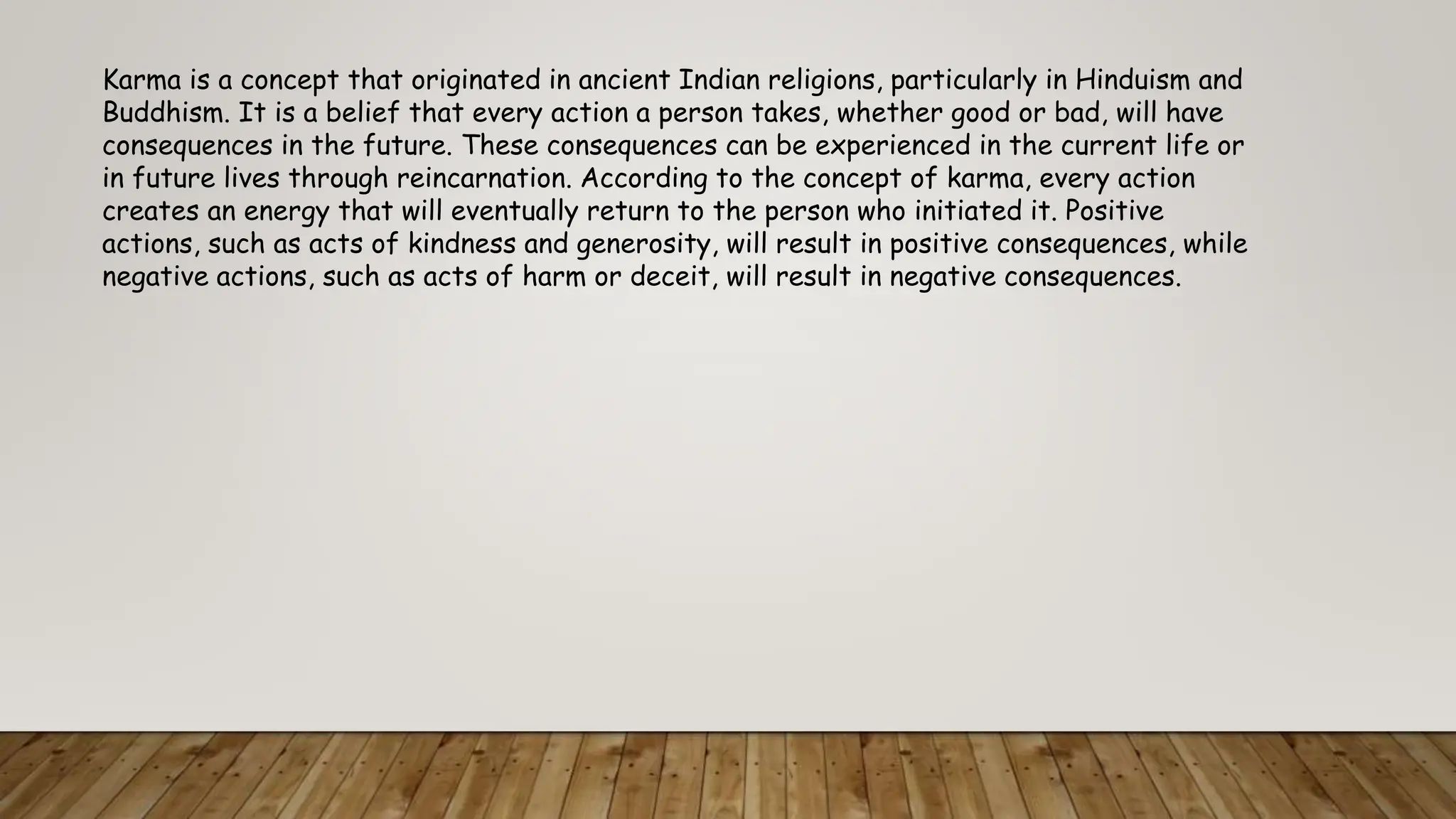
Karma is a concept that originated in ancient Indian religions, particularly in Hinduism and
Buddhism. It is a belief that every action a person takes, whether good or bad, will have
consequences in the future. These consequences can be experienced in the current life or
in future lives through reincarnation. According to the concept of karma, every action
creates an energy that will eventually return to the person who initiated it. Positive
actions, such as acts of kindness and generosity, will result in positive consequences, while
negative actions, such as acts of harm or deceit, will result in negative consequences.
Concept of karma is often used as a moral guide, encouraging individuals to act in a positive and
ethical manner in order to create positive consequences for themselves and others. It is also seen as a
way to understand and accept the challenges and difficulties one may face in life, as they may be seen
as a result of past actions.
The concept of karma is often used as a moral guide, encouraging individuals to
act in a positive and ethical manner in order to create positive consequences
for themselves and others. It is also seen as a way to understand and accept
the challenges and difficulties one may face in life, as they may be seen as a
result of past actions.
The Importance of Karma
1. Responsibility: Karma emphasizes personal responsibility for one’s actions. It teaches individuals to be
mindful of their thoughts, words, and deeds, as they will have consequences in the future. This
promotes self-awareness and encourages individuals to make ethical choices.
2. .Moral development: Karma encourages individuals to act in a morally upright manner. It promotes
virtues such as honesty, kindness, compassion, and generosity. By understanding the consequences of
their actions, individuals are motivated to cultivate positive qualities and refrain from harmful
behaviors
3. .Justice and fairness: Karma is often associated with the idea of justice and fairness. It suggests that
individuals will ultimately receive what they deserve based on their actions. This belief provides
comfort to those who have experienced injustice or suffering, as it offers the hope that justice will
prevail in the long run.
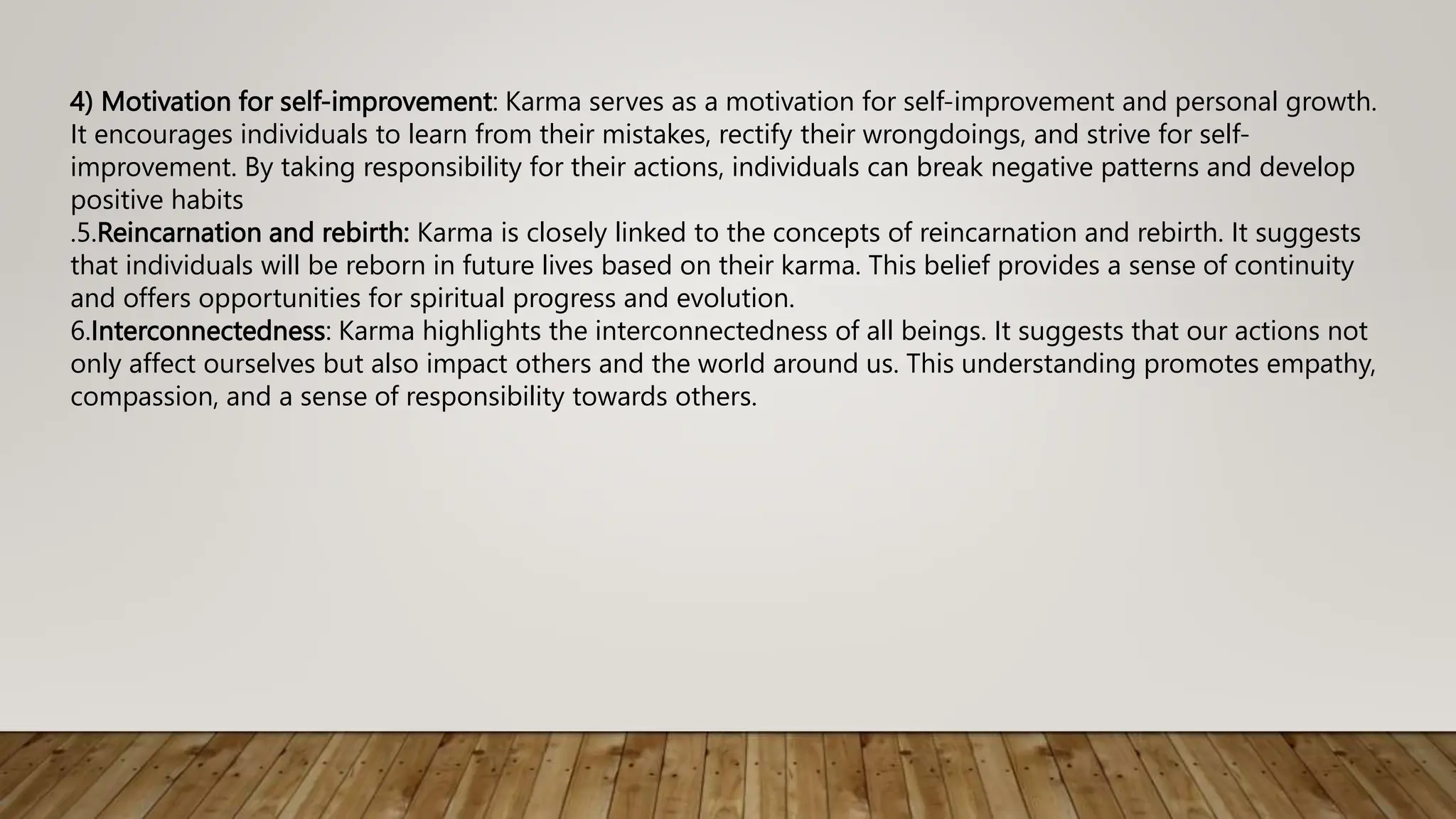
4) Motivation for self-improvement: Karma serves as a motivation for self-improvement and personal growth.
It encourages individuals to learn from their mistakes, rectify their wrongdoings, and strive for self-
improvement. By taking responsibility for their actions, individuals can break negative patterns and develop
positive habits
.5.Reincarnation and rebirth: Karma is closely linked to the concepts of reincarnation and rebirth. It suggests
that individuals will be reborn in future lives based on their karma. This belief provides a sense of continuity
and offers opportunities for spiritual progress and evolution.
6.Interconnectedness: Karma highlights the interconnectedness of all beings. It suggests that our actions not
only affect ourselves but also impact others and the world around us. This understanding promotes empathy,
compassion, and a sense of responsibility towards others.
7) Reflect on personal growth and transformation: Reflect on how the concept of karma
can contribute to personal growth and transformation. Consider how understanding and
applying the principles of karma can lead to increased self-awareness, empathy, and a
sense of responsibility for one’s actions.
of yoga
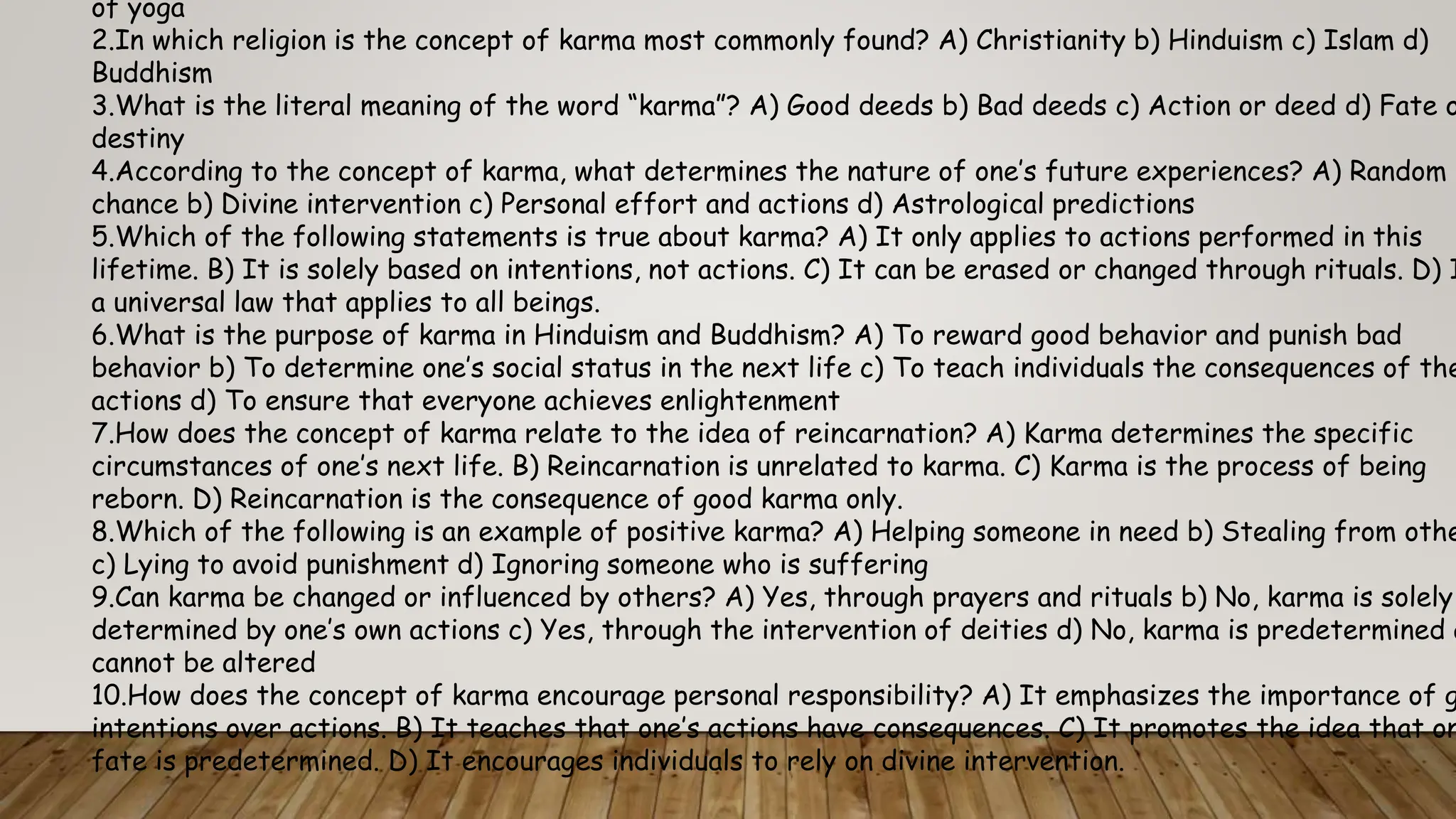
2.In which religion is the concept of karma most commonly found? A) Christianity b) Hinduism c) Islam d)
Buddhism
3.What is the literal meaning of the word “karma”? A) Good deeds b) Bad deeds c) Action or deed d) Fate o
destiny
4.According to the concept of karma, what determines the nature of one’s future experiences? A) Random
chance b) Divine intervention c) Personal effort and actions d) Astrological predictions
5.Which of the following statements is true about karma? A) It only applies to actions performed in this
lifetime. B) It is solely based on intentions, not actions. C) It can be erased or changed through rituals. D) I
a universal law that applies to all beings.
6.What is the purpose of karma in Hinduism and Buddhism? A) To reward good behavior and punish bad
behavior b) To determine one’s social status in the next life c) To teach individuals the consequences of the
actions d) To ensure that everyone achieves enlightenment
7.How does the concept of karma relate to the idea of reincarnation? A) Karma determines the specific
circumstances of one’s next life. B) Reincarnation is unrelated to karma. C) Karma is the process of being
reborn. D) Reincarnation is the consequence of good karma only.
8.Which of the following is an example of positive karma? A) Helping someone in need b) Stealing from othe
c) Lying to avoid punishment d) Ignoring someone who is suffering
9.Can karma be changed or influenced by others? A) Yes, through prayers and rituals b) No, karma is solely
determined by one’s own actions c) Yes, through the intervention of deities d) No, karma is predetermined a
cannot be altered
10.How does the concept of karma encourage personal responsibility? A) It emphasizes the importance of g
intentions over actions. B) It teaches that one’s actions have consequences. C) It promotes the idea that on
fate is predetermined. D) It encourages individuals to rely on divine intervention.

Karma.pptx

  • 1.
  • 2.
    Learning objectives: Atthe end of the lesson, the pupils should be able to: 1) Understand the concept of Karma 2) Enumerate the 12 laws of karma 3) Enumerate the importance of Karma
  • 3.
    Karma is aconcept that originated in ancient Indian religions, particularly in Hinduism and Buddhism. It is a belief that every action a person takes, whether good or bad, will have consequences in the future. These consequences can be experienced in the current life or in future lives through reincarnation. According to the concept of karma, every action creates an energy that will eventually return to the person who initiated it. Positive actions, such as acts of kindness and generosity, will result in positive consequences, while negative actions, such as acts of harm or deceit, will result in negative consequences.
  • 4.
    Concept of karmais often used as a moral guide, encouraging individuals to act in a positive and ethical manner in order to create positive consequences for themselves and others. It is also seen as a way to understand and accept the challenges and difficulties one may face in life, as they may be seen as a result of past actions.
  • 5.
    The concept ofkarma is often used as a moral guide, encouraging individuals to act in a positive and ethical manner in order to create positive consequences for themselves and others. It is also seen as a way to understand and accept the challenges and difficulties one may face in life, as they may be seen as a result of past actions.
  • 6.
    The Importance ofKarma 1. Responsibility: Karma emphasizes personal responsibility for one’s actions. It teaches individuals to be mindful of their thoughts, words, and deeds, as they will have consequences in the future. This promotes self-awareness and encourages individuals to make ethical choices. 2. .Moral development: Karma encourages individuals to act in a morally upright manner. It promotes virtues such as honesty, kindness, compassion, and generosity. By understanding the consequences of their actions, individuals are motivated to cultivate positive qualities and refrain from harmful behaviors 3. .Justice and fairness: Karma is often associated with the idea of justice and fairness. It suggests that individuals will ultimately receive what they deserve based on their actions. This belief provides comfort to those who have experienced injustice or suffering, as it offers the hope that justice will prevail in the long run.
  • 7.
    4) Motivation forself-improvement: Karma serves as a motivation for self-improvement and personal growth. It encourages individuals to learn from their mistakes, rectify their wrongdoings, and strive for self- improvement. By taking responsibility for their actions, individuals can break negative patterns and develop positive habits .5.Reincarnation and rebirth: Karma is closely linked to the concepts of reincarnation and rebirth. It suggests that individuals will be reborn in future lives based on their karma. This belief provides a sense of continuity and offers opportunities for spiritual progress and evolution. 6.Interconnectedness: Karma highlights the interconnectedness of all beings. It suggests that our actions not only affect ourselves but also impact others and the world around us. This understanding promotes empathy, compassion, and a sense of responsibility towards others.
  • 8.
    7) Reflect onpersonal growth and transformation: Reflect on how the concept of karma can contribute to personal growth and transformation. Consider how understanding and applying the principles of karma can lead to increased self-awareness, empathy, and a sense of responsibility for one’s actions.
  • 11.
    of yoga 2.In whichreligion is the concept of karma most commonly found? A) Christianity b) Hinduism c) Islam d) Buddhism 3.What is the literal meaning of the word “karma”? A) Good deeds b) Bad deeds c) Action or deed d) Fate o destiny 4.According to the concept of karma, what determines the nature of one’s future experiences? A) Random chance b) Divine intervention c) Personal effort and actions d) Astrological predictions 5.Which of the following statements is true about karma? A) It only applies to actions performed in this lifetime. B) It is solely based on intentions, not actions. C) It can be erased or changed through rituals. D) I a universal law that applies to all beings. 6.What is the purpose of karma in Hinduism and Buddhism? A) To reward good behavior and punish bad behavior b) To determine one’s social status in the next life c) To teach individuals the consequences of the actions d) To ensure that everyone achieves enlightenment 7.How does the concept of karma relate to the idea of reincarnation? A) Karma determines the specific circumstances of one’s next life. B) Reincarnation is unrelated to karma. C) Karma is the process of being reborn. D) Reincarnation is the consequence of good karma only. 8.Which of the following is an example of positive karma? A) Helping someone in need b) Stealing from othe c) Lying to avoid punishment d) Ignoring someone who is suffering 9.Can karma be changed or influenced by others? A) Yes, through prayers and rituals b) No, karma is solely determined by one’s own actions c) Yes, through the intervention of deities d) No, karma is predetermined a cannot be altered 10.How does the concept of karma encourage personal responsibility? A) It emphasizes the importance of g intentions over actions. B) It teaches that one’s actions have consequences. C) It promotes the idea that on fate is predetermined. D) It encourages individuals to rely on divine intervention.